The Reality of Tesla Free Supercharging for Life
If you've been researching EV ownership costs, you've likely encountered the phrase "Tesla free Supercharging for life." For early adopters, this was a genuine perk that significantly reduced the total cost of ownership. But as we move through 2026, the landscape has shifted dramatically.
Quick Verdict
Tesla discontinued free unlimited Supercharging for new vehicle purchases in 2017, with limited exceptions for referral programs and promotional periods. Most Tesla owners today pay per kWh or per minute at Superchargers, though strategic charging habits can still minimize costs.
Understanding EV Charging Levels: Speed and Cost
Before diving into Tesla-specific policies, let's establish the fundamentals. EV charging operates across three levels, each with distinct power delivery (measured in kilowatts, or kW) and energy storage implications (measured in kilowatt-hours, or kWh). The distinction matters: kW determines how fast you add range, while kWh determines your battery's total capacity.
| Charging Level | Voltage/Amperage | Power Output (kW) | Miles of Range Added Per Hour | Typical Use Case |
|---|---|---|---|---|
| Level 1 | 120V / 12-16A | 1.4-1.9 kW | 3-5 miles | Overnight trickle charging, emergency backup |
| Level 2 | 240V / 32-48A | 7.7-11.5 kW | 25-44 miles | Home daily charging, workplace, destinations |
| DC Fast Charging | 400-800V DC | 50-350 kW | 180-1,000+ miles (peak) | Road trips, rapid top-ups |
For context, a Tesla Model Y Long Range with its 75 kWh usable battery capacity can add approximately 200 miles of range in 15 minutes at a V3 Supercharger (peak 250 kW), assuming optimal battery temperature and state of charge below 50%. However, charging speed tapers significantly above 80% state of charge to protect battery longevity—a phenomenon called the charging curve.
Tesla Supercharger Network: Current Pricing Structure
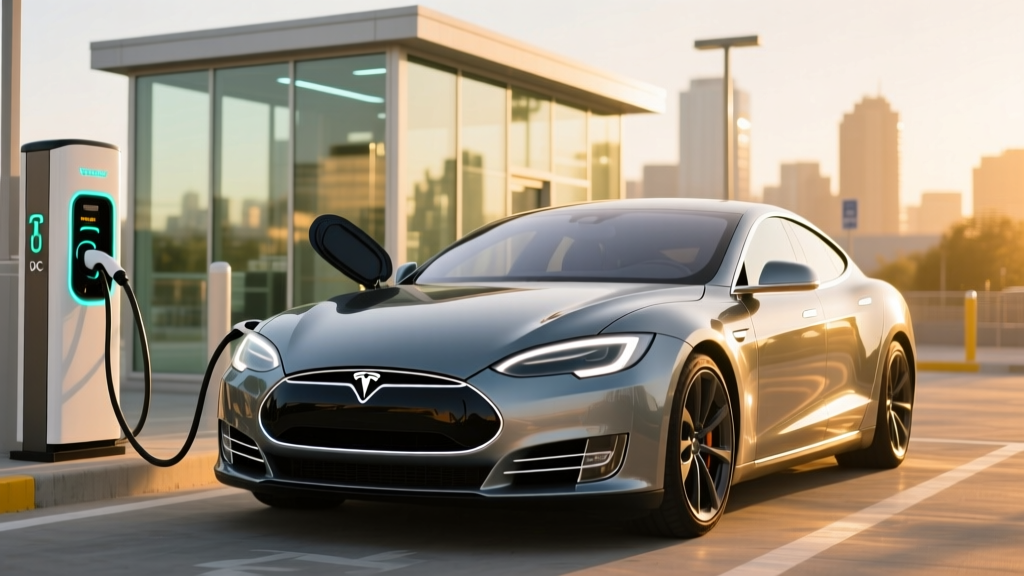
Tesla's Supercharger network spans over 50,000 connectors globally as of 2026, with V3 stations delivering up to 250 kW and newer V4 stations capable of 350 kW for compatible vehicles like the Cybertruck and refreshed Model 3 Performance.
Who Still Gets Free Supercharging?
The "free Supercharging for life" benefit applies only to:
- Original Model S and Model X vehicles purchased before January 15, 2017, with transferable free Supercharging tied to the VIN (not the owner)
- Non-transferable free Supercharging on some Model S/X sold between January 2017 and March 2017, valid only for the original purchaser
- Limited promotional periods where Tesla temporarily offered free Supercharging credits to boost quarterly deliveries (most recently late 2023 for Model 3/Y inventory vehicles)
- Referral program credits (discontinued in 2024, though existing credits remain valid through 2026)
For everyone else, Tesla Supercharger pricing varies by location, time of day, and demand. As of 2026, typical rates range from $0.25 to $0.50 per kWh in the United States, with urban stations in California and New York trending toward the higher end. Some stations now implement time-of-use pricing, charging $0.15-$0.20/kWh during off-peak hours (typically 11 PM to 6 AM) and $0.40-$0.60/kWh during peak demand.
Home Charging Installation: The Real Cost Breakdown
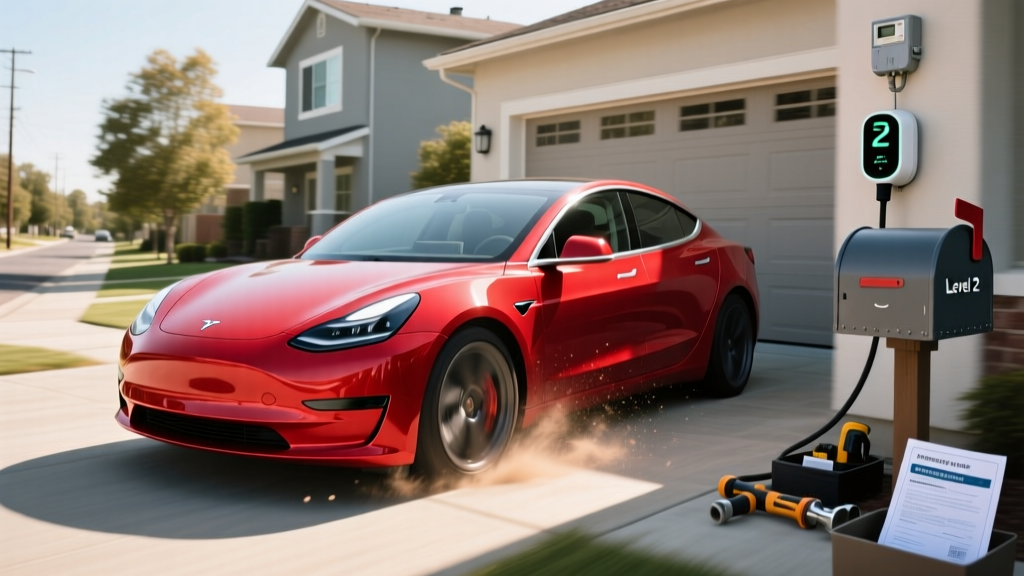
For most Tesla owners, home Level 2 charging delivers the lowest cost per mile and eliminates range anxiety for daily driving. But installation costs vary widely based on your electrical panel's capacity, distance from the panel to the charging location, and local permit requirements.
| Component | Basic Install (Near Panel) | Standard Install (50-100 ft run) | Complex Install (Panel Upgrade Required) |
|---|---|---|---|
| Level 2 Charger Equipment | $400-$600 | $400-$600 | $400-$600 |
| Electrical Permit | $50-$150 | $50-$150 | $50-$150 |
| Electrician Labor (240V/40-60A circuit) | $500-$1,000 | $1,200-$2,500 | $2,500-$4,000 |
| Electrical Panel Upgrade (if needed) | $0 | $0 | $1,500-$3,500 |
| Total Estimated Cost | $950-$1,750 | $1,650-$3,250 | $4,450-$8,250 |
The single biggest cost variable is whether your home's electrical panel has sufficient capacity. Most modern homes with 200-amp service can accommodate a 40-60 amp dedicated circuit for Level 2 charging. However, older homes with 100-amp panels often require an upgrade to 200 amps—a $1,500 to $3,500 expense that includes the new panel, utility coordination, and inspection.
Electrical Requirements for Tesla Home Charging
Tesla's Wall Connector (Gen 3) delivers up to 11.5 kW (48 amps) on a 60-amp dedicated circuit, or 9.6 kW (40 amps) on a 50-amp circuit. The National Electrical Code requires circuits to be rated at 125% of the continuous load, meaning a 48-amp charger needs a 60-amp breaker.
Safety considerations include:
- Dedicated circuit (not shared with other appliances)
- GFCI protection for outdoor installations
- NEMA 14-50 outlet or hardwired connection (hardwired preferred for reliability and higher amperage)
- Weather-rated enclosure for outdoor mounting (NEMA 4 rating minimum)
Connector Compatibility: NACS, CCS, and Adapters
Tesla's proprietary North American Charging Standard (NACS) connector became the de facto industry standard after Ford, GM, Rivian, and most major automakers adopted it for 2025 and later model-year vehicles. This shift means Tesla owners can charge at home and at Superchargers without adapters, while non-Tesla EVs increasingly require NACS adapters or native NACS ports.
| Connector Type | Power Capability | Vehicles Using This Standard | Adapter Availability |
|---|---|---|---|
| NACS (Tesla) | Up to 350 kW DC | All Tesla models, 2025+ Ford, GM, Rivian, Volvo, Polestar, Mercedes, BMW | Tesla provides CCS adapter ($175); Magic Dock at some Superchargers |
| CCS1 | Up to 350 kW DC | 2024 and older non-Tesla EVs (Hyundai, Kia, VW, etc.) | Tesla CCS adapter for Model 3/Y; third-party NACS-to-CCS adapters emerging |
| CHAdeMO | Up to 100 kW DC | Nissan Leaf, Mitsubishi Outlander PHEV (legacy) | Limited adapter options; network phasing out by 2027 |
Cost to Charge: Home vs. Public vs. Gas
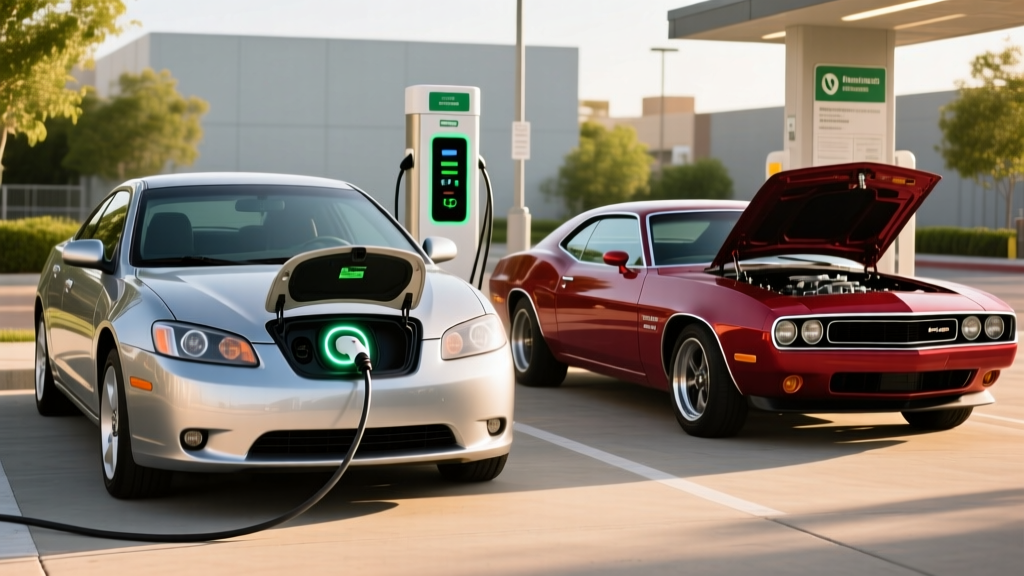
The economic case for EV ownership hinges on charging costs. Let's compare real-world scenarios using a Tesla Model Y Long Range (330 miles EPA range, 75 kWh usable battery) and a comparable gas-powered SUV averaging 25 MPG combined.
| Charging/Fueling Scenario | Cost per kWh or Gallon | Cost for Full Charge/Tank | Cost Per Mile |
|---|---|---|---|
| Home Level 2 (off-peak, $0.12/kWh) | $0.12/kWh | $9.00 | $0.027 |
| Home Level 2 (standard, $0.18/kWh) | $0.18/kWh | $13.50 | $0.041 |
| Tesla Supercharger (average, $0.35/kWh) | $0.35/kWh | $26.25 | $0.079 |
| Public DC Fast (Electrify America, $0.48/kWh) | $0.48/kWh | $36.00 | $0.109 |
| Gas SUV (25 MPG, $3.50/gallon) | $3.50/gallon | $52.50 (15-gallon tank) | $0.140 |
Even at peak Supercharger rates, the Tesla Model Y costs roughly 44% less per mile than a gas SUV. Home charging during off-peak hours delivers an 81% savings. Over 15,000 miles annually, that's a $1,695 fuel cost savings with home charging versus $2,100 for gas.
Recommended Home Charging Equipment
For Tesla owners, the choice is straightforward: Tesla's Wall Connector offers the best integration, reliability, and power output. For households with multiple EVs or non-Tesla vehicles, universal chargers provide flexibility.
Tesla Wall Connector (Gen 3)
- Power Output: Up to 11.5 kW (48 amps) on 60A circuit
- Connector: NACS (Tesla proprietary)
- Cable Length: 24 feet
- Smart Features: Wi-Fi connectivity, over-the-air updates, load sharing (pair two units on one circuit), access control
- Price: $475 (2026 MSRP)
- Best For: Tesla-only households seeking maximum charge speed
ChargePoint Home Flex
- Power Output: Up to 12 kW (50 amps) on 60A circuit, adjustable down to 16A
- Connector: J1772 (NACS adapter included for Tesla compatibility)
- Cable Length: 23 feet
- Smart Features: Wi-Fi, app scheduling, Alexa integration, energy tracking
- Price: $699 (2026 MSRP)
- Best For: Multi-EV households, renters planning to move
Emporia Level 2 EV Charger
- Power Output: Up to 11.5 kW (48 amps) on 60A circuit
- Connector: J1772 (NACS adapter required for Tesla)
- Cable Length: 24 feet
- Smart Features: Wi-Fi, solar integration, real-time energy monitoring, load management
- Price: $399 (2026 MSRP)
- Best For: Budget-conscious buyers with solar panels
Charging Time Examples: 10-80% State of Charge
Real-world charging times depend on battery size, charger power, battery temperature, and state of charge. Most EVs, including Teslas, charge fastest between 10-50% SoC, then taper to protect battery health. Here are typical 10-80% charging times for common scenarios:
- Tesla Model Y Long Range (75 kWh battery) at V3 Supercharger (250 kW): 28-32 minutes (assuming battery preconditioned to optimal temperature)
- Tesla Model 3 Performance (82 kWh battery) at V4 Supercharger (350 kW): 22-26 minutes (2025+ models with improved thermal management)
- Tesla Model Y at home Level 2 (11.5 kW): 6-7 hours (overnight charging)
- Tesla Model S Plaid (100 kWh battery) at V3 Supercharger: 38-42 minutes
Pro tip: Use Tesla's navigation to route to a Supercharger, and the vehicle automatically preconditions the battery for optimal charge speed. Arriving without preconditioning can add 10-15 minutes to your charging session, especially in cold weather.
Frequently Asked Questions
Is Tesla free Supercharging for life still available for new purchases?
No. Tesla discontinued free unlimited Supercharging for new vehicle purchases in 2017. The only exceptions are limited-time promotional credits offered during specific sales pushes (most recently late 2023) and legacy vehicles with transferable free Supercharging tied to the VIN.
How much does it cost to install a home EV charger?
Home Level 2 charger installation costs range from $950 to $8,250, depending on electrical panel capacity, distance from panel to charging location, and local permit fees. Most homeowners with modern 200-amp panels pay $1,650-$3,250 for a standard installation.
How fast will each charging level add range?
Level 1 (120V) adds 3-5 miles per hour. Level 2 (240V) adds 25-44 miles per hour depending on amperage. DC fast charging adds 180-1,000+ miles per hour at peak rates, though sustained rates are lower due to charging curve taper above 80% state of charge.
Which connector/charger is compatible with my Tesla?
All Tesla vehicles use the NACS (North American Charging Standard) connector. Tesla's Wall Connector is the recommended home charger, delivering up to 11.5 kW. For non-Tesla EVs, you'll need a J1772 charger with a NACS adapter, or a native NACS charger if your vehicle supports it (2025+ Ford, GM, Rivian models).
How much does charging cost per mile vs gas?
Home charging costs $0.027-$0.041 per mile (depending on electricity rates), while Tesla Supercharging costs $0.079 per mile on average. A comparable gas SUV costs $0.140 per mile at $3.50/gallon and 25 MPG combined. Home charging delivers 70-81% savings versus gas.
What electrical upgrades might I need for home charging?
If your home has a 100-amp electrical panel (common in homes built before 1990), you'll likely need a panel upgrade to 200 amps, costing $1,500-$3,500. Homes with 200-amp service typically have sufficient capacity for a dedicated 40-60 amp circuit without upgrades. A licensed electrician can assess your panel's available capacity during a site visit.
Can I charge my non-Tesla EV at Tesla Superchargers?
Yes, but with limitations. Tesla opened select Supercharger stations to non-Tesla EVs via the Magic Dock (built-in CCS adapter) starting in 2023. As of 2026, approximately 30% of U.S. Supercharger locations support non-Tesla vehicles. You'll need the Tesla app to initiate charging, and pricing is typically $0.40-$0.55/kWh for non-Tesla vehicles (higher than Tesla owner rates).
The Bottom Line: Maximizing Value Without Free Supercharging
While Tesla free Supercharging for life is largely a relic of the brand's early growth strategy, EV ownership still delivers substantial fuel cost savings—especially with strategic home charging. Install a Level 2 charger, take advantage of off-peak electricity rates, and reserve Superchargers for road trips. The math still works: even without free charging, a Tesla Model Y owner driving 15,000 miles annually saves $1,000-$1,700 per year versus a gas-powered equivalent.
For the latest Tesla Supercharger policies, visit Tesla's official Supercharger page. For home charging installation guidance and safety standards, consult the National Electrical Code (NEC Article 625) and your local building department.