The promise of free Supercharging for life is one of the most sought-after perks in the EV world. But as Tesla has restructured its incentive programs over the years, tracking which vehicles actually carry this benefit — and whether it transfers to subsequent owners — has become confusing. If you're shopping for a Tesla in 2026 and wondering which Tesla has free Supercharging for life, this guide breaks down eligibility by model year, transferability rules, and how free Supercharging stacks up against home Level 2 charging costs.
Which Tesla Models Have Free Supercharging for Life?
Tesla's free Supercharging program has gone through several iterations since 2012. Here's the current landscape as of 2026:
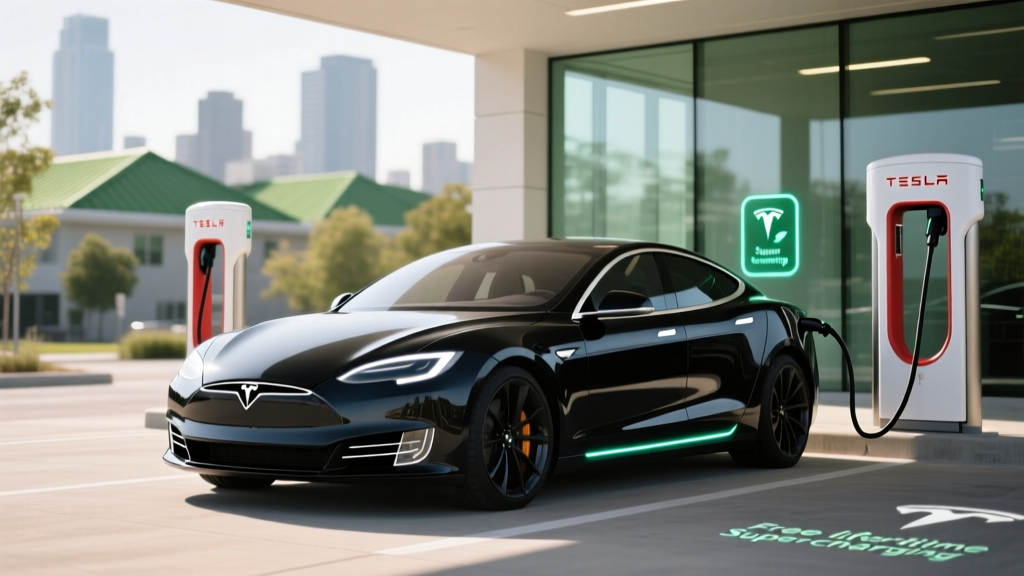
- Model S and Model X (ordered before January 15, 2017): These vehicles received free unlimited Supercharging that is tied to the VIN and transfers with the car to subsequent owners. This is the most valuable and rarest form of the perk.
- Model S and Model X (ordered between January 15, 2017 and November 2018): Free Supercharging was tied to the original owner only — it does not transfer upon resale.
- Model S and Model X (late 2018 onward): Tesla removed free Supercharging as standard. It has been offered intermittently as a limited-time promotional incentive (e.g., end-of-quarter delivery pushes), typically for 10,000–40,000 miles or 1–3 years, not for life.
- Model 3 and Model Y: Free Supercharging for life has never been a standard offering on these models. Occasional referral credits or limited promotional miles have been available, but lifetime free charging does not exist for Model 3/Y as a factory benefit.
How Much Does Tesla Supercharging Actually Cost?
For the vast majority of Tesla owners in 2026 who do not have free Supercharging, the network charges per kWh (energy consumed, not power delivered). Rates vary by location, time of day, and demand.
| Scenario | Rate ($/kWh) | Cost for 60 kWh (≈200 mi) |
|---|---|---|
| Off-peak (rural, overnight) | $0.25–$0.30 | $15.00–$18.00 |
| Standard (suburban, midday) | $0.32–$0.42 | $19.20–$25.20 |
| Peak (urban, weekday evening) | $0.45–$0.58 | $27.00–$34.80 |
| Idle fee (if plugged in past full) | $0.50–$1.00/min | Varies |
For a Tesla Model Y Long Range with its 75 kWh usable battery and ~310-mile EPA range, a typical 10–80% charge (about 52.5 kWh) at $0.38/kWh costs roughly $20. That works out to about $0.08–$0.10 per mile on public Superchargers — still cheaper than gasoline at $3.50/gal for a 28 MPG ICE vehicle ($0.125/mi), but significantly more than home charging.
Charging Levels Explained: Speeds, Times, and Range Added
Understanding charging speeds requires distinguishing between kW (kilowatts — the rate of power delivery) and kWh (kilowatt-hours — the total energy stored in your battery). Think of kW as how fast water flows from a hose, and kWh as the size of the bucket you're filling.
| Level | Voltage / Amps | Power (kW) | Miles of Range Per Hour | 10–80% Time (75 kWh Battery) |
|---|---|---|---|---|
| Level 1 (120V household) | 120V / 12A | 1.4 kW | 3–5 mi/hr | ~45+ hours |
| Level 2 (240V home) | 240V / 48A | 11.5 kW | 30–44 mi/hr | ~6–7 hours |
| DC Fast Charge (Supercharger V3/V4) | 400–500V DC | Up to 250 kW | ~1,000 mi/hr (peak) | ~25–30 min |
Home EV Charger Installation: Costs and Electrical Requirements
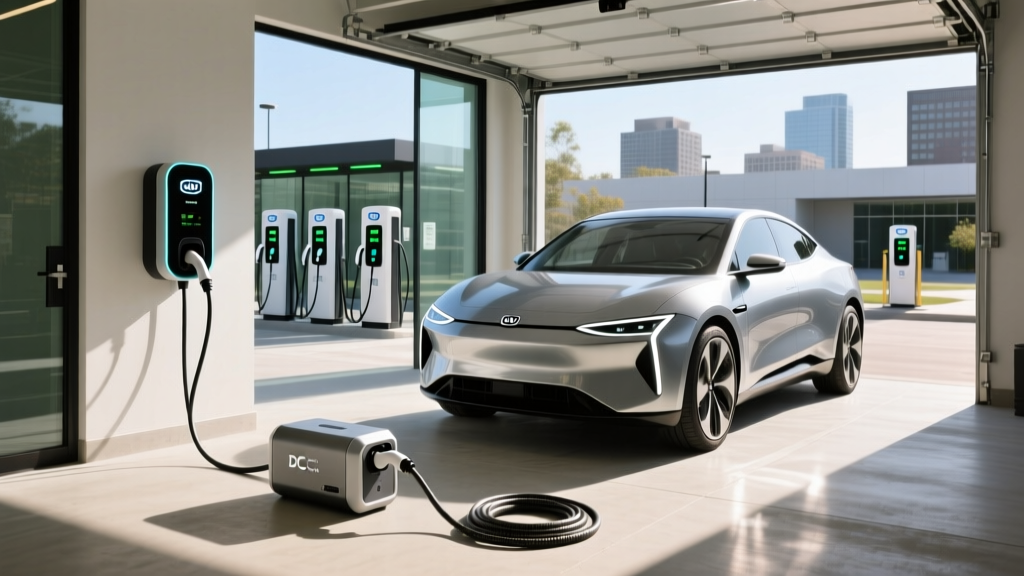
Most Tesla owners charge at home the majority of the time. Installing a Level 2 home charger (officially called a Wall Connector by Tesla, or an EVSE — Electric Vehicle Supply Equipment — in industry terms) requires a dedicated 240V circuit, similar to what a clothes dryer or electric oven uses.
Electrical Requirements for Level 2 Home Charging
- Circuit: Dedicated 60A breaker (to support continuous 48A charging) or 50A breaker (40A continuous) — per NEC 80% rule for continuous loads
- Wire gauge: 6 AWG copper for 60A circuit; 8 AWG for 50A circuit
- Panel capacity: Your home's main electrical panel must have enough spare amperage. A 200A panel is typical for modern homes; a 100A panel in an older home may require an upgrade ($1,500–$3,500) to add a 60A EV circuit
- Permit: Most jurisdictions require an electrical permit for new 240V circuits, typically $50–$200
- GFCI protection: NEC 2020 and later requires GFCI breakers for EV outlets in garages (adds $40–$80 to breaker cost)
| Item | Low Estimate | High Estimate |
|---|---|---|
| EVSE equipment (Tesla Wall Connector, ChargePoint, etc.) | $350 | $700 |
| Electrician labor (run 240V line, mount unit) | $400 | $1,500 |
| Electrical permit | $50 | $200 |
| Panel upgrade (if needed — 100A → 200A) | $1,500 | $3,500 |
| Conduit, wire, breaker, misc. materials | $100 | $400 |
| Total (no panel upgrade) | $900 | $2,800 |
| Total (with panel upgrade) | $2,400 | $6,300 |
Always hire a licensed electrician and pull a permit. Unpermitted electrical work can void home insurance and create fire hazards. The National Electrical Code (NEC) governs EV circuit installation requirements.
Connector Compatibility: NACS, CCS, and Adapters
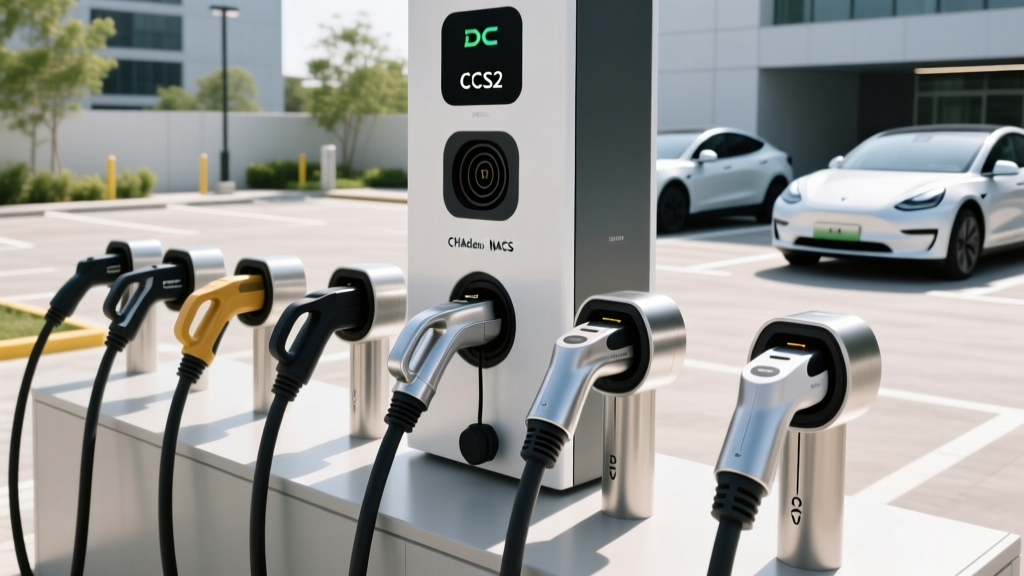
As of 2026, the North American Charging Standard (NACS) — originally Tesla's proprietary connector — has been adopted by nearly every major automaker. Here's where things stand:
| Connector | Brands Using It (Factory) | Notes |
|---|---|---|
| NACS (Tesla) | Tesla, Ford, GM, Rivian, Volvo, Polestar, Fisker, Mercedes (new models) | Direct access to Tesla Supercharger network |
| CCS1 | Hyundai, Kia, BMW, VW, Stellantis (many 2024 and earlier models) | Requires NACS adapter for Supercharger access; Electrify America uses CCS natively |
| CHAdeMO | Nissan Leaf (legacy only) | Effectively discontinued for new vehicles; limited DC fast infrastructure |
If you own a CCS-equipped EV (e.g., a 2023 Hyundai Ioniq 5 or 2024 BMW i4), you'll need a CCS-to-NACS adapter to use Tesla Superchargers. Tesla sells an official adapter for ~$250, and aftermarket options from Lectron and others are available for $150–$200. Ford and GM include NACS adapters with many 2025+ models.
Cost Per Mile: Supercharging vs. Home Charging vs. Gas
Here's how the economics compare for a Tesla Model Y Long Range (75 kWh battery, 310 mi EPA range, ~4 mi/kWh efficiency) versus a comparable gas-powered SUV averaging 28 MPG combined:
| Charging/Fueling Method | Rate | Cost Per Mile | Annual Cost (12,000 mi) |
|---|---|---|---|
| Home Level 2 (off-peak, $0.12/kWh) | $0.12/kWh | $0.030 | $360 |
| Home Level 2 (standard, $0.18/kWh) | $0.18/kWh | $0.045 | $540 |
| Tesla Supercharger (avg $0.38/kWh) | $0.38/kWh | $0.095 | $1,140 |
| Free Supercharging (lifetime perk) | $0.00/kWh | $0.000 | $0 |
| Gasoline SUV (28 MPG, $3.50/gal) | $3.50/gal | $0.125 | $1,500 |
Even without free Supercharging, home-charged Tesla ownership delivers massive fuel savings — roughly $1,000–$1,140 per year compared to gasoline. Free Supercharging is a bonus, but it should not be the primary reason to overpay for an older Model S or Model X. A 2016 Model S with free Supercharging may command a $3,000–$5,000 premium over a comparable car without it, which takes 3–5 years of exclusive Supercharger use to recoup.
Recommended Home EV Chargers for Tesla Owners
Tesla Wall Connector (Gen 3)
- Power output: Up to 11.5 kW (48A on 60A circuit)
- Connector: NACS (native Tesla)
- Cable length: 24 ft
- Smart features: Wi-Fi, OTA firmware updates, load sharing between two units, power management with Tesla Powerwall
- Price: ~$475
Best for: Tesla-only households wanting seamless integration and the lowest cost for a premium unit.
ChargePoint Home Flex
- Power output: Up to 12 kW (50A on 60A circuit), configurable down to 16A for lower-capacity panels
- Connector: NACS or J1772 (select at purchase); NACS version fits Tesla natively
- Cable length: 23 ft
- Smart features: Wi-Fi, scheduling, Alexa integration, detailed energy tracking app
- Price: ~$550–$650
Best for: Multi-EV households (NACS + J1772 models) and users wanting granular energy reporting.
Emporia Level 2 EV Charger
- Power output: Up to 11.5 kW (48A)
- Connector: J1772 (use Tesla Mobile Connector adapter) or NACS (newer version)
- Cable length: 24 ft
- Smart features: Integrates with Emporia Vue energy monitor for whole-home load management, solar-aware scheduling
- Price: ~$399
Best for: Budget-conscious buyers who want smart energy monitoring without paying a premium.
Is Free Supercharging Worth Paying Extra For?
If you're considering a used pre-2017 Model S or Model X specifically for the free Supercharging perk, weigh these factors:
- Your driving profile: If you road-trip frequently (10,000+ highway miles/year), the savings compound quickly. A driver putting 15,000 miles/year on Superchargers saves $1,100–$1,400 annually versus paying retail rates.
- Vehicle age and maintenance: A 2016 Model S is now 10 years old. Battery degradation (typically 10–15% at this age for NMC chemistry), air suspension repairs, and out-of-warranty drivetrain issues can easily offset Supercharging savings.
- Opportunity cost: A newer Model Y Long Range ($47,990 MSRP in 2026) with a modern heat pump, 320-mile EPA range, and 250 kW peak charging will cost less to maintain and insure — even if every kWh at Superchargers is paid out of pocket.
- Transfer verification: Always confirm via Tesla that the free Supercharging on a specific VIN is the transferable type. Some vehicles lost the perk after being sold through non-Tesla dealers or after certain title events.
Choose a used Model S/X with transferable free Supercharging if: You want a premium sedan/SUV at a steep discount, road-trip often, and accept higher maintenance risk on a 9–13 year old vehicle.
Choose a new Model Y or Model 3 if: You charge at home most days (making free Supercharging largely irrelevant), want current safety tech and warranty coverage, and prioritize lower total cost of ownership over a niche perk.
Frequently Asked Questions
Does free Supercharging transfer when I sell my Tesla?
Only on Model S and Model X ordered before January 15, 2017. These vehicles have VIN-bound free Supercharging that follows the car regardless of ownership changes. All other free Supercharging perks (promotional, referral-based, or owner-tied) expire upon transfer of title.
Can I get free Supercharging on a new 2026 Tesla?
Not as a standard feature. Tesla occasionally offers limited-time promotional free Supercharging (typically 10,000 miles or 1 year) as an end-of-quarter delivery incentive, but lifetime free Supercharging is no longer offered on any new Tesla model.
How much does home charging cost compared to Supercharging?
Home charging at the US average residential rate of ~$0.16/kWh costs about $0.04/mile in a Model Y. Supercharging at $0.38/kWh averages $0.095/mile. Home charging is roughly 60% cheaper per mile, which is why most EV owners do 80–90% of their charging at home.
What electrical panel upgrade do I need for a home charger?
If your home has a 200A main panel with available breaker slots, you likely need no upgrade. Homes with 100A panels — common in pre-1990 construction — typically need a panel upgrade to 200A, costing $1,500–$3,500 depending on your utility's requirements and local labor rates. A licensed electrician can perform a load calculation per NEC Article 220 to determine your panel's actual capacity.
Do I need a Tesla Wall Connector, or can I use a third-party charger?
Any NACS-equipped Level 2 charger will charge a Tesla at full speed. The Tesla Wall Connector offers the best value at $475 with native NACS, but ChargePoint, Emporia, and Wallbox all make excellent alternatives — particularly useful if you also own a non-Tesla EV and want a universal setup.
Sources: Tesla Supercharger pricing and policies are available at tesla.com/supercharger. Electrical code requirements reference the NFPA National Electrical Code. EPA range and efficiency data sourced from fueleconomy.gov.