Free Supercharging Isn't What It Used to Be — Know What You're Actually Getting
If you're browsing used-car listings and spot a Tesla for sale with free supercharging, it's easy to assume you've found a golden ticket to zero-cost driving. In 2026, that phrase can mean several very different things — and the distinction determines whether you'll save $2,000 a year or $200 on charging costs.
Tesla has issued multiple generations of free Supercharging: unlimited lifetime (pre-2017 Model S/X), transferable limited credits (various referral promotions between 2017-2023), and non-transferable credits tied to the original owner's account. Only the earliest unlimited plans reliably transfer with the vehicle's VIN, and even those have been subject to Tesla's policy revisions. Before you wire a deposit, verify the exact Supercharging status through Tesla's ownership transfer portal — not the seller's screenshot.
Regardless of whether your prospective Tesla includes free Supercharging, understanding the full charging ecosystem — home Level 2, public DC fast, and the real cost per mile — is what separates informed EV buyers from disappointed ones. This guide covers everything you need to budget for.
Charging Levels Explained: Speed, Power, and What You Actually Get
EV charging is measured in kW (kilowatts), which represents the rate of power delivery. Your battery stores energy measured in kWh (kilowatt-hours) — the total capacity. Think of kW as how fast water flows through a hose, and kWh as the size of the bucket. Confusing the two is the most common mistake new EV owners make.
| Level | Voltage | Power (kW) | Miles of Range per Hour | Best Use Case |
|---|---|---|---|---|
| Level 1 | 120V AC | 1.0–1.4 kW | 3–5 miles/hr | Overnight top-up, PHEVs, emergencies |
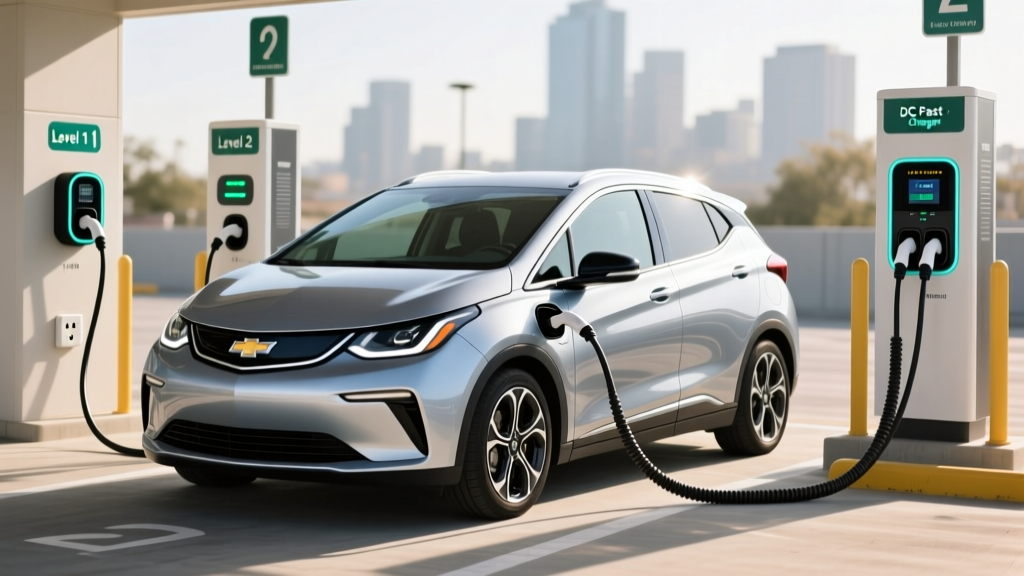
| Level 2 | 240V AC | 7.2–19.2 kW | 25–70 miles/hr | Daily home charging, workplace |
| DC Fast Charge | 400–800V DC | 50–350 kW | 150–1,000+ miles/hr (peak) | Road trips, rapid top-ups |
A Tesla Model Y Long Range (75 kWh usable battery, EPA 310 miles) charging at 11.5 kW on a Level 2 Wall Connector adds roughly 44 miles of range per hour — enough to fully replenish overnight. On a 250 kW V3 Supercharger, that same vehicle can add approximately 200 miles in 15 minutes, though the charge curve tapers significantly above 80% state of charge (SoC). Peak kW is never sustained across the full session.
How Much Does It Cost to Install a Home EV Charger?
Home Level 2 charging is where the vast majority of EV charging happens — and where the economics overwhelmingly favor electrification. But installation costs vary dramatically based on your home's electrical infrastructure.
| Component | Typical Cost Range | Notes |
|---|---|---|
| Level 2 Charger Equipment | $300–$700 | Tesla Wall Connector: ~$425; ChargePoint Home Flex: ~$550 |
| Electrician Labor | $500–$2,500 | Depends on run length from panel, wall type, conduit needs |
| Electrical Permit | $50–$300 | Varies by municipality; required in most jurisdictions |
| Panel Upgrade (if needed) | $1,500–$4,000 | Common in homes with 100A service; 200A recommended for EV + existing loads |
| Total (no panel upgrade) | $850–$3,500 | Most homes with 200A service and short runs |
| Total (with panel upgrade) | $2,350–$7,500 | Older homes, long conduit runs, or high-load panels |
For a Tesla Model Y or Model 3, the Tesla Wall Connector delivers up to 11.5 kW (48 amps) on a 60-amp dedicated circuit with 240V supply. The National Electrical Code (NEC) requires the circuit breaker to be rated at 125% of the continuous load — so a 48A charger needs a 60A breaker. Don't skip the permit: unpermitted electrical work can void home insurance claims and create fire risk.
What Electrical Upgrades Might I Need?
Before purchasing any Level 2 charger, have a licensed electrician perform a load calculation on your electrical panel. This determines whether your existing service can handle an additional 40–60 amp continuous draw. Homes built before 2000 frequently have 100-amp or 150-amp panels that may be near capacity with existing appliances (electric dryer, range, HVAC).
Key upgrade scenarios:
- 200A service, available capacity: Standard 60A circuit install, $850–$2,000 total. Most straightforward scenario.
- 100A service or near-capacity panel: Upgrade to 200A service, $2,000–$4,000. Adds resale value to the home.
- Detached garage or long conduit run: Additional $500–$1,500 in labor and materials for trenching or extended wire runs.
- Smart panel / load management: Devices like the Span smart panel or Emporia load manager can avoid a full panel upgrade by dynamically limiting charger draw when other loads spike. Cost: $500–$2,000 additional.
The federal government offers a 30% tax credit (up to $1,000) for home EV charger installation under IRS Form 8911 — this applies to both equipment and labor, but only in eligible census tracts. Check your qualification before assuming the credit applies.
Connector Compatibility: NACS, CCS, and What Fits Your Tesla
Tesla's North American Charging Standard (NACS) connector has become the dominant EV charging connector in North America. As of 2025, Ford, GM, Rivian, Volvo, Polestar, and others have adopted NACS, with most legacy CCS vehicles able to access Tesla Superchargers via adapter.
| Connector | Used By | Home Charging | DC Fast Charging | Adapter Needed? |
|---|---|---|---|---|
| NACS (Tesla) | Tesla (all), Ford, GM, Rivian, Volvo, others (2025+) | Tesla Wall Connector, J1772 with adapter | Tesla Supercharger, Electrify America (NACS stalls) | CCS-to-NACS adapter for non-Tesla DC networks |
| CCS1 | Hyundai, Kia, BMW, VW, legacy models (pre-2025) | J1772 (standard on all L2 chargers) | Electrify America, EVgo, ChargePoint DC | NACS-to-CCS adapter for Supercharger access |
| CHAdeMO | Nissan Leaf (legacy), Mitsubishi Outlander PHEV | J1772 | Limited; networks phasing out | No reliable adapter to NACS/CCS |
| J1772 | All EVs (Level 1 and Level 2 AC standard) | Universal for AC charging | N/A (AC only) | Tesla vehicles include J1772-to-NACS adapter in-box |
If you're buying a used Tesla, it charges natively on NACS at home and at Superchargers. For third-party DC fast chargers still using CCS1 cables, Tesla includes a CCS adapter (or you can purchase one for ~$175). This gives Tesla owners the broadest charging network access of any EV brand.
Charging Cost Per Mile: Home vs. Public vs. Gas
The economics of EV charging depend entirely on where you charge. A Tesla for sale with free Supercharging sounds compelling, but if you can charge at home, your per-mile cost is likely already lower than Supercharging — even without the free credits.
| Charging Scenario | Avg $/kWh | Cost per Mile | Annual Cost (12,000 mi) |
|---|---|---|---|
| Home (national avg electricity) | $0.17/kWh | $0.049/mi | $583 |
| Home (off-peak utility rate) | $0.09/kWh | $0.026/mi | $309 |
| Home (high-cost state, e.g. CA) | $0.30/kWh | $0.086/mi | $1,029 |
| Tesla Supercharger (paid, avg) | $0.32/kWh | $0.091/mi | $1,097 |
| Free Supercharging (legacy) | $0.00/kWh | $0.00/mi | $0 |
| Electrify America (peak) | $0.48/kWh | $0.137/mi | $1,646 |
| Gasoline equivalent (25 MPG, $3.40/gal) | — | $0.136/mi | $1,632 |
The data is clear: home charging at off-peak rates is the cheapest way to fuel any vehicle on the road. Free Supercharging saves money on road trips, but relying exclusively on DC fast charging — even when free — accelerates battery degradation due to sustained high-heat exposure. Most owners with free Supercharging still install a home Level 2 charger for daily use.
According to fueleconomy.gov, the 2025 Tesla Model Y Long Range achieves 122 MPGe combined (28 kWh/100 miles), making it one of the most efficient electric SUVs available. That efficiency directly translates to lower charging costs per mile.
Recommended Home Charging Equipment
For Tesla owners, the charger ecosystem is straightforward. Here are the top options based on power output, reliability, and smart features:
| Charger | Max Power | Cable Length | Smart Features | Price |
|---|---|---|---|---|
| Tesla Wall Connector (Gen 4) | 11.5 kW (48A) | 24 ft | Wi-Fi, OTA updates, Tesla app integration, load sharing | $425 |
| ChargePoint Home Flex | 12 kW (50A, adjustable) | 23 ft | App scheduling, Alexa, utility demand-response | $549 |
| Emporia Vue + Charger | 11.5 kW (48A) | 24 ft | Whole-home energy monitoring, solar integration | $599 |
| Grizzl-E Smart | 10 kW (40A) | 24 ft | OCPP protocol, rugged outdoor build, -40°F rated | $499 |
For Tesla owners, the Wall Connector is the default recommendation: native NACS connector (no adapter needed), 11.5 kW output fills a Model Y's 75 kWh battery from 10–80% in approximately 5 hours, and load-sharing lets you daisy-chain two units on a single 60A circuit. The ChargePoint Home Flex is ideal if you also own a non-Tesla EV, since it ships with a J1772 connector that works universally (Tesla vehicles include a J1772 adapter).
Safety, Code, and Installation Best Practices
EV charging is a continuous high-amperage load — the electrical equivalent of running an electric oven for 8 hours straight. Safety margins matter.
- Dedicated circuit required: Your Level 2 charger must be on its own breaker — never shared with other appliances.
- GFCI protection: NEC 2023 and later require GFCI (Ground Fault Circuit Interrupter) protection for all EV charging outlets. Hardwired Wall Connectors have built-in GFCI; receptacle-based installs need a GFCI breaker.
- Outdoor rating: If your charger is mounted outside, ensure it carries a NEMA 4 (weatherproof) rating. All chargers listed above meet this standard.
- Wire gauge: A 60A circuit requires 6 AWG copper wire (THHN in conduit) or 4 AWG if using NM-B (Romex) cable. Your electrician will size this based on run length and local code.
- NEMA 14-50 vs. hardwired: A NEMA 14-50 outlet offers portability (take your charger when you move) but requires a GFCI breaker (~$100–$150 extra). Hardwired installs are slightly cheaper and eliminate the outlet as a failure point.
Always pull a permit. The NHTSA and your home insurance provider both expect code-compliant electrical work. Unpermitted installs have been linked to residential electrical fires and will complicate any future home sale.
Free Supercharging: What to Verify Before You Buy
Before purchasing that Tesla for sale with free Supercharging, run this checklist:
- Is it unlimited or credit-based? Unlimited lifetime free Supercharging applies to Model S/X ordered before January 15, 2017. Credit-based programs (e.g., 10,000 free miles) expire when depleted.
- Is it transferable? Unlimited plans tied to the VIN transfer automatically at ownership change. Credit-based plans from referral programs often do NOT transfer — they remain on the original owner's Tesla account.
- Has Tesla revoked it? Tesla has periodically modified free Supercharging terms. Verify current status by providing the VIN to Tesla's support or checking the vehicle's charging screen under Settings → Charging → Supercharging.
- Does the seller have proof? Screenshots can be faked. The definitive proof is the Tesla app showing "Free Unlimited Supercharging" after the ownership transfer is complete.
- Does it affect resale value? Vehicles with verified transferable unlimited free Supercharging command a $2,000–$5,000 premium on the used market. Factor this into your negotiation.
Frequently Asked Questions
How fast will each charging level add range to my Tesla?
Level 1 (120V standard outlet): approximately 3–5 miles per hour — adequate only for plug-in hybrids or emergency trickle charging. Level 2 (240V, Tesla Wall Connector at 11.5 kW): approximately 44 miles per hour for a Model Y Long Range, fully replenishing the battery in about 7 hours. DC Fast Charging (250 kW V3 Supercharger): up to 200 miles added in 15 minutes at peak rate, though the charge curve tapers sharply above 50–60% SoC. Expect a 10–80% session to take approximately 25–30 minutes.
How much does it cost to install a home EV charger in 2026?
Most homes with 200-amp electrical service and a short wire run from the panel to the garage will pay between $850 and $3,500 total (equipment, electrician labor, and permit). Homes requiring a panel upgrade from 100A to 200A should budget an additional $1,500–$4,000, bringing the total to $2,350–$7,500. Always get 2–3 quotes from licensed electricians.
Which connector and charger is compatible with my Tesla?
All Tesla vehicles (Model 3, Y, S, X) use the NACS connector natively. For home charging, the Tesla Wall Connector plugs directly in with no adapter. For public Level 2 chargers using J1772 connectors, Tesla includes a J1772-to-NACS adapter in the vehicle. For non-Tesla DC fast chargers using CCS1 cables, you'll need a CCS-to-NACS adapter (~$175 from Tesla or ~$100–$200 from third-party suppliers like Lectron).
How much does EV charging cost per mile compared to gas?
Charging at home at the national average electricity rate of $0.17/kWh costs approximately $0.049 per mile in a Tesla Model Y — roughly one-third the cost of gasoline at $3.40/gallon in a 25 MPG vehicle ($0.136/mile). Off-peak home rates can drop this to under $0.03/mile. Public DC fast charging at $0.32–$0.48/kWh is comparable to or slightly more expensive than gasoline per mile, which is why home charging is the economic foundation of EV ownership.
What electrical upgrades might my home need for a Level 2 charger?
The most common upgrade is a panel capacity increase from 100A to 200A service, needed in roughly 20–30% of older homes. Other scenarios include adding a sub-panel for a detached garage ($500–$1,500), trenching for underground conduit runs ($300–$800), or installing a smart load management system to avoid a full panel upgrade ($500–$2,000). A licensed electrician's load calculation is the definitive way to determine your home's readiness.
Is free Supercharging worth paying a premium for?
It depends on your driving patterns. If you road-trip frequently (10,000+ highway miles per year), verified transferable unlimited free Supercharging can save $800–$1,200 annually compared to paid Supercharging. For primarily local drivers who charge at home, the savings are minimal — perhaps $100–$300 per year on occasional long trips. Pay no more than a $2,000–$3,000 premium unless you drive high annual miles on highways.