If you've searched for Tesla free charging lately, you've likely hit a wall of outdated forum posts and expired promotions. The landscape has shifted dramatically since Tesla's early days of unlimited complimentary Supercharging. In 2026, truly free Tesla charging is rare but not extinct — it survives through referral credits, employer-provided perks, destination charging at select hotels, and utility off-peak programs that can make home charging nearly cost-free.
This guide cuts through the noise. We'll map exactly where free or near-free charging still exists, what it costs to charge a Tesla (or any EV) at home versus on the road, and how to set up a Level 2 home charger that pays for itself within a year. Whether you drive a Model 3, Model Y, or a non-Tesla EV with a NACS adapter, the economics and infrastructure advice here applies.
Where Tesla Free Charging Still Exists in 2026
Tesla ended its famous unlimited free Supercharging program for new vehicle purchases back in 2019. Since then, the company has periodically offered limited free charging through specific channels. Here's where you can still find it:
- Referral credits: Tesla's referral program periodically awards Supercharging credits (typically 1,000–5,000 miles worth) when an existing owner refers a new buyer. These credits are applied to the new owner's Tesla account and can offset several months of road-trip charging. Availability varies by quarter — check Tesla's current referral terms before counting on this.
- Tesla destination charging: Hundreds of hotels, restaurants, and shopping centers host Tesla Wall Connectors that guests can use at no direct cost. The business absorbs the electricity. Use the Tesla app or PlugShare to filter for free destination chargers near your route.
- Employer and fleet perks: Some companies offer free workplace charging as an employee benefit. If your employer has Tesla Wall Connectors or NACS-equipped Level 2 stations, your daily commuting energy may cost you nothing out of pocket.
- Utility promotional rates: Certain electric utilities (PG&E, Con Edison, Xcel Energy, and others) offer EV-specific time-of-use plans where off-peak overnight rates drop to $0.05–$0.08/kWh. While not technically free, charging a 75 kWh battery at $0.06/kWh costs roughly $4.50 for a full charge — effectively negligible for daily driving.
- Promotional events: Tesla has occasionally activated free Supercharging weekends around holidays (Thanksgiving, Christmas travel periods) to manage public relations during peak travel. These are unpredictable and announced via the Tesla app or email.
The bottom line: don't buy a Tesla expecting free charging as a standard perk. Budget for electricity costs, and treat any free credits or destination charging as a bonus.
Charging Levels Explained: Speed, Power, and Real-World Range Added
Understanding charging speed requires distinguishing kW (kilowatts) — the rate of power flow — from kWh (kilowatt-hours) — the total energy stored in your battery. Think of kW as how fast water flows from a hose, and kWh as the size of the bucket you're filling. A 250 kW DC fast charger fills your battery bucket far faster than a 1.4 kW wall outlet, but both deliver the same electrons.
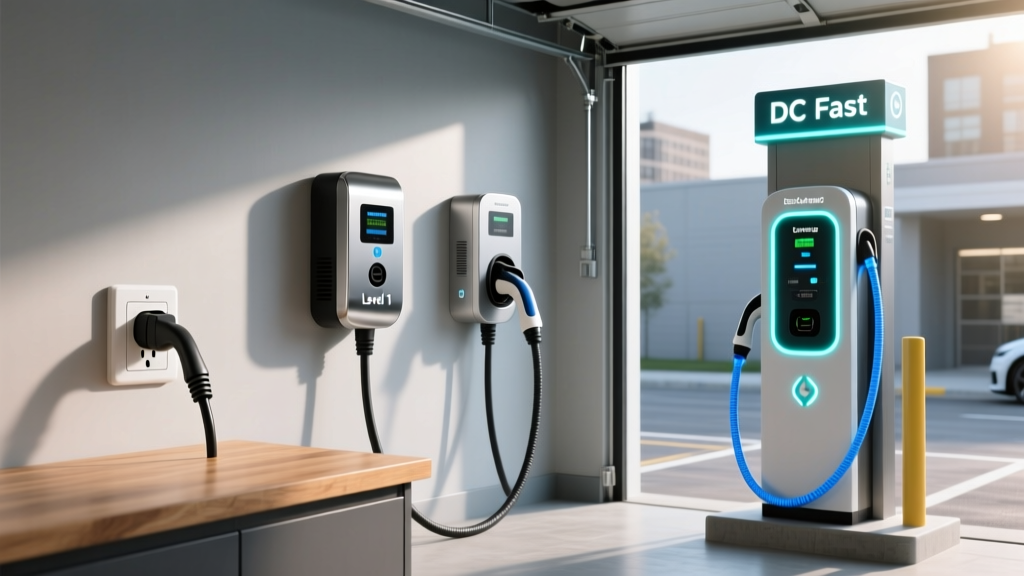
| Level | Voltage | Max Power (kW) | Miles of Range Added per Hour | Best For |
|---|---|---|---|---|
| Level 1 (120V outlet) | 120V AC | 1.4–1.9 kW | 3–5 miles | Overnight top-ups, PHEVs, emergency |
| Level 2 (240V home/public) | 240V AC | 3.3–19.2 kW | 12–75 miles | Daily home charging, workplace, hotels |
| DC Fast Charging | 400–800V DC | 50–350 kW | 150–1,000+ miles (equivalent rate) | Road trips, rapid top-ups |
For a Tesla Model Y Long Range (75 kWh usable battery, EPA 310 miles), here's what charging times look like in practice:
- Level 1 (120V, 12A): Adds ~4 miles/hour. A 10–80% charge (~217 miles) takes approximately 54 hours. Practical only for emergencies or plug-in hybrids with small batteries.
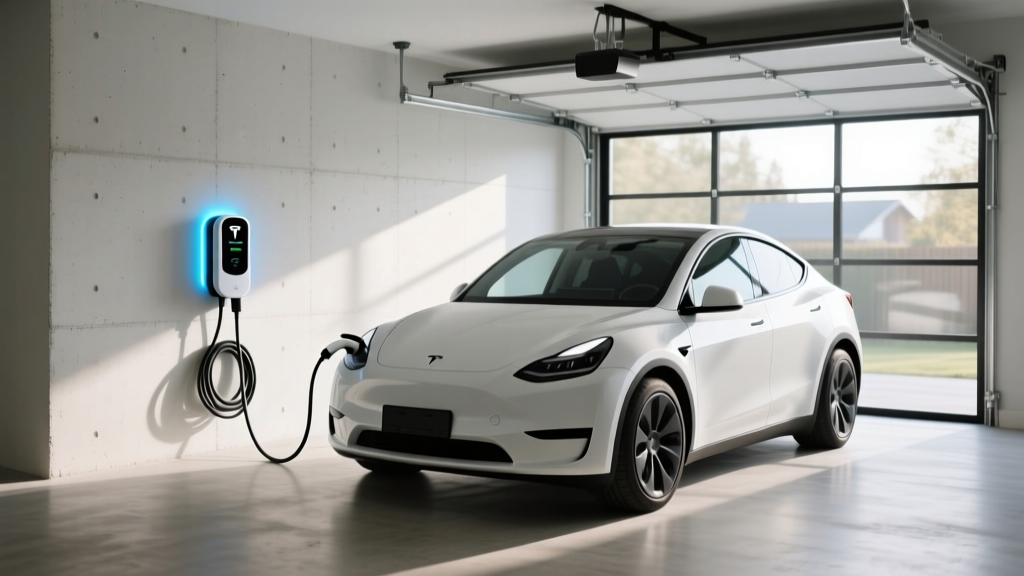
- Level 2 (240V, 48A Wall Connector): Adds ~44 miles/hour. That same 10–80% charge completes in roughly 5 hours — perfect for overnight charging.
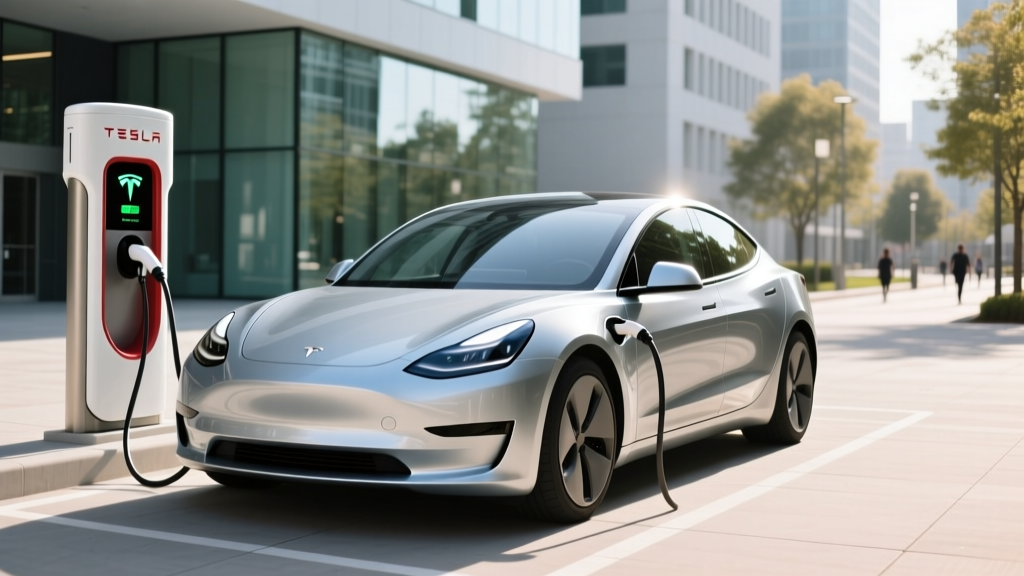
- DC Fast (V4 Supercharger, 250 kW peak): 10–80% in approximately 25–30 minutes. Note that peak 250 kW only sustains at low state of charge (roughly 5–25%); the charge curve tapers significantly above 50%, dropping to ~60 kW by 80%. This taper is physics, not a flaw — charging a battery fast at high SoC causes excess heat and lithium plating.
How Much Does It Cost to Install a Home EV Charger?
Home Level 2 charging is the economic sweet spot of EV ownership. But installation costs vary wildly depending on your home's electrical panel, the distance from panel to charger location, and local permit requirements. Here's a realistic breakdown for 2026:
| Component | Typical Cost Range | Notes |
|---|---|---|
| Level 2 charger equipment (40A–48A) | $350–$750 | Tesla Wall Connector ~$420; ChargePoint Home Flex ~$550; Emporia Vue ~$400 |
| Electrician labor (240V/50A circuit install) | $600–$2,000 | Depends on run length, wall/ceiling routing, conduit type |
| Electrical permit | $50–$200 | Required in most jurisdictions; varies by city/county |
| Panel upgrade (if needed) | $1,500–$4,000 | Older homes with 100A service often need a 200A upgrade to add a 50A EV circuit |
| Total (no panel upgrade) | $1,000–$2,950 | Most homes with modern 200A panels fall in this range |
| Total (with panel upgrade) | $2,500–$6,950 | Common in homes built before 1990 |
Federal Tax Credit for Home Charging Equipment
The IRS §30C Alternative Fuel Vehicle Refueling Property Credit covers 30% of home charging equipment and installation costs, up to $1,000. However, eligibility depends on your census tract meeting specific low-income or rural criteria. Always verify current-year eligibility with a tax professional — this credit has specific geographic limitations that disqualify many suburban homeowners.
Cost to Charge: Home vs. Public vs. Gas — The Per-Mile Math
The economic case for EVs hinges on fuel cost per mile. Here's how the numbers compare across charging scenarios for a Tesla Model Y (approximately 3.5 miles per kWh, or ~28 kWh/100mi):
| Scenario | Rate | Cost per Mile (Model Y) | Annual Cost (12,000 mi) |
|---|---|---|---|
| Home off-peak (utility TOU plan) | $0.08/kWh | $0.023 | $274 |
| Home standard rate | $0.15/kWh | $0.043 | $514 |
| Public Level 2 (ChargePoint, EVgo) | $0.25–$0.39/kWh | $0.071–$0.111 | $857–$1,337 |
| Tesla Supercharger (V3/V4) | $0.28–$0.40/kWh | $0.080–$0.114 | $960–$1,371 |
| Electrify America DC fast | $0.36–$0.48/kWh | $0.103–$0.137 | $1,234–$1,646 |
| Gas car (30 MPG combined, $3.40/gal) | — | $0.113 | $1,360 |
Key takeaway: home charging on an off-peak utility plan delivers fuel costs at roughly one-fifth to one-quarter of a comparable gas vehicle. Even at standard residential rates, EVs cost about a third of what gasoline costs per mile. Public DC fast charging, however, narrows the gap significantly — frequent Supercharger reliance can push EV fuel costs close to gas-car territory.
This is why Tesla free charging promotions matter most for road-trippers who rely heavily on Superchargers. If you can charge at home 90% of the time, the occasional Supercharger stop is a minor expense. If you live in an apartment without home charging access and rely exclusively on public DC fast charging, your per-mile costs roughly double.
Connector Compatibility: NACS, CCS, and Adapters in 2026
The connector landscape has consolidated significantly since Ford, GM, Rivian, Volvo, and nearly every major automaker committed to the North American Charging Standard (NACS) — Tesla's connector design — starting in the 2025 model year. Here's where things stand:
| Connector | Native Vehicles | DC Fast Network Access |
|---|---|---|
| NACS (Tesla) | Tesla (all), Ford F-150 Lightning, GM Ultium vehicles, Rivian, Volvo/Polestar, Hyundai/Kia (select 2026+) | Tesla Supercharger network (19,000+ stalls in North America), plus growing NACS stalls on EVgo, Electrify America |
| CCS1 | Legacy VW ID.4, BMW iX, pre-2025 Hyundai Ioniq 5/6, pre-2025 Ford Mustang Mach-E | Electrify America, EVgo, ChargePoint, Ionity (Europe) |
| CHAdeMO | Nissan Leaf (discontinued), Mitsubishi Outlander PHEV (legacy) | Limited and shrinking network; most new installations are NACS or CCS |
Adapter requirements: If you own a CCS-equipped EV (pre-2025 model year), Tesla sells a CCS-to-NACS adapter (~$250) that grants access to Superchargers. Ford and Rivian owners received complimentary adapters with their vehicles. Conversely, Tesla owners traveling to CCS-only chargers need a NACS-to-CCS adapter (available from Tesla and third-party brands like Lectron for ~$175–$250).
For home Level 2 charging, the Tesla Wall Connector now ships with a NACS plug but can charge CCS vehicles with a simple adapter. Most third-party Level 2 chargers (ChargePoint, Emporia, EnelX) ship with either NACS or CCS connectors — verify before purchasing.
Best Home EV Chargers for 2026: Equipment Recommendations
After testing dozens of Level 2 chargers across multiple homes and EV models, these are our top picks based on power output, build quality, smart features, and value:
Tesla Wall Connector (Gen 4)
- Power: 48A / 11.5 kW (on 60A circuit)
- Connector: NACS native
- Cable: 24 ft
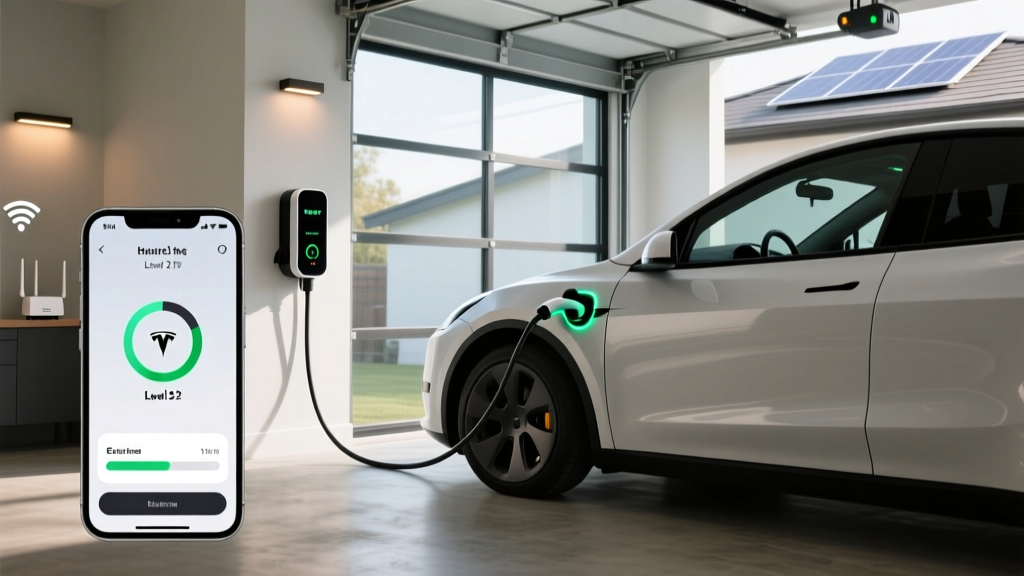
- Smart features: Wi-Fi, OTA updates, load sharing (pair two units on one circuit), power sharing
- Price: ~$420
- Best for: Tesla owners; cleanest integration with Tesla app
ChargePoint Home Flex
- Power: Up to 50A / 12 kW (on 60A circuit); adjustable 16A–50A via DIP switches
- Connector: NACS or CCS (select at purchase)
- Cable: 23 ft
- Smart features: Wi-Fi, app scheduling, utility demand-response integration, Alexa
- Price: ~$550
- Best for: Multi-EV households, utility TOU optimization
Emporia Level 2 EV Charger
- Power: 48A / 11.5 kW (on 60A circuit)
- Connector: NACS or CCS options
- Cable: 24 ft
- Smart features: Wi-Fi, app control, integrates with Emporia Vue energy monitor for whole-home load tracking
- Price: ~$400
- Best for: Budget-conscious buyers who want energy monitoring
Grizzl-E Smart
- Power: 40A / 9.6 kW (on 50A circuit)
- Connector: NACS or CCS
- Cable: 24 ft
- Smart features: OCPP protocol, works with multiple charging apps, extreme cold rated (-40°F)
- Price: ~$500
- Best for: Cold-climate installations, outdoor mounting, Canadian-built durability
Safety, Electrical Code, and Installation Best Practices
EV charging draws sustained high current for hours — this is not the same as plugging in a dryer that cycles on and off. Proper installation is non-negotiable for safety and insurance compliance:
- Dedicated circuit: Your Level 2 charger must be on its own dedicated circuit with no other loads. A 48A charger requires a 60A breaker (NEC continuous-load rule: circuit must be rated 125% of the sustained load).
- GFCI protection: NEC 2023 and later require GFCI (Ground Fault Circuit Interrupter) protection for all EV charging outlets. Hardwired installations may use a GFCI breaker at the panel; plug-in installations require a GFCI-protected receptacle.
- Outdoor rating: If your charger mounts outdoors, ensure the unit carries a NEMA 4 or IP65 rating for weather resistance. The Tesla Wall Connector and Grizzl-E both meet this standard.
- Wire gauge: A 60A circuit requires 4 AWG copper wire (or 3 AWG aluminum) for runs up to ~50 feet. Longer runs may require thicker wire to prevent voltage drop. Your electrician will size this correctly.
- Permit and inspection: Most jurisdictions require an electrical permit and post-installation inspection. Skipping this can void your homeowner's insurance coverage for any electrical fire originating from the EV circuit. Budget $50–$200 and 1–2 weeks for the inspection.
- Hardwired vs. plug-in: Hardwired installations (direct wire, no receptacle) are generally preferred for 48A+ chargers — they eliminate the NEMA 14-50 receptacle as a potential failure point and are required by some local codes for continuous loads above 40A.
Frequently Asked Questions
Does Tesla still offer free unlimited Supercharging?
No. Tesla ended unlimited free Supercharging for new vehicle purchases in 2019. Some used Model S and Model X vehicles (2012–2017 era) retain transferable free Supercharging as a legacy perk, but these are increasingly rare and command a price premium on the used market. For new Teslas, free charging comes only through referral credits, employer perks, destination charging at participating businesses, or utility promotional rates.
How fast will each charging level add range to my Tesla?
Level 1 (120V) adds approximately 3–5 miles per hour. Level 2 at 48A (240V, 11.5 kW) adds roughly 44 miles per hour for a Model Y. DC fast charging at a V3/V4 Supercharger (250 kW peak) can add up to 200 miles in 15 minutes, but only at low state of charge — expect 10–80% in about 25–30 minutes due to charge-curve taper above 50%.
Which connector does my EV need?
All 2026 Tesla vehicles use the NACS connector natively. Most new Ford, GM, Rivian, and Volvo EVs also use NACS. Older CCS-equipped vehicles (pre-2025 Hyundai, VW, BMW) need a CCS-to-NACS adapter (~$250) to access Tesla Superchargers. CHAdeMO is effectively legacy — only the discontinued Nissan Leaf used it, and public CHAdeMO infrastructure is shrinking.
How much does charging cost per mile compared to gas?
Home charging on a standard rate (~$0.15/kWh) costs about $0.04/mile in a Tesla Model Y — roughly one-third the cost of a 30 MPG gas car at $3.40/gallon ($0.11/mile). Off-peak home charging drops to ~$0.02/mile. However, public DC fast charging at $0.35–$0.48/kWh pushes costs to $0.10–$0.14/mile, nearly matching gasoline.
What electrical upgrades might I need for a home charger?
Homes built after 2000 typically have 200A electrical service with spare capacity for a 50–60A EV circuit. Older homes with 100A panels often require a panel upgrade ($1,500–$4,000) to safely add EV charging. A licensed electrician will perform a NEC Article 220 load calculation to determine your specific needs. Some utilities offer rebates of $250–$500 for panel upgrades paired with EV charger installation.
Can I use Tesla free charging credits at non-Tesla chargers?
No. Tesla Supercharging credits apply exclusively to the Tesla Supercharger network and cannot be transferred to Electrify America, EVgo, or other networks. However, if you drive a non-Tesla EV with NACS access to Superchargers (Ford, Rivian, etc.), your vehicle's charging account may accept Tesla credits depending on the automaker's billing integration.