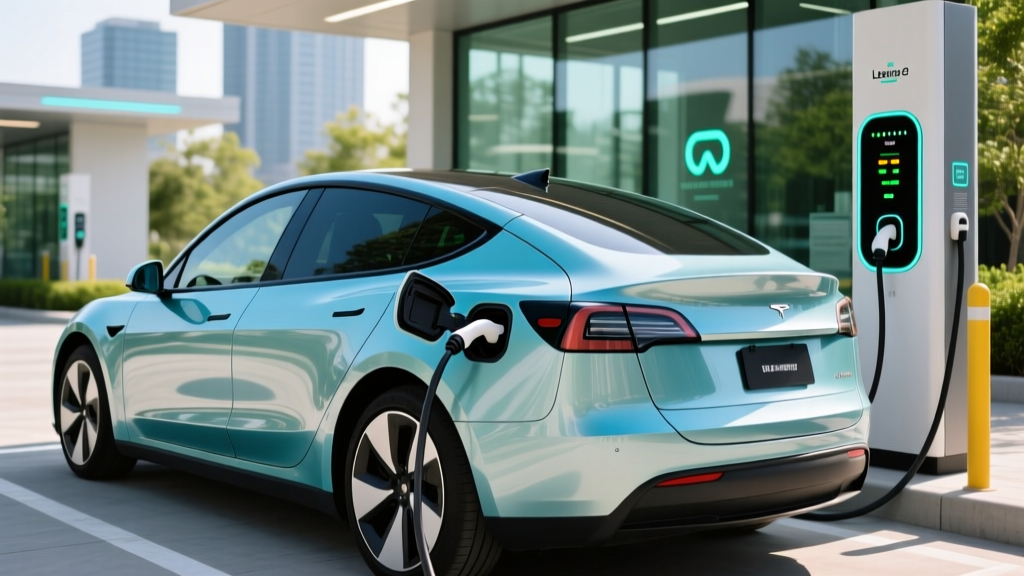
If you've been researching electric vehicles, you've likely encountered the question: does Tesla offer free charging? The short answer is no — not anymore, at least not as a blanket policy. Tesla discontinued its legacy free unlimited Supercharging program for new vehicle purchases years ago, though a handful of older Model S and Model X vehicles with transferable free Supercharging still exist on the used market. Today, Tesla owners pay per kWh or per minute at Superchargers, just like drivers of any other EV brand paying at Electrify America, EVgo, or ChargePoint stations.
But the real question behind the keyword is about total charging cost — how much you'll actually spend keeping an EV powered, whether you drive a Tesla, a Hyundai Ioniq 5, a Ford F-150 Lightning, or any other battery-electric vehicle. This guide breaks down every charging tier, what home installation really costs, what you'll pay per mile versus gasoline, and which equipment actually delivers on its promises.
Does Tesla Offer Free Charging? The 2026 Reality
Tesla's original free unlimited Supercharging perk — bundled with early Model S and Model X purchases to incentivize adoption — was phased out for new orders starting in 2017. As of 2026, here's how Tesla's charging economics actually work:
- Supercharger pricing: Most U.S. Superchargers charge between $0.25 and $0.50 per kWh, varying by location, time of day, and local utility rates. Urban Superchargers and high-demand corridors tend toward the higher end.
- Idle fees: Tesla charges $0.50–$1.00 per minute if your vehicle remains plugged in after reaching its charge limit and the station is at 50% capacity or higher — doubling at 100% capacity.
- Promotional credits: Tesla occasionally offers limited-time Supercharging credits (e.g., 1,000 free miles) as referral bonuses or delivery incentives on specific models. These are temporary, not permanent.
- Destination Charging: Tesla's network of Level 2 chargers at hotels, restaurants, and businesses is sometimes free for patrons, but this is at the property owner's discretion — not a Tesla guarantee.
- Legacy vehicles: Some pre-2017 Model S/X units carry transferable free Supercharging. These vehicles command a premium on the used market specifically because of this perk, but it's a dwindling population.
For the vast majority of EV buyers in 2026 — Tesla or otherwise — the focus should be on minimizing cost per kWh through home charging and understanding the real economics of public fast charging on road trips.
Charging Levels Explained: Speeds, Power, and Range Per Hour
Before comparing costs, you need to understand the three charging tiers. The critical distinction: kW (kilowatts) measures power — how fast energy flows into your battery. kWh (kilowatt-hours) measures energy — how much total capacity your battery holds. A 75 kWh battery charged at 7 kW gains roughly 7 kWh per hour, or about 25–30 miles of range depending on vehicle efficiency.
| Charging Level | Voltage | Power (kW) | Miles of Range Per Hour | Best Use Case |
|---|---|---|---|---|
| Level 1 (120V) | 120V AC | 1.0–1.9 kW | 3–5 miles | Overnight top-ups, PHEVs, low-mileage drivers |
| Level 2 (240V) | 240V AC | 3.3–19.2 kW | 12–75 miles | Daily home charging, workplace, destinations |
| DC Fast Charging | 200–900V DC | 50–350 kW | 150–1,000+ miles/hr (peak) | Road trips, highway corridors, rapid top-ups |
Charging Time Examples for Common Battery Sizes
| Vehicle (Example) | Usable Battery | Level 2 (11.5 kW) | DC Fast 10–80% | Peak DC Rate |
|---|---|---|---|---|
| Tesla Model Y (2026) | ~75 kWh (LFP) | ~6.5 hours (0–100%) | ~25 min | 250 kW |
| Hyundai Ioniq 5 (2026) | ~77.4 kWh (NMC) | ~7 hours (0–100%) | ~18 min | 350 kW (800V) |
| Ford F-150 Lightning (2026) | ~131 kWh (NMC, Extended) | ~11.5 hours (0–100%) | ~38 min | 230 kW |
| Chevrolet Equinox EV (2026) | ~85 kWh (NMC) | ~7.5 hours (0–100%) | ~22 min | 190 kW |
Home Charger Installation: What It Actually Costs
Home Level 2 charging is where EV ownership economics shine — and where most new owners underestimate the upfront investment. A Level 2 home charger requires a dedicated 240-volt circuit, similar to what powers an electric dryer or oven. The total cost depends on your home's electrical panel capacity, the distance from panel to charger location, and local permit requirements.
Electrical Requirements
- Circuit: A 40-amp charger requires a dedicated 50-amp breaker (NEC code mandates charging circuits be rated at 125% of continuous load). A 48-amp charger needs a 60-amp breaker.
- Wire gauge: Typically 6 AWG copper for 40–50A circuits; 4 AWG for 60A. Longer runs may require upsizing to minimize voltage drop.
- Panel capacity: Most modern homes with 200-amp service can accommodate a Level 2 charger. Older homes with 100-amp or 150-amp panels may need a service upgrade — a significant added cost.
- GFCI protection: The 2023 NEC (adopted in most jurisdictions by 2026) requires GFCI protection for EV charging outlets. Hardwired chargers typically have built-in GFCI; receptacle-installed units need a GFCI breaker.
- Outdoor rating: If your charger mounts outdoors, it must carry a NEMA 4 or NEMA 4X rating for weather resistance.
| Cost Component | Low Range | High Range | Notes |
|---|---|---|---|
| Level 2 Charger (Equipment) | $300 | $750 | Varies by brand, power output, smart features |
| Electrician Labor | $400 | $1,500 | Depends on run length, wall type, conduit needs |
| Electrical Permit | $50 | $250 | Varies by municipality; some bundle with inspection |
| Panel Upgrade (if needed) | $1,500 | $4,000 | 100A→200A service upgrade; not always required |
| Total (No Panel Upgrade) | $750 | $2,500 | Typical for homes with adequate 200A service |
| Total (With Panel Upgrade) | $2,250 | $6,500 | Older homes needing service upgrade |
Always get quotes from at least two licensed electricians and confirm they have specific EV charger installation experience. Ask whether your panel has spare capacity before committing to equipment — a $300 panel assessment can prevent a $3,000 surprise. The IRS §30D tax credit does not cover home charging equipment, but some utilities and state programs offer rebates of $200–$1,000 for charger installation. Check energy.gov and your local utility for current programs.
Connector Compatibility: NACS, CCS1, and CHAdeMO
The connector landscape shifted dramatically between 2023 and 2026. Tesla's North American Charging Standard (NACS) has been adopted by Ford, GM, Rivian, Hyundai, Kia, Volvo, BMW, and most major automakers. By 2026, the majority of new EVs sold in North America ship with native NACS ports. CCS1 (Combined Charging System) remains on some models and is supported at most non-Tesla DC fast-charging stations. CHAdeMO is effectively legacy — only the Nissan Leaf continues to use it, and Nissan's next-generation EVs are expected to adopt NACS.
| Connector | Brands Using It (2026) | DC Fast Charge Networks | Adapter Needed? |
|---|---|---|---|
| NACS (Tesla) | Tesla, Ford, GM, Rivian, Hyundai, Kia, Volvo, BMW, Mercedes | Tesla Supercharger, Electrify America (partial), EVgo, ChargePoint | CCS→NACS adapters available ($150–$250) for legacy CCS vehicles |
| CCS1 | VW ID.4 (remaining), some Stellantis models, older Ford/GM/Hyundai | Electrify America, EVgo, ChargePoint, most non-Tesla networks | NACS→CCS adapters available for accessing Superchargers with CCS vehicles |
| CHAdeMO | Nissan Leaf (legacy only) | Declining availability; some Electrify America and EVgo stations | No widely available adapter to NACS or CCS |
If you own a CCS-equipped vehicle purchased before the NACS transition, a NACS-to-CCS adapter (such as Tesla's official adapter or third-party options from Lectron or A2Z) allows access to the Supercharger network. Confirm your vehicle's manufacturer has approved the specific adapter for DC fast charging — not all adapters support high-power sessions safely.
Cost Per Mile: EV Charging vs. Gasoline
The economic argument for EVs centers on fuel cost per mile. Here's how different charging scenarios compare to a gasoline vehicle averaging 28 MPG combined at $3.40 per gallon (2026 U.S. average).
| Charging Scenario | Typical $/kWh | Cost Per Mile* | Annual Cost (12,000 mi) |
|---|---|---|---|
| Home Level 2 (off-peak utility rate) | $0.08–$0.14 | $0.025–$0.045 | $300–$540 |
| Home Level 2 (standard utility rate) | $0.14–$0.20 | $0.045–$0.065 | $540–$780 |
| Public Level 2 (workplace/retail) | $0.20–$0.35 | $0.065–$0.11 | $780–$1,320 |
| DC Fast Charging (road trips) | $0.30–$0.55 | $0.10–$0.18 | $1,200–$2,160 |
| Gasoline Vehicle (28 MPG, $3.40/gal) | — | $0.121 | $1,457 |
*Based on an EV averaging 3.0 miles per kWh (approximately 112 MPGe combined), which is representative of vehicles like the Tesla Model Y, Hyundai Ioniq 5, and Chevrolet Equinox EV. Less efficient EVs (e.g., Ford F-150 Lightning at ~2.0 mi/kWh) will see higher per-mile costs.
The takeaway: home charging at off-peak rates delivers fuel savings of 65–80% compared to gasoline. Even exclusive DC fast charging on road trips costs roughly the same or slightly more than gasoline per mile — but most EV owners do 80–90% of their charging at home, making the blended average heavily favor electric.
Recommended Home Charging Equipment for 2026
Not all Level 2 chargers are equal. Here are four proven units across price and feature tiers, each with verified specifications:
Tesla Wall Connector (Gen 4)
- Power Output: Up to 48A (11.5 kW on 240V/60A circuit)
- Connector: Native NACS; J1772 adapter included
- Cable Length: 24 feet
- Smart Features: Wi-Fi, OTA updates, load sharing with multiple units, Tesla app integration
- Price: ~$475
- Best For: Tesla owners, NACS-equipped vehicles, multi-Tesla households
ChargePoint Home Flex
- Power Output: Configurable 16A–50A (up to 12 kW on 240V/60A circuit)
- Connector: J1772 (NACS adapter required for Tesla-port vehicles)
- Cable Length: 23 feet
- Smart Features: Wi-Fi, Alexa integration, scheduling, energy tracking via app
- Price: ~$550–$650
- Best For: Non-Tesla EVs, households wanting flexible amperage configuration
Emporia Level 2 EV Charger
- Power Output: Up to 48A (11.5 kW on 240V/60A circuit)
- Connector: J1772
- Cable Length: 24 feet
- Smart Features: Wi-Fi, integrates with Emporia home energy monitor, solar-aware scheduling
- Price: ~$350–$400
- Best For: Budget-conscious buyers, solar panel owners, energy-monitoring enthusiasts
Grizzl-E Smart
- Power Output: Up to 40A (9.6 kW on 240V/50A circuit)
- Connector: J1772 (NACS version available)
- Cable Length: 24 feet
- Smart Features: Wi-Fi, OCPP protocol support, adjustable amperage, built-in GFCI
- Price: ~$450–$550
- Best For: Cold-climate garages (rated to -40°F), outdoor installs, commercial OCPP networks
For homes with solar panels, the Emporia charger paired with an Emporia Vue energy monitor enables solar-excess-only charging — using only surplus solar generation to charge your vehicle, effectively reducing marginal fuel cost to near zero. For Tesla-exclusive households, the Gen 4 Wall Connector's load-sharing feature allows two units on a single 60A circuit, splitting amperage dynamically.
Safety, Electrical Code, and Installation Best Practices
EV charging represents a sustained high-current load — far longer than a dryer cycle or oven use. This makes proper installation non-negotiable:
- Dedicated circuit: Your Level 2 charger must be on its own dedicated breaker. Sharing a circuit with other appliances risks tripping breakers and overheating wiring.
- Hardwired vs. receptacle: Hardwired installations (no plug) eliminate one failure point and avoid the NEC GFCI-breaker requirement for receptacles. Many electricians now recommend hardwiring for reliability.
- NEMA 14-50 receptacles: If you choose a plug-in setup for portability, ensure the receptacle is industrial-grade (Hubbell or Bryant brand recommended over residential-grade Leviton). Reports of melted residential-grade 14-50 outlets under sustained EV charging loads have been documented by EV communities and electricians.
- Thermal monitoring: Quality chargers include internal temperature sensors that reduce power output if the unit overheats — a critical safety feature for garage installations in hot climates.
- Permit and inspection: Skipping the permit to save $100–$200 risks insurance claim denial if an electrical fire occurs. Most jurisdictions require a final inspection to verify code compliance. Your electrician should pull the permit, not you.
Frequently Asked Questions
How much does it cost to install a home EV charger?
A typical Level 2 home charger installation costs between $750 and $2,500 when no panel upgrade is needed — this includes the charger unit ($300–$750), electrician labor ($400–$1,500), and the local permit ($50–$250). If your home has an older 100-amp or 150-amp electrical panel that lacks spare capacity, a panel upgrade to 200 amps adds $1,500–$4,000, pushing the total to $2,250–$6,500. Get a panel capacity assessment from a licensed electrician before purchasing equipment.
How fast will each charging level add range?
Level 1 (120V) adds approximately 3–5 miles of range per hour — sufficient for plug-in hybrids or drivers covering under 30 miles daily. Level 2 (240V) adds 12–75 miles per hour depending on the charger's amperage and your vehicle's onboard charger capacity; a 48A/11.5 kW unit adds roughly 35–45 miles per hour for a mid-size SUV. DC fast charging adds 150–1,000+ miles per hour at peak rates, but sessions are typically limited to 10–80% state of charge (18–38 minutes depending on battery size and peak kW acceptance).
Which connector/charger is compatible with my EV?
If your 2025–2026 model-year EV is from Tesla, Ford, GM, Rivian, Hyundai, Kia, or most other major brands, it likely has a NACS port. Volkswagen's ID.4 and some remaining Stellantis models still use CCS1. The Nissan Leaf remains the primary CHAdeMO vehicle. For home Level 2 charging, all non-Tesla EVs use the J1772 standard; Tesla vehicles use NACS natively, though Tesla includes a J1772 adapter. Check your vehicle's charge port or owner's manual to confirm before ordering a home charger.
How much does charging cost per mile vs gas?
Home charging at typical utility rates ($0.10–$0.20/kWh) costs $0.03–$0.065 per mile for an EV averaging 3 miles per kWh — a 50–75% savings over a 28 MPG gasoline vehicle at $3.40/gallon ($0.121/mile). Public DC fast charging at $0.35–$0.55/kWh costs $0.10–$0.18 per mile, roughly comparable to gasoline. Since most EV owners charge at home 80–90% of the time, the blended annual fuel cost is typically 40–60% lower than gasoline.
What electrical upgrades might I need?
Homes with 200-amp electrical service and available breaker slots typically need no upgrades beyond the dedicated circuit and wiring run. Homes with 100-amp or 150-amp panels, or panels that are already near capacity, may require a service upgrade ($1,500–$4,000). Some utilities offer time-of-use panels or secondary meters that allow a dedicated EV circuit without upgrading the main service — ask your utility about "make-ready" programs. Homes with older knob-and-tube or aluminum wiring should get a full electrical assessment before adding any high-load circuit.
Does Tesla still offer free Supercharging with new vehicle purchases?
No. Tesla does not include free unlimited Supercharging with new vehicle purchases as of 2026. The company occasionally offers limited promotional Supercharging credits (e.g., 1,000–5,000 miles) as delivery incentives or referral rewards, but these are temporary. Some properties with Tesla Destination Chargers offer free Level 2 charging to patrons, but this is at the property owner's discretion, not Tesla's policy.