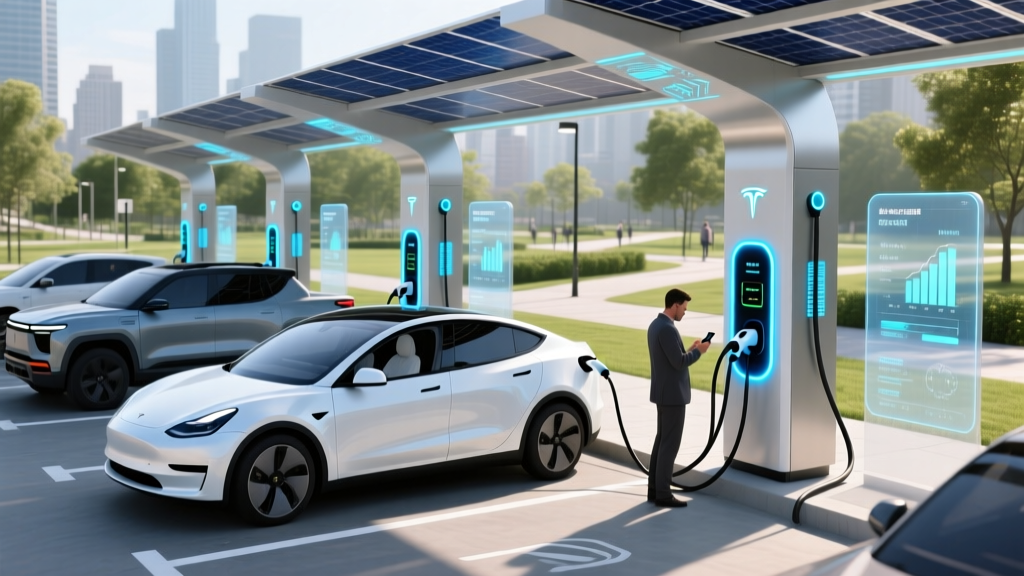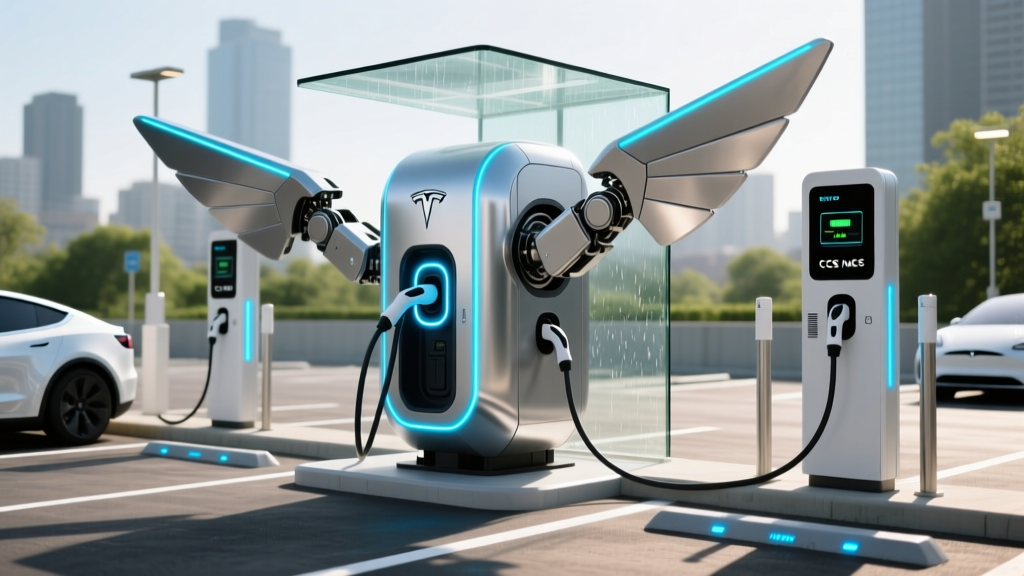
If you've been searching for Tesla folding unit superchargers, you're not alone — the term has circulated across EV forums and social media for months, conjuring images of a portable, origami-style DC fast charger you could toss in your trunk and deploy anywhere. Here's the reality check: as of 2026, Tesla does not manufacture or sell a consumer product by that name. The phrase appears to stem from a mix of speculative renders, misinterpreted Tesla patent filings around modular charging hardware, and conflations with the company's actual wall-mounted and pedestal-based Supercharger and Destination Charger products.
What does exist is Tesla's rapidly expanding Supercharger network (now open to non-Tesla EVs via the NACS standard), the Tesla Wall Connector for home Level 2 charging, and a growing ecosystem of portable Level 2 EVSEs from third-party brands. If you're trying to figure out how to actually charge your EV — at home, on the road, or somewhere in between — this guide covers every real option with exact numbers.
EV Charging Levels Explained: kW, Miles Per Hour, and What You Actually Get
Before evaluating any charger, you need to understand the three charging tiers. The critical distinction: kW (kilowatts) measures power — how fast energy flows into your battery. kWh (kilowatt-hours) measures energy — the total capacity stored in your battery. A 75 kWh battery charged at 11 kW takes roughly 7 hours from empty to full, minus losses.
| Level | Voltage | Power (kW) | Miles of Range Added Per Hour | Typical Use Case |
|---|---|---|---|---|
| Level 1 | 120V AC | 1.0–1.4 kW | 3–5 miles | Overnight top-up, PHEVs, emergencies |
| Level 2 | 240V AC | 3.3–19.2 kW | 12–75 miles | Home daily charging, workplaces, hotels |
| DC Fast Charging | 400–800V DC | 50–350+ kW | 150–1,200+ miles (theoretical peak) | Road trips, rapid top-ups, commercial fleets |
Real-world context matters. A Level 2 charger delivering 11.5 kW (48A on a 60A circuit) will add roughly 35–44 miles of range per hour to a mid-size EV like the Tesla Model Y or Hyundai Ioniq 5. That's enough to fully replenish a 75 kWh battery overnight in about 7–8 hours. DC fast charging, by contrast, is measured in 10–80% session times rather than miles-per-hour, because the charge curve tapers significantly above 80% state of charge to protect battery health.
Home Level 2 Installation: Electrical Requirements, Costs, and Panel Gotchas
Installing a home Level 2 charger is the single most impactful upgrade an EV owner can make. But the total cost depends heavily on your home's electrical panel, the distance from panel to charger location, and local permit requirements.
Electrical Requirements
Most home Level 2 chargers require a 240V dedicated circuit. The circuit breaker must be rated 125% higher than the charger's continuous draw (per NEC Article 625). For example:
- A 48A charger (11.5 kW) requires a 60A breaker
- A 40A charger (9.6 kW) requires a 50A breaker
- A 32A charger (7.7 kW) requires a 40A breaker
If your home has a 100A main panel that's already near capacity, you may need a panel upgrade to 200A — a significant added cost. Homes built before 1990 are the most likely candidates. A licensed electrician will perform a load calculation to determine if your panel can handle the additional draw.
Installation Cost Breakdown
| Component | Typical Cost Range | Notes |
|---|---|---|
| Level 2 EVSE Equipment | $350–$750 | Varies by brand, power output, cable length, smart features |
| Electrician Labor | $600–$2,500 | Depends on run distance, conduit, drywall work, attic/crawlspace access |
| Electrical Permit | $50–$300 | Required in most jurisdictions; varies by municipality |
| Panel Upgrade (if needed) | $1,500–$4,000 | 100A→200A upgrade; not always required |
| Total (no panel upgrade) | $1,000–$3,550 | Most common scenario for modern homes |
| Total (with panel upgrade) | $2,500–$7,550 | Older homes or those with maxed-out panels |
The IRS §30D credit does not currently cover home charging equipment directly, but some utilities and state programs offer rebates of $250–$1,000 for Level 2 installations. Check with your local utility before purchasing.
Connector Compatibility: NACS, CCS1, CHAdeMO, and Adapter Realities
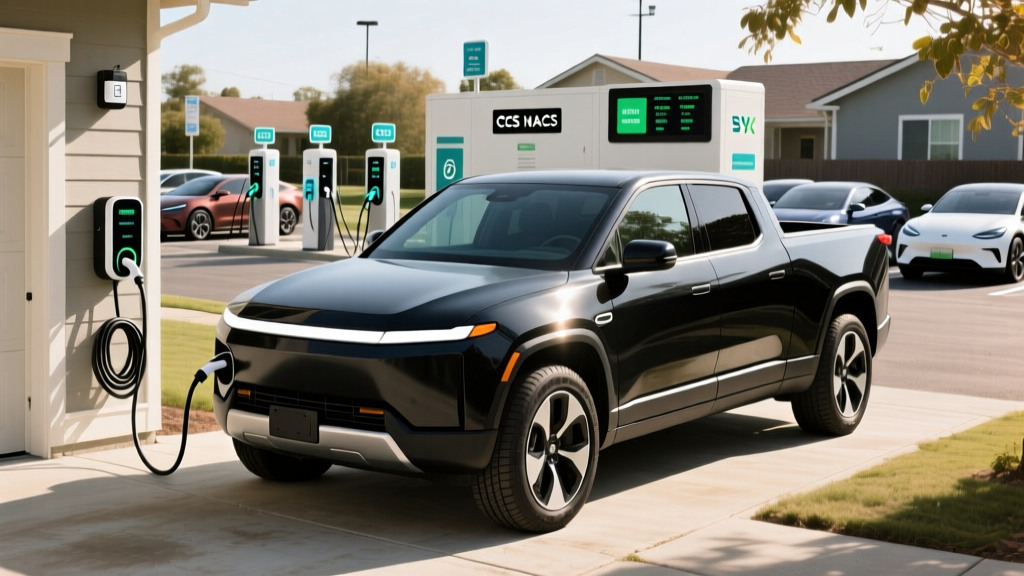
The connector landscape in 2026 has largely consolidated around NACS (North American Charging Standard), which Tesla opened to other manufacturers in late 2022. Most major automakers — Ford, GM, Rivian, Hyundai, Kia, Volvo, BMW — now ship vehicles with native NACS ports or have committed to the transition. However, hundreds of thousands of CCS1-equipped EVs remain on the road, and CHAdeMO persists on older Nissan Leafs and Mitsubishi Outlander PHEVs.
| Connector | Brands Using It (2026) | DC Fast Charge Availability | Adapter Options |
|---|---|---|---|
| NACS (Tesla) | Tesla, Ford, GM, Rivian, Hyundai, Kia, Volvo, BMW, others | Tesla Supercharger network + growing third-party NACS stations | CCS1-to-NACS adapters available (~$200–$300) |
| CCS1 | Legacy VW ID.4, older Hyundai/Kia models, pre-2025 Stellantis EVs | Electrify America, EVgo, ChargePoint DC stations | NACS-to-CCS1 adapters available for Tesla Supercharger access |
| CHAdeMO | Nissan Leaf (discontinued), Mitsubishi Outlander PHEV | Limited and declining station count | No widely available CHAdeMO-to-NACS adapter |
If you own a CCS1-equipped vehicle and want access to Tesla's Supercharger network, Tesla sells an official CCS adapter, and third-party options from brands like Lectron and A2Z are widely available. Confirm your vehicle's firmware supports the adapter before purchasing.
Charging Cost Per Mile: Home Electricity vs. Public DC Fast vs. Gas
One of the most persistent EV questions is whether charging actually saves money versus gasoline. The answer depends almost entirely on where you charge.
| Charging Scenario | Cost Per kWh | Cost Per Mile (at 3 mi/kWh efficiency) | Equivalent Gas Price (at 30 MPG) |
|---|---|---|---|
| Home — Off-Peak Utility Rate | $0.08–$0.12 | $0.027–$0.04 | $0.81–$1.20/gallon |
| Home — Standard Residential Rate | $0.14–$0.18 | $0.047–$0.06 | $1.41–$1.80/gallon |
| Public Level 2 (ChargePoint, etc.) | $0.25–$0.49 | $0.083–$0.163 | $2.49–$4.89/gallon |
| DC Fast Charging (Tesla Supercharger) | $0.28–$0.48 | $0.093–$0.16 | $2.79–$4.80/gallon |
| DC Fast Charging (Electrify America) | $0.36–$0.56 | $0.12–$0.187 | $3.60–$5.61/gallon |
The takeaway: home charging is dramatically cheaper than gasoline in virtually every market. Public DC fast charging, while convenient for road trips, can approach or exceed the cost of gasoline in high-priced states like California and New York. For maximum savings, install a home Level 2 charger and take advantage of time-of-use (TOU) utility rates that offer off-peak electricity below $0.10/kWh.
Charging Time Examples: 10–80% Sessions by Battery Size
Here's how long real-world charging sessions take for common battery sizes at different power levels. These assume an 85% charging efficiency and a typical charge curve taper:
- 60 kWh battery (e.g., base Tesla Model 3 RWD):
- At 11.5 kW (home Level 2, 48A): ~4.5 hours 10–80%
- At 170 kW (DC fast, peak): ~22 minutes 10–80%
- 75 kWh battery (e.g., Tesla Model Y LR, Ford Mustang Mach-E Extended Range):
- At 11.5 kW: ~5.5 hours 10–80%
- At 250 kW (DC fast, peak): ~18–22 minutes 10–80%
- 100 kWh battery (e.g., Ford F-150 Lightning Extended, Rivian R1S Max Pack):
- At 11.5 kW: ~7.5 hours 10–80%
- At 350 kW (DC fast, 800V architecture): ~18–25 minutes 10–80%
Best Home Level 2 Chargers in 2026: Equipment Picks
Based on reliability, power output, cable quality, smart features, and NACS/CCS compatibility, here are the top home chargers currently available:
Tesla Wall Connector (Gen 4)
- Power: Up to 11.5 kW (48A)
- Connector: Native NACS
- Cable Length: 24 ft
- Smart Features: Wi-Fi, OTA updates, Power Sharing for multi-unit installs, access control
- Price: ~$475
- Best For: Tesla owners and NACS-equipped EVs; best-in-class reliability
ChargePoint Home Flex (NACS version)
- Power: Up to 12 kW (50A, configurable)
- Connector: NACS (also available in J1772/CCS)
- Cable Length: 23 ft
- Smart Features: Wi-Fi, app scheduling, Alexa integration, energy tracking
- Price: ~$599
- Best For: Mixed-EV households, smart-home integration
Emporia Level 2 EV Charger
- Power: Up to 11.5 kW (48A)
- Connector: J1772 (NACS adapter included)
- Cable Length: 24 ft
- Smart Features: Wi-Fi, solar integration with Emporia Vue panel monitor, scheduling
- Price: ~$399
- Best For: Budget-conscious buyers, solar-panel households
Grizzl-E Smart (United Chargers)
- Power: Up to 10 kW (40A)
- Connector: J1772 (NACS adapter available)
- Cable Length: 24 ft
- Smart Features: Wi-Fi, OCPP compatibility, adjustable amperage
- Price: ~$499
- Best For: Cold-climate durability (rated to -40°F), commercial/fleet use
Safety, Electrical Code, and Installation Best Practices
EV charging equipment is a continuous high-draw load, which places it under stricter NEC (National Electrical Code) requirements than most household appliances. Key considerations:
- Dedicated Circuit: Your EVSE must be on its own dedicated circuit — no sharing with other outlets or appliances.
- GFCI Protection: NEC 2020 and later require GFCI protection for all EVSE outlets (NEMA 14-50 or hardwired). Hardwired installations with built-in GFCI in the EVSE unit are acceptable.
- Outdoor Rating: If installing outdoors, ensure the EVSE carries a NEMA 4 or NEMA 4X rating for weather resistance. All recommended chargers above meet this standard.
- NEMA 14-50 vs. Hardwired: A NEMA 14-50 outlet offers portability (take your charger when you move), but hardwired installations eliminate the GFCI breaker requirement at the panel and are generally more reliable for daily use. We recommend hardwired for permanent installations.
- Permit and Inspection: Most jurisdictions require an electrical permit and post-installation inspection. Skipping this can void homeowner's insurance coverage for electrical fires and may cause issues at resale.
Always hire a licensed electrician familiar with NEC Article 625 (Electric Vehicle Charging System Equipment). Per the National Fire Protection Association, improper EVSE installation is a leading cause of residential electrical incidents involving charging equipment.
What About That "Tesla Folding Unit Supercharger" Concept?
To close the loop on the original search term: Tesla's actual charging hardware lineup in 2026 includes the Supercharger V4 (up to 350 kW for NACS vehicles, with CCS adapters built into the cabinet at select sites), the Tesla Wall Connector for home Level 2, and the Mobile Connector bundle (a portable Level 1/Level 2 cord set that ships with some Tesla vehicles). The company has also deployed Destination Chargers at hotels, restaurants, and shopping centers — these are essentially Wall Connectors in commercial settings, delivering 11–22 kW.
No foldable, collapsible, or portable DC fast charger exists in Tesla's product line or any competitor's. DC fast chargers require 480V three-phase power, liquid-cooled cables, and grid connections that simply cannot be made portable. The concept remains speculative at best. For now, the practical path is a home Level 2 installation for daily charging and the Supercharger/public DC network for road trips.
Frequently Asked Questions
How much does it cost to install a home EV charger?
A typical Level 2 home installation costs between $1,000 and $3,550 when no panel upgrade is needed, including equipment ($350–$750), electrician labor ($600–$2,500), and permit fees ($50–$300). If your home requires a 100A-to-200A panel upgrade, add $1,500–$4,000 to the total.
How fast will each charging level add range?
Level 1 (120V) adds 3–5 miles per hour. Level 2 (240V) adds 12–75 miles per hour depending on amperage. DC fast charging can add 150–300+ miles in a 20–30 minute session, but actual speed depends on battery size, state of charge, temperature, and the vehicle's maximum charge acceptance rate.
Which connector or charger is compatible with my EV?
Check your vehicle's charge port. If it's a 2025+ model from Tesla, Ford, GM, Rivian, Hyundai, Kia, or BMW, it likely has a NACS port. Older EVs may have CCS1 or CHAdeMO. Adapters are available for most cross-standard combinations, though CHAdeMO options are increasingly limited.
How much does charging cost per mile vs. gas?
Home charging at off-peak rates costs roughly $0.03–$0.04 per mile — equivalent to $0.81–$1.20 per gallon of gasoline. Public DC fast charging costs $0.09–$0.19 per mile, closer to $3.00–$5.50 per gallon equivalent. A comparable gas vehicle at 30 MPG with $3.50/gallon fuel costs about $0.117 per mile.
What electrical upgrades might I need?
The most common upgrade is a panel capacity increase from 100A to 200A, needed when your existing panel is near its load limit. Your electrician will perform a NEC Article 220 load calculation. Other potential upgrades include running new conduit, upgrading the meter socket, or adding a sub-panel if the charger is far from the main panel (e.g., a detached garage).
Does the federal EV tax credit cover home charger installation?
The IRS §30D clean vehicle credit applies to the purchase of qualifying new EVs, not directly to home charging equipment. However, the separate §30C Alternative Fuel Vehicle Refueling Property Credit can cover up to $1,000 (30% of cost) for home charging equipment installed in eligible census tracts. Check IRS guidelines and consult a tax professional for your specific situation.