Are Tesla Destination Chargers Free? The Short Answer
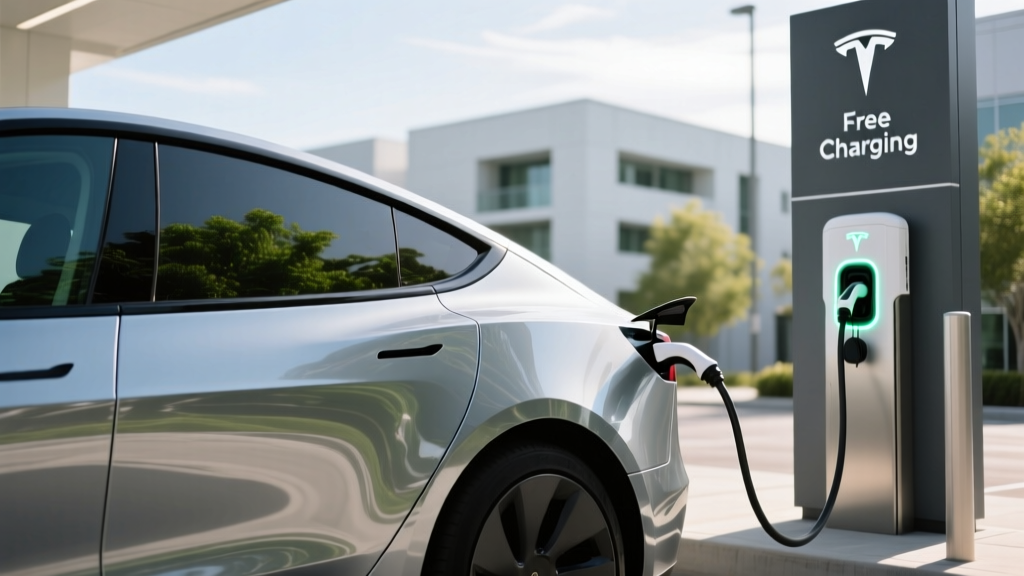
The answer depends entirely on the host property. Tesla Destination Chargers are Level 2 AC chargers (typically 11.5 kW to 19.2 kW) installed by businesses — hotels, restaurants, shopping centers, and parking garages — that partner with Tesla to offer charging to patrons. Unlike Tesla Superchargers, which always charge a per-kWh fee, Destination Charger pricing is set by the property owner. Some hotels bundle charging with your overnight stay at no extra cost. Others charge a per-kWh rate, a flat hourly parking fee, or require you to be a paying customer.
You can check the price before you plug in: the Tesla app and in-car navigation display the rate for each Destination Charger location. As of early 2026, Destination Charger rates typically range from $0.00 (complimentary with stay) to around $0.35/kWh at premium locations. Since these are Level 2 chargers, they're best suited for overnight stops or multi-hour visits — not quick top-ups on a road trip.
Destination Charger reality check: A 19.2 kW Destination Charger adds roughly 55–65 miles of range per hour to a Tesla Model Y. If you're parked for a 3-hour dinner, expect to recover around 150–190 miles — plenty for most day-trip needs, but not a replacement for DC fast charging on long highway stretches.
EV Charging Levels Explained: Speed, Power, and Range Added
Understanding charging requires distinguishing between kW (kilowatts), which measures power flow rate — like water pressure from a hose — and kWh (kilowatt-hours), which measures energy stored in your battery — like the total volume of water in a tank. A 10 kW charger running for one hour delivers 10 kWh of energy. This distinction matters every time you evaluate a charger or compare costs.
| Level | Voltage | Max Power (kW) | Miles of Range Added Per Hour | Typical Use Case |
|---|---|---|---|---|
| Level 1 (120V AC) | 120V | 1.4–1.9 kW | 3–5 mi/hr | Overnight trickle; PHEV-friendly |
| Level 2 (240V AC) | 240V | 7.2–19.2 kW | 20–65 mi/hr | Home daily charging; workplace; destinations |
| DC Fast Charging | 400–800V DC | 50–350+ kW | 150–1,200+ mi/hr (peak) | Road trips; quick 10–80% top-ups |
Level 1 plugs into a standard 120V household outlet and is best for plug-in hybrids with small batteries (10–20 kWh) or EVs driven under 30 miles per day. Level 2 requires a 240V circuit — the same kind your electric dryer uses — and is the standard for daily home EV charging. DC Fast Charging bypasses the car's onboard charger and feeds direct current straight into the battery at high power; this is what Superchargers, Electrify America, and EVgo stations use.
Charging times for common 2026 battery sizes on DC fast chargers:
- 60 kWh battery (e.g., base Tesla Model 3 RWD): 10–80% in approximately 20–25 minutes at a 170 kW+ station
- 82 kWh battery (e.g., Tesla Model Y Long Range): 10–80% in approximately 22–28 minutes at a 250 kW Supercharger
- 100 kWh battery (e.g., Ford F-150 Lightning Extended Range): 10–80% in approximately 30–38 minutes at a 150–170 kW station
These times assume the battery is preconditioned (warmed to optimal temperature) and that the station can sustain its peak rate. In practice, charging curves taper significantly above 80% State of Charge (SoC), which is why most EV drivers charge to 80% on road trips rather than filling to 100%.
Home EV Charger Installation: Electrical Requirements and Costs
Installing a Level 2 home charger is the single most impactful upgrade for EV ownership. Here's what's involved electrically and financially.
Electrical Requirements
A Level 2 charger requires a dedicated 240V circuit. The most common configurations:
- NEMA 14-50 outlet (50A circuit, 40A continuous): Delivers up to 9.6 kW. The most popular and versatile option — works with nearly every Level 2 charger and allows you to unplug and take the unit if you move.
- Hardwired 60A circuit (48A continuous): Delivers up to 11.5 kW. Required for higher-power chargers like the Tesla Wall Connector at max output. Hardwired connections avoid the GFCI breaker nuisance-tripping issues some EV owners experience with NEMA 14-50 outlets.
- Hardwired 80A circuit (64A continuous): Delivers up to 19.2 kW. Only useful if your EV's onboard charger supports 19.2 kW (most support 11.5 kW or less).
Panel upgrade reality: Most modern homes with 200A electrical service can accommodate a 50A or 60A EV circuit without a panel upgrade. However, older homes with 100A service, homes already running multiple high-draw appliances (electric range, dryer, HVAC), or homes with maxed-out panels may need a service upgrade to 200A — adding $1,500 to $4,000+ to the project. Always have a licensed electrician perform a load calculation before committing to a circuit size.
Installation Cost Breakdown
| Component | Simple Install (Panel Nearby) | Complex Install (Long Run / Panel Upgrade) |
|---|---|---|
| Level 2 Charger Unit | $400–$700 | $400–$700 |
| Electrical Permit | $50–$200 | $50–$300 |
| Electrician Labor + Materials | $500–$1,500 | $1,500–$4,000 |
| Panel Upgrade (if needed) | $0 | $1,500–$4,000 |
| Total Estimated Cost | $950–$2,400 | $3,450–$9,000 |
The wide range reflects real-world variability: a short conduit run from a 200A panel to an adjacent garage wall might cost under $1,500 all-in, while a 60-foot underground conduit run to a detached garage with a panel upgrade can exceed $7,000. Get at least three quotes from licensed electricians, and confirm they have EV charger installation experience — the National Electrical Contractors Association maintains a searchable directory.
Federal tax credit: The IRS §30D alternative fuel vehicle refueling property credit can cover up to 30% of home charger equipment and installation costs, capped at $1,000. This credit is subject to eligibility requirements including placement in service in a qualifying census tract. Check current rules at IRS.gov before purchasing, and consult a tax professional for your specific situation.
Connector Compatibility: NACS, CCS1, and Adapters
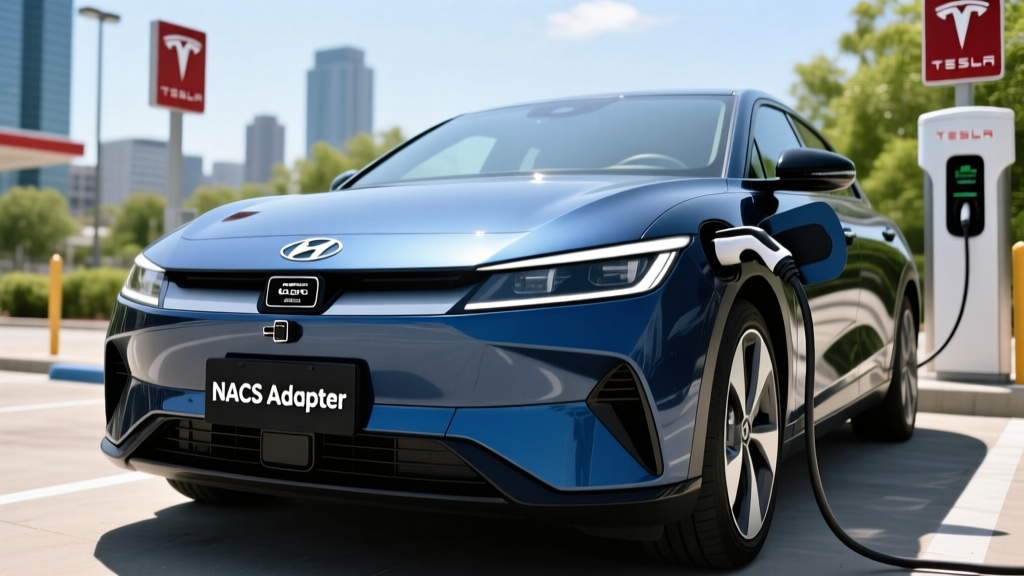
The North American connector landscape has consolidated significantly since 2023, when Ford, GM, Rivian, and most other automakers committed to adopting Tesla's North American Charging Standard (NACS). As of the 2026 model year, nearly all new EVs sold in the U.S. ship with a NACS charge port. CCS1 vehicles remain on the road in large numbers, and CHAdeMO is limited to older Nissan Leafs and Mitsubishi Outlander PHEVs.
| Connector | Brands Using It (New Vehicles) | Adapter Needed For |
|---|---|---|
| NACS (Tesla standard) | Tesla, Ford, GM, Rivian, Volvo, Polestar, Mercedes, BMW, Hyundai, Kia, Nissan (new Ariya refresh), Subaru, Lucid, Toyota (bZ series) | CCS1 stations (use NACS-to-CCS adapter, ~$200–$250) |
| CCS1 | Remaining 2024–2025 model-year inventory; VW ID.4 (through 2025) | Tesla Superchargers (use CCS-to-NACS adapter, ~$200) |
| CHAdeMO | Discontinued for new vehicles; legacy Nissan Leaf (2011–2025) | Very limited DC fast network; no practical adapter to NACS/CCS |
Key takeaway: If you're buying a new EV in 2026, NACS is your native connector. Tesla's Supercharger network — the largest and most reliable DC fast-charging network in North America — is natively accessible. For the occasional CCS-only station, a compact NACS-to-CCS adapter (sold by Tesla and third parties like Lectron) fits in your frunk and solves the problem.
How Much Does EV Charging Cost Per Mile vs. Gas?
Charging cost depends on electricity rates, which vary dramatically between home charging, public Level 2, and DC fast charging. Here's a realistic comparison using a 2026 Tesla Model Y Long Range (averaging 3.5 miles per kWh, or roughly 120 MPGe combined per fueleconomy.gov) versus a comparable gas SUV averaging 26 MPG combined.
| Scenario | Rate | Cost Per Mile (EV) | Cost Per Mile (Gas, $3.50/gal, 26 MPG) |
|---|---|---|---|
| Home charging (off-peak utility rate) | $0.10/kWh | $0.029 | $0.135 |
| Home charging (national avg residential) | $0.17/kWh | $0.049 | $0.135 |
| Public Level 2 (Destination / workplace) | $0.25/kWh | $0.071 | $0.135 |
| DC Fast Charging (Supercharger / EA avg) | $0.38/kWh | $0.109 | $0.135 |
| DC Fast Charging (peak pricing) | $0.55/kWh | $0.157 | $0.135 |
At home on a standard residential rate, EV charging costs roughly one-third to one-half what gasoline costs per mile. Even on DC fast chargers at average rates, the EV is cheaper per mile. Only at peak-priced DC fast stations does the cost approach or slightly exceed gas — which is why home charging is the economic backbone of EV ownership.
For a driver covering 12,000 miles per year charging primarily at home ($0.17/kWh), annual fuel cost is approximately $588. The comparable gas SUV spends $1,615. That's a $1,027 annual savings, or roughly $5,135 over five years — before factoring in reduced EV maintenance costs (no oil changes, fewer brake replacements due to regenerative braking).
Best Home EV Chargers for 2026: Equipment Picks
These are proven Level 2 chargers we recommend based on power output, build quality, smart features, cable length, and price. All are UL-listed or ETL-certified for safety.
Tesla Wall Connector (Gen 4)
- Power: Up to 19.2 kW (80A circuit) or 11.5 kW (60A circuit)
- Connector: NACS native; J1772 adapter included
- Cable Length: 24 feet
- Smart Features: Wi-Fi, OTA updates, load sharing (pair two units on one circuit), Tesla app integration, access control
- Price: ~$450
- Best For: Tesla owners or NACS-native EV owners who want max power and seamless ecosystem integration
ChargePoint Home Flex (2nd Gen)
- Power: Up to 12 kW (50A circuit) — configurable via DIP switches
- Connector: NACS or J1772 (select at purchase)
- Cable Length: 23 feet
- Smart Features: Wi-Fi, ChargePoint app scheduling, Alexa integration, energy tracking, UL-listed
- Price: ~$550–$650
- Best For: Multi-EV households wanting app-based scheduling and energy monitoring
Emporia Level 2 EV Charger
- Power: Up to 11.5 kW (48A / 60A circuit)
- Connector: NACS or J1772
- Cable Length: 24 feet
- Smart Features: Wi-Fi, Emporia app, solar integration (pair with Emporia VUE energy monitor to charge on excess solar), scheduling
- Price: ~$400
- Best For: Budget-conscious buyers and solar-panel owners who want to maximize self-generated charging
Grizzl-E Smart (United Chargers)
- Power: Up to 11.5 kW (48A / 60A circuit)
- Connector: NACS or J1772
- Cable Length: 24 feet
- Smart Features: Wi-Fi, OCPP-compatible, adjustable amperage, extreme-cold rated (-40°F), built in Canada
- Price: ~$550
- Best For: Cold-climate owners and outdoor installations where ruggedness matters
Safety and Electrical Code Considerations
EV charging involves sustained high-current draw — often for 6–10 hours at a time. This is fundamentally different from intermittent loads like a dryer or oven. Safety and code compliance are non-negotiable.
- Dedicated circuit: Your Level 2 charger must be on its own dedicated breaker. Sharing a circuit with other appliances violates NEC (National Electrical Code) requirements and creates a fire hazard.
- GFCI protection: The 2020 NEC requires GFCI (Ground Fault Circuit Interrupter) protection for outlets used for EV charging. Hardwired installations typically do not require GFCI breakers, which is one reason many electricians prefer hardwiring — it avoids nuisance tripping.
- Outdoor rating: If your charger is installed outdoors, ensure the unit carries a NEMA 4 (weather-resistant) rating and that the electrician uses weatherproof conduit and fittings. All chargers listed above are rated for outdoor use.
- Wire gauge: A 50A circuit requires 6 AWG copper wire; a 60A circuit requires 4 AWG. Your electrician will size wire per NEC Table 310.16. Do not undersize wire — this is a common shortcut in unpermitted work and a serious fire risk.
- Permits: Nearly all jurisdictions require an electrical permit for a new 240V circuit. The permit fee is typically $50–$200 and includes an inspection that verifies safe installation. Skipping the permit may void your homeowner's insurance coverage for electrical fires.
Frequently Asked Questions
Are Tesla Destination Chargers free at hotels?
Many hotels offer complimentary Destination Charging as a guest amenity, but it's not universal. Some properties charge a per-kWh fee or require a parking fee. Always check the Tesla app or call the hotel before booking to confirm the charging policy. Complimentary charging is most common at mid-range and upscale hotels competing for EV-driving guests.
Can non-Tesla EVs use Tesla Destination Chargers?
Yes — with an adapter. Tesla Destination Chargers use the NACS connector. If you drive a CCS1-equipped EV, you'll need a NACS-to-J1772 or NACS-to-CCS adapter. As of 2026, most new non-Tesla EVs ship with NACS ports natively, so the adapter issue is fading. Tesla's "Opens Superchargers" program also applies to some Destination Charger locations, but the property owner decides access policy.
How much does it cost to install a home EV charger?
A straightforward Level 2 installation with a panel nearby typically costs $950–$2,400 all-in (charger unit, permit, electrician labor, and materials). Complex installations involving long conduit runs, trenching, or a panel upgrade to 200A service can range from $3,450 to $9,000. The IRS §30D credit may offset up to $1,000 (30% of costs) if your installation is in a qualifying census tract.
How fast will each charging level add range?
Level 1 (120V) adds roughly 3–5 miles per hour. Level 2 (240V, 48A) adds roughly 35–45 miles per hour to a typical EV. DC fast charging at 150–250 kW can add 150–300+ miles in 20–30 minutes, depending on battery size and the vehicle's charge curve. Always check your specific vehicle's onboard charger capacity — a car limited to 11.5 kW AC won't charge faster on a 19.2 kW Destination Charger.
Which connector is compatible with my EV?
If you bought a new EV in 2025 or 2026, it almost certainly has a NACS charge port. Tesla vehicles have always used NACS. Older CCS1 vehicles (2022–2024 model years from Ford, GM, Hyundai, Kia, VW) can access NACS/Supercharger stations with a purchased adapter. CHAdeMO is limited to older Nissan Leafs and has a shrinking public network. Check your owner's manual or the charge port shape: NACS is smaller and lighter than CCS1.
How much does charging cost per mile vs. gas?
Home charging at the national average residential rate ($0.17/kWh) costs roughly $0.05 per mile in a typical EV — about one-third the cost of gasoline at $3.50/gallon in a 26 MPG vehicle ($0.135/mile). DC fast charging at $0.38/kWh averages about $0.11 per mile, still cheaper than gas. Only peak-priced DC stations ($0.55+/kWh) approach gasoline costs per mile.
What electrical upgrades might I need for a home charger?
If your home has a 200A electrical panel with available breaker slots and load capacity, you likely need no upgrade — just a new 50A or 60A breaker and a conduit run. If your panel is 100A, fully loaded, or uses outdated fuse boxes, you'll likely need a service upgrade to 200A ($1,500–$4,000). An electrician can perform a NEC Article 220 load calculation to determine whether your existing panel can handle the added EV circuit.