What Is a Tesla Destination Charger — and How Does It Fit Into the EV Charging Ecosystem?
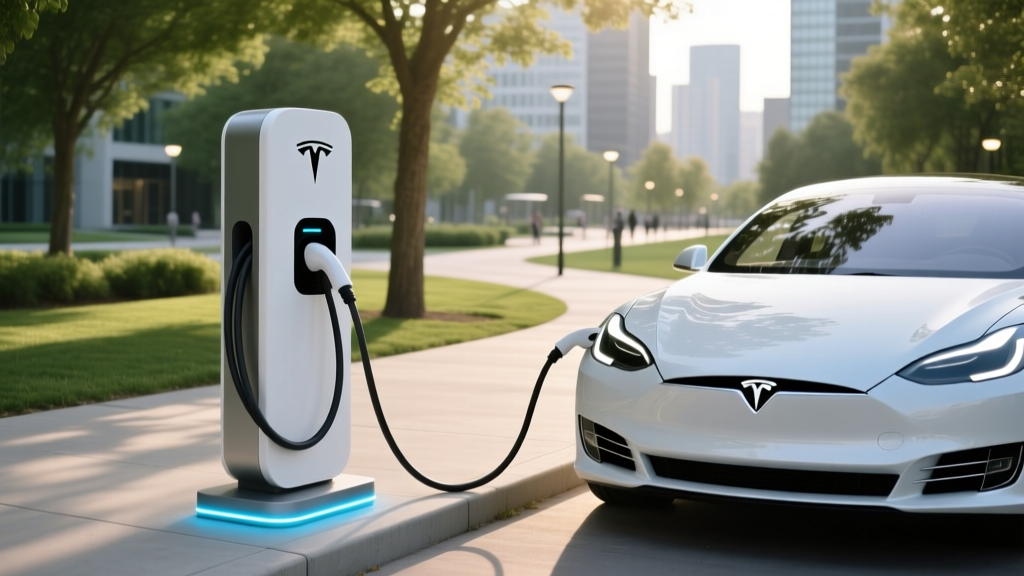
If you've pulled into a hotel, restaurant, or shopping center and noticed a sleek Tesla-branded wallbox with a NACS (North American Charging Standard) connector, you've encountered a Tesla Destination Charger. These are Level 2 AC charging stations installed by businesses through Tesla's Destination Charging program. They're designed for opportunistic charging — topping up your battery while you eat, sleep, or shop — not for the rapid 10-to-80% DC fast charges you'd get at a Supercharger.
But here's the nuance most guides miss: "Tesla Destination Charger" is a specific program name, not a charging level. The hardware delivers Level 2 AC power (typically 11.5 kW to 19.2 kW, depending on the installation), and since Tesla opened the NACS connector to the broader industry, many non-Tesla EVs can now use them with a simple adapter. Understanding exactly how these chargers work — and how Level 2 fits between slow Level 1 and rapid DC fast charging — is critical to planning your charging life, whether at home or on the road.
This guide breaks down every charging level with exact speeds in kW and miles-per-hour, walks through home installation costs with the electrician and permit breakdown most articles skip, maps connector compatibility across brands, and gives you real cost-per-mile numbers versus gasoline. Let's get specific.
Charging Levels Explained: Level 1, Level 2, and DC Fast Charging
The single most important distinction in EV charging is between kW (kilowatts — the rate of power flow, like water pressure) and kWh (kilowatt-hours — the total energy delivered, like gallons of water). A charger's kW rating tells you how fast it can push energy into your battery. Your battery's kWh capacity tells you how much energy it holds. A 75 kWh battery charged at 11.5 kW from empty would theoretically take about 6.5 hours — but charging curves, efficiency losses, and the 80% taper make real-world times longer.
| Level | Voltage | Power (kW) | Miles of Range Added per Hour | Typical Use Case |
|---|---|---|---|---|
| Level 1 | 120V AC | 1.0–1.4 kW | 3–5 mi/hr | Overnight top-up, PHEVs, emergencies |
| Level 2 (Home/Destination) | 240V AC | 7.2–19.2 kW | 20–56 mi/hr | Daily home charging, Destination Chargers, workplace |
| DC Fast Charging | 400V–800V DC | 50–350 kW | 150–1,000+ mi/hr (peak) | Road trips, rapid top-ups, Superchargers |
Level 1 uses a standard 120V household outlet. It comes with most EVs and requires no installation, but at ~1.4 kW it adds only about 3–5 miles of range per hour. For a plug-in hybrid (PHEV) with a 15 kWh battery, that's fine — a full overnight charge. For a long-range BEV with an 82 kWh pack, Level 1 is an emergency backup at best.
Level 2 is where Tesla Destination Chargers live. These use 240V AC — the same voltage as your electric dryer — and deliver between 7.2 kW (on a 30A circuit) and 19.2 kW (on an 80A circuit). A Tesla Destination Charger typically delivers 11.5 kW (48A) or up to 19.2 kW (80A) depending on the host site's electrical capacity. At 11.5 kW, a Tesla Model Y (EPA 310 mi range, ~75 kWh usable battery) gains roughly 30–35 miles of range per hour. At 19.2 kW, that jumps to about 50–56 miles per hour. That means a 6-hour dinner-and-movie stop can add 180–300+ miles — more than enough for most drivers.
DC Fast Charging bypasses the vehicle's onboard charger and pushes DC current directly into the battery. Tesla Superchargers peak at 170 kW (V2) or 250 kW (V3), while networks like Electrify America and Ionity offer up to 350 kW for compatible vehicles. The Hyundai Ioniq 5, for example, can peak at ~240 kW on an 800V architecture and charge from 10–80% in roughly 18 minutes. However, peak kW is not sustained kW — charging curves taper significantly above 80% State of Charge (SoC) to protect battery health. Expect the average rate across a 10–80% session to be 60–75% of the peak number.
Tesla Destination Chargers vs. Superchargers vs. Home Wall Connectors
Understanding the distinction between Tesla's three charging ecosystems prevents real-world confusion:
- Tesla Destination Chargers: Level 2 AC units installed at hotels, restaurants, wineries, and retail locations. Power output varies by site (11.5 kW to 19.2 kW). They use the NACS connector. Access is typically free or low-cost for customers, though some hosts now charge a per-kWh fee. Charging speed is slow compared to Superchargers — plan for 2–8 hour sessions.
- Tesla Superchargers: DC fast-charging stations delivering 150–250 kW (and up to 325 kW at newer V4 sites). A 10–80% charge takes 15–25 minutes depending on vehicle and stall version. These are the backbone of Tesla road-trip infrastructure, with over 6,500+ Supercharger stalls in North America as of early 2026 (Tesla Supercharger Network).
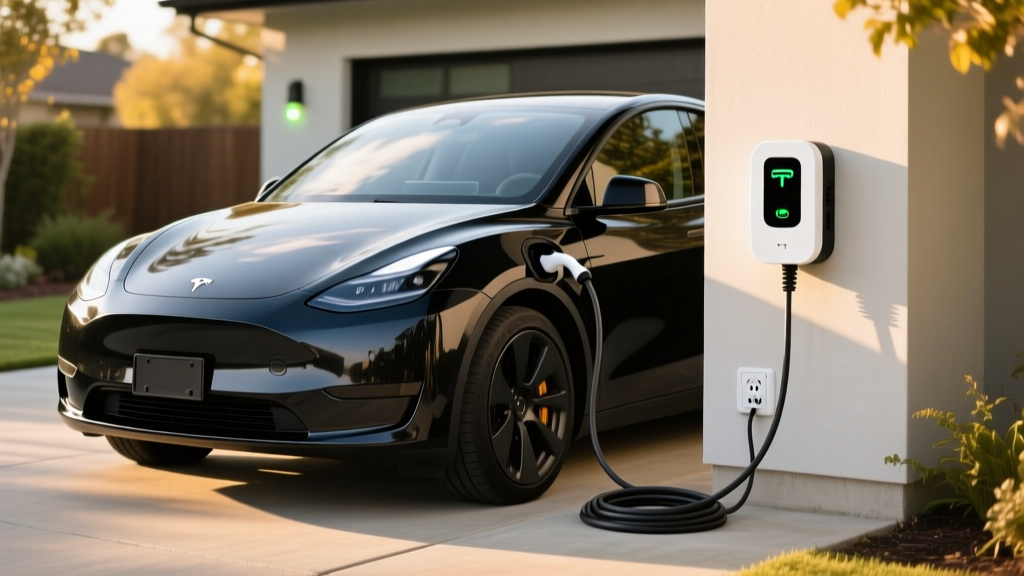
- Tesla Wall Connector (Home): The same Level 2 hardware technology as Destination Chargers, installed in your garage or driveway. The Gen 3 Wall Connector delivers up to 11.5 kW (48A on a 60A circuit) and costs approximately $475 for the unit itself.
The key takeaway: a Tesla Destination Charger is essentially a Tesla Wall Connector mounted at a commercial location. The charging experience is identical — plug in with the NACS connector and walk away. The difference is context: you're charging while doing something else, not sleeping at home.
Connector Compatibility: NACS, CCS1, CHAdeMO, and What You Need
The connector landscape has shifted dramatically since Tesla opened the NACS standard in late 2022. As of 2026, NACS is the dominant connector for new EVs in North America, with Ford, GM, Rivian, Hyundai, Kia, BMW, and others adopting it natively. But millions of CCS1-equipped EVs remain on the road, and CHAdeMO persists on older Nissan Leafs.
| Connector | Type | Compatible Brands (Native) | Adapter Availability |
|---|---|---|---|
| NACS (Tesla) | AC + DC (same port) | Tesla, Ford (2025+), GM (2025+), Rivian (2025+), Hyundai/Kia (2025+), BMW, Mercedes | CCS-to-NACS adapters ($200–$400) widely available |
| CCS1 | AC (J1772) + DC (CCS combo) | Volkswagen, older Ford/GM/Hyundai models, BMW iX (pre-2025), most pre-2025 non-Tesla EVs | Tesla provides CCS adapter; NACS-to-CCS adapters available |
| CHAdeMO | DC only (separate AC port uses J1772) | Nissan Leaf, Mitsubishi Outlander PHEV (older) | Limited adapter options; network support declining |
| J1772 | AC only (Level 1/2) | All non-Tesla EVs for AC charging | Tesla Mobile Connector includes J1772 adapter |
Can a non-Tesla EV use a Tesla Destination Charger? Yes — with a caveat. Tesla has begun opening select Destination Chargers to non-Tesla vehicles via the NACS connector. If your EV has a native NACS port (e.g., a 2025+ Ford Mustang Mach-E or 2026 Hyundai Ioniq 5), you can plug directly into any NACS-equipped Destination Charger that's been enabled for non-Tesla access. If your EV uses CCS1, you'll need a NACS-to-CCS adapter (approximately $200–$300 from brands like Lectron or A2Z). Always check the charger's status in the Tesla app or on the host location's signage before relying on access.
Home Level 2 Installation: Electrical Requirements, Costs, and Panel Upgrades
Installing a Level 2 charger at home is the single biggest quality-of-life upgrade an EV owner can make. But the cost varies enormously based on your home's electrical panel, the distance from panel to charger location, and local permit requirements. Here's the breakdown most articles gloss over.
Electrical Requirements
A Level 2 charger requires a dedicated 240V circuit. The amperage determines your charging speed:
- 30A circuit (24A continuous draw): 5.8 kW — adequate for PHEVs and overnight BEV charging
- 50A circuit (40A continuous): 9.6 kW — solid for most BEVs, adds ~28–32 mi/hr
- 60A circuit (48A continuous): 11.5 kW — Tesla Wall Connector standard, adds ~33–37 mi/hr
- 80A circuit (64A continuous): 15.4–19.2 kW — requires heavy-gauge wire, most homes need a panel upgrade
The National Electrical Code (NEC) requires that continuous loads (like EV charging) not exceed 80% of the circuit breaker rating. That's why a 60A breaker yields only 48A of usable charging current. Any licensed electrician should follow this rule — if yours doesn't, find a new one.
Panel Upgrade Reality
Many homes built before 2000 have 100A or 150A main service panels. Adding a 50–60A dedicated EV circuit to an already-loaded 100A panel may exceed capacity, requiring a panel upgrade to 200A. This is the hidden cost that catches buyers off guard. A panel upgrade typically runs $1,500–$3,500 depending on your utility, local codes, and whether a new service drop is needed. Some utilities offer rebates — check with your provider.
If your panel has spare capacity (your electrician will perform a load calculation per NEC Article 220), you may be able to add a 50A or 60A circuit without an upgrade. Homes with newer 200A panels and gas appliances (less electrical load) are often fine.
| Component | Low-End | Typical | High-End |
|---|---|---|---|
| EVSE Equipment (charger unit) | $300 (basic 32A) | $475–$650 (Tesla Wall Connector / ChargePoint) | $700–$1,000 (smart WiFi-enabled) |
| Electrician Labor (simple install, <20 ft run) | $300 | $500–$800 | $1,200+ (long runs, conduit) |
| Permit & Inspection | $50 | $100–$250 | $400 (high-cost jurisdictions) |
| Electrical Panel Upgrade (if needed) | $1,500 | $2,000–$2,500 | $3,500+ |
| Total (No Panel Upgrade) | $650 | $1,100–$1,700 | $2,400 |
| Total (With Panel Upgrade) | $2,150 | $3,100–$4,200 | $5,900+ |
The IRS §30C Alternative Fuel Vehicle Refueling Property Credit can offset up to 30% of home charger equipment and installation costs (capped at $1,000) if you live in an eligible census tract. This is separate from the §30D new EV purchase credit. Consult a tax professional to confirm eligibility, as census-tract rules and income limits apply.
Cost to Charge: Per-kWh Scenarios and Cost per Mile vs. Gasoline
The economics of EV charging depend heavily on where and when you charge. Here are real 2026 scenarios with exact numbers:
| Scenario | Typical $/kWh | Cost to Add 200 Miles (at 3.5 mi/kWh) | Cost per Mile |
|---|---|---|---|
| Home — Off-Peak Utility Rate (overnight) | $0.08–$0.12 | $4.57–$6.86 | $0.023–$0.034 |
| Home — Standard Residential Rate | $0.14–$0.18 | $8.00–$10.29 | $0.040–$0.051 |
| Tesla Destination Charger (host-dependent) | Free–$0.26 | $0–$14.86 | $0–$0.074 |
| Public Level 2 (ChargePoint, EVgo L2) | $0.20–$0.39 | $11.43–$22.29 | $0.057–$0.111 |
| DC Fast Charging (Supercharger / Electrify America) | $0.28–$0.48 | $16.00–$27.43 | $0.080–$0.137 |
| Gasoline Equivalent (25 MPG avg, $3.40/gal) | — | $27.20 | $0.136 |
At a national average residential electricity rate of ~$0.16/kWh (per EIA data), charging at home costs roughly $0.045 per mile for a vehicle averaging 3.5 miles per kWh (the approximate efficiency of a Tesla Model Y or Hyundai Ioniq 5). That's about one-third the per-mile cost of a 25 MPG gasoline car at $3.40/gallon.
DC fast charging at $0.35–$0.48/kWh narrows the gap — and on some public networks during peak pricing, it can actually exceed the per-mile cost of an efficient hybrid. This is why home Level 2 charging is the economic sweet spot. Destination Chargers, when free, are essentially bonus range.
Charging Time Examples: What to Expect by Battery Size
Charge times depend on three variables: battery capacity (kWh), charger power output (kW), and the vehicle's onboard charger limit. Most EVs cap AC Level 2 intake at 11.5 kW (Tesla, many others) or 10.9 kW (Hyundai/Kia). Here's what real sessions look like:
- Tesla Model Y Long Range (75 kWh usable, 11.5 kW onboard limit): 10–80% at a 11.5 kW Destination Charger takes approximately 4.5–5 hours. At 19.2 kW (if equipped), ~3 hours.
- Ford Mustang Mach-E Extended Range (91 kWh usable, 10.5 kW limit): 10–80% at 10.5 kW takes ~6 hours. At 7.2 kW, ~8.5 hours.
- Chevrolet Equinox EV (85 kWh usable, 11.5 kW limit): 10–80% at 11.5 kW takes ~5 hours.
- Toyota RAV4 Prime PHEV (18.1 kWh battery, 3.3 kW limit): Full charge at 3.3 kW takes ~5.5 hours — note the RAV4 Prime is capped at 3.3 kW on Level 2, which is a known limitation for PHEV owners.
- Hyundai Ioniq 5 (77.4 kWh usable, 10.9 kW limit): 10–80% at 10.9 kW takes ~5 hours. On DC fast charging at 240 kW peak, 10–80% takes ~18 minutes.
The pattern is clear: Level 2 Destination Chargers are ideal for multi-hour stops. If you're staying overnight at a hotel with a Destination Charger, you'll wake up with a full battery. If you're stopping for a 45-minute lunch, you'll add roughly 25–50 miles of range — useful, but not transformative. For rapid road-trip charging, DC fast chargers remain essential.
Recommended Level 2 Equipment for Home Installation
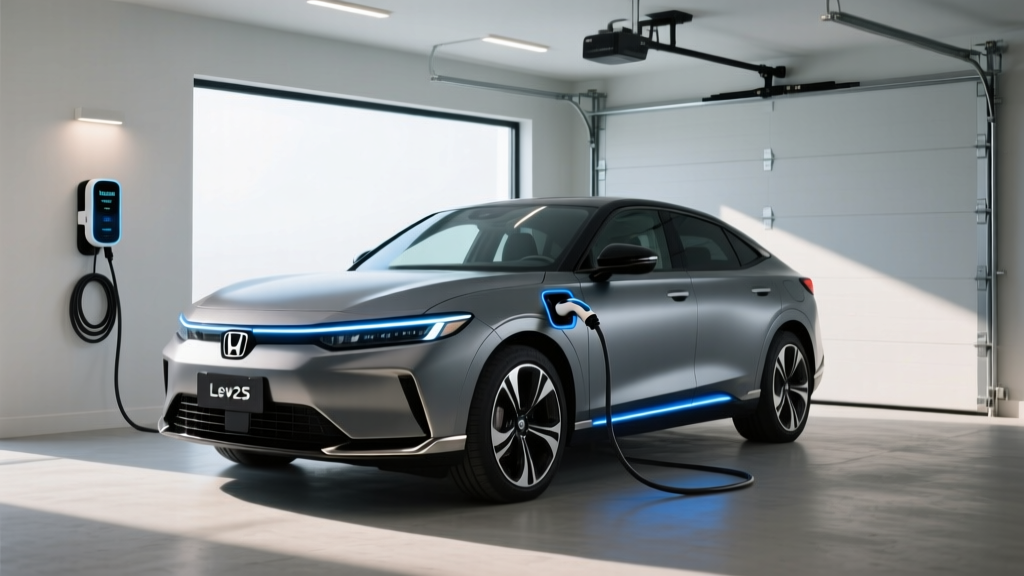
If you're installing a Level 2 charger at home (the same technology as a Tesla Destination Charger, just on your wall), here are proven units with exact specifications:
Tesla Wall Connector (Gen 3)
- Max Power: 11.5 kW (48A on 60A circuit)
- Connector: NACS (native); J1772 adapter included
- Cable Length: 24 feet
- Smart Features: WiFi, power sharing (link up to 6 units on one circuit), Tesla app integration, OTA updates
- Price: ~$475
- Best For: Tesla owners; NACS-native EVs; multi-Tesla households
ChargePoint Home Flex
- Max Power: 12 kW (50A on 60A circuit) — adjustable down to 16A
- Connector: J1772 (NACS adapter available separately)
- Cable Length: 23 feet
- Smart Features: WiFi, ChargePoint app scheduling, Alexa integration, flexible amperage dip-switch
- Price: ~$550–$650
- Best For: CCS/J1772 EVs; renters who may move (adjustable amperage fits various circuits)
Emporia Level 2 EV Charger
- Max Power: 11.5 kW (48A on 60A circuit)
- Connector: J1772 (NACS version available 2025+)
- Cable Length: 24 feet
- Smart Features: WiFi, Emporia energy-monitoring integration (tracks whole-home energy use), solar-aware scheduling
- Price: ~$350–$400
- Best For: Budget-conscious buyers; solar-panel households wanting energy integration
Grizzl-E Smart
- Max Power: 10 kW (40A on 50A circuit)
- Connector: J1772 (NACS adapter available)
- Cable Length: 24 feet
- Smart Features: OCPP-compatible, adjustable amperage, extreme cold rated (-40°F)
- Price: ~$450–$550
- Best For: Cold-climate owners; those wanting an open-protocol charger not locked to one ecosystem
Safety, Electrical Code, and Installation Best Practices
EV charging is a high-draw, continuous electrical load. Cutting corners is a fire risk. Here's what proper installation requires:
- Dedicated circuit: Your Level 2 charger must have its own breaker — never share a circuit with other appliances. A 60A breaker with 6 AWG copper wire (or 4 AWG aluminum) is standard for a 48A/11.5 kW install.
- GFCI protection: NEC 2023 (Article 625.54) requires GFCI protection for all EVSE receptacles rated 150V to ground or less and 50A or less. Hardwired units may have GFCI built in — confirm with your electrician. Note: some EV owners report nuisance GFCI trips with certain outlet/receptacle combinations; a hardwired install avoids this issue entirely.
- Outdoor rating: If installing outside, ensure the EVSE is NEMA 4 rated (weatherproof). The Tesla Wall Connector and Grizzl-E are both rated for outdoor use. Use a weatherproof conduit entry if the unit is wall-mounted in an exposed location.
- Permit and inspection: Most jurisdictions require an electrical permit for a new 240V circuit. The inspection verifies wire gauge, breaker sizing, grounding, and GFCI compliance. Don't skip this — unpermitted work can void home insurance claims and create resale issues.
- Cable management: A 24-foot cable draped across a garage floor is a tripping hazard. Wall-mount a cable organizer or choose a ceiling-mounted retractable reel if space is tight.
Frequently Asked Questions
How much does it cost to install a home EV charger?
A straightforward Level 2 installation (60A circuit, short wire run, no panel upgrade) typically costs $1,100–$1,700 total, including the charger unit ($350–$650), electrician labor ($500–$800), and permit ($100–$250). If your home needs a 200A panel upgrade, add $1,500–$3,500. Always get 2–3 quotes from licensed electricians and confirm they include permit and inspection in the price.
How fast will each charging level add range?
Level 1 (120V, 1.4 kW): 3–5 miles per hour. Level 2 (240V, 11.5 kW): 30–37 miles per hour for most EVs. DC Fast Charging (150–250 kW): 150–1,000+ miles per hour at peak, but sessions are limited to 15–30 minutes due to charge-curve taper above 80% SoC. A Tesla Destination Charger at 11.5 kW adds roughly 33 miles per hour — enough for a full overnight charge on any current EV.
Which connector or charger is compatible with my EV?
Check your vehicle's charge port. If it's a Tesla or a 2025+ model from Ford, GM, Rivian, Hyundai, Kia, or BMW, you likely have a NACS port and can use Tesla Destination Chargers and Superchargers natively. If you drive a pre-2025 non-Tesla EV, you likely have a CCS1/J1772 port and will need a NACS-to-CCS adapter for Tesla chargers. CHAdeMO is limited to older Nissan Leafs and is being phased out across most networks.
How much does charging cost per mile vs. gas?
At the national average residential electricity rate of ~$0.16/kWh, an EV averaging 3.5 mi/kWh costs about $0.045 per mile to charge at home. A gasoline car at 25 MPG with fuel at $3.40/gallon costs $0.136 per mile. Home charging is roughly one-third the per-mile cost. However, DC fast charging at $0.35–$0.48/kWh costs $0.10–$0.14 per mile — approaching or matching gasoline costs. The savings advantage is largest when you charge at home on off-peak utility rates.
What electrical upgrades might I need?
The most common upgrade is a panel replacement from 100A to 200A service, needed when your existing panel lacks spare capacity for a new 50–60A circuit. An electrician performs a NEC Article 220 load calculation to determine this. Older homes with knob-and-tube wiring or Federal Pacific/Zinsco panels (known safety hazards) may require full rewiring or panel replacement regardless. Some utilities offer $200–$500 rebates for panel upgrades tied to EV adoption — check before paying full price.
Are Tesla Destination Chargers free to use?
It depends on the host. Many hotels and restaurants offer Destination Charging as a free amenity for customers. However, an increasing number of hosts have begun charging per-kWh fees (typically $0.20–$0.26/kWh) or require validation. Always check the listing in the Tesla app or on-site signage before assuming free access.
Can I use a Tesla Destination Charger with a non-Tesla EV?
Yes, if the Destination Charger has been enabled for non-Tesla vehicles by the host and your EV has a NACS port or you carry a NACS-to-CCS adapter. Tesla has been gradually opening Destination Chargers to non-Tesla EVs, but access is not universal. Confirm availability via the Tesla app's "Charge Your Non-Tesla" filter before planning a stop.
Whether you're plugging into a Destination Charger at a mountain lodge or installing a Wall Connector in your garage, Level 2 AC charging is the backbone of practical EV ownership. It's slower than DC fast charging, but cheaper, gentler on battery health, and perfectly suited to the hours you'd spend sleeping, working, or dining anyway. Know your connector, know your circuit, and know your per-kWh rate — and the numbers will work out.