Quick Answer: How Long Does It Take to Charge a Tesla?
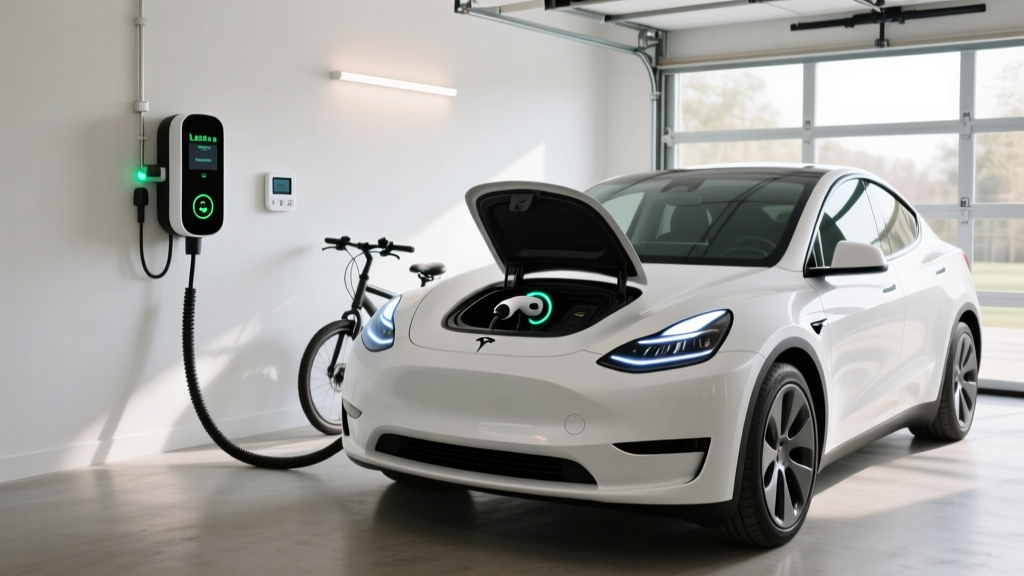
The answer depends entirely on which charging level you use. A Tesla Model Y Long Range (75 kWh usable battery, NMC chemistry) can take anywhere from under 20 minutes at a V4 Supercharger to over 50 hours on a standard 120V household outlet. Below, we break down exact Tesla charging time across every scenario you'll encounter as an owner — with real numbers, not marketing claims.
Before we get into the data, one critical distinction: kW (kilowatts) measures power — how fast energy flows into your car. kWh (kilowatt-hours) measures energy — the total capacity of your battery. Think of kW as the width of a hose and kWh as the size of the bucket. A wider hose (higher kW) fills the bucket (kWh) faster.
Tesla Charging Time by Level: Speeds, Range Added, and Real-World Times
| Charging Level | Voltage / Amperage | Max Power (kW) | Miles of Range Added per Hour | 10–80% Time (Model Y LR, 75 kWh) | 10–80% Time (Model 3 LR, 75 kWh) |
|---|---|---|---|---|---|
| Level 1 (120V household) | 120V / 12A | ~1.4 kW | 3–5 mi/hr | ~50+ hours | ~50+ hours |
| Level 2 (240V home/public) | 240V / 48A | ~11.5 kW | 30–44 mi/hr | ~5.5 hours | ~5.5 hours |
| Level 2 (240V / 32A) | 240V / 32A | ~7.7 kW | 20–30 mi/hr | ~8 hours | ~8 hours |
| DC Fast (Tesla V3 Supercharger) | DC / up to 400V | 250 kW peak | ~1,000+ mi/hr (peak) | ~25–30 min | ~25–30 min |
| DC Fast (Tesla V4 Supercharger) | DC / up to 800V arch. | 350 kW peak | ~1,200+ mi/hr (peak) | ~18–22 min | ~18–22 min |
| DC Fast (CCS via adapter) | DC / varies | 150–350 kW (station dependent) | Varies | ~25–40 min | ~25–40 min |
How Much Does It Cost to Install a Home Tesla Charger?
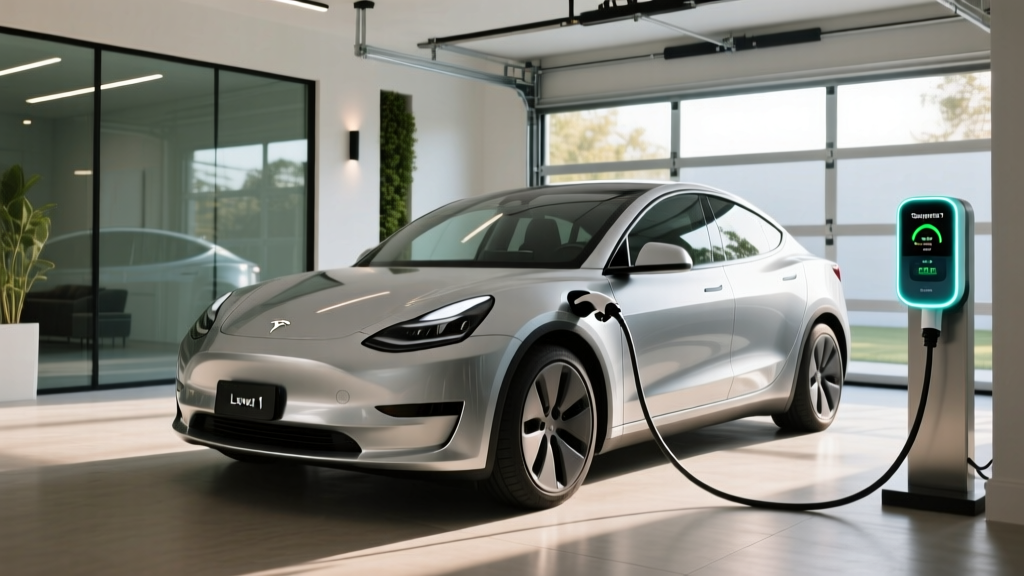
Home Level 2 charging is where most Tesla owners do 85–95% of their charging. The total cost depends on your electrical panel capacity, the distance from panel to charger location, and local permit fees. Here's a realistic breakdown for a 240V / 48A (11.5 kW) installation:
| Cost Component | Typical Range | Notes |
|---|---|---|
| Tesla Wall Connector (hardware) | $400–$475 | 48A, 24-ft cable, Wi-Fi, NACS connector built-in |
| Electrician labor (standard install) | $600–$1,500 | Assumes panel has capacity; 10–40 ft run from panel |
| Permit fee | $50–$300 | Varies by municipality; some jurisdictions waive EV permits |
| Electrical panel upgrade (if needed) | $1,500–$4,000+ | Required if your panel is 100A or maxed out; 200A upgrade typical |
| Total — no panel upgrade | $1,050–$2,275 | Most homes with 200A service fall here |
| Total — with panel upgrade | $2,550–$6,275+ | Older homes with 100A or 150A panels |
What Electrical Upgrades Might I Need?
A 48A Level 2 charger requires a 60A dedicated circuit (the National Electrical Code requires circuits to be rated at 125% of continuous load: 48A × 1.25 = 60A). Your electrician will check whether your panel has two available breaker slots and sufficient remaining capacity.
You likely need a panel upgrade if:
- Your home has a 100A main service panel (common in homes built before 1990)
- Your panel is already near capacity (electric dryer, HVAC, electric range, water heater all drawing from a 150A panel)
- You plan to add solar, a heat pump, or a second EV in the near future
You likely do NOT need a panel upgrade if:
- You have a 200A panel with gas appliances (range, dryer, furnace)
- You opt for a lower-amperage charger (32A on a 40A circuit) which still adds ~25 mi/hr — enough for most daily driving
- You install a smart panel-level load manager (e.g., Emporia or Span) that dynamically shares capacity
Always hire a licensed electrician and pull a permit. Unpermitted work can void home insurance and cause issues at sale. The NEC requires a GFCI breaker for outdoor receptacles, though hardwired Wall Connectors do not require GFCI protection (and GFCI can cause nuisance tripping with EV chargers — your electrician will advise based on local code).
Which Connector and Charger Is Compatible With My Tesla?
Every Tesla sold in North America uses the NACS (North American Charging Standard) connector — previously proprietary to Tesla, now adopted industry-wide. Here's how connector compatibility works across the EV landscape in 2026:
| Connector | Used By | Adapter Needed for Tesla? | Max DC Fast Power |
|---|---|---|---|
| NACS (Tesla) | All Tesla models; Ford F-150 Lightning, Mustang Mach-E, Rivian, GM Ultium vehicles, Hyundai Ioniq 5 (2026+), Volvo, Polestar, others | No — native | Up to 350 kW (V4 Supercharger) |
| CCS1 | Most non-Tesla EVs through 2025 model year; Electrify America, EVgo stations | Yes — Tesla sells a CCS-to-NACS adapter (~$175); or use Magic Dock at some Superchargers | Up to 350 kW (station dependent) |
| CHAdeMO | Nissan Leaf (legacy); Mitsubishi Outlander PHEV | Yes — third-party CHAdeMO-to-NACS adapters (~$300–$400); limited availability | Up to 100 kW (most stations 50 kW) |
| J1772 (Level 2 AC) | All non-Tesla EVs for Level 2 charging | Yes — Tesla includes a J1772-to-NACS adapter with every new vehicle | N/A (AC only, up to 19.2 kW) |
Key takeaway for Tesla owners: Your NACS connector gives you native access to the entire Tesla Supercharger network (20,000+ stalls in North America as of early 2026, per Tesla's Supercharger page). With the included J1772 adapter, you can use any public Level 2 station. For CCS-based DC fast chargers (Electrify America, many EVgo stations), you'll need Tesla's CCS adapter.
How Much Does Charging a Tesla Cost Per Mile vs. Gas?
Charging cost is where EVs deliver their biggest ongoing savings — but the exact number depends on where and when you charge. Here are realistic 2026 scenarios for a Tesla Model Y Long Range (EPA 320 mi range, ~28 kWh/100 mi efficiency, per fueleconomy.gov):
| Charging Scenario | Rate ($/kWh) | Cost to Add 100 Miles | Cost Per Mile |
|---|---|---|---|
| Home — off-peak (utility time-of-use rate) | $0.08–$0.12 | $2.24–$3.36 | $0.022–$0.034 |
| Home — standard residential (national avg.) | $0.16 | $4.48 | $0.045 |
| Public Level 2 (ChargePoint, workplace) | $0.25–$0.49 | $7.00–$13.72 | $0.070–$0.137 |
| Tesla Supercharger V3/V4 | $0.28–$0.48 | $7.84–$13.44 | $0.078–$0.134 |
| Electrify America / third-party DC fast | $0.35–$0.56 | $9.80–$15.68 | $0.098–$0.157 |
Gas comparison: A comparable gas-powered compact SUV averaging 28 MPG combined at $3.40/gallon costs $0.121/mile ($3.40 ÷ 28 = $12.14 per 100 miles). Home-charged Tesla owners pay roughly one-third to one-half the per-mile fuel cost. Even exclusive Supercharger users pay roughly the same per mile as gas — or slightly less.
Over 15,000 miles/year, home off-peak charging saves approximately $1,300–$1,500 annually compared to gas. Over 5 years, that's $6,500–$7,500 in fuel savings — a significant portion of the Tesla's price premium over a gas equivalent.
Recommended Home Chargers for Tesla Owners (2026)
While the Tesla Wall Connector is the default choice, several third-party options work well with NACS-equipped vehicles. Here are top picks based on power output, build quality, smart features, and value:
Tesla Wall Connector
- Power: Up to 11.5 kW (48A / 240V)
- Connector: NACS (native, no adapter)
- Cable length: 24 ft
- Smart features: Wi-Fi, OTA updates, power sharing (up to 6 units on one circuit), access control
- Price: ~$475
- Verdict: Best integration with Tesla vehicles; cleanest install; power-sharing is unique for multi-EV homes
Emporia Level 2 EV Charger
- Power: Up to 11.5 kW (48A / 240V)
- Connector: J1772 (NACS adapter included with Tesla)
- Cable length: 24 ft
- Smart features: Energy monitoring, solar integration, scheduling, load management
- Price: ~$400
- Verdict: Best for solar homes; detailed energy tracking; budget-friendly
ChargePoint Home Flex (NACS)
- Power: Up to 12 kW (50A / 240V)
- Connector: NACS (2026 model) or J1772
- Cable length: 23 ft
- Smart features: App scheduling, Alexa integration, amperage adjustable (16–50A)
- Price: ~$599
- Verdict: Adjustable amperage is ideal for panel-constrained homes; strong app ecosystem
Grizzl-E Smart (NACS)
- Power: Up to 10 kW (40A / 240V)
- Connector: NACS available; J1772 standard
- Cable length: 24 ft
- Smart features: OCPP-compatible, works with multiple apps, adjustable amperage
- Price: ~$449
- Verdict: Rugged, cold-weather rated (-40°F); Canadian-built; good for outdoor/garage installs in northern climates
Safety, Code, and Installation Best Practices
Level 2 EV charging is a continuous load under the National Electrical Code (NEC Article 625), meaning it can run at full draw for 3+ hours. This triggers specific requirements:
- Dedicated circuit: Your EV charger must be on its own breaker — not shared with other outlets or appliances.
- Circuit sizing: The breaker must be rated at 125% of the charger's maximum amperage (48A charger → 60A breaker; 32A charger → 40A breaker).
- Wire gauge: 6 AWG copper for 48A/60A circuits; 8 AWG for 32A/40A circuits (your electrician will confirm based on run length).
- Outdoor installations: The charger must be rated for outdoor use (NEMA 4 or IP65). All chargers listed above carry outdoor ratings. NEC 2023+ requires GFCI protection for outdoor receptacles — hardwired installations avoid this requirement.
- Permit and inspection: Most jurisdictions require an electrical permit for EV charger installation. Skipping this risks insurance denial in the event of a fire and can complicate home resale.
Tesla Charging Time FAQ
How fast will each charging level add range to my Tesla?
Level 1 (120V) adds roughly 3–5 miles per hour — adequate only for plug-in hybrids or overnight top-ups if you drive under 30 miles/day. Level 2 (240V, 48A) adds 30–44 miles per hour, fully replenishing a Model Y overnight in about 8–9 hours. DC fast charging at a V3 Supercharger adds up to 200 miles in 15 minutes during peak charge rate (low SoC, preconditioned battery).
How much does it cost to install a home Tesla charger?
Expect $1,050–$2,275 for a standard 48A Tesla Wall Connector installation if your electrical panel has sufficient capacity. If your home needs a panel upgrade (common in pre-1990 homes with 100A service), total costs can reach $2,550–$6,275+. Always get 2–3 quotes from licensed electricians.
Can I charge a non-Tesla EV at a Tesla Supercharger?
Yes. As of 2026, Tesla has opened a significant portion of its Supercharger network to non-Tesla NACS-equipped vehicles. Ford, Rivian, GM, Volvo, and Polestar owners with native NACS ports can use the Tesla app to initiate charging. CCS-equipped vehicles can access select Superchargers equipped with Tesla's Magic Dock adapter, though availability is limited to specific stations.
Does cold weather affect Tesla charging time?
Yes, significantly. Below 40°F, lithium-ion batteries resist accepting charge until they warm up. Without preconditioning, a cold-soaked Model Y at a Supercharger might peak at only 50–80 kW instead of 250 kW, extending 10–80% time by 15–30 minutes. Always navigate to a Supercharger using the car's built-in navigation — this triggers battery preconditioning automatically, warming the pack for optimal charge acceptance.
How much does charging a Tesla cost per mile compared to gas?
Home-charged at off-peak rates ($0.08–$0.12/kWh), a Model Y costs approximately $0.022–$0.034 per mile. A comparable gas SUV at 28 MPG and $3.40/gallon costs $0.121 per mile. Even at Supercharger rates ($0.28–$0.48/kWh), the Tesla costs $0.078–$0.134 per mile — generally equal to or less than gas. Annual savings for 15,000 miles of mostly home charging: $1,300–$1,500.
Should I charge my Tesla to 100% every night?
No. Tesla's NMC batteries (Model Y Long Range, Model 3 Long Range, Model S, Model X) last longest when daily charging is limited to 80–90%. Reserve 100% charges for road trips. The Model 3 Rear-Wheel Drive and Model Y (Standard Range) use LFP (lithium iron phosphate) batteries, which Tesla recommends charging to 100% at least once weekly for accurate SoC calibration — LFP chemistry tolerates full charges better with minimal degradation impact.