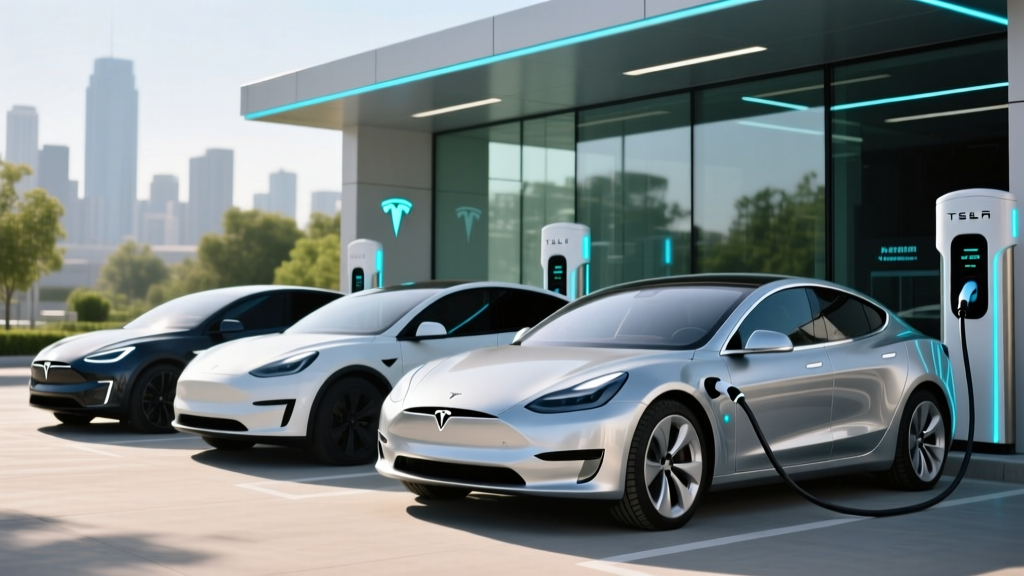
If you own a Tesla — or are about to buy one — the single most practical question is how long charging actually takes across different scenarios. Marketing materials highlight peak kW numbers, but real-world charging involves taper curves, connector differences, and battery-size variables that dramatically shift your timeline. This Tesla charging time chart breaks down exact 10–80% charge durations for every current Tesla model across Level 1, Level 2, and DC fast charging, with the electrical specs and cost data you need to plan your setup.
kW (kilowatts) measures power — the rate at which energy flows into your battery, like water pressure from a hose. kWh (kilowatt-hours) measures energy capacity — the total amount stored, like the size of the tank. A 250 kW charger delivers energy fast; an 82 kWh battery holds a fixed amount. Charging time = kWh ÷ kW (adjusted for curve taper).
Tesla Charging Levels: Speeds Explained
Every Tesla sold today charges at three distinct levels. Understanding what each delivers in miles-per-hour of range is the foundation for reading any charging time chart accurately.
| Level | Voltage | Max Power (kW) | Miles of Range Added/Hour | Typical Use Case |
|---|---|---|---|---|
| Level 1 (120V) | 120V AC | 1.0–1.4 kW | 3–5 mi/hr | Emergency / overnight trickle |
| Level 2 (240V) | 240V AC | 7.2–11.5 kW | 25–44 mi/hr | Home daily charging |
| DC Fast (Supercharger) | 400V+ DC | 170–250 kW | ~1,000+ mi/hr (peak) | Road trips, rapid top-ups |
Level 1 is effectively a trickle — useful only for topping off a parked vehicle or in emergencies. Level 2 at 240V is where 90%+ of Tesla charging happens for owners with home access. DC fast charging via Tesla Superchargers or third-party networks handles road-trip replenishment, but the charge curve tapers significantly above 80% state of charge (SoC).
Tesla Charging Time Chart by Model
The table below shows estimated 10–80% charging times for each current-production Tesla model. These figures assume optimal battery preconditioning and ambient temperatures above 60°F. Cold weather, high SoC starts, and sustained highway-speed driving before charging can add 15–30% to these times.
| Model (2025–2026) | Usable Battery (kWh) | Peak DC kW | DC 10–80% (min) | Level 2 @ 11.5 kW (hrs) | Level 1 @ 1.2 kW (hrs) |
|---|---|---|---|---|---|
| Model 3 RWD | 57.5 (LFP) | 170 | ~25 | ~5.0 | ~48 |
| Model 3 Long Range AWD | 75 (NMC) | 250 | ~22 | ~6.5 | ~63 |
| Model 3 Performance | 75 (NMC) | 250 | ~22 | ~6.5 | ~63 |
| Model Y Long Range AWD | 75 (NMC) | 250 | ~22 | ~6.5 | ~63 |
| Model Y Performance | 75 (NMC) | 250 | ~22 | ~6.5 | ~63 |
| Model S Long Range | 95 (NMC) | 250 | ~28 | ~8.3 | ~79 |
| Model S Plaid | 95 (NMC) | 250 | ~28 | ~8.3 | ~79 |
| Model X Long Range | 95 (NMC) | 250 | ~28 | ~8.3 | ~79 |
| Model X Plaid | 95 (NMC) | 250 | ~28 | ~8.3 | ~79 |
| Cybertruck AWD | 123 (NMC) | 250 | ~35 | ~10.7 | ~103 |
| Cybertruck Cyberbeast | 123 (NMC) | 250 | ~35 | ~10.7 | ~103 |
A Tesla Model 3 Long Range peaks at 250 kW but only sustains that rate briefly between ~10–25% SoC. From 25–50%, power tapers to roughly 150 kW; from 50–80%, it drops to 75–50 kW. The published 10–80% time of ~22 minutes reflects this integrated curve — not a sustained 250 kW for the full session. Charging from 80–100% at a Supercharger can take an additional 20+ minutes and is generally not recommended for battery longevity.
Home Charger Installation: Electrical Requirements and Costs
Installing a Level 2 home charger is the single highest-impact upgrade for Tesla ownership. Here's what the electrical work actually involves and what it costs in 2026.
Electrical Requirements
Tesla's Wall Connector delivers up to 11.5 kW (48 amps) on a 240V circuit. The National Electrical Code requires a dedicated circuit rated at 125% of the continuous load — meaning a 48A charger needs a 60A breaker. If your electrical panel lacks capacity, you'll need either a panel upgrade or a lower-amperage charger configuration (e.g., 32A on a 40A breaker for 7.7 kW).
Installation Cost Breakdown
| Component | Cost Range | Notes |
|---|---|---|
| Tesla Wall Connector (hardware) | $420–$475 | 24ft cable, Wi-Fi enabled, NACS connector |
| Electrician labor (standard install) | $600–$1,500 | Run 6 AWG wire, mount unit, 60A breaker |
| Permit and inspection | $100–$400 | Varies by municipality |
| Panel upgrade (if needed) | $1,500–$3,500 | 100A → 200A service; older homes common |
| Total (no panel upgrade) | $1,120–$2,375 | Most homes with 200A service |
| Total (with panel upgrade) | $2,620–$5,875 | Homes with 100A or older panels |
Homes built after 2000 typically have 200A panels with spare capacity. Pre-1990 homes with 100A service frequently require an upgrade, especially if you're also running electric HVAC, a dryer, and an oven. A licensed electrician can perform a load calculation to determine whether your panel can handle a 60A EV circuit. The IRS Residential Clean Energy Credit covers 30% of charger hardware and installation costs up to $1,000 through 2032, which can offset a meaningful portion of the expense.
Safety and Code Considerations
- Dedicated circuit: EV chargers must be on their own breaker — never shared with other appliances.
- GFCI protection: NEC 2023 and later require GFCI protection for outdoor receptacles; hardwired Wall Connectors bypass this requirement and are generally preferred.
- Outdoor rating: The Tesla Wall Connector is NEMA 4 rated for outdoor installation. If mounting outside, ensure the conduit run is weather-sealed.
- Cable management: The 24-foot cable on the Wall Connector is sufficient for most driveways. For longer runs, consider the 18-foot variant or a third-party unit with a 25-foot cable.
Connector Compatibility: NACS, CCS, and Adapters
All Teslas sold in North America use the NACS (North American Charging Standard) connector — Tesla's proprietary plug, now adopted industry-wide. But the charging landscape in 2026 includes multiple standards, and understanding compatibility matters for public charging access.
| Connector | Used By | Tesla Compatibility | Max DC kW |
|---|---|---|---|
| NACS (Tesla) | All Teslas; Ford, GM, Rivian, Hyundai (2025+) | Native on all Teslas | Up to 350 kW (V4 Supercharger) |
| CCS1 | Most non-Tesla EVs (pre-2025) | Tesla CCS adapter (~$175) required | Up to 350 kW |
| CHAdeMO | Nissan Leaf (legacy) | Not compatible; no adapter available | Up to 100 kW |
| J1772 (Level 2) | All non-Tesla EVs | Tesla J1772 adapter (included with vehicle) | Up to 19.2 kW AC |
Tesla Superchargers use NACS natively. With the opening of the Supercharger network to non-Tesla EVs, many stations now feature "Magic Dock" CCS adapters built into the pedestal. For Teslas charging at third-party CCS stations (Electrify America, EVgo), you'll need the official Tesla CCS adapter. As of 2026, the vast majority of new public DC fast chargers support NACS natively or via integrated adapters, reducing friction significantly compared to 2023.
Charging Cost per Mile: Tesla vs. Gas
The economics of charging vary enormously depending on where and when you plug in. Here's a realistic cost breakdown for a Tesla Model Y Long Range (averaging 3.5 miles/kWh or 28 kWh/100mi).
| Scenario | Rate ($/kWh) | Cost per Full Charge (75 kWh) | Cost per Mile | EPA Range Equivalent |
|---|---|---|---|---|
| Home (off-peak utility rate) | $0.08–$0.12 | $6.00–$9.00 | $0.023–$0.034 | ~265 mi |
| Home (standard residential) | $0.14–$0.18 | $10.50–$13.50 | $0.040–$0.051 | ~265 mi |
| Tesla Supercharger (avg) | $0.28–$0.36 | $21.00–$27.00 | $0.079–$0.102 | ~265 mi |
| Third-party DC fast (EA, EVgo) | $0.35–$0.48 | $26.25–$36.00 | $0.099–$0.136 | ~265 mi |
| Gasoline equivalent (25 MPG, $3.50/gal) | — | $37.10 | $0.140 | ~265 mi equiv. |
Home charging at off-peak rates delivers fuel costs roughly 75–85% lower than a comparable gas vehicle. Even at Supercharger rates, Tesla owners pay roughly 30–50% less per mile than gas. The gap narrows significantly if you rely exclusively on expensive third-party DC fast chargers — a key reason home Level 2 installation pays for itself within 12–18 months for most drivers.
Recommended Home Charging Equipment
Tesla Wall Connector (Best Overall for Tesla Owners)
- Power output: Up to 11.5 kW (48A)
- Connector: NACS (native Tesla)
- Cable length: 24 ft (also available in 18 ft)
- Smart features: Wi-Fi, OTA updates, load sharing (pair two units on one circuit), access control
- Price: ~$420–$475
- Best for: Tesla-only households wanting maximum speed and seamless integration
ChargePoint Home Flex (Best Multi-Vehicle)
- Power output: Up to 12 kW (50A) — configurable down to 16A
- Connector: NACS or J1772 (choose at purchase)
- Cable length: 23 ft
- Smart features: Wi-Fi, app scheduling, Alexa integration, energy tracking
- Price: ~$550–$650
- Best for: Households with a Tesla and a non-Tesla EV (NACS version charges both with adapter)
Emporia Vue Level 2 Charger (Budget Pick)
- Power output: Up to 11.5 kW (48A)
- Connector: J1772 (Tesla adapter included) or NACS
- Cable length: 24 ft
- Smart features: Wi-Fi, app control, solar integration, energy monitoring
- Price: ~$350–$400
- Best for: Budget-conscious buyers who want smart features without Tesla pricing
For Tesla-only households, the Wall Connector is the default recommendation — it's the fastest Level 2 option, integrates with your Tesla account, and supports power sharing if you add a second unit later. If your household includes a non-Tesla EV, the ChargePoint Home Flex in NACS configuration offers flexibility. Always verify your electrical panel's capacity before selecting a 48A unit; a 32A charger on a 40A circuit delivers 7.7 kW and is sufficient for most overnight charging needs.
Understanding the Charge Curve: Why Peak kW Is Misleading
The most common mistake in reading a Tesla charging time chart is assuming peak kW applies throughout the session. It does not. DC fast charging follows a taper curve dictated by battery chemistry and thermal management.
Here's what a typical Supercharger session looks like for a Model Y Long Range (75 kWh NMC battery):
- 10–25% SoC: Peaks at 250 kW — fastest charging occurs here
- 25–50% SoC: Tapers to ~150 kW
- 50–65% SoC: Further reduction to ~100 kW
- 65–80% SoC: Drops to ~50–75 kW
- 80–100% SoC: Trickle charges at ~10–25 kW (avoid unless necessary)
This is why the 10–80% metric is the industry standard — it captures the useful, relatively fast portion of the curve. Charging past 80% on a road trip wastes time; plan your stops to arrive at low SoC and depart at 70–80% for maximum efficiency. LFP batteries (used in the Model 3 RWD) tolerate regular 100% charging better than NMC and can accept higher power at higher SoC, slightly flattening the curve.
Frequently Asked Questions
How much does it cost to install a home Tesla charger?
Expect $1,120–$2,375 total for a standard installation (Tesla Wall Connector hardware, electrician labor, permit) if your 200A electrical panel has spare capacity. Homes needing a panel upgrade from 100A to 200A should budget $2,620–$5,875. The IRS Residential Clean Energy Credit covers 30% of hardware and installation up to $1,000 through 2032, per IRS guidelines.
How fast will each charging level add range to my Tesla?
Level 1 (120V) adds 3–5 miles per hour — essentially overnight trickle charging. Level 2 (240V, 48A) adds 35–44 miles per hour, replenishing a Model Y in roughly 6.5 hours from empty. DC fast charging at a V3 Supercharger adds up to 200 miles in approximately 15 minutes at peak rate, though the full 10–80% session takes 22–35 minutes depending on model.
Which connector and charger is compatible with my Tesla?
All Teslas use the NACS connector natively. At home, the Tesla Wall Connector is the optimal choice. For public charging, Tesla Superchargers use NACS. At third-party CCS stations, you'll need the Tesla CCS adapter (~$175). The J1772 adapter (included with your Tesla) works for public Level 2 charging at non-Tesla stations.
How much does charging a Tesla cost per mile vs. gas?
Home charging at off-peak rates costs $0.023–$0.034 per mile — roughly 75–85% less than a 25 MPG gas car at $3.50/gallon ($0.14/mile). Supercharger charging averages $0.079–$0.102 per mile, still 25–45% cheaper than gas. Your exact cost depends on local electricity rates and how often you use DC fast charging vs. home Level 2.
What electrical upgrades might I need for a home charger?
A 48A Level 2 charger requires a dedicated 60A, 240V circuit. If your panel is 200A with available slots and capacity, no upgrade is needed. If your panel is 100A (common in homes built before 1990) or already near capacity with existing loads, you'll need a panel upgrade to 200A — typically $1,500–$3,500. A licensed electrician can perform a load calculation to determine your exact situation. Some homeowners opt for a 32A charger on a 40A breaker to avoid a panel upgrade entirely.
Should I charge my Tesla to 100% regularly?
For NMC batteries (Model 3 Long Range, Model Y, S, X), Tesla recommends setting the daily charge limit to 80% and charging to 100% only when needed for long trips. For LFP batteries (Model 3 RWD), Tesla recommends charging to 100% at least once per week to maintain battery calibration. Long-term degradation data from fueleconomy.gov shows most Tesla batteries retain 85–90% capacity after 150,000 miles with proper charging habits.