The Short Answer: No, Tesla Charging Stations Are Not Free
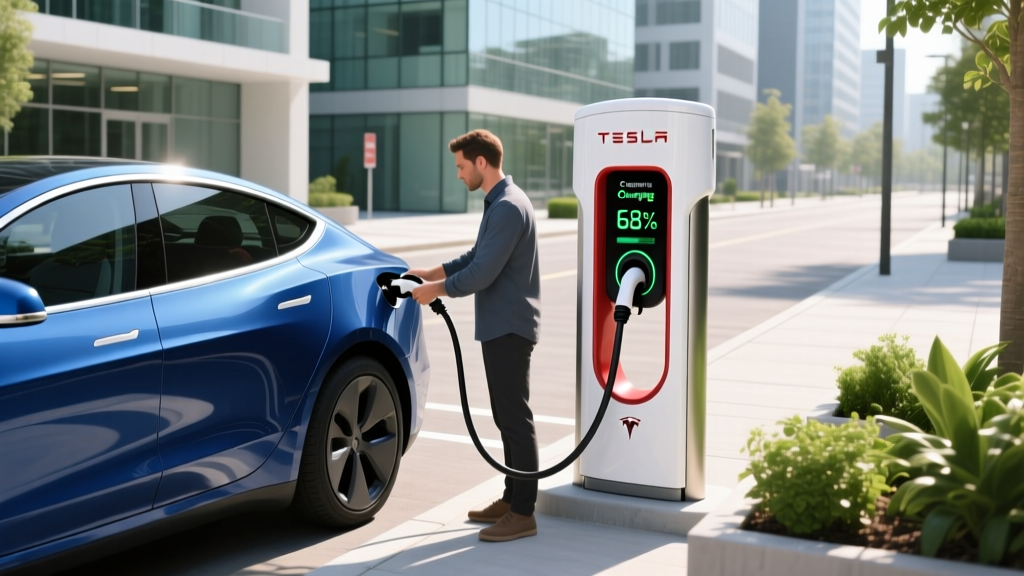
If you've been wondering whether Tesla Superchargers still offer complimentary electricity, the reality in 2026 is straightforward: Tesla charging stations are not free for the vast majority of owners. Tesla phased out its legacy free unlimited Supercharging program years ago, and today nearly every Tesla driver pays per kilowatt-hour (kWh) or per minute at Supercharger stalls. A handful of older Model S and Model X vehicles purchased with transferable free Supercharging credits still exist on the road, but these are rare exceptions tied to specific original-purchase agreements — not a current benefit.
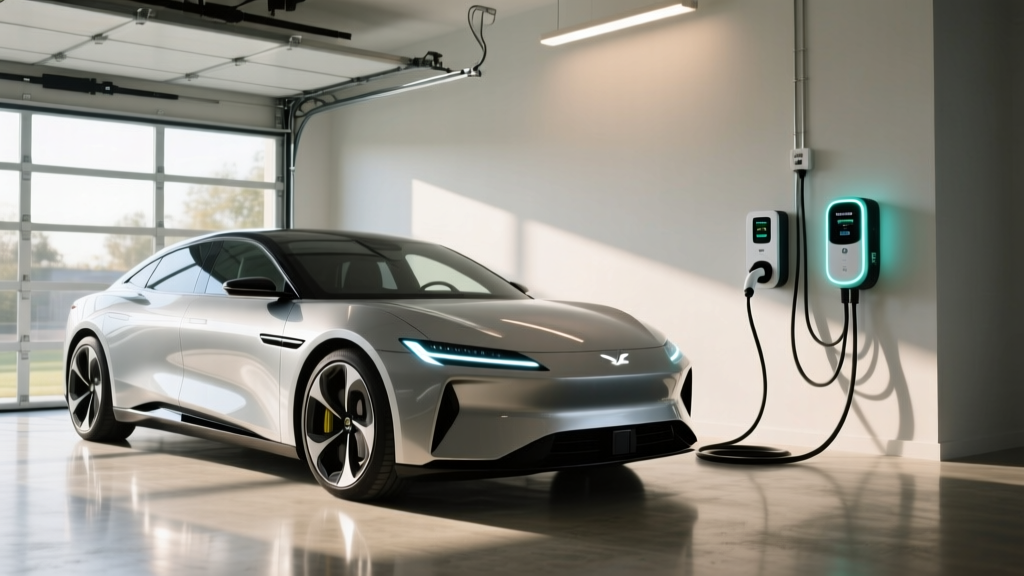
The good news? Even without free access, Tesla's Supercharger network remains one of the most reliable and cost-effective public charging options available. And for most EV owners — Tesla or otherwise — the real savings come from home charging, where electricity costs a fraction of public rates. This guide breaks down exactly what you'll pay at every charging level, what it costs to install a home charger, and how EV charging compares to gasoline on a per-mile basis.
Understanding EV Charging Levels: Speeds, Power, and Range Added
Before comparing costs, you need to understand the three charging levels available to EV owners. The critical distinction: kW (kilowatts) measures power — how fast energy flows into your battery. kWh (kilowatt-hours) measures energy — the total capacity stored in your battery, like gallons in a fuel tank. A 75 kWh battery charged at 11.5 kW takes roughly 6.5 hours from empty to full; at 250 kW DC fast charging, that same battery can go from 10% to 80% in about 25 minutes.
| Level | Voltage / Amps | Power Output | Miles of Range Added per Hour | Typical Use Case |
|---|---|---|---|---|
| Level 1 | 120V / 12A | ~1.4 kW | 3–5 miles/hr | Overnight top-up, emergency, PHEVs |
| Level 2 | 240V / 32–48A | 7.7–11.5 kW | 25–44 miles/hr | Daily home charging, workplace |
| DC Fast Charging | 400–800V DC | 50–350 kW | 150–1,000+ miles/hr (peak) | Road trips, highway corridors |
Real-world context: A Tesla Model Y Long Range (81 kWh usable battery, EPA 310 miles) charging on a 48A Level 2 home charger at 11.5 kW will add roughly 40 miles of range per hour — enough to fully replenish overnight. On a V3 Tesla Supercharger (peak 250 kW), that same Model Y can charge from 10% to 80% in approximately 25–28 minutes. However, charging speed tapers significantly above 80% State of Charge (SoC) to protect battery health, so that last 20% can take as long as the first 70%.
How Much Does It Cost to Install a Home EV Charger?
Home Level 2 charging is where EV ownership economics shine — but the upfront installation cost varies enormously depending on your home's electrical infrastructure. Here's a realistic breakdown based on 2026 electrician rates and equipment pricing:
| Component | Low-End Estimate | High-End Estimate | Notes |
|---|---|---|---|
| Level 2 Charger Equipment | $250 | $700 | Smart Wi-Fi chargers (ChargePoint, Emporia, Tesla Wall Connector) |
| Electrician Labor (standard install) | $300 | $800 | Running 240V/50A circuit near panel, NEMA 14-50 outlet or hardwired |
| Permit & Inspection | $50 | $250 | Varies by municipality; some utilities bundle this |
| Electrical Panel Upgrade (if needed) | $1,500 | $4,000+ | Required if your panel is 100A or maxed out; older homes common |
| Total (no panel upgrade) | $600 | $1,750 | Most homes with 200A service fall here |
| Total (with panel upgrade) | $2,100 | $5,750+ | Homes with 100A or older panels |
Electrical requirements for a standard Level 2 install: You'll need a dedicated 240V circuit rated for 40–60 amps (a 50A breaker supports continuous 40A draw per NEC 80% rule). The circuit requires 6 AWG copper wire for runs up to ~50 feet; longer runs may need 4 AWG to minimize voltage drop. A NEMA 14-50 receptacle offers portability (unplug and take your charger when you move), while hardwired installations allow slightly higher amperage and eliminate the GFCI breaker requirement that some 14-50 setups mandate.
Panel upgrade reality check: If your home has a 100-amp main panel — common in homes built before the 1990s — adding a 50A EV circuit may push your total load beyond safe capacity. A licensed electrician will perform a load calculation per NEC Article 220 to determine if an upgrade to 200A service is necessary. This is the single biggest variable in home charging cost, and it's non-negotiable for safety.
Charging Cost Per Mile: Home vs. Public vs. Gasoline
The reason most EV owners tolerate non-free public charging is that home electricity rates make EVs dramatically cheaper per mile than gasoline vehicles. Here's how the math works across common scenarios:
| Scenario | Rate | Efficiency Assumption | Cost Per Mile |
|---|---|---|---|
| Home charging (national avg electricity) | $0.17/kWh | 3.5 miles/kWh (avg EV) | $0.049/mile |
| Home charging (off-peak TOU rate) | $0.09/kWh | 3.5 miles/kWh | $0.026/mile |
| Tesla Supercharger (avg 2026) | $0.32/kWh | 3.5 miles/kWh | $0.091/mile |
| Electrify America / public DC fast | $0.43/kWh | 3.5 miles/kWh | $0.123/mile |
| Gasoline vehicle (28 MPG combined) | $3.45/gallon | 28 MPG | $0.123/mile |
| Gasoline vehicle (22 MPG combined, truck/SUV) | $3.45/gallon | 22 MPG | $0.157/mile |
What this means in practice: A Tesla Model 3 owner driving 12,000 miles per year and charging primarily at home on an average rate spends roughly $588/year on electricity. That same mileage in a 28 MPG gasoline car at $3.45/gal costs $1,477/year — a savings of nearly $900 annually. Even exclusive Supercharger use comes to about $1,092/year, still below gasoline.
Tesla Supercharger pricing varies by location, time of day, and demand. In 2026, typical rates range from $0.25/kWh in lower-cost regions to $0.48/kWh in premium urban locations. Tesla also offers off-peak Supercharger discounts at select stations, reducing rates by 20–30% during overnight hours. Non-Tesla EVs accessing Superchargers via the NACS adapter or built-in NACS port (now standard on Ford, Rivian, GM, and others) may pay a slightly higher per-kWh rate unless enrolled in Tesla's membership tier.
Connector Compatibility: Which Charger Works With Your EV?
The EV charging connector landscape has consolidated significantly since 2023, when Ford and GM announced adoption of the North American Charging Standard (NACS) — Tesla's proprietary connector, now opened as an industry standard. Here's where things stand in 2026:
| Connector Type | Brands Using It (Native) | DC Fast Charge Access | Adapter Needed? |
|---|---|---|---|
| NACS (Tesla) | Tesla (all), Ford, GM, Rivian, Volvo, Polestar, Mercedes, Fisker | Tesla Superchargers + growing NACS networks | CCS-to-NACS adapter for older CCS vehicles |
| CCS1 | Hyundai, Kia, VW, BMW, legacy models from Ford/GM | Electrify America, EVgo, ChargePoint, Ionity | NACS-to-CCS adapter for Tesla Supercharger access |
| CHAdeMO | Nissan Leaf (legacy), Mitsubishi Outlander PHEV | Declining network; limited new installations | Not cross-compatible; CHAdeMO stations shrinking |
Key 2026 development: Most new EVs sold in North America now ship with a native NACS charge port. If you own a 2024–2025 model-year CCS vehicle (like a Hyundai Ioniq 5 or VW ID.4 from those years), you can access Tesla Superchargers using a CCS-to-NACS adapter — Tesla sells one for approximately $199, and third-party options from Lectron and A2Z are available for $120–$160. Always verify adapter compatibility with your specific model and firmware version before purchasing.
For Level 2 home charging, all EVs (including Teslas) use the J1772 standard or NACS (which carries the same J1772 signaling protocol in a smaller connector). Tesla vehicles come with a J1772 adapter in the glovebox for use with non-Tesla Level 2 chargers, and universal Level 2 chargers like the ChargePoint Home Flex work with all EVs using the appropriate connector.
Recommended Home Level 2 Chargers (2026)
After testing and tracking reliability data across the major home charger brands, here are our top picks for different budgets and needs:
Tesla Wall Connector (Gen 4) — Best for Tesla Owners
- Power Output: Up to 11.5 kW (48A on a 60A circuit)
- Connector: NACS native
- Cable Length: 24 feet
- Smart Features: Wi-Fi, OTA updates, Power Share (load balancing between two units), Tesla app integration
- Price: ~$425
- Best For: Tesla-only households; highest power output for NACS vehicles
ChargePoint Home Flex — Most Versatile
- Power Output: Up to 12 kW (50A, adjustable down to 16A via DIP switches)
- Connector: J1772 (NACS adapter included or available)
- Cable Length: 23 feet
- Smart Features: Wi-Fi, ChargePoint app scheduling, Alexa/Google Home, energy tracking, flexible amperage for older panels
- Price: ~$549
- Best For: Multi-EV households, homes needing adjustable amperage
Emporia Vue Level 2 Charger — Best Budget Smart Charger
- Power Output: Up to 11.5 kW (48A on a 60A circuit)
- Connector: J1772
- Cable Length: 24 feet
- Smart Features: Wi-Fi, Emporia app, energy monitoring, solar integration, scheduling, works with Emporia whole-home energy monitor
- Price: ~$349
- Best For: Budget-conscious buyers who still want smart scheduling and energy data
Pro tip on amperage selection: Match your charger's amperage to your circuit capacity. A 60A breaker supports a continuous 48A draw; a 50A breaker supports 40A continuous. Never exceed 80% of your breaker rating for continuous loads (NEC Article 210.20). If your panel is tight on capacity, chargers like the ChargePoint Home Flex let you dial down to 32A or even 16A — still delivering 20+ miles of range per hour, which is sufficient for most daily driving.
Charging Time Examples: How Long Does a Full Charge Take?
Charging time depends on battery size (kWh), charger power (kW), and the charge curve — the reality that DC fast charging slows dramatically above 80% SoC to protect battery chemistry. Here are realistic 10% to 80% times for popular 2026 EV models:
| Vehicle | Battery (usable kWh) | Level 2 at 11.5 kW (home) | DC Fast (peak kW / 10–80%) |
|---|---|---|---|
| Tesla Model 3 Long Range | 75 kWh | ~4.5 hours (0–100%) | 250 kW / ~25 min |
| Tesla Model Y Long Range | 81 kWh | ~5 hours (0–100%) | 250 kW / ~28 min |
| Ford Mustang Mach-E Extended Range | 91 kWh | ~5.5 hours (0–100%) | 150 kW / ~38 min |
| Hyundai Ioniq 5 Long Range | 77.4 kWh | ~4.8 hours (0–100%) | 238 kW / ~22 min |
| Chevrolet Equinox EV 3RS | 85 kWh | ~5.2 hours (0–100%) | 150 kW / ~35 min |
Understanding the charge curve: Peak kW ratings are just that — peaks. A Hyundai Ioniq 5 can sustain ~238 kW from roughly 10–55% SoC, but drops to ~100 kW by 70% and ~45 kW by 85%. This is why the 10–80% metric is the industry standard for DC fast charging comparisons: it represents the practical "highway stop" window where charging speed is highest. Preconditioning your battery (a feature most EVs activate automatically when you navigate to a charger) warms the cells to optimal temperature and can shave 3–8 minutes off your session.
Safety, Electrical Code, and Installation Best Practices
EV charging involves sustained high-current electrical loads — far more demanding than typical household appliances. Here are the non-negotiable safety and code considerations:
- Dedicated circuit: Your Level 2 charger must have its own dedicated circuit — never share with other appliances. A shared circuit risks overloading and tripping breakers during sustained charging sessions.
- GFCI protection: NEC 2020 and later require GFCI (Ground Fault Circuit Interrupter) protection for 14-50 receptacles used for EV charging. Hardwired installations typically do not require GFCI at the breaker, as the charger itself provides ground fault protection. Your electrician will advise based on local code interpretation.
- Outdoor rating: If your charger is installed outdoors (garage wall facing exterior, carport, driveway post), ensure the unit carries an NEMA 4 or IP65 rating for weather resistance. All three chargers recommended above meet outdoor-rated standards.
- Wire gauge and run length: For a 50A circuit, 6 AWG copper is standard for runs under 50 feet. Longer runs require upsizing to 4 AWG to prevent voltage drop exceeding 3% (per NEC recommendations). Aluminum wire (SER cable) is a code-compliant, lower-cost alternative for panel-to-outlet runs inside walls.
- Permits and inspections: Most jurisdictions require an electrical permit for new 240V circuits. The inspection ensures proper wire gauge, breaker sizing, grounding, and torque on connections. Skipping permits risks voiding homeowner insurance coverage for electrical fires.
- Smart load management: If your panel is near capacity but you want to avoid a costly upgrade, devices like the Emporia Smart Load Management system or Tesla's Power Share can dynamically throttle charger amperage based on real-time household load — keeping total draw within your panel's rating.
Frequently Asked Questions
Are any Tesla Superchargers still free in 2026?
Effectively no. A small number of 2016–2017 Model S and Model X vehicles carry legacy free unlimited Supercharging credits that transfer with the vehicle, but these are collector-market exceptions. Tesla occasionally runs limited-time promotional free charging events at specific locations, but there is no standing free Supercharger access for current-model vehicles. Every new Tesla sold today charges standard per-kWh rates.
Can non-Tesla EVs use Tesla Superchargers?
Yes. Tesla has opened its Supercharger network to non-Tesla EVs equipped with a NACS charge port or a CCS-to-NACS adapter. Ford, Rivian, GM, and Volvo/Polestar EVs with native NACS ports (2025+ models) can plug directly in. Older CCS vehicles need an approved adapter. Non-Tesla vehicles may pay a slightly higher per-kWh rate unless enrolled in a Tesla charging membership. Use the Tesla app to locate compatible stalls and initiate sessions.
How much does it cost to install a home EV charger?
For a home with adequate 200A electrical service, expect $600–$1,750 total (charger + electrician + permit). Homes needing a panel upgrade from 100A to 200A should budget an additional $1,500–$4,000. A licensed electrician should perform a load calculation before quoting. Some utilities offer rebates of $200–$500 for smart charger installations — check with your local provider.
How fast will each charging level add range?
Level 1 (120V standard outlet): 3–5 miles per hour. Level 2 (240V home charger): 25–44 miles per hour depending on amperage. DC Fast Charging: 150–1,000+ miles per hour at peak, but sessions are measured in minutes (10–80% in 18–40 minutes) because the charge rate tapers as the battery fills.
How much does EV charging cost per mile compared to gasoline?
Home charging at the national average electricity rate ($0.17/kWh) costs approximately $0.049/mile for an average EV — about one-third the cost of a 28 MPG gasoline car at $3.45/gallon ($0.123/mile). Even public DC fast charging at $0.43/kWh ($0.123/mile) matches or beats gasoline. The savings widen further with time-of-use electricity plans offering off-peak rates of $0.08–$0.10/kWh.
What electrical upgrades might I need for a home charger?
The most common upgrade is a 200A panel replacement if your home currently has 100A service — this affects roughly 20–30% of US homes, particularly those built before 1990. You may also need a new conduit run from the panel to the garage, a sub-panel if your garage is detached, or a smart load management system if you want to avoid a panel upgrade. Always get a professional load calculation before assuming your panel can handle a 50A EV circuit.
Is the federal tax credit available for home charger installation?
The IRS §30C Alternative Fuel Vehicle Refueling Property Credit offers up to $1,000 (30% of equipment and installation costs) for home EV charger installations, subject to income limitations and census-tract eligibility requirements. The credit applies to equipment placed in service through 2032. Consult a tax professional to confirm your eligibility based on your specific location and income.