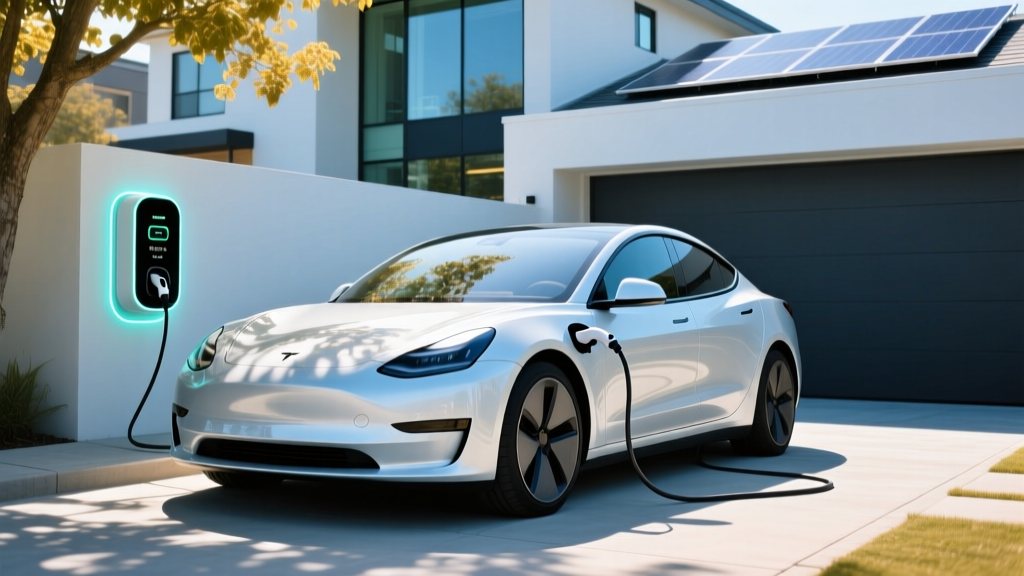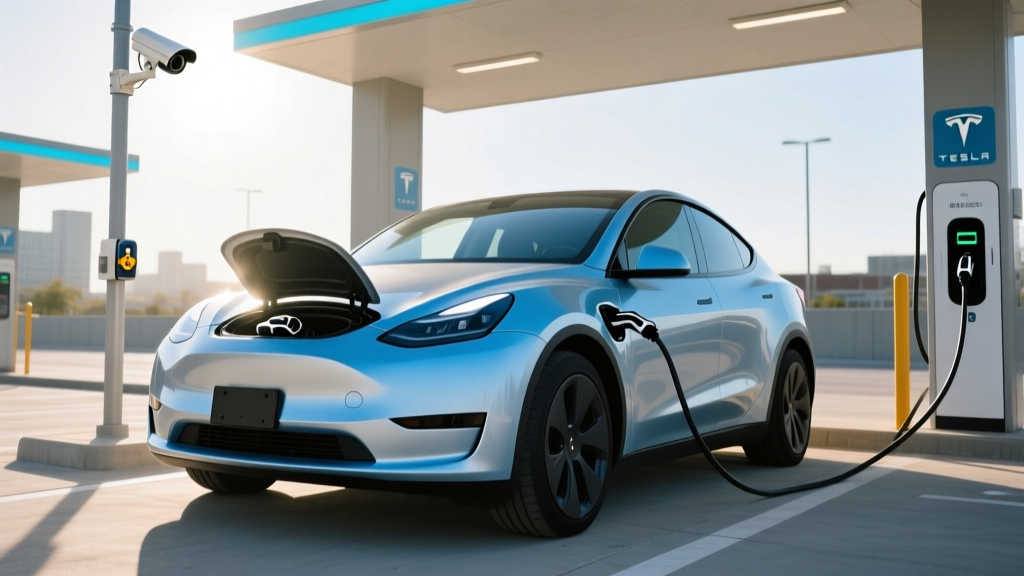
As electric vehicle adoption accelerates, a frustrating trend has emerged alongside it: Tesla charging station theft. Thieves are targeting Wall Connectors, portable chargers, and even the copper wiring inside charging pedestals. For EV owners investing $500–$2,000+ in home charging equipment, understanding the risk — and more importantly, how to mitigate it — is now part of responsible EV ownership.
This guide covers everything you need to know about securing your Tesla or universal EV charger at home, while also walking you through the full charging ecosystem: levels, installation costs, electrical requirements, connectors, and equipment picks for 2026.
Why Tesla Charging Station Theft Is Increasing
Several factors converge to make EV chargers attractive theft targets:
- High copper value: Charging cables contain significant copper wiring. With copper prices exceeding $4.50/lb in 2026, a 24-foot charging cable can represent $150–$300 in scrap metal value.
- Resale market: Tesla Wall Connectors retail for $420–$600 and can be resold online with minimal verification.
- Portable charger vulnerability: The Tesla Mobile Connector (Gen 2) and similar portable units are easily grabbed if left plugged in outdoors or visible through a garage window.
- Charging-desert desperation: In areas with limited public infrastructure, stolen chargers find ready buyers among EV owners desperate for home charging solutions.
Reports from EV owner forums and local news outlets in California, Texas, and Florida documented dozens of charger thefts in 2025, with the trend continuing into 2026. The targets are overwhelmingly outdoor-installed Level 2 chargers in driveways and carports.
Charging Levels Explained: Speed, Power, and Range Added
Before choosing and securing a charger, understand what each level delivers. Power is measured in kW (kilowatts) — the rate of energy flow — while battery capacity is measured in kWh (kilowatt-hours) — the total energy stored. Confusing the two is the most common EV literacy mistake.
| Level | Voltage | Power (kW) | Miles of Range/Hour | Typical Use Case |
|---|---|---|---|---|
| Level 1 | 120V AC | 1.2–1.9 kW | 3–5 mi/hr | Overnight trickle; PHEVs |
| Level 2 (Home) | 240V AC | 7.2–11.5 kW | 20–44 mi/hr | Daily home charging |
| Level 2 (Public) | 240V AC | 6.6–19.2 kW | 18–70 mi/hr | Workplace, retail, apartments |
| DC Fast Charge | 400–800V DC | 50–350 kW | 150–1,000+ mi/hr | Road trips, highway stops |
Real-world context: A Tesla Model Y Long Range (75 kWh usable battery, EPA 310 miles) charging on a Level 2 home charger at 11.5 kW will go from 10% to 80% in approximately 5–6 hours. On a 250 kW Supercharger, the same 10–80% session takes roughly 18–22 minutes, though the charge curve tapers significantly above 80% to protect battery health.
How Much Does It Cost to Install a Home EV Charger?
The total cost of a home Level 2 charging setup breaks into three components: the charger hardware, electrical labor, and permits. Here's what to expect in 2026:
| Component | Typical Range | Notes |
|---|---|---|
| Level 2 Charger (Equipment) | $300–$700 | Tesla Wall Connector ~$420; ChargePoint Home Flex ~$550; Emporia Vue ~$400 |
| Electrician Labor (standard install) | $500–$1,500 | 240V/40A–50A circuit run from panel to garage/driveway |
| Electrical Permit | $50–$300 | Varies by municipality; some jurisdictions bundle with inspection |
| Panel Upgrade (if needed) | $1,500–$4,000 | Upgrading from 100A to 200A service; common in homes built before 1990 |
| Conduit/Trenching (long runs) | $300–$1,200 | If charger is far from panel (e.g., detached garage, driveway pedestal) |
| Total (no panel upgrade) | $850–$2,500 | Most homes with 200A service and nearby panel |
| Total (with panel upgrade) | $2,350–$6,500 | Older homes needing service upgrade |
Electrical Requirements: What Your Panel Needs
A Level 2 home charger requires a dedicated 240V circuit, similar to a clothes dryer or electric oven. Here are the specifics:
- Circuit rating: 40A or 50A breaker (supports 32A or 40A continuous draw, respectively — electrical code requires circuits rated at 125% of continuous load)
- Wire gauge: 6 AWG copper for 50A; 8 AWG for 40A (your electrician will confirm based on run length)
- Outlet type: NEMA 14-50 (most common, universal) or hardwired connection (required by some local codes for outdoor installs)
- GFCI protection: NEC 2020 and later require GFCI breakers for EV charging outlets — adds $50–$150 to breaker cost
- Dedicated circuit: The EV charger cannot share a circuit with other major appliances
Do You Need a Panel Upgrade?
Your electrical panel has a total amperage capacity (usually 100A or 200A in residential homes). Adding a 40A–50A EV circuit to a 100A panel that's already near capacity risks tripping the main breaker or creating a fire hazard. Your electrician will perform a load calculation to determine available capacity.
Homes built before 1990 often have 100A service. Upgrading to 200A typically costs $1,500–$4,000 depending on utility requirements, trenching, and local labor rates. Some utilities offer rebates for panel upgrades tied to EV adoption — check with your provider.
Connector Compatibility: NACS, CCS, and CHAdeMO
The connector landscape has shifted dramatically. As of 2025, nearly all major automakers adopted the NACS (North American Charging Standard) — the Tesla-originated connector — for new vehicles. Here's where things stand in 2026:
| Connector | Brands Using It | Adapter Needed? |
|---|---|---|
| NACS (Tesla) | Tesla, Ford, GM, Rivian, Volvo, Polestar, Fisker, BMW (2026+), Honda (2026+) | No — native on new models; CCS-to-NACS adapters available for older EVs |
| CCS1 | Hyundai, Kia (pre-2026), VW, Audi, BMW (pre-2026), Mercedes | NACS-to-CCS adapters (~$150–$250) for Supercharger access |
| CHAdeMO | Nissan Leaf (legacy only; discontinued in US) | CHAdeMO-to-CCS adapters available but limited DCFC access |
For Tesla owners: Your Wall Connector uses NACS natively. If you own a non-Tesla EV with CCS, you'll need a NACS-to-CCS adapter (such as the Lectron or A2Z adapter, ~$180–$250) to use a Tesla Wall Connector at home. The Tesla Wall Connector Gen 4 (2025 release) includes a "Magic Dock" style universal connector option for $580.
Protecting Your Tesla Charger From Theft: Practical Strategies
With the investment in a Wall Connector or portable charger, here are proven methods to deter Tesla charging station theft:
Physical Security Measures
- Hardwire instead of plug-in: A hardwired Wall Connector cannot be unplugged and walked away with. It requires an electrician to disconnect, making it far less attractive to opportunistic thieves. Most electricians charge only $50–$100 more for hardwiring vs. NEMA 14-50 outlet installation.
- Locking charger enclosure: Products like the EV Charger Lock Box ($80–$150) enclose the charger body in a steel cage bolted to the wall, exposing only the cable.
- Cable lock systems: Steel cable locks (similar to bicycle locks) threaded through the charging cable loop deter grab-and-run theft. Brands like ChargePoint and EVsaver sell purpose-built cable locks for $30–$60.
- Tamper-proof mounting bolts: Replace standard mounting screws with security Torx or one-way bolts ($15–$25 at hardware stores).
- Lockable NEMA cover: If using a plug-in charger, a weatherproof lockable NEMA 14-50 cover box ($40–$80) prevents the plug from being disconnected.
Surveillance and Deterrence
- Motion-activated lighting: A $40–$80 LED flood light with motion sensor near the charger eliminates the cover of darkness thieves prefer.
- Security cameras: A visible camera (Ring, Nest, or Wyze) pointed at the charging area provides both deterrence and evidence. Models with AI person detection ($60–$150) can send real-time alerts.
- Smart charger features: Chargers like the ChargePoint Home Flex and Emporia Vue offer usage alerts via their apps — you'll know instantly if charging activity starts or stops unexpectedly.
Insurance Coverage
Most homeowner's insurance policies cover permanently installed EV chargers under "dwelling" or "other structures" coverage. However, portable chargers may require a personal property rider. Document your charger purchase with receipts and serial numbers. If theft occurs, file a police report immediately — many jurisdictions now track EV equipment theft specifically.
Recommended Chargers: Secure, Smart, and Worth the Investment
When selecting a charger, prioritize models that support hardwiring (for theft resistance), offer smart features, and match your vehicle's onboard charger capacity.
| Charger | Max Output | Connector | Cable Length | Smart Features | Price |
|---|---|---|---|---|---|
| Tesla Wall Connector (Gen 4) | 11.5 kW (48A) | NACS (universal Magic Dock option) | 24 ft | Wi-Fi, OTA updates, load sharing, access control | $420 (NACS) / $580 (Magic Dock) |
| ChargePoint Home Flex | 12 kW (50A) | NACS or CCS1 (configurable) | 23 ft | App scheduling, Alexa, usage tracking, flex amperage | $549 |
| Emporia Vue EV Charger | 11.5 kW (48A) | NACS (adapter for CCS) | 24 ft | Energy monitoring, solar integration, time-of-use optimization | $399 |
| Grizzl-E Smart | 10 kW (40A) | NACS or J1772 | 24 ft | App control, OCPP compatible, extreme cold rated (-40°F) | $499 |
| Enel X JuiceBox Pro | 11.5 kW (48A) | NACS or CCS1 | 25 ft | Load balancing, utility demand-response, detailed analytics | $599 |
Charging Cost: Home vs. Public vs. Gas
One silver lining of theft risk: once your charger is installed and secured, home charging remains dramatically cheaper than gasoline or public DC fast charging.
| Scenario | Rate | Cost per Mile* |
|---|---|---|
| Home Level 2 (off-peak TOU rate) | $0.09–$0.14/kWh | $0.027–$0.042 |
| Home Level 2 (standard rate) | $0.14–$0.22/kWh | $0.042–$0.066 |
| Public Level 2 (ChargePoint, EVgo) | $0.25–$0.49/kWh | $0.075–$0.147 |
| DC Fast Charge (Electrify America, Tesla Supercharger) | $0.30–$0.56/kWh | $0.090–$0.168 |
| Gasoline (28 MPG avg, $3.40/gal) | $3.40/gallon | $0.121 |
| Gasoline (22 MPG truck/SUV, $3.40/gal) | $3.40/gallon | $0.155 |
*Based on a vehicle efficiency of 3.0–3.5 miles/kWh (typical for a mid-size EV like the Tesla Model Y or Ford Mustang Mach-E). Data from fueleconomy.gov and national average electricity rates.
A Tesla Model Y owner charging at home on off-peak rates spends roughly $450–$550/year on electricity for 12,000 miles of driving. The equivalent gas vehicle at 28 MPG spends $1,450–$1,550/year. That's $900–$1,000 in annual savings — which helps offset both the charger installation cost and any security investments.
DC Fast Charging Times: What to Expect on the Road
When you're away from home, DC fast charging speeds vary dramatically by vehicle and station. Here are 10–80% times for popular 2026 models:
- Tesla Model Y Long Range (75 kWh): ~18–22 minutes at a 250 kW V4 Supercharger (peak ~170 kW, tapering above 50% SoC)
- Hyundai Ioniq 5 (77.4 kWh): ~18 minutes at a 350 kW station (800V architecture sustains ~240 kW peak)
- Ford Mustang Mach-E Extended Range (91 kWh): ~25–30 minutes at 150 kW (peak ~115 kW)
- Chevrolet Equinox EV (85 kWh): ~28–32 minutes at 150 kW (peak ~110 kW)
- BMW iX xDrive50 (111.5 kWh): ~28–34 minutes at 200 kW (peak ~150 kW)
Charge curve reality check: No EV sustains its peak charge rate for the entire session. A vehicle rated at "250 kW peak" typically holds that rate only between 10–30% SoC, then tapers progressively. This is why 10–80% time is the standard metric — charging from 80–100% can take as long as the 10–80% session due to tapering and cell balancing.
Safety and Code Compliance
Proper installation isn't just about performance — it's about fire safety and insurance compliance:
- NEC Article 625: The National Electrical Code governs all EV charging installations. Your electrician must comply with the latest edition adopted in your state.
- Outdoor-rated equipment: Any charger installed outside must carry a NEMA 4 (weatherproof) rating. All chargers listed above meet this standard.
- GFCI protection: Required for all receptacle-based (plug-in) EV charging circuits. Hardwired installations may be exempt in some jurisdictions — confirm with your inspector.
- Ventilation: Indoor garage installations generally don't require additional ventilation for EV chargers (unlike lead-acid battery charging). However, the installation area should be free of stored flammable materials within 3 feet.
- Utility notification: Some utilities require you to notify them before installing an EV charger, especially if adding a second 240V circuit. Many offer TOU (time-of-use) rate plans that significantly reduce charging costs.
Frequently Asked Questions
Is Tesla charging station theft covered by insurance?
Most homeowner's insurance policies cover permanently installed (hardwired or bolted) EV chargers under dwelling or other-structures coverage. Portable chargers may require a personal property endorsement. Check your policy's "other structures" limit — it's typically 10% of your dwelling coverage. File a police report for any theft to support your claim.
Should I hardwire my Tesla Wall Connector or use a NEMA 14-50 outlet?
For theft-prone areas, hardwiring is strongly recommended. A hardwired charger cannot be unplugged and stolen without tools and electrical knowledge. Hardwiring also eliminates the GFCI breaker requirement in some jurisdictions (saving $50–$150), and provides a cleaner installation. The only downside: you can't easily take the charger with you if you move. Most electricians charge $50–$100 more for hardwiring.
Can thieves steal my Tesla Mobile Connector from my garage?
Yes — if your garage is unlocked or has a vulnerable door. The Mobile Connector (Gen 2, ~$200 replacement cost) is small enough to pocket. Always store it out of sight when not in use, and never leave it plugged in and visible through a garage window. If you use the Mobile Connector for daily home charging, consider upgrading to a permanently mounted Wall Connector instead.
What's the cheapest way to charge at home while protecting against theft?
The Emporia Vue EV Charger ($399) hardwired to a 48A circuit offers the best value-to-security ratio. Hardwiring deters theft, the built-in energy monitoring helps you optimize for off-peak TOU rates, and the $399 price point minimizes your financial exposure. Pair with a $40 motion-activated light for basic deterrence — total investment under $500 before installation.
Do I need a permit to install a home EV charger?
Yes, in most US jurisdictions. Electrical permits for EV charger installation typically cost $50–$300 and ensure your installation is inspected for code compliance. Skipping the permit risks insurance claim denial if a fire occurs, and may cause issues during a home sale inspection. Your electrician usually handles permit filing.
How fast does a Level 2 home charger add range compared to Level 1?
A Level 1 charger (standard 120V outlet) adds 3–5 miles of range per hour — adequate for PHEVs with small batteries but painfully slow for a full-size BEV. A Level 2 charger at 11.5 kW adds 35–44 miles per hour, meaning an overnight session (8 hours) can replenish 280–350 miles — more than enough for virtually any daily driving pattern. See the charging levels table above for the full breakdown.