If you've watched Tesla Superchargers pop up along highway corridors and wondered whether you could own or operate one, you're not alone. Searches around Tesla charging station franchise cost have surged as the Supercharger network opened to non-Tesla EVs via the NACS standard and as federal charging-infrastructure funds expanded. But the economics of hosting, owning, or co-investing in a DC fast-charging site are layered — and they differ sharply from buying a fast-food franchise.
This guide dissects what a Tesla Supercharger site actually costs to deploy, how the hosting and revenue-share models work, what property owners can realistically earn, and how those costs compare to installing Level 2 destination charging or independent DC fast-charging stations. We'll also cover the electrical, permitting, and equipment realities so you can evaluate whether a charging site makes financial sense for your property.
Does Tesla Actually Offer a Charging Station Franchise?
The short answer: no, not in the traditional franchise sense. Tesla does not sell Supercharger franchises the way McDonald's sells restaurant franchises. You cannot buy a license to operate a branded Tesla Supercharger under your own LLC and collect per-kWh revenue independently. Instead, Tesla uses a host-partnership model for most new sites.
Here's how the structure typically works:
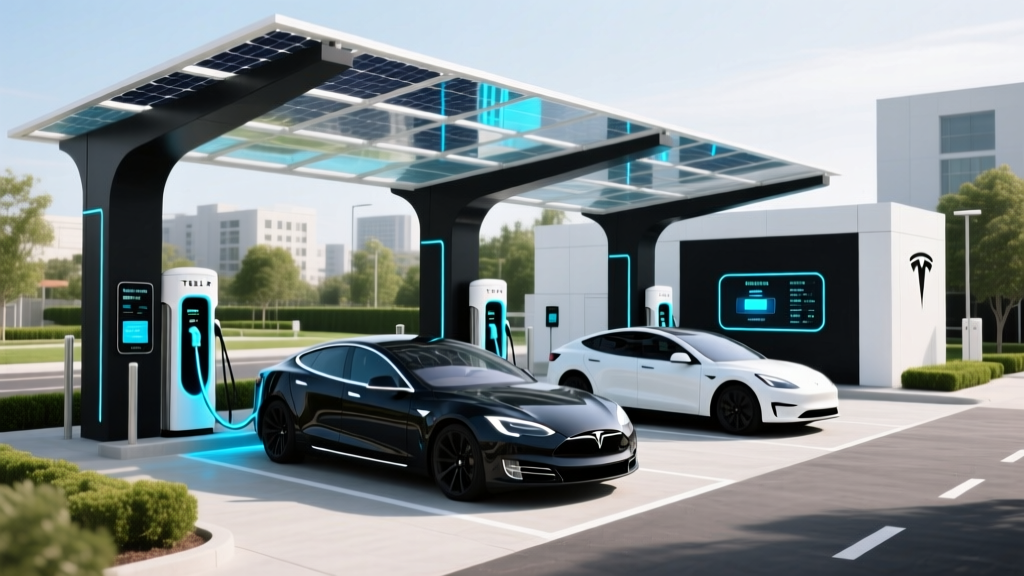
- Tesla owns and operates the chargers. The company supplies the Supercharger cabinets (V4 architecture as of 2026), handles maintenance, software, billing, and network management.
- The property owner (host) provides the land, parking spaces, and electrical infrastructure access. Hosts are typically retail plazas, hotels, shopping centers, restaurants, or municipalities.
- Revenue flows primarily to Tesla. Hosts benefit from increased foot traffic, longer customer dwell time, and sometimes a negotiated revenue share or rent payment — but the per-kWh charging margin stays largely with Tesla.
This model is fundamentally different from franchise ownership. You're not buying a business; you're leasing space and providing utility access in exchange for tenant-traffic benefits or a fixed monthly payment.
Breaking Down the Tesla Charging Station Franchise Cost Structure
Even though Tesla retains ownership of the hardware, understanding the full deployment cost helps property owners evaluate hosting economics and compare against independent charging investments. Based on industry reports, utility interconnection filings, and U.S. Department of Energy data, here's what a typical 8-stall V4 Supercharger site costs to deploy in 2026:
| Cost Category | Typical Range | Notes |
|---|---|---|
| Supercharger hardware (V4 cabinets + dispensers) | $300,000 – $500,000 | Tesla-owned; 4 cabinets powering 8 stalls at up to 325 kW each |
| Utility transformer & service upgrade | $75,000 – $250,000 | Depends on existing service; may require 1–2 MW dedicated feed |
| Site electrical work (trenching, conduit, switchgear) | $50,000 – $150,000 | Varies with distance from transformer to parking stalls |
| Civil work (concrete pads, striping, ADA compliance) | $25,000 – $75,000 | 8 dedicated EV spaces with pull-through for towing |
| Permitting & utility interconnection fees | $15,000 – $50,000 | Wide variance by municipality and utility |
| Network & payment infrastructure | $10,000 – $20,000 | Cellular backhaul, payment terminals for non-Tesla vehicles |
| Total estimated deployment | $475,000 – $1,045,000 | Tesla typically funds hardware; host may fund civil/electrical |
The critical takeaway: the host's financial exposure typically ranges from $50,000 to $300,000 for civil work, electrical infrastructure, and permitting — not the full $1M+ deployment cost. Tesla absorbs the charger hardware and ongoing maintenance. However, in competitive locations, Tesla may fund the entire installation to secure the site.
Revenue Economics: What Hosts Actually Earn
Host revenue depends on the negotiated agreement. Common structures include:
- Fixed monthly rent: $2,000–$8,000/month for the parking spaces and utility easement, regardless of charger utilization.
- Revenue share: 5–15% of per-kWh charging revenue, which on a high-traffic site dispensing 40,000–80,000 kWh/month at $0.35–$0.50/kWh could yield $700–$6,000/month.
- Indirect traffic value: Retail and food-service hosts benefit from 20–40 minute customer dwell time during charging sessions. A Supercharger adjacent to a coffee shop or restaurant can increase same-store sales by 5–15%, according to site-operator surveys.
For context, a well-utilized 8-stall Supercharger in a highway corridor might dispense 60,000 kWh/month. At an average $0.40/kWh, that's $24,000 in gross charging revenue — but Tesla's electricity cost, demand charges, maintenance, and network overhead consume the majority. Host revenue share is a small slice of the top line.
Charging Levels Explained: Speeds, Costs, and Use Cases
Whether you're evaluating a Supercharger hosting opportunity or planning your own independent charging site, understanding the three charging levels is essential. Note the critical distinction: kW (kilowatts) measures power — the rate of energy delivery, like water pressure from a hose. kWh (kilowatt-hours) measures energy — the total amount of electricity delivered, like gallons of water in a bucket. A 250 kW charger delivers energy faster than a 7.2 kW Level 2 charger, but both are measured in kWh when billing.
| Level | Voltage | Power (kW) | Miles of Range Added per Hour | Typical Use Case |
|---|---|---|---|---|
| Level 1 | 120V AC | 1.0 – 1.4 kW | 3 – 5 miles | Emergency / overnight trickle at home |
| Level 2 | 240V AC | 3.3 – 19.2 kW | 12 – 75 miles | Home, workplace, destination charging |
| DC Fast (Level 3) | 200–900V DC | 50 – 350+ kW | 150 – 1,200+ miles (equivalent rate) | Highway corridors, fleet depots |
Real-world charging time examples: A Tesla Model Y Long Range (75 kWh usable battery, NMC chemistry) charging from 10% to 80% State of Charge (SoC):
- Level 2 at 11.5 kW (48A): ~6.5 hours
- V4 Supercharger at 250 kW peak: ~22 minutes (peak rate tapers above 50% SoC; sustained average is ~120–150 kW over the session)
- 50 kW DC fast charger: ~1 hour 15 minutes
The charge curve matters: DC fast chargers don't sustain peak kW for the entire session. A V4 Supercharger rated at 325 kW may deliver that rate only between 10–30% SoC on a preconditioned battery, then taper progressively. This is why 10–80% time is a more useful metric than peak kW alone.
Destination Charging vs. Supercharger Hosting: A Practical Comparison
If the Supercharger hosting model doesn't fit your property or budget, Tesla's Destination Charging program offers a lower-cost alternative — and one where the property owner has more control.
Tesla Supercharger Hosting
- Host cost: $50,000–$300,000 (civil + electrical)
- Charger ownership: Tesla
- Power per stall: Up to 325 kW (V4)
- Connector: NACS (native Tesla + magic-dock CCS adapter)
- Revenue model: Rent or small rev-share; Tesla keeps kWh margin
- Best for: Highway-adjacent retail, high-traffic corridors
Tesla Destination Charging
- Host cost: $3,000–$15,000 per stall (Level 2 install)
- Charger ownership: Host (Tesla provides Wall Connectors at low or no cost to qualified sites)
- Power per stall: Up to 11.5 kW (48A at 240V)
- Connector: NACS
- Revenue model: Free amenity or paid via Tesla's destination billing; drives hotel/restaurant bookings
- Best for: Hotels, resorts, wineries, restaurants, workplaces
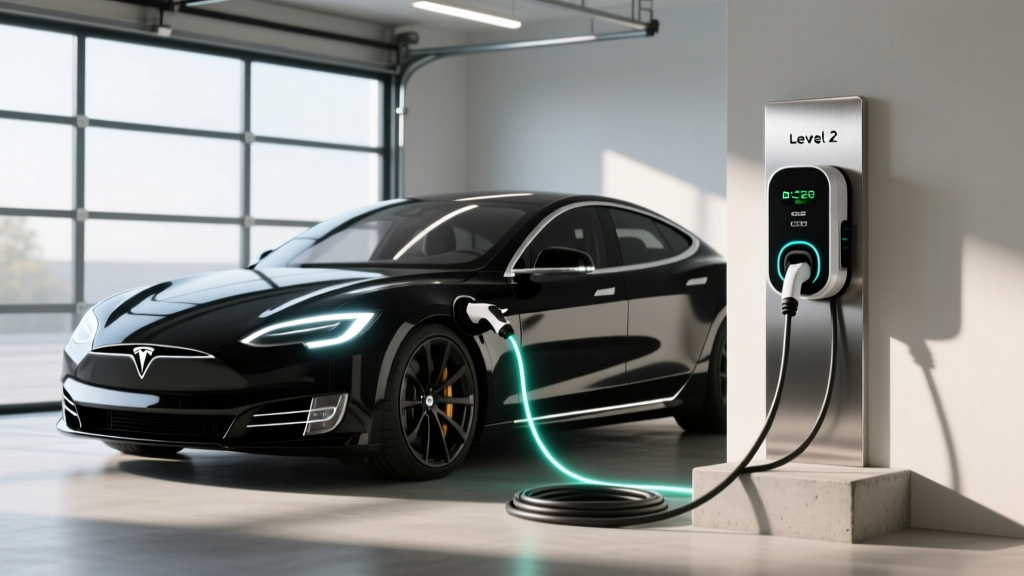
Destination Charging is the closest thing to a true "Tesla charging franchise" a small business owner can access. You install Level 2 Tesla Wall Connectors (or third-party NACS chargers), offer them as an amenity, and capture the full business benefit. The IRS §30C tax credit can offset up to 30% of charging equipment and installation costs (capped at $100,000 per item of property) for commercial installations in eligible census tracts — consult a tax professional for your specific eligibility.
Independent DC Fast-Charging: Costs Without Tesla's Brand
If you want full ownership and revenue control of a fast-charging site, independent DC fast chargers from companies like ChargePoint, EVgo, ABB, or Tritium are an option — though the economics are steeper without Tesla's brand recognition and built-in navigation routing.
| Cost Category | Range |
|---|---|
| DC fast charger hardware (4 × 180 kW units) | $200,000 – $360,000 |
| Utility service upgrade & transformer | $75,000 – $200,000 |
| Electrical installation & trenching | $40,000 – $120,000 |
| Permitting & interconnection | $10,000 – $40,000 |
| Payment & network software (annual) | $5,000 – $15,000/year |
| Total first-year investment | $330,000 – $735,000 |
Independent operators set their own per-kWh pricing and keep 100% of revenue, but must drive their own traffic through apps like PlugShare, ChargePoint, and EVgo. NEVI (National Electric Vehicle Infrastructure) formula program funds can cover up to 80% of eligible costs for sites along designated Alternative Fuel Corridors — check your state DOT's NEVI allocation plan.
Connector Compatibility: What Plugs Into What
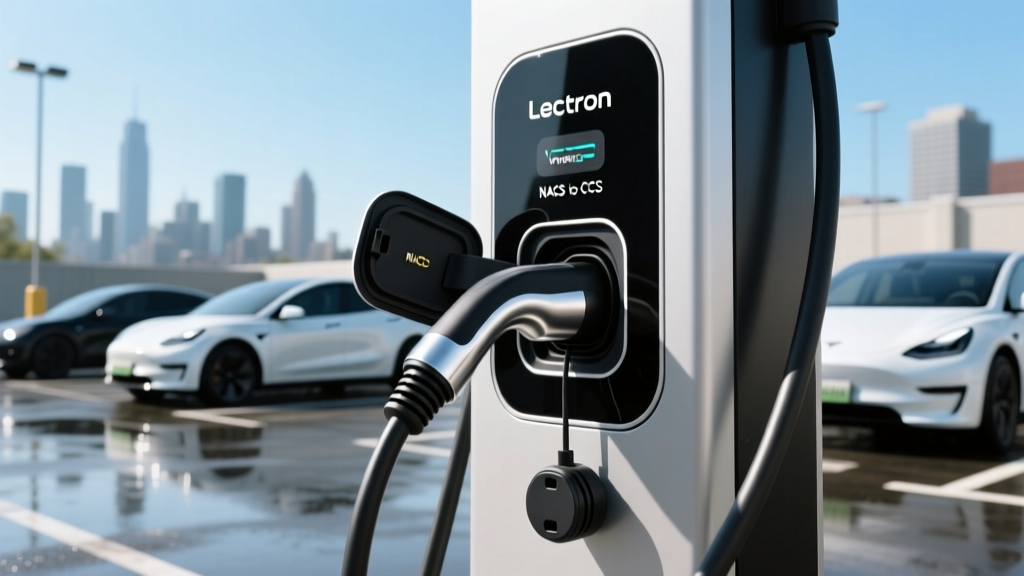
As of 2026, the North American charging landscape has consolidated heavily around NACS (North American Charging Standard, originally Tesla's proprietary connector). Nearly every major automaker — Ford, GM, Rivian, Volvo, BMW, Hyundai, Kia, and others — has adopted NACS for new vehicles. However, millions of CCS1-equipped EVs remain on the road.
| Connector | Charging Type | Vehicle Examples | Adapter Needed? |
|---|---|---|---|
| NACS (Tesla) | AC Level 2 + DC Fast | All Tesla models, 2025+ Ford F-150 Lightning, 2025+ GM Ultium vehicles, 2026+ Hyundai/Kia NACS models | None for native NACS vehicles |
| CCS1 | DC Fast | 2024 and older Ford/GM/Hyundai/Kia/VW EVs, BMW iX (pre-NACS), most non-Tesla EVs through 2024 | NACS-to-CCS adapter required at Tesla Superchargers (magic dock or personal adapter) |
| CHAdeMO | DC Fast | Nissan Leaf (all years), Mitsubishi Outlander PHEV (older), some legacy models | Limited infrastructure; no NACS adapter widely available |
| J1772 | AC Level 1 & 2 | All non-Tesla EVs (for AC charging) | J1772-to-NACS adapter for Tesla vehicles (included with Tesla) |
For site hosts: if you're installing chargers in 2026, NACS-native equipment is the clear default for new deployments. However, including at least one CCS1-capable stall (or a magic-dock equipped Supercharger) ensures compatibility with the existing CCS fleet and may be required for NEVI-funded sites.
Cost to Charge: Home vs. Public vs. DC Fast — Per-Mile Economics
Whether you're an EV owner evaluating charging costs or a site host modeling revenue, the per-kWh and per-mile economics drive decisions.
| Scenario | Typical $/kWh | Cost per Mile (at 3.5 mi/kWh) | Equivalent Gas Cost (at 25 MPG) |
|---|---|---|---|
| Home Level 2 (off-peak utility rate) | $0.08 – $0.14 | $0.02 – $0.04 | Gas at $0.63–$1.00/gallon |
| Home Level 2 (standard rate) | $0.13 – $0.20 | $0.04 – $0.06 | Gas at $1.00–$1.43/gallon |
| Public Level 2 (network pricing) | $0.20 – $0.40 | $0.06 – $0.11 | Gas at $1.43–$2.86/gallon |
| Tesla Supercharger (2026 avg.) | $0.30 – $0.50 | $0.09 – $0.14 | Gas at $2.14–$3.57/gallon |
| Non-Tesla DC fast (EA, EVgo) | $0.35 – $0.60 | $0.10 – $0.17 | Gas at $2.50–$4.29/gallon |
For site hosts, the margin math works like this: if you buy electricity from the utility at $0.12/kWh (including demand charges amortized over volume) and sell it at $0.40/kWh, your gross margin is $0.28/kWh. At 60,000 kWh/month throughput, that's $16,800/month gross — before rent, maintenance, network fees, and debt service. Real-world utilization for new sites often starts at 10–20% and takes 18–36 months to mature, making patience and location selection the primary success factors.
Electrical Requirements and Panel Upgrades: The Hidden Cost Driver
Whether you're hosting a Supercharger or installing independent DC fast chargers, the electrical service is usually the most underestimated cost.
For an 8-stall V4 Supercharger site:
- Required service: 1,000–2,000 amps at 480V three-phase (dedicated utility feed)
- Transformer: Pad-mount 500–1,000 kVA transformer, typically utility-owned but host-funded for the installation
- Panel upgrade: Most commercial properties need a new switchgear and metering cabinet ($20,000–$60,000)
- Utility timeline: New service installations can take 6–18 months depending on the utility, especially if a new distribution line or transformer is needed
For a 2-stall Level 2 Destination Charging site:
- Required service: 100A at 240V (dedicated circuit per charger, 48A continuous draw each)
- Existing panel capacity: A 200A commercial panel with available breaker slots can often accommodate 2 Level 2 chargers without upgrade
- Panel upgrade needed: If the existing panel is at capacity, upgrading to 400A adds $3,000–$8,000
Safety and code requirements (NEC 2026):
- Dedicated circuit per charger — no sharing with other loads
- GFCI protection for all outdoor receptacles and EVSE installations (NEC Article 625)
- NEMA 4 or NEMA 4X rated enclosures for outdoor equipment
- Proper grounding and bonding per local AHJ (Authority Having Jurisdiction)
- ADA-compliant accessible charging spaces where required by local code
Always engage a licensed electrician for final specifications. The National Electrical Code (NEC) Article 625 governs EV charging installations, and local amendments can add requirements for load management, signage, and fire setbacks.
Frequently Asked Questions
Can I buy a Tesla Supercharger franchise and operate it independently?
No. Tesla does not sell Supercharger franchises. The company owns and operates all Supercharger equipment. Property owners can apply to host a Supercharger site, providing land and utility access, while Tesla funds the hardware and manages operations. Host compensation comes through rent, revenue share, or indirect business traffic — not direct kWh margin ownership.
How much does it cost to host a Tesla Supercharger on my property?
Host costs typically range from $50,000 to $300,000 for civil work, electrical infrastructure, and permitting. Tesla covers the charger hardware ($300,000–$500,000+). In some cases, Tesla funds the entire installation if the location is strategically valuable. The total site deployment can exceed $1 million, but the host's share is a fraction of that.
What's the cheapest way to add Tesla-compatible charging to my business?
Tesla Destination Charging with Level 2 Wall Connectors is the lowest-cost entry point. Installation runs $3,000–$15,000 per stall (240V, 48A, 11.5 kW), and Tesla may provide the Wall Connectors at reduced or no cost to qualified hospitality and retail sites. The IRS §30C credit can offset up to 30% of equipment and installation costs for commercial properties in eligible census tracts.
How long does it take to charge a typical EV at a Supercharger?
A Tesla Model Y (75 kWh battery) charges from 10% to 80% in approximately 22 minutes at a V4 Supercharger with battery preconditioning. A Ford F-150 Lightning (131 kWh extended-range battery) takes roughly 35–40 minutes for the same 10–80% session. Actual times vary with battery temperature, SoC starting point, and whether other stalls are sharing the same power cabinet.
Are Tesla Superchargers compatible with non-Tesla EVs?
Yes, as of 2026. Tesla has opened the Supercharger network to non-Tesla EVs equipped with NACS charge ports or CCS1 vehicles using Tesla's Magic Dock adapter (available at select Supercharger stalls) or a third-party NACS-to-CCS adapter. Non-Tesla drivers access Superchargers through the Tesla app. Pricing for non-Tesla vehicles is typically 10–25% higher than Tesla-member rates.
What electrical service does a Supercharger site need?
An 8-stall V4 Supercharger site typically requires a dedicated 1,000–2,000 amp service at 480V three-phase, with a 500–1,000 kVA pad-mount transformer. This is a significant utility interconnection that can take 6–18 months to install, depending on the utility's existing infrastructure proximity. Early engagement with your utility is critical — it's often the longest lead-time item in the project.
Is hosting a Supercharger profitable for property owners?
Direct profitability is modest. Host revenue from rent or rev-share typically ranges from $2,000–$8,000/month. The primary value is indirect: increased customer traffic, longer dwell time, and property differentiation. A Supercharger can increase adjacent retail sales by 5–15% and hotel occupancy by 3–8%, according to operator surveys. As a pure real-estate play, it's a traffic amenity more than a profit center.
Is a Tesla Charging Site Right for Your Property?
The "Tesla charging station franchise cost" search reflects genuine interest in the EV charging economy, but the opportunity isn't franchise ownership — it's strategic property positioning. If you own highway-adjacent commercial real estate with utility access, hosting a Supercharger can be a low-risk way to drive traffic and future-proof your property. If you want direct revenue control and are willing to invest $300,000–$700,000, independent DC fast-charging with NEVI funding offers a path to full ownership.
For most small businesses, Destination Charging at Level 2 remains the most accessible and financially sound entry point — with installation costs in the thousands rather than hundreds of thousands, and the full business benefit of attracting EV-driving customers who stay, shop, and dine while they charge.