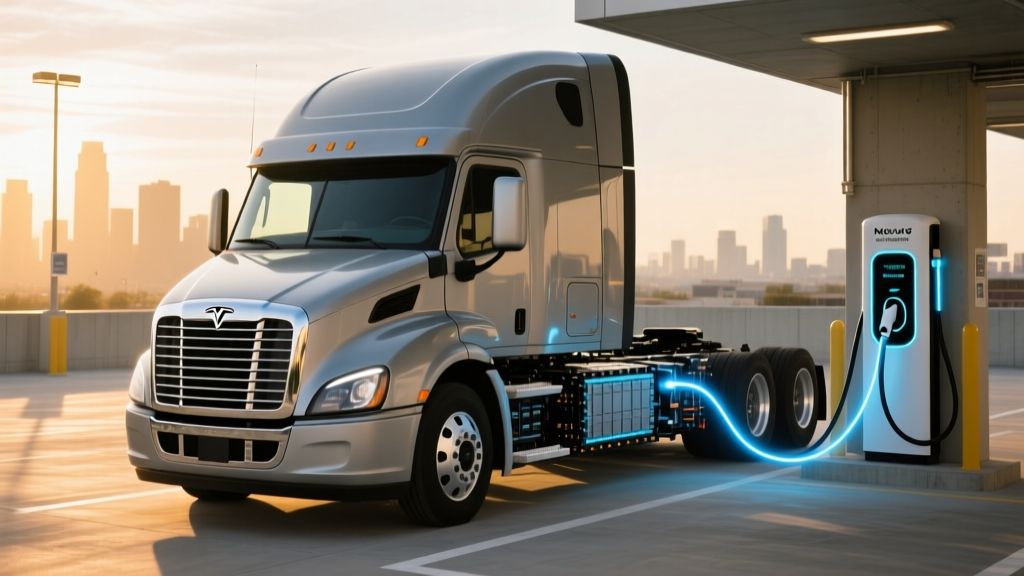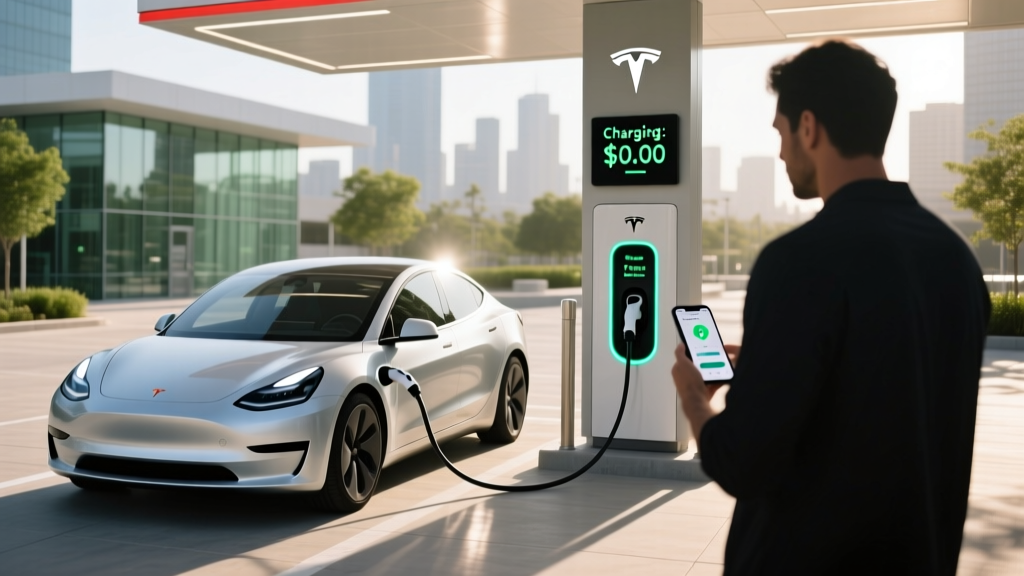
If you're considering a Tesla—or any electric vehicle—one of the first questions that comes up is: do you have to pay at Tesla charging stations? The short answer is yes. Tesla Superchargers are a paid public DC fast-charging network, with rates that vary by location, time of day, and whether your vehicle is a Tesla or a non-Tesla EV using the network via the Magic Dock adapter. But understanding the full picture of EV charging costs means looking beyond the Supercharger stall. Home charging, public Level 2 networks, and the electrical infrastructure behind it all play a major role in what you'll actually spend per mile.
This guide covers every layer: Tesla Supercharger pricing in 2026, how all three charging levels stack up in speed and cost, what it takes to install a home charger (including the panel-upgrade scenarios nobody warns you about), and which equipment actually delivers on its promises. We'll keep the physics straight—kW is power (how fast energy flows), and kWh is energy (how much your battery holds). Confusing the two is the single most common mistake new EV owners make.
Do You Have to Pay at Tesla Charging Stations? Pricing Explained
Tesla Superchargers are not free. As of early 2026, typical Supercharger pricing in the U.S. ranges from $0.25 to $0.55 per kWh, depending on the state, station location, and time-of-use tier. Urban Superchargers in California and the Northeast routinely hit $0.40–$0.55/kWh during peak hours, while rural stations in the Midwest and South can dip to $0.25–$0.32/kWh off-peak.
Here's how that translates to a real charge session. A Tesla Model Y Long Range (75 kWh usable battery, NMC chemistry) charging from 10% to 80% requires roughly 52.5 kWh of energy. At $0.35/kWh (a reasonable national average), that session costs approximately $18.38 and adds about 230 miles of EPA-rated range. At peak California rates of $0.50/kWh, the same session jumps to $26.25.
A few important details about Tesla's network:
- Idle fees: Tesla charges $0.50/minute if your car remains plugged in after reaching its charge limit and the station is at least 50% full. This rises to $1.00/minute at 100% station occupancy.
- Non-Tesla access: Tesla has opened select Superchargers to non-Tesla EVs via the built-in Magic Dock (NACS connector). Non-Tesla drivers typically pay a 10–20% premium unless they subscribe to Tesla's $12.99/month membership, which brings pricing in line with Tesla owners.
- Free Supercharging credits: Some new Tesla purchases include limited promotional Supercharging credits (e.g., 10,000 miles), but unlimited free Supercharging is no longer offered on new vehicles.
- Tesla Destination Chargers: These Level 2 chargers at hotels, restaurants, and shopping centers are often free for customers, though some properties have begun adding fees or limiting access to guests only.
The Three Charging Levels: Speed, Cost, and When to Use Each
Every EV owner needs to understand the three charging levels. They differ in power delivery (measured in kW), which directly determines how quickly your battery (measured in kWh) fills up.
| Level | Voltage | Power (kW) | Miles of Range Added Per Hour | Typical Use Case | 10–80% Time (75 kWh Battery) |
|---|---|---|---|---|---|
| Level 1 | 120V AC | 1.0–1.9 kW | 3–5 miles/hr | Emergency / overnight top-up | 50+ hours (not practical) |
| Level 2 | 240V AC | 3.3–19.2 kW | 12–75 miles/hr | Home daily charging, workplace, public | 3.5–10 hours |
| DC Fast | 400–800V DC | 50–350 kW | 150–1,000+ miles/hr | Road trips, highway corridors | 15–45 minutes |
Level 1 uses a standard 120V household outlet. It comes with most EVs as an emergency cable. At 1.4 kW, you'll add roughly 4 miles of range per hour—enough to recover a day's commute overnight if you drive under 30 miles, but entirely inadequate as a primary charging strategy for most owners.
Level 2 is the backbone of practical EV ownership. A 240V circuit—identical to what powers your electric dryer or oven—delivers between 3.3 kW (16A) and 19.2 kW (80A). Most home installations run at 40A or 48A, delivering 9.6–11.5 kW, which fully replenishes a 75 kWh battery overnight in about 7–8 hours. This is where 80–90% of all EV charging happens for owners with home access.
DC Fast Charging (DCFC) bypasses the vehicle's onboard charger and sends direct current straight to the battery at high voltage. Tesla Superchargers (V3 at 250 kW, V4 at up to 350 kW), Electrify America (up to 350 kW), and EVgo (up to 350 kW) make road trips viable. But here's the critical real-world caveat: peak charge rates are not sustained. A vehicle that advertises "250 kW peak" may only hold that rate between 10–30% State of Charge (SoC), then taper progressively. A realistic 10–80% average for a 250 kW-capable Tesla Model Y is around 150–170 kW, yielding a 10–80% charge in approximately 22–27 minutes. Cold batteries charge even slower unless preconditioned via the car's navigation-routed battery warming.
How Much Does It Cost to Install a Home EV Charger?
Home Level 2 charger installation costs vary enormously depending on your home's electrical panel capacity, the distance from panel to charging location, and local permit requirements. Here's a realistic 2026 breakdown:
| Component | Simple Install (Panel Adjacent) | Standard Install (30–50 ft run) | Complex Install (Panel Upgrade Required) |
|---|---|---|---|
| Level 2 Charger Equipment | $350–$700 | $350–$700 | $350–$700 |
| Electrician Labor | $300–$600 | $600–$1,500 | $1,200–$2,500 |
| Electrical Permit | $50–$150 | $50–$200 | $100–$300 |
| Panel Upgrade (if needed) | $0 | $0 | $1,500–$3,500 |
| Conduit, Wire, Misc. | $50–$150 | $150–$400 | $200–$600 |
| Total Estimated Cost | $750–$1,600 | $1,150–$2,800 | $3,350–$7,600 |
The Panel-Upgrade Reality Check
Many homes built before 2000 have 100-amp electrical panels. Adding a 40-amp or 50-amp dedicated EV circuit to an already-loaded 100A panel may exceed capacity, requiring an upgrade to 200A service. This is the single biggest cost variable—and one that listing agents and EV forums often gloss over. A licensed electrician will perform a load calculation (per NEC Article 220) to determine whether your panel has headroom. If you're already running electric heat, an electric oven, and an electric dryer, the math often doesn't work on a 100A panel.
Alternatives to a full panel upgrade include:
- Lower-amperage circuit: A 20A or 30A circuit still delivers 4.8–7.2 kW—enough for overnight charging on most days—and may fit within existing panel capacity.
- Smart load management: Devices like the Emporia VUE or Sense Energy Monitor can dynamically throttle charger draw when other high-load appliances are running, avoiding the need for a panel upgrade in some cases.
- Utility rebates: Many utilities offer $500–$1,500 rebates for panel upgrades paired with EV charger installation. Check your local utility's EV program before paying out of pocket.
Connector Compatibility: NACS, CCS1, and CHAdeMO in 2026
The connector landscape has consolidated significantly. Tesla's North American Charging Standard (NACS) has been adopted by Ford, GM, Rivian, Volvo, Hyundai, Kia, and most other major automakers starting with 2025–2026 model-year vehicles. Here's where things stand:
| Connector | Brands Using It (Native) | Adapter Needed For | DC Fast Charge Availability |
|---|---|---|---|
| NACS (Tesla) | Tesla (all years), Ford (2025+), GM (2025+), Rivian (2025+), Hyundai/Kia (2026+), Volvo (2025+) | Older CCS vehicles need NACS-to-CCS adapter ($200–$300) | Tesla Supercharger network, growing third-party NACS stations |
| CCS1 | Legacy VW/Audi (pre-2026), BMW, Mercedes, Stellantis, older Ford/GM/Hyundai/Kia | CCS-to-NACS adapter for Tesla Supercharger access | Electrify America, EVgo, ChargePoint, Ionity (EU) |
| CHAdeMO | Nissan Leaf (all years), Mitsubishi Outlander PHEV | No practical adapter to NACS/CCS | Declining network; limited new installations |
If you're buying a new EV in 2026, NACS is the clear forward-looking choice. Tesla's Supercharger network remains the most reliable and extensive DC fast-charging network in North America, with over 6,500 stations and 65,000+ connectors. CCS1 vehicles can access Superchargers with Tesla's Magic Dock adapter at select locations, but availability isn't universal.
For home Level 2 charging, all vehicles use the J1772 connector (or NACS, which includes J1772 AC signaling). Tesla's Wall Connector includes a NACS plug natively; for CCS vehicles, you'll need a J1772-to-NACS adapter or a charger with a J1772 plug.
Cost Per Mile: EV Charging vs. Gasoline
The economics of EV charging depend heavily on where you charge. Here's a realistic comparison using a Tesla Model Y Long Range (310 miles EPA, 75 kWh battery, ~4.1 miles/kWh efficiency) versus a comparable gas-powered Toyota RAV4 (30 MPG combined) at $3.40/gallon (2026 national average per EIA).
| Charging Scenario | Rate | Cost for Full Charge (75 kWh) | Cost Per Mile | vs. Gas (30 MPG) |
|---|---|---|---|---|
| Home (off-peak utility rate) | $0.10/kWh | $7.50 | $0.024/mi | 78% cheaper |
| Home (national avg. residential) | $0.17/kWh | $12.75 | $0.041/mi | 64% cheaper |
| Home (high-cost state, e.g. CA) | $0.30/kWh | $22.50 | $0.073/mi | 36% cheaper |
| Public Level 2 (ChargePoint/EVgo) | $0.25–$0.40/kWh | $18.75–$30.00 | $0.061–$0.097/mi | 15–47% cheaper |
| Tesla Supercharger (avg.) | $0.35/kWh | $26.25 | $0.085/mi | 25% cheaper |
| DC Fast (peak urban) | $0.50–$0.55/kWh | $37.50–$41.25 | $0.121–$0.133/mi | 5–16% cheaper |
| Gasoline (RAV4, 30 MPG) | $3.40/gal | $35.13 (equiv. energy) | $0.113/mi | Baseline |
The takeaway: home charging is where the savings live. At off-peak utility rates, an EV costs roughly 2–4 cents per mile to "fuel"—a fraction of gasoline. Even at Tesla Supercharger average rates, you'll save about 25% per mile compared to a 30 MPG gas vehicle. But exclusive DC fast charging at peak urban rates can actually exceed gasoline costs per mile. This is why home Level 2 access is the single most important factor in EV ownership economics.
Time-of-use (TOU) utility plans amplify savings. Many utilities offer rates as low as $0.06–$0.10/kWh between 11 PM and 6 AM. Setting your EV or charger to charge during these windows can cut fuel costs to under $0.025/mile—equivalent to paying $0.75 per gallon of gasoline.
Recommended Home Level 2 Chargers for 2026
After testing and tracking reliability data across dozens of units, here are our top picks for home Level 2 chargers in 2026:
Best Overall: Tesla Wall Connector (Gen 4)
- Power Output: Up to 11.5 kW (48A on a 60A circuit)
- Connector: NACS native
- Cable Length: 24 feet
- Smart Features: Wi-Fi connectivity, over-the-air updates, power sharing between two units on one circuit, Tesla app integration
- Price: $475
- Best For: Tesla owners; non-Tesla NACS vehicles (2025+ Ford, GM, Rivian, etc.)
Best for Non-Tesla / Universal: ChargePoint Home Flex (2nd Gen)
- Power Output: Up to 12 kW (50A adjustable, on a 60A circuit)
- Connector: J1772 (NACS adapter available separately)
- Cable Length: 23 feet
- Smart Features: Wi-Fi, Alexa integration, scheduling, energy tracking, amperage configurable via app
- Price: $599
- Best For: CCS1 vehicles, multi-EV households, renters who may move
Budget Pick: Emporia Level 2 EV Charger
- Power Output: Up to 11.5 kW (48A on a 60A circuit)
- Connector: J1772 (NACS adapter available)
- Cable Length: 24 feet
- Smart Features: Wi-Fi, solar integration (pairs with Emporia VUE energy monitor), load management, scheduling
- Price: $399
- Best For: Solar-equipped homes, budget-conscious buyers, panel-constrained installations
Premium Pick: Enel X JuiceBox 50
- Power Output: Up to 12 kW (50A on a 60A circuit)
- Connector: J1772
- Cable Length: 25 feet
- Smart Features: Wi-Fi, smart grid integration, utility demand-response compatible, detailed energy reporting
- Price: $649
- Best For: Utility demand-response program participants, smart-home enthusiasts
Installation note: All of the above chargers require a dedicated 240V circuit. The National Electrical Code (NEC) requires that continuous loads (like EV charging, which runs for 3+ hours) use no more than 80% of a circuit's rated capacity. A 48A charger needs a 60A circuit; a 40A charger needs a 50A circuit. Your electrician will size wire gauge accordingly—typically 6 AWG copper for 50A and 4 AWG for 60A runs.
Safety, Electrical Code, and Installation Requirements
EV charging is a high-draw, long-duration electrical load—more similar to running an electric furnace than plugging in a phone. Proper installation isn't optional; it's a safety and insurance requirement.
Key Code and Safety Requirements
- Dedicated circuit: Your EV charger must be on its own dedicated breaker—no sharing with other outlets or appliances.
- GFCI protection: NEC 2023 and later require Ground Fault Circuit Interrupter (GFCI) protection for all EV charging outlets. Many modern hardwired chargers have built-in GFCI; plug-in units rely on the breaker. Confirm with your electrician.
- Outdoor rating: If your charger is installed outdoors (garage exterior, driveway, carport), it must carry a NEMA 4 or NEMA 4X weatherproof rating. All chargers listed above meet this standard.
- Permit and inspection: Virtually all jurisdictions require an electrical permit for EV charger installation, followed by an inspection. Skipping this can void your homeowner's insurance coverage for electrical fires and may cause issues at resale.
- Hardwired vs. plug: Hardwired installations (no plug, direct wire connection) are generally preferred for 48A+ chargers. NEMA 14-50 outlets are acceptable for 40A chargers and offer portability if you move, but the outlet must be installed with proper torque specs—loose 14-50 receptacles have been linked to overheating incidents.
Always hire a licensed electrician familiar with EV charger installations. According to NFPA's NEC guidelines, improper EV charger wiring is a fire hazard, and DIY installations on 240V circuits carry serious shock risk.
Federal Tax Credit for Home Charger Installation
The IRS §30C Alternative Fuel Vehicle Refueling Property Credit covers 30% of home EV charger equipment and installation costs, up to a maximum credit of $1,000. This is separate from the §30D new-vehicle tax credit.
Key eligibility requirements for 2026:
- The charger must be installed at your primary residence in the United States.
- The property must be located in an eligible census tract (generally non-urban or low-income communities—check the IRS eligibility tool).
- The credit covers both equipment cost and labor/installation.
- This is a non-refundable credit—it reduces your tax liability but won't generate a refund beyond what you owe.
Example: If your total home charger installation costs $2,200 (equipment + electrician + permit), the §30C credit would cover $660 (30%), bringing your net cost to $1,540. Consult a tax professional to confirm eligibility for your specific situation.
Frequently Asked Questions
Do you have to pay at Tesla charging stations every time?
Yes, with rare exceptions. Tesla Superchargers charge per kWh (or per minute at some legacy stations). The only scenarios where you won't pay are: (1) you have remaining free Supercharging credits from a promotional purchase, (2) you're using a free Tesla Destination Charger at a hotel or business, or (3) a specific Supercharger location is running a temporary promotional rate of $0.00.
How fast will each charging level add range?
Level 1 (120V) adds 3–5 miles of range per hour. Level 2 (240V, 40–48A typical home setup) adds 25–40 miles per hour. DC fast charging at 150–250 kW can add 150–250+ miles in 15–20 minutes, though the charge curve tapers significantly above 80% SoC. These figures assume a mid-efficiency EV like the Tesla Model Y at roughly 3.5–4.1 miles/kWh.
Which connector is compatible with my EV?
If you own a Tesla (any year), you use NACS natively. If you own a 2025+ Ford, GM, Rivian, or 2026+ Hyundai/Kia EV, you likely have a native NACS port. Older CCS1 vehicles (2024 and earlier from most brands) require a CCS-to-NACS adapter ($200–$300) to access Tesla Superchargers. Nissan Leaf and Mitsubishi PHEVs use CHAdeMO, which has limited and declining DC fast-charging infrastructure.
How much does charging cost per mile vs. gas?
Home charging at average U.S. residential rates ($0.17/kWh) costs roughly $0.04/mile for a Tesla Model Y—about 64% cheaper than a 30 MPG gas vehicle at $3.40/gallon ($0.113/mile). Tesla Supercharging at $0.35/kWh costs about $0.085/mile, still 25% cheaper than gas. Only exclusive peak-rate DC fast charging approaches or exceeds gasoline costs.
What electrical upgrades might I need for a home charger?
The most common and costly upgrade is a panel upgrade from 100A to 200A service ($1,500–$3,500) if your existing panel lacks capacity for a dedicated 40–60A circuit. Other potential upgrades include: adding a new breaker position (if your panel is full), running new conduit for long wire distances (50+ feet from panel to garage), or upgrading the service drop from the utility if your home's incoming supply is undersized. A licensed electrician's load calculation will determine what's required.
Can I charge my EV with solar panels?
Yes, and it's one of the lowest-cost charging strategies available. A properly sized solar array can offset your EV's electricity consumption entirely. Smart chargers like the Emporia Level 2 can be configured to charge only when excess solar production is available, maximizing self-consumption. Pairing solar with a time-of-use utility plan and a home battery (like Tesla Powerwall) lets you store cheap solar energy and deploy it for EV charging at night.