Understanding Tesla Charging Levels: Speed, Power, and Range Added
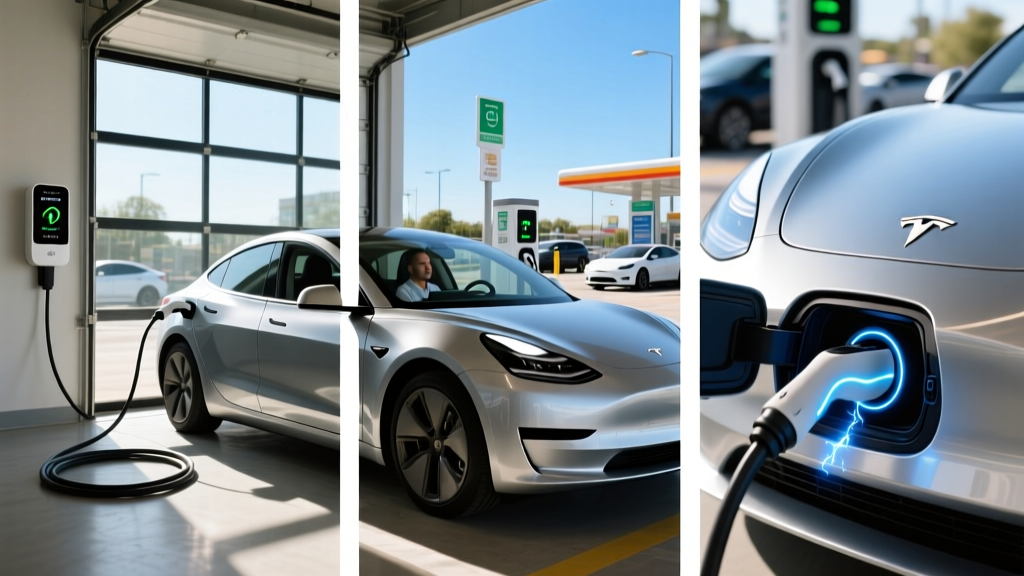
Before estimating your Tesla charging installation cost, you need to understand the three charging levels available to Tesla owners—and what each delivers in real-world terms. The critical distinction here is kW (kilowatts), which measures charging power or speed, versus kWh (kilowatt-hours), which measures battery energy capacity. Think of kW as how fast water flows from a hose; kWh is how much water the bucket holds.
| Charging Level | Voltage / Amperage | Max Power (kW) | Miles of Range Added Per Hour | Typical Use Case |
|---|---|---|---|---|
| Level 1 (120V) | 120V / 12A | ~1.4 kW | 3–5 miles/hour | Overnight trickle, emergency top-off |
| Level 2 (240V) | 240V / 40–60A | 9.6–14.4 kW | 30–52 miles/hour | Daily home charging (primary method) |
| DC Fast Charging | 400V–800V DC | 150–250+ kW | 500–1,000+ miles/hour (peak) | Road trips, Supercharger network |
For a Tesla Model Y (75 kWh usable battery, EPA 310–330 miles depending on trim), Level 2 home charging at 11.5 kW adds roughly 40 miles of range per hour—a full charge from 20% to 90% in about 5 hours. Level 1 at 1.4 kW would take over 40 hours for the same session, making it impractical as a primary method for anything beyond overnight maintenance or PHEV-scale batteries.
DC fast charging at Tesla Superchargers (V3 stalls deliver up to 250 kW peak) can take a Model Y from 10% to 80% in approximately 20–25 minutes. However, peak rate is not sustained rate: the charge curve tapers significantly above 60% SoC to protect battery health, so the last 20% takes nearly as long as the first 50%.
Tesla Charging Installation Cost: Full Breakdown
The total Tesla charging installation cost for a Level 2 home setup typically ranges from $1,200 to $4,500+, depending on your home's electrical infrastructure, distance from the panel to the charger location, and local permitting fees. Here's what drives those numbers:
| Cost Component | Low-End Estimate | High-End Estimate | Notes |
|---|---|---|---|
| Level 2 Charger Hardware (Tesla Wall Connector or equivalent) | $400 | $650 | Tesla Wall Connector is ~$475 (2026); third-party smart chargers $400–$650 |
| Electrician Labor (installation, wiring, conduit) | $500 | $2,500 | Depends on run distance from panel; garage-adjacent installs are cheapest |
| Electrical Permit | $50 | $250 | Varies by municipality; some jurisdictions bundle with inspection |
| Panel Upgrade (if needed) | $1,500 | $4,000+ | Required if your panel is at capacity or is an older 100A service |
| Total (No Panel Upgrade) | $950 | $3,400 | Most homes with 200A service fall in this range |
| Total (With Panel Upgrade) | $2,450 | $7,400+ | Older homes (pre-2000) with 100A panels often need this |
The single biggest variable in Tesla charging installation cost is whether your electrical panel has spare capacity. A dedicated Level 2 circuit typically requires a 50A or 60A breaker (for 40A or 48A continuous charging, respectively). If your 200A panel already has significant loads—electric oven, dryer, HVAC, tankless water heater—you may be near capacity even without an EV charger. A licensed electrician will perform a load calculation per NEC Article 220 to determine if you can add the circuit or need a service upgrade.
According to Energy.gov's home charging guidance, homes built before 2000 frequently have 100A panels that cannot support a 50A EV circuit alongside existing loads. Upgrading to 200A service typically costs $1,500–$3,000, while jumping to 400A (for future-proofing or homes with multiple EVs) can exceed $4,000.
Electrical Requirements for Tesla Home Charging
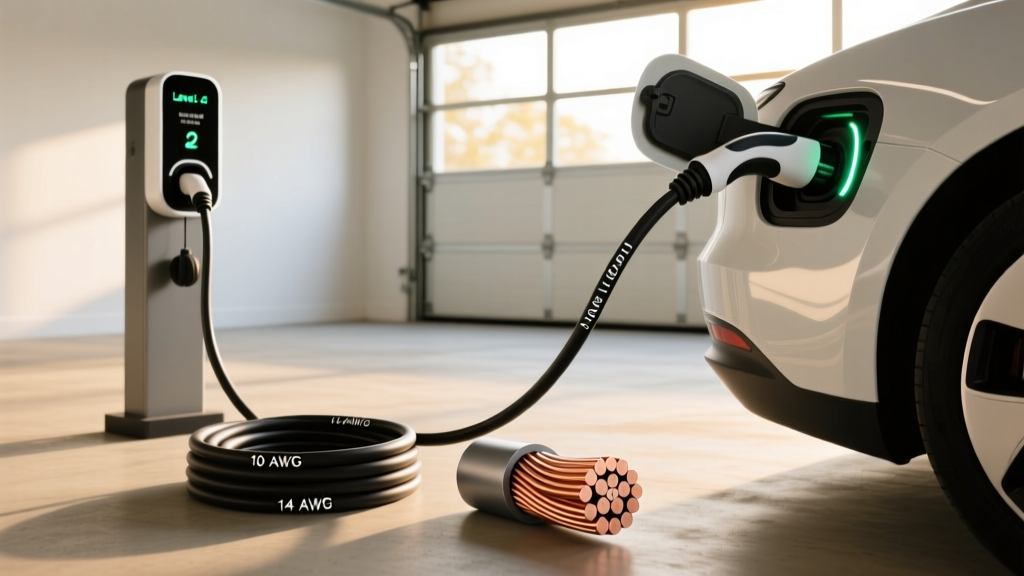
The Tesla Wall Connector (Gen 3, current for 2026) supports up to 48A continuous charging on a 60A breaker circuit, delivering up to 11.5 kW on a 240V supply. Here are the specific electrical specifications your electrician will work to:
- Circuit breaker: 60A (for full 48A output) or 50A (for 40A output / 9.6 kW)
- Wire gauge: 6 AWG copper (for 60A) or 8 AWG copper (for 50A) in most jurisdictions
- Voltage: 240V single-phase (standard US residential split-phase)
- Dedicated circuit: Required—the EV charger cannot share a breaker with other loads
- GFCI protection: NEC 2020+ requires GFCI for outdoor receptacles; hardwired Wall Connector installations may not require a GFCI breaker (varies by local code—your electrician will confirm)
- Outdoor rating: The Tesla Wall Connector is rated NEMA 3R (suitable for outdoor mounting); if installing in an exposed location, ensure conduit and junction boxes match this rating
A common mistake: some homeowners attempt to use a NEMA 14-50 receptacle (the same outlet type as an electric dryer) for plug-in Level 2 charging. This works, but NEC code now requires GFCI protection on 14-50 receptacles used for EV charging in many jurisdictions, adding $50–$150 for a GFCI breaker. Hardwiring the Wall Connector avoids this requirement and eliminates the failure point of a plug connection—most electricians recommend hardwired for permanent installations.
Connector Compatibility: NACS, CCS, and Adapter Needs
As of 2026, Tesla's North American Charging Standard (NACS) connector has become the dominant light-duty EV charging connector in the US, with Ford, GM, Rivian, Volvo, and most major manufacturers adopting it. Tesla vehicles have always used NACS natively, so Tesla owners face zero adapter complexity for home charging or Supercharger access. However, understanding the broader landscape matters if you own multiple EVs or plan to charge non-Tesla vehicles at home.
| Connector Type | Brands Using It (2026) | Home Charger Availability | Adapter Needed for Tesla? |
|---|---|---|---|
| NACS (Tesla) | Tesla, Ford, GM, Rivian, Volvo, Polestar, Mercedes, BMW (newer models) | Tesla Wall Connector, Emporia, ChargePoint (NACS models) | No—native for Tesla |
| CCS1 | Hyundai, Kia, Volkswagen, legacy BMW/Mercedes models, some Stellantis | Most third-party chargers (Grizzl-E, JuiceBox CCS models) | Tesla CCS Adapter (~$175) required |
| CHAdeMO | Nissan Leaf (legacy), Mitsubishi Outlander PHEV (older) | Limited; mostly public DC stations | Tesla CHAdeMO Adapter (~$400, discontinued/limited availability) |
If you're installing a home charger specifically for a Tesla, the Tesla Wall Connector with its native NACS plug is the straightforward choice. If you need to charge both a Tesla and a CCS-equipped vehicle (say, a Hyundai Ioniq 5), consider either installing two chargers on separate circuits or using a charger with a J1772 connector plus the Tesla J1772 adapter that ships with every Tesla vehicle.
Cost to Charge: Home vs. Public vs. Gas Comparison
The financial case for home charging rests on electricity cost per mile versus gasoline. Here's how the numbers work for a Tesla Model Y (approximately 3.5 miles per kWh efficiency, or roughly 28 kWh/100 miles) in different charging scenarios:
| Charging Scenario | Cost per kWh | Cost per Mile (Model Y @ 3.5 mi/kWh) | Cost for 300-Mile "Fill-Up" |
|---|---|---|---|
| Home (national avg residential, off-peak) | $0.14/kWh | $0.040/mile | $12.00 |
| Home (California avg, off-peak TOU rate) | $0.18/kWh | $0.051/mile | $15.43 |
| Tesla Supercharger (avg US, 2026) | $0.35/kWh | $0.100/mile | $30.00 |
| Electrify America / 3rd-party DC fast | $0.48/kWh | $0.137/mile | $41.14 |
| Gasoline equivalent (25 MPG avg, $3.50/gal) | $0.14/mile (per mile) | $0.140/mile | $42.00 |
Home charging at off-peak rates delivers fuel cost roughly one-quarter to one-third that of gasoline per mile. Even at California's higher electricity rates, home charging costs about one-third of gas. However, exclusive reliance on DC fast charging (Superchargers and third-party networks) narrows the gap significantly—Supercharging costs roughly 70% of gas per mile, and third-party DC networks can approach gas-equivalent pricing.
This is why home Level 2 installation is not a luxury for Tesla owners—it's where the economics of EV ownership fundamentally work. According to fueleconomy.gov, the 2026 Tesla Model Y Long Range achieves 123 MPGe combined, translating to roughly $550–$650 annual electricity cost for 15,000 miles of driving (at national average residential rates), compared to approximately $1,800–$2,100 in gasoline for a comparable 25 MPG ICE vehicle.
Recommended Level 2 Chargers for Tesla Owners (2026)
Here are three chargers worth evaluating, each suited to different priorities:
Tesla Wall Connector (Gen 3)
- Power Output: Up to 11.5 kW (48A on 60A circuit)
- Connector: Native NACS (no adapter needed for Tesla)
- Cable Length: 24 feet
- Smart Features: Wi-Fi connectivity, OTA firmware updates, power-sharing (pair two units on one circuit), access control
- Price: ~$475
- Best For: Tesla-only households wanting native integration
Emporia Vue Level 2 EV Charger
- Power Output: Up to 11.5 kW (48A on 60A circuit)
- Connector: NACS (2026 model) or J1772
- Cable Length: 24 feet
- Smart Features: Integration with Emporia Vue home energy monitor, solar-aware scheduling, load management, app control
- Price: ~$399
- Best For: Homes with solar panels or energy monitoring who want to optimize charging against solar production or TOU rates
Grizzl-E Smart (NACS Edition)
- Power Output: Up to 10 kW (40A on 50A circuit)
- Connector: NACS (2026 edition)
- Cable Length: 24 feet
- Smart Features: OCPP-compatible, adjustable amperage (16A–40A), extreme cold rating (-40°C), aluminum enclosure
- Price: ~$499
- Best For: Cold-climate installations, outdoor mounting, or owners wanting adjustable amperage to match limited panel capacity
The Tesla Wall Connector remains the default recommendation for Tesla-only households: it's reliable, supports power-sharing for two-Tesla garages on a single 60A circuit (each unit dynamically allocates up to 48A combined), and receives firmware updates. The Emporia earns its spot for solar-equipped homes where aligning charging with peak production can push effective cost-per-kWh below $0.05. The Grizzl-E's adjustable amperage is genuinely useful if your electrician determines your panel can only spare 30A or 40A rather than the full 60A.
Charging Time Examples: 10% to 80% for Common Tesla Batteries
Charging speed depends on battery size, charger power, and the state-of-charge curve. Here are real-world 10%–80% times for current Tesla models on Level 2:
| Vehicle | Usable Battery (kWh) | Charger Power | 10%–80% Time (Approx.) |
|---|---|---|---|
| Model 3 RWD (LFP) | ~57 kWh | 11.5 kW (48A) | ~3.5 hours |
| Model 3 Long Range | ~75 kWh | 11.5 kW (48A) | ~4.5 hours |
| Model Y Long Range | ~75 kWh | 11.5 kW (48A) | ~4.5 hours |
| Model S / X (2026) | ~95 kWh | 11.5 kW (48A) | ~5.7 hours |
| Cybertruck AWD | ~123 kWh | 11.5 kW (48A) | ~7.5 hours |
Note on LFP batteries (used in Model 3 RWD): Tesla recommends periodic charging to 100% for LFP chemistry to maintain battery calibration, unlike NMC batteries where daily charging to 80–90% is preferred for longevity. This affects your charging schedule but not installation requirements.
Safety, Permits, and Code Considerations
Level 2 EV charger installation is regulated electrical work. Here's what you need to know to stay safe and code-compliant:
- Permits: Virtually all US jurisdictions require an electrical permit for new 240V circuit installation. Permit fees typically range $50–$250. The permit triggers an inspection after installation—this is not optional, and skipping it can void homeowner's insurance coverage for electrical fires.
- Dedicated circuit: NEC code requires EV chargers be on a dedicated circuit (not shared with other appliances). This is non-negotiable.
- Load calculation: Your electrician must perform a NEC Article 220 load calculation to verify your panel can handle the added draw. If the calculation shows you're over capacity, a panel upgrade or load-management device is required.
- Load management alternatives: If a panel upgrade is cost-prohibitive, devices like the Emporia Smart Load Manager or Tesla's built-in load-sharing can dynamically reduce charger amperage when other household loads spike—keeping total draw within panel capacity without a full service upgrade.
- Outdoor installation: If mounting outdoors, ensure the charger is rated NEMA 3R or higher (the Wall Connector is rated NEMA 3R). Conduit runs must be weatherproof, and the installation should include a disconnect switch within sight of the charger per most local codes.
- Utility rebates: Many utilities offer rebates ($250–$1,000) for Level 2 charger installation, particularly if you enroll in a time-of-use (TOU) rate plan. Check with your local utility before installing—some require pre-approval to qualify.
For detailed federal incentive information, the IRS Alternative Fuel Vehicle Refueling Property Credit (Form 8911) may cover up to 30% of home charging equipment and installation costs (capped at $1,000) for installations in eligible census tracts—check current-year eligibility with a tax professional.
Frequently Asked Questions
How much does it cost to install a home EV charger for a Tesla?
For most homes with a 200A electrical panel and a short wire run from panel to garage, expect $1,200–$2,500 total (charger + electrician + permit). Homes needing a panel upgrade to 200A service should budget $2,500–$7,000+. The Tesla Wall Connector hardware itself costs approximately $475.
How fast will each charging level add range to my Tesla?
Level 1 (120V standard outlet) adds roughly 3–5 miles of range per hour. Level 2 (240V, 48A) adds approximately 40 miles per hour for a Model Y. DC fast charging at a V3 Supercharger adds up to 200 miles in 15 minutes at peak rate, though the charge curve tapers above 60% SoC.
Do I need an adapter to charge my Tesla at home?
No. The Tesla Wall Connector uses the native NACS connector that plugs directly into all Tesla vehicles without an adapter. If you install a third-party charger with a J1772 connector, use the J1772-to-Tesla adapter that ships with every Tesla vehicle.
How much does charging a Tesla cost per mile compared to gas?
At the US national average residential electricity rate (~$0.14/kWh), a Tesla Model Y costs approximately $0.04 per mile to charge at home—roughly 70% less than a 25 MPG gas vehicle at $3.50/gallon ($0.14/mile). Supercharger costs are higher at ~$0.10/mile, still below gasoline.
What electrical upgrades might I need before installing a Tesla charger?
The most common upgrade is a panel capacity increase from 100A to 200A service ($1,500–$3,000) for older homes. You may also need a new 60A breaker slot, upgraded wire gauge from the panel, or a load-management device if your panel is near capacity. A licensed electrician's load calculation determines this—get a quote before purchasing hardware.
Can I install a Tesla Wall Connector myself?
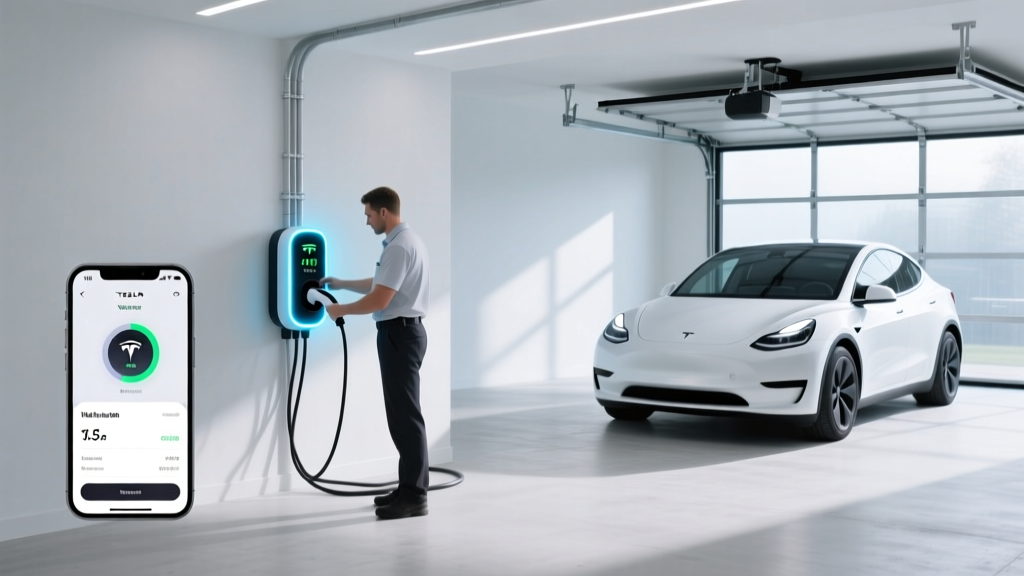
Tesla strongly recommends professional installation by a licensed electrician, and most jurisdictions legally require a permit and inspection for new 240V circuits. DIY installation of a 60A/240V circuit risks fire, code violations, and insurance claim denial. The electrical work is not analogous to mounting a shelf—this is high-amperage work that demands proper wire sizing, torque specifications, and grounding.