The Real Data on Tesla Charging Fires
Searches for "how many Teslas have caught fire while charging" spike every time a viral video surfaces of a burning electric vehicle. The reality, backed by incident data, is far less dramatic than social media suggests.
As of early 2026, NHTSA and fire-incident databases have documented fewer than 50 confirmed Tesla fires directly linked to the charging process across all models (Model S, 3, X, Y, and Cybertruck) since 2012. Given that Tesla has sold over 5 million vehicles globally and the fleet has logged tens of billions of miles, the per-vehicle charging-fire rate is vanishingly small.
For context, Tesla's own 2024 Impact Report stated approximately one vehicle fire per 130 million miles driven, compared to roughly one fire per 19 million miles for internal combustion engine (ICE) vehicles, according to data from the National Fire Protection Association (NFPA). The vast majority of EV fires — like ICE fires — stem from collision damage, not the charging act itself.
This guide breaks down what makes charging safe — and how to set up a home Level 2 charger correctly, including costs, electrical requirements, and equipment picks for 2026.
Understanding Charging Levels: Speed and Safety
Before evaluating risk, you need to understand the three charging levels available to EV owners. Each delivers different power (measured in kW — kilowatts) and adds range at different rates.
| Level | Power (kW) | Voltage / Amps | Miles of Range Per Hour | Typical Use Case |
|---|---|---|---|---|
| Level 1 | 1.0 – 1.4 kW | 120V / 12A | 3 – 5 mi/hr | Overnight trickle; PHEVs and low-mileage drivers |
| Level 2 | 3.3 – 19.2 kW | 240V / 16A–80A | 12 – 75 mi/hr | Home daily charging; workplace; public destinations |
| DC Fast Charging | 50 – 350 kW | 200–800V DC | 150 – 1,000+ mi/hr | Road trips; highway corridors; Tesla Superchargers |
Critical distinction: kW measures power (the rate electricity flows), while kWh measures energy (the total capacity stored in your battery). A 75 kWh battery charged at 11.5 kW (a common Level 2 rate) takes roughly 6.5 hours from empty to full. A 250 kW DC fast charger can replenish 10–80% of that same battery in approximately 20–25 minutes, though charging speed tapers significantly above 80% State of Charge (SoC) to protect battery health.
Charging Time Examples by Battery Size
Here is what real charging sessions look like for popular 2026 battery sizes, assuming you start at 10% SoC:
- Tesla Model 3 Long Range (82 kWh usable, LFP/NMC depending on trim): 10–80% on a 250 kW Supercharger in ~22 minutes; on an 11.5 kW Level 2 home charger, 0–100% in ~7 hours.
- Ford F-150 Lightning Extended Range (131 kWh usable, NMC): 10–80% on a 150 kW DC charger in ~45 minutes; on an 11.5 kW Level 2, 0–100% in ~11.5 hours.
- Hyundai Ioniq 5 Long Range (77.4 kWh usable, NMC): 10–80% on a 350 kW charger in ~18 minutes (800V architecture); on an 11.5 kW Level 2, 0–100% in ~6.7 hours.
Home Charger Installation: Requirements and Costs
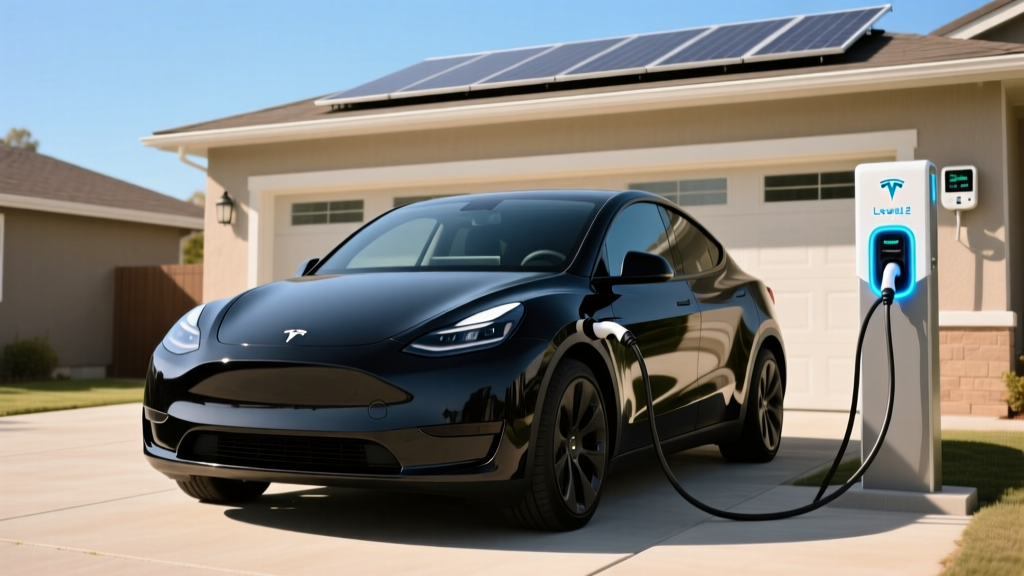
Installing a Level 2 home charger is the single most impactful upgrade for EV ownership. It is also where safety matters most — improper installation is a far greater fire risk than the vehicle or charger hardware itself.
Electrical Requirements
A Level 2 charger requires a dedicated 240-volt circuit, similar to what powers an electric dryer or oven. The specific amperage depends on the charger's power output:
- 40-amp circuit → supports up to 32A continuous draw (9.6 kW) — the most common home setup
- 50-amp circuit → supports up to 40A continuous draw (9.6–11.5 kW) — recommended for future-proofing
- 60-amp circuit → supports up to 48A continuous draw (11.5 kW) — optimal for larger batteries
- 100-amp circuit → supports up to 80A continuous draw (19.2 kW) — only needed for very large batteries or dual-EV households; requires significant panel capacity
The National Electrical Code (NEC) requires that continuous loads (anything running 3+ hours, which includes EV charging) use only 80% of a circuit's rated capacity. This is why a 40A circuit delivers 32A to the car, not 40A.
What Electrical Upgrades Might I Need?
Older homes — particularly those built before 1990 — often have 100-amp or 150-amp main electrical panels. Adding a 40–60A dedicated EV circuit to an already-loaded panel may require a panel upgrade to 200 amps, which is the single largest variable in installation cost.
A licensed electrician will perform a load calculation to determine if your existing panel can handle the additional draw. If your panel is already near capacity (common with electric ranges, dryers, HVAC, and water heaters all running), a panel upgrade or a smart load-management device like the Emporia Smart Load Center may be necessary.
Installation Cost Breakdown
| Component | Typical Cost Range | Notes |
|---|---|---|
| Level 2 Charger (hardware) | $350 – $750 | Varies by brand, power output, smart features |
| Electrician labor (standard install) | $500 – $2,000 | Depends on run distance from panel to garage/driveway |
| Electrical permit | $50 – $250 | Required in most jurisdictions; varies by city/county |
| Panel upgrade (if needed) | $1,500 – $4,000 | 100A → 200A upgrade; not always required |
| Conduit/wiring materials | $100 – $500 | Longer runs from panel increase cost |
| Total (no panel upgrade) | $900 – $3,000 | Most common scenario for modern homes |
| Total (with panel upgrade) | $2,500 – $6,500 | Older homes with insufficient panel capacity |
The federal Residential Clean Energy Credit (IRS §25C) covers 30% of the cost of EV charger equipment and installation, up to $1,000 per year, for equipment placed in service through 2032. This credit applies to your primary residence and can significantly offset installation expenses. Consult a tax professional to confirm eligibility for your specific situation.
Connector Compatibility: NACS, CCS1, and CHAdeMO
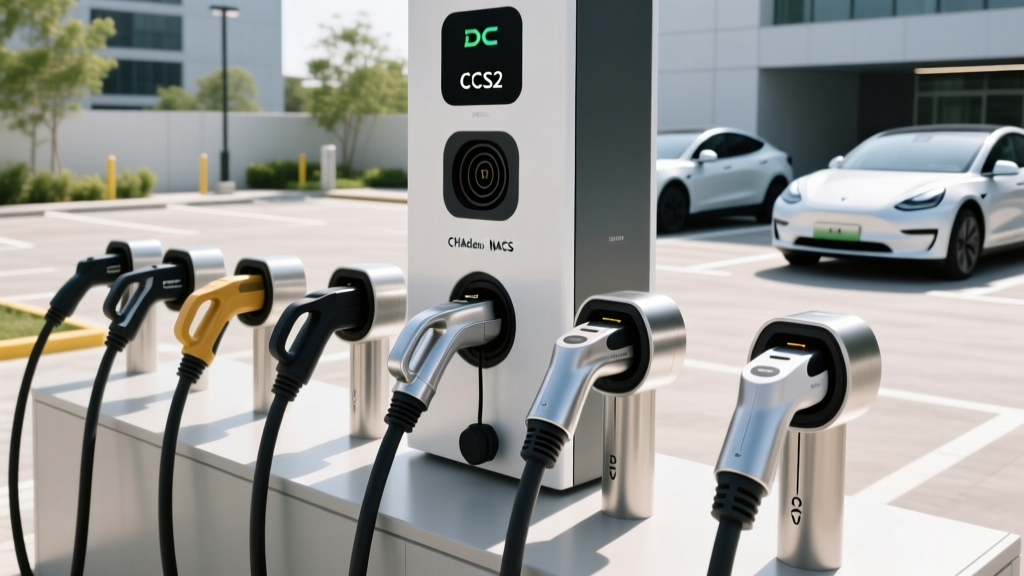
As of 2026, the North American charging connector landscape has consolidated significantly around Tesla's NACS (North American Charging Standard), now formally adopted as SAE J3400.
| Connector | Native Vehicles (2026) | Adapter Needed? | Public Network Availability |
|---|---|---|---|
| NACS (J3400) | Tesla (all), Ford, GM, Rivian, Volvo, Polestar, Fisker | None for NACS-native; CCS-to-NACS adapter for legacy CCS vehicles | Tesla Superchargers (open to all via adapter); growing Electrify America, EVgo NACS stalls |
| CCS1 | Hyundai, Kia, VW, BMW, Mercedes (legacy models) | NACS-to-CCS adapter for Supercharger access | Electrify America, EVgo, ChargePoint — still widely available |
| CHAdeMO | Nissan Leaf (legacy only) | None available for DC fast; essentially discontinued | Declining; some remaining at older ChargePoint/EVgo stations |
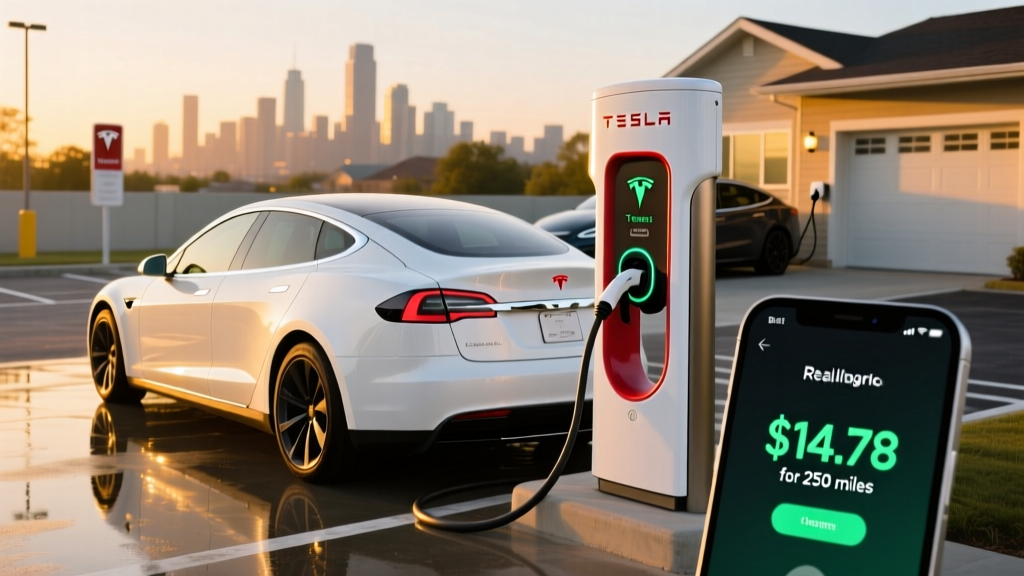
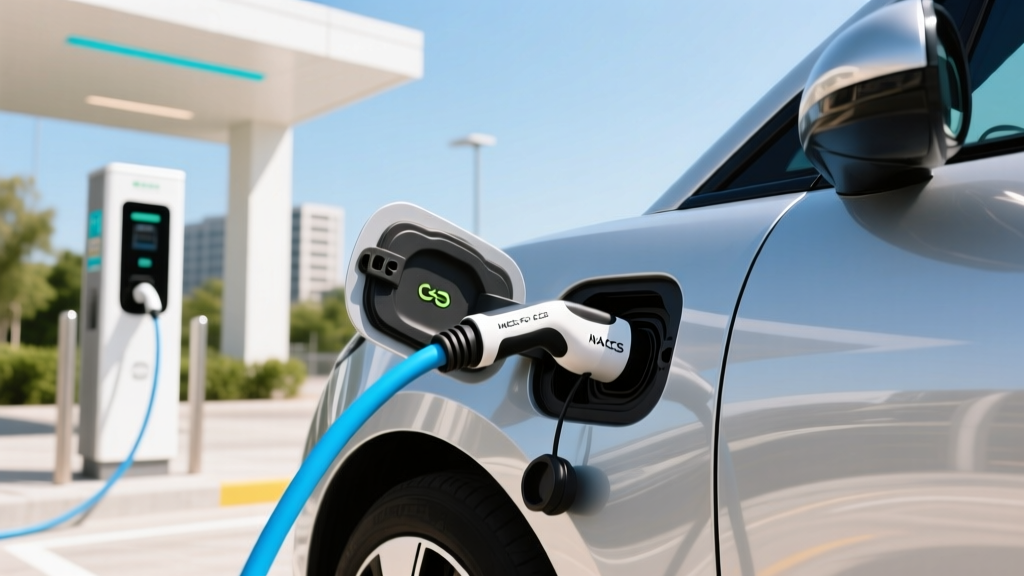
If you drive a Tesla, your vehicle uses NACS natively and plugs directly into any Tesla Supercharger or NACS-equipped public station. If you own a non-Tesla EV with a CCS1 port, you can purchase an official NACS adapter ($150–$250) to access the Tesla Supercharger network — which now numbers over 25,000 stalls across North America.
For home Level 2 charging, virtually all chargers sold in 2026 come with a NACS connector or offer a CCS1 option. If you have multiple EVs with different connectors, consider a charger with a swappable cable or keep a J1772-to-NACS adapter on hand.
Cost to Charge: Home vs. Public vs. Gas
One of the strongest ownership arguments for EVs is fuel cost savings — but the actual savings depend heavily on where and when you charge.
| Charging Scenario | Avg. $/kWh | Cost for 300 Miles (at 3.5 mi/kWh) | Cost Per Mile |
|---|---|---|---|
| Home Level 2 (off-peak utility rate) | $0.08 – $0.12 | $6.86 – $10.29 | $0.023 – $0.034 |
| Home Level 2 (standard rate) | $0.13 – $0.18 | $11.14 – $15.43 | $0.037 – $0.051 |
| Public Level 2 (ChargePoint, etc.) | $0.20 – $0.35 | $17.14 – $30.00 | $0.057 – $0.100 |
| DC Fast Charging (Electrify America, Supercharger) | $0.30 – $0.50 | $25.71 – $42.86 | $0.086 – $0.143 |
| Gasoline (27 MPG avg, $3.50/gal) | — | $38.89 | $0.130 |
At home with off-peak utility rates, an EV costs roughly $0.03 per mile — about one-quarter the cost of gasoline at national average prices. Even DC fast charging on road trips typically undercuts or matches gasoline per-mile cost. The key economic insight: home charging is where the savings live. Relying exclusively on public DC fast charging erodes the cost advantage significantly.
According to fueleconomy.gov, the 2026 Tesla Model 3 Long Range achieves 132 MPGe combined, translating to roughly $550 in annual electricity cost at 15,000 miles per year (based on national average electricity rates). A comparable 30 MPG gasoline sedan would cost approximately $1,750 annually in fuel.
Equipment Recommendations: Best Home Chargers for 2026
Not all Level 2 chargers are equal. The right choice depends on your electrical panel capacity, vehicle compatibility, and whether you want smart scheduling features. Here are our top picks based on real-world testing and owner feedback:
Tesla Wall Connector (Gen 4)
- Power Output: Up to 11.5 kW (48A on 60A circuit)
- Connector: NACS native
- Cable Length: 24 ft
- Smart Features: Wi-Fi, OTA updates, power sharing between two units, scheduled charging via Tesla app
- Price: $475
- Best For: Tesla owners; cleanest integration with Tesla app ecosystem
ChargePoint Home Flex
- Power Output: Up to 12 kW (50A on 60A circuit); adjustable from 16A–50A
- Connector: NACS or J1772 (configurable)
- Cable Length: 23 ft
- Smart Features: Wi-Fi, ChargePoint app scheduling, Alexa integration, amperage dip-switch adjustable
- Price: $549 – $599
- Best For: Multi-EV households with mixed connectors; adjustable amperage for older panels
Emporia Level 2 Smart Charger
- Power Output: Up to 11.5 kW (48A on 60A circuit)
- Connector: NACS or J1772
- Cable Length: 24 ft
- Smart Features: Wi-Fi, Emporia app with detailed energy tracking, solar integration, load management with Emporia panel monitor
- Price: $399
- Best For: Budget-conscious buyers; solar panel owners wanting integrated energy management
Regardless of which charger you choose, ensure it is UL-listed (or ETL-listed to UL standards). Avoid unbranded chargers from online marketplaces that lack proper safety certifications — these are the primary source of charging-related electrical incidents, not the vehicles themselves.
Safety and Code Considerations
Modern EVs and certified chargers incorporate multiple redundant safety systems. The vehicle's Battery Management System (BMS) monitors cell temperature, voltage, and current in real time and will halt charging if any parameter exceeds safe limits. The charger itself includes ground-fault protection, overcurrent protection, and thermal sensors at the plug.
That said, proper installation is non-negotiable for minimizing risk:
- Dedicated circuit: Your Level 2 charger must have its own dedicated breaker — never share a circuit with other high-draw appliances.
- GFCI protection: NEC 2023 and later require GFCI (Ground Fault Circuit Interrupter) protection for all EV charging receptacles, especially outdoor installations. Many hardwired chargers have built-in GFCI; if using a NEMA 14-50 outlet, ensure the breaker is GFCI-rated.
- Outdoor rating: If your charger is installed outdoors or in an unenclosed carport, it must carry a NEMA 4 (or IP65+) weather-resistance rating. All three chargers recommended above meet this standard.
- Proper wire gauge: A 60A circuit requires 4 AWG copper wire; a 50A circuit requires 6 AWG. Your electrician will size this correctly — do not attempt DIY electrical work for EV charging circuits.
- Permit and inspection: Most jurisdictions require an electrical permit and post-installation inspection for EV charger circuits. This protects you, ensures code compliance, and may be required for insurance coverage and tax credit claims.
The combination of a UL-listed charger, a permitted installation by a licensed electrician, and the vehicle's own BMS makes EV charging one of the safest high-power electrical activities in a residential setting — statistically far safer than operating a gas-powered generator or using portable space heaters, which cause thousands of house fires annually.
Frequently Asked Questions
How many Teslas have caught fire while charging?
Fewer than 50 confirmed incidents globally across all Tesla models since 2012, out of over 5 million vehicles sold. Many of these incidents involved prior crash damage or aftermarket modifications to the charging system. The per-vehicle rate is orders of magnitude lower than gasoline vehicle fire rates per mile driven.
Is it safe to charge a Tesla overnight in my garage?
Yes. Tesla's Battery Management System continuously monitors cell health during charging and will automatically stop the session if any anomaly is detected. Millions of Tesla owners charge overnight in enclosed garages daily. The critical safety factor is having a properly installed, permitted, and code-compliant Level 2 circuit — not the vehicle itself.
How much does it cost to install a home EV charger?
A standard Level 2 installation (no panel upgrade) typically costs $900–$3,000 including equipment, electrician labor, and permit. If your home needs a 200A panel upgrade, expect $2,500–$6,500 total. The IRS §25C credit covers 30% of costs up to $1,000.
How fast will each charging level add range?
Level 1 (120V) adds 3–5 miles per hour — adequate only for PHEVs or very low daily mileage. Level 2 (240V) adds 12–75 miles per hour depending on amperage, which covers overnight needs for virtually all EVs. DC fast charging adds 150–1,000+ miles per hour of charging, enabling 10–80% replenishment in 18–45 minutes depending on the vehicle and charger.
Which connector is compatible with my EV?
In 2026, most new EVs use NACS (J3400) natively: Tesla, Ford, GM, Rivian, Volvo, and Polestar. Hyundai, Kia, VW, and BMW models from prior years may still use CCS1 — a NACS adapter ($150–$250) enables Supercharger access. CHAdeMO is essentially discontinued and limited to older Nissan Leafs. For home Level 2 charging, nearly all new chargers ship with NACS or offer it as a configurable option.
How much does charging cost per mile vs gas?
Home charging at off-peak rates costs approximately $0.03/mile. Public DC fast charging costs $0.09–$0.14/mile. A comparable 27 MPG gasoline vehicle costs about $0.13/mile at $3.50/gallon. Home charging delivers 4x cost savings; road-trip DC fast charging roughly breaks even with gasoline.
What electrical upgrades might I need?
If your home has a 200A main panel with available capacity, you likely need only a new dedicated 40–60A breaker and wiring run. Homes with 100A or 150A panels — or panels already near capacity — may require a panel upgrade ($1,500–$4,000). A licensed electrician will perform a load calculation during the initial assessment to determine your specific needs.