Owning a Tesla means navigating a charging ecosystem that's simultaneously the best and most confusing in the EV industry. The Tesla Supercharger network remains the gold standard for reliability, but Tesla charging costs vary wildly depending on where, when, and how you plug in — from pennies per mile at home on off-peak utility rates to highway-speed Supercharging that can rival gas prices per mile in peak-demand cities.
This guide breaks down every charging scenario a Tesla owner (or prospective buyer) faces in 2026, with exact dollar figures, kilowatt-hour rates, installation costs, and equipment recommendations. Whether you drive a Model 3, Model Y, Model S, or Model X — or are considering one — you'll know precisely what to budget.
Understanding kW vs kWh: The Foundation of Charging Costs
Before calculating a single dollar amount, you need to nail down the most commonly confused terms in EV ownership:
- kW (kilowatts) = power, or the rate at which energy flows. Think of it as the width of a hose. A 250 kW Supercharger delivers energy faster than an 11.5 kW home wall connector.
- kWh (kilowatt-hours) = energy, or the total amount stored or consumed. Think of it as gallons in a tank. A Tesla Model Y Long Range has a ~75 kWh usable battery; a Model S has ~95 kWh.
Your electricity bill charges you per kWh. Charger speed is rated in kW. Confusing the two is the single most common mistake new EV owners make — and it leads to wildly wrong cost estimates.
Charging Levels Explained: Speed, Power, and Range Added
Every Tesla can charge at three levels. Here's what each delivers in real-world terms:
| Level | Voltage | Max Power (kW) | Miles of Range Added Per Hour | Typical Use Case |
|---|---|---|---|---|
| Level 1 | 120V AC | 1.4–1.9 kW | 3–5 mi/hr | Emergency / overnight trickle for low-mileage drivers |
| Level 2 | 240V AC | 7.2–11.5 kW | 25–44 mi/hr | Home daily charging, workplace, destination charging |
| DC Fast (Supercharger) | 400V DC | 150–250 kW | 170–200 mi in 15 min | Road trips, highway corridor travel |
Real-world note: Those "miles per hour" figures assume a Model Y Long Range (~270 Wh/mi efficiency). A heavier Model X or a Model 3 Performance driven aggressively will see fewer miles per kWh, meaning fewer miles added per hour of charging.
Tesla Charging Costs by Scenario: Home, Supercharger, and Public DC Fast
Here's where the rubber meets the road. Tesla charging costs depend entirely on your electricity source and time of use.
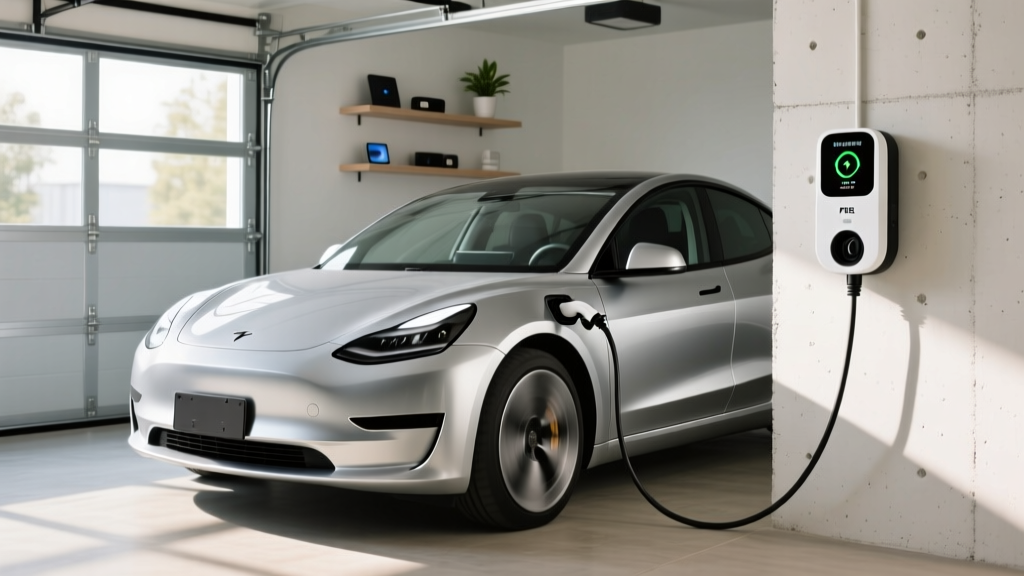
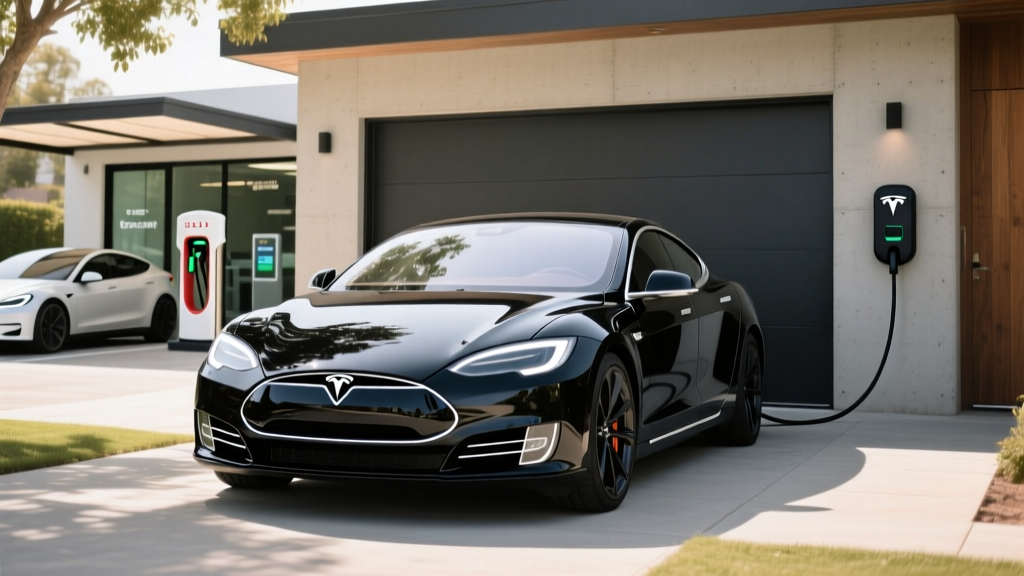
Home Charging (Level 2)
The national average residential electricity rate sits around $0.16/kWh as of early 2026, according to the U.S. Energy Information Administration. But rates vary enormously:
- Off-peak utility rates (overnight, in states with time-of-use plans): $0.08–$0.12/kWh
- Standard residential rate (no TOU plan): $0.13–$0.20/kWh
- Peak TOU rates (summer afternoons in California, for example): $0.30–$0.50+/kWh
Example: Fully recharging a Model Y Long Range (~75 kWh usable) from 10% to 100% at home:
- At $0.10/kWh (off-peak): $7.50 for ~290 miles of range
- At $0.16/kWh (national avg): $12.00 for ~290 miles
- At $0.35/kWh (peak TOU): $26.25 for ~290 miles
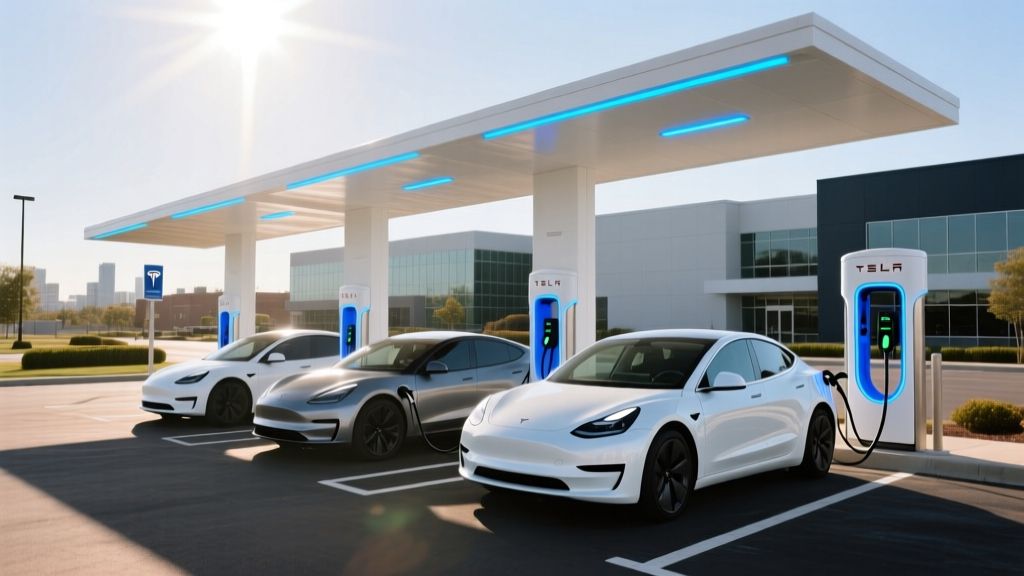
Tesla Supercharger Network
Tesla Supercharger pricing in 2026 typically ranges from $0.25 to $0.50/kWh depending on location, time of day, and whether the station is in a high-demand urban corridor or a rural highway stop. Some stations now feature time-of-use pricing, with off-peak rates 20–30% lower.
- Average Supercharger session (10% to 80%, ~56 kWh for a Model Y): $14–$28
- Idle fees: $0.50–$1.00/minute if you remain plugged in after reaching your charge limit at a busy station
As of late 2024, Tesla opened the Supercharger network to non-Tesla EVs (using a built-in Magic Dock CCS adapter at select stalls). This has increased stall congestion at some popular locations, a factor worth considering during peak travel weekends.
Third-Party DC Fast Chargers (Electrify America, EVgo, ChargePoint)
Since all 2025+ Tesla models ship with the NACS (North American Charging Standard) port, you'll need an adapter to use CCS1-equipped third-party chargers. Tesla sells a NACS-to-CCS adapter (~$250). Many non-Tesla networks have also begun deploying NACS cables.
- Electrify America: $0.35–$0.55/kWh (guest rate); lower with Pass+ subscription ($4/month for $0.31/kWh)
- EVgo: $0.35–$0.50/kWh; lower with EVgo Plus subscription
- ChargePoint (DC fast): Varies by site host, typically $0.35–$0.60/kWh
Cost Per Mile: Tesla vs Gas Car
The ultimate question for any EV buyer: does charging actually save money compared to gasoline? Here's a side-by-side using a Tesla Model Y Long Range and a comparable gas SUV (Toyota RAV4 AWD, 30 MPG combined):
| Charging/Fueling Scenario | Cost Per Mile (Tesla Model Y) | Cost Per Mile (RAV4 30 MPG, $3.50/gal) |
|---|---|---|
| Home off-peak ($0.10/kWh) | $0.027 | $0.117 |
| Home national avg ($0.16/kWh) | $0.043 | $0.117 |
| Supercharger avg ($0.35/kWh) | $0.095 | $0.117 |
| Peak TOU home ($0.40/kWh) | $0.108 | $0.117 |
| Expensive public DC ($0.55/kWh) | $0.149 | $0.117 |
Key insight: Home charging at off-peak or even average rates delivers massive savings — roughly 75–80% less per mile than gas. But at the most expensive public DC fast chargers, the cost per mile can exceed gasoline. The financial case for a Tesla hinges on reliable home charging access.
Home Charger Installation: Costs, Electrical Requirements, and Panel Upgrades
Installing a Level 2 home charger is the single highest-impact upgrade a Tesla owner can make. Here's what's involved.
Electrical Requirements
The Tesla Wall Connector (Gen 3) supports up to 48 amps continuous draw, which requires a 60-amp dedicated circuit on a 240V line. For a slightly lower-cost install, you can configure it at 40 amps on a 50-amp circuit, still delivering a robust 9.6 kW.
Older homes (pre-1990s) often have 100-amp or 150-amp main electrical panels. Adding a 60-amp EV circuit may push the panel past its safe capacity, requiring a panel upgrade to 200 amps — a significant added cost.
Installation Cost Breakdown
| Component | Low Estimate | High Estimate | Notes |
|---|---|---|---|
| Tesla Wall Connector (hardware) | $400 | $475 | Gen 3, 24ft cable, Wi-Fi enabled |
| Electrician labor (simple install) | $500 | $1,200 | Short run from panel, same wall or adjacent |
| Electrician labor (complex install) | $1,200 | $3,500 | Long conduit run, trenching, garage detached |
| Permit / inspection fee | $50 | $300 | Varies by municipality |
| Electrical panel upgrade (if needed) | $2,000 | $5,000 | 100A → 200A service upgrade |
| Total (no panel upgrade) | $950 | $5,475 | Most homes: $1,200–$2,500 all-in |
| Total (with panel upgrade) | $2,950 | $10,475 | Older homes with 100A service |
Federal incentive note: The IRS §30C Alternative Fuel Vehicle Refueling Property Credit covers 30% of home charger hardware and installation costs, up to $1,000, for equipment placed in service through 2032. Eligibility depends on census-tract requirements and income limitations — consult a tax professional.
Charging Time Examples: 10% to 80% by Model and Charger Type
DC fast charging isn't a flat rate — the charge curve tapers significantly above 80% state of charge to protect battery health. Here's what to expect for the critical 10–80% session:
| Model | Usable Battery (kWh) | Peak DC Rate (kW) | 10–80% at V3 Supercharger (250 kW) | 10–80% at Level 2 (11.5 kW) |
|---|---|---|---|---|
| Model 3 Long Range (2025+) | ~75 kWh | 250 kW | ~25–28 min | ~5.5 hours |
| Model Y Long Range (2025+) | ~75 kWh | 250 kW | ~25–28 min | ~5.5 hours |
| Model S (2025+) | ~95 kWh | 250 kW | ~32–36 min | ~7 hours |
| Model X (2025+) | ~95 kWh | 250 kW | ~32–36 min | ~7 hours |
Charge curve reality: A Model Y at a V3 Supercharger may peak at 250 kW between 10–25% SoC, then taper to ~150 kW by 50%, ~80 kW by 70%, and ~40 kW by 80%. The advertised "250 kW" is a peak, not a sustained rate. This is why the 10–80% time is a more useful metric than peak kW alone.
Cold weather impact: In sub-freezing temperatures, expect 10–80% times to increase by 20–40% unless the battery is preconditioned. Tesla's navigation system automatically preconditioning the battery when you route to a Supercharger — always navigate to the charger to enable this.
Connector Compatibility: NACS, CCS, and Adapter Needs
All Tesla vehicles sold in North America since 2012 use the proprietary Tesla connector, which was rebranded as NACS (North American Charging Standard) in late 2022. As of 2025, nearly all major automakers have adopted NACS for new models, making it the de facto standard.
| Network / Connector | Native Tesla Support? | Adapter Required? | Notes |
|---|---|---|---|
| Tesla Supercharger (NACS) | Yes — native | No | Full access, fastest speeds |
| Tesla Destination Charger (NACS/J1772) | Yes — native | No (J1772 adapter included with older Teslas) | Hotels, restaurants, workplaces |
| Electrify America (CCS1) | No | Yes — Tesla NACS-to-CCS adapter (~$250) | Useful as backup in remote areas |
| EVgo (CCS1 / some NACS) | Partial | May need CCS adapter | EVgo adding NACS cables through 2026 |
| ChargePoint (J1772 Level 2) | No | Yes — J1772-to-NACS adapter (included with vehicle) | Level 2 only; widely available |
| CHAdeMO | No | Aftermarket adapter (~$400+, rare) | Network is largely defunct in the US; not recommended |
Practical advice: For 95% of Tesla owners, the Supercharger network plus the included J1772 adapter is all you need. The CCS adapter is worth buying ($250) only if you regularly travel in areas with sparse Supercharger coverage — parts of the rural Midwest, for example.
Recommended Home Charging Equipment for Tesla Owners
While the Tesla Wall Connector is the obvious default, several third-party options compete on features and price. Here's how the top picks compare:
Tesla Wall Connector (Gen 3) — Best Overall for Tesla Owners
- Power output: Up to 11.5 kW (48A on 60A circuit)
- Connector: NACS native
- Cable length: 24 feet
- Smart features: Wi-Fi, OTA updates, load sharing (pair two units on one circuit), power sharing with Tesla Powerwall
- Price: ~$400–$475
- Verdict: Seamless integration with Tesla app, sleek design, best-in-class for Tesla-only households.
ChargePoint Home Flex — Best Multi-Vehicle Household
- Power output: Up to 12 kW (50A on 60A circuit); configurable down to 16A
- Connector: J1772 (NACS adapter needed for Tesla) or NACS version now available
- Cable length: 23 feet
- Smart features: Wi-Fi, Alexa integration, detailed ChargePoint app with cost tracking, flexible amperage dial
- Price: ~$550–$650
- Verdict: Ideal if you have a non-Tesla EV alongside your Tesla. The adjustable amperage means you can install it on a 40A or 50A circuit without reconfiguring.
Emporia Vue Level 2 Charger — Best Budget Smart Charger
- Power output: Up to 11.5 kW (48A)
- Connector: J1772 or NACS version available
- Cable length: 24 feet
- Smart features: Wi-Fi, energy monitoring via Emporia app, solar integration, scheduling
- Price: ~$350–$400
- Verdict: Excellent value, especially for homes with solar panels. Energy monitoring helps track exact charging costs.
Safety and Electrical Code Considerations
A Level 2 EV charger is a continuous high-draw appliance — it runs at near-maximum capacity for hours. Electrical code and safety requirements are non-negotiable:
- Dedicated circuit: Your EV charger must be on its own dedicated breaker — never shared with other outlets or appliances. A 48A charger requires a 60A breaker (NEC requires circuits be rated at 125% of continuous load).
- GFCI protection: The 2023 NEC update (and most 2026 local adoptions) requires GFCI protection for all EV charging outlets. Hardwired installations (like the Tesla Wall Connector) may be exempt in some jurisdictions — check with your electrician.
- Outdoor rating: If installing outside, ensure the charger is NEMA 4 rated (weatherproof). The Tesla Wall Connector is rated for indoor and outdoor use.
- Permit and inspection: Nearly all jurisdictions require an electrical permit for a new 240V circuit. The inspection ensures the wire gauge, breaker size, and grounding meet code. Skipping this step risks insurance claim denials in the event of an electrical fire.
- Wire gauge: A 60A circuit typically requires 6 AWG copper wire (THHN in conduit) or 4 AWG NM-B cable. Your electrician will size this based on run length and local code.
Panel capacity check: Before committing to a 60A circuit, have your electrician perform a load calculation on your main panel. The formula considers your home's square footage, existing major appliances (HVAC, electric range, dryer), and the proposed EV load. If the calculation exceeds 80% of your panel's rated capacity, a panel upgrade is mandatory — not optional.
Frequently Asked Questions
How much does it cost to install a home EV charger for a Tesla?
Most homeowners spend between $1,200 and $2,500 for a complete Tesla Wall Connector installation (hardware, electrician labor, and permit) when no panel upgrade is needed. If your home has an older 100-amp electrical panel that needs upgrading to 200 amps, expect the total to range from $3,000 to $10,000+. The IRS §30C credit can offset up to $1,000 (30% of costs) if you meet eligibility requirements.
How fast will each charging level add range to my Tesla?
Level 1 (120V standard outlet) adds roughly 3–5 miles of range per hour — enough only for overnight top-ups if you drive under 40 miles daily. Level 2 (240V, Tesla Wall Connector at 11.5 kW) adds approximately 35–44 miles per hour, easily replenishing a full day's driving in 2–3 hours. A V3 Supercharger (250 kW DC fast) can add up to 200 miles in about 15 minutes, though the rate tapers as the battery fills.
Which connector and charger is compatible with my Tesla?
All Tesla vehicles use the NACS connector natively, which plugs directly into every Tesla Supercharger and Tesla Destination Charger. For public Level 2 chargers with J1772 connectors, use the J1772-to-NACS adapter included with your vehicle. For CCS1 DC fast chargers (Electrify America, EVgo), you'll need Tesla's NACS-to-CCS adapter, sold separately for ~$250.
How much does Tesla charging cost per mile compared to gas?
At the national average home electricity rate of ~$0.16/kWh, a Tesla Model Y costs roughly $0.043 per mile to charge at home — about 63% less than a 30 MPG gas SUV at $3.50/gallon ($0.117/mile). At typical Supercharger rates ($0.35/kWh), the Tesla costs ~$0.095/mile, still about 19% cheaper than gas. Only at the most expensive public DC chargers ($0.55+/kWh) does EV charging cost more per mile than gasoline.
What electrical upgrades might I need for a home Tesla charger?
If your home has a 200-amp electrical panel (standard in most homes built after ~2000), you likely need no upgrade beyond a new 60-amp breaker and dedicated circuit. Homes with 100-amp or 150-amp panels — common in pre-1990s construction — may require a panel upgrade to 200 amps, costing $2,000–$5,000. Your licensed electrician will perform a load calculation to determine this before pulling a permit.
Does Tesla still offer free Supercharging?
Free unlimited Supercharging is no longer standard on new Tesla vehicles. It was discontinued for new orders after 2019, though some referral programs and promotional offers have periodically included limited free Supercharging credits (typically 10,000 miles or 1 year). As of 2026, all new Tesla owners should budget for per-kWh Supercharger costs.
Sources: U.S. Energy Information Administration (EIA) electricity rate data, Tesla.com official specifications and Supercharger pricing, IRS.gov §30C alternative fuel refueling property credit guidelines, fueleconomy.gov for EPA efficiency ratings.