Whether you own a Tesla Model 3, Model Y, Cybertruck, or are eyeing one of the newer refreshed models, understanding the true cost of keeping your battery charged is essential for budgeting. Tesla owners have more charging options than ever in 2026 — the Supercharger network continues to expand, home charging remains the cheapest route, and third-party networks now support NACS connectors natively. But the price differences between these methods are dramatic.
This guide breaks down exactly how much Tesla charging costs across every scenario, what you'll spend to install a home charger, and how those costs stack up against filling a gas tank. All figures reflect 2026 utility rates, Supercharger pricing, and equipment availability.
Charging Levels Explained: Speeds, Power, and Range Added Per Hour
Before calculating cost, you need to understand the three charging levels available to Tesla owners. The critical distinction: kW (kilowatts) measures the rate of power delivery — how fast energy flows into your car. kWh (kilowatt-hours) measures total energy stored — the size of your battery. Think of kW as the width of a hose and kWh as the bucket you're filling.
| Level | Voltage | Power (kW) | Miles of Range Added Per Hour | Best For |
|---|---|---|---|---|
| Level 1 (120V household outlet) | 120V | 1.0–1.4 kW | 3–5 mi/hr | Overnight top-ups, low-mileage drivers, emergency backup |
| Level 2 (240V home/public) | 240V | 7.2–19.2 kW | 22–56 mi/hr | Daily home charging, workplace charging, destination charging |
| DC Fast Charging (Supercharger/public) | 400V+ | 50–250+ kW | 175–325+ mi/hr (peak) | Road trips, rapid top-ups, commercial fleets |
A few real-world notes on these figures:
- Level 1 at 120V delivers roughly 1.2 kW continuously. For a Model Y Long Range with an 82 kWh battery (75 kWh usable), a full charge from empty would take roughly 62 hours. This is only practical if you drive fewer than 30 miles per day.
- Level 2 at 48A (11.5 kW) — the Tesla Wall Connector's max output — adds about 44 miles of range per hour. An overnight session of 8 hours replenishes roughly 350 miles, more than enough for any daily commute.
- DC Fast Charging at a V4 Supercharger peaks at 250 kW for current Model 3/Y and up to 325 kW for newer Cybertruck configurations. However, peak rates are only sustained between roughly 10–50% State of Charge (SoC). Above 80%, the charge curve tapers significantly to protect the battery. Expect a 10–80% charge in approximately 18–25 minutes depending on model and battery temperature.
How Much Does Tesla Charging Actually Cost? Per-kWh and Per-Mile Breakdown
The cost to charge a Tesla varies enormously depending on where and when you plug in. Here are the three main scenarios Tesla owners encounter in 2026:
| Charging Scenario | Typical $/kWh | Cost to Add 200 Miles (Model Y LR, ~3.5 mi/kWh) | Cost Per Mile |
|---|---|---|---|
| Home (off-peak utility rate) | $0.08–$0.14/kWh | $3.26–$8.11 | $0.02–$0.04 |
| Home (standard residential rate) | $0.13–$0.18/kWh | $7.43–$10.29 | $0.04–$0.05 |
| Tesla Supercharger (average) | $0.25–$0.40/kWh | $14.29–$22.86 | $0.07–$0.11 |
| Public DC Fast (Electrify America, EVgo, etc.) | $0.31–$0.48/kWh | $17.71–$27.43 | $0.09–$0.14 |
| Public Level 2 (ChargePoint, workplace) | $0.00–$0.25/kWh | $0.00–$14.29 | $0.00–$0.07 |
How these numbers are calculated: A Model Y Long Range achieves approximately 3.5 miles per kWh (roughly 28.5 kWh/100mi, per EPA data on fueleconomy.gov). To add 200 miles, you need about 57 kWh. Multiply that by the per-kWh rate for each scenario.
Tesla Supercharger Pricing Details
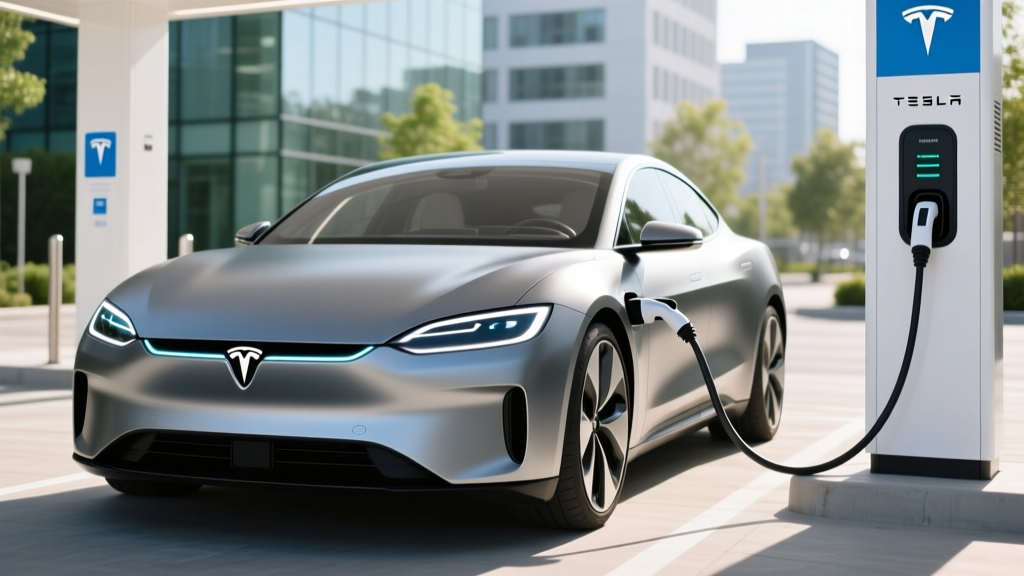
Tesla Supercharger rates vary by location, time of day, and whether you're a Tesla owner or driving a non-Tesla EV on the network (which often carries a surcharge). In 2026, typical member rates range from:
- Off-peak hours: $0.22–$0.30/kWh (overnight and midday in many markets)
- Peak hours: $0.32–$0.45/kWh (weekday evenings, especially in California and the Northeast)
- Idle fees: $1.00/minute if your car remains plugged in after reaching its charge limit and the station is at 50%+ capacity
Tesla's in-app pricing shows the exact rate at each station before you navigate there. Some Supercharger locations also offer "charging plans" — Tesla has tested subscription models that reduce per-kWh costs for high-mileage drivers.
Home Charging: Your Cheapest Option by Far
For most Tesla owners, 80–95% of charging happens at home. If your utility offers time-of-use (TOU) rates, scheduling charges for off-peak hours (typically 10 PM–6 AM) can cut costs to $0.06–$0.10/kWh in some markets. At $0.10/kWh, adding 200 miles to a Model Y costs about $5.71 — roughly the price of a coffee.
Cost Per Mile: Tesla Charging vs. Gas Vehicle
The most telling comparison for buyers deciding between a Tesla and a gas car is cost per mile. Here's how a Model Y Long Range stacks up against a comparable gas-powered compact SUV averaging 28 MPG combined (think Toyota RAV4 or Honda CR-V):
| Scenario | Tesla Model Y LR | Gas SUV (28 MPG) |
|---|---|---|
| Home off-peak charging / regular unleaded | $0.03/mile | $0.11/mile (at $3.10/gal) |
| Home standard rate / regular unleaded | $0.04/mile | $0.13/mile (at $3.50/gal) |
| Supercharger (avg) / premium unleaded | $0.09/mile | $0.16/mile (at $4.00/gal) |
| Annual cost at 12,000 miles (home charging) | $360–$480 | $1,320–$1,560 |
At 12,000 miles per year, a Tesla owner charging primarily at home saves between $900 and $1,200 annually on fuel compared to a gas SUV. Over a 5-year ownership period, that's $4,500–$6,000 in fuel savings alone — enough to offset a meaningful portion of the vehicle's price premium.
However, if you rely exclusively on Superchargers or public DC fast chargers, your per-mile cost rises to $0.08–$0.14, narrowing the gap considerably. This is why home charging access is the single biggest factor in EV ownership economics.
Home Charger Installation: Costs, Electrical Requirements, and Panel Upgrades
Installing a Level 2 home charger is the highest-leverage investment a Tesla owner can make. Here's what's involved and what it costs.
Electrical Requirements for Tesla Home Charging
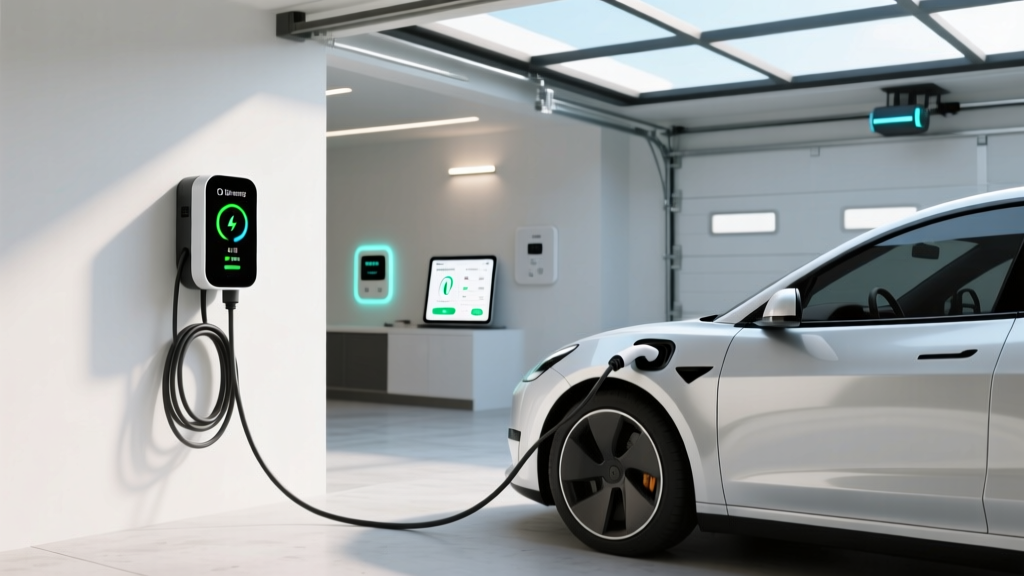
The Tesla Wall Connector (Gen 3) supports up to 48 amps continuous draw, which requires a dedicated 60-amp circuit on a 240V line. For maximum charge speed, you need:
- Voltage: 240V (standard for Level 2 EV charging, same as a dryer or oven circuit)
- Amperage: 60A breaker for 48A continuous charging, or 50A breaker for 40A continuous (32A charger settings)
- Wire gauge: 6 AWG copper for 60A circuits, 8 AWG for 50A (varies by run length and local code)
- Circuit type: Hardwired (recommended for Wall Connector) or NEMA 14-50 outlet (allows portability)
If you opt for a NEMA 14-50 outlet instead of hardwiring, you gain flexibility to unplug and take the charger with you if you move. However, hardwired installations are generally safer, more weather-resistant, and may be required by local code in some jurisdictions.
Installation Cost Breakdown
| Component | Low Estimate | High Estimate | Notes |
|---|---|---|---|
| Tesla Wall Connector (hardware) | $425 | $475 | Gen 3, 24ft cable, Wi-Fi enabled |
| Third-party Level 2 charger (ChargePoint, Emporia, Grizzl-E) | $350 | $700 | Varies by brand, amperage, smart features |
| Electrician labor (standard install) | $500 | $1,500 | Depends on panel proximity, conduit run, drywall work |
| Electrical permit | $50 | $200 | Required in most jurisdictions; varies by city/county |
| Panel upgrade (100A → 200A service) | $1,500 | $4,000 | Needed if existing panel lacks capacity; older homes common |
| Total (no panel upgrade) | $975 | $2,175 | Most common scenario for newer homes |
| Total (with panel upgrade) | $2,475 | $6,175 | Older homes, homes with 100A service |
The panel upgrade question is critical. Homes built before 2000 often have 100-amp or 150-amp electrical panels. Adding a 60-amp EV circuit to an already-loaded 100A panel may exceed safe capacity, requiring an upgrade to 200A service. A licensed electrician will perform a load calculation per NEC Article 220 to determine if your panel can handle the addition. Do not skip this step — overloaded panels are a fire hazard.
What Electrical Upgrades Might You Need?
Beyond the panel itself, your electrician may identify these common requirements:
- Conduit run: If your panel is far from the garage or parking spot, running conduit (EMT or PVC) adds $8–$15 per foot in labor and materials.
- Dedicated GFCI breaker: NEC 2020 and later require GFCI protection for outdoor receptacles and some garage installations. GFCI breakers for 240V circuits cost $50–$120.
- Sub-panel installation: If your main panel is full but has capacity, adding a sub-panel ($400–$800) can create space for the EV circuit without a full service upgrade.
- Utility service upgrade: In rare cases, the utility's supply line to your home may need upgrading. This is typically the utility's responsibility but can add weeks to the timeline.
Home Charger Equipment Recommendations for Tesla Owners
In 2026, Tesla owners have several excellent Level 2 charger options. Here's how the top picks compare:
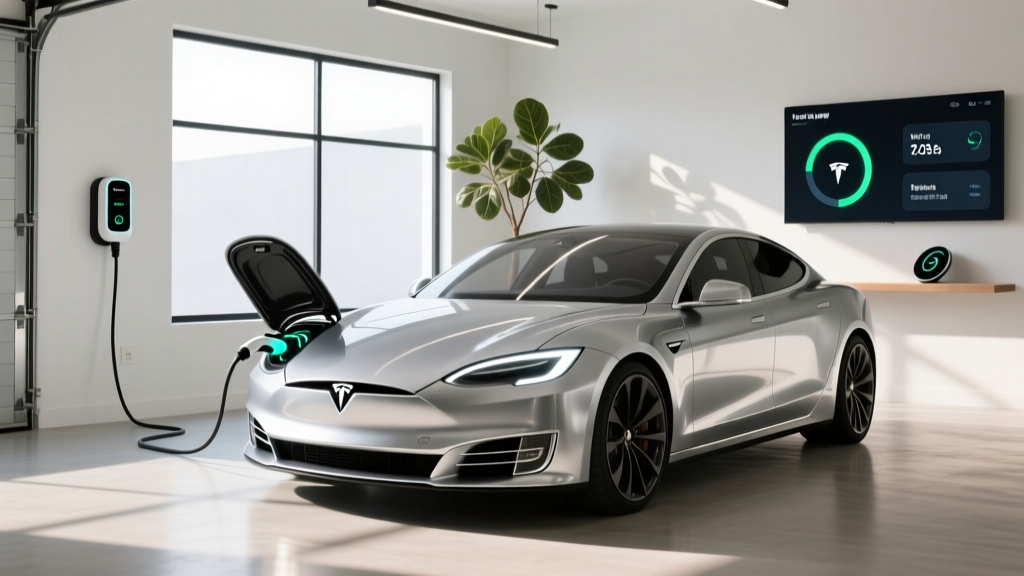
Tesla Wall Connector (Gen 3)
- Power: Up to 11.5 kW (48A @ 240V)
- Connector: NACS (native Tesla)
- Cable length: 24 feet
- Smart features: Wi-Fi, OTA updates, power-sharing between two units, access control
- Price: $425–$475
- Best for: Tesla-only households wanting seamless integration
Emporia Vue + Level 2 Charger
- Power: Up to 11.5 kW (48A @ 240V)
- Connector: J1772 (NACS adapter needed for Tesla)
- Cable length: 24 feet
- Smart features: Energy monitoring, solar integration, scheduled charging, circuit-level tracking
- Price: $400–$500 (charger); $100–$200 additional for energy monitor
- Best for: Solar owners wanting detailed energy management
ChargePoint Home Flex
- Power: Up to 12 kW (50A @ 240V)
- Connector: J1772 (NACS adapter needed for Tesla)
- Cable length: 23 feet
- Smart features: Alexa/Google integration, scheduling, charging history, flexible amperage settings
- Price: $550–$650
- Best for: Multi-EV households (J1772 works universally with adapter)
Grizzl-E Smart
- Power: Up to 10 kW (40A @ 240V)
- Connector: J1772 (NACS adapter included in some bundles)
- Cable length: 24 feet
- Smart features: OCPP-compatible, app control, adjustable amperage
- Price: $450–$550
- Best for: Extreme climates (-40°F rated), budget-conscious buyers
Our pick for most Tesla owners: The Tesla Wall Connector at $425 remains the best value for single-Tesla households. It charges at the maximum rate the Model 3 and Model Y onboard chargers can accept (11.5 kW / 48A), requires no adapter, and integrates directly with the Tesla app for charge scheduling and history. The power-sharing feature lets you install two Wall Connectors on a single 60A circuit — ideal for two-Tesla garages.
If you also own a non-Tesla EV or anticipate guests with J1772 vehicles, the ChargePoint Home Flex or Emporia charger with a NACS-to-J1772 adapter provides more flexibility.
Connector Compatibility: NACS, CCS, and Adapter Requirements
As of 2025, Tesla's North American Charging Standard (NACS) connector has become the de facto industry standard. Ford, GM, Rivian, Volvo, BMW, Hyundai, and most major automakers have adopted NACS for their new EVs. This means Tesla owners benefit from the broadest charging ecosystem available.
| Connector Type | Native Tesla Support? | Where You'll Find It | Adapter Needed? |
|---|---|---|---|
| NACS (Tesla) | Yes — native on all Teslas | Tesla Superchargers, Tesla Destination Chargers, newer third-party stations | None |
| CCS1 | No — requires adapter | Older Electrify America, EVgo, and ChargePoint DC fast stations | Tesla CCS Adapter ($175 from Tesla, or third-party ~$100–$150) |
| CHAdeMO | No — requires adapter | Limited and declining (mostly Nissan Leaf infrastructure) | Aftermarket CHAdeMO-to-NACS adapter (~$250–$400); not recommended for DC fast charging |
| J1772 (Level 2 public) | No — requires adapter | Public Level 2 stations, workplaces, hotels | Tesla J1772 Adapter (included with every Tesla; also sold separately ~$50) |
Key takeaway: Tesla vehicles come with a J1772 adapter in the glovebox or frunk, so public Level 2 charging is accessible everywhere. For DC fast charging outside the Supercharger network, the Tesla CCS adapter unlocks thousands of Electrify America and EVgo stations. However, most new third-party DC fast stations being installed in 2025–2026 include native NACS cables, reducing the need for adapters over time.
Charging Time Examples: 10–80% for Common Tesla Batteries
Real-world charging times depend on battery size, state of charge, battery temperature, and charger capability. Here are representative 10–80% charge times for current Tesla models at various charger types:
| Model / Battery | Usable kWh | 250 kW Supercharger (V3/V4) | 150 kW Public DC Fast | 11.5 kW Level 2 (Home Wall Connector) |
|---|---|---|---|---|
| Model 3 RWD (LFP, 60 kWh usable) | 60 kWh | ~25 min (LFP charges more linearly) | ~35 min | ~5.5 hours |
| Model 3 Long Range (NMC, 75 kWh usable) | 75 kWh | ~22 min | ~32 min | ~6.5 hours |
| Model Y Long Range (NMC, 75 kWh usable) | 75 kWh | ~22 min | ~32 min | ~6.5 hours |
| Cybertruck AWD (NMC, ~100 kWh usable) | ~100 kWh | ~28 min (325 kW peak capable) | ~42 min | ~8.5 hours |
LFP vs. NMC charging behavior: Tesla's Standard Range / RWD models use LFP (lithium iron phosphate) batteries, which have a flatter charge curve and tolerate frequent 100% charging better than NMC chemistry. Tesla actually recommends charging LFP vehicles to 100% at least once per week for battery calibration. NMC models (Long Range, Performance) should typically be set to 80% daily charge for longevity, reserving 100% for road trips.
Safety, Code, and Best Practices for Home Charging
Home EV charging is safe and well-regulated when installed correctly. Key safety and code considerations include:
- Dedicated circuit: Your Level 2 charger must be on its own dedicated circuit — it cannot share with other appliances. A 60A breaker for a 48A continuous load is standard.
- GFCI protection: The 2020 NEC and later require GFCI protection for 240V receptacles in garages and outdoor locations. Hardwired chargers may be exempt depending on local interpretation, but GFCI is always a good safety practice.
- Outdoor rating: If your charger is installed outdoors, both the unit and the wiring method must be rated for wet locations. The Tesla Wall Connector is NEMA 3R rated (suitable for outdoor use).
- Cable management: Use a wall-mounted cable organizer or retractable reel to prevent tripping hazards and cable damage. Never run a charging cable across a driveway or sidewalk.
- Permit and inspection: Most municipalities require an electrical permit and post-installation inspection. Your electrician should pull the permit — if they suggest skipping it, find another electrician. An unpermitted install can void homeowner's insurance coverage in the event of a fire.
- Load management: If your panel is near capacity, consider a smart charger with load-management features (like the Emporia or Wall Connector's built-in load sharing) that dynamically reduces charge rate when other circuits are drawing heavily.
Frequently Asked Questions About Tesla Charging Costs
How much does it cost to fully charge a Tesla Model Y at home?
A Model Y Long Range has approximately 75 kWh of usable battery. At the US average residential rate of $0.16/kWh, a full charge costs about $12.00 and provides roughly 310 miles of EPA range. With off-peak TOU rates at $0.10/kWh, that drops to $7.50 for a full charge.
Is Tesla Supercharging free?
Not for most new vehicles. Tesla discontinued free unlimited Supercharging for new purchases in 2019. Some used Teslas and limited promotional offers still include free Supercharging credits, but standard pay-per-kWh pricing applies to the vast majority of 2026 Tesla owners. Expect $0.25–$0.45/kWh depending on location and time.
Can I charge my Tesla on a regular 120V outlet?
Yes, using the Tesla Mobile Connector with the included NEMA 5-15 adapter. However, Level 1 charging at 120V adds only 3–5 miles of range per hour. It's suitable as a backup or for very low-mileage drivers (under 30 miles/day) but impractical as a primary charging method for most owners.
How does cold weather affect Tesla charging costs?
Cold temperatures (below 40°F) reduce battery efficiency by 15–30%, meaning you use more kWh per mile. The battery also charges more slowly when cold unless preconditioned. In practice, winter charging costs can be 20–35% higher than summer for the same miles driven, particularly in northern climates. Using seat heaters instead of cabin heat and preconditioning while plugged in help mitigate this.
Do I need a Tesla Wall Connector, or can I use a third-party charger?
You can absolutely use a third-party J1772 charger with the J1772 adapter included with your Tesla. However, the Tesla Wall Connector offers the best combination of price ($425), charge speed (48A / 11.5 kW), and native integration. Third-party chargers make more sense if you own non-Tesla EVs, want detailed energy monitoring, or need solar integration features.
What happens if my home electrical panel can't handle a Level 2 charger?
If a load calculation shows your panel is at capacity, you have three options: (1) upgrade to a 200A panel ($1,500–$4,000), (2) install a lower-amperage circuit (e.g., 30A for 24A charging, which still adds ~22 miles/hour), or (3) use a smart load-management device that shares capacity between your EV charger and other circuits. Your electrician can advise on the most cost-effective path for your specific situation.
Sources: fueleconomy.gov (EPA efficiency data), IRS.gov (Residential Clean Energy Credit), Tesla.com (Wall Connector and vehicle specifications). All pricing reflects 2026 market rates and is subject to regional variation. Consult a licensed electrician for installation specifics and a tax professional for credit eligibility.