If you've ever searched for a "Tesla phone charger" thinking it might double as an EV charging solution, you're not alone — but the physics tell a very different story. A smartphone charger delivers 5-30 watts. A Tesla Wall Connector delivers up to 11,500 watts. That's a 380x difference, and understanding why matters for anyone planning to charge an electric vehicle at home.
This guide breaks down EV charging levels, real-world speeds, home installation requirements, connector compatibility, and the actual cost per mile versus gasoline — with exact numbers, not marketing fluff.
Charging Levels Explained: Level 1, Level 2, and DC Fast Charging
EV charging operates at three distinct levels, each with different power requirements, speeds, and use cases. The critical distinction every EV owner must understand: kW (kilowatts) measures power — how fast energy flows. kWh (kilowatt-hours) measures energy — how much the battery stores. A 10 kW charger fills a 100 kWh battery in roughly 10 hours (math simplified; real charging curves taper above 80% SoC).
| Level | Voltage / Amperage | Power (kW) | Miles of Range Added per Hour | Typical Use Case |
|---|---|---|---|---|
| Level 1 | 120V / 12-16A | 1.4-1.9 kW | 3-5 miles | Overnight trickle, PHEV top-ups |
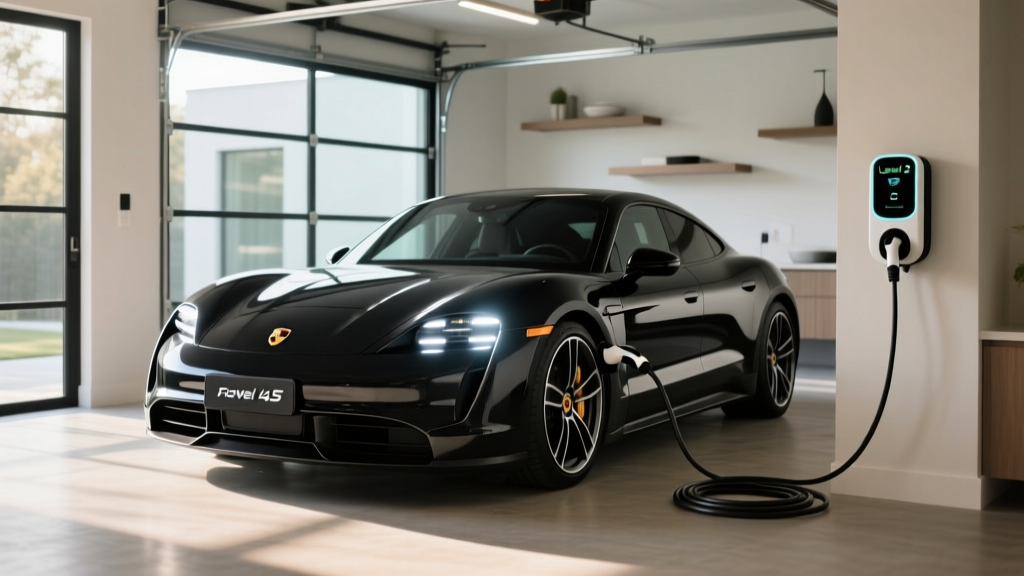
| Level 2 | 240V / 16-80A | 3.8-19.2 kW | 14-75 miles | Daily home/workplace charging |
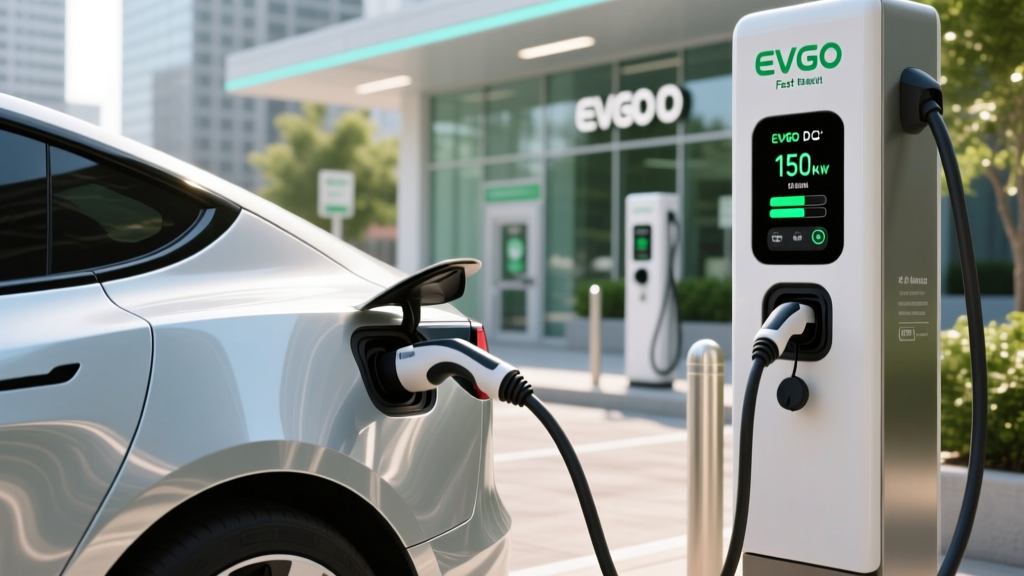
| DC Fast | 200-900V DC | 50-350 kW | 150-1,000+ miles (peak) | Road trips, rapid top-ups |
Real-world context: A Tesla Model Y Long Range (75 kWh usable battery, ~310 miles EPA range) charging on Level 1 at 1.4 kW gains about 4 miles per hour — or roughly 40 miles overnight. That same vehicle on a 48A Level 2 charger (11.5 kW) gains about 37 miles per hour, fully replenishing overnight. On a 250 kW Tesla Supercharger V4, it peaks at ~250 kW and adds 150+ miles in 15 minutes before tapering.
Home EV Charger Installation: Electrical Requirements and Real Costs
Installing a Level 2 home charger isn't like plugging in a phone. It requires a dedicated 240V circuit — the same voltage as your electric dryer or oven — and potentially an electrical panel upgrade if your home's service is maxed out.
Electrical Requirements for Level 2 Charging
- Voltage: 240V (split-phase, standard US residential)
- Amperage: 16A (3.8 kW) to 80A (19.2 kW) depending on charger and circuit
- Circuit breaker: Must be rated 125% above continuous load (e.g., 48A charger requires a 60A breaker)
- Wire gauge: 6 AWG copper for 48A; 4 AWG for 60A; 2 AWG for 80A circuits
- Dedicated circuit: NEC 2023/2026 code requires EV chargers on their own breaker — no sharing with other appliances
When You Need a Panel Upgrade
Most modern homes have 200A electrical service. If your panel is already near capacity (electric HVAC, electric water heater, electric dryer, electric range), adding a 48A EV circuit might push you over. A licensed electrician will perform a load calculation per NEC Article 220 to determine available headroom.
If your home has 100A service (common in pre-1990 builds) or the load calculation shows insufficient capacity, you'll need a panel upgrade to 200A — or consider a smart load-management system like the Emporia Load Management or Tesla Gateway that dynamically limits charger draw when other appliances cycle on.
Installation Cost Breakdown
| Component | Simple Install (near panel) | Complex Install (far run / conduit) | Panel Upgrade Required |
|---|---|---|---|
| Level 2 charger (hardwired) | $400-$700 | $400-$700 | $400-$700 |
| Electrician labor | $300-$600 | $800-$2,000 | $500-$1,500 |
| Materials (wire, conduit, breaker) | $100-$250 | $400-$1,200 | $200-$600 |
| Permit and inspection | $50-$200 | $100-$300 | $150-$400 |
| Panel upgrade (200A service) | N/A | N/A | $1,500-$4,000 |
| Total | $850-$1,750 | $1,700-$4,200 | $2,750-$7,200 |
Pro tip: The IRS §30C tax credit covers up to 30% of home EV charger installation costs (equipment + labor), capped at $1,000. Eligibility depends on census tract qualifications. Consult a tax professional for your specific situation.
Connector Compatibility: NACS, CCS, CHAdeMO, and Adapter Needs
As of 2026, the North American charging landscape has consolidated heavily around NACS (North American Charging Standard) — the connector Tesla pioneered and opened to other manufacturers. Here's what fits what:
| Connector | Native Vehicles | Adapter Required For | Public Network Availability |
|---|---|---|---|
| NACS (Tesla) | Tesla (all), Ford, GM, Rivian, Volvo, Polestar, Fisker (2025+) | CCS vehicles via adapter ($200-$400) | Tesla Supercharger (open to NACS), Electrify America (partial) |
| CCS1 | Hyundai, Kia, VW, BMW, Mercedes, legacy models | NACS vehicles via adapter | Electrify America, EVgo, ChargePoint, Ionity (EU) |
| CHAdeMO | Nissan Leaf (legacy), Mitsubishi Outlander PHEV | None widely available | Declining; some EA and EVgo stations |
For Tesla owners: Your vehicle has a native NACS port. At home, use the Tesla Wall Connector or any NACS-equipped Level 2 unit. For public CCS stations (rare but present), Tesla sells a CCS adapter (~$250). For non-Tesla EVs with CCS ports, the Tesla NACS adapter unlocks the Supercharger network.
Cost to Charge: Home vs. Public vs. Gasoline
The economics of EV charging depend heavily on where and when you plug in. Here's the real math:
| Scenario | $/kWh | Cost per Mile (3.5 mi/kWh EV) | Annual Cost (12,000 mi) |
|---|---|---|---|
| Home Level 2 (off-peak utility rate) | $0.08-$0.14 | $0.023-$0.040 | $275-$480 |
| Home Level 2 (standard residential) | $0.14-$0.20 | $0.040-$0.057 | $480-$685 |
| Public Level 2 (ChargePoint, EVgo) | $0.25-$0.49 | $0.071-$0.140 | $855-$1,680 |
| DC Fast Charging (EA, Supercharger) | $0.30-$0.55 | $0.086-$0.157 | $1,030-$1,885 |
| Gasoline vehicle (25 MPG, $3.40/gal) | N/A | $0.136 | $1,632 |
Key insight: Home charging at off-peak rates makes EVs 70-80% cheaper per mile than gasoline. But exclusive reliance on DC fast charging erases most of that advantage. If you can't charge at home or work, run the numbers carefully — public-only charging can approach gas-car costs in some markets.
For a Tesla Model 3 Long Range (75 kWh battery), a 10-80% charge (52.5 kWh) costs roughly $5.25-$7.35 at home (off-peak) versus $15.75-$28.88 at a DC fast charger.
Recommended Level 2 Home Chargers: Specs and Smart Features
Not all Level 2 chargers are equal. Here are top picks based on power output, build quality, smart features, and real-world reliability:
Tesla Wall Connector (Gen 4)
- Power: Up to 11.5 kW (48A at 240V)
- Connector: NACS (native Tesla)
- Cable length: 24 ft
- Smart features: Wi-Fi, OTA updates, Power Sharing (link up to 6 units on one circuit), access control
- Price: $475
- Best for: Tesla owners, multi-EV households
ChargePoint Home Flex (2nd Gen)
- Power: Up to 12 kW (50A) — adjustable down for smaller circuits
- Connector: NACS or CCS (J1772 with adapter)
- Cable length: 23 ft
- Smart features: Wi-Fi, app scheduling, utility demand-response integration, Alexa
- Price: $599-$699
- Best for: Non-Tesla EVs, utility rate optimization
Emporia Level 2 EV Charger
- Power: Up to 11.5 kW (48A)
- Connector: NACS or J1772
- Cable length: 24 ft
- Smart features: Wi-Fi, solar integration, load management, energy monitoring
- Price: $399-$449
- Best for: Budget-conscious buyers, solar homes, panel-constrained installs
Grizzl-E Smart (United Chargers)
- Power: Up to 10 kW (40A)
- Connector: NACS or J1772
- Cable length: 24 ft
- Smart features: OCPP-compatible, adjustable amperage, outdoor-rated (NEMA 4)
- Price: $549
- Best for: Outdoor installs, cold climates (-40°C rated)
Safety, Code Compliance, and What Your Electrician Will Check
EV chargers are continuous loads (defined as 3+ hours), which triggers specific National Electrical Code (NEC) requirements:
- Dedicated circuit: Your EV charger cannot share a breaker with any other outlet or appliance.
- 125% rule: A 48A charger requires a 60A breaker and wire rated for 60A continuous.
- GFCI protection: NEC 2023 and 2026 require GFCI (Ground Fault Circuit Interrupter) for all EV receptacles. Hardwired units may be exempt in some jurisdictions — your electrician will confirm local code.
- Outdoor rating: If installing outside, the unit must be NEMA 3R or NEMA 4 rated for weather resistance. All chargers listed above meet this standard.
- Permit and inspection: Nearly all US jurisdictions require an electrical permit for EV charger installation. Skipping this risks insurance claim denials and code violations.
Warning: Do not use extension cords, outlet splitters, or "dryer adapter" workarounds. EV charging draws sustained high current — improper wiring causes fires. Hire a licensed electrician who pulls a permit.
Charging Time Examples: 10-80% for Common Battery Sizes
DC fast charging speeds are governed by the vehicle's charge curve, not just the station's peak kW. Most EVs peak between 10-30% SoC, then taper significantly above 80% to protect battery longevity.
| Vehicle (Battery Size) | Level 2 at 11.5 kW | 150 kW DC Fast | 250 kW DC Fast | 350 kW DC Fast |
|---|---|---|---|---|
| Tesla Model 3 LR (75 kWh) | ~4.5 hours | ~28 min | ~22 min | N/A (vehicle max 250 kW) |
| Tesla Model Y LR (75 kWh) | ~4.5 hours | ~30 min | ~23 min | N/A |
| Hyundai Ioniq 5 (77.4 kWh) | ~4.7 hours | ~25 min | N/A | ~18 min |
| Ford F-150 Lightning ER (131 kWh) | ~8 hours | ~55 min | ~41 min | N/A (vehicle max 210 kW) |
| Chevrolet Equinox EV (85 kWh) | ~5.2 hours | ~32 min | N/A | ~22 min (peak 190 kW) |
Cold-weather caveat: Below 32°F, expect 10-80% DC fast charging times to increase 20-40% unless the vehicle has preconditioned its battery (Tesla's "navigate to charger" feature does this automatically). Level 2 charging is less affected by cold because the longer duration allows thermal management to keep up.
Frequently Asked Questions
How much does it cost to install a home EV charger?
A straightforward Level 2 installation (short wire run, adequate panel capacity) costs $850-$1,750 including equipment, electrician labor, materials, and permit. Complex installs with long conduit runs range $1,700-$4,200. If your home needs a 200A panel upgrade, expect $2,750-$7,200 total. The IRS §30C credit may offset up to $1,000 of this cost if you're in a qualifying census tract.
How fast will each charging level add range?
Level 1 (120V): 3-5 miles per hour. Level 2 (240V, 48A): 30-40 miles per hour for most EVs. DC Fast (150-350 kW): 150-1,000+ miles per hour at peak, but real sessions are measured in minutes (18-30 min for 10-80%).
Which connector/charger is compatible with my EV?
Tesla, Ford, GM, Rivian, and most 2025+ EVs use NACS. Hyundai, Kia, VW, BMW, and pre-2025 models typically use CCS1. Check your vehicle's charge port or owner's manual. Adapters exist in both directions ($200-$400) but add a point of failure and slight efficiency loss.
How much does charging cost per mile vs gas?
Home charging at off-peak rates: $0.02-$0.04 per mile. Public DC fast charging: $0.09-$0.16 per mile. Gasoline at 25 MPG and $3.40/gallon: $0.14 per mile. Home-charged EVs cost 70-80% less per mile than gas cars.
What electrical upgrades might I need?
If your home has 100A service or your existing 200A panel is near capacity, you may need a panel upgrade ($1,500-$4,000) or a smart load-management system ($300-$800) that dynamically throttles the charger when other appliances draw power. A licensed electrician's load calculation is the definitive answer.
Can I use a Tesla charger to charge my phone?
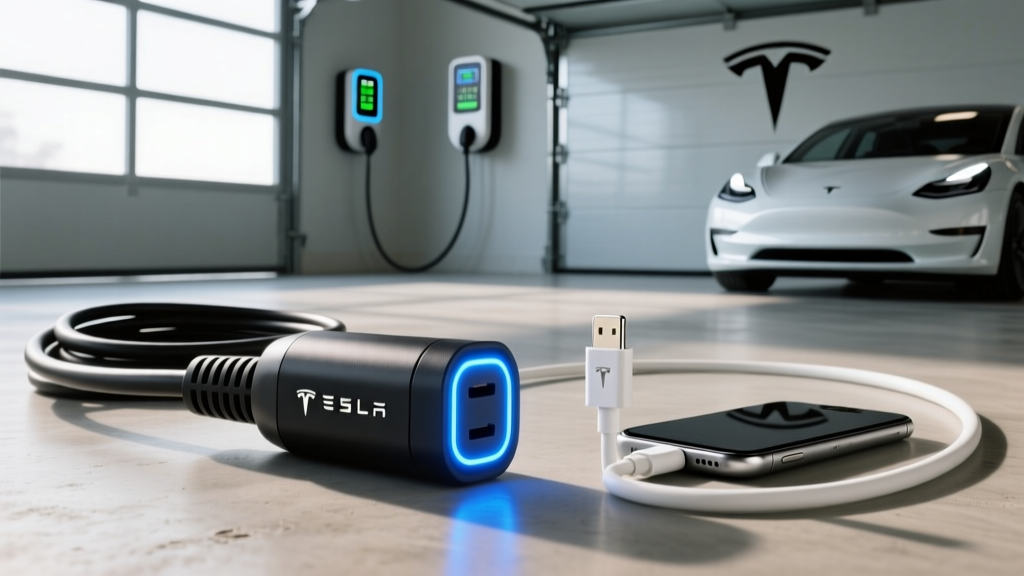
No. A Tesla Wall Connector outputs 240V AC at up to 48A — far too much voltage for a phone. Your phone needs 5V USB or up to 20V USB-C PD. The search term "Tesla phone charger" likely refers to Tesla's USB-C car charging cables (sold in Tesla's shop) for plugging phones into the car's USB ports — not the EV Wall Connector.
Is a 48A or 80A charger better for my home?
Most EVs accept a maximum of 11.5 kW (48A) on Level 2 — including Tesla Model 3/Y, Hyundai Ioniq 5/6, and Ford Mustang Mach-E. Only the Tesla Model S/X (with dual onboard chargers) and some luxury EVs can accept 19.2 kW (80A). Unless you own one of those vehicles, a 48A charger is sufficient and requires a less expensive 60A circuit rather than a 100A circuit.