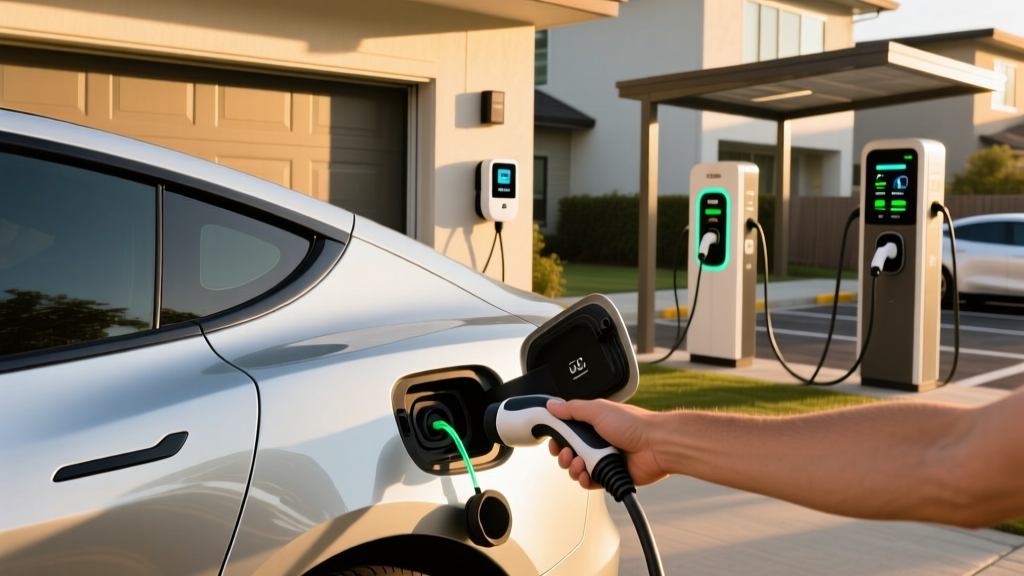
Plugging in at home is the single biggest quality-of-life upgrade an EV owner can make. For Tesla drivers and owners of newer NACS-equipped EVs, the Tesla Wall Connector is the default pick — but the sticker price of the hardware is only the beginning. The real question buyers search for is the total Tesla charger at home cost, including the electrician, permits, potential panel upgrades, and the long-term per-mile savings that justify the investment.
This guide breaks down every line item for a 2026 installation, explains what your electrical panel actually needs, compares charging speeds across all three levels, and shows exactly what you'll pay per mile versus a gas car. No marketing fluff — just the numbers and the wiring realities.
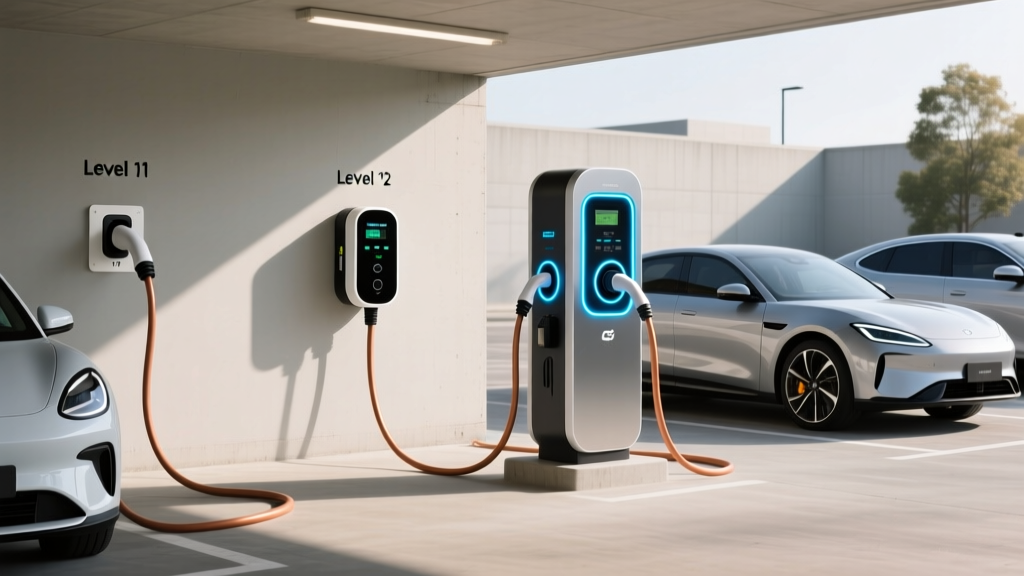
Charging Levels Explained: Speeds, Power, and Real-World Range Added
Before calculating cost, you need to understand what each charging level delivers. The single most important distinction in EV literacy is kW (kilowatts) = power (the rate of energy flow, like water pressure) versus kWh (kilowatt-hours) = energy (the total amount stored or delivered, like gallons of water). Your charger's kW rating determines how fast it fills your battery's kWh capacity.
| Level | Voltage | Power (kW) | Miles of Range Added/Hour | Best For |
|---|---|---|---|---|
| Level 1 (Standard Outlet) | 120V AC | 1.0–1.4 kW | 3–5 miles | Overnight trickle, PHEVs, emergencies |
| Level 2 (Home/Public AC) | 240V AC | 3.3–19.2 kW | 12–75 miles | Daily home charging, destination charging |
| DC Fast Charging | 400–800V DC | 50–350 kW | 150–1,000+ miles | Road trips, rapid top-ups (not for daily use) |
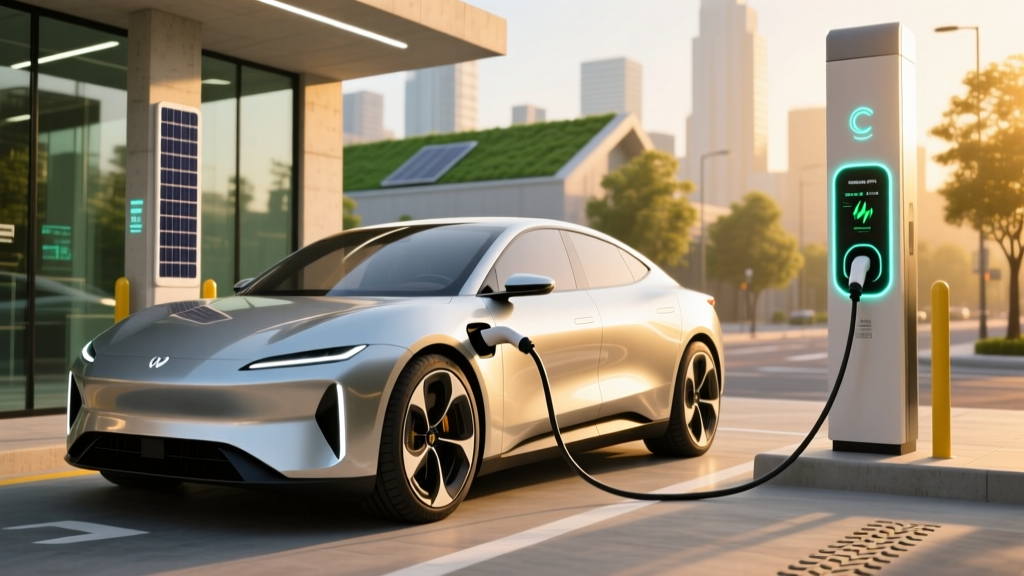
For a Tesla Model Y (75 kWh usable battery, ~310 miles EPA range), a Level 1 outlet adds roughly 4 miles per hour — meaning a full charge from empty would take over 3 days. A Level 2 Tesla Wall Connector at 11.5 kW (48 amps on a 60-amp circuit) adds approximately 44 miles per hour, fully replenishing the battery in about 7 hours. A 250 kW Tesla Supercharger can take that same battery from 10% to 80% in roughly 25 minutes, though charging speed tapers significantly above 80% State of Charge (SoC) to protect battery health — a phenomenon called the charge curve taper.
How Much Does It Cost to Install a Tesla Charger at Home?
The total Tesla charger at home cost varies enormously depending on your home's existing electrical infrastructure. Here's the realistic breakdown for a 2026 installation:
| Line Item | Low End | Typical | High End |
|---|---|---|---|
| Tesla Wall Connector (Gen 3, 48A, 24ft cable) | $475 | $475 | $475 |
| Electrician labor (licensed, 2–6 hours) | $400 | $800 | $2,000 |
| Wiring & conduit (copper THHN, PVC/EMT, 20–60 ft run) | $150 | $400 | $900 |
| Electrical permit (local jurisdiction) | $50 | $125 | $300 |
| 60-amp double-pole breaker | $30 | $50 | $75 |
| Panel upgrade (100A → 200A, if needed) | $1,500 | $2,500 | $4,500 |
| Total WITHOUT panel upgrade | $1,105 | $1,850 | $3,750 |
| Total WITH panel upgrade | $2,605 | $4,350 | $8,250 |
The panel upgrade variable is the wildcard. Homes built before 1990 often have 100-amp service. Adding a 48-amp continuous EV load (which the National Electrical Code requires you size at 60 amps — 125% of continuous draw) to a panel already running central AC, an electric dryer, and an electric range may exceed the panel's capacity. A licensed electrician will perform a load calculation per NEC Article 220 to determine if an upgrade is mandatory.
If your panel has spare capacity and the run from panel to garage is short (under 30 feet), expect to pay between $1,200 and $2,200 total — hardware included. If your panel is maxed out or your garage is on the opposite side of the house from the electrical service, costs climb quickly.
Electrical Requirements: What Your Home Needs for a Tesla Wall Connector
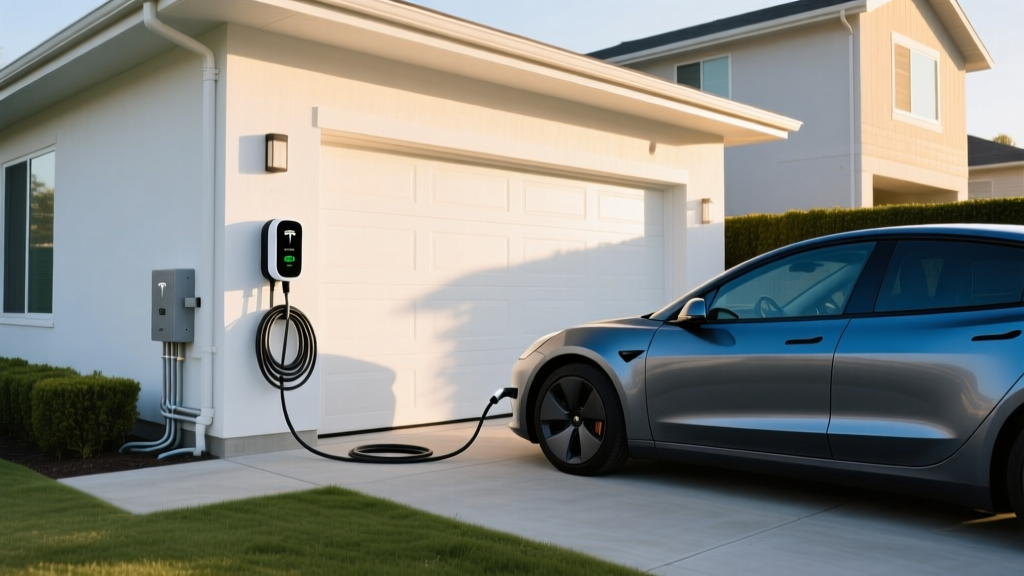
The Tesla Wall Connector (Generation 3) is configurable from 16 amps up to 48 amps. Here are the circuit requirements at each common amperage:
- 48-amp charging (11.5 kW): Requires a 60-amp dedicated double-pole breaker, 6 AWG copper wire (or 4 AWG aluminum), and 240V service. This is the recommended setup for fastest Level 2 home charging.
- 40-amp charging (9.6 kW): Requires a 50-amp breaker, 8 AWG copper. Sufficient for most daily driving needs and a good option if your panel has limited headroom.
- 32-amp charging (7.7 kW): Requires a 40-amp breaker, 8 AWG copper. Works well for smaller battery packs or shorter commutes.
- 16-amp charging (3.8 kW): Requires a 20-amp breaker, 12 AWG copper. The minimum practical configuration.
Safety & Code Essentials: The NEC requires EV charging circuits to be rated at 125% of the continuous load. A 48-amp charger needs a 60-amp breaker — never undersize this. Your installation must use a dedicated circuit (not shared with other appliances). Outdoor installations require a NEMA 4-rated enclosure or the Wall Connector's built-in outdoor rating (it's rated for outdoor use). Many jurisdictions require GFCI protection for outdoor receptacles, though hardwired EVSE installations (which the Wall Connector is designed for) are typically exempt from GFCI requirements under NEC 625. Always pull a permit — unpermitted electrical work can void homeowner's insurance and create fire hazards.
Connector Compatibility: NACS, CCS, and Adapters in 2026
The connector landscape has consolidated dramatically. Tesla's North American Charging Standard (NACS) is now the dominant connector in North America, with Ford, GM, Rivian, Volvo, Hyundai, Kia, BMW, and most major automakers adopting it for their 2025–2026 model-year vehicles.
| Connector | Used By | Compatible with Tesla Wall Connector? |
|---|---|---|
| NACS (Tesla) | All Tesla vehicles; Ford F-150 Lightning, Mustang Mach-E (2025+); GM Ultium vehicles (2025+); Rivian R1T/R1S (2025+); Hyundai Ioniq 5 (2026+); many others | Yes — native fit, no adapter needed |
| CCS1 (Combo) | Older Ford, GM, Hyundai, Kia, VW, BMW EVs (pre-NACS transition); most non-Tesla EVs through 2024 | Requires a CCS-to-NACS adapter (~$150–$250) or use a CCS-equipped charger like ChargePoint Home Flex |
| CHAdeMO | Nissan Leaf (legacy); Mitsubishi Outlander PHEV | No practical adapter available; use a CHAdeMO-specific charger or public station |
| J1772 (Level 2 AC) | All non-Tesla EVs for AC Level 2 charging (pre-2025) | Tesla includes a J1772 adapter with the Wall Connector for non-Tesla vehicles |
If you own a non-Tesla EV with a CCS port and want to use the Tesla Wall Connector, you'll need a third-party CCS-to-NACS adapter. Tesla also sells the J1772 Wall Connector variant for households with mixed EV fleets. For homes with both a Tesla and a legacy CCS vehicle, some owners install two chargers or use a universal unit like the ChargePoint Home Flex with swappable connectors.
Cost to Charge at Home vs. Public vs. Gas: The Per-Mile Math
The financial case for home charging rests on one metric: cost per mile. Here's how it breaks down across scenarios, using a Tesla Model Y Long Range (approximately 28 kWh/100 miles, or 3.57 miles/kWh) and a comparable gas crossover averaging 28 MPG combined.
| Scenario | Rate | Cost per kWh | Cost per Mile (Model Y) | Annual Cost (12,000 mi) |
|---|---|---|---|---|
| Home (national avg. residential electricity) | $0.16/kWh | $0.16 | $0.045 | $538 |
| Home (off-peak TOU rate, e.g., overnight) | $0.09/kWh | $0.09 | $0.025 | $302 |
| Tesla Supercharger (avg. national) | $0.30/kWh | $0.30 | $0.084 | $1,008 |
| Electrify America / DC fast public | $0.40/kWh | $0.40 | $0.112 | $1,344 |
| Gas vehicle (28 MPG, $3.40/gal) | $3.40/gal | — | $0.121 | $1,457 |
Home charging on an off-peak time-of-use (TOU) plan delivers fuel cost savings of roughly $1,100–$1,150 per year compared to gasoline, and $700+ compared to exclusive Supercharger use. At those savings, even a $3,000 installation pays for itself in under three years. Many utilities offer EV-specific TOU rates that make overnight charging exceptionally cheap — check with your provider for availability.
According to fueleconomy.gov, the 2026 Tesla Model Y Long Range achieves 120 MPGe combined, translating to an electricity cost roughly one-third that of a 28 MPG gas vehicle at current national averages.
Charging Time Examples: How Long Does a Full Charge Actually Take?
Real-world charging times depend on battery size, charger power, and the charge curve. Lithium-ion batteries accept charge quickly at low SoC but taper significantly above 80% to prevent lithium plating and thermal stress. Here are practical examples:
| Vehicle (Battery kWh) | Level 1 (1.4 kW) 0–100% | Level 2 (11.5 kW) 0–100% | DC Fast (250 kW) 10–80% |
|---|---|---|---|
| Tesla Model 3 RWD (57.5 kWh, LFP) | ~41 hours | ~5 hours | ~22 minutes |
| Tesla Model Y LR (75 kWh, NMC) | ~54 hours | ~6.5 hours | ~25 minutes |
| Ford F-150 Lightning Ext. Range (131 kWh, NMC) | ~94 hours | ~11.4 hours | ~41 minutes |
| Hyundai Ioniq 5 (84 kWh, NMC) | ~60 hours | ~7.3 hours | ~18 minutes (at 350 kW peak) |
For daily driving (30–50 miles), even a 32-amp Level 2 charger replenishes your overnight usage in 1–2 hours. Most EV owners set their vehicle to charge to 80% or 90% daily (configurable in the Tesla app) and only charge to 100% before road trips. LFP batteries (like those in the Model 3 RWD) can be charged to 100% daily without degradation concerns — a key chemistry advantage.
Equipment Recommendations: Best Home Chargers for Tesla & NACS EVs
Tesla Wall Connector (Gen 3)
- Power Output: Up to 11.5 kW (48 amps)
- Connector: NACS (native Tesla); J1772 adapter included
- Cable Length: 24 feet
- Smart Features: Wi-Fi enabled, OTA firmware updates, Tesla app integration, Power-Share between two units on one circuit, access control (restrict to your vehicles only)
- Price: $475 (direct from Tesla)
- Best For: Tesla owners and NACS-equipped EVs; cleanest integration with Tesla vehicles
ChargePoint Home Flex
- Power Output: Up to 12 kW (50 amps), configurable down to 16 amps
- Connector: NACS or J1772 (select at purchase); CCS adapter available
- Cable Length: 23 feet
- Smart Features: Wi-Fi, ChargePoint app with detailed energy tracking, Alexa integration, scheduling, load management for multi-charger setups
- Price: ~$550–$650
- Best For: Mixed-EV households; excellent app and energy reporting; flexible amperage for panel-constrained homes
Emporia Vue Level 2 EV Charger
- Power Output: Up to 11.5 kW (48 amps)
- Connector: J1772 (NACS adapter available separately)
- Cable Length: 24 feet
- Smart Features: Wi-Fi, Emporia app with solar integration, real-time energy monitoring, pairs with Emporia Vue home energy monitor for whole-house tracking
- Price: ~$350–$400
- Best For: Budget-conscious buyers with solar panels; best-in-class energy monitoring
For most Tesla owners, the first-party Wall Connector is the obvious choice — it's competitively priced, integrates natively with the vehicle (the car wakes to begin charging automatically), and supports future NACS vehicles. If your household has a non-Tesla EV with a CCS connector, the ChargePoint Home Flex offers more flexibility.
Federal Tax Credits and Utility Rebates for Home Charger Installation
The federal Alternative Fuel Vehicle Refueling Property Credit (IRC §30C) was reinstated through 2032 under the Inflation Reduction Act. Eligible taxpayers can claim 30% of the cost of home EV charging equipment and installation, up to $1,000 per year. This applies to the Wall Connector hardware and the electrician's labor — but there are important caveats:
- The credit is non-refundable — it can reduce your federal tax liability to zero but won't generate a refund beyond that.
- For 2026, the credit is available for equipment installed at your primary residence in the United States.
- Some states and utilities offer additional rebates. California's utility programs, for example, have offered $250–$1,500 in additional EV charger rebates. Check with your local utility — programs vary by jurisdiction and change frequently.
- Always consult a tax professional for eligibility specifics. Current rules are published at irs.gov.
Frequently Asked Questions
Can I install a Tesla Wall Connector myself?
Tesla sells the Wall Connector directly to consumers, and it ships with installation instructions. However, the NEC requires a 240V, 60-amp hardwired circuit to be installed by a licensed electrician in most jurisdictions. DIY installation of high-amperage circuits carries serious fire and electrocution risk, will fail home inspection if unpermitted, and may void your homeowner's insurance. Budget for professional installation.
What if my home only has 100-amp electrical service?
A 100-amp panel can potentially support a Level 2 charger if your total household load is low (no electric range, no central AC, gas heat and water heater). Your electrician will run a NEC Article 220 load calculation. If you're near the limit, you can either upgrade to 200-amp service ($1,500–$4,500), install a lower-amperage charger (32 amps instead of 48), or use a smart load-management device like the Emporia Smart Load Manager that dynamically reduces charger power when other appliances draw heavily.
Does the Tesla Wall Connector work with non-Tesla EVs?
Yes. Tesla includes a J1772 adapter with the Wall Connector, allowing it to charge any EV with a J1772 inlet (virtually all non-Tesla EVs built before 2025). For newer NACS-equipped vehicles from Ford, GM, Rivian, Hyundai, and others, the Wall Connector plugs in natively — no adapter needed.
How much does it cost to charge a Tesla at home per month?
At the national average residential electricity rate of ~$0.16/kWh and driving 1,000 miles per month in a Model Y (~280 kWh consumed), expect to pay approximately $45 per month for home charging. On an off-peak TOU rate of $0.09/kWh, that drops to about $25 per month. Compare this to roughly $121/month in gasoline for a 28 MPG vehicle driven the same distance.
Is it better to hardwire or use a NEMA 14-50 outlet?
Hardwiring is the recommended installation for the Tesla Wall Connector. It eliminates a potential failure point (the receptacle), doesn't require a GFCI breaker (which can nuisance-trip with EVSEs and adds $100–$200 to the installation), and is required by some local codes for fixed EVSE installations. A NEMA 14-50 outlet offers portability — you can take the charger with you if you move — but requires a GFCI breaker in many jurisdictions under the 2023 NEC revision and introduces a plug/receptacle connection that can degrade over time under sustained high-amperage loads.
How fast will each charging level add range?
Level 1 (120V standard outlet) adds 3–5 miles per hour — adequate only for plug-in hybrids or very low-mileage drivers. Level 2 (240V) at 11.5 kW adds approximately 44 miles per hour in a Model Y — enough to fully recharge overnight. DC fast charging at 250 kW adds up to 200 miles in 15 minutes but is intended for road trips, not daily use, due to battery stress and higher per-kWh cost.
The bottom line on Tesla charger at home cost: most homeowners with adequate electrical service will spend $1,200–$2,200 for a fully installed, permitted Tesla Wall Connector. That investment unlocks the cheapest, most convenient fueling an EV owner can access — roughly $0.03–$0.05 per mile, or a quarter of what gasoline costs. Get a quote from a licensed electrician, check your utility for TOU rates and rebates, and never skip the permit.