If you own a Tesla or are about to buy one, the first practical question after range is: how long will it actually take to charge? The answer depends entirely on which charging level you use, the size of your Tesla's battery pack, and the state of charge (SoC) when you plug in. Below, we break down real charge time for a Tesla Model 3, Model Y, Model S, and Model X across every charging scenario you'll encounter — from a standard wall outlet to a 325 kW V4 Supercharger — with exact numbers, costs, and equipment picks for 2026.
The Three Charging Levels: How Fast Does Each Add Range?
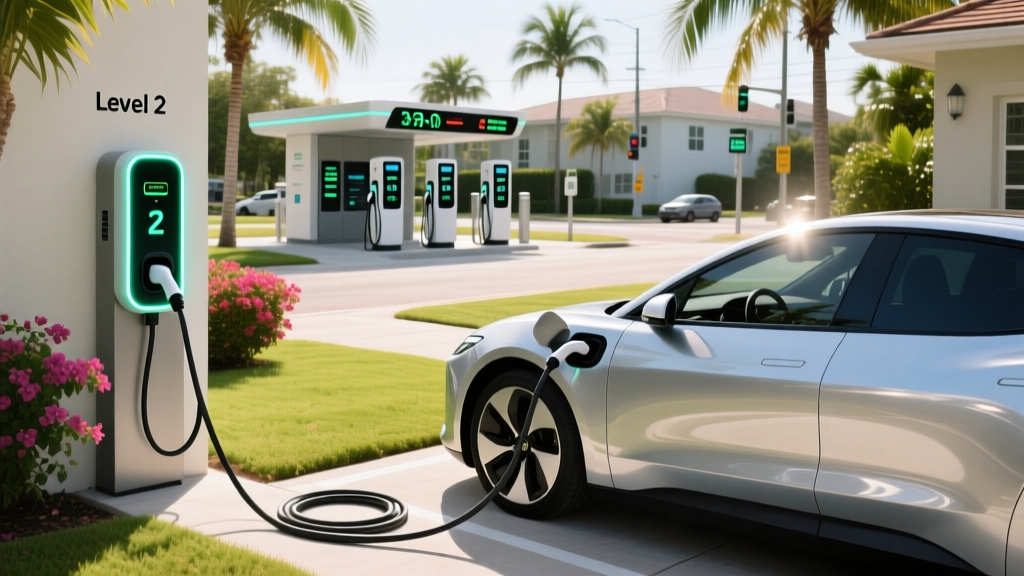
EV charging is categorized into three levels, each defined by its power delivery in kilowatts (kW). Remember: kW measures power (the rate of energy flow), while kWh measures energy (the total capacity of your battery). A 75 kWh battery charged at 7.5 kW takes roughly 10 hours from empty to full. Here's how each level translates to real range added per hour for current Tesla models.
| Level | Voltage / Amperage | Power (kW) | Miles of Range Added per Hour | Typical Use Case |
|---|---|---|---|---|
| Level 1 | 120V / 12A | ~1.4 kW | 3–5 mi/hr | Emergency / overnight trickle |
| Level 2 (Home) | 240V / 32–48A | 7.7–11.5 kW | 25–44 mi/hr | Daily home charging |
| Level 2 (Public/Destination) | 240V / 40–80A | 9.6–19.2 kW | 30–52 mi/hr | Workplace, hotels, malls |
| DC Fast (Supercharger V3) | 400V DC | Up to 250 kW | ~170 mi in 15 min (peak) | Road trips |
| DC Fast (Supercharger V4) | 400–800V DC | Up to 325 kW | ~200 mi in 15 min (peak) | Road trips (newer corridors) |
Tesla's onboard charger caps Level 2 AC charging at 11.5 kW (48A) for the Model 3 and Model Y, and 11.5 kW for Model S and Model X (2024+ refresh). Even if you plug into a 19.2 kW public Level 2 station, your Tesla will only accept 11.5 kW. This is a hardware limitation, not a software one.
Tesla Charge Time by Battery Size: 10–80% and Full Charge
Battery size is the biggest variable in charge time. Tesla currently offers several usable battery capacities depending on model and trim. Here are realistic charge times at each level, assuming you start at 10% SoC — the typical low point before you plug in.
| Model (2025–2026) | Usable Battery (kWh) | Level 1 (1.4 kW) 10–80% | Level 2 (11.5 kW) 10–80% | DC Fast (250 kW) 10–80% |
|---|---|---|---|---|
| Model 3 RWD | ~57.5 kWh (LFP) | ~29 hours | ~3.5 hours | ~25 minutes |
| Model 3 Long Range AWD | ~75 kWh (NMC) | ~38 hours | ~4.6 hours | ~27 minutes |
| Model Y Long Range AWD | ~75 kWh (NMC) | ~38 hours | ~4.6 hours | ~27 minutes |
| Model S Long Range | ~95 kWh (NMC) | ~48 hours | ~5.8 hours | ~33 minutes |
| Model X Long Range | ~95 kWh (NMC) | ~48 hours | ~5.8 hours | ~35 minutes |
Home Charger Installation: Electrical Requirements and Costs
Installing a Level 2 home charger is the single biggest upgrade most Tesla owners make. It transforms your daily routine from "plan around charging" to "wake up with a full battery every morning." But the installation involves real electrical work, and costs vary widely based on your home's panel capacity and wiring distance.
Electrical Requirements
- Circuit: A dedicated 60A breaker is recommended for a 48A continuous-load charger (NEC code requires circuits rated at 125% of continuous load).
- Voltage: 240V split-phase (standard US residential).
- Wire gauge: 6 AWG copper for runs up to ~50 feet; 4 AWG for longer runs.
- Panel capacity: Most homes need at least 100A total panel capacity. If you're already running electric heat, an electric dryer, and an electric oven on a 100A panel, adding a 60A EV circuit may require a panel upgrade to 200A — a significant added cost.
| Component | Low Estimate | High Estimate | Notes |
|---|---|---|---|
| Level 2 Charger (Equipment) | $250 | $650 | Tesla Wall Connector, ChargePoint, Emporia |
| Electrician Labor (standard install) | $400 | $1,200 | Depends on run length, conduit, wall type |
| Permit & Inspection | $50 | $250 | Varies by municipality |
| Electrical Panel Upgrade (if needed) | $1,500 | $4,000 | 100A → 200A service upgrade |
| Total (No Panel Upgrade) | $700 | $2,100 | Typical scenario for modern homes |
| Total (With Panel Upgrade) | $2,200 | $6,100 | Older homes with 100A panels |
Always hire a licensed electrician and pull a permit. Unpermitted EV charger installations can void homeowner's insurance claims and create fire hazards. The NEC requires GFCI protection for outdoor receptacles, and many jurisdictions now require it for hardwired EV circuits as well. Your electrician will know local code — don't skip this step to save money.
Which Connector Is Compatible With My Tesla?
Tesla uses the North American Charging Standard (NACS) connector — a compact, proprietary design that Tesla open-sourced in 2022. As of 2025, nearly every major automaker has adopted NACS for their North American EVs, making it the de facto standard. However, the transition period means you'll encounter multiple connector types at public stations.
| Connector Type | Tesla Compatibility | Where You'll Find It | Adapter Needed? |
|---|---|---|---|
| NACS (Tesla) | Native — all Teslas | Tesla Superchargers, Tesla Destination Chargers, newer Electrify America / EVgo stations | None |
| CCS1 | With adapter (Tesla sells a CCS adapter, ~$175) | Electrify America, EVgo, ChargePoint DC stations (legacy) | Yes — Tesla CCS Adapter |
| CHAdeMO | Not compatible (no adapter available) | Older Nissan Leaf stations, some legacy networks | N/A |
| J1772 (Level 2 AC) | With included J1772 adapter (ships with every Tesla) | Public Level 2 stations, hotels, workplaces | Yes — included with vehicle |
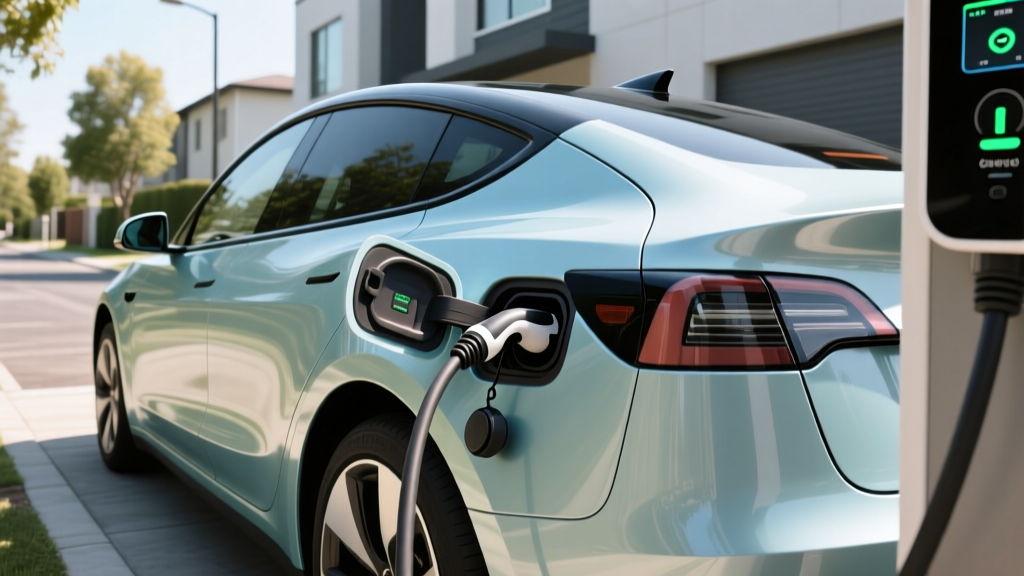
Every new Tesla ships with a J1772-to-NACS adapter for public Level 2 charging and a Tesla Mobile Connector with NEMA 14-50 and 5-15 plugs. The CCS adapter is a separate purchase but essential if you plan to use non-Tesla DC fast-charging networks on road trips. As of 2026, Tesla has also opened its Supercharger network to non-Tesla EVs equipped with NACS or CCS-to-NACS adapters at select locations — a network expansion that benefits all EV drivers.
Cost to Charge a Tesla: Home vs. Public vs. Gas
Charging cost is where EVs typically win decisively over gasoline vehicles — but the gap narrows significantly when you rely on public DC fast charging. Here's a realistic cost breakdown using national averages for 2026.
| Charging Scenario | Rate ($/kWh) | Cost for 10–80% (~52.5 kWh) | Cost per Mile (EPA 310 mi) |
|---|---|---|---|
| Home (national avg. residential) | $0.16/kWh | $8.40 | $0.043/mi |
| Home (off-peak time-of-use) | $0.09/kWh | $4.73 | $0.024/mi |
| Tesla Supercharger (avg. 2026) | $0.32/kWh | $16.80 | $0.086/mi |
| Third-party DC fast (Electrify America) | $0.43/kWh | $22.58 | $0.116/mi |
| Gas equivalent (28 MPG avg., $3.40/gal) | — | — | $0.121/mi |
Best Home Chargers for Tesla in 2026
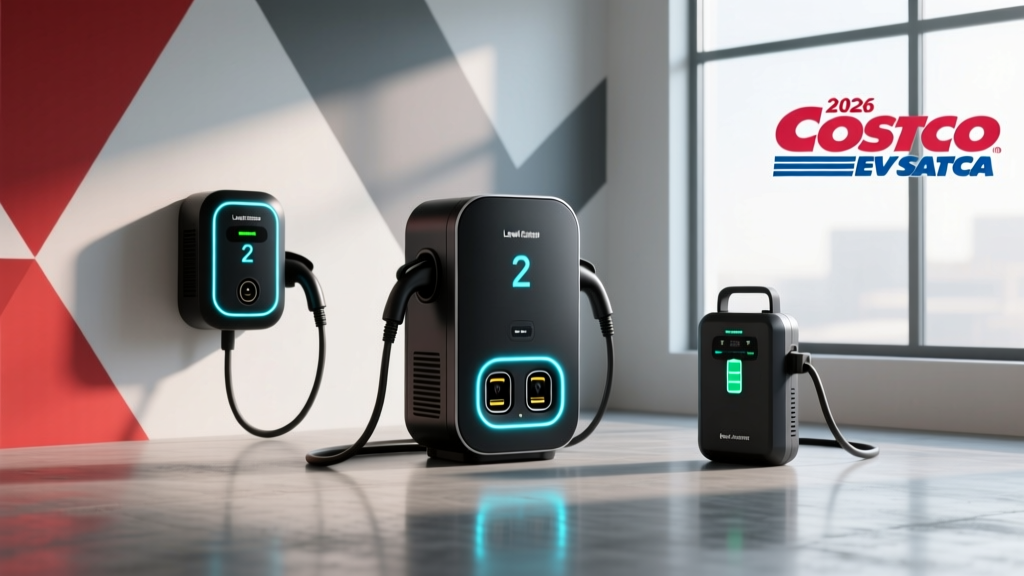
You have two main paths for home Level 2 charging: Tesla's own Wall Connector or a third-party NACS charger. Both work seamlessly, but they differ in features, cable length, and smart capabilities.
Tesla Wall Connector (Gen 3)
- Power Output: Up to 11.5 kW (48A)
- Connector: NACS (native)
- Cable Length: 24 feet
- Smart Features: Wi-Fi OTA updates, power-sharing with second unit, load management
- Price: ~$420
- Best For: Tesla-only households, cleanest integration
Emporia Vue Level 2 Charger
- Power Output: Up to 11.5 kW (48A)
- Connector: NACS (2025+ model) or J1772
- Cable Length: 24 feet
- Smart Features: Energy monitoring, solar integration, scheduling via app
- Price: ~$350
- Best For: Solar homes, multi-EV households
ChargePoint Home Flex (NACS)
- Power Output: Up to 12 kW (50A, configurable down to 16A)
- Connector: NACS (2025+ version)
- Cable Length: 23 feet
- Smart Features: Alexa integration, flexible amperage, detailed app analytics
- Price: ~$550
- Best For: Homes with lower-capacity panels (dial down amperage)
Tesla Mobile Connector (Included)
- Power Output: Up to 7.2 kW (32A) with NEMA 14-50 plug
- Connector: NACS (native)
- Cable Length: 20 feet
- Smart Features: None (dumb charger)
- Price: Included with vehicle; NEMA 14-50 adapter included
- Best For: Budget install — just add a 240V outlet
For most Tesla owners, the Tesla Wall Connector is the default recommendation: it matches the car's 11.5 kW onboard charger limit exactly, offers a clean aesthetic, and receives over-the-air updates. The Emporia is a strong alternative if you have solar panels and want to track energy flow. The ChargePoint Home Flex is ideal if your panel can't support a full 60A circuit — you can configure it to draw as little as 16A (3.8 kW) and increase later if you upgrade your panel.
Safety, Electrical Code, and Permitting
EV charging draws sustained high current for hours — more like an electric furnace than a typical appliance. This makes proper installation non-negotiable.
- Dedicated circuit: Your EV charger must be on its own dedicated breaker. Never share a circuit with other appliances.
- GFCI protection: Required for outdoor receptacles (NEC 2020+). Many jurisdictions now require GFCI for hardwired outdoor EV installations as well. Some EV chargers have built-in GFCI — confirm with your electrician to avoid nuisance tripping from double-GFCI setups.
- Outdoor rating: If installing outside, ensure the charger carries a NEMA 4 or IP65 rating. The Tesla Wall Connector and ChargePoint Home Flex are both rated for outdoor use.
- Load management: If your panel is near capacity, consider a load-management device (like the Emporia Smart Panel or a Tesla Powerwall integration) that dynamically throttles charger amperage based on real-time household draw.
- Permit and inspection: Required in most US jurisdictions. Typical cost is $50–$250. Skipping the permit risks insurance claim denial and code violations that surface during a home sale.
Frequently Asked Questions
How much does it cost to install a home EV charger for my Tesla?
A typical Level 2 installation with no panel upgrade runs $700–$2,100 total (charger + electrician + permit). If your home needs a 100A-to-200A panel upgrade, add $1,500–$4,000. The Tesla Mobile Connector with a simple NEMA 14-50 outlet installation is the lowest-cost path — often under $500 if the outlet is near your panel.
How fast will each charging level add range to my Tesla?
Level 1 (120V) adds 3–5 miles per hour — fine for overnight trickle but impractical as a primary strategy. Level 2 (240V, 48A) adds 30–44 miles per hour and fully recharges most Teslas overnight. DC fast charging (Supercharger V3) adds up to 170 miles in 15 minutes at peak speed, though the charge curve tapers significantly above 60% SoC.
Which connector and charger is compatible with my Tesla?
All Teslas use the NACS connector natively. For public Level 2 stations using J1772, use the adapter included with your Tesla. For non-Tesla DC fast chargers using CCS1, purchase the Tesla CCS Adapter (~$175). CHAdeMO stations are not compatible with any Tesla. At home, any NACS Level 2 charger works — the Tesla Wall Connector, Emporia, and ChargePoint Home Flex are top picks.
How much does charging a Tesla cost per mile compared to gas?
Home charging at national average rates ($0.16/kWh) costs about $0.043 per mile in a Model Y Long Range — roughly 65% less than a 28 MPG gas car at $3.40/gallon ($0.121/mi). Off-peak home rates ($0.09/kWh) drop that to $0.024/mi. However, exclusive Supercharger use ($0.32/kWh) raises cost to $0.086/mi, narrowing the savings significantly. See the EPA's EV cost calculator for state-specific electricity rates.
What electrical upgrades might I need before installing a Tesla charger?
The most common upgrade is a panel capacity increase from 100A to 200A service — necessary if your existing panel is already near capacity with electric heating, cooking, and drying loads. You may also need a new 60A breaker slot (two adjacent spaces in your panel), upgraded service wiring from the utility, or a new conduit run from the panel to your garage or driveway. A licensed electrician can assess your panel with a load calculation in about 30 minutes — most offer this evaluation for free or a nominal fee.