If you own a Tesla—or are about to buy one—the single most practical question isn't 0-60 time; it's how long charging actually takes in the real world. The answer depends entirely on which charging level you use, your specific Tesla model's battery size, and whether your home electrical panel can support a hardwired Level 2 wall connector.
This guide breaks down exact Tesla charge times across every charging scenario, the electrical requirements for home installation, connector compatibility across the expanding NACS ecosystem, and what you'll actually pay per mile compared to gasoline. All figures reflect 2026 model-year Tesla vehicles and current utility rates.
Tesla Charge Times by Charging Level
Before diving into specific minutes, let's clarify the critical distinction: kW (kilowatts) measures charging power—the rate of energy flow—while kWh (kilowatt-hours) measures battery energy capacity. A 75 kWh battery charged at 11.5 kW takes roughly 6.5 hours from empty to full (minus efficiency losses). Confusing these two units is the most common EV literacy mistake.
| Level | Voltage / Amps | Power (kW) | Miles of Range Added Per Hour | Best For |
|---|---|---|---|---|
| Level 1 (120V outlet) | 120V / 12A | ~1.4 kW | 3–5 mi/hr | Overnight trickle, PHEVs, emergencies |
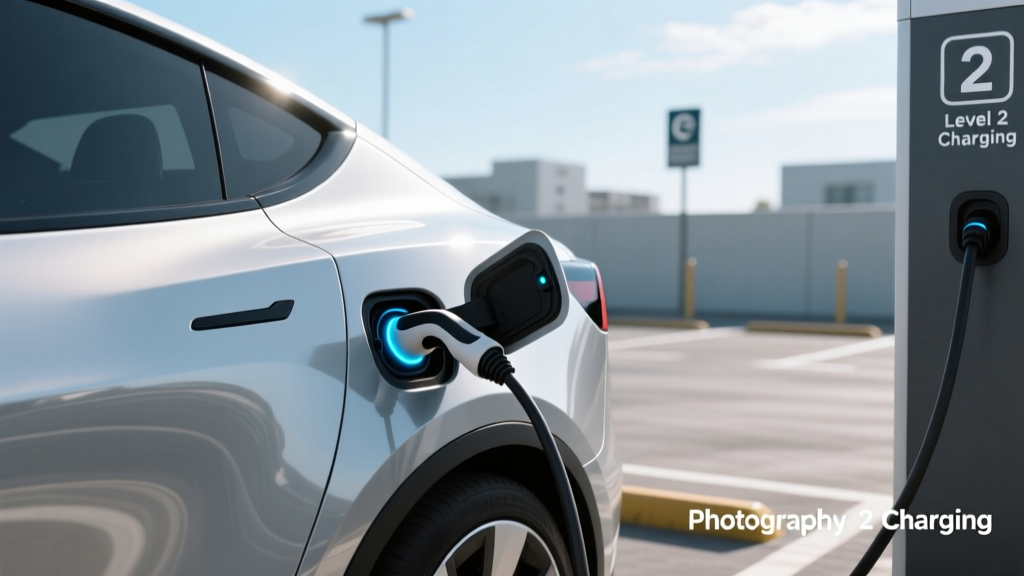
| Level 2 (240V home/public) | 240V / 32–48A | 7.7–11.5 kW | 25–44 mi/hr | Daily home charging, workplace, destinations |
| DC Fast (Supercharger V3) | 400V DC | Up to 250 kW peak | ~200 mi in 15 min (peak) | Road trips, rapid top-ups |
| DC Fast (Supercharger V4) | 400–800V DC | Up to 350 kW (capable) | Model-dependent | Newer Tesla models with optimized architecture |
Exact Tesla Charge Times: 10-80% by Model
EV charging is not linear. Your Tesla charges fastest between roughly 10% and 50% State of Charge (SoC), then progressively tapers as the battery management system protects cell health. The "10-80%" metric is the industry standard because charging above 80% slows dramatically—often adding 20+ minutes for the final 20%. Here's what to expect at a V3 Supercharger (250 kW peak):
| Model (2026) | Battery (usable kWh) | Peak Charge Rate | 10-80% Time | EPA Range |
|---|---|---|---|---|
| Model 3 Long Range AWD | ~75 kWh (NMC) | 250 kW | ~25–28 min | 363 mi |
| Model 3 Performance | ~75 kWh (NMC) | 250 kW | ~25–28 min | 330 mi |
| Model Y Long Range AWD | ~75 kWh (NMC) | 250 kW | ~25–28 min | 320 mi |
| Model Y Performance | ~75 kWh (NMC) | 250 kW | ~25–28 min | 293 mi |
| Model S Long Range | ~95 kWh (NMC) | 250 kW | ~32–37 min | 402 mi |
| Model X Long Range | ~95 kWh (NMC) | 250 kW | ~32–37 min | 348 mi |
Home Level 2 Charging: Electrical Requirements and Installation Cost
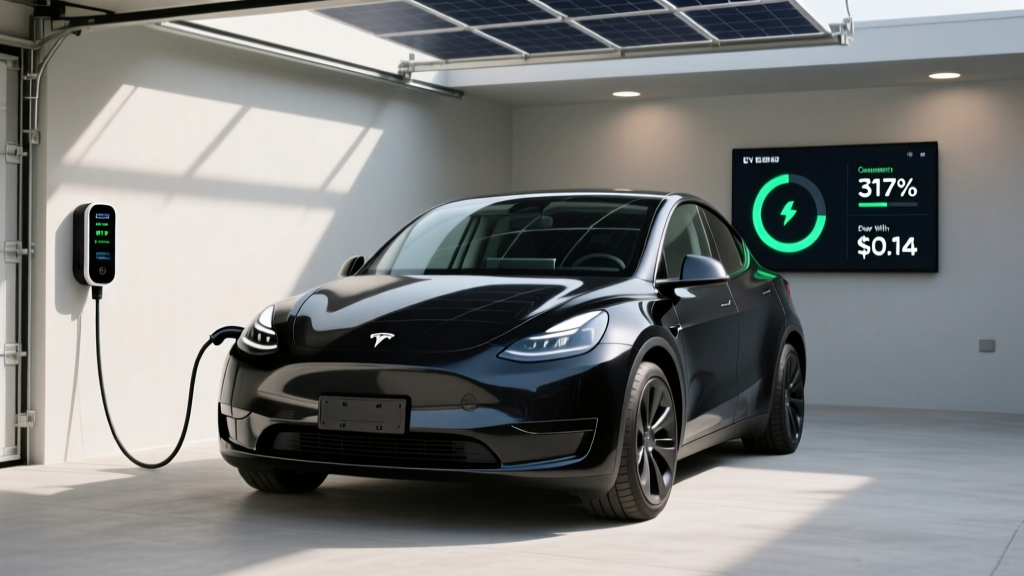
For most Tesla owners, a home Level 2 charger is the backbone of daily ownership. You plug in at night and wake up to a full battery every morning—no gas station detours. But installing a 240V circuit is a serious electrical project with specific requirements.
Electrical Requirements
- Circuit: A dedicated 60-amp breaker is recommended for the Tesla Wall Connector (which draws up to 48A continuous, requiring a circuit rated at 125% of continuous load per NEC Article 210.20).
- Wire: 6 AWG copper (THHN in conduit) or 4 AWG aluminum for a 60A circuit. Longer runs may require thicker wire to limit voltage drop.
- Panel capacity: Your main electrical panel must have enough spare capacity. A typical home has a 100A or 200A main panel. A 60A EV circuit on a 100A panel with existing high-draw appliances (electric range, dryer, HVAC) may require a NEC-compliant load calculation or a panel upgrade to 200A.
- Permit: Most jurisdictions require an electrical permit for new 240V circuits. Your electrician pulls this; inspection follows.
Home Charger Installation Cost Breakdown
| Component | Cost Range | Notes |
|---|---|---|
| Tesla Wall Connector (equipment) | $420–$475 | 48A max, 24-ft cable, Wi-Fi, NACS connector built-in |
| Electrician labor (standard install) | $600–$1,500 | Assumes panel is near garage, short wire run |
| Electrician labor (complex install) | $1,500–$3,500 | Long wire run, conduit, attic/crawlspace routing |
| Electrical permit | $50–$250 | Varies by municipality |
| Panel upgrade (if needed) | $1,500–$3,500 | 100A → 200A upgrade; required if panel is at capacity |
| Total (no panel upgrade) | $1,070–$5,225 | Most homes fall in the $1,200–$2,500 range |
| Total (with panel upgrade) | $2,570–$8,725 | Older homes with 100A service are most affected |
The single biggest variable is whether your existing electrical panel can absorb a new 60A load. Homes built after 2000 with 200A service usually accommodate an EV circuit without issue. Homes from the 1960s–1980s with 100A service and electric heating/cooking often need an upgrade. Get a licensed electrician to perform a load calculation before committing.
Charging Cost Per Mile: Tesla vs. Gasoline
One of the strongest arguments for EV ownership is fuel cost savings—but the exact number depends heavily on where and when you charge. Here's a realistic breakdown for a 2026 Tesla Model 3 Long Range (averaging ~3.5 miles per kWh, or roughly 115 MPGe combined per EPA data):
| Scenario | $/kWh | Cost Per Mile | Full "Tank" (75 kWh) Cost |
|---|---|---|---|
| Home charging (off-peak utility rate) | $0.08–$0.14 | $0.023–$0.040 | $6.00–$10.50 |
| Home charging (standard residential rate) | $0.14–$0.22 | $0.040–$0.063 | $10.50–$16.50 |
| Home with solar (marginal cost) | $0.00–$0.05 | $0.000–$0.014 | $0.00–$3.75 |
| Tesla Supercharger (average 2026) | $0.28–$0.40 | $0.080–$0.114 | $21.00–$30.00 |
| Third-party DC fast (Electrify America, etc.) | $0.35–$0.55 | $0.100–$0.157 | $26.25–$41.25 |
| Gasoline car (28 MPG avg, $3.40/gal) | — | $0.121 | ~$48 (equiv.) |
The bottom line: Home-charged Tesla owners typically pay $0.03–$0.06 per mile, roughly one-quarter to one-half the cost of a comparable gasoline vehicle. Exclusive Supercharger use narrows the gap to near-parity with gas, which is why home charging access remains the single most important factor in EV ownership economics.
Connector Compatibility: NACS, CCS, and Adapters
Tesla's North American Charging Standard (NACS) connector has become the de facto EV charging standard in North America. As of 2025–2026, Ford, GM, Rivian, Volvo, Polestar, and most major automakers have adopted NACS on new vehicles, with more joining through 2027. Here's what this means for your Tesla:
| Connector | Used By | Tesla Compatibility | Adapter Needed? |
|---|---|---|---|
| NACS (Tesla native) | All Tesla models; Ford, GM, Rivian (2025+) | Native—no adapter needed | No |
| CCS1 (Combined Charging System) | Hyundai, Kia, BMW, VW, older Ford/GM | Tesla vehicles can use CCS stalls with adapter | Yes—Tesla CCS Adapter (~$175 from Tesla) |
| CHAdeMO | Nissan Leaf (legacy); being phased out | Not compatible | No reliable adapter exists |
| J1772 (Level 2 AC) | All non-Tesla EVs for AC charging | Tesla Mobile Connector includes J1772 adapter | Included with Tesla |
For Tesla owners, the key takeaway: your NACS connector works natively at every Supercharger and at the growing number of third-party NACS stations (Electrify America, ChargePoint, and others are adding NACS cables). The Tesla CCS adapter opens access to legacy CCS-only DC fast chargers—useful in areas where Supercharger coverage is sparse. The CHAdeMO standard is effectively dead for new installations.
Best Home Chargers for Tesla Owners (2026 Picks)
If you're buying a dedicated home charger, here are the top options with exact specifications:
Tesla Wall Connector
- Power: 11.5 kW (48A) max
- Connector: NACS native (24 ft cable)
- Smart features: Wi-Fi, OTA updates, power sharing (link up to 6 units on one circuit), Tesla app integration
- Price: ~$420–$475
- Verdict: Best default choice for Tesla-only households. Clean integration, reliable hardware.
ChargePoint Home Flex
- Power: Up to 12 kW (50A) configurable
- Connector: NACS or J1772 (23 ft cable)
- Smart features: Wi-Fi, Alexa, scheduling, detailed energy reports, works with all EVs via adapter
- Price: ~$550–$650
- Verdict: Best multi-EV household pick. Flexible amperage lets you match your circuit exactly.
Emporia Level 2 EV Charger
- Power: Up to 11.5 kW (48A)
- Connector: J1772 (NACS adapter available)
- Smart features: Wi-Fi, solar integration, energy monitoring, budget-friendly smart features
- Price: ~$350–$400
- Verdict: Best budget smart charger. Excellent if you have solar and want energy tracking.
Grizzl-E Smart
- Power: Up to 10 kW (40A)
- Connector: NACS or J1772 (24 ft cable)
- Smart features: OCPP-compatible, adjustable amperage, extreme cold rated (-40°F)
- Price: ~$450–$550
- Verdict: Best for harsh climates. Canadian-built, rugged, and repairable.
Safety, Code, and Installation Best Practices
A Level 2 EV charger draws sustained high current for hours—more like an electric furnace than a phone charger. Treat the installation accordingly:
- Dedicated circuit: Your EV charger must be on its own dedicated breaker. Never share a circuit with other appliances. NEC Article 625 governs EV charging equipment specifically.
- GFCI protection: NEC 2020 and later requires GFCI protection for 125V/250V receptacles in garages. However, hardwired Wall Connectors typically do not require a GFCI breaker (the unit has internal ground-fault protection). Confirm with your electrician and local AHJ (Authority Having Jurisdiction).
- Hardwired vs. plug: Hardwiring (direct wire connection, no plug) is preferred for 48A+ chargers. A NEMA 14-50 receptacle is acceptable for 40A or lower chargers but adds a point of failure and may require GFCI. Hardwired installs are generally cheaper (no expensive receptacle) and more reliable.
- Outdoor rating: If mounting outside, ensure the charger is NEMA 4 rated (weatherproof). The Tesla Wall Connector and ChargePoint Home Flex both carry outdoor ratings.
- Wire gauge: Undersized wire causes heat buildup and fire risk. For a 60A circuit: minimum 6 AWG copper. For runs over 50 feet, consider 4 AWG to limit voltage drop below 3%.
- Permit and inspection: Skipping the permit may void your homeowner's insurance in the event of an electrical fire. The permit cost ($50–$250) is trivial insurance.
Frequently Asked Questions
How much does it cost to install a home EV charger for a Tesla?
Most homeowners pay between $1,200 and $2,500 for a standard Tesla Wall Connector installation (equipment + electrician + permit) when the electrical panel has sufficient capacity. If your home needs a 100A-to-200A panel upgrade, total costs can reach $3,000–$6,000 or more. Always get a load calculation from a licensed electrician first.
How fast will each charging level add range to my Tesla?
Level 1 (120V) adds 3–5 miles of range per hour—suitable only for plug-in hybrids or emergency trickle charging. Level 2 (240V, 48A) adds 30–44 miles per hour, fully recharging a Model 3 overnight in 7–9 hours. DC fast charging (Supercharger V3 at 250 kW) adds up to 200 miles in 15 minutes at peak rate, though the charge curve tapers significantly above 50% SoC.
Which connector and charger is compatible with my Tesla?
All Tesla vehicles use the NACS connector natively. The Tesla Wall Connector, Superchargers, and a growing number of third-party stations use NACS. For CCS-only DC fast chargers (common at Electrify America and some older networks), you'll need the Tesla CCS Adapter (~$175). CHAdeMO is not compatible with Tesla vehicles.
How much does charging a Tesla cost per mile vs. gas?
Home-charged Tesla owners pay approximately $0.03–$0.06 per mile depending on local electricity rates, compared to $0.10–$0.14 per mile for a gasoline car averaging 28 MPG at $3.40/gallon. Exclusive Supercharger use ($0.28–$0.40/kWh) costs roughly $0.08–$0.11 per mile—still slightly cheaper than gas, but the savings narrow considerably.
What electrical upgrades might I need for a Tesla home charger?
The most common upgrade is a panel replacement from 100A to 200A service ($1,500–$3,500), required when your existing panel lacks spare capacity for a 60A EV circuit. Other potential upgrades include adding a sub-panel in the garage (if your main panel is far away), trenching for underground conduit (detached garages), or upgrading the utility service drop for older homes. A licensed electrician's load calculation will identify exactly what's needed before work begins.