If you own a Nissan LEAF, an older Mitsubishi Outlander PHEV, or any other CHAdeMO-equipped electric vehicle, you've likely watched the public charging landscape shift dramatically over the past few years. Tesla's Supercharger network — the largest and most reliable DC fast-charging infrastructure in North America — has opened to non-Tesla vehicles, but access depends entirely on your connector type. For CHAdeMO owners, the question is urgent: does a Tesla CHAdeMO adapter exist, and can you use Superchargers?
The short answer: Tesla once offered a CHAdeMO-to-Tesla adapter, but it was discontinued, and the Supercharger network has never natively supported CHAdeMO. In 2026, the practical path for CHAdeMO owners is understanding where you can charge, how adapters factor in, and what your long-term options look like as the industry consolidates around NACS and CCS1.
This guide covers everything CHAdeMO owners need to know about Tesla's ecosystem, public charging compatibility, home charging setup, and real costs per mile.
The Connector Landscape: CHAdeMO vs. NACS vs. CCS1
Before tackling adapters, let's clarify the three DC fast-charging connectors you'll encounter in North America:
| Connector | Primary Brands (2026) | Max DC Rate | Status |
|---|---|---|---|
| NACS (Tesla) | Tesla, Ford, GM, Rivian, Volvo, Polestar, Fisker, Mercedes (2025+) | Up to 350 kW (V4 Supercharger) | Dominant standard; most automakers adopting by 2025-2026 |
| CCS1 | Hyundai, Kia, BMW, VW, legacy GM/Ford models | Up to 350 kW | Phasing out on new models; still common on 2020-2024 vehicles |
| CHAdeMO | Nissan LEAF (all years), Mitsubishi Outlander PHEV (older), some older Kia Soul EV | Up to 100 kW (typically 50 kW) | Legacy; no new mainstream EVs use it after ~2022 |
CHAdeMO was developed primarily by Japanese automakers and was once a serious competitor to CCS1. However, as Tesla's NACS connector gained momentum — and as Ford, GM, and others committed to adopting it starting in 2024-2025 — CHAdeMO was effectively stranded. Nissan's Ariya, for instance, launched in the U.S. with CCS1, not CHAdeMO.
Tesla CHAdeMO Adapter: History and Current Availability
Tesla did sell a CHAdeMO-to-Tesla adapter in certain markets (notably Japan, where CHAdeMO infrastructure was extensive). This adapter allowed Tesla owners traveling in Japan to use local CHAdeMO DC fast chargers. It was never officially sold in the U.S. or broadly available through Tesla's North American store.
Key facts about the Tesla CHAdeMO adapter:
- Direction of use: It was designed for Tesla vehicles to plug into CHAdeMO chargers — not the reverse. You could not use it to plug a Nissan LEAF into a Supercharger.
- Max throughput: Approximately 50 kW, limited by the adapter's protocol translation and CHAdeMO's typical station output.
- Availability: Discontinued. Third-party units occasionally appear on resale markets for $400-$700+, but Tesla provides no warranty or support.
- Supercharger compatibility: Even with this adapter, a CHAdeMO vehicle cannot authenticate on the Supercharger network. Tesla's Supercharger stalls communicate via proprietary protocols that require either a native NACS plug or, for Magic Dock-equipped stalls, a CCS1 vehicle.
Where CHAdeMO Owners Can Actually Fast-Charge in 2026
While the Supercharger network is off-limits, CHAdeMO vehicles still have access to thousands of DC fast chargers across North America. Here's a realistic look at your options:
- Electrify America: Most stations include at least one CHAdeMO connector (typically at 50 kW). Coverage is nationwide but reliability varies — check the PlugShare app for recent user reports before relying on a specific station.
- EVgo: Many legacy EVgo stations retain CHAdeMO connectors, often at 50-62.5 kW. Newer EVgo stations are increasingly CCS/NACS-only.
- ChargePoint (DC fast): Some ChargePoint Express stations offer CHAdeMO, but availability is inconsistent.
- Nissan dealer network: Select Nissan dealerships with DC fast chargers still provide CHAdeMO access, though speeds are typically limited to 50 kW.
For a Nissan LEAF with a 62 kWh battery (LEAF e+), a 50 kW CHAdeMO session from 10-80% takes approximately 60-75 minutes, depending on battery temperature and state of charge. The LEAF's lack of active thermal management (it uses passive air cooling) means charging speeds can throttle significantly in hot weather or after repeated fast-charge sessions — a real-world limitation that no adapter can solve.
Charging Levels Explained: Speeds, kW, and Miles Per Hour
Understanding the three charging levels is essential for any EV owner. Note the critical distinction: kW (kilowatts) measures power — the rate at which energy flows. kWh (kilowatt-hours) measures energy — the total capacity stored in your battery. Think of kW as the flow rate of a hose and kWh as the size of the bucket.
| Level | Voltage / Power | Typical Speed | Miles of Range Per Hour | Best For |
|---|---|---|---|---|
| Level 1 | 120V AC / 1.2-1.9 kW | 1.4 kW average | 3-5 mi/hr | Overnight top-ups, PHEVs, emergency |
| Level 2 | 240V AC / 3.3-19.2 kW | 7.2-11.5 kW (most common home) | 20-45 mi/hr | Daily home charging, workplace |
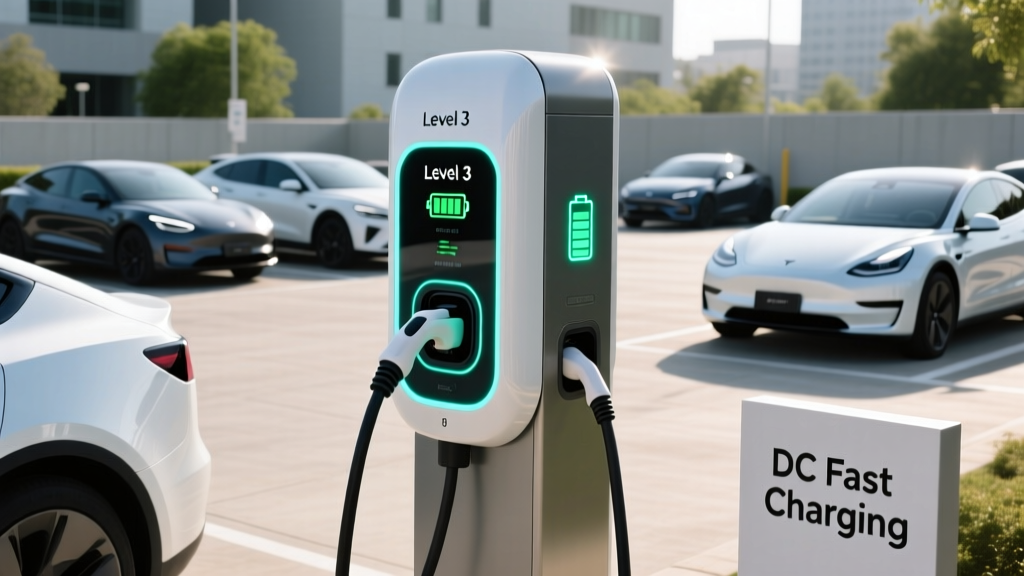
| DC Fast | 400-800V DC / 50-350 kW | 50-250 kW (vehicle-limited) | 150-1,000+ mi/hr (peak) | Road trips, quick top-ups |
For a CHAdeMO vehicle like the LEAF e+ (62 kWh battery, ~212 miles EPA range):
- Level 1 (1.4 kW): ~8 hours for a 10-80% charge — practical only for overnight PHEV charging or emergency use.
- Level 2 (7.2 kW): ~6 hours for a 10-80% charge — the standard home-charging experience.
- DC Fast CHAdeMO (50 kW): ~60-75 minutes for 10-80%, with tapering above 80%.
Home Charging Setup: Electrical Requirements, Costs, and Equipment
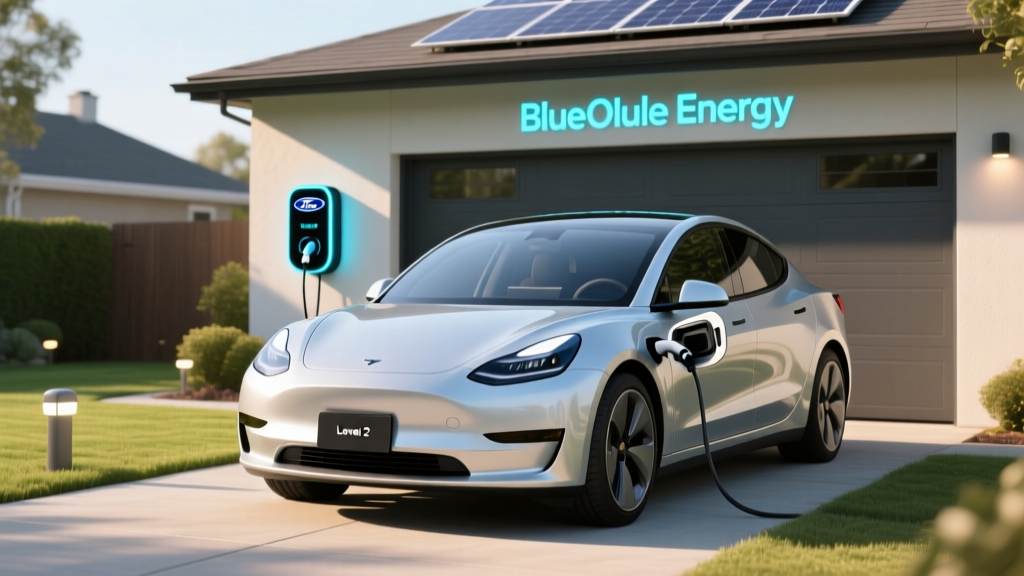
Regardless of your connector type, home Level 2 charging is where most EV owners do 80-90% of their charging. For CHAdeMO owners, any J1772 Level 2 charger works — the LEAF and other CHAdeMO vehicles use the standard J1772 connector for AC (Level 1 and Level 2) charging. CHAdeMO is only relevant for DC fast charging.
Electrical Requirements for a Level 2 Home Charger
- Circuit: A dedicated 240V circuit, typically 40A or 50A, depending on charger amperage.
- Breaker: 50A breaker for a 40A continuous-load charger (NEC requires 125% headroom, so a 40A charger needs a 50A breaker).
- Wire gauge: 6 AWG copper for a 50A circuit; 4 AWG for 60A.
- Panel capacity: Your electrical panel must have sufficient spare capacity. A 200A panel is standard for modern homes; older homes with 100A service may need an upgrade.
Installation Cost Breakdown
| Component | Cost Range | Notes |
|---|---|---|
| Level 2 Charger (Equipment) | $300 - $700 | Varies by brand, power output, smart features |
| Electrician Labor | $500 - $2,000 | Depends on run length from panel to garage/driveway |
| Electrical Permit | $50 - $200 | Required in most jurisdictions; varies by municipality |
| Panel Upgrade (if needed) | $1,500 - $4,000 | 100A → 200A upgrade; not required for most modern homes |
| Total (standard install) | $850 - $2,900 | Without panel upgrade |
| Total (with panel upgrade) | $2,350 - $6,900 | Older homes with 100A service |
The biggest cost variable is the distance from your electrical panel to the charging location. A panel in the garage next to your parking spot might mean a $500 labor bill. A panel in the basement requiring a 60-foot conduit run to an outdoor driveway post can push labor past $2,000. Always get 2-3 quotes from licensed electricians and confirm they pull a permit — unpermitted work can void home insurance and cause issues at resale.
Equipment Recommendations for CHAdeMO/J1772 Vehicles
ChargePoint Home Flex
- Power: Up to 12 kW (50A) / configurable 16-50A
- Connector: J1772 (compatible with all CHAdeMO vehicles for AC charging)
- Cable length: 23 feet
- Smart features: Wi-Fi, app scheduling, utility integration, Alexa
- Price: ~$549
- Best for: Flexibility across amperages; strong app
Emporia Level 2 EV Charger
- Power: Up to 11.5 kW (48A)
- Connector: J1772
- Cable length: 24 feet
- Smart features: Wi-Fi, app, energy monitoring, solar integration
- Price: ~$399
- Best for: Budget-conscious; solar-panel homes
Grizzl-E Smart
- Power: Up to 10 kW (40A)
- Connector: J1772
- Cable length: 24 feet
- Smart features: Wi-Fi, OCPP, adjustable amperage
- Price: ~$449
- Best for: Cold-climate durability (rated to -40°F); outdoor installs
Wallbox Pulsar Plus
- Power: Up to 11.5 kW (48A)
- Connector: J1772
- Cable length: 25 feet
- Smart features: Wi-Fi + Bluetooth, app, load balancing
- Price: ~$499
- Best for: Compact form factor; multi-charger households
All of these chargers use the J1772 connector, which is universal for AC charging on every EV sold in North America — including your CHAdeMO vehicle. You do not need a special CHAdeMO home charger; CHAdeMO is exclusively a DC fast-charging connector.
Cost to Charge: Per-Mile Economics vs. Gas
One of the strongest arguments for EV ownership is lower per-mile energy cost, even for older CHAdeMO vehicles. Here's how the numbers break down across charging scenarios:
| Scenario | Price | Cost for 62 kWh (LEAF e+ Full) | Cost Per Mile (212 mi range) |
|---|---|---|---|
| Home (off-peak utility rate) | $0.08-$0.12/kWh | $4.96 - $7.44 | $0.023 - $0.035 |
| Home (standard rate) | $0.14-$0.18/kWh | $8.68 - $11.16 | $0.041 - $0.053 |
| Public Level 2 (ChargePoint, etc.) | $0.20-$0.35/kWh | $12.40 - $21.70 | $0.058 - $0.102 |
| DC Fast (Electrify America) | $0.35-$0.55/kWh | $21.70 - $34.10 | $0.102 - $0.161 |
| Gas comparison (25 MPG, $3.40/gal) | $0.136/mi | — | $0.136 |
According to fueleconomy.gov, the 2024 Nissan LEAF e+ achieves 114 MPGe combined, translating to roughly 30 kWh per 100 miles. Even at public DC fast-charging rates of $0.48/kWh (a common Electrify America rate), you're paying about $0.14/mile — roughly break-even with a 25 MPG gas car at $3.40/gallon. At home off-peak rates, the LEAF costs roughly 3 cents per mile — a 75% savings over gas.
For CHAdeMO owners who rely heavily on public DC fast charging (no home access), the economics narrow significantly. This is a real consideration for apartment dwellers or those without garage access.
Safety, Code, and Installation Best Practices
EV charging installations are governed by the National Electrical Code (NEC), specifically Article 625 covering Electric Vehicle Charging System Equipment. Key requirements and best practices:
- Dedicated circuit: Your Level 2 charger must be on its own dedicated circuit — no sharing with other appliances or outlets.
- GFCI protection: NEC 2020 and later require GFCI protection for all EV charging outlets (including hardwired units in some jurisdictions). Some chargers have built-in GFCI; confirm with your electrician.
- Outdoor rating: If installing outside, the charger must carry a NEMA 3R or NEMA 4 rating. All four chargers recommended above are outdoor-rated.
- Hardwired vs. plug: Chargers above 40A typically require hardwiring (no plug). A NEMA 14-50 outlet is common for 40A chargers and offers portability — but the receptacle itself must be rated for continuous duty (many big-box store outlets are not).
- Permit and inspection: Most municipalities require an electrical permit and post-installation inspection. Skipping this can void your homeowner's insurance coverage for electrical fires.
- Load management: If your panel is near capacity, consider a smart charger with load-balancing capability (like the Wallbox Pulsar Plus) that dynamically reduces charging power when other household loads spike.
The Long-Term Outlook for CHAdeMO Owners
The charging infrastructure is consolidating around NACS and CCS1. CHAdeMO stations are not being actively removed, but they are not being prioritized in new installations either. Here's what CHAdeMO owners should plan for:
- Existing CHAdeMO infrastructure will persist for several more years, particularly at Electrify America and EVgo stations, but reliability and maintenance may decline as usage drops.
- No adapter path to Superchargers exists. Unlike CCS1 vehicles (which can use Tesla's Magic Dock at select Superchargers or a third-party CCS-to-NACS adapter for non-Tesla networks), CHAdeMO has no viable adapter solution for the Supercharger network.
- Trade-in timing matters. If you're driving a LEAF or other CHAdeMO vehicle and considering an upgrade, the growing NACS/CCS ecosystem is a strong argument for switching to a vehicle with one of those connectors. The Nissan Ariya (CCS1) or any NACS-equipped vehicle from Ford, GM, or Tesla will give you far broader fast-charging access.
- Home charging remains unaffected. Your J1772 Level 2 home charger works with every EV on the market — it's only DC fast charging where CHAdeMO limits you.
For current IRS guidance on whether a home charger installation qualifies for the Alternative Fuel Vehicle Refueling Property Credit (up to $1,000 for residential charging equipment), check irs.gov. Eligibility depends on your census tract and tax liability — consult a tax professional for your specific situation.
Frequently Asked Questions
Can I use a Tesla Supercharger with my CHAdeMO vehicle?
No. Tesla Superchargers require either a native NACS connector or, at Magic Dock-equipped stalls, a CCS1 connector. There is no commercially available adapter that allows a CHAdeMO vehicle to authenticate and charge at a Supercharger. The Tesla CHAdeMO adapter that existed was designed for Tesla vehicles to use CHAdeMO stations — not the reverse.
How much does it cost to install a home EV charger?
A standard Level 2 home charger installation costs between $850 and $2,900, including equipment ($300-$700), electrician labor ($500-$2,000), and permit ($50-$200). If your home has an older 100A electrical panel that needs upgrading to 200A, add $1,500-$4,000 to the total. Most modern homes with 200A service will not need a panel upgrade.
How fast will each charging level add range to my LEAF?
Level 1 (120V, 1.4 kW) adds approximately 3-5 miles of range per hour. Level 2 (240V, 7.2 kW) adds approximately 22-25 miles per hour. DC fast charging on CHAdeMO (50 kW) can add roughly 100-120 miles in 30 minutes under optimal conditions, though speeds taper significantly above 80% state of charge and in extreme temperatures.
Which connector does my EV use, and what charger should I buy?
Every EV sold in North America uses the J1772 connector for Level 1 and Level 2 AC charging — including CHAdeMO vehicles. For home charging, buy any J1772 Level 2 charger (ChargePoint Home Flex, Emporia, Grizzl-E, Wallbox). For DC fast charging, your vehicle's built-in CHAdeMO port works at Electrify America, EVgo, and other networks with CHAdeMO connectors.
How much does charging cost per mile vs. gas?
Home charging at off-peak rates costs roughly $0.03-$0.05 per mile for a Nissan LEAF e+. Public DC fast charging costs $0.10-$0.16 per mile. A comparable gas vehicle at 25 MPG and $3.40/gallon costs about $0.14 per mile. Home charging provides the best economics — the advantage narrows or disappears if you rely exclusively on public DC fast chargers at premium rates.
What electrical upgrades might I need for a home charger?
The most common upgrade is a panel capacity increase from 100A to 200A, required in older homes that lack spare capacity for a dedicated 40-50A circuit. You may also need a conduit run if the panel is far from your parking spot, or a smart load-management device if your panel is near capacity but an upgrade isn't feasible. A licensed electrician can perform a load calculation to determine whether your existing panel can support a charger.
Is it worth buying a CHAdeMO-to-CCS adapter?
As of 2026, no reliable, commercially available CHAdeMO-to-CCS1 adapter exists for consumer purchase. Some fleet and prototype adapters have been demonstrated, but none are sold at retail with safety certifications. If you need broader DC fast-charging access, the practical solution is trading into a vehicle with a CCS1 or NACS connector rather than seeking an adapter.