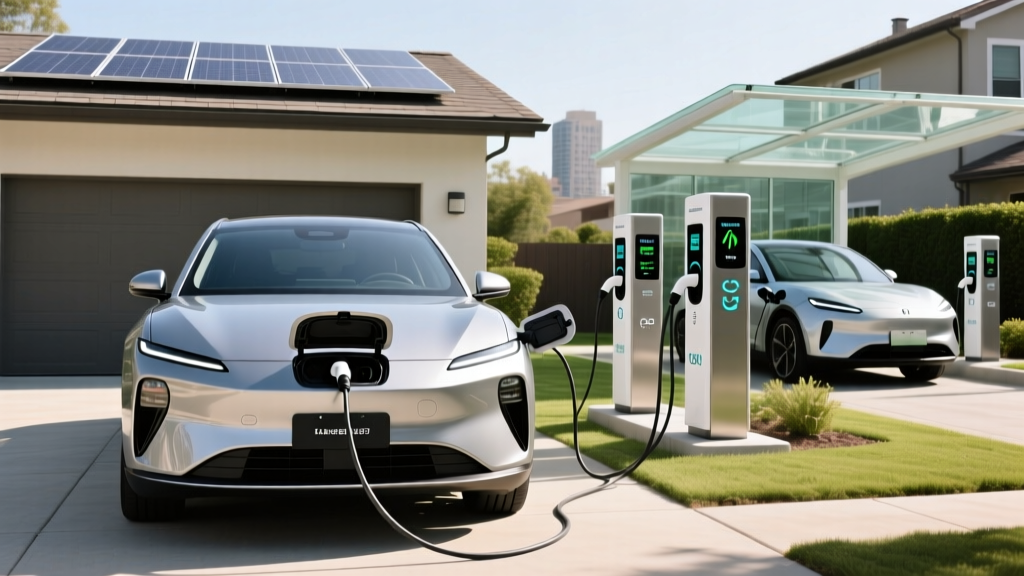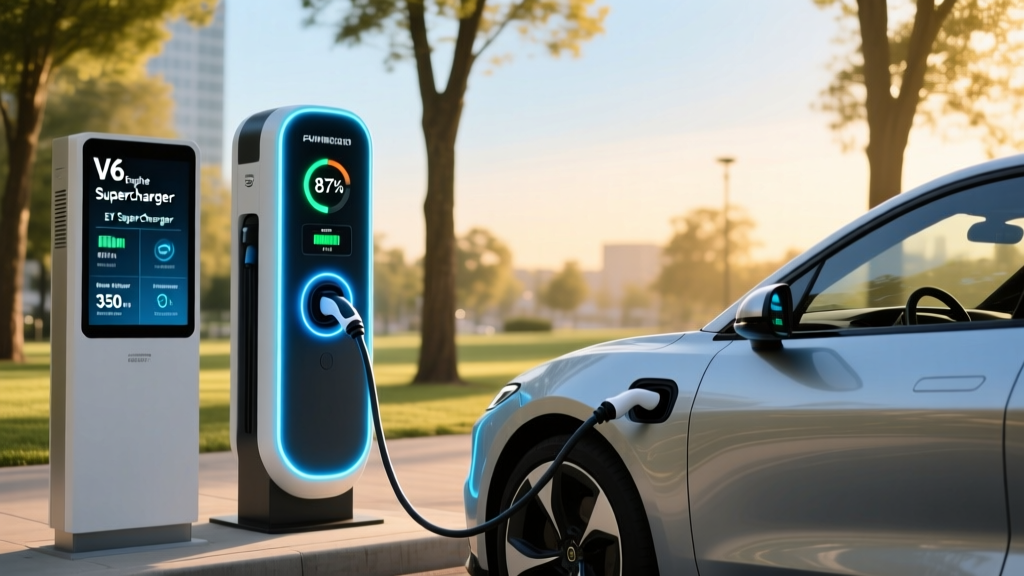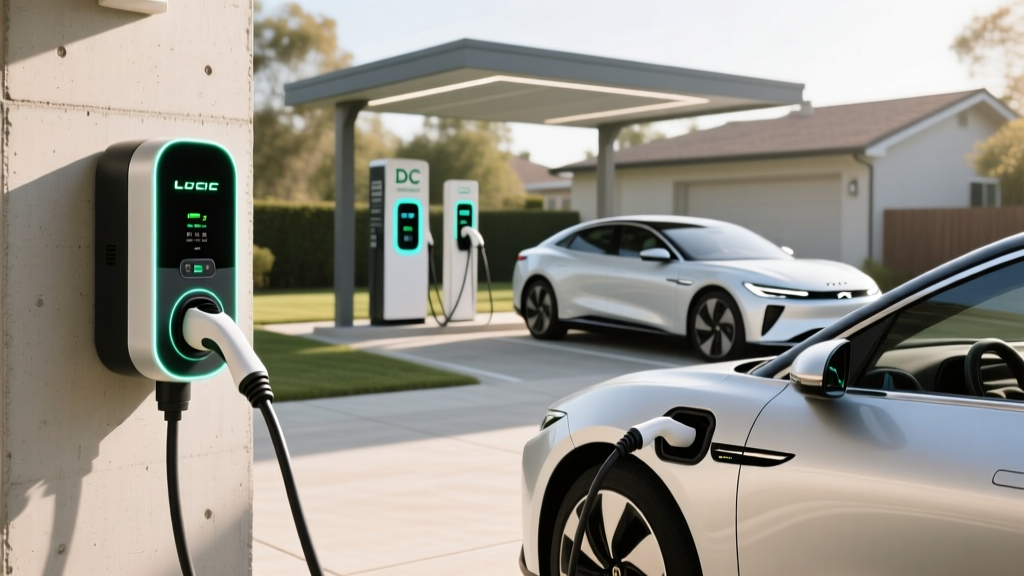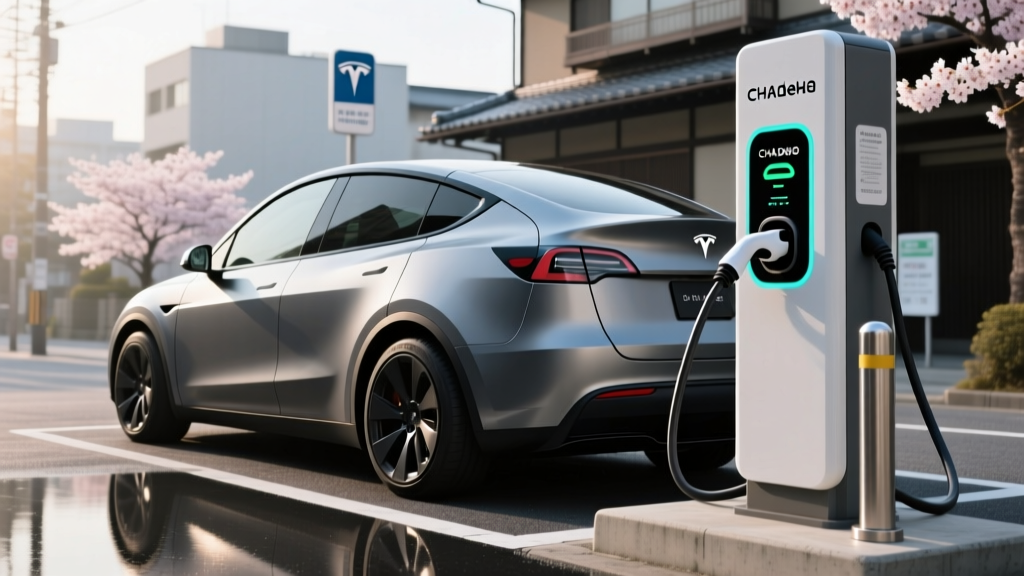
Driving a Tesla in Japan presents a unique charging challenge. While the United States and Europe have largely consolidated around NACS (Tesla's North American Charging Standard) and CCS1/CCS2, Japan's DC fast-charging infrastructure remains dominated by CHAdeMO — a connector standard co-developed by Tokyo Electric Power Company (TEPCO) and Nissan. If you've imported a Tesla to Japan, or you're planning an extended stay with a Tesla vehicle, understanding Tesla CHAdeMO adapter compatibility in Japan is essential for practical daily driving and road trips.
This guide covers everything you need to know: how the Tesla CHAdeMO adapter works in Japan, what charging speeds to expect, how Japan's charging networks operate, and a complete reference for EV charging levels, home installation costs, and equipment recommendations that apply whether you're charging in Yokohama or back home in the U.S.
Why CHAdeMO Still Dominates Japan's Charging Network
Japan was an early EV adopter. The Nissan Leaf launched in 2010 with CHAdeMO as its DC fast-charging connector, and the country built out thousands of CHAdeMO stations before CCS gained any traction globally. As of 2025-2026, Japan operates over 7,600 CHAdeMO-equipped DC fast chargers across networks like e-Mobility Power (eMP), Nippon Expressway Company (NEXCO), and various retail installations. CCS2 chargers are growing but remain a minority.
This means a Tesla owner in Japan cannot rely on the Tesla Supercharger network alone — particularly outside major metro areas. The CHAdeMO adapter becomes a critical piece of equipment for accessing the country's most widespread fast-charging infrastructure.
Tesla CHAdeMO Adapter: Compatibility and Real-World Performance
Tesla's official CHAdeMO adapter (part number 1084100-00-A) was designed primarily for the Japanese market, where Tesla sells vehicles with a proprietary Tesla connector port (not NACS, which is North America-specific). Here's what you need to know about compatibility:
Which Tesla Models Support the CHAdeMO Adapter?
- Model S and Model X (all years sold in Japan): Full compatibility with the Tesla CHAdeMO adapter. These vehicles support CHAdeMO DC fast charging at up to approximately 50 kW, though the adapter and protocol limit sustained speeds.
- Model 3 and Model Y (Japan-market): Compatibility varies by production year. Earlier Japan-market Model 3 vehicles (pre-2021) support the adapter with a firmware update. Newer vehicles may require a software enablement from Tesla Service. Maximum charge rate via CHAdeMO adapter is typically 50-60 kW — well below the vehicle's native DC fast-charge capability of 170-250 kW via Supercharger.
CHAdeMO Charge Curve Limitations
CHAdeMO protocol in Japan is largely deployed at 50 kW stations, with some newer installations offering 90 kW or even 150 kW. However, the Tesla CHAdeMO adapter itself caps throughput at approximately 50 kW regardless of station capability. The charge curve also tapers significantly above 80% state of charge (SoC), dropping to under 15 kW as the battery management system protects cell health. This is standard behavior across all DC fast-charging protocols — not unique to CHAdeMO — but the lower peak rate means the taper is felt sooner.
Where to Buy the Tesla CHAdeMO Adapter in Japan
The adapter is available through Tesla's Japan online store and Tesla Service Centers in Tokyo, Osaka, and Nagoya. As of 2025, the retail price is approximately ¥45,000-55,000 (~$300-$370 USD). Third-party CHAdeMO-to-Tesla adapters exist but are not recommended — they may lack proper communication protocol handshakes and can trigger charge faults or void warranty coverage.
Japan's Public Charging Networks for Tesla Owners
Beyond the CHAdeMO adapter question, understanding Japan's charging ecosystem is critical for route planning:
Major Networks and Payment
- e-Mobility Power (eMP): Japan's largest charging network operator. Offers CHAdeMO chargers at highway service areas (SAs/PAs) and commercial locations. Requires an eMP membership card or app for activation. Pricing: typically ¥40-50/kWh ($0.27-$0.34 USD).
- NEXCO (expressway chargers): CHAdeMO stations at highway rest stops along major expressways. Often free or subsidized for expressway users, but 50 kW maximum.
- Tesla Superchargers in Japan: Tesla operates a growing Supercharger network in Japan, concentrated in urban areas and along major highways. These use Tesla's proprietary connector (Japan-market) and charge at up to 250 kW (V3) or 150 kW (V2). Pricing: approximately ¥49-59/kWh depending on location and time of day.
- Destination Chargers: Level 2 AC chargers at hotels, onsens, and shopping centers. Often free for customers. Typically 6-7 kW output.
Payment at Japanese CHAdeMO stations can be confusing for visitors. Many stations require a physical RFID membership card (eMP card, WAON, or specific OEM cards like the Nissan Zero Charge card). Credit card tap-to-pay is becoming more common at newer installations but is not universal. Download the eMP app and register before your trip.
EV Charging Levels Explained: Speeds, Costs, and Use Cases
Whether you're charging in Japan or at home, understanding the three charging levels is foundational. Below is a reference table with speeds in kilowatts (kW — the rate of power delivery) and approximate miles of range added per hour of charging:
| Charging Level | Voltage / Phase | Power Output | Miles of Range Per Hour | Typical Use Case |
|---|---|---|---|---|
| Level 1 (120V AC) | 120V / Single-phase | 1.0-1.4 kW | 3-5 miles/hr | Overnight trickle charge; emergency top-up |
| Level 2 (240V AC) | 240V / Single-phase | 3.3-19.2 kW | 12-75 miles/hr | Home daily charging; workplace; destination |
| DC Fast Charging | 200-900V DC | 50-350 kW | 150-1,000+ miles/hr | Road trips; rapid top-ups; commercial fleets |
Key distinction: kW (kilowatts) measures power — how fast energy flows into the battery. kWh (kilowatt-hours) measures energy — the total capacity of the battery. A 75 kWh battery charged at 7.2 kW (Level 2) takes roughly 10.4 hours from 0-100%. That same battery at a 150 kW DC fast charger reaches 80% in approximately 25-35 minutes, though the charge curve tapers significantly in the final 20%.
Charging Time Examples for Common Battery Sizes
| Battery Size | Level 2 (7.2 kW) | Level 2 (11.5 kW) | DC Fast 50 kW (10-80%) | DC Fast 150 kW (10-80%) | DC Fast 250 kW (10-80%) |
|---|---|---|---|---|---|
| 60 kWh (e.g., base Model 3 RWD) | ~8.3 hrs | ~5.2 hrs | ~60 min | ~28 min | ~22 min |
| 75 kWh (e.g., Model Y Long Range) | ~10.4 hrs | ~6.5 hrs | ~78 min | ~35 min | ~27 min |
| 100 kWh (e.g., Model S/X) | ~13.9 hrs | ~8.7 hrs | ~105 min | ~45 min | ~35 min |
These times assume optimal conditions (battery preconditioned, moderate temperature). Cold weather can increase Level 2 times by 10-20% and reduce DC fast-charge peak rates by 20-40% due to the battery management system limiting charge current to protect cold cells.
Home EV Charger Installation: Requirements, Costs, and Panel Upgrades
Installing a Level 2 home charger is the single most impactful upgrade for daily EV ownership. Here's a detailed breakdown of what's involved:
Electrical Requirements
A typical Level 2 home charger requires a 240V dedicated circuit on a double-pole breaker. Common configurations:
- 40-amp circuit / 32-amp continuous: Supports up to 7.7 kW (most common residential setup). Requires 8 AWG copper wire.
- 50-amp circuit / 40-amp continuous: Supports up to 9.6 kW. Requires 6 AWG copper wire.
- 60-amp circuit / 48-amp continuous: Supports up to 11.5 kW (maximum for most residential chargers like the Tesla Wall Connector). Requires 6 AWG or 4 AWG copper wire depending on run length.
The National Electrical Code (NEC) requires that continuous loads (like EV charging, which runs for 3+ hours) not exceed 80% of the circuit breaker rating. A 50A breaker therefore delivers a maximum continuous 40A / 9.6 kW.
Panel Upgrade Considerations
Many older homes have 100A or 150A electrical service panels that may not have sufficient spare capacity for a dedicated 40-60A EV circuit. A licensed electrician will perform a load calculation (NEC Article 220) to determine if your panel can handle the additional draw. If not, a panel upgrade to 200A service typically costs $1,500-$3,500 and may be required before charger installation can proceed.
Some newer homes and those with 200A+ panels can accommodate an EV charger without upgrades. If your panel has adequate spare breaker slots and the load calculation passes, you'll save significantly on installation.
Installation Cost Breakdown
| Component | Cost Range | Notes |
|---|---|---|
| Level 2 Charger (hardware) | $250-$700 | Varies by brand, power output, smart features |
| Electrician labor (standard install) | $500-$1,500 | Depends on wire run length, wall type, conduit needs |
| Electrical permit | $50-$200 | Required in most jurisdictions; varies by city/county |
| Panel upgrade (if needed) | $1,500-$3,500 | Only if existing panel lacks capacity |
| Additional materials (conduit, wire, junction box) | $100-$400 | Longer wire runs increase cost |
| Total (no panel upgrade) | $800-$2,800 | Typical scenario for homes with adequate panel capacity |
| Total (with panel upgrade) | $2,300-$6,300 | Older homes or high-load households |
Always hire a licensed electrician and pull a permit. Unpermitted electrical work can void homeowner's insurance coverage and create fire risk. The National Electrical Contractors Association and your local building department can help you find qualified installers.
Safety and Code Requirements
- Dedicated circuit: EV chargers must be on their own circuit — not shared with other appliances.
- GFCI protection: NEC 2020 and later requires GFCI (Ground Fault Circuit Interrupter) protection for outdoor receptacles used for EV charging. Hardwired installations may have different requirements depending on local code.
- Outdoor rating: If installing outdoors, the charger must carry a NEMA 4 or IP65 rating for weather resistance.
- Proper grounding: The circuit must include an equipment grounding conductor. Ungrounded (2-prong) outlets are not acceptable for EV charging.
Connector Compatibility Guide: NACS, CCS1, and CHAdeMO
Understanding which connector your EV uses — and what adapters you may need — is essential for both home and public charging:
| Connector | Charging Type | Primary Region | Vehicles Using It | Adapter Options |
|---|---|---|---|---|
| NACS (Tesla) | AC + DC | North America (standard from 2025+) | All Tesla vehicles; Ford, GM, Rivian, Hyundai, and most others from 2025+ | CCS-to-NACS adapters available from Tesla and third parties |
| CCS1 | AC + DC | North America (legacy non-Tesla) | Pre-2025 non-Tesla EVs (Hyundai Ioniq 5, VW ID.4, BMW iX, etc.) | NACS-to-CCS1 adapters for Tesla Supercharger access |
| CCS2 | AC + DC | Europe, parts of Asia | Most European-market EVs | CHAdeMO-to-CCS2 adapters (limited availability) |
| CHAdeMO | DC only | Japan (primary), some global legacy | Nissan Leaf, Mitsubishi Outlander PHEV, older Japan-market EVs | Tesla CHAdeMO adapter (Japan-market Teslas); no CCS-to-CHAdeMO adapter widely available |
| J1772 | AC only (Level 1/2) | North America (all EVs) | All non-Tesla EVs for AC charging | Tesla includes J1772-to-Tesla adapter with every vehicle |
For Tesla owners in Japan: Your vehicle uses Tesla's proprietary connector for both AC and DC charging. The Tesla CHAdeMO adapter enables DC fast charging at Japan's ubiquitous CHAdeMO stations. For AC Level 2 charging at Japanese destination chargers and home installations, you'll need a J1772-to-Tesla adapter (included with the vehicle) or a Tesla Wall Connector with the Japan-specific connector.
For Tesla owners in North America: CHAdeMO infrastructure is rapidly declining. Electrify America, EVgo, and most networks have standardized on CCS1, and the transition to NACS is accelerating. A CHAdeMO adapter has minimal utility in the U.S. market as of 2026.
Cost to Charge: Home vs. Public vs. Gas Comparison
One of the strongest economic arguments for EV ownership is the lower per-mile energy cost. Here's how different charging scenarios compare:
| Charging Scenario | Rate ($/kWh) | Vehicle Efficiency | Cost Per Mile | Annual Cost (12,000 mi) |
|---|---|---|---|---|
| Home (off-peak utility rate) | $0.08-$0.14 | 3.5 mi/kWh (286 Wh/mi) | $0.023-$0.040 | $276-$480 |
| Home (standard utility rate) | $0.14-$0.22 | 3.5 mi/kWh | $0.040-$0.063 | $480-$756 |
| Public Level 2 (workplace/retail) | $0.20-$0.35 | 3.5 mi/kWh | $0.057-$0.100 | $684-$1,200 |
| DC Fast Charging (public) | $0.30-$0.55 | 3.5 mi/kWh | $0.086-$0.157 | $1,032-$1,884 |
| Japan eMP CHAdeMO | ~$0.30 (¥45/kWh) | 3.5 mi/kWh | ~$0.086 | ~$1,032 |
| Gasoline (25 MPG combined, $3.40/gal) | — | 25 mi/gal | $0.136 | $1,632 |
| Gasoline (25 MPG combined, $4.50/gal — Japan avg) | — | 25 mi/gal | $0.180 | $2,160 |
Home charging at off-peak rates delivers the lowest cost per mile — often one-quarter to one-third the cost of gasoline. Even exclusive DC fast charging is competitive with gas in many markets. The key economic takeaway: the more you can charge at home, the greater your savings. Public fast charging should be treated as a road-trip convenience, not a daily strategy.
Recommended Home Charging Equipment
For North American Tesla owners (and those with NACS-equipped vehicles from 2025 onward), here are top-rated Level 2 home chargers:
Tesla Wall Connector (Gen 3)
Power Output: Up to 11.5 kW (48A) on a 60A circuit
Connector: NACS (Tesla native)
Cable Length: 24 feet
Smart Features: Wi-Fi connectivity, over-the-air updates, load sharing between multiple units, access control
Price: ~$475
Best For: Tesla owners who want maximum charge speed and seamless integration with the Tesla app. The load-sharing feature is ideal for homes with two EVs on a single circuit.
ChargePoint Home Flex
Power Output: Up to 12 kW (50A) configurable — adjustable from 16A to 50A to match your circuit
Connector: J1772 (NACS adapter included in newer versions)
Cable Length: 23 feet
Smart Features: Wi-Fi, Alexa integration, detailed charging history via app, scheduled charging, utility demand-response programs
Price: ~$550-$700
Best For: Multi-EV households with a mix of Tesla and non-Tesla vehicles. The adjustable amperage is excellent for homes with limited panel capacity — you can set it to 32A (7.7 kW) on a 40A circuit without an electrician reconfiguring the breaker.
Emporia Vue Level 2 Charger
Power Output: Up to 11.5 kW (48A)
Connector: J1772 (NACS adapter available)
Cable Length: 24 feet
Smart Features: Integration with Emporia energy monitoring system, solar-aware charging, time-of-use scheduling, real-time energy tracking
Price: ~$400-$500
Best For: Budget-conscious buyers and solar panel owners. The solar-aware charging mode directs excess solar production to the EV, maximizing self-consumption and minimizing grid draw.
Tesla CHAdeMO Adapter FAQ
Can I use the Tesla CHAdeMO adapter outside of Japan?
Technically yes — the adapter works at any CHAdeMO station globally. However, CHAdeMO infrastructure is declining in North America and Europe, where CCS1/CCS2 and NACS have become dominant. In the U.S., you'll find CHAdeMO chargers at some older Electrify America, EVgo, and independent stations, but availability is shrinking annually. The adapter is most practical for Japan-based Tesla owners.
Does the CHAdeMO adapter support regenerative braking or vehicle-to-load (V2L)?
No. The CHAdeMO adapter is for DC fast charging only. V2L functionality (which allows the EV to power external devices) requires specific vehicle hardware and a separate V2L adapter — currently available on vehicles like the Hyundai Ioniq 5 and Ford F-150 Lightning, but not on Tesla vehicles.
How fast can I charge a Tesla Model Y via CHAdeMO in Japan?
The Tesla CHAdeMO adapter limits DC charging to approximately 50-60 kW regardless of station output. On a Model Y Long Range (75 kWh battery), expect a 10-80% charge in roughly 65-80 minutes. This is considerably slower than the 25-30 minutes achievable at a 250 kW Tesla V3 Supercharger, so plan longer stops at highway service areas.
Is it safe to use third-party CHAdeMO-to-Tesla adapters?
Tesla does not certify third-party CHAdeMO adapters, and using one may void warranty coverage on the vehicle's charging system. Third-party adapters have been reported to cause communication protocol errors, incomplete charge sessions, and in rare cases, connector damage. The official Tesla CHAdeMO adapter is the recommended choice despite its higher price.
Will Japan eventually switch from CHAdeMO to CCS or NACS?
Japan's charging industry has begun deploying CCS2 chargers alongside CHAdeMO at new installations, and some networks have announced long-term transition plans. However, given the massive installed base of CHAdeMO stations and CHAdeMO-equipped Japanese EVs (Nissan, Mitsubishi, Subaru), a full transition will take many years. CHAdeMO will remain Japan's dominant DC fast-charging standard through at least the late 2020s.
How much does it cost to install a home EV charger?
A typical Level 2 home charger installation costs $800-$2,800 when no panel upgrade is needed (equipment + electrician + permit). If your home requires a 200A panel upgrade, total costs can range from $2,300-$6,300. Get at least three quotes from licensed electricians, and always pull a permit for the work.
What electrical upgrades might I need for a home charger?
The most common upgrade is a panel capacity increase from 100A or 150A to 200A service, required when the existing panel lacks spare capacity for a dedicated 40-60A EV circuit. Other potential upgrades include adding a sub-panel (if the charger is far from the main panel), upgrading wiring in older homes with aluminum or undersized conductors, and installing a GFCI breaker if local code requires it for outdoor installations.
Sources: Charging infrastructure data from U.S. Department of Energy Alternative Fuels Data Center; electrical code references from the National Fire Protection Association (NFPA 70 / NEC); Japan EV charging network information from e-Mobility Power and Tesla Japan official resources.