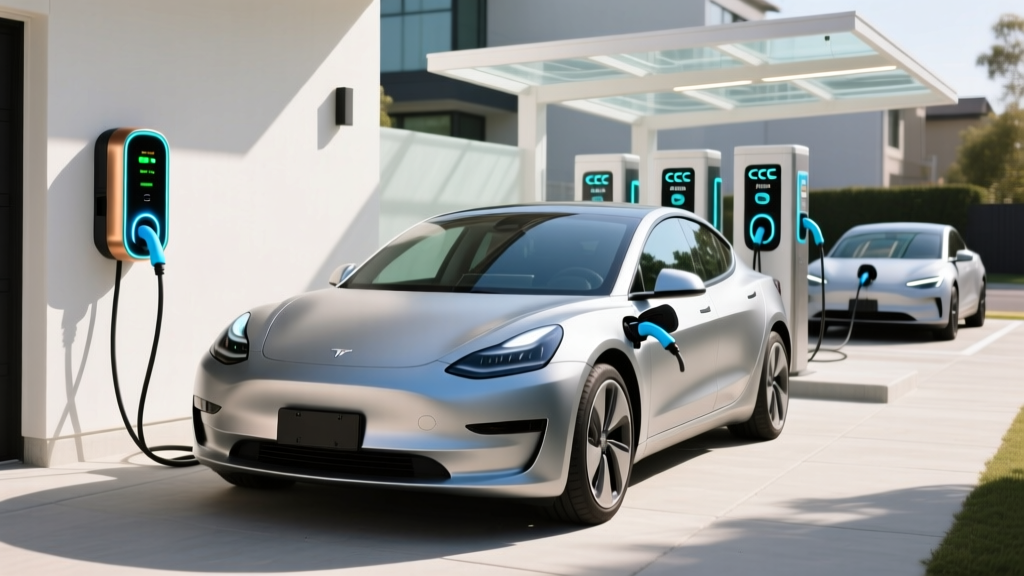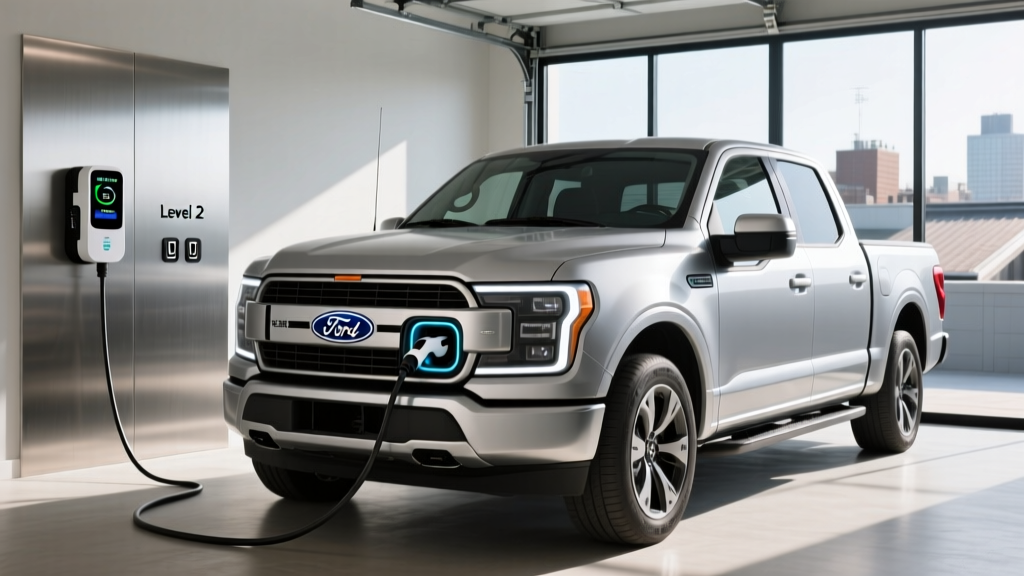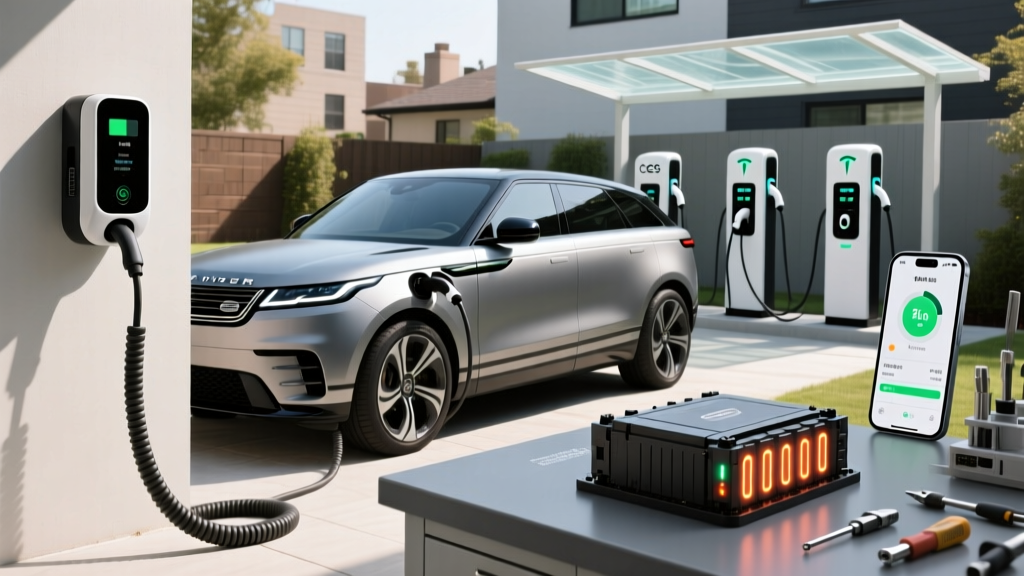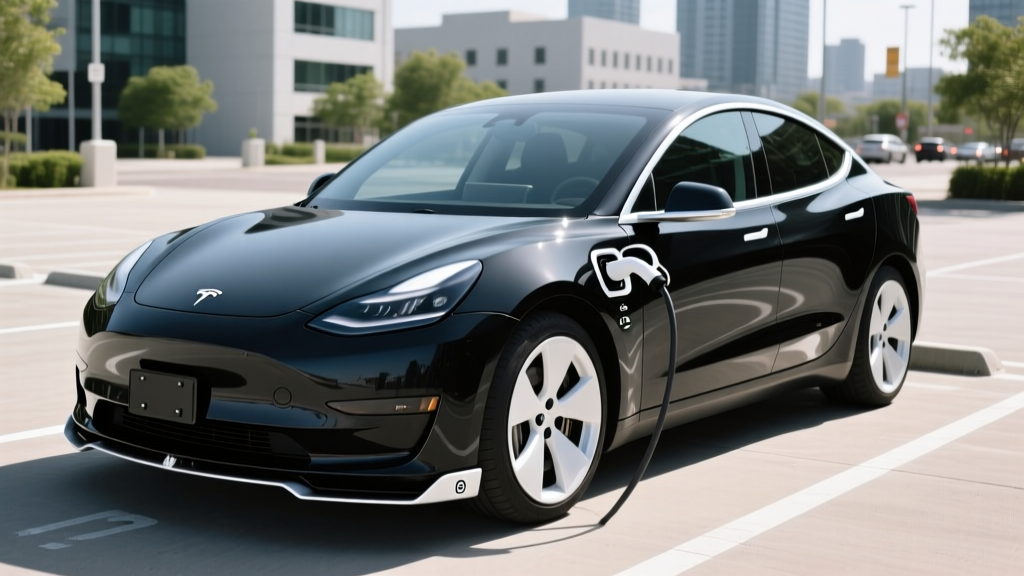
When Tesla built its early Model S and Model X vehicles, the company relied exclusively on its proprietary connector and the growing Supercharger network. But as the EV industry has standardized around CCS1 for DC fast charging—and as Tesla's own North American Charging Standard (NACS) opens to competitors—owners of older Teslas face a compatibility gap. The Tesla CCS retrofit offers a bridge, but it's not as simple as swapping a plug.
This guide breaks down exactly what the retrofit involves, how it affects your charging speeds, what you'll pay, and whether it's worth pursuing versus relying on adapters and the Supercharger network.
What Is a Tesla CCS Retrofit and Why Does It Matter?
A Tesla CCS retrofit replaces or modifies the vehicle's charge port to accept CCS1 connectors natively—the standard used by Electrify America, EVgo, and most non-Tesla DC fast chargers in North America. Tesla officially offered this retrofit for Model S and Model X vehicles built before a certain production date (generally pre-2020 models that shipped with the older Tesla proprietary port and lacked the hardware to support CCS).
Here's why this matters: while Tesla's Supercharger network remains the gold standard for reliability, the CCS ecosystem has expanded dramatically. As of 2026, Electrify America operates over 1,000 stations, and EVgo and ChargePoint continue to add CCS stalls. Having native CCS capability means you can pull into any public DC fast charger without fumbling with adapters—critical for road trips through charging deserts or when Superchargers are occupied or out of service.
Charging Levels Explained: Speeds in kW and Miles Per Hour
Before evaluating the retrofit, you need a clear picture of what each charging level delivers. Remember: kW (kilowatts) measures power—the rate of energy delivery—while kWh (kilowatt-hours) measures energy capacity, the size of your battery. Confusing them is the most common EV literacy mistake.
| Level | Voltage / Amperage | Power (kW) | Miles of Range Added Per Hour | Typical Use Case |
|---|---|---|---|---|
| Level 1 | 120V / 12A | ~1.4 kW | 3–5 mi/hr | Overnight trickle; emergency top-ups |
| Level 2 | 240V / 32–48A | 7.7–11.5 kW | 25–44 mi/hr | Home daily charging; workplace; public L2 |
| DC Fast (CCS) | 400–800V DC | 50–250 kW (peak) | 150–1,000+ mi/hr (peak) | Road trips; rapid public charging |
| Tesla Supercharger V3 | ~400V DC | Up to 250 kW | Up to ~1,000 mi/hr (peak) | Tesla-proprietary network |
Real-world charging time examples (for a 100 kWh battery, 10–80% SoC):
- Level 1 (1.4 kW): ~50 hours (impractical for full charges; overnight adds ~40 miles)
- Level 2 at 11.5 kW (48A): ~6 hours
- DC fast at 150 kW sustained average: ~28–35 minutes (note: peak rate tapers significantly above 50–60% SoC due to the charge curve)
- Tesla Supercharger V3 at 250 kW peak: ~20–25 minutes for 10–80%, but older Model S/X vehicles without the latest battery management may not sustain peak rates
The charge curve is critical context: no EV sustains its peak kW rate for the entire session. A charger rated at 150 kW might deliver that for the first 10–15 minutes, then taper to 75 kW, then 40 kW as the battery fills. Always evaluate chargers by their 10–80% time, not peak kW alone.
Connector Compatibility: NACS, CCS1, and CHAdeMO Explained
North America has three active DC fast-charging connector standards, and understanding which applies to your Tesla determines whether you need a retrofit, an adapter, or neither.
| Connector | Vehicles That Use It | Network Availability | Adapter Needed for Older Tesla? |
|---|---|---|---|
| NACS (Tesla) | All current Teslas; Ford, GM, Rivian, Hyundai, and others starting 2025–2026 | Tesla Superchargers (open to NACS-equipped non-Teslas); some third-party networks adding NACS stalls | No — native on all Teslas |
| CCS1 | Most non-Tesla EVs pre-2025; legacy public infrastructure | Electrify America, EVgo, ChargePoint, most public DC fast chargers | Yes — retrofit or CCS-to-Tesla adapter |
| CHAdeMO | Nissan Leaf (legacy); Mitsubishi Outlander PHEV | Declining; mostly legacy stations | Not applicable; no Tesla adapter exists |
The adapter alternative: Several third-party manufacturers produce CCS-to-Tesla adapters (sometimes called "Tesla CCS adapters") that allow you to plug a CCS1 cable into your Tesla's proprietary port without a full retrofit. These typically cost $150–$350 and support up to 150–250 kW depending on the model. The trade-off: adapters add a physical connection point that can introduce resistance, heat, or communication errors if poorly manufactured. Tesla's official retrofit, when available, replaces the port hardware entirely for a more reliable integration.
Tesla CCS Retrofit: Cost, Process, and Availability
Tesla has offered the CCS retrofit as a service center procedure for eligible Model S and Model X vehicles. The process involves:
- Eligibility check: Your VIN must be on Tesla's approved list. Generally, vehicles built before mid-2020 with the older charge port assembly qualify. Contact a Tesla Service Center or check your Tesla app for eligibility.
- Parts: The retrofit replaces the charge port inlet, wiring harness (if needed), and updates the vehicle's firmware to recognize CCS communication protocols.
- Labor: Typically 2–4 hours of service center time.
- Cost: Historically, Tesla quoted the retrofit at approximately $250–$450 including parts and labor, though pricing varies by model year and service center. Some owners reported the retrofit was offered free during recall-related service campaigns.
Current availability (2026): Tesla's CCS retrofit program has had periods of parts scarcity and regional limitations. Before scheduling, confirm with your local service center that parts are in stock and that your specific VIN qualifies. If Tesla is not offering the retrofit in your area, the CCS-to-Tesla adapter remains your practical alternative.
Home Charging Setup: Installation Costs and Electrical Requirements
Whether you have a retrofitted CCS port or the standard Tesla connector, your home Level 2 setup is where 80%+ of your charging will happen. Here's what's required.
Electrical Requirements for Level 2 Home Charging
| Component | Specification | Cost Range |
|---|---|---|
| Level 2 EVSE (charger unit) | 240V, 32A–48A; NACS or J1772 connector | $300–$700 |
| Electrical panel capacity | Requires 50A–60A dedicated breaker (for 40A–48A charger); 200A panel recommended | $0 (if capacity exists) to $2,000–$4,000 (panel upgrade) |
| Wiring & conduit | 6 AWG copper (48A) or 8 AWG (32A); run from panel to garage/driveway | $200–$800 (depends on run length) |
| Electrician labor | Licensed electrician; 3–8 hours typical | $500–$2,500 |
| Permit & inspection | Required in most jurisdictions; electrical permit | $50–$300 |
| Total (no panel upgrade) | $1,050–$4,300 | |
| Total (with panel upgrade) | $3,050–$8,300 |
Panel upgrade reality: Homes built before 2000 often have 100A or 150A panels already near capacity. Adding a 50A–60A EV circuit may require upgrading to a 200A panel—a $2,000–$4,000 job on its own. Get a load calculation from your electrician before committing. Some utilities offer rebates that offset panel upgrade costs.
Safety and Code Considerations
- Dedicated circuit: Your EV charger must have its own dedicated breaker—never share a circuit with other high-draw appliances.
- GFCI protection: NEC 2020 and later require GFCI protection for outdoor receptacles and many indoor EV installations. Hardwired EVSE units (no plug) may bypass this requirement in some jurisdictions, but check local code.
- Outdoor rating: If your charger mounts outside, it must carry a NEMA 4 or NEMA 4X rating for weather resistance.
- Wire gauge: Undersized wire creates fire risk. A 48A continuous load requires 6 AWG copper wire minimum. Your electrician will size this correctly—don't cut corners here.
- Permit: Skipping the permit to save $100–$200 can void your homeowner's insurance if an electrical fire occurs. Always permit and inspect.
Recommended Home Chargers for Tesla Owners
Whether your Tesla has the native NACS port, a CCS retrofit, or the original proprietary connector, these Level 2 chargers cover your needs.
Tesla Wall Connector
- Power output: Up to 11.5 kW (48A at 240V)
- Connector: NACS (native Tesla)
- Cable length: 24 ft
- Smart features: Wi-Fi, OTA updates, power sharing with second unit, load management
- Price: ~$475
- Best for: Tesla-only households wanting maximum integration
ChargePoint Home Flex
- Power output: Up to 12 kW (50A at 240V); configurable 16A–50A
- Connector: J1772 (with NACS adapter available) or NACS version
- Cable length: 23 ft
- Smart features: Wi-Fi, app scheduling, Alexa integration, energy tracking
- Price: ~$550–$700
- Best for: Multi-EV households (Tesla + non-Tesla); adjustable amperage for older panels
Emporia Level 2 EV Charger
- Power output: Up to 11.5 kW (48A at 240V)
- Connector: J1772 (NACS adapter included in some bundles)
- Cable length: 24 ft
- Smart features: Wi-Fi, app control, integrates with Emporia Vue energy monitor, solar-aware scheduling
- Price: ~$400
- Best for: Budget-conscious buyers with solar panels; excellent energy monitoring
Grizzl-E Smart
- Power output: Up to 10 kW (40A at 240V)
- Connector: J1772 or NACS
- Cable length: 24 ft
- Smart features: OCPP-compatible, adjustable amperage, extreme cold-rated (-40°F)
- Price: ~$450–$550
- Best for: Cold-climate owners; durable aluminum enclosure; Canadian-built
Connector note for CCS-retrofitted Teslas: If your Tesla has undergone the CCS retrofit, it retains the NACS/Tesla port physically. You'll still use a NACS-connector home charger. The CCS retrofit enables you to accept CCS1 cables at public DC fast chargers—it does not change your home charging connector.
Cost to Charge: Per-Mile Economics vs. Gasoline
The financial case for EV charging hinges on your electricity rate and how you charge. Here's a realistic breakdown for a Tesla Model S (100 kWh battery, ~3.0 mi/kWh efficiency, EPA-rated ~405 miles).
| Scenario | Rate ($/kWh) | Cost for Full 100 kWh Charge | Cost Per Mile |
|---|---|---|---|
| Home off-peak (utility time-of-use) | $0.08–$0.12 | $8–$12 | $0.027–$0.04 |
| Home standard rate (no TOU) | $0.14–$0.18 | $14–$18 | $0.047–$0.06 |
| Public Level 2 (ChargePoint, etc.) | $0.20–$0.35 | $20–$35 | $0.067–$0.117 |
| DC fast charging (Electrify America, EVgo) | $0.35–$0.55 | $35–$55 | $0.117–$0.183 |
| Tesla Supercharger (varies by location) | $0.25–$0.40 | $25–$40 | $0.083–$0.133 |
| Gasoline equivalent (30 MPG, $3.50/gal) | — | ~$47 (for 405 mi) | $0.117 |
The bottom line: Home charging at off-peak rates delivers fuel costs roughly 60–75% lower than gasoline. Even public DC fast charging at premium rates is often comparable to or cheaper than gas on a per-mile basis. The economics strongly favor home charging—public DC fast charging is best reserved for road trips, not daily use.
According to fueleconomy.gov, the average EV owner who charges primarily at home saves $600–$1,200 annually in fuel costs compared to a 27 MPG gasoline vehicle, depending on local electricity and gas prices.
Is the Tesla CCS Retrofit Worth It?
Get the CCS retrofit if:
- You own an older Model S or Model X (pre-2020) and frequently road-trip through areas with limited Supercharger coverage but robust CCS infrastructure
- You want redundancy—if a Supercharger stall is broken or occupied, CCS gives you a backup network
- The retrofit is available at a reasonable cost ($250–$450) from your Tesla Service Center
- You plan to keep the vehicle for several more years
Skip the retrofit and use an adapter (or Superchargers only) if:
- You live in an area with dense Supercharger coverage and rarely need alternatives
- Your Tesla Service Center reports long parts backlogs or excessive pricing
- A quality CCS-to-Tesla adapter ($200–$350) provides sufficient flexibility for your occasional CCS needs
- You're planning to trade the vehicle within 1–2 years
Frequently Asked Questions
How much does it cost to install a home EV charger?
A typical Level 2 home charger installation costs $1,050–$4,300 if your electrical panel has sufficient capacity. If you need a panel upgrade from 100A/150A to 200A, add $2,000–$4,000, bringing the total to $3,050–$8,300. This includes the EVSE unit ($300–$700), wiring and conduit ($200–$800), electrician labor ($500–$2,500), and permit fees ($50–$300). Always get a load calculation first to determine whether a panel upgrade is needed.
How fast will each charging level add range?
Level 1 (120V) adds 3–5 miles per hour. Level 2 (240V, 32–48A) adds 25–44 miles per hour depending on amperage and vehicle efficiency. DC fast charging at 150 kW can add 150–250+ miles in 15–20 minutes, though the charge curve means peak speed only applies at low state of charge. For a 100 kWh Tesla, expect a 10–80% DC fast charge in roughly 25–35 minutes at a 150 kW station.
Which connector and charger is compatible with my EV?
All Teslas use the NACS connector natively. Older Teslas (pre-2020 Model S/X) may need a CCS retrofit or adapter to use CCS1 public chargers. Current non-Tesla EVs from Ford, GM, Rivian, and others are transitioning to NACS for 2025–2026 model years; older non-Tesla EVs use CCS1. For home charging, the Tesla Wall Connector (NACS) is ideal for Tesla-only households; the ChargePoint Home Flex works for mixed fleets.
How much does charging cost per mile compared to gas?
Home charging at off-peak rates ($0.08–$0.12/kWh) costs approximately $0.03–$0.04 per mile for a Tesla Model S. Gasoline at $3.50/gallon in a 30 MPG vehicle costs about $0.12 per mile. Even public DC fast charging at $0.45/kWh works out to roughly $0.15/mile—comparable to gas. The savings are most dramatic with home charging.
What electrical upgrades might I need for a home charger?
The most common upgrade is an electrical panel upgrade from 100A or 150A to 200A, required if your existing panel lacks capacity for a 50A–60A dedicated EV circuit. Other potential upgrades include: running new conduit from the panel to the garage (especially if the panel is on the opposite side of the house), upgrading the utility service drop (rare, but possible in very old homes), and installing a sub-panel if the main panel is full. A licensed electrician's load calculation ($100–$200) will identify exactly what you need before you commit to equipment purchases.
Does the CCS retrofit affect my Tesla's Supercharger access?
No. The CCS retrofit adds CCS1 compatibility alongside your existing NACS/Tesla connector functionality. You retain full access to Tesla Superchargers. The retrofit expands your options—it doesn't replace anything.
Can I install a home EV charger myself?
Legally, most jurisdictions require a licensed electrician for 240V circuit installations, and doing it yourself will likely fail inspection and void your homeowner's insurance coverage for electrical incidents. Hardwired EVSE installations involve working inside your electrical panel with live bus bars—a lethal hazard for untrained individuals. Hire a licensed, EV-experienced electrician and pull the required permit.
Sources: Tesla Service Center documentation; U.S. Department of Energy / fueleconomy.gov; IRS §30D clean vehicle credits; National Electrical Code (NEC) 2023 requirements for EV supply equipment.