Understanding the Tesla CCS Retrofit Landscape
The electric vehicle charging ecosystem has undergone a massive transformation since Tesla opened its Supercharger network to non-Tesla vehicles. For Tesla owners and charging station operators alike, understanding the Tesla CCS retrofit cost has become essential as the industry standardizes around the North American Charging Standard (NACS) while maintaining CCS1 compatibility through adapters and hardware upgrades.
Whether you're a Tesla owner wondering if you need a CCS adapter for road trips, a business owner evaluating the cost to retrofit existing Supercharger stalls, or a homeowner planning a Level 2 installation that can handle multiple EV brands, this guide breaks down the exact figures, electrical requirements, and real-world performance data you need.
Charging Levels Explained: Speed, Power, and Real-World Range Addition
Before calculating retrofit costs, it's critical to understand what each charging level delivers. Power is measured in kilowatts (kW), while battery capacity is measured in kilowatt-hours (kWh) — the most common confusion in EV charging. Think of kW as the speed of water flowing through a hose, and kWh as the size of the bucket you're filling.
| Charging Level | Power Output (kW) | Voltage/Amperage | Miles of Range Per Hour | Typical Use Case |
|---|---|---|---|---|
| Level 1 (Standard Outlet) | 1.2-1.9 kW | 120V / 12-16A | 3-5 miles | Overnight trickle charging, PHEVs |
| Level 2 (Home/Public AC) | 7.2-19.2 kW | 240V / 30-80A | 20-60 miles | Daily home charging, workplace |
| DC Fast Charging (CCS/NACS) | 50-350 kW | 400-800V DC | 150-1000+ miles | Road trips, rapid top-ups |
For context, a Tesla Model Y Long Range with a 75 kWh usable battery charging at a Level 2 station delivering 11.5 kW will add approximately 44 miles of range per hour. The same vehicle at a 250 kW V3 Supercharger can add 200 miles in 15 minutes under optimal conditions (battery preconditioned, 10-50% state of charge).
Tesla CCS Retrofit Cost Breakdown: Supercharger Stations and Adapters
The term "Tesla CCS retrofit" applies to two distinct scenarios, each with vastly different cost structures:
Scenario 1: Tesla Owner CCS Adapter
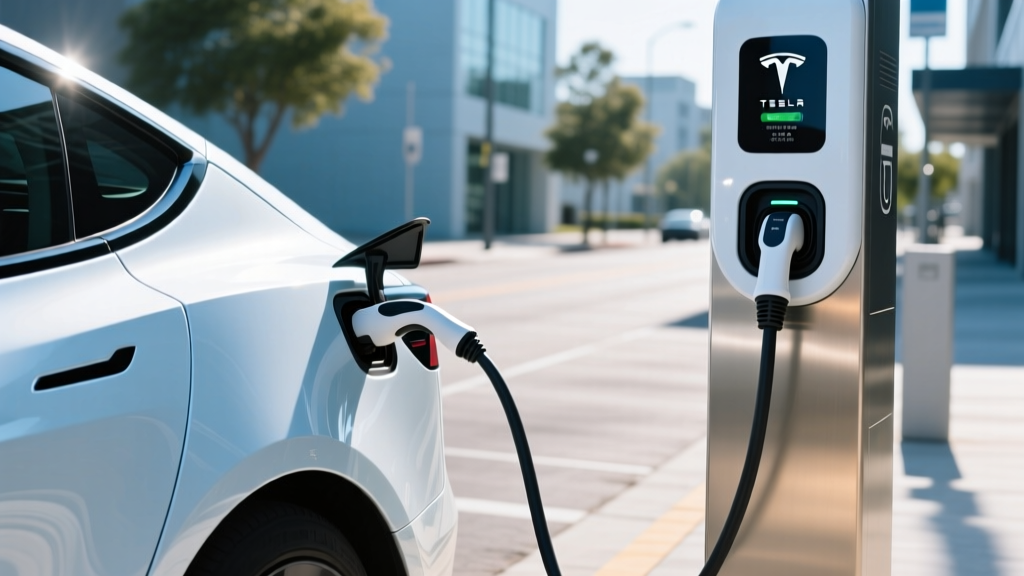
If you own a Tesla with the proprietary NACS port (pre-2025 models) and need to charge at CCS1 stations, you'll need a CCS adapter. As of 2026:
- Tesla Official CCS Adapter: $175-250 (available through Tesla's shop, limited stock)
- Third-party CCS adapters (Lectron, A2Z): $150-200
- Installation: None required — plug-and-play
- Charging speed impact: Most adapters support up to 150-250 kW DC fast charging, though sustained rates depend on vehicle acceptance
This retrofit cost is minimal and worthwhile if you frequently travel in areas where Electrify America or other CCS networks have better coverage than Superchargers.
Scenario 2: Supercharger Station CCS Retrofit
For charging station operators or businesses looking to add CCS connectors to existing Tesla Supercharger stalls, the costs are substantial:
| Component | Cost Range | Notes |
|---|---|---|
| CCS cable and connector kit (per stall) | $8,000-15,000 | Includes liquid-cooled cable for 350 kW capability |
| Dispenser cabinet modification | $3,000-6,000 | Dual-hose configuration, software integration |
| Electrical infrastructure upgrade | $10,000-50,000 | Depends on existing transformer capacity |
| Permitting and utility coordination | $2,000-8,000 | Varies by jurisdiction, may require utility service upgrade |
| Total per stall | $23,000-79,000 | Average: ~$40,000 per dual-connector stall |
Tesla has been selectively retrofitting Supercharger locations to include "Magic Dock" CCS adapters built into the charging cable, but this is a Tesla-managed process, not something third parties can independently execute. According to Tesla's official Supercharger documentation, the Magic Dock system allows non-Tesla EVs to charge without carrying their own adapter, but availability remains limited to specific pilot locations.
Home Level 2 Charger Installation: Electrical Requirements and Costs
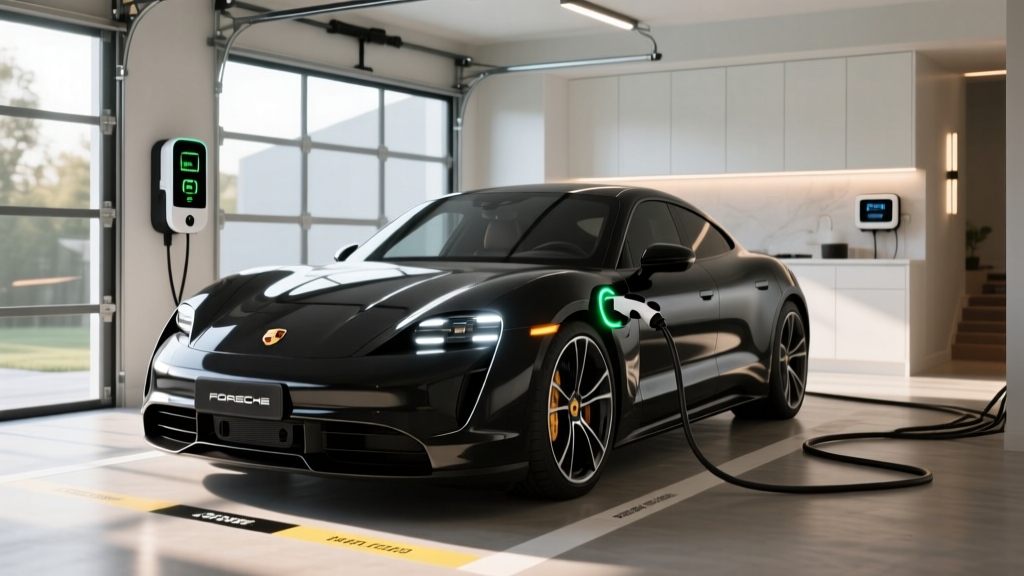
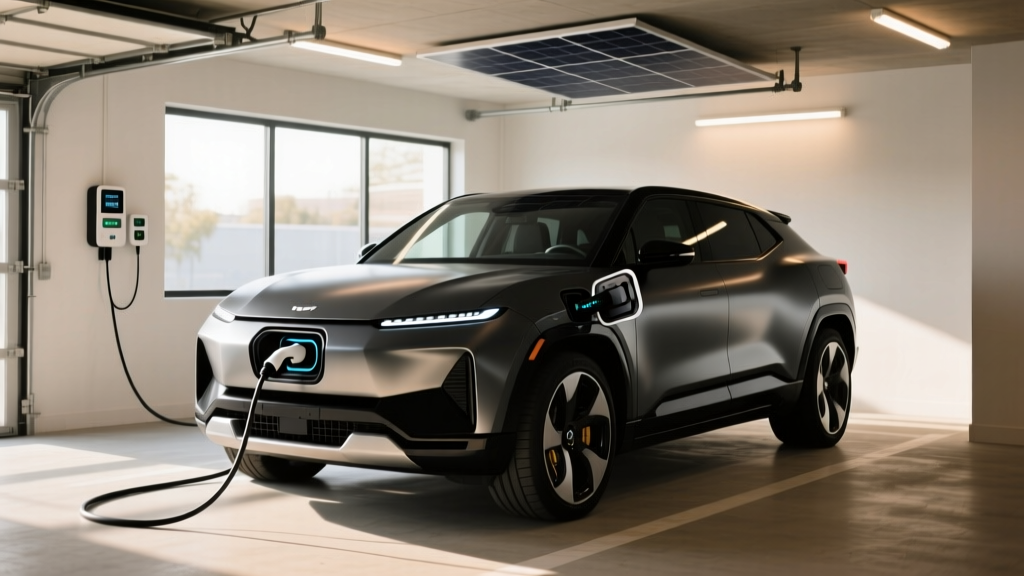
For most EV owners, the practical "retrofit" question centers on home charging setup. Here's what a professional Level 2 installation entails:
Electrical Specifications
- Circuit requirement: Dedicated 240V circuit, 40-60 amps typical (supports 32-48A continuous charging)
- Wire gauge: 6 AWG copper for 50A circuits, 4 AWG for 60A
- Breaker: 50-70A double-pole breaker
- Panel capacity: Minimum 200A main service recommended; older homes with 100A panels may need a service upgrade
Home Charger Installation Cost Breakdown
| Component | Cost Range | Details |
|---|---|---|
| Level 2 charger unit (smart, 48A) | $500-800 | ChargePoint Home Flex, Wallbox Pulsar Plus, Emporia Vue |
| Electrician labor (4-8 hours) | $600-1,500 | Depends on run length, conduit requirements |
| Materials (wire, conduit, breaker) | $200-500 | Longer runs from panel to garage increase cost |
| Permit and inspection | $100-300 | Required in most jurisdictions for code compliance |
| Total (no panel upgrade) | $1,400-3,100 | Average: ~$2,200 |
| Electrical panel upgrade (if needed) | $2,000-5,000 | 100A to 200A service upgrade for older homes |
| Total (with panel upgrade) | $3,400-8,100 | Significant but one-time investment |
The panel upgrade scenario is the hidden cost that catches many homeowners off guard. Homes built before 1990 often have 100A or 150A main service, which may not accommodate a 50A EV circuit alongside existing loads (HVAC, electric range, dryer). A licensed electrician can perform a load calculation to determine if an upgrade is necessary.
Connector Compatibility: NACS, CCS1, and Adapter Requirements
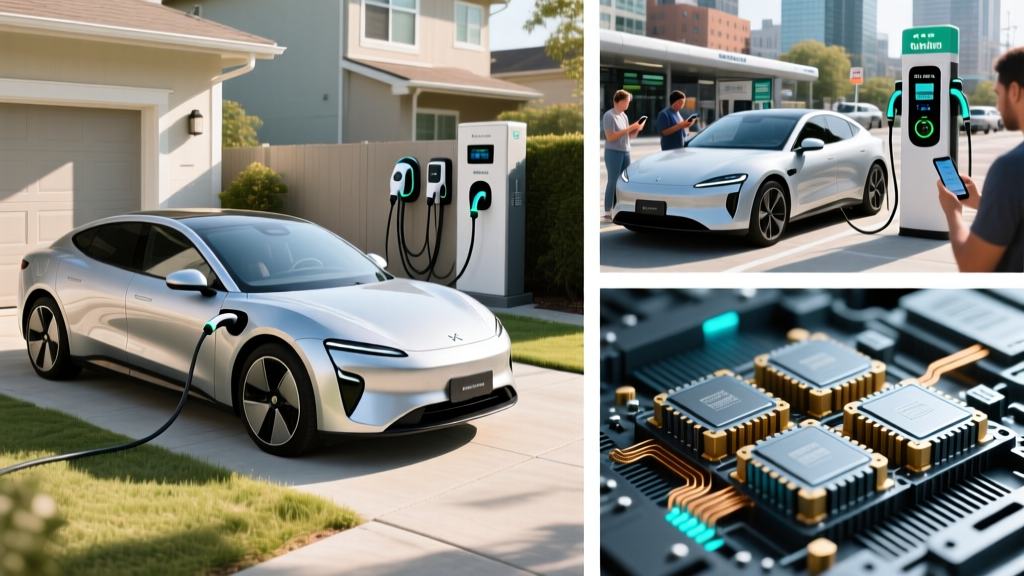
The charging connector landscape in 2026 is consolidating around NACS (Tesla's design, now the industry standard), but millions of CCS1-equipped vehicles remain on the road. Here's compatibility by brand:
| EV Brand | Native Connector | Tesla Supercharger Access | CCS Station Access | Adapter Needed? |
|---|---|---|---|---|
| Tesla (2025+ models) | NACS | Direct | Requires NACS-to-CCS adapter | Yes (for CCS stations) |
| Tesla (pre-2025) | NACS (proprietary) | Direct | Requires NACS-to-CCS adapter | Yes (for CCS stations) |
| Ford, GM, Rivian, Volvo (2025+) | NACS | Direct (with OEM adapter or native) | Requires NACS-to-CCS adapter | Yes (for CCS stations) |
| Hyundai, Kia, BMW, VW (current) | CCS1 | Requires CCS-to-NACS adapter | Direct | Yes (for Tesla Superchargers) |
| Nissan Leaf (older) | CHAdeMO | Limited (via third-party adapters) | Limited | Yes (multiple adapters) |
The adapter situation is improving but remains fragmented. Ford, GM, and Rivian owners with NACS ports received complimentary Tesla adapters with vehicle purchase in 2025, but replacements cost $200-300. CCS owners can purchase Tesla's official CCS-to-NACS adapter for $250 or third-party options from Lectron ($180-220).
Charging Cost Analysis: $/kWh Scenarios and Cost Per Mile vs Gas
The economics of EV charging vary dramatically based on where and when you charge. Here's a realistic breakdown using 2026 electricity rates:
| Charging Scenario | Cost per kWh | Cost to Charge 75 kWh Battery (10-80%) | Cost Per Mile (3.5 mi/kWh efficiency) |
|---|---|---|---|
| Home Level 2 (off-peak TOU rate) | $0.08-0.12 | $4.20-6.30 | $0.023-0.034 |
| Home Level 2 (standard rate) | $0.13-0.18 | $6.83-9.45 | $0.037-0.051 |
| Public Level 2 (workplace, mall) | $0.20-0.35 | $10.50-18.38 | $0.057-0.100 |
| DC Fast Charging (Tesla Supercharger) | $0.28-0.36 | $14.70-18.90 | $0.080-0.103 |
| DC Fast Charging (Electrify America, EVgo) | $0.35-0.55 | $18.38-28.88 | $0.100-0.157 |
| Gas Vehicle Baseline | $3.40/gallon (28 MPG) | N/A | $0.121 |
At home with off-peak rates, EV charging costs 70-80% less per mile than gasoline. Even at DC fast charging rates, most EVs still beat gas on cost per mile — though the gap narrows significantly. For a Tesla Model Y averaging 280 Wh/mile (3.57 mi/kWh), home charging at $0.10/kWh yields $0.028/mile vs $0.12/mile for a 28 MPG gas crossover at $3.40/gallon.
The EPA's fueleconomy.gov provides detailed MPGe ratings and kWh/100mi consumption data for every EV model, allowing precise cost calculations for your specific vehicle and local electricity rates.
Charging Time Examples: 10-80% State of Charge
Real-world charging times depend on battery size, charger power, and the charging curve (most EVs taper significantly above 80% SoC to protect battery health). Here are representative examples:
Level 2 Home Charging (48A, 11.5 kW)
- Tesla Model 3 RWD (60 kWh battery): 10-80% in ~4 hours
- Tesla Model Y Long Range (75 kWh): 10-80% in ~4.5 hours
- Ford F-150 Lightning Extended Range (131 kWh): 10-80% in ~8 hours
- Chevy Equinox EV (85 kWh): 10-80% in ~5.5 hours
DC Fast Charging (250 kW Tesla Supercharger V3)
- Tesla Model 3 Long Range: 10-80% in 25-30 minutes (peak 250 kW, sustained ~150 kW average)
- Tesla Model Y: 10-80% in 27-32 minutes
- Hyundai Ioniq 5 (CCS): 10-80% in 18 minutes at 350 kW charger (vehicle accepts 240 kW peak)
The charging curve matters: a "250 kW" charger doesn't deliver that rate for the entire session. Most EVs hit peak power between 10-40% SoC, then taper to 150 kW, 100 kW, and eventually 50 kW as the battery fills. This is why 10-80% times are the standard metric — charging above 80% can double the total session time.
Equipment Recommendations: Level 2 Chargers for Home Installation
Based on real-world testing, reliability data, and feature sets, these are the top Level 2 chargers for 2026:
ChargePoint Home Flex
- Power output: Up to 12 kW (50A) configurable down to 16A for panel-limited homes
- Connector: NACS (Tesla) or J1772 (CCS vehicles) — select at purchase
- Cable length: 23 feet
- Smart features: Wi-Fi, app scheduling, Alexa integration, load sharing
- Price: $699 (NACS) / $649 (J1772)
- Best for: Tesla owners wanting flexible amperage adjustment
Wallbox Pulsar Plus
- Power output: Up to 11.5 kW (48A)
- Connector: J1772 (CCS) or NACS (2025+ models)
- Cable length: 20 feet
- Smart features: Wi-Fi, Bluetooth, Power Sharing (multiple units on one circuit)
- Price: $599-649
- Best for: Multi-EV households, compact design
Emporia Level 2 EV Charger
- Power output: Up to 11.5 kW (48A)
- Connector: J1772 (universal, works with Tesla adapter)
- Cable length: 24 feet
- Smart features: Real-time energy monitoring, solar integration, circuit protection
- Price: $399-449
- Best for: Budget-conscious buyers, solar panel owners
All three units are UL-listed, outdoor-rated (NEMA 4), and compatible with time-of-use rate plans. The Emporia offers the best value if you don't need native NACS, while the ChargePoint provides the most granular control for homes with electrical constraints.
Safety, Code Compliance, and Installation Best Practices
EV charger installation is not a DIY project. The National Electrical Code (NEC Article 625) mandates specific requirements:
- Dedicated circuit: EV chargers require their own breaker — no sharing with other appliances
- GFCI protection: Required for outdoor installations (2023 NEC update), built into most modern chargers
- Outlet vs hardwired: NEMA 14-50 outlets offer flexibility but require GFCI breaker ($150-200 extra); hardwired connections are more reliable and avoid this cost
- Outdoor rating: If installing outside, ensure NEMA 4 or 4X enclosure rating for weather protection
- Permit and inspection: Required in most jurisdictions — skipping this can void homeowner's insurance and create fire risk
The National Fire Protection Association's NEC guidelines provide the complete code framework, but your licensed electrician will handle compliance. Always verify their EV charger installation experience — the load calculations and wire sizing differ from standard appliance circuits.
Frequently Asked Questions
How much does it cost to install a home EV charger?
A typical Level 2 home charger installation costs $1,400-3,100 including equipment ($500-800), electrician labor ($600-1,500), materials ($200-500), and permits ($100-300). If your home requires an electrical panel upgrade from 100A to 200A service, add $2,000-5,000, bringing the total to $3,400-8,100. The panel upgrade is a one-time cost that also increases your home's resale value.
How fast will each charging level add range?
Level 1 (120V standard outlet) adds 3-5 miles of range per hour — suitable for plug-in hybrids with small batteries but impractical for full EVs. Level 2 (240V, 48A) adds 20-60 miles per hour depending on vehicle efficiency, fully charging most EVs overnight. DC fast charging (150-350 kW) adds 150-1,000 miles per hour, delivering 10-80% charge in 18-35 minutes depending on battery size and vehicle acceptance rate.
Which connector/charger is compatible with my EV?
Check your vehicle's charging port: Tesla vehicles use NACS (proprietary pre-2025, industry standard 2025+). Most other brands (Hyundai, Kia, BMW, VW) use CCS1. Ford, GM, and Rivian switched to NACS in 2025. For home Level 2 charging, purchase a charger matching your vehicle's connector, or use the J1772 standard with your vehicle's adapter. For DC fast charging, adapters are available but may limit charging speed.
How much does charging cost per mile vs gas?
Home charging at off-peak rates ($0.08-0.12/kWh) costs $0.023-0.034 per mile for an efficient EV like the Tesla Model 3 — roughly 70-80% less than a 28 MPG gas vehicle at $3.40/gallon ($0.12/mile). Even DC fast charging at $0.35/kWh yields $0.10/mile, still cheaper than gas. Your exact cost depends on local electricity rates and your vehicle's efficiency (measured in kWh/100mi or Wh/mile).
What electrical upgrades might I need?
Homes built before 1990 often have 100A or 150A electrical service, which may not accommodate a 50A EV circuit alongside existing loads (electric range, HVAC, dryer). A licensed electrician will perform a load calculation per NEC Article 220. If an upgrade to 200A service is needed, expect to pay $2,000-5,000 including utility coordination, new panel, and inspection. Homes with 200A+ service typically need no upgrade. Some utilities offer rebates covering $200-500 of panel upgrade costs for EV adoption.
Is the Tesla CCS retrofit worth it for Supercharger station owners?
For charging network operators, the $23,000-79,000 per-stall retrofit cost is justified by increased utilization from non-Tesla vehicles. Tesla's Magic Dock pilot locations show 30-40% higher stall utilization after adding CCS capability. However, for individual Tesla owners, the $175-250 CCS adapter is a low-cost insurance policy for road trips through areas with limited Supercharger coverage but robust Electrify America or EVgo networks.
Can I install a Tesla Wall Connector for non-Tesla vehicles?
Yes. The Tesla Wall Connector (2025+ models) includes a NACS plug that works with Tesla vehicles and any EV equipped with a NACS port or adapter. For CCS vehicles without NACS adapters, you'll need a separate J1772 or CCS charger, or use Tesla's $250 CCS-to-NACS adapter on the vehicle side. The Wall Connector delivers up to 11.5 kW (48A) and costs $475, making it one of the most affordable smart chargers if you're primarily a Tesla household.