If you own a pre-2023 Tesla with the proprietary connector, you've likely noticed the charging landscape shifting. Ford, GM, Rivian, Volvo, and dozens of other automakers now use the North American Charging Standard (NACS) — the same physical connector Tesla pioneered — while most legacy public DC fast chargers still rely on CCS1. For older Tesla owners, this raises a practical question: what does a Tesla CCS adapter retrofit cost, and is it even necessary in 2026?
The short answer: Tesla's official CCS adapter runs roughly $195–$250, and the retrofit is a plug-in accessory — not a service-center job — for most vehicles. But the full picture involves understanding which Teslas support CCS natively, what you gain from the adapter, and how this fits into a broader home and public charging strategy. Let's map it out with real numbers.
Why Tesla Owners Need a CCS Adapter in 2026
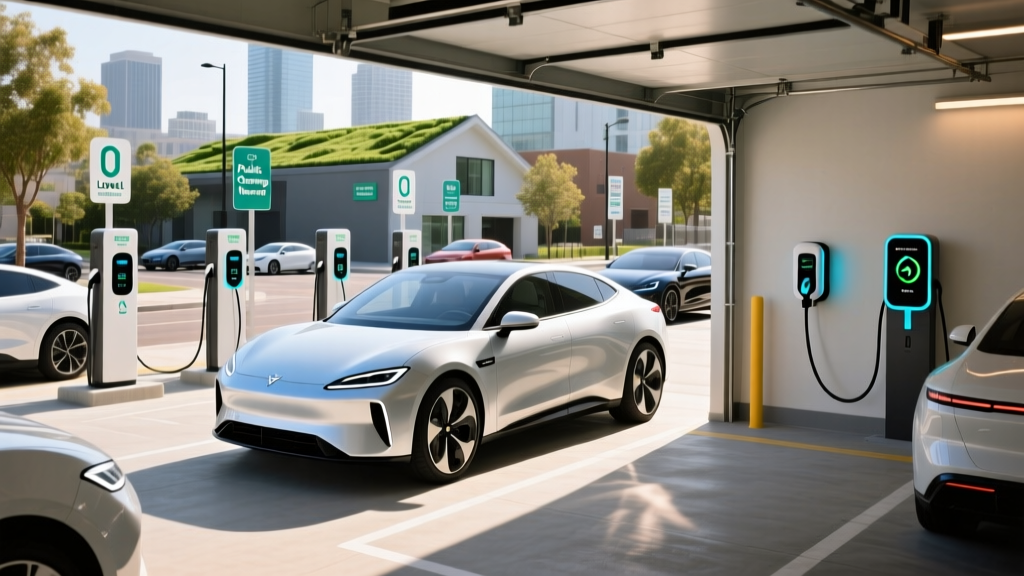
Tesla's Supercharger network — now open to non-Tesla EVs under the NACS standard — remains the most reliable DC fast-charging network in North America. But the public charging ecosystem outside of Superchargers is still heavily CCS1. Networks like Electrify America, EVgo, and ChargePoint deployed thousands of CCS1-equipped stations between 2019 and 2024, and those chargers aren't being ripped out overnight.
A CCS adapter lets a Tesla (which uses the NACS/J3400 port) plug into a CCS1 DC fast charger. This matters if:
- You live in an area with sparse Supercharger coverage but dense CCS infrastructure (common in parts of the Northeast and Midwest).
- You take road trips through regions where Supercharger stalls are occupied or offline, but CCS chargers are available.
- You want maximum redundancy — the cardinal rule of EV ownership is never depending on a single network.
Teslas delivered from late 2022 onward (approximately) include CCS compatibility in software and the necessary ECU hardware. Older Teslas — particularly 2012–2020 Model S and Model X — may require a firmware update and, in some cases, an ECU retrofit to enable CCS communication. This is where the "retrofit" cost comes in beyond just the adapter itself.
Tesla CCS Adapter Retrofit Cost Breakdown
The total cost to add CCS fast-charging capability to a Tesla depends on your vehicle's model year and whether it already has the CCS-compatible charge ECU. Here's what to expect in 2026:
| Scenario | Parts Cost | Labor/Service | Total Estimate |
|---|---|---|---|
| Adapter only (CCS-capable Tesla, 2022+ Model 3/Y, updated S/X) | $195–$250 (Tesla CCS1 adapter) | $0 (plug-and-play) | $195–$250 |
| Adapter + ECU retrofit (older Model S/X, pre-2021) | $195–$250 (adapter) + $250–$450 (ECU update/parts) | $150–$300 (service center labor) | $595–$1,000 |
| Aftermarket CCS adapter (third-party, e.g., Lectron, A2Z) | $130–$180 | $0 | $130–$180 |
Charging Levels Explained: Speed, Power, and Range Per Hour
Understanding where a CCS adapter fits requires a quick refresher on EV charging levels. The critical distinction: kW (kilowatts) measures power — how fast energy flows into your battery. kWh (kilowatt-hours) measures energy — the total capacity of your battery, like gallons in a fuel tank.
| Level | Voltage | Power (kW) | Miles of Range Added Per Hour | Typical Use Case |
|---|---|---|---|---|
| Level 1 | 120V AC | 1.2–1.9 kW | 3–5 mi/hr | Overnight trickle; emergency backup |
| Level 2 | 240V AC | 7.2–19.2 kW | 20–60 mi/hr | Home daily charging; workplace; destinations |
| DC Fast Charging | 400–800V DC | 50–350 kW | 150–1,000+ mi/hr (peak) | Road trips; rapid top-ups |
For context, a Tesla Model 3 Long Range (82 kWh battery, ~341 mi EPA range) charging on Level 2 at 11.5 kW gains roughly 44 miles of range per hour — enough to fully replenish overnight. On a 250 kW DC fast charger (Supercharger V3 or comparable CCS station), that same Model 3 peaks at ~250 kW and charges from 10–80% in approximately 25–30 minutes, though the charge curve tapers significantly above 60% state of charge (SoC).
Connector Compatibility: NACS, CCS1, and CHAdeMO
North America's charging connector landscape has consolidated dramatically since 2023, but you'll still encounter three main connector types at public stations:
| Connector | Brands Using It | Adapter Needed for Tesla? |
|---|---|---|
| NACS (J3400) | Tesla (native), Ford, GM, Rivian, Volvo, Polestar, Mercedes, Nissan (2025+), Hyundai/Kia (2025+), Fisker | None — this is Tesla's native port |
| CCS1 | Legacy VW ID.4, older BMW iX, Stellantis EVs, pre-2025 Hyundai/Kia, older Nissan Leaf (DC portion) | Yes — Tesla CCS1 adapter (~$195–$250) |
| CHAdeMO | Nissan Leaf (pre-2025), Mitsubishi Outlander PHEV | Rare; third-party adapters exist but not recommended |
By 2026, the vast majority of new EVs sold in North America ship with NACS ports. CCS1 is now primarily a legacy infrastructure connector — it exists on chargers installed between 2018 and 2024, and many of those stations are gradually adding NACS cables or dual-cable configurations. CHAdeMO is effectively dead for new vehicles.
For Tesla owners, the CCS adapter is an insurance policy. You'll use Superchargers (NACS) for 90%+ of your DC fast charging, but the CCS adapter gives you access to Electrify America's 1,000+ stations and EVgo's network when Superchargers aren't available.
Home Charging Installation: Costs, Electrical Requirements, and Upgrades
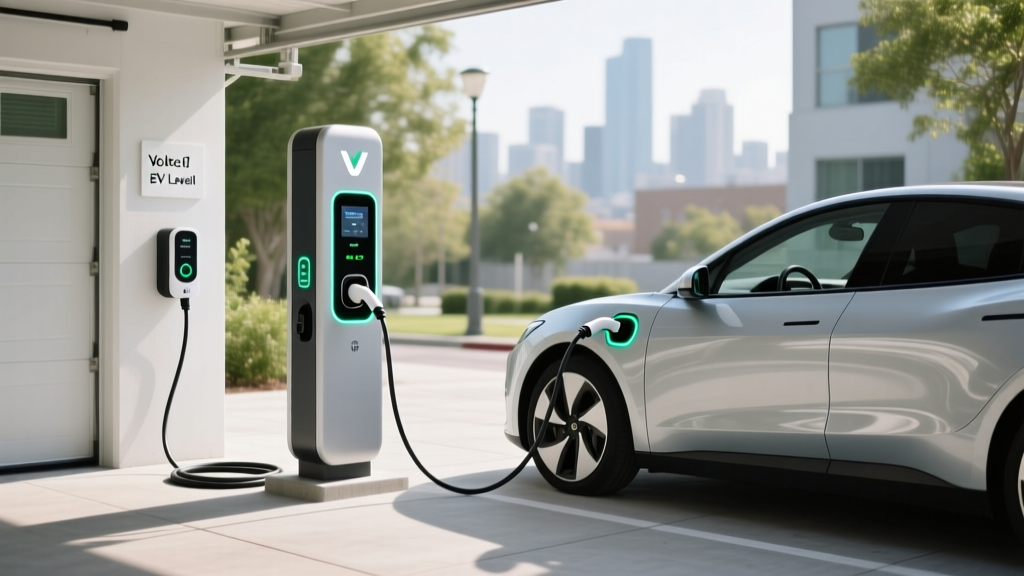
The CCS adapter solves your public-charging compatibility. But the backbone of EV ownership is home Level 2 charging, where you'll do 80–90% of your charging. Here's what a proper home installation actually requires and costs.
Electrical Requirements
A Level 2 home charger requires a dedicated 240V circuit. The most common configurations:
- 40A circuit / 32A continuous (7.7 kW): Minimum practical setup for most EVs. Adds ~28–30 miles of range per hour to a Model 3.
- 50A circuit / 40A continuous (9.6 kW): Sweet spot for most homes. Adds ~36–40 mi/hr.
- 60A circuit / 48A continuous (11.5 kW): Matches Tesla Wall Connector maximum output. Adds ~44 mi/hr.
NEC code requires the circuit breaker to be rated at 125% of the continuous load, so a 48A charger needs a 60A breaker. Always hire a licensed electrician — this is not a DIY project.
Installation Cost Breakdown
| Component | Cost Range | Notes |
|---|---|---|
| Level 2 charger equipment | $250–$700 | Tesla Wall Connector ~$420; ChargePoint Home Flex ~$550; Emporia Vue ~$350 |
| Electrician labor (standard install) | $500–$1,500 | Varies by run length from panel to garage; shorter runs = lower cost |
| Electrical permit | $50–$200 | Required in most jurisdictions; varies by municipality |
| Panel upgrade (if needed) | $1,500–$4,000 | Older homes with 100A service often need an upgrade to 200A to support EV charging + existing loads |
| Total (no panel upgrade) | $800–$2,400 | Typical for homes with 200A service and panel capacity |
| Total (with panel upgrade) | $2,300–$6,400 | Common for pre-1990 homes or homes with heavy existing loads |
Safety and Code Considerations
- Dedicated circuit: Your EV charger must be on its own dedicated circuit — never shared with other appliances.
- GFCI protection: NEC 2023 and later require GFCI protection for EV charging outlets. Hardwired installations (like the Tesla Wall Connector) may have GFCI built into the unit; receptacle-based installs need a GFCI breaker.
- Outdoor rating: If your charger is installed outdoors or in an uncovered carport, ensure it carries a NEMA 4 or IP65 rating for weather resistance.
- Wire gauge: 6 AWG copper for 50A circuits; 4 AWG for 60A. Your electrician will spec this correctly, but verify it on the invoice.
The National Electrical Code and your local building authority govern final requirements — always defer to your licensed electrician for the exact specification.
Equipment Recommendations: Best Home Chargers for Tesla Owners
If you're setting up home charging alongside your CCS adapter for public use, here are the top Level 2 chargers worth considering in 2026:
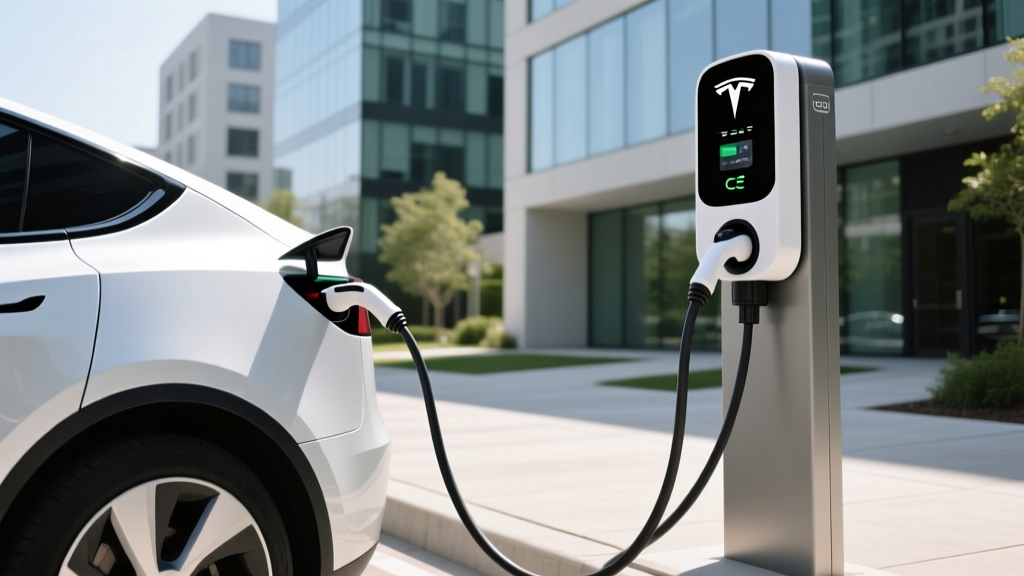
Tesla Wall Connector (Gen 4)
Power: 11.5 kW (48A) max
Connector: NACS (native Tesla)
Cable length: 24 ft
Smart features: Wi-Fi, OTA updates, load sharing between multiple units, Power-Share with Powerwall
Price: ~$420
Verdict: Best value for Tesla-only households. No J1772 adapter included — Tesla vehicles only unless you buy a separate NACS-to-J1772 adapter for guests.
ChargePoint Home Flex (NACS version)
Power: Up to 12 kW (50A) configurable
Connector: NACS (2025+ models) or J1772 with adapter
Cable length: 23 ft
Smart features: Wi-Fi, Alexa, scheduling, charge tracking app, amperage adjustable via dip switch
Price: ~$550
Verdict: Best for multi-EV households (Tesla + non-Tesla). Adjustable amperage lets you match your circuit without buying a different unit.
Emporia Level 2 Smart Charger
Power: Up to 11.5 kW (48A)
Connector: NACS or J1772
Cable length: 24 ft
Smart features: Wi-Fi, energy monitoring, solar integration, scheduling
Price: ~$350
Verdict: Best budget smart charger. Excellent energy monitoring pairs well with solar panels. Build quality slightly below Tesla/ChargePoint.
Grizzl-E Smart (United Chargers)
Power: Up to 10 kW (40A)
Connector: J1772 (NACS adapter available)
Cable length: 24 ft
Smart features: OCPP-compatible, adjustable amperage, extreme cold rated (-40°F)
Price: ~$500
Verdict: Best for extreme climates. Built like a tank in Canada; ideal for unheated garages and outdoor installs in northern states.
Cost to Charge: EV vs. Gas Per Mile
One of the strongest economic arguments for EV ownership is the per-mile fuel cost. Here's how home, public, and DC fast charging compare against a gasoline baseline:
| Scenario | Rate | Cost Per Mile (250 Wh/mi EV) | Equivalent Gas Vehicle |
|---|---|---|---|
| Home (off-peak utility rate) | $0.08–$0.14/kWh | $0.020–$0.035 | $2.20/gal at 30 MPG = $0.073/mi |
| Home (average US rate) | $0.16/kWh | $0.040 | $3.40/gal at 25 MPG = $0.136/mi |
| Public Level 2 (network pricing) | $0.25–$0.49/kWh | $0.063–$0.123 | — |
| DC Fast Charging (Tesla Supercharger) | $0.28–$0.42/kWh | $0.070–$0.105 | — |
| DC Fast Charging (Electrify America / EVgo) | $0.35–$0.56/kWh | $0.088–$0.140 | — |
At the national average electricity rate of ~$0.16/kWh (per EIA data), home charging a Tesla Model 3 at 250 Wh/mi costs roughly $0.04 per mile — about one-third the cost of a 25 MPG gas car at $3.40/gallon.
DC fast charging narrows the gap considerably. At $0.42/kWh on a Supercharger, you're paying ~$0.105/mile — competitive with a fuel-efficient gas car. This is why home charging is the economic linchpin of EV ownership: if you can charge at home 80%+ of the time, your fuel savings are substantial. If you rely entirely on public DC fast charging, the savings shrink to marginal.
Is the Tesla CCS Adapter Retrofit Worth It?
For most Tesla owners in 2026, the CCS adapter is a $195–$250 insurance policy that you'll rarely use but appreciate when you need it. Here's the decision framework:
Choose to buy the CCS adapter if:
- You take road trips outside the Supercharger corridor network (rural routes, national parks, parts of the Midwest).
- Your Tesla is 2022+ and CCS-compatible — the $195–$250 cost is trivial for the redundancy.
- You live in an apartment or condo without home charging and need access to all available public DC fast chargers.
Skip the CCS adapter if:
- You exclusively drive within Supercharger-covered routes and have reliable home charging.
- Your older Model S/X would require the full ECU retrofit (~$600–$1,000) and you plan to upgrade vehicles within 2 years.
- You primarily charge at home and only use Superchargers for road trips.
The charging infrastructure is converging toward NACS. By 2027–2028, expect most new DC fast charger installations to include NACS cables natively, reducing the need for CCS adapters over time. But for now, having one in your frunk is smart preparation.
Frequently Asked Questions
How much does it cost to install a home EV charger?
A typical Level 2 home installation runs $800–$2,400 including equipment ($250–$700), electrician labor ($500–$1,500), and permits ($50–$200). If your home needs an electrical panel upgrade from 100A to 200A service, add $1,500–$4,000. The total range is $800 for a simple short-run install in a modern home, up to $6,400 for a full panel upgrade with a long conduit run.
How fast will each charging level add range?
Level 1 (120V) adds 3–5 miles per hour — only practical for overnight trickle charging or PHEVs with small batteries. Level 2 (240V, 7.7–11.5 kW) adds 20–60 miles per hour depending on amperage and vehicle efficiency. DC fast charging at 150–250 kW adds 150–500+ miles per hour at peak, but the charge curve tapers above 60% SoC, so 10–80% in 20–30 minutes is the realistic expectation for most EVs.
Which connector is compatible with my EV?
If you own a Tesla, your vehicle has a NACS (J3400) port. You can use any Tesla Supercharger natively, and you'll need a CCS1 adapter (~$195–$250 from Tesla) to use CCS-equipped public chargers. For non-Tesla EVs purchased in 2025+, most now ship with NACS ports. Older non-Tesla EVs (2018–2024) typically have CCS1. CHAdeMO is found only on older Nissan Leafs and Mitsubishi PHEVs.
How much does charging cost per mile vs. gas?
Home charging at the US average rate of $0.16/kWh costs roughly $0.04 per mile for a typical EV (250 Wh/mi). A 25 MPG gas car at $3.40/gallon costs $0.136 per mile — about 3.4× more. DC fast charging at $0.35–$0.50/kWh costs $0.09–$0.13 per mile, which is comparable to a fuel-efficient gas vehicle. Home charging is where the real savings live.
What electrical upgrades might I need for a home charger?
The most common upgrade is a panel capacity increase. Homes with 100A main panels typically need a 200A upgrade ($1,500–$4,000) to safely add a 40–60A EV circuit. Other potential upgrades: replacing a Federal Pacific or Zinsco panel (known safety hazards, $2,000–$3,500 to replace), adding a sub-panel if your main panel is far from the garage, or upgrading the service drop from the utility. A licensed electrician's load calculation will determine exactly what's required.
Can I use a third-party CCS adapter instead of Tesla's official one?
Third-party CCS adapters from brands like Lectron and A2Z EV are available for $130–$180. They function similarly to Tesla's official adapter but may not support the full CCS communication protocol in all scenarios, and they won't be covered under Tesla's warranty. For a $65–$120 savings, the trade-off in reliability and support is rarely worth it — the official Tesla adapter is the recommended choice.
Does the §30D tax credit cover home charger installation?
The federal Alternative Fuel Vehicle Refueling Property Credit (IRS Form 8911) covers up to 30% of home charging equipment and installation costs, capped at $1,000. However, it applies only if you live in an eligible census tract (generally non-urban or low-income areas as defined by the IRS). Check your eligibility with a tax professional before counting on this credit. It's separate from the §30D new EV purchase credit.