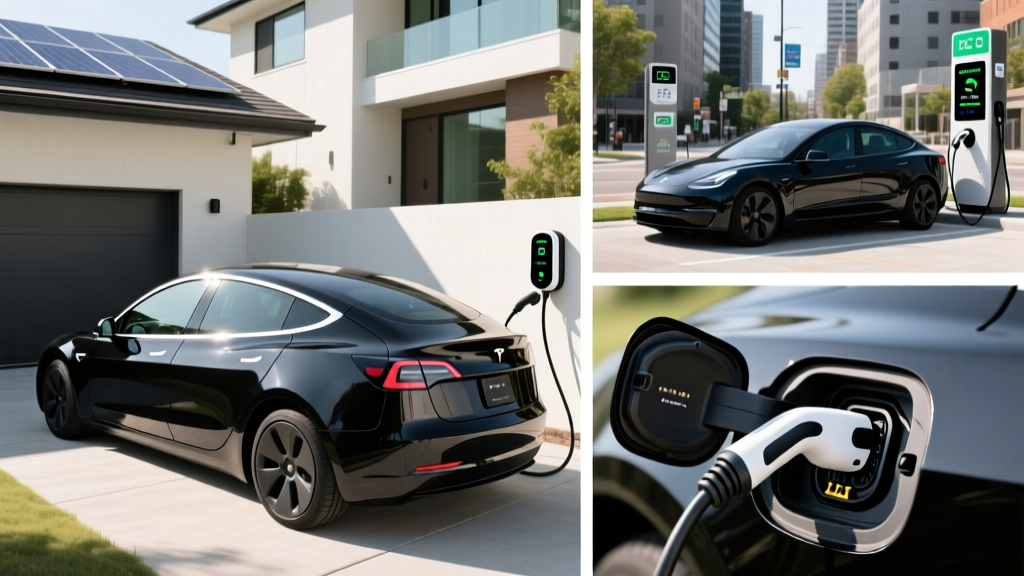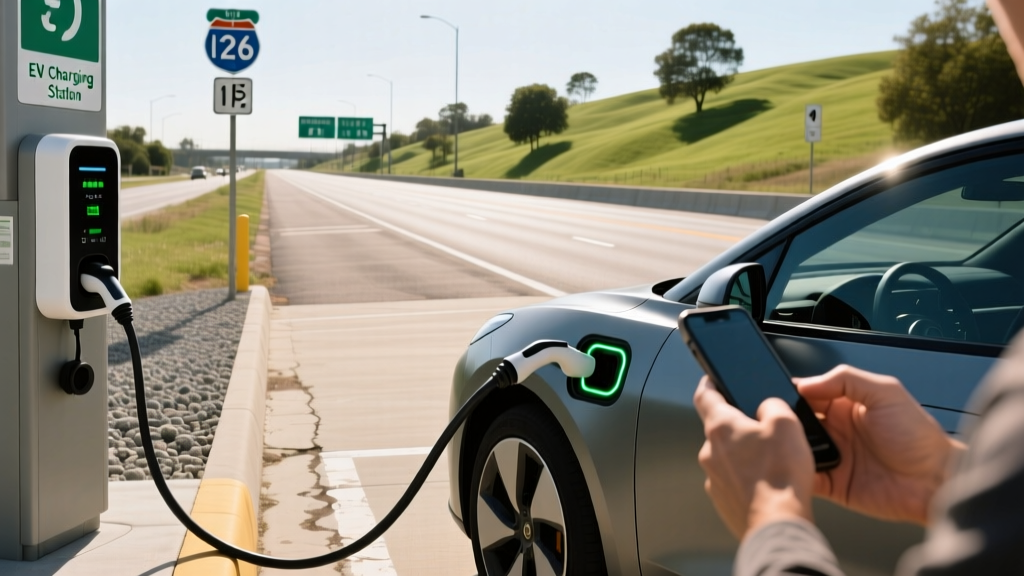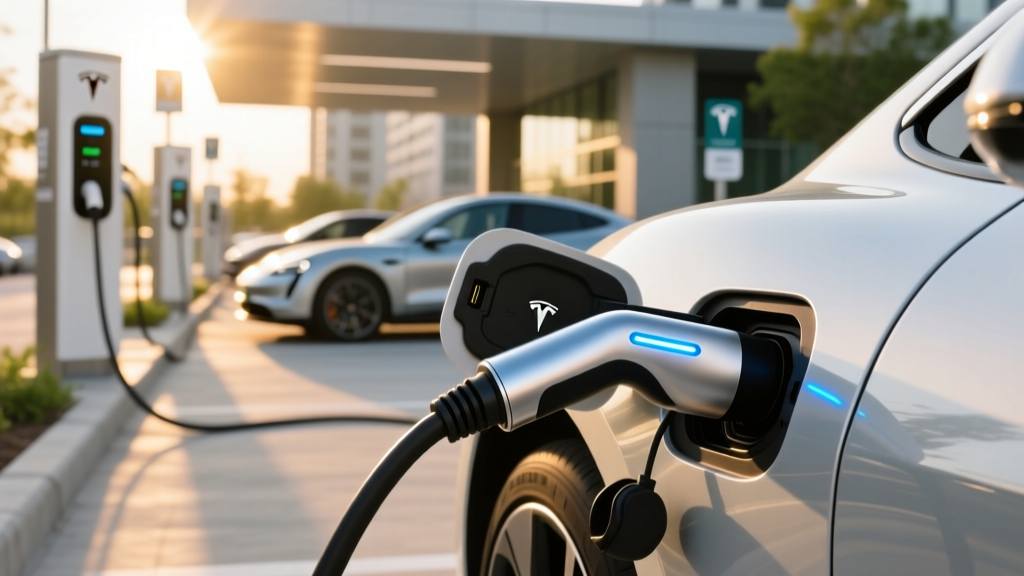
If you own a Tesla built before late 2022, your car shipped with a proprietary Tesla charge port. That means the rapidly expanding network of CCS1 DC fast chargers — Electrify America, EVgo, and hundreds of independent stations — has been off-limits without an adapter. The Tesla CCS adapter solves that problem, converting your Tesla's port to accept the CCS1 connector used by virtually every non-Tesla public fast charger in North America.
As of 2026, the adapter landscape has shifted significantly. Tesla's North American Charging Standard (NACS) has been adopted by Ford, GM, Rivian, Volvo, and most other automakers, meaning Tesla Superchargers are opening to non-Tesla vehicles. But for Tesla owners who want maximum charging flexibility — especially on road trips through areas with sparse Supercharger coverage — a CCS adapter remains essential hardware. Here's exactly what you need to know about compatibility, speeds, pricing, and the home charging setup that makes the whole ecosystem work.
Why Tesla Owners Need a CCS Adapter in 2026
Tesla vehicles manufactured before approximately November 2022 use a proprietary charge port that physically accepts only Tesla connectors (the Gen 2 Mobile Connector, Wall Connector, and Supercharger cables). Starting in late 2022, Tesla began equipping new vehicles with a "Magic Dock" style port that natively accepts both Tesla and CCS1 connectors — no adapter required.
If your Tesla has the older port, you have three options for accessing CCS1 chargers:
- Tesla's official CCS Adapter — sold through Tesla's shop, typically around $175–$250, supports up to 150 kW DC fast charging on compatible vehicles.
- Third-party adapters — brands like Lectron and A2Z offer CCS-to-Tesla adapters ranging from $150–$300, though firmware compatibility can vary.
- Aftermarket CCS port retrofit — a permanent conversion replacing the Tesla port with a native CCS1 port, costing $500–$1,500 installed. This is popular among Model 3/Y owners who rarely use Superchargers.
The official Tesla adapter is the safest choice. It's firmware-recognized by the vehicle, maintains warranty coverage, and doesn't require any software hacks. Third-party adapters work for many owners but can trigger communication errors on certain charger brands or after Tesla over-the-air updates.
Understanding Charging Levels: kW, kWh, and Miles Per Hour
Before evaluating any adapter or charger, you need clarity on two terms that get confused constantly: kW (kilowatts) measures power — how fast energy flows into your battery. kWh (kilowatt-hours) measures energy — the total capacity of your battery, like gallons in a fuel tank. A 75 kWh battery charged at 11 kW takes roughly 7 hours from empty; charged at 150 kW, it takes under 30 minutes to reach 80%.
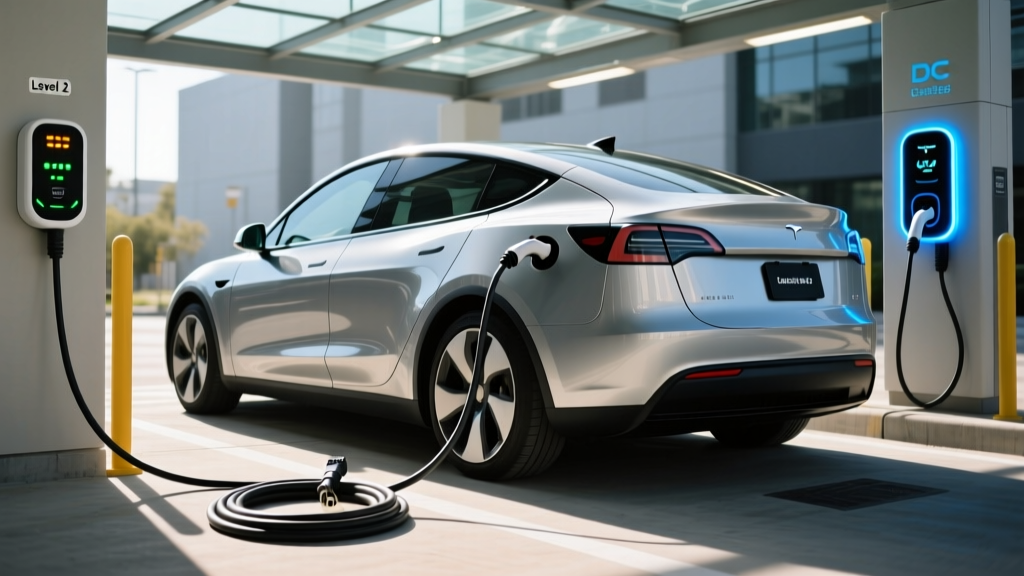
| Level | Voltage | Power (kW) | Miles of Range Per Hour | Typical Use Case |
|---|---|---|---|---|
| Level 1 | 120V AC | 1.0–1.4 kW | 3–5 mi/hr | Emergency / overnight trickle |
| Level 2 (Home) | 240V AC | 7.2–11.5 kW | 25–44 mi/hr | Daily home charging |
| Level 2 (Public) | 240V AC | 7.2–19.2 kW | 25–70 mi/hr | Workplace, shopping, hotels |
| DC Fast (50 kW) | 400V+ DC | 50 kW | ~150–180 mi/hr | Older public stations |
| DC Fast (150 kW) | 400V+ DC | 150 kW | ~400–600 mi/hr | Typical highway charger |
| DC Fast (250–350 kW) | 400–800V DC | 250–350 kW | ~800–1,200 mi/hr | Newest high-power stations |
The Tesla CCS adapter maxes out at 150 kW, even if the station can deliver 350 kW. This is a hardware limitation of the adapter's internal electronics. For most Tesla models with 75–82 kWh batteries, 150 kW still delivers a 10–80% charge in approximately 25–35 minutes, which is adequate for road-trip stops.
Real-world charging curve reality: No EV sustains its peak charge rate for the full session. A Tesla Model Y at a 150 kW charger will peak near 150 kW at low state of charge (10–30%), then taper to ~100 kW around 50% SoC, and drop below 50 kW past 80%. This is why manufacturers quote 10–80% times rather than 0–100%.
Charging Time Examples for Common Tesla Battery Sizes
Here's what charging sessions look like across different Tesla models and battery capacities, assuming you're using the CCS adapter at a 150 kW station:
| Vehicle | Battery (Usable kWh) | Peak DC Rate | 10–80% Time | Miles Added in 20 Min |
|---|---|---|---|---|
| Model 3 RWD (LFP) | 57.5 kWh | ~150 kW (adapter-limited) | ~28 min | ~130 mi |
| Model 3 Long Range | 75 kWh | ~150 kW (adapter-limited) | ~32 min | ~140 mi |
| Model Y Long Range | 75 kWh | ~150 kW (adapter-limited) | ~33 min | ~135 mi |
| Model S Plaid | 95 kWh | ~150 kW (adapter-limited) | ~40 min | ~150 mi |
| Cybertruck AWD | 123 kWh | ~150 kW (adapter-limited) | ~55 min | ~130 mi |
Compare this to Supercharger speeds: Tesla's V3 Superchargers deliver up to 250 kW, and V4 cabinets can push higher. A Model 3 Long Range at a V3 Supercharger hits 10–80% in roughly 22–25 minutes — about 8–10 minutes faster than the CCS adapter allows. The gap matters on long road trips with multiple stops, but for occasional CCS use, the adapter performs well.
Connector Compatibility: NACS, CCS1, and CHAdeMO
North America's charging connector landscape has consolidated dramatically since 2023. Here's where each standard stands in 2026:
| Connector | Used By | DC Fast Charging | AC Level 2 | Adapter Needed for Tesla? |
|---|---|---|---|---|
| NACS (Tesla) | Tesla, Ford, GM, Rivian, Volvo, Polestar, Mercedes (2025+), Honda (2025+) | Yes — up to 350 kW at V4 Superchargers | Yes | Native on 2023+ Teslas; older Teslas use native port |
| CCS1 | Legacy VW/Hyundai/Kia/BMW/Stellantis models; most non-Tesla DC fast chargers | Yes — up to 350 kW | Yes (Combo connector) | Yes — Tesla CCS adapter required for pre-2023 Teslas |
| CHAdeMO | Nissan Leaf (discontinued), Mitsubishi Outlander PHEV (legacy) | Yes — up to 100 kW | No (separate J1772 port) | Not compatible — different protocol entirely |
| J1772 | All non-Tesla EVs for AC Level 1/2 | No (AC only) | Yes | Tesla includes J1772 adapter with every vehicle |
Key takeaway: The Tesla CCS adapter gives you access to Electrify America, EVgo, ChargePoint DC fast chargers, and thousands of independent CCS stations. It does not work with CHAdeMO chargers (increasingly rare) and is unnecessary at Tesla Superchargers. Your Tesla also ships with a J1772 adapter for Level 2 public AC charging at non-Tesla destinations.
If you're buying a new Tesla in 2026, it comes with the NACS port natively and needs no adapter for Superchargers. For CCS stations, Tesla's Magic Dock built into newer vehicles handles both — though some 2024–2025 models still benefit from the standalone CCS adapter at older Electrify America stations that haven't been retrofitted with NACS cables.
Home Charging Setup: Electrical Requirements and Installation Costs
The CCS adapter is for public DC fast charging. Your daily charging should happen at home on Level 2, where electricity is cheapest and most convenient. Here's what a proper home Level 2 installation requires:
Electrical Requirements
A Level 2 home charger requires a 240V dedicated circuit, similar to what powers an electric dryer or oven. The two most common configurations:
- 40-amp circuit (NEMA 14-50 outlet) — delivers up to 32 amps continuous (7.7 kW). This is the most common residential install and works with the Tesla Mobile Connector or most hardwired Level 2 units.
- 60-amp circuit (hardwired) — delivers up to 48 amps continuous (11.5 kW). Required for the Tesla Wall Connector at full output and the fastest home charging available for most Teslas. The onboard charger in the Model 3/Y caps at 11.5 kW; older Model S/X can accept up to 11.5 kW on dual-charger configurations.
Panel upgrade reality: Most homes built after 1990 have a 200-amp electrical panel with enough spare capacity for a 40A or 60A EV circuit. But older homes with 100-amp service, or homes already running electric heat, a hot tub, and an electric range, may need a panel upgrade to 200A — adding $1,500–$3,500 to the project. Always have an electrician perform a load calculation before committing to a circuit size.
| Component | Basic Install (40A / NEMA 14-50) | Premium Install (60A Hardwired) | With Panel Upgrade |
|---|---|---|---|
| Charger Equipment | $200–$450 (Mobile Connector or basic Level 2) | $400–$700 (Tesla Wall Connector, ChargePoint Home Flex) | $400–$700 |
| Electrical Materials (wire, conduit, breaker) | $150–$400 | $200–$600 | $200–$600 |
| Electrician Labor | $300–$800 | $500–$1,500 | $500–$1,500 |
| Permit & Inspection | $50–$200 | $50–$300 | $50–$300 |
| Panel Upgrade (if needed) | N/A | N/A | $1,500–$3,500 |
| Total Estimated Cost | $700–$1,850 | $1,150–$3,100 | $2,650–$6,600 |
The federal Residential Clean Energy Credit does not cover EV charger equipment directly as of 2026 (the separate Alternative Fuel Vehicle Refueling Property Credit under §30C expired for most residential installations after 2023, though some census-tract-based eligibility remains). Check your utility company — many offer $250–$500 rebates for Level 2 charger installations, and some provide time-of-use rates that make overnight charging significantly cheaper.
Recommended Home Charging Equipment for Tesla Owners
You don't need the CCS adapter at home — you'll use Tesla's native connector. Here are the top Level 2 units for Tesla garages:
Tesla Wall Connector (Gen 4)
- Power Output: Up to 11.5 kW (48A) on a 60A circuit
- Connector: NACS (native Tesla)
- Cable Length: 24 feet
- Smart Features: Wi-Fi, OTA updates, load sharing between multiple units, Powerwall integration
- Price: ~$475
- Best For: Tesla-only households wanting maximum speed and ecosystem integration
ChargePoint Home Flex
- Power Output: Up to 12 kW (50A) on a 60A circuit; configurable down to 16A
- Connector: J1772 (use Tesla's included J1772 adapter) or NACS version available
- Cable Length: 23 feet
- Smart Features: Wi-Fi, Alexa, scheduling, detailed energy tracking via app
- Price: ~$550–$700
- Best For: Multi-EV households (Tesla + non-Tesla) or renters who may move
Tesla Mobile Connector (Bundle)
- Power Output: Up to 7.7 kW (32A) on a NEMA 14-50 outlet
- Connector: NACS with interchangeable adapter heads (NEMA 5-15, NEMA 14-50 included)
- Cable Length: 20 feet
- Smart Features: None (dumb charger — no Wi-Fi or scheduling)
- Price: ~$200 (cord) + ~$45 (14-50 adapter head)
- Best For: Budget installs, renters, or as a travel backup
Safety and Electrical Code Considerations
Every Level 2 installation must comply with the National Electrical Code (NEC Article 625) and your local jurisdiction's amendments. Key requirements:
- Dedicated circuit: Your EV charger must be on its own breaker — not shared with other outlets or appliances.
- GFCI protection: NEC 2020 and later requires GFCI protection for all receptacles used for EV charging (NEMA 14-50 outlets). Hardwired installations are exempt from the GFCI breaker requirement since the charger has built-in ground-fault detection.
- Outdoor rating: If your charger is installed outside (driveway or exterior wall), the unit must carry a NEMA 4 or NEMA 4X rating. The Tesla Wall Connector and ChargePoint Home Flex are both outdoor-rated.
- Permit and inspection: Virtually all jurisdictions require a permit for a new 240V circuit. Skipping the permit risks voiding homeowner's insurance coverage for any electrical fire and can complicate a future home sale.
Cost to Charge: Home vs. Public vs. Gas Comparison
The financial case for home charging is overwhelming. Here's how costs break down across scenarios, using a Tesla Model Y Long Range (~75 kWh usable battery, EPA 310 miles) as the baseline:
| Scenario | Rate ($/kWh) | Cost for Full Charge (75 kWh) | Cost Per Mile (310 mi range) | Annual Cost (12,000 mi/yr) |
|---|---|---|---|---|
| Home (national avg. residential) | $0.16/kWh | $12.00 | $0.039 | $465 |
| Home (off-peak TOU rate) | $0.08/kWh | $6.00 | $0.019 | $232 |
| Tesla Supercharger (avg.) | $0.32/kWh | $24.00 | $0.077 | $929 |
| CCS Public DC Fast (avg.) | $0.38/kWh | $28.50 | $0.092 | $1,103 |
| Gas equivalent (25 MPG, $3.40/gal) | — | $40.80 | $0.136 | $1,632 |
Even at public DC fast charger prices — which the CCS adapter exposes you to — the Model Y costs roughly 32% less per mile than a comparable 25 MPG gas crossover. At home on an off-peak time-of-use plan, the savings jump to 86% less per mile. The CCS adapter's value isn't daily savings; it's the freedom to take road trips without being tethered exclusively to the Supercharger network.
Important pricing note: Public DC fast charger pricing varies enormously by network, location, and time of day. Electrify America charges $0.31–$0.48/kWh depending on the state and whether you have a subscription plan. EVgo ranges from $0.29–$0.43/kWh. Always check the network's app before plugging in — some stations in high-cost markets like California and Massachusetts exceed $0.55/kWh during peak hours.
Where to Buy the Tesla CCS Adapter and What to Expect
The official Tesla CCS Adapter is available through Tesla's online shop and Service Centers. As of 2026, it retails for approximately $175–$250 depending on the version. It supports up to 150 kW DC and 48A AC through a CCS1 connection. Tesla recommends it for all pre-2023 vehicles that haven't received the Magic Dock port upgrade.
Using the adapter at a public CCS station:
- Pull up to any CCS1-equipped DC fast charger (Electrify America, EVgo, ChargePoint, etc.).
- Plug the CCS connector into the adapter, then plug the adapter into your Tesla's charge port.
- Initiate the session through the charger network's app or RFID card.
- Your Tesla's screen will display charging status, kW draw, and estimated time to completion.
- When finished, stop the session in the app, then unplug — the adapter stays in your car's port until you remove it.
Compatibility limitations to know: The adapter works with the vast majority of CCS1 stations, but a small number of older ABB and Tritium chargers have firmware handshake issues with Tesla vehicles through the adapter. If a station fails to initiate, try a different stall or use the network's app to report the issue. Tesla's Supercharger network remains the most reliable DC fast charging experience — the CCS adapter is your backup, not your primary.
Frequently Asked Questions
How much does it cost to install a home EV charger?
A basic 40-amp NEMA 14-50 installation with the Tesla Mobile Connector runs $700–$1,850 all-in (equipment, materials, electrician labor, and permit). A premium 60-amp hardwired installation with the Tesla Wall Connector costs $1,150–$3,100. If your home needs an electrical panel upgrade from 100A to 200A, add $1,500–$3,500. Get at least two quotes from licensed electricians, and confirm they perform a load calculation before recommending a circuit size.
How fast will each charging level add range to my Tesla?
Level 1 (120V) adds 3–5 miles of range per hour — essentially useless except for emergency trickle charging. Level 2 at 7.7 kW (32A) adds about 30 miles per hour; at 11.5 kW (48A) it adds about 44 miles per hour. DC fast charging via the CCS adapter at 150 kW adds roughly 400–600 miles of range per hour at peak, though real sessions taper significantly after 50% state of charge. A typical 10–80% session at 150 kW takes 28–40 minutes depending on your battery size.
Which connector and charger is compatible with my Tesla?
All Teslas use the Tesla/NACS connector natively for Superchargers and home charging. For public Level 2 AC charging, use the J1772 adapter included with your vehicle. For public DC fast charging at non-Tesla stations, pre-2023 Teslas require the Tesla CCS adapter; 2023+ Teslas with the Magic Dock port accept CCS1 natively. CHAdeMO chargers are not compatible with any Tesla vehicle.
How much does charging cost per mile compared to gas?
Home charging at the national average of $0.16/kWh costs a Model Y owner about $0.039 per mile — roughly $465 annually for 12,000 miles. A comparable 25 MPG gas crossover at $3.40/gallon costs $0.136 per mile, or $1,632 annually. Even public DC fast charging at $0.38/kWh ($0.092/mile) undercuts gasoline by about 32%. According to fueleconomy.gov, the Model Y Long Range achieves 122 MPGe combined, making it one of the most efficient electric crossovers on the market.
What electrical upgrades might I need for a home charger?
The most common upgrade is a new 240V circuit (40A or 60A) run from your panel to the garage or driveway. If your panel has open breaker slots and sufficient amperage capacity (most 200A panels do), no upgrade is needed beyond the circuit itself. Homes with 100A service, panels near capacity, or subpanels feeding the garage may need a panel upgrade ($1,500–$3,500) or a dedicated subpanel for the EV circuit. Some utilities offer "make-ready" programs that cover the cost of running conduit and wire to your garage — check with your provider before paying out of pocket.
Does the Tesla CCS adapter work with every CCS charging network?
It works with the vast majority: Electrify America, EVgo, ChargePoint, Francis Energy, and most regional networks. A small number of legacy charger models (some older ABB Terra 53 units and early Tritium RT50s) have reported firmware handshake failures with Tesla vehicles through the adapter. If a stall doesn't initiate, move to a different stall at the same station or try a different network. The adapter does not work with CHAdeMO connectors or Tesla Superchargers (which use the native Tesla port).
Can I use the CCS adapter for Level 2 AC charging too?
No. The Tesla CCS adapter is designed exclusively for DC fast charging. For Level 2 AC public charging (such as at hotels, workplaces, or shopping centers), use the J1772-to-Tesla adapter that came with your vehicle. That adapter handles up to 48A / 11.5 kW AC and is a separate, smaller piece of hardware.
The Tesla CCS adapter is a $175–$250 insurance policy against charging deserts and Supercharger congestion. It won't match V3 Supercharger speeds, but at 150 kW it delivers a practical 25–35 minute road-trip stop at any of the tens of thousands of CCS1 stations across North America. Pair it with a proper 60A home Level 2 installation for daily charging, and you have complete coverage for every driving scenario a Tesla owner faces.