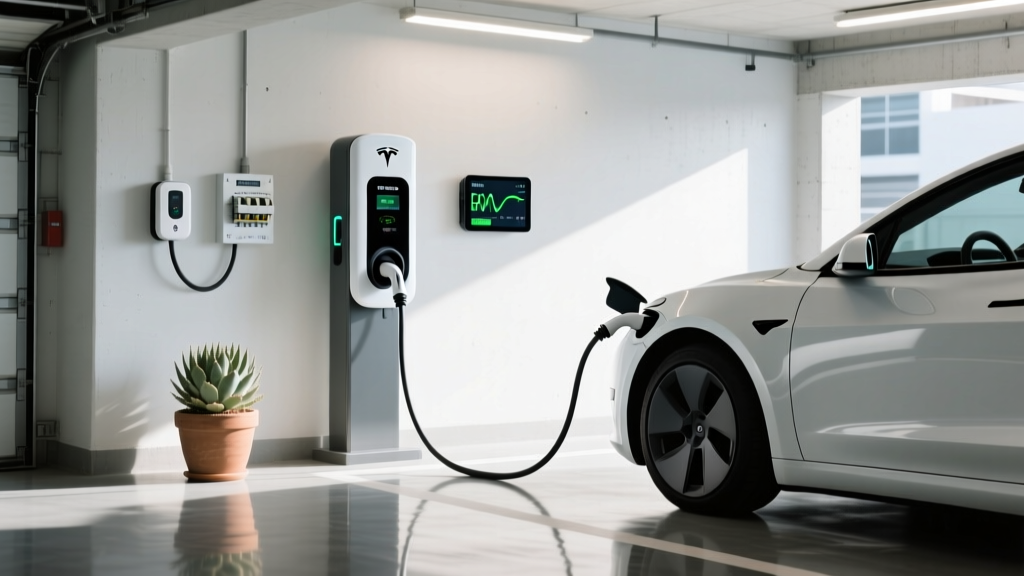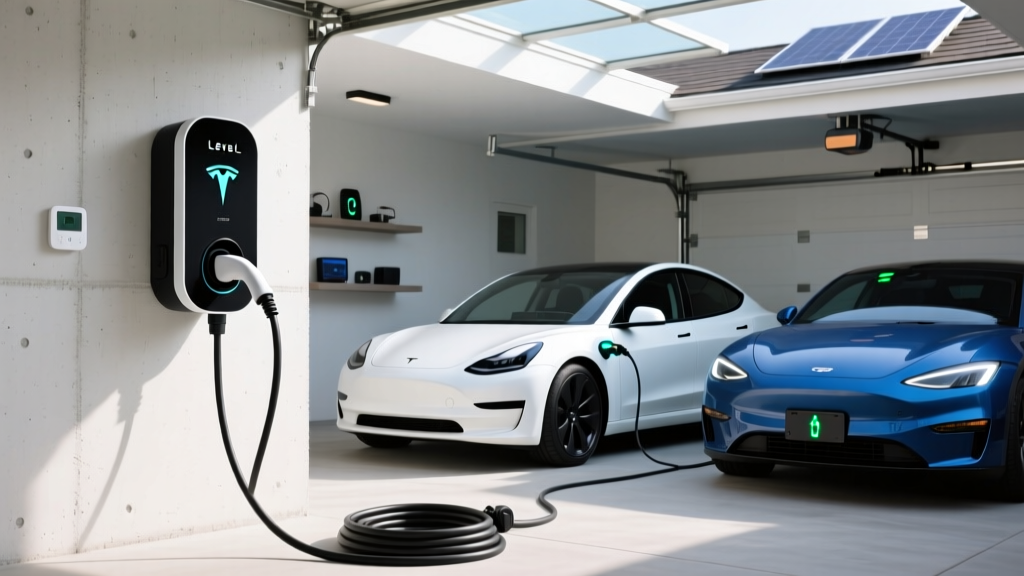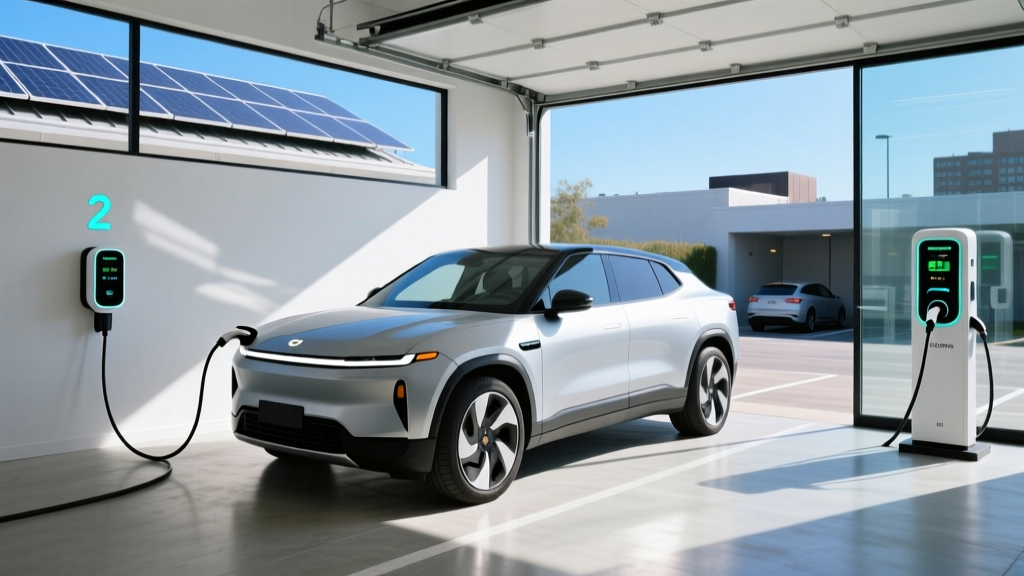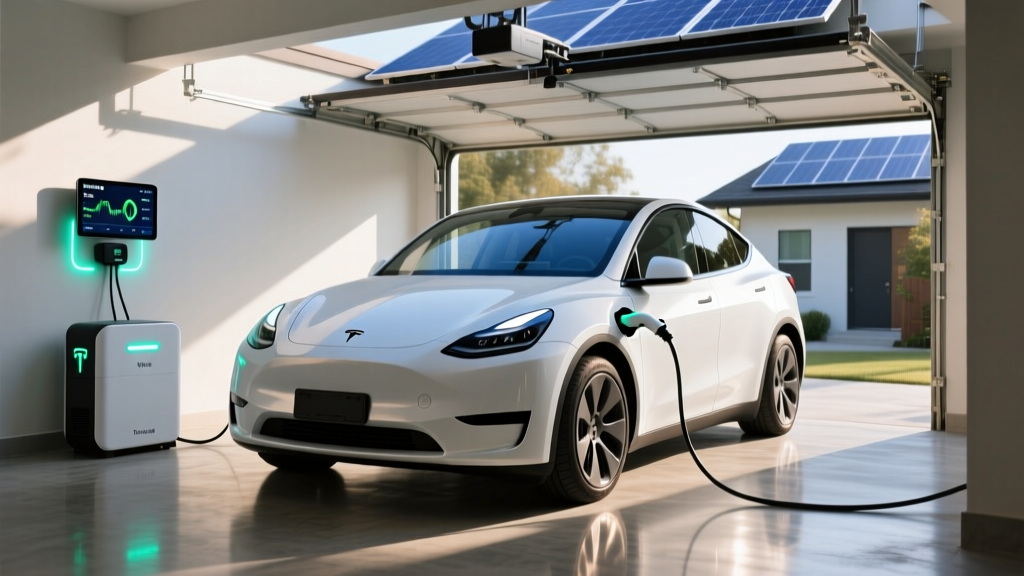
If you've been following the EV space, you've likely seen the term Tesla bidirectional charging surface in forums, investor calls, and spec sheets. The idea is compelling: instead of your car just consuming electricity, it pushes energy back out — to power a campsite, run your home during an outage, or even sell electricity back to the grid. But what's actually available from Tesla today, what requires specific hardware, and what remains vaporware? This guide separates the marketing from the measurable.
What Bidirectional Charging Actually Means for Tesla Owners
Bidirectional charging is an umbrella term covering three distinct capabilities, each with different hardware requirements, use cases, and availability timelines:
- V2L (Vehicle-to-Load): Your EV's battery powers external devices — laptops, power tools, a fridge during an outage — through a standard 120V or 240V outlet. Think of it as a mobile generator without the emissions.
- V2H (Vehicle-to-Home): Your EV connects to your home's electrical panel through a transfer switch or smart panel, powering entire circuits during a blackout. This requires a bidirectional-capable wall charger and electrical integration.
- V2G (Vehicle-to-Grid): Your EV feeds electricity back into the utility grid, earning credits or payments. This requires utility program enrollment, grid-compatible bidirectional hardware, and regulatory approval.
The critical distinction that most coverage misses: Tesla's vehicle fleet has limited bidirectional support as of early 2026. The Cybertruck is the primary exception, shipping with a built-in V2L feature called Powershare. The broader Tesla sedan and SUV lineup (Model 3, Model Y, Model S, Model X) does not currently support V2L, V2H, or V2G natively. Tesla has signaled intent to expand bidirectional capabilities, and the Tesla Powerwall ecosystem positions the company for V2H integration, but vehicle-side hardware changes are required.
The Cybertruck Powershare: Tesla's Live Bidirectional Feature
The Tesla Cybertruck launched with Powershare, a V2L system that turns the truck's 123 kWh battery pack into a mobile power station. Here's what the hardware actually delivers:
- Bed outlets: Two 120V/20A NEMA 5-20 receptacles in the bed, delivering up to 2.4 kW combined — enough for power tools, a portable fridge, or job-site lighting.
- Cabin outlets: Standard 120V outlets inside the cab for laptops and small electronics.
- 240V outlet (Bed): A NEMA 14-50 outlet rated for up to 9.6 kW — this is the headline feature, capable of running a welder, large air compressor, or powering essential home circuits through a transfer cord.
- Continuous output: Up to 9.6 kW through the 240V bed outlet; 11.5 kW peak when combining all outlets.
With a 123 kWh battery, running a continuous 5 kW load (enough for essential home circuits — fridge, lights, router, a few outlets) would provide roughly 20+ hours of backup power before the battery depletes to a safe reserve. That's a meaningful outage solution without a dedicated home battery.
Powershare vs. Ford Pro Power Onboard
Ford's F-150 Lightning and F-150 PowerBoost hybrid offer a competing system called Pro Power Onboard, available in 2.0 kW and 9.6 kW variants. The key difference: Ford's Intelligent Backup Power system (paired with the Charge Station Pro and Home Integration System) supports full V2H — automatically powering your home's electrical panel during an outage without manual transfer cords. Tesla's Cybertruck V2L requires a manual connection to your home panel via a transfer switch; there is no automatic whole-home integration as of 2026.
Charging Levels: What Powers a Bidirectional-Capable Tesla
Before you can push energy out, you need to put it in. Understanding the three charging levels is essential for any bidirectional strategy, because charge speed determines how quickly your "mobile battery" is ready to serve double duty.
| Level | Voltage / Amperage | Power (kW) | Miles of Range per Hour | Typical Use Case |
|---|---|---|---|---|
| Level 1 | 120V / 12A | 1.4 kW | 3–5 mi/hr | Emergency trickle; overnight top-off |
| Level 2 | 240V / 32–48A | 7.7–11.5 kW | 25–44 mi/hr | Daily home charging; preconditioning |
| DC Fast | 400–800V DC | 50–250+ kW | 150–1,000+ mi/hr | Road trips; rapid replenishment |
kW vs. kWh — the critical distinction: kW (kilowatts) measures power — the rate at which energy flows, like water pressure in a hose. kWh (kilowatt-hours) measures energy — the total amount stored or consumed, like gallons in a tank. A 250 kW DC fast charger delivers energy at a high rate; a 123 kWh Cybertruck battery stores 123 kWh of total energy capacity. Never use these interchangeably.
Real-World Charging Times for Tesla's Battery Sizes
Manufacturer-quoted peak kW rates are just that — peaks. Real-world charging follows a charge curve: the battery charges fastest at low State of Charge (SoC) and tapers significantly above 80% to protect cell longevity. Here's what 10–80% charging actually looks like across Tesla's current lineup:
| Model | Battery (kWh, usable) | Peak DC Fast kW | 10–80% DC Fast Time | Level 2 Full Charge (11.5 kW) |
|---|---|---|---|---|
| Model 3 Long Range | ~75 kWh (NMC) | 250 kW | ~25 min | ~7.5 hours |
| Model Y Long Range | ~75 kWh (NMC) | 250 kW | ~27 min | ~7.5 hours |
| Cybertruck AWD | ~123 kWh (NMC) | 250+ kW | ~35 min | ~11.5 hours |
| Model S Plaid | ~95 kWh (NMC) | 250 kW | ~30 min | ~9 hours |
For bidirectional use, this matters: if you drain your Cybertruck to 20% during an outage, you'll need roughly 30–35 minutes at a Supercharger to bring it back to 80% — assuming the battery is preconditioned. In cold weather, add 10–15 minutes unless the vehicle has thermally preconditioned the pack on the way to the charger.
Home Charger Installation: Requirements, Costs & Panel Upgrades
Whether you're installing a standard Level 2 charger for daily use or preparing for future bidirectional-capable hardware, the electrical work is largely the same. Here's what a proper installation involves in 2026:
Electrical Requirements
- Circuit: A dedicated 240V circuit, typically 40A, 50A, or 60A, depending on charger amperage.
- Charger amperage rule: EV chargers are considered continuous loads under NEC (National Electrical Code), meaning the circuit must be rated for 125% of the charger's max draw. A 48A charger requires a 60A circuit.
- Wire gauge: 6 AWG copper for 50A circuits; 4 AWG for 60A. Aluminum wire is cheaper but requires larger gauge.
- Outlet vs. hardwired: NEMA 14-50 outlets offer portability; hardwired connections are safer for continuous high-amperage use and avoid the NEC 2023 requirement for GFCI breakers on receptacles (which can cause nuisance tripping with some chargers).
Panel Upgrade Reality
This is the cost most online guides gloss over. If your home has a 100A electrical panel — common in homes built before 2000 — adding a 60A EV circuit may exceed your panel's capacity, especially if you're running electric HVAC, a dryer, and an oven simultaneously. A licensed electrician will perform a load calculation to determine if an upgrade is needed.
- 100A to 200A panel upgrade: $1,500–$3,500 (electrician labor + new panel + utility coordination)
- 200A panel (sufficient for most EV installs): No upgrade needed in most modern homes
- Smart panel / energy management systems: Products like the Span smart panel or load-management devices (e.g., Emporia, Schneider) can avoid a panel upgrade by dynamically throttling charger amperage when other loads spike. Cost: $500–$2,000 added to installation.
| Component | Cost Range (2026) | Notes |
|---|---|---|
| Level 2 Charger (Equipment) | $350–$750 | Smart Wi-Fi chargers; bidirectional units cost $1,500+ |
| Electrician Labor | $500–$2,000 | Depends on run length from panel to garage |
| Permit & Inspection | $50–$300 | Varies by municipality; required for code compliance |
| Panel Upgrade (if needed) | $1,500–$3,500 | 100A → 200A service upgrade |
| Total (no panel upgrade) | $900–$3,050 | Most common scenario for post-2000 homes |
| Total (with panel upgrade) | $2,400–$6,550 | Older homes or high-load households |
Safety & code essentials: Your installation must include a dedicated circuit (no sharing with other appliances), and your electrician should verify proper grounding. For outdoor installations, ensure the charger carries a NEMA 4 or NEMA 4X weather rating. Many jurisdictions now require GFCI protection on 240V receptacles — hardwiring your charger sidesteps this and is generally the more reliable approach for EV charging.
Connector Compatibility: NACS, CCS & What Fits Your Tesla
Tesla's North American Charging Standard (NACS) connector has become the de facto North American EV standard, with Ford, GM, Rivian, Hyundai, and most major automakers adopting it for 2025–2026 model-year vehicles. Here's the current connector landscape:
| Connector | Brands Using It (2026) | Adapter Needed for Tesla? |
|---|---|---|
| NACS (Tesla) | Tesla, Ford, GM, Rivian, Hyundai, Kia, Volvo, Polestar, others | No — native on all Teslas |
| CCS1 | Legacy VW ID.4, older BMW iX, some Stellantis EVs | Tesla CCS Adapter ($175 from Tesla) |
| CHAdeMO | Nissan Leaf (discontinued in US), Mitsubishi Outlander PHEV | No official Tesla adapter; third-party options limited |
For bidirectional charging specifically: The Cybertruck's Powershare uses standard NEMA outlets (5-20 and 14-50) for V2L output — no special connector needed. For future V2H integration, the hardware interface will likely run through the NACS connector paired with a bidirectional-capable wall unit, similar to how Ford's Charge Station Pro works with the F-150 Lightning's CCS port. Tesla has not announced a consumer bidirectional wall charger as of early 2026.
Charging Cost Per Mile: EV vs. Gas in 2026
The economics of filling your EV — whether for driving or bidirectional use — depend heavily on where and when you charge. Here's a realistic breakdown using the 2026 national average electricity rate of ~$0.17/kWh (residential) and the Tesla Model Y Long Range (~3.5 miles/kWh efficiency) as a baseline:
| Charging Scenario | $/kWh | Cost per Mile (Model Y LR) | Equivalent Gas Price at 28 MPG |
|---|---|---|---|
| Home (off-peak / TOU rate) | $0.09–$0.13 | $0.026–$0.037 | $0.73–$1.04/gal |
| Home (standard residential rate) | $0.17 | $0.049 | $1.37/gal |
| Public Level 2 (ChargePoint, etc.) | $0.25–$0.39 | $0.071–$0.111 | $1.99–$3.11/gal |
| Tesla Supercharger (V3/V4) | $0.28–$0.42 | $0.080–$0.120 | $2.24–$3.36/gal |
| Electrify America DC Fast | $0.35–$0.55 | $0.100–$0.157 | $2.80–$4.40/gal |
For comparison, a 2026 Toyota RAV4 (non-hybrid) averaging 28 MPG combined at $3.40/gallon costs $0.121/mile in fuel alone. Even at peak Supercharger rates, the Model Y undercuts that. Home off-peak charging delivers fuel costs at roughly one-quarter the price of gas.
Bidirectional cost consideration: If you use your Cybertruck's Powershare to power your home during an outage, you're consuming stored electricity that cost you $0.09–$0.17/kWh to charge at home. A typical 5 kW home load running for 10 hours consumes 50 kWh — costing you roughly $4.50–$8.50 in stored energy. Compare that to a gasoline generator burning ~15 gallons at $3.40/gal ($51) for the same runtime, and the EV-as-battery economics are compelling — plus zero noise, zero carbon monoxide risk, and zero maintenance.
Level 2 Charger Recommendations for Tesla & NACS Vehicles
If you're setting up home charging to support a Tesla (or preparing for future bidirectional-capable hardware), here are the chargers we recommend based on real-world reliability, power output, and smart features. Note: none of these currently support bidirectional flow — that requires specialized (and expensive) hardware not yet available for consumer NACS vehicles beyond the Cybertruck's built-in V2L.
Tesla Wall Connector (Gen 3)
- Power Output: Up to 11.5 kW (48A on a 60A circuit)
- Connector: NACS (native Tesla)
- Cable Length: 24 feet
- Smart Features: Wi-Fi, OTA updates, Power Sharing (link multiple units on one circuit), access control
- Price: ~$475
- Best For: Tesla-only households; cleanest integration with the Tesla app
ChargePoint Home Flex (NACS version)
- Power Output: Up to 12 kW (50A, configurable down to 16A for panel-limited homes)
- Connector: NACS (2025+ models) or J1772 with adapter
- Cable Length: 23 feet
- Smart Features: Wi-Fi, Alexa integration, detailed energy tracking, flexible amperage settings
- Price: ~$599
- Best For: Mixed-EV households; flexible amperage avoids panel upgrades
Emporia Vue Level 2 Charger
- Power Output: Up to 11.5 kW (48A)
- Connector: J1772 (NACS adapter included with 2025+ units)
- Cable Length: 24 feet
- Smart Features: Integrated with Emporia Vue energy monitor for whole-home load tracking, solar-aware charging, TOU scheduling
- Price: ~$399
- Best For: Budget-conscious buyers; solar-panel households wanting integrated energy management
Wallbox Pulsar Plus (NACS)
- Power Output: Up to 11.5 kW (48A)
- Connector: NACS (2025+ models)
- Cable Length: 25 feet
- Smart Features: Wi-Fi + Bluetooth, Eco-Smart mode (solar matching), Power Boost (dynamic load management)
- Price: ~$549
- Best For: Homes with solar; dynamic load management avoids panel upgrades
What's Next: Tesla V2H and V2G on the Horizon
Tesla's bidirectional ambitions extend beyond the Cybertruck's V2L. The company's ecosystem — Powerwall home batteries, Solar Roof, and the Tesla Energy division — is architecturally aligned for V2H and V2G integration. Here's what industry signals suggest for 2026–2027:
- Powerwall 3 integration: The Powerwall 3 includes a built-in bidirectional inverter and DC coupling with solar. A future software/hardware bridge could allow a Tesla vehicle to charge a Powerwall or be charged by one, creating a home energy loop.
- Vehicle firmware updates: Tesla's electrical architecture in the Model 3 Highland and Model Y Juniper refreshes reportedly includes bidirectional-capable onboard chargers, but the feature remains software-locked pending regulatory and hardware certification.
- Utility partnerships: V2G programs require utility cooperation, ISO (Independent System Operator) market access, and FERC (Federal Energy Regulatory Commission) regulatory frameworks. California, Texas, and the Northeast are the most likely early markets.
For now, if bidirectional capability is a priority in your EV purchase, the Cybertruck Powershare (V2L) and the Ford F-150 Lightning with Intelligent Backup Power (V2H) are the two production-ready options in the North American market.
Frequently Asked Questions
Does the Tesla Model Y or Model 3 support bidirectional charging?
No. As of early 2026, neither the Model 3 nor the Model Y supports V2L, V2H, or V2G. Only the Cybertruck offers bidirectional output through its Powershare feature. Tesla has indicated future vehicles may include the capability, but no timeline or retrofit plan has been announced for existing vehicles.
How much does it cost to install a home EV charger?
A typical Level 2 home charger installation costs $900–$3,050 when no panel upgrade is needed, covering equipment ($350–$750), electrician labor ($500–$2,000), and permit fees ($50–$300). If your home requires a 100A-to-200A panel upgrade, add $1,500–$3,500, bringing the total to $2,400–$6,550. Always get a load calculation from a licensed electrician before committing.
Can I use my Cybertruck to power my entire house?
Not automatically. The Cybertruck's Powershare provides V2L output through bed and cabin outlets — you can run individual appliances or, with a manual transfer switch and a 240V/14-50 connection, power essential home circuits (fridge, lights, HVAC fan, router). However, it does not offer the seamless whole-home automatic transfer that Ford's F-150 Lightning Intelligent Backup Power provides. Expect to budget $500–$1,500 for a transfer switch installation by an electrician.
How much does charging cost per mile vs. gas?
Charging a Tesla Model Y Long Range at home on a standard $0.17/kWh rate costs approximately $0.049/mile. Off-peak TOU (time-of-use) rates drop that to $0.026–$0.037/mile. A comparable gas SUV at 28 MPG and $3.40/gallon costs $0.121/mile. Even public DC fast charging at $0.35–$0.55/kWh ($0.10–$0.16/mile) remains competitive with gasoline.
Will Tesla release a bidirectional wall charger?
Tesla has not announced a consumer bidirectional wall charger as of early 2026. The company's existing Wall Connector is charge-only (unidirectional). Industry watchers expect Tesla to introduce bidirectional hardware alongside future vehicle support, potentially integrated with the Powerwall ecosystem, but no product has been confirmed or priced.
What electrical upgrades might I need for home charging?
The most common upgrade is a panel capacity increase from 100A to 200A service ($1,500–$3,500) if your existing panel can't accommodate a dedicated 60A circuit alongside your other loads. Homes built after 2005 with 200A service typically need no panel upgrade. Other potential costs include running new conduit ($200–$800 depending on distance), upgrading wire for longer runs, and installing a smart load-management device ($500–$1,200) to avoid panel upgrades by dynamically sharing amperage.
Is bidirectional charging covered by any tax credits or incentives?
The federal §30D Clean Vehicle Tax Credit applies to the purchase of qualifying new EVs (up to $7,500, subject to MSRP caps, buyer income limits, and battery-sourcing requirements) but does not specifically cover bidirectional charging equipment. However, the Residential Clean Energy Credit (§25D) covers 30% of the cost of home energy storage systems like the Tesla Powerwall through 2032. Some state and utility programs offer rebates for V2H-capable equipment — check with your local utility or the DSIRE incentive database for current programs in your area.