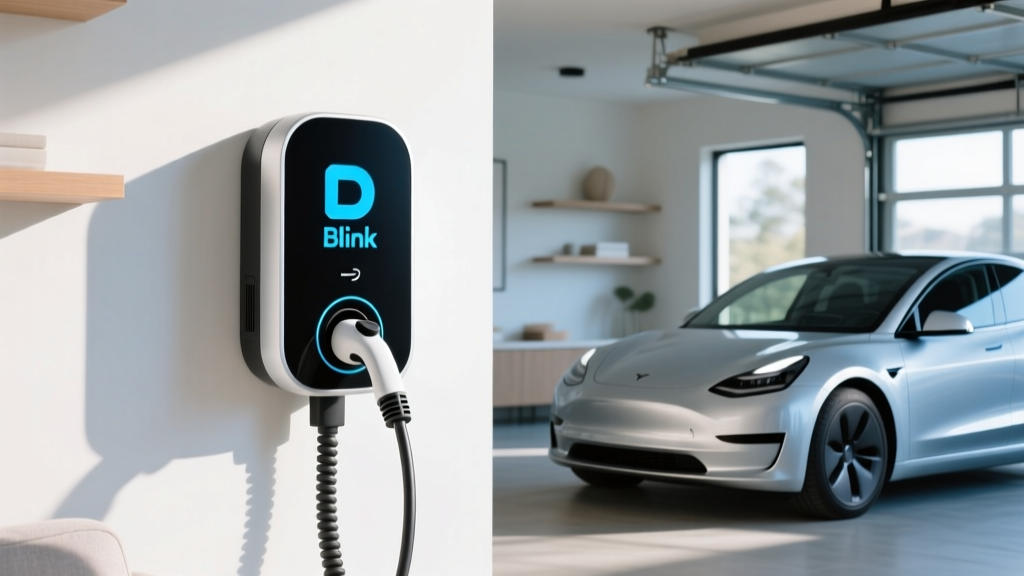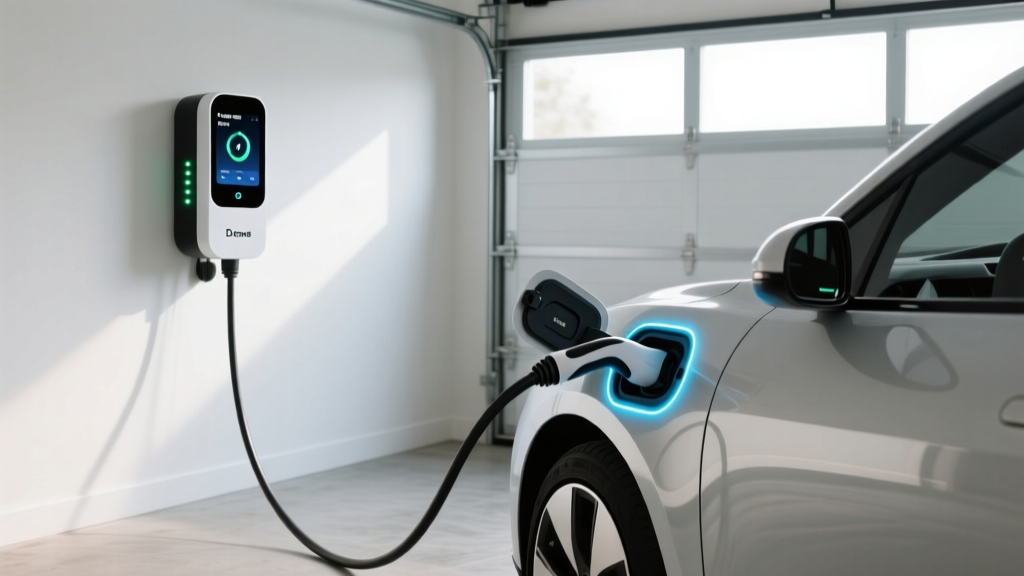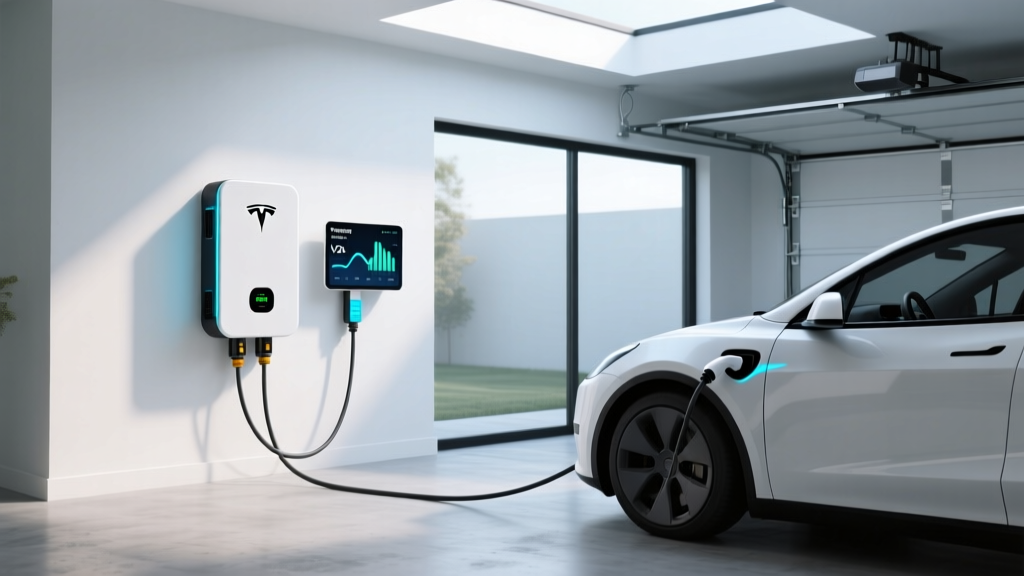
What Is the Tesla Bidirectional Charger and Who Is It For?
The Tesla bidirectional charger — officially the Tesla Wall Connector with bidirectional capability when paired with a Tesla Powerwall — represents a shift from simple EV charging to full home-energy management. Unlike a standard Level 2 wall connector that only pushes electricity into your vehicle, a bidirectional setup allows your EV's battery to send power back to your home (Vehicle-to-Home, or V2H) or even to the grid (Vehicle-to-Grid, or V2G) during outages or peak-rate windows.
As of early 2026, Tesla's bidirectional ecosystem requires three core components working together:
- Tesla Powerwall 3 (or multiple units) with an integrated DC bidirectional inverter
- Tesla Wall Connector (Gen 3 with bidirectional firmware support)
- A compatible vehicle — currently the Tesla Cybertruck (with Powershare enabled) and the upcoming next-generation Tesla models announced for bidirectional support
This is not a standalone product you simply plug in. It's an integrated energy system, and understanding the electrical requirements, costs, and real-world limitations is essential before committing to the investment.
Charging Levels Explained: Where Bidirectional Fits
Before evaluating the Tesla bidirectional system, you need a clear picture of the three charging levels available to EV owners. Power (measured in kW) determines speed; energy (measured in kWh) determines how much your battery holds. These are not interchangeable.
| Level | Voltage / Amps | Max Power (kW) | Miles of Range Added per Hour | Typical Use |
|---|---|---|---|---|
| Level 1 | 120V / 12A | 1.4 kW | 3–5 mi/hr | Overnight trickle, standard outlet |
| Level 2 (Standard) | 240V / 48A | 11.5 kW | 30–44 mi/hr | Home wall connector, daily charging |
| Level 2 (Bidirectional) | 240V / 48A | ~11.5 kW (to home) | Discharges ~30–40 mi/hr equivalent | V2H backup, peak shaving |
| DC Fast Charge | 400–800V DC | 150–350 kW | 200–1,000+ mi/hr | Road trips, Superchargers, public DC |
For context, a Tesla Model Y Long Range with its 75 kWh (usable) battery charges from 10–80% in roughly 7.5 hours on a standard 11.5 kW Level 2 connection. On a 250 kW Supercharger (DC fast), that same 10–80% session takes approximately 25–30 minutes — though the charge curve tapers significantly above 80% State of Charge (SoC), meaning the last 20% can take as long as the first 70%.
Electrical Requirements and Installation Costs
Installing the Tesla bidirectional charger system is substantially more complex than mounting a standard Wall Connector. You're not just adding a charger — you're integrating a home energy management system that must coordinate between your EV, Powerwall, main electrical panel, and utility grid connection.
Core Electrical Specifications
- Voltage: 240V split-phase (standard US residential)
- Amperage: 60A dedicated circuit for the Wall Connector (delivers up to 48A continuous to the vehicle)
- Panel capacity: Minimum 200A main service panel recommended; many bidirectional setups require a Tesla Gateway (or Gateway 2) to manage islanding and grid-disconnect during outages
- Powerwall requirement: At least one Powerwall 3 (13.5 kWh usable capacity per unit, 11.5 kW continuous output) is mandatory for the bidirectional energy path
- Backup switch / transfer switch: Required for whole-home or partial-home backup configurations
Panel Upgrade Reality
Homes built before 2000 often have 100A or 150A main panels. Adding a 60A EV circuit plus a Powerwall connection (another 60A breaker) can exceed your panel's capacity. A panel upgrade to 200A or even 400A (with a load-center split) is common in these scenarios. This is the single biggest variable in your installation cost.
| Component | Estimated Cost Range | Notes |
|---|---|---|
| Tesla Wall Connector (hardware) | $400–$500 | 24-foot cable, NACS connector |
| Tesla Powerwall 3 (per unit) | $9,200–$12,000 | Includes integrated inverter; installed |
| Tesla Gateway 2 | $500–$800 | Manages grid/island switching |
| Electrician labor (standard install) | $1,500–$3,500 | Varies by run length, conduit, complexity |
| Panel upgrade (if needed) | $2,000–$5,000 | 200A to 400A service upgrade |
| Permit and inspection | $150–$500 | Required by most jurisdictions |
| Total system (Wall Connector + 1 Powerwall + install) | $12,000–$22,000 | Before any incentives or tax credits |
The IRS residential clean energy credit (IRC §25D) covers 30% of the cost of battery storage technology (including Powerwall) through 2032, with no annual cap. This can reduce the Powerwall portion of your system cost by roughly $2,760–$3,600 per unit. The EV charger hardware itself may also qualify under the §30C alternative fuel vehicle refueling property credit (up to $1,000 for residential), though eligibility depends on census-tract requirements. Consult a tax professional for your specific situation.
Connector Compatibility and Vehicle Support
The Tesla bidirectional charger uses the North American Charging Standard (NACS) connector — the same plug found on all Tesla vehicles and, as of 2025–2026, adopted by Ford, GM, Rivian, Hyundai, Kia, BMW, and most other major automakers for new EV models.
| Connector Standard | Brands Using It (2026) | Adapter Needed for Tesla Wall Connector? |
|---|---|---|
| NACS (Tesla) | Tesla, Ford, GM, Rivian, Hyundai, Kia, BMW, Mercedes, Volvo, Polestar | No — native fit |
| CCS1 (legacy) | Older VW ID.4, Chevrolet Bolt (pre-2026), some Stellantis models | Yes — Tesla NACS-to-CCS adapter (~$200–$250) |
| CHAdeMO | Nissan Leaf (legacy) | Not compatible — no reliable adapter available |
Critical limitation for bidirectional mode: As of 2026, bidirectional V2H functionality through the Tesla Wall Connector is only supported with the Tesla Cybertruck (Powershare feature). Other Tesla vehicles (Model 3, Model Y, Model S, Model X) can charge from the Wall Connector but cannot currently discharge power back through it. Tesla has announced that future vehicle models and software updates will expand bidirectional support, but specific timelines remain unconfirmed. Non-Tesla NACS vehicles cannot participate in Tesla's bidirectional ecosystem even with the physical connector compatibility.
How Much Does Charging Cost Per Mile vs. Gas?
Whether you're charging from the grid or discharging your EV to offset peak utility rates, understanding the cost-per-mile math is essential for evaluating the bidirectional system's financial return.
| Scenario | Rate ($/kWh) | Vehicle Efficiency | Cost per Mile |
|---|---|---|---|
| Home off-peak (utility TOU rate) | $0.08–$0.12 | 3.5 mi/kWh (Model Y) | $0.023–$0.034 |
| Home peak rate | $0.25–$0.35 | 3.5 mi/kWh | $0.071–$0.100 |
| Public Level 2 (ChargePoint, etc.) | $0.20–$0.40 | 3.5 mi/kWh | $0.057–$0.114 |
| DC Fast Charge (Electrify America, Tesla Supercharger) | $0.30–$0.55 | 3.5 mi/kWh | $0.086–$0.157 |
| Gasoline (30 MPG combined, $3.40/gal) | $3.40/gallon | 30 MPG | $0.113 |
The bidirectional value proposition becomes clear during peak-rate hours: if your utility charges $0.30/kWh between 4–9 PM, discharging your Cybertruck's 123 kWh battery pack through V2H to power your home during those hours can offset roughly $8–$15 in electricity costs per evening, depending on your home load. Over a year of peak-shaving, that can amount to $1,500–$3,000 in utility savings — though actual results depend heavily on your rate structure, climate, and usage patterns.
Charging Time Examples for Common Battery Sizes
Whether you're charging your EV or planning how quickly your vehicle can replenish after a V2H discharge event, these benchmarks help set expectations:
- Tesla Model Y Long Range (75 kWh usable): 10–80% in ~7.5 hours on 11.5 kW Level 2; ~25 minutes on 250 kW DC fast charge
- Tesla Cybertruck (123 kWh usable): 10–80% in ~12 hours on 11.5 kW Level 2; ~40 minutes on 250 kW DC fast charge
- Ford F-150 Lightning Extended Range (131 kWh usable): 10–80% in ~13 hours on 11.5 kW Level 2 (CCS, with adapter for NACS); ~41 minutes on 150 kW DC (taper-limited)
- Hyundai Ioniq 5 (77.4 kWh usable): 10–80% in ~8 hours on 11.5 kW Level 2; ~18 minutes on 350 kW DC fast charge (800V architecture)
After a V2H discharge event where your Cybertruck sends 15 kWh back to your home overnight, expect to need roughly 1.5 additional hours of Level 2 charging to recover that energy before your morning commute. Plan accordingly — bidirectional use trades vehicle range for home power.
Equipment Recommendations for Your Setup
Tesla Wall Connector (Gen 3)
- Power output: Up to 11.5 kW (48A continuous on 60A circuit)
- Connector: NACS (native Tesla)
- Cable length: 24 feet
- Smart features: Wi-Fi connectivity, OTA updates, power sharing (up to 6 units on one circuit), access control, scheduled charging via Tesla app
- Bidirectional capable: Yes, with Powerwall 3 + compatible vehicle
- Price: ~$475 (hardware only)
Alternative: ChargePoint Home Flex (Non-Bidirectional)
- Power output: Up to 12 kW (50A continuous on 60A circuit, configurable down to 16A)
- Connector: NACS or J1772 (selectable)
- Cable length: 23 feet
- Smart features: Wi-Fi, Alexa integration, ChargePoint app scheduling, load management
- Bidirectional capable: No
- Price: ~$650–$700
If bidirectional capability is your primary goal, the Tesla Wall Connector paired with a Powerwall is currently the only integrated residential V2H ecosystem available at scale in the US. Ford's Intelligent Backup Power system (using the Charge Station Pro with a home integration system) offers a competing V2H solution for F-150 Lightning owners, but requires its own dedicated hardware and electrical integration.
Safety, Code, and Permit Considerations
A bidirectional charger installation triggers several electrical code requirements that go beyond a standard Level 2 charger:
- Dedicated circuit: The 60A circuit serving the Wall Connector must be dedicated — no shared loads on the breaker. Your electrician will run new conductors from your panel (or subpanel) to the charger location.
- GFCI protection: NEC 2023 (and adopted 2026 codes in most states) requires GFCI protection for all EV charging outlets and hardwired connections in garages and outdoor locations. The Tesla Wall Connector has integrated ground-fault protection.
- Outdoor rating: The Wall Connector is rated NEMA 3R (suitable for outdoor installation). However, the Powerwall 3 must also be installed in a location that meets its environmental rating — typically a garage wall or shaded exterior wall.
- Anti-islanding protection: The Tesla Gateway 2 ensures your system automatically disconnects from the utility grid during an outage before your Powerwall and EV begin powering your home. This is a critical safety requirement to prevent back-feeding electricity onto grid lines where utility workers may be performing repairs.
- Permit requirements: Virtually all jurisdictions require an electrical permit for a 60A circuit installation. The bidirectional / battery-storage component may trigger additional reviews, including a utility interconnection agreement if V2G (grid export) is enabled. Budget $150–$500 for permits and expect a post-installation inspection.
Is the Tesla Bidirectional Charger Worth It? A Decision Framework
Choose the Tesla bidirectional system if:
- You own or plan to purchase a Cybertruck (or future bidirectional-compatible Tesla)
- You experience frequent power outages (10+ hours per year) and want EV-backed home backup
- Your utility has aggressive time-of-use rates with peak/off-peak spreads exceeding $0.20/kWh
- You already plan to install a Powerwall for solar self-consumption or backup
- You want a single-app ecosystem (Tesla app) managing solar, battery, vehicle, and charger
Stick with a standard Level 2 charger if:
- Your current vehicle doesn't support bidirectional discharge
- You have reliable grid power and no solar system
- Your total installation budget is under $5,000
- You charge primarily overnight on cheap off-peak rates (the bidirectional premium won't pay for itself quickly)
- You drive a non-Tesla EV, even with NACS compatibility
The Tesla bidirectional charger system is a legitimate home-energy platform, not just a car charger. At $12,000–$22,000 for a complete installation, it's a major investment that makes financial sense primarily for Cybertruck owners in outage-prone areas or those with expensive time-of-use utility rates. For everyone else, a standard $475 Tesla Wall Connector on a dedicated 60A circuit delivers excellent Level 2 charging at a fraction of the cost — and you can always add a Powerwall and upgrade to bidirectional later as vehicle support expands.
Frequently Asked Questions
How much does it cost to install a Tesla bidirectional charger at home?
A complete Tesla bidirectional system — including the Wall Connector ($475), at least one Powerwall 3 ($9,200–$12,000 installed), Gateway 2 ($500–$800), electrician labor ($1,500–$3,500), and permits ($150–$500) — typically costs $12,000–$22,000 before incentives. If your home needs a panel upgrade from 100A/150A to 200A+, add $2,000–$5,000. The 30% federal residential clean energy credit (§25D) can offset roughly $3,000–$4,000 of the battery portion.
How fast will each charging level add range to my Tesla?
Level 1 (120V) adds roughly 3–5 miles per hour. Level 2 via the Tesla Wall Connector at 11.5 kW adds approximately 30–44 miles per hour depending on your vehicle's efficiency. DC fast charging at a 250 kW Supercharger can add up to 200 miles in 15 minutes, though the charge curve tapers sharply above 80% SoC, making the final 20% significantly slower.
Which vehicles are compatible with the Tesla bidirectional charger?
For charging only (one-directional), any vehicle with a NACS connector works — that includes all Teslas and most 2025–2026 models from Ford, GM, Hyundai, Kia, Rivian, and others (older CCS1 vehicles need an adapter). For bidirectional V2H discharge, only the Tesla Cybertruck with Powershare is currently supported. Tesla has announced plans to expand this to future models.
How much does EV charging cost per mile compared to gas?
Home off-peak charging costs approximately $0.023–$0.034 per mile in a Tesla Model Y (at $0.08–$0.12/kWh). A comparable 30 MPG gas vehicle at $3.40/gallon costs about $0.113 per mile. Even public DC fast charging at $0.45/kWh ($0.129/mile) is roughly comparable to gas. The bidirectional system adds value by letting you discharge during expensive peak hours, further reducing your effective energy costs.
What electrical upgrades might my home need for a bidirectional charger?
The most common upgrade is a main panel replacement — homes with 100A or 150A service typically need an upgrade to 200A or 400A to accommodate both the 60A EV circuit and the Powerwall connection. Older wiring may need to be replaced to meet current NEC code. Your electrician will perform a load calculation to determine if an upgrade is necessary. Budget $2,000–$5,000 for a panel upgrade if required.
Can I use the Tesla bidirectional charger to power my entire home during an outage?
Partially. A single Powerwall 3 provides 11.5 kW of continuous output — enough to run essential circuits (refrigerator, lights, HVAC fan, outlets) but not typically an entire home with central A/C, electric oven, and dryer running simultaneously. Adding the Cybertruck's 123 kWh battery via V2H dramatically extends backup duration (potentially 3–7 days for moderate loads), but the discharge rate is limited by the Wall Connector's bidirectional power rating. Whole-home backup usually requires 2–3 Powerwalls plus the vehicle contribution.