Why a 500-Mile Tesla Battery Changes Your Charging Strategy
When Tesla introduced the refreshed Model S Long Range with an EPA-estimated 402 miles and teased next-generation packs pushing toward the 500-mile mark, the conversation shifted from "Is there enough range?" to "How do I actually refill a 100+ kWh battery without losing my weekend?" A Tesla 500-mile range vehicle—whether the current Model S Long Range (402 mi EPA, ~100 kWh usable) or upcoming extended-range variants expected for 2027—demands a deliberate charging plan. The bigger the battery, the more each hour of Level 2 charging matters, and the more DC fast-charging taper curves affect road-trip timing.
This guide breaks down exactly what it takes to charge a large-capacity Tesla battery at home and on the road in 2026: charging levels in kW and miles-per-hour, real home-installation costs including panel upgrades, connector compatibility across the NACS ecosystem, equipment picks, and per-mile cost comparisons against gasoline. Whether you own a Model S Long Range today or are planning for a future 500-mile pack, the electrical fundamentals below apply.
Charging Levels Explained: Speeds in kW and Miles Per Hour
EV charging comes in three tiers. The critical distinction: kW (kilowatts) measures power—the rate at which energy flows into your battery. kWh (kilowatt-hours) measures energy—the total capacity of your battery. A 100 kWh battery charged at 10 kW takes roughly 10 hours from empty. Think of kW as the width of a hose and kWh as the size of the bucket.
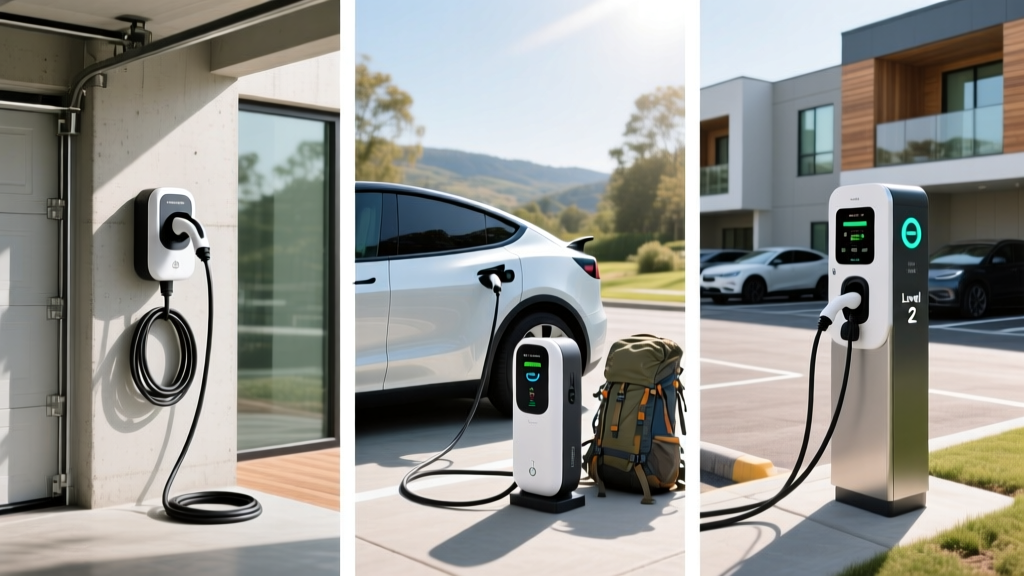
| Level | Voltage / Amps | Power (kW) | Miles of Range Per Hour | 0–100% Full Charge | Best For |
|---|---|---|---|---|---|
| Level 1 (120V) | 120V / 12A | ~1.4 kW | ~3–4 mi/hr | ~70+ hours | Emergency / trickle top-off |
| Level 2 (240V) | 240V / 48A | ~11.5 kW | ~30–38 mi/hr | ~9–10 hours | Daily home charging |
| Level 2 (240V, 60A) | 240V / 60A | ~14.4 kW | ~38–44 mi/hr | ~7–8 hours | Fastest home option (Tesla Wall Connector) |
| DC Fast (Supercharger V3) | DC / up to 250 kW | Peak 250 kW | ~1,000+ mi/hr (peak) | 10–80% in ~25–30 min | Road trips |
| DC Fast (Supercharger V4) | DC / up to 350 kW | Peak 350 kW | ~1,200+ mi/hr (peak) | 10–80% in ~18–22 min | Road trips (newer vehicles) |
Home Charger Installation: Electrical Requirements and Costs
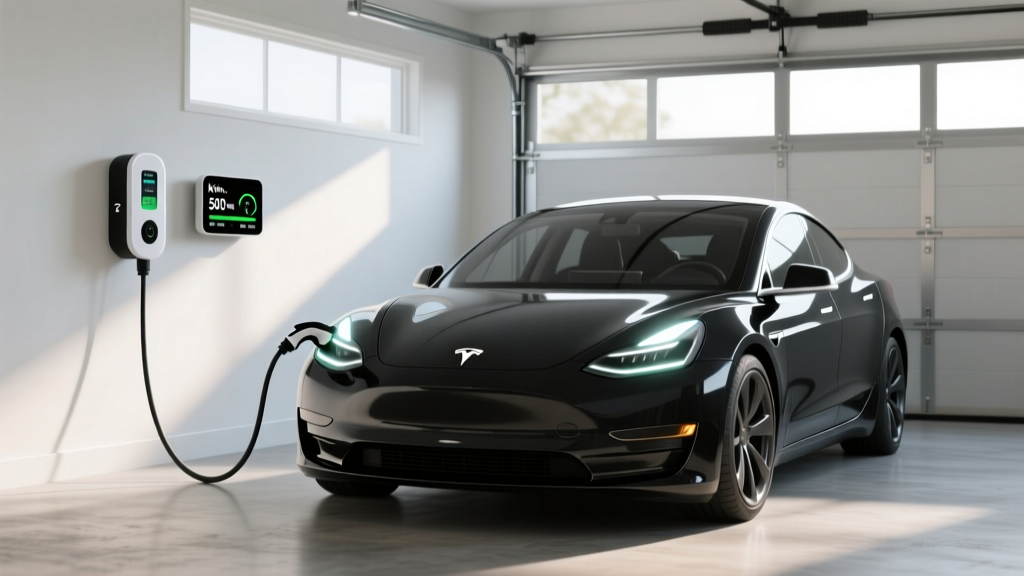
For a battery this large, Level 2 home charging is not optional—it's essential. Level 1 at 1.4 kW adds only ~3–4 miles per hour, meaning you'd need over 70 hours to fully replenish a 100 kWh pack. A properly installed 240V Level 2 circuit is the foundation of practical Tesla ownership.
Electrical Requirements
The Tesla Wall Connector (Gen 3) supports up to 48 amps continuous draw on a 60-amp breaker, delivering up to 11.5 kW. For the full 14.4 kW capability available on some configurations, a 60A continuous / 75A breaker circuit is needed. Here's what your home electrical system must provide:
- Circuit: Dedicated 60A (for 48A charging) or 75A (for 60A charging) double-pole breaker
- Voltage: 240V split-phase (standard US residential)
- Wire gauge: 6 AWG copper (60A circuit) or 4 AWG copper (75A circuit)
- Panel capacity: Minimum 200A service recommended; older 100A panels almost always require an upgrade
- GFCI protection: Required by NEC 2020+ for EV receptacles in garages and outdoor locations
Panel Upgrade Reality
If your home has a 100A main panel—or a 200A panel already near capacity with HVAC, electric range, dryer, and water heater loads—adding a 60A EV circuit may exceed your panel's safe load calculation. An electrician will perform a NEC Article 220 load calculation. If you're over capacity, expect a panel upgrade to 200A or 400A service. This is the single largest variable in home charging cost.
| Component | Simple Install (Panel Has Capacity) | Complex Install (Panel Upgrade Needed) |
|---|---|---|
| EV Charger Equipment (Tesla Wall Connector) | $400–$500 | $400–$500 |
| Electrical Permit | $50–$200 | $100–$350 |
| Electrician Labor (run conduit, wire, breaker) | $600–$1,500 | $1,500–$3,000 |
| Panel Upgrade (200A→400A if needed) | — | $2,000–$5,000 |
| Utility Service Upgrade (if needed for 400A) | — | $1,500–$4,000 |
| Wall Repair / Patching | $0–$200 | $200–$600 |
| Total Estimated Range | $1,050–$2,400 | $5,700–$13,450 |
Many utilities offer rebates of $250–$1,000 for Level 2 installation, and some states provide additional incentives. Check with your local utility and the Alternative Fuels Data Center for current programs in your area. Always hire a licensed electrician—DIY 240V work carries serious fire and shock risk and may void your homeowner's insurance.
Connector Compatibility: NACS, CCS, and Adapter Requirements
As of 2026, Tesla's North American Charging Standard (NACS) has become the dominant EV connector in the United States. Nearly every major automaker—Ford, GM, Rivian, Hyundai, Kia, BMW, and others—has adopted NACS on new vehicles or provides CCS-to-NACS adapters. Here's what you need to know about connector compatibility:
| Connector | Used By | AC Level 2? | DC Fast? | Notes |
|---|---|---|---|---|
| NACS (Tesla) | All Tesla models; Ford, GM, Rivian, Hyundai, Kia, BMW (2025+ models) | Yes | Yes (up to 350 kW at V4 Superchargers) | Compact, no adapter needed for Teslas |
| CCS1 | Older non-Tesla EVs (pre-2025); some current models | Yes (J1772 portion) | Yes (up to 350 kW) | Tesla Superchargers now open to CCS via Magic Dock or adapter |
| CHAdeMO | Nissan Leaf (legacy) | No | Yes (up to 100 kW) | Phasing out; limited new infrastructure |
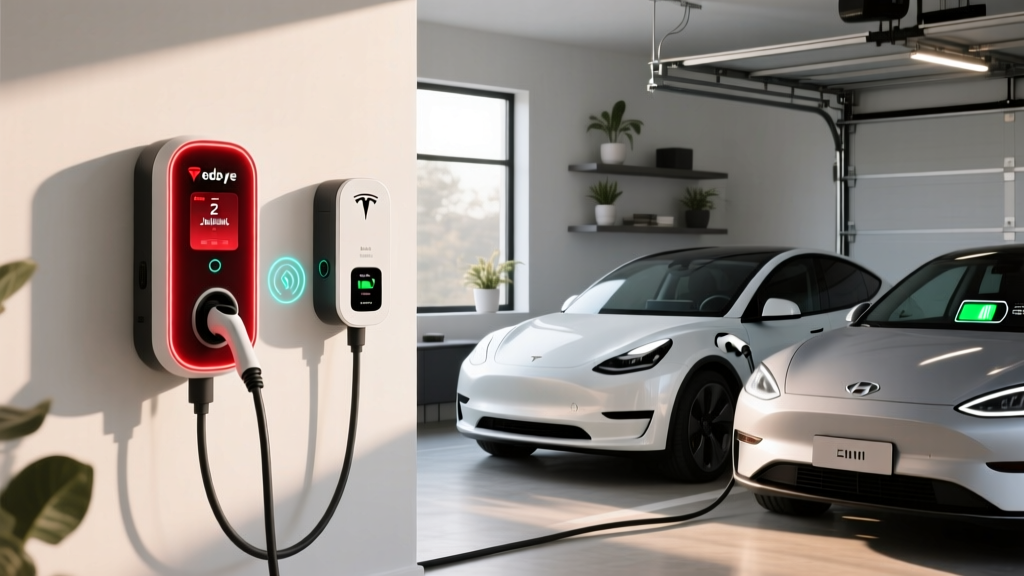
For Tesla owners: Your vehicle uses NACS natively. At home, the Tesla Wall Connector plugs directly in. On the road, Tesla Superchargers (V3 at 250 kW, V4 at up to 350 kW) require no adapter. You can also use Electrify America, EVgo, and ChargePoint CCS stations with a NACS-to-CCS adapter (sold by Tesla for ~$250), though charging speeds may be limited by the adapter's thermal rating.
For non-Tesla EVs charging at Superchargers: Tesla has opened many Supercharger stalls to NACS-equipped and CCS-equipped non-Tesla vehicles via the Tesla app. CCS vehicles may use Tesla's built-in "Magic Dock" adapter at select stations or carry their own NACS adapter from their manufacturer.
Charging Cost Per Mile: Home vs. Public vs. Gasoline
One of the strongest ownership arguments for a large-battery Tesla is the per-mile energy cost. Electricity prices vary widely by region and time of use, but even at public DC fast-charging rates, electrons are generally cheaper than gasoline per mile driven.
| Charging Scenario | Rate ($/kWh) | Cost for 100 kWh (Full Pack) | Cost Per Mile | vs. Gas ($3.50/gal, 30 MPG) |
|---|---|---|---|---|
| Home Off-Peak (national avg) | $0.12 | $12.00 | $0.040 | 6.6× cheaper |
| Home Peak (TOU rate) | $0.25 | $25.00 | $0.083 | 3.2× cheaper |
| Public Level 2 (ChargePoint, etc.) | $0.25–$0.39 | $25–$39 | $0.083–$0.130 | 1.8–2.8× cheaper |
| Tesla Supercharger (avg 2026) | $0.30–$0.40 | $30–$40 | $0.100–$0.133 | 1.7–2.6× cheaper |
| Gasoline Sedan (30 MPG) | — | — | $0.117 | Baseline |
At home on off-peak rates, charging a 100 kWh Tesla battery costs roughly $12 for ~330–400 real-world miles—about 4 cents per mile. Even at Supercharger rates, you're paying 10–13 cents per mile versus 11.7 cents for a 30 MPG gas car at $3.50/gallon. The savings compound dramatically for high-mileage drivers: a 15,000-mile/year driver saves $800–$1,400 annually by charging at home versus buying gas, per fueleconomy.gov comparisons.
Equipment Recommendations: Best Home Chargers for Large Tesla Batteries
When you're refilling a 100+ kWh battery nightly, charger quality, cable length, and smart features matter. Here are top picks for 2026:
Tesla Wall Connector (Gen 3)
- Power: Up to 11.5 kW (48A on 60A circuit)
- Connector: NACS native
- Cable: 24 ft
- Smart Features: Wi-Fi, OTA updates, load sharing (pair two on one circuit), access control
- Price: ~$400–$500
- Best For: Tesla-only households; best integration with vehicle scheduling
ChargePoint Home Flex
- Power: Up to 12 kW (50A, configurable 16–50A)
- Connector: NACS or J1772 (select at purchase)
- Cable: 23 ft
- Smart Features: Wi-Fi, app scheduling, Alexa, load management
- Price: ~$550–$700
- Best For: Multi-EV households (Tesla + non-Tesla); flexible amperage
Grizzl-E Smart
- Power: Up to 10 kW (40A on 50A circuit)
- Connector: NACS or J1772
- Cable: 24 ft
- Smart Features: Wi-Fi, OCPP support, adjustable amperage
- Price: ~$400–$500
- Best For: Budget-conscious; outdoor-rated (NEMA 4), rugged build
Emporia Level 2 EV Charger
- Power: Up to 11.5 kW (48A on 60A circuit)
- Connector: NACS or J1772
- Cable: 24 ft
- Smart Features: Wi-Fi, solar integration, energy monitoring via Emporia Vue panel
- Price: ~$350–$400
- Best For: Solar-home owners wanting energy-tracking integration
For a Tesla 500-mile range battery, prioritize chargers delivering at least 11.5 kW (48A). At that rate, a depleted 100 kWh pack refills in roughly 9 hours—perfect for overnight charging on a time-of-use rate plan. If your panel can support a 75A circuit, the Tesla Wall Connector's full 14.4 kW output cuts that to ~7 hours.
DC Fast Charging: Road-Trip Realities for a 500-Mile Battery
On a road trip, a large battery is both a blessing and a challenge. The blessing: you can drive 350+ real-world highway miles before needing to stop. The challenge: refilling that massive pack takes longer at each stop due to charge-curve taper.
DC fast charging does not sustain peak kW throughout the session. A Tesla Model S Long Range at a V3 Supercharger (250 kW peak) typically follows this curve:
- 10–30% SoC: Near-peak 230–250 kW (~30–40 miles added per minute)
- 30–60% SoC: Sustained ~180–220 kW
- 60–80% SoC: Tapers to ~100–150 kW
- 80–100% SoC: Drops to ~30–50 kW (avoid charging past 80% on road trips unless necessary)
The result: a 10–80% session at a V3 Supercharger takes approximately 25–30 minutes for a ~100 kWh pack, adding roughly 240–280 real-world miles. At a V4 Supercharger (350 kW peak, available to newer Tesla architectures), expect 10–80% in roughly 18–22 minutes.
Safety, Code, and Permitting Essentials
A 60A or 75A 240V circuit is serious electrical infrastructure. Here's what the National Electrical Code (NEC) and best practices require:
- Dedicated circuit: Your EV charger must have its own breaker—no sharing with other appliances.
- GFCI protection: NEC 2020 (Article 625.54) requires ground-fault circuit-interrupter protection for all EV receptacles rated 150V to ground or less, indoors and outdoors. Hardwired Wall Connectors may not require a separate GFCI breaker (the unit has built-in protection), but a NEMA 14-50 receptacle does.
- Outdoor rating: If mounting outside, ensure your charger carries a NEMA 4 (weatherproof) rating. The Tesla Wall Connector and Grizzl-E are outdoor-rated; verify before installation.
- Permit: Virtually all jurisdictions require an electrical permit for a new 240V circuit. Your electrician typically pulls this. Inspections ensure code compliance and protect your home insurance coverage.
- Stranded vs. solid wire: For runs over 50 feet, voltage drop becomes a factor. Your electrician may upsize wire to 4 AWG even on a 60A circuit to maintain performance.
Skip the permit and your homeowner's insurance provider may deny a claim if an electrical fire traces back to unpermitted work. It's not worth the risk.
Frequently Asked Questions
How much does it cost to install a home EV charger?
A straightforward Level 2 installation with an existing panel that has capacity typically runs $1,050–$2,400 (equipment, labor, and permit combined). If your home needs a panel upgrade from 100A to 200A or from 200A to 400A, total costs can reach $5,700–$13,450. The Tesla Wall Connector itself costs ~$400–$500; the bulk of the expense is electrician labor and any panel/service upgrades.
How fast will each charging level add range?
Level 1 (120V) adds ~3–4 miles per hour—impractical for a 100 kWh battery. Level 2 (240V, 48A) adds ~30–38 miles per hour, fully recharging overnight. DC fast charging at a Tesla V3 Supercharger peaks at 250 kW, adding 1,000+ miles per hour at peak (realistically 240–280 miles in a 25–30 minute 10–80% session). V4 Superchargers at 350 kW reduce that to ~18–22 minutes.
Which connector/charger is compatible with my EV?
All Tesla vehicles use the NACS connector natively—no adapter needed at home or at Superchargers. Non-Tesla EVs from 2025+ increasingly use NACS as well. Older non-Tesla EVs with CCS1 connectors can access Tesla Superchargers using a NACS-to-CCS adapter or Tesla's Magic Dock at select stations. CHAdeMO (Nissan Leaf) is phasing out with minimal new infrastructure.
How much does charging cost per mile vs gas?
At home on off-peak electricity (~$0.12/kWh), a Tesla Model S Long Range costs about $0.04 per mile—roughly 6.6× cheaper than a 30 MPG gas car at $3.50/gallon ($0.117/mi). Even at Supercharger rates ($0.30–$0.40/kWh), you pay $0.10–$0.13 per mile, still competitive with or cheaper than gasoline. Annual savings for a 15,000-mile driver range from $800 to $1,400, according to fueleconomy.gov.
What electrical upgrades might I need?
The most common upgrade is a panel capacity increase. If your home has a 100A main panel, upgrading to 200A ($2,000–$4,000) is nearly always required. If your 200A panel is already loaded with electric HVAC, range, dryer, and water heater, a 400A upgrade ($3,500–$9,000 including utility service work) may be necessary. Your electrician will perform a NEC load calculation to determine exact needs. Some utilities offer "make-ready" programs that cover wiring costs up to the charger location.