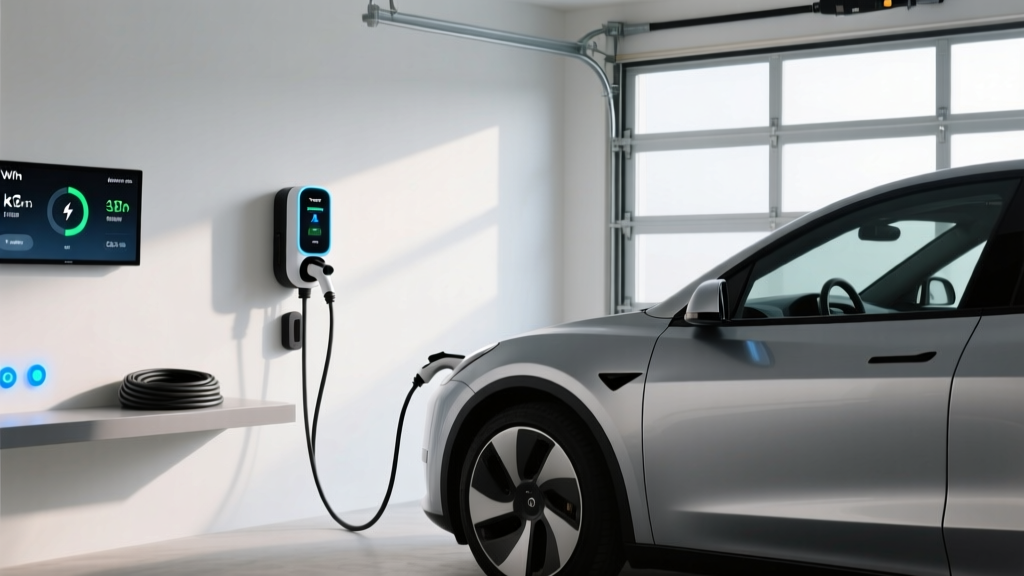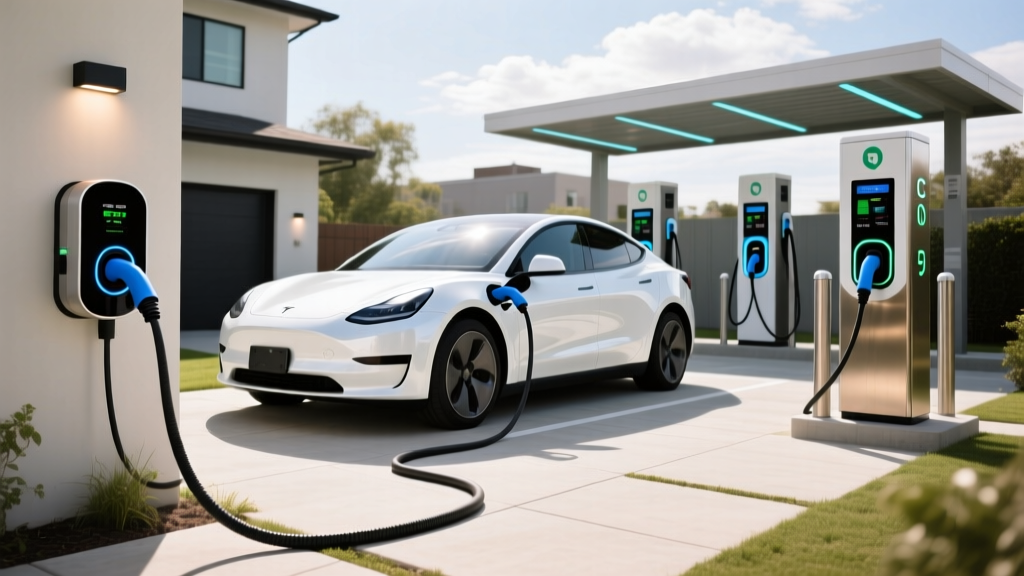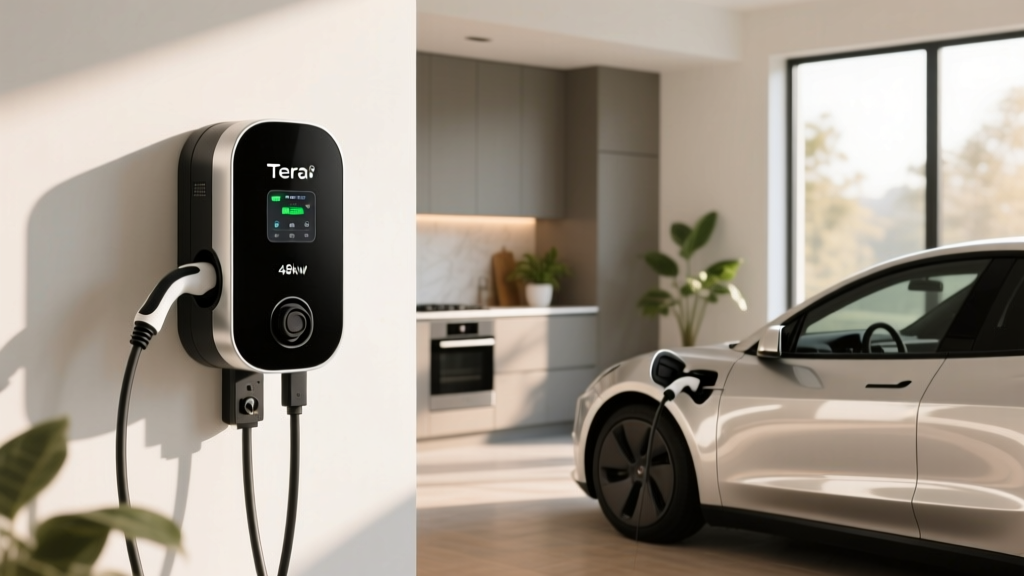
When you need more range in less time at home, Tera EV chargers have quietly carved out a niche among Level 2 and light-commercial DC fast-charging equipment. Originally known for commercial-grade dispensers, Tera has expanded into residential-adjacent hardware that bridges the gap between a standard 40A home wallbox and a full 150 kW public fast charger. If you're evaluating Tera EV chargers for a home garage, a multi-unit dwelling, or a small fleet depot, this guide breaks down the real power output, connector compatibility, installation requirements, and what you'll actually pay to get one running.
Before we get into specific models, let's establish the fundamentals that govern every charger on the market — including Tera's lineup.
Charging Levels Explained: What Speeds to Expect
Every EV charger falls into one of three categories based on power delivery. The distinction between kW (kilowatts — the rate of power flow) and kWh (kilowatt-hours — the total energy stored in your battery) is critical here. A 48 kW charger delivers 48 kilowatts of power per hour of charging; a 75 kWh battery holds 75 kilowatt-hours of energy. Think of kW as the width of a hose and kWh as the size of the bucket.
| Level | Voltage | Power (kW) | Miles Added/Hour | Typical Use |
|---|---|---|---|---|
| Level 1 | 120V AC | 1.0–1.9 kW | 3–5 mi/hr | Overnight trickle, PHEVs |
| Level 2 | 240V AC | 3.3–19.2 kW | 12–70 mi/hr | Home daily charging, workplace |
| DC Fast | 200–920V DC | 24–350+ kW | 100–1,200+ mi/hr | Road trips, commercial, fleet |
Tera's product range spans the upper end of Level 2 (hardwired 19.2 kW units) and entry-level DC fast charging (24 kW to 48 kW wall-mounted dispensers). The 48 kW DC unit is what draws the most attention — it's compact enough for a residential install but fast enough to charge a 75 kWh battery from 10–80% in roughly 65 minutes.
Tera EV Charger Models: Power Output and Specs
As of 2026, Tera offers three primary models relevant to home and light-commercial buyers. Here's how they stack up:
Tera HomeCharge 19 (Level 2)
- Power Output: 19.2 kW (80A, 240V)
- Connector: NACS (Tesla standard), CCS1 adapter available
- Cable Length: 24 ft
- Smart Features: Wi-Fi, app scheduling, energy metering, OTA updates
- Price: ~$1,099 (equipment only)
- Best For: Large-battery EVs (F-150 Lightning, Rivian R1S, Hummer EV) that benefit from faster Level 2 speeds
Tera FlexDC 30 (Compact DC Fast)
- Power Output: 30 kW DC (200–500V)
- Connector: NACS native, CCS1 included
- Cable Length: 20 ft
- Smart Features: RFID access, networked payment (OCPP 2.0.1), remote diagnostics
- Price: ~$7,800 (equipment only)
- Best For: Multi-unit dwellings, small fleets, Airbnb/host rental properties
Tera FlexDC 48 (Residential DC Fast)
- Power Output: 48 kW DC (200–920V)
- Connector: NACS + CCS1 dual-cable option
- Cable Length: 20 ft
- Smart Features: Load management, V2H-ready (firmware pending), OCPP, app monitoring
- Price: ~$11,500 (equipment only)
- Best For: High-mileage drivers, home-based fleet, Turo operators, enthusiasts wanting near-public speeds at home
The FlexDC 48 is the model most buyers search for when they type "tera ev chargers" into a search bar. It's one of the few sub-50 kW DC units designed for residential electrical systems, though it still demands significant infrastructure.
Home Installation: Electrical Requirements and Costs
This is where most EV charger guides stay vague. We won't. Installing a Tera charger — especially the DC models — is a serious electrical project that requires a licensed electrician and, in most jurisdictions, a permit.
Electrical Requirements by Model
| Model | Voltage | Circuit Amperage | Wire Gauge | Panel Headroom Needed |
|---|---|---|---|---|
| HomeCharge 19 | 240V single-phase | 100A breaker (80A continuous) | 2 AWG copper | ~100A spare capacity |
| FlexDC 30 | 240V single-phase (input) | 150A breaker | 1/0 AWG copper | ~150A spare capacity |
| FlexDC 48 | 240V or 208V three-phase | 200A breaker | 2/0 AWG copper | ~200A spare capacity |
Panel Upgrade Reality
Most US homes built before 2010 have a 100A or 150A main panel. The HomeCharge 19 (100A circuit) will max out a 150A panel if you're simultaneously running an electric dryer, range, and HVAC. The FlexDC models almost certainly require a panel upgrade to 200A or 400A service, which is a $2,000–$5,000 project on its own before the charger install begins.
Some homeowners opt for a load-management device (like the Emporia VUE or Span smart panel) that dynamically throttles the charger when other appliances draw heavily. This can avoid a full panel upgrade, but it adds $800–$1,500 to the project and may reduce your effective charge rate during peak household usage.
Full Installation Cost Breakdown
| Cost Component | HomeCharge 19 (Level 2) | FlexDC 30 | FlexDC 48 |
|---|---|---|---|
| Equipment | $1,099 | $7,800 | $11,500 |
| Electrician labor (2–8 hrs) | $600–$2,000 | $2,000–$4,500 | $3,000–$6,000 |
| Permit & inspection | $100–$400 | $200–$600 | $300–$800 |
| Panel upgrade (if needed) | $0–$3,500 | $2,000–$5,000 | $2,500–$5,000 |
| Conduit/wire run (50+ ft) | $200–$800 | $400–$1,500 | $500–$2,000 |
| Total range | $1,200–$7,800 | $10,400–$19,400 | $15,300–$25,300 |
For context, the median HomeCharge 19 install in a home with an existing 200A panel and a short wire run comes in around $2,200–$3,200 all-in. The FlexDC units are firmly in commercial-adjacent territory — they make sense for high-use scenarios, not casual overnight charging.
Connector Compatibility: NACS, CCS1, and CHAdeMO
The connector landscape has consolidated significantly since 2024, when Ford, GM, Rivian, Volvo, and most other major automakers committed to adopting the NACS (North American Charging Standard, originally the Tesla connector). Here's what that means for Tera charger buyers in 2026:
| Connector | Compatible Brands | Adapter Needed for Tera? |
|---|---|---|
| NACS (native) | Tesla, Ford, GM, Rivian, Volvo, Polestar, Hyundai/Kia (2025+), Mercedes (2026+) | No — Tera NACS units plug directly |
| CCS1 | Older Hyundai/Kia (pre-2025), BMW iX/i4 (2024–2025), VW ID.4 (2024–2025), legacy stock | NACS-to-CCS adapter (~$150–$250) if Tera unit is NACS-only |
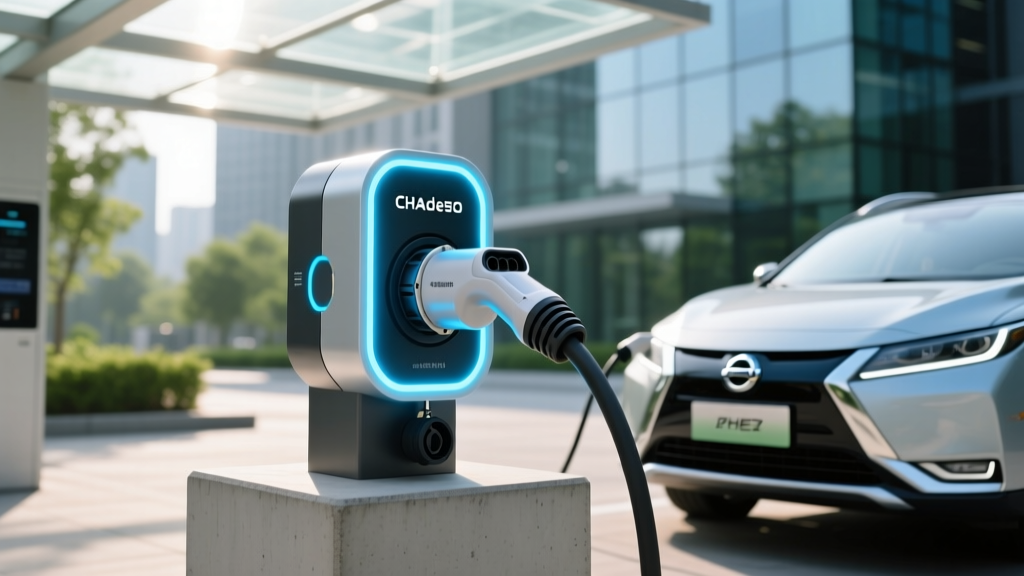
| CHAdeMO | Nissan Leaf (2013–2025), Mitsubishi Outlander PHEV (older) | Not supported on Tera DC units; use public CHAdeMO stations |
Tera's FlexDC units ship with NACS as the primary connector and include a CCS1 cable option on dual-cable models. If you drive a pre-2025 vehicle with CCS1, budget for a Tesla NACS-to-CCS adapter or a third-party equivalent rated for DC fast charging (not all adapters handle DC — verify the rating).
The HomeCharge 19 (Level 2) uses NACS natively. For J1772-inlet vehicles (most pre-2025 non-Teslas), a simple J1772-to-NACS adapter (~$40–$80) resolves compatibility — these adapters work fine for AC Level 2 charging.
Charging Speed in Practice: How Fast Does a Tera Charger Add Range?
Manufacturer-rated peak kW is only part of the story. Real charging speed depends on your battery's state of charge (SoC), temperature, and the charge curve — the way batteries accept power quickly at low SoC and taper significantly above 80%.
10–80% Charge Times on Tera Equipment
| Vehicle (Battery Size) | HomeCharge 19 (19.2 kW) | FlexDC 30 (30 kW) | FlexDC 48 (48 kW) |
|---|---|---|---|
| Tesla Model Y (75 kWh usable, NMC) | ~2 hr 55 min | ~1 hr 50 min | ~1 hr 05 min |
| Ford F-150 Lightning Ext. Range (131 kWh, NMC) | ~5 hr 05 min | ~3 hr 10 min | ~1 hr 55 min |
| Hyundai Ioniq 5 (77.4 kWh, NMC) | ~3 hr 05 min | ~1 hr 55 min | ~1 hr 10 min |
| Chevy Equinox EV (85 kWh, NMC) | ~3 hr 20 min | ~2 hr 05 min | ~1 hr 15 min |
| Toyota bZ4X (71.4 kWh, NMC) | ~2 hr 50 min | ~1 hr 45 min | ~1 hr 00 min |
A few real-world caveats:
- Charge taper is real. These 10–80% times assume the vehicle can accept peak kW throughout. Most EVs taper above 50–60% SoC. On the FlexDC 48, a Model Y will pull close to 48 kW from 10–40%, then ramp down to ~30 kW by 70%, and ~15 kW approaching 80%.
- Cold batteries charge slower. Below 40°F, expect 20–40% longer charge times unless your vehicle has preconditioned the battery. Most modern EVs do this automatically when you navigate to a charger, but at home, you'll need to schedule preconditioning via the vehicle's app.
- Level 2 is still sufficient for 90% of use cases. If you drive 40 miles/day and charge overnight, even a 7.7 kW (32A) charger adds ~180 miles in 8 hours. The HomeCharge 19's 19.2 kW is overkill for daily commuting but shines for large batteries and high-mileage days.
Cost to Charge: Home vs. Public vs. Gas
The economic case for home charging is overwhelming — if you have access. Here's what charging actually costs per mile on a Tera HomeCharge 19 versus public networks and a gas baseline.
| Scenario | Rate | Cost/kWh | Cost/Mile (250 Wh/mi EV) |
|---|---|---|---|
| Home off-peak (utility TOU rate) | $0.09–$0.14/kWh | $0.12 avg | $0.030/mile |
| Home standard rate | $0.15–$0.22/kWh | $0.18 avg | $0.045/mile |
| Public Level 2 (ChargePoint, EVgo) | $0.25–$0.49/kWh | $0.35 avg | $0.088/mile |
| DC fast charging (EA, Tesla Supercharger) | $0.32–$0.58/kWh | $0.44 avg | $0.110/mile |
| Gas car (30 MPG, $3.40/gal) | $3.40/gallon | — | $0.113/mile |
At home off-peak rates, a Tera HomeCharge 19 delivers fuel at roughly $0.03/mile — a 73% savings over a 30 MPG gas car at $3.40/gallon. Even at standard residential rates, home charging undercuts gas by about 60%.
The flexDC units add a wrinkle: DC fast chargers waste 5–10% of energy as heat during AC-to-DC conversion inside the unit. Factor this into your operating cost — a 48 kWh charge session draws ~52 kWh from your panel.
According to fueleconomy.gov, the average 2026 EV consumes 25–30 kWh per 100 miles (250–300 Wh/mile). Plug your vehicle's specific Wh/mile figure into this formula:
Cost per mile = (Wh/mile ÷ 1,000) × $/kWh
Example: 270 Wh/mile × $0.12/kWh = $0.032/mile
Safety, Code, and Permit Considerations
Every jurisdiction enforces the National Electrical Code (NEC), with local amendments. Here's what your electrician and inspector will verify:
- Dedicated circuit. EV chargers must be on a dedicated breaker — no sharing with other outlets or appliances. The HomeCharge 19 needs its own 100A breaker; the FlexDC units need 150A or 200A dedicated circuits.
- GFCI protection. NEC 2023 and later require GFCI protection for all EV receptacles (not hardwired units). If you install a Tera unit hardwired (recommended for 80A+ circuits), GFCI requirements may not apply, but local inspectors vary.
- Outdoor rating. Tera's FlexDC units carry a NEMA 4 (weatherproof) rating suitable for outdoor mounting. The HomeCharge 19 is rated NEMA 4X (corrosion-resistant) for coastal or high-humidity installations.
- Wire sizing and conduit. Continuous loads (3+ hours) require wire rated at 125% of the circuit amperage. An 80A continuous charger needs wire rated for 100A — hence 2 AWG copper minimum.
- Permit and inspection. Virtually every municipality requires an electrical permit for a new 240V circuit. Expect $100–$800 in permit fees, plus a mandatory inspection after installation. Unpermitted work can void your homeowner's insurance coverage in the event of an electrical fire.
Federal Tax Credit for Home Charging Equipment
The IRS residential clean energy provisions and the §30C Alternative Fuel Vehicle Refueling Property Credit can offset up to 30% of home charger equipment and installation costs (capped at $1,000) for qualifying taxpayers. Key eligibility factors for 2026:
- Your home must be in a qualifying census tract (rural or low-income area designation)
- The credit applies to both the charger hardware and installation labor
- The $1,000 cap is per property, not per charger
- You must own the home (rentals are ineligible for the personal-use credit)
Check the latest IRS §30C guidance before purchasing — eligibility rules and qualifying census tracts are updated annually.
Should You Buy a Tera EV Charger? Decision Framework
Choose the Tera HomeCharge 19 (Level 2) if:
- You drive a large-battery EV (100+ kWh) and want overnight charging completed in 5 hours instead of 10
- You already have a 200A panel with spare capacity
- You want a future-proof 80A charger that won't need upgrading when you buy your next EV
- Budget: $2,200–$3,200 installed (no panel upgrade needed)
Choose the Tera FlexDC 30 or 48 (DC Fast) if:
- You operate a rental property, Turo fleet, or multi-unit dwelling where fast turnaround is revenue
- You drive 100+ miles daily and can't wait 6+ hours on Level 2
- You have (or will install) 200A+ electrical service
- You can absorb $15,000–$25,000 in total project cost
Choose a standard 40A/48A Level 2 charger (ChargePoint, Emporia, Wallbox) instead if:
- You drive under 60 miles/day and charge overnight
- Your home has a 100A or 150A panel and you don't want to upgrade
- Budget is under $1,500 installed
Frequently Asked Questions
How much does it cost to install a Tera EV charger at home?
For the Tera HomeCharge 19 (Level 2), expect $1,200–$7,800 total depending on whether your panel needs upgrading. The FlexDC 48 (DC fast) runs $15,300–$25,300 installed. The single biggest cost variable is whether your existing electrical panel has enough spare amperage.
How fast will each Tera charger add range?
The HomeCharge 19 (19.2 kW) adds roughly 60–70 miles of range per hour for a typical EV. The FlexDC 30 (30 kW) adds 90–120 miles per hour. The FlexDC 48 (48 kW) adds 140–190 miles per hour at peak SoC. Actual speeds taper above 50–60% battery level.
Which connector do I need for my EV?
If your EV is a 2025+ model from Ford, GM, Rivian, Tesla, Hyundai, Kia, or Volvo, it likely has a NACS port — Tera's native connector. Older CCS1 vehicles need an adapter. CHAdeMO vehicles (Nissan Leaf) are not compatible with Tera DC units.
How much does home charging cost per mile vs. gas?
At average US residential off-peak rates ($0.12/kWh), home EV charging costs about $0.03/mile — roughly 73% less than a 30 MPG gas car at $3.40/gallon ($0.113/mile). Even at standard residential rates ($0.18/kWh), EVs cost about $0.045/mile.
What electrical upgrades might I need for a Tera charger?
The HomeCharge 19 requires a 100A dedicated circuit — feasible on a 200A panel with load management. The FlexDC 30 and 48 require 150A–200A dedicated circuits, which almost always necessitate a panel upgrade to 200A or 400A service ($2,000–$5,000). Your electrician will assess your panel's spare capacity during a site visit.
Is a DC fast charger at home worth it over Level 2?
For most residential users, no. A 19.2 kW Level 2 charger adds enough range overnight for any daily driving pattern. DC fast charging at home makes economic sense only for commercial use, high-turnover rental fleets, or extreme-mileage drivers who need a full charge in under 2 hours multiple times per week.
Can I use the §30C tax credit for a Tera charger?
Possibly. The §30C credit covers 30% of equipment and installation costs up to $1,000, but your home must be located in a qualifying census tract. Verify eligibility on the IRS website before purchasing. This is separate from the §30D new-vehicle credit.