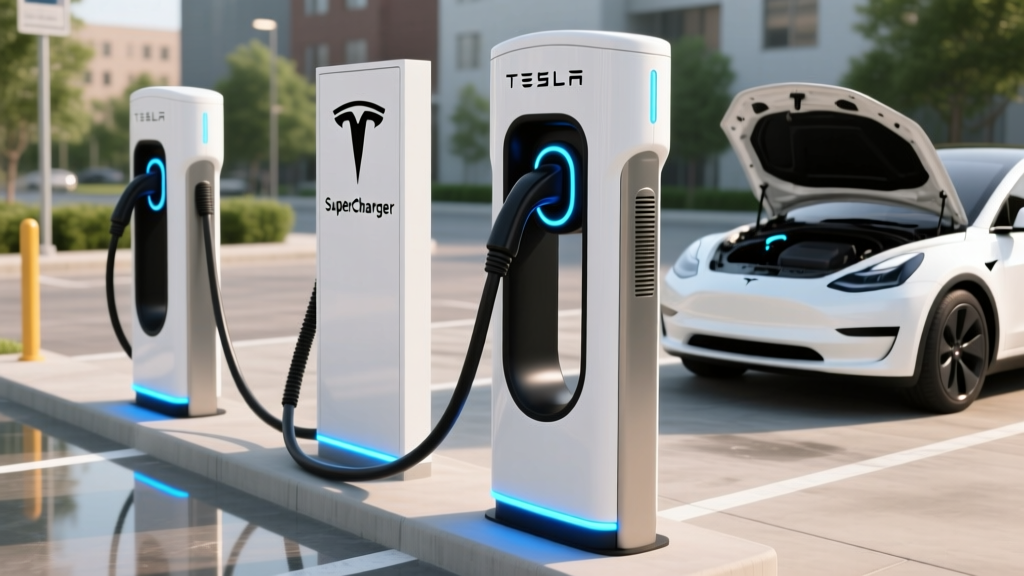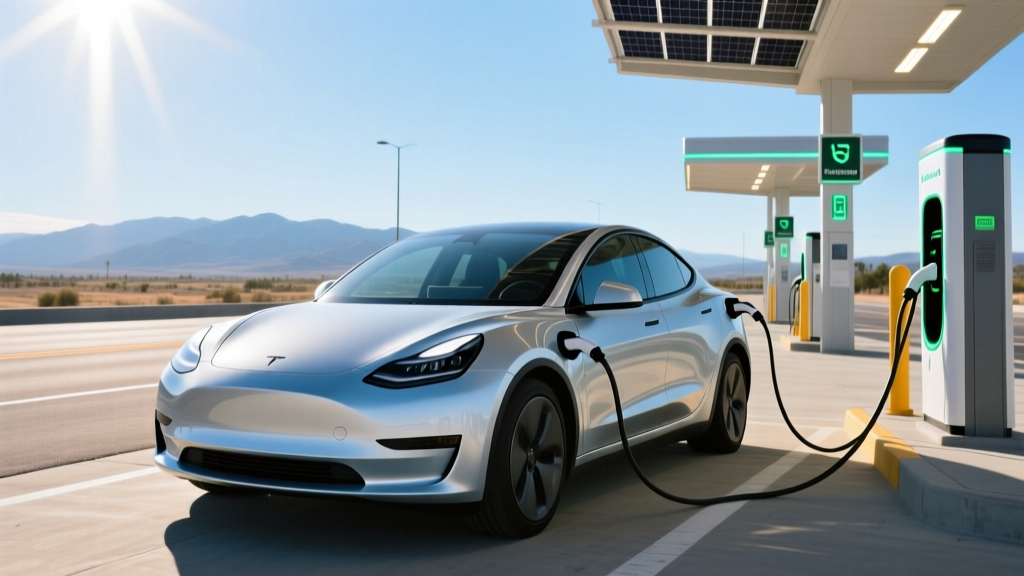
If you drive an electric vehicle along California's Interstate 5 corridor between Los Angeles and the Central Valley, you will almost certainly pass through the Grapevine — and the Tejon Ranch Supercharger is one of the most critical waypoints on that route. Sitting near the junction of I-5 and CA-138, this station serves as a make-or-break charging stop for EVs climbing or descending the 4,000-foot Tejon Pass grade.
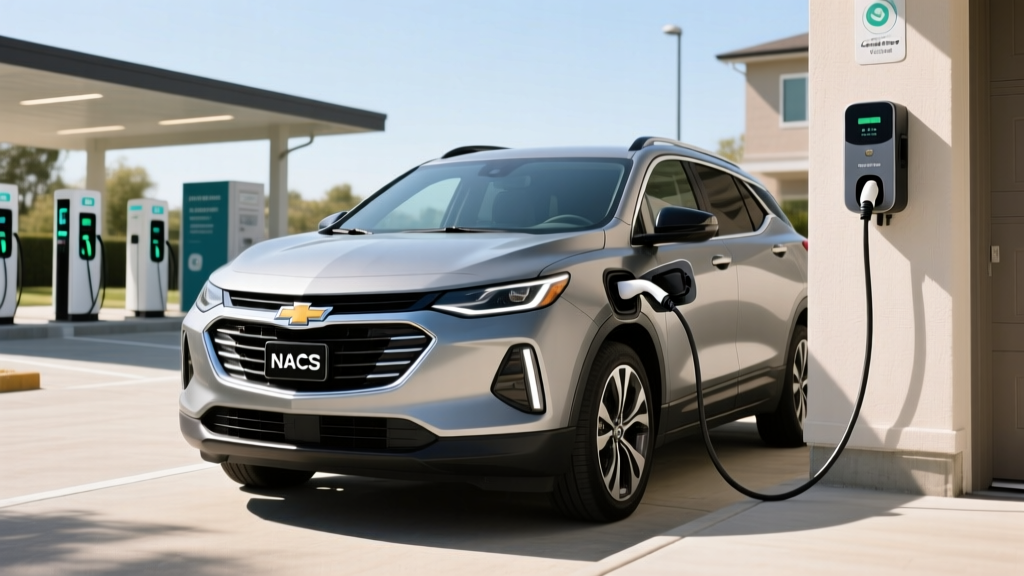
Whether you are pulling in with a Tesla Model Y, a Ford F-150 Lightning with a NACS adapter, or a Hyundai Ioniq 5 on CCS, understanding what this station offers — and how to maximize your stop — is the difference between a 20-minute break and a 50-minute slog. This guide covers the Tejon Ranch Supercharger in the context of broader EV charging literacy: DC fast-charging realities, connector compatibility, costs, and how to prepare your vehicle (and your home setup) for road trips like this one.
Where Tejon Ranch Fits in the I-5 Charging Corridor
The Tejon Ranch Supercharger station is located at the Tejon Ranch Commerce Center, roughly 65 miles north of downtown Los Angeles and 45 miles south of Bakersfield. For most EVs with 250+ miles of real-world highway range, it sits at a natural midpoint — close enough to LA to reach without anxiety, far enough that you will want electrons for the push north toward Fresno or the Bay Area.
The elevation change matters. Climbing the Grapevine southbound-to-northbound consumes significantly more energy than flat-land driving. Expect your efficiency to drop to roughly 2.0–2.5 miles per kWh on the ascent (compared to 3.0–3.5 mi/kWh on level ground at 65 mph), then partially recover through regenerative braking on the descent. This means arriving at Tejon Ranch with a lower state of charge (SoC) than a flat-terrain trip of equal distance would suggest.
For context, here is how Tejon Ranch distances stack up against popular I-5 destinations:
- Los Angeles (DTLA) to Tejon Ranch: ~65 miles
- Tejon Ranch to Bakersfield: ~45 miles
- Tejon Ranch to Fresno: ~170 miles
- Tejon Ranch to San Francisco: ~290 miles
If your real-world range is 250 miles, a full charge at Tejon Ranch gets you comfortably to Fresno with buffer. For San Francisco, plan one additional stop — likely at the Kettleman City or Harris Ranch Superchargers.
DC Fast Charging Explained: What Happens at Tejon Ranch
The Tejon Ranch Supercharger is a DC fast-charging (DCFC) station. Unlike the Level 1 or Level 2 chargers you might use at home, DCFC stations deliver direct current straight to your battery at high power, bypassing the vehicle's onboard charger. This is what enables 10–80% charges in roughly 15–30 minutes depending on your vehicle.
Before we break down speeds, let's clear up the single most common EV confusion: kW (kilowatts) measures power — how fast energy flows. kWh (kilowatt-hours) measures energy — how much your battery holds. Think of kW as the width of a hose and kWh as the size of the bucket. A 250 kW charger fills your 75 kWh battery much faster than a 7.2 kW Level 2 home charger.
| Level | Voltage | Power (kW) | Miles of Range per Hour | Typical Use Case |
|---|---|---|---|---|
| Level 1 | 120V AC | 1.0–1.4 kW | 3–5 mi/hr | Emergency / overnight trickle |
| Level 2 | 240V AC | 7.2–19.2 kW | 20–60 mi/hr | Home daily charging, workplace |
| DC Fast Charge | 400–800V DC | 50–350 kW | 150–1,000+ mi/hr (peak) | Road trips, rapid top-ups |
At a V3 or V4 Supercharger like those deployed at Tejon Ranch, Tesla vehicles (and NACS-equipped or NACS-adapted EVs) can pull up to 250 kW peak. However — and this is critical — peak kW is not sustained kW. Your vehicle's charge curve tapers as the battery fills:
- 10–30% SoC: Near-peak rate (e.g., 200–250 kW on a capable pack)
- 30–60% SoC: Moderate taper (150–200 kW)
- 60–80% SoC: Significant taper (75–125 kW)
- Above 80% SoC: Sharp taper (under 50 kW) — charging above 80% at a DCFC is rarely worth the time
This is why we quote 10–80% charge times rather than 0–100%. For a Tesla Model Y Long Range (75 kWh usable battery, NMC chemistry), expect roughly 15–20 minutes from 10–80% at a 250 kW V3 Supercharger. A Ford F-150 Lightning Extended Range (131 kWh usable) will take closer to 35–45 minutes for the same swing, because even at 230 kW peak, the larger battery absorbs more total energy.
Charging Time Examples at 250 kW DCFC
| Vehicle | Battery (kWh usable) | Peak Charge Rate (kW) | 10–80% Time (est.) |
|---|---|---|---|
| Tesla Model 3 Long Range | 75 (NMC) | 250 | ~18 min |
| Tesla Model Y Long Range | 75 (NMC) | 250 | ~18 min |
| Hyundai Ioniq 5 (NACS adapter) | 77.4 (NMC) | ~200* | ~22 min |
| Ford F-150 Lightning Ext. Range | 131 (NMC) | 230 | ~40 min |
| Chevrolet Silverado EV 4WT | 200 (NMC) | 350 | ~45 min |
*Non-Tesla EVs using a NACS adapter at Superchargers may see charge rates limited by the adapter and vehicle handshake; real-world peak often 150–200 kW at V3 stalls.
Connector Compatibility: Will Your EV Plug In at Tejon Ranch?
As of 2026, Tesla has opened a growing number of Supercharger stalls to non-Tesla EVs through the "Magic Dock" built-in CCS adapter at select stations, and through NACS (North American Charging Standard) compatibility. However, not every Supercharger stall at every station supports non-Tesla vehicles. Always verify in the Tesla app or your vehicle's native charging network map before relying on a specific station.
Here is the connector landscape you need to know:
| Connector | Also Known As | Native Vehicles | Adapter Needed for Supercharger? |
|---|---|---|---|
| NACS | Tesla connector / J3400 | Tesla (all), Ford (2025+), GM (2025+), Rivian (2025+), Volvo, Polestar | No — plug directly |
| CCS1 | Combined Charging System | Hyundai, Kia, BMW, VW, older Ford/GM | Yes — CCS-to-NACS adapter (~$200) or Magic Dock at select stalls |
| CHAdeMO | — | Nissan Leaf (legacy), Mitsubishi Outlander PHEV | No reliable adapter to NACS; use Electrify America or other CCS/CHAdeMO networks |
If you drive a 2025+ Ford, GM, or Rivian with a native NACS port, the Tejon Ranch Supercharger is a plug-and-play stop. If your EV still has CCS1, you will need a CCS-to-NACS adapter (such as the Lectron or A2Z adapter, typically $170–$230) to access Tesla Superchargers. Check the Tesla app's "Charge Your Non-Tesla EV" feature to confirm which stalls at Tejon Ranch are open to non-Tesla vehicles.
CHAdeMO owners (primarily Nissan Leaf drivers) should plan around Electrify America, EVgo, or other networks with native CHAdeMO connectors. The Supercharger network is effectively closed to CHAdeMO.
Charging Cost at Tejon Ranch vs. Home vs. Gas
Supercharger pricing varies by time of day, location, and whether you are a Tesla member. At California Supercharger stations in 2026, expect to pay roughly $0.46–$0.56 per kWh during peak hours and $0.36–$0.44 per kWh off-peak. Tejon Ranch, as a highway-adjacent station, tends toward the higher end of that range.
Let's put real numbers to it. Assuming $0.50/kWh at Tejon Ranch and a vehicle averaging 3.0 miles per kWh (e.g., a Tesla Model Y or Hyundai Ioniq 6):
- Cost per mile at Supercharger: $0.50 ÷ 3.0 = ~$0.17/mile
- Cost to add 200 miles: ~67 kWh × $0.50 = ~$33.50
Compare that to home charging and gasoline:
| Scenario | Rate | Vehicle Efficiency | Cost per Mile |
|---|---|---|---|
| Home Level 2 (off-peak TOU) | $0.13/kWh | 3.0 mi/kWh | $0.043 |
| Home Level 2 (standard rate) | $0.25/kWh | 3.0 mi/kWh | $0.083 |
| Supercharger (Tejon Ranch est.) | $0.50/kWh | 3.0 mi/kWh | $0.167 |
| Electrify America (guest rate) | $0.56/kWh | 3.0 mi/kWh | $0.187 |
| Gasoline (30 MPG, $4.50/gal) | $4.50/gallon | 30 MPG | $0.150 |
| Gasoline (22 MPG truck, $4.50/gal) | $4.50/gallon | 22 MPG | $0.205 |
The takeaway: home charging is dramatically cheaper than any public option, and highway Supercharging is roughly cost-competitive with a fuel-efficient gas car — but significantly cheaper than a truck or SUV on gasoline. The economics strongly favor installing a Level 2 home charger and using DCFC only for road trips.
For authoritative efficiency data on any specific EV, the EPA's fueleconomy.gov provides MPGe and kWh/100mi figures for every model sold in the US.
Setting Up Home Charging: So Road Trips Start at 100%
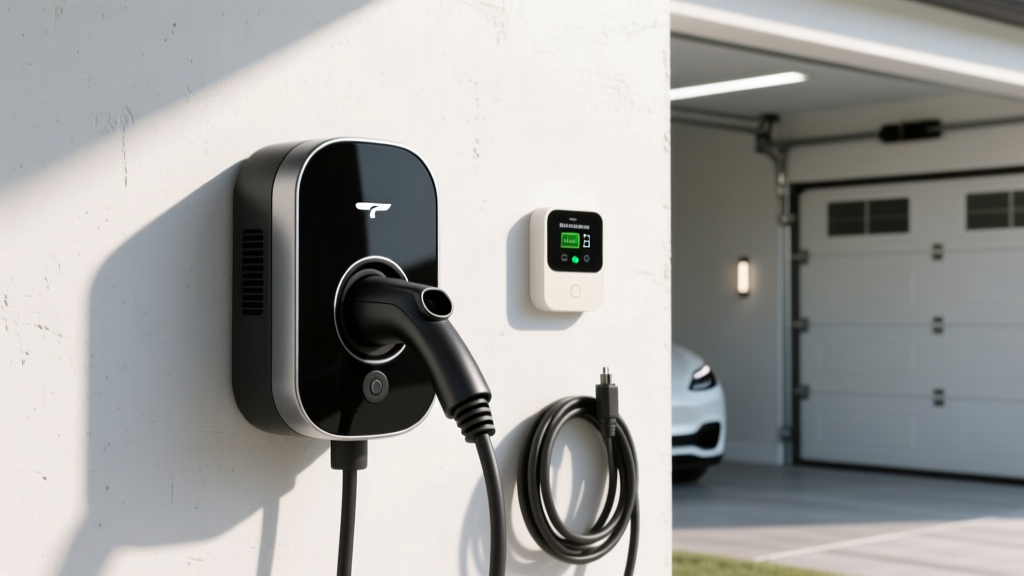
The single best investment for EV road-trip readiness is a Level 2 home charger. Leaving home at 100% SoC means you can skip or shorten your first DCFC stop — at Tejon Ranch or elsewhere. Here is what a home Level 2 installation actually involves and costs.
Electrical Requirements
A typical Level 2 home charger requires a 240-volt dedicated circuit, similar to what an electric dryer or oven uses. The most common setup is a NEMA 14-50 outlet on a 50-amp circuit, which supports chargers up to 40 amps (48 amps continuous requires a 60-amp circuit per NEC 80% derating rules).
- Minimum viable: 240V / 20A circuit (3.8 kW) — adds ~12 miles per hour
- Recommended standard: 240V / 50A circuit, NEMA 14-50 (9.6 kW) — adds ~32 miles per hour
- Maximum residential: 240V / 60A circuit, hardwired (11.5 kW) — adds ~40 miles per hour
- High-power (200A panel required): 240V / 80A circuit, hardwired (19.2 kW) — adds ~60 miles per hour
Panel Upgrade: The Hidden Cost
Many homes built before 2000 have 100-amp or 125-amp main electrical panels. Adding a 50-amp EV circuit to an already-loaded panel may require a panel upgrade to 200 amps. This is the single biggest variable in home charging cost and can add $1,500–$3,500 to your project. A licensed electrician will perform a load calculation to determine if your panel has capacity.
Installation Cost Breakdown
| Component | Simple Install (panel nearby, no upgrade) | Complex Install (long run or panel upgrade) |
|---|---|---|
| Level 2 Charger (hardware) | $350–$700 | $350–$700 |
| Electrician labor | $300–$800 | $800–$2,500 |
| Electrical permit | $50–$200 | $50–$200 |
| Panel upgrade (if needed) | $0 | $1,500–$3,500 |
| Conduit/wiring materials | $100–$300 | $300–$800 |
| Total | $800–$2,000 | $3,000–$7,700 |
The IRS §30C Alternative Fuel Vehicle Refueling Property Credit may cover up to 30% of home charger installation costs (max $1,000), subject to census-tract eligibility. Always consult a tax professional and verify current-year rules before claiming.
Equipment Recommendations
Not all Level 2 chargers are equal. Here are three proven options across budgets:
Emporia Vue Level 2 EV Charger
- Power: 48A (11.5 kW) hardwired or 40A (9.6 kW) NEMA 14-50
- Connector: J1772 (NACS adapter included with some bundles)
- Cable length: 24 ft
- Smart features: Wi-Fi, app scheduling, solar integration, energy monitoring
- Price: ~$400
ChargePoint Home Flex
- Power: Adjustable 16A–50A (3.8–12 kW) — set to match your circuit
- Connector: J1772 (NACS version available)
- Cable length: 23 ft
- Smart features: Wi-Fi, app scheduling, Alexa, utility demand-response
- Price: ~$550–$700
Tesla Wall Connector
- Power: Up to 48A (11.5 kW) on 60A circuit
- Connector: NACS native (J1772 adapter available for non-Teslas)
- Cable length: 24 ft
- Smart features: Wi-Fi, OTA updates, Power-Share (load balancing between two units)
- Price: ~$475
Safety, Code, and Preconditioning for Supercharger Stops
Home Installation Safety
Any Level 2 installation must comply with NEC Article 625 and local building codes. Key requirements:
- Dedicated circuit: Your EV charger must have its own breaker — no sharing with other appliances.
- GFCI protection: Required for outdoor receptacles and many indoor installations per NEC 2023/2026 updates.
- Outdoor rating: If your charger is outside, it must carry a NEMA 4 or IP65+ weatherproof rating. All three chargers recommended above meet this standard.
- Permit and inspection: Most jurisdictions require an electrical permit and a post-install inspection. Do not skip this — it protects your home insurance coverage.
Preconditioning: Squeeze More Speed from Your Tejon Ranch Stop
EV batteries charge fastest when warm — ideally between 75–95°F (24–35°C). If you are driving to Tejon Ranch on a cold morning (the Grapevine can drop below 40°F in winter), your battery may be too cold to accept peak charge rates, adding minutes to your stop.
Preconditioning warms the battery before you arrive. Tesla vehicles do this automatically when you navigate to a Supercharger. For non-Tesla EVs, look for a "precondition for charging" setting or simply start your navigation to the charger 20–30 minutes before arrival. On vehicles like the Hyundai Ioniq 5 and Kia EV6, preconditioning activates when the battery temperature is below the optimal charging window and a DCFC destination is set in navigation.
Without preconditioning in cold weather, expect your 10–80% charge time to increase by 30–50%. This is physics, not a defect — lithium-ion chemistry limits charge acceptance at low temperatures to prevent lithium plating and permanent degradation.
Frequently Asked Questions
How much does it cost to install a home EV charger?
A straightforward Level 2 installation with an adequate electrical panel typically runs $800–$2,000 all-in (charger, electrician, permit, materials). If your home needs a 200-amp panel upgrade, expect $3,000–$7,700 total. Always get a load calculation from a licensed electrician before committing.
How fast will each charging level add range?
Level 1 (120V) adds 3–5 miles per hour — fine for PHEVs, inadequate for BEVs. Level 2 (240V, 40–48A) adds 25–40 miles per hour and will fully recharge most EVs overnight. DC fast charging (50–350 kW) adds 150–1,000+ miles per hour at peak, but charge curves taper significantly above 60–80% SoC.
Which connector/charger is compatible with my EV?
As of 2026, NACS (J3400) is the dominant North American standard. Tesla, Ford, GM, Rivian, Volvo, and Polestar use it natively. Hyundai, Kia, BMW, and VW use CCS1 and require a CCS-to-NACS adapter (~$170–$230) for Supercharger access. CHAdeMO (Nissan Leaf) has no reliable Supercharger adapter — use Electrify America or EVgo instead.
How much does charging cost per mile vs. gas?
Home charging at off-peak rates (~$0.13/kWh) costs about $0.04/mile — roughly one-quarter the cost of gasoline at 30 MPG. Highway Supercharging (~$0.50/kWh) costs about $0.17/mile, which is competitive with a fuel-efficient gas car but more expensive than home charging. For trucks getting 22 MPG, gas still costs ~$0.21/mile, making even Supercharging cheaper.
What electrical upgrades might I need for a home charger?
The most common upgrade is a panel replacement from 100A or 125A to 200A ($1,500–$3,500). You may also need new conduit runs if your panel is far from your garage, a sub-panel if your main panel is full, or a utility service upgrade if your home's incoming service is under 100A. A licensed electrician's load calculation will identify exactly what is required.
Is the Tejon Ranch Supercharger open to non-Tesla EVs?
Tesla has been progressively opening Supercharger stalls to non-Tesla EVs via Magic Dock (built-in CCS adapter) and NACS compatibility. However, availability varies by station and stall. Always check the Tesla app's "Charge Your Non-Tesla EV" map for real-time stall availability at Tejon Ranch before relying on it with a non-Tesla vehicle.
How does the Grapevine elevation affect my EV range?
The climb through Tejon Pass (approximately 4,000 feet of elevation gain from the LA basin) significantly increases energy consumption. Expect 30–50% higher energy use on the ascent compared to flat highway driving. However, regenerative braking recovers a meaningful portion on the descent. Plan your SoC buffer accordingly — arriving at Tejon Ranch with 15–20% is comfortable, but arriving below 10% leaves little margin for error if stalls are occupied or out of service.
For the latest Supercharger station status and stall availability, check the Tesla Find Us page or your vehicle's built-in navigation. For federal charging infrastructure tax credits, review the IRS §30C credit guidelines and consult a qualified tax professional.