Setting up a home Level 2 charger is the single most impactful upgrade an EV owner can make. But between electrical panel constraints, permit requirements, and navigating the federal tax credit for EV charger installations, the process involves more variables than most buyers anticipate. This guide breaks down the exact costs, the 30C tax credit mechanics, connector compatibility across the 2026 landscape, and the equipment worth your money.
The Federal Tax Credit for EV Charger Installation (IRS §30C)
The Alternative Fuel Vehicle Refueling Property Credit (IRS §30C) covers residential EV charging equipment and installation. Unlike the §30D new-vehicle credit, this one targets the hardware on your wall and the electrician's labor to get it running.
- Credit amount: 30% of equipment + installation costs, capped at $1,000 for residential property
- Eligible property: Your principal residence (not investment or rental properties under this credit)
- Qualified equipment: Level 2 chargers, wiring, conduit, panel upgrades directly related to charger installation, and labor
- Income limits: None — unlike §30D, the charger credit has no AGI cap
- Nonrefundable: The credit can reduce your tax liability to zero but won't generate a refund beyond that
- Census tract requirement: The property must be located in an eligible census tract (non-urban or low-income community areas as defined by the IRS)
The census-tract restriction is the most common disqualifier. Before committing to an installation, verify your address against the IRS §30C eligibility tool or consult a tax professional. Many suburban and rural addresses qualify; dense urban cores often do not.
How it works in practice: If your total charger purchase and installation costs $2,800, the credit returns $840 (30% × $2,800). If your total hits $3,334 or more, you max out at the $1,000 cap.
Charging Levels Explained: Speed, Power, and Real-World Range Added
Understanding the difference between kW (power — the rate of energy delivery) and kWh (energy — the total capacity stored in your battery) is essential. A 48-amp Level 2 charger delivers 11.5 kW of power; charging a 75 kWh battery from 10–80% requires delivering roughly 52.5 kWh of energy, which takes about 4.5 hours at that rate.
| Level | Voltage | Power (kW) | Miles of Range Added/Hour | Best For |
|---|---|---|---|---|
| Level 1 | 120V | 1.2–1.9 kW | 3–5 mi/hr | Overnight trickle; PHEVs; low-mileage drivers |
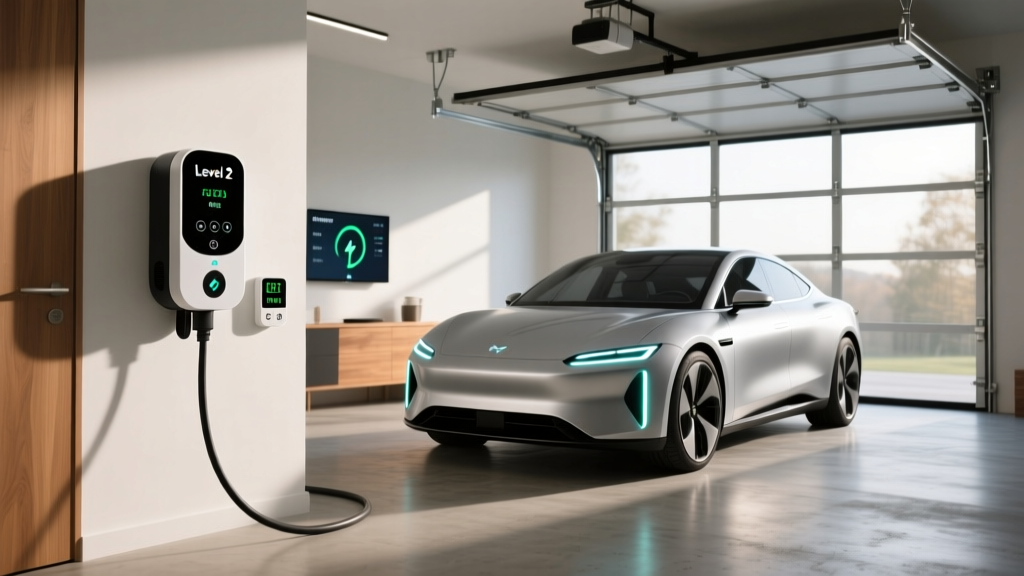
| Level 2 (Home) | 240V | 7.2–11.5 kW | 22–44 mi/hr | Daily home charging; covers 95% of needs |
| Level 2 (Public/Commercial) | 240V | 11.5–19.2 kW | 44–70 mi/hr | Workplace, apartments, destination charging |
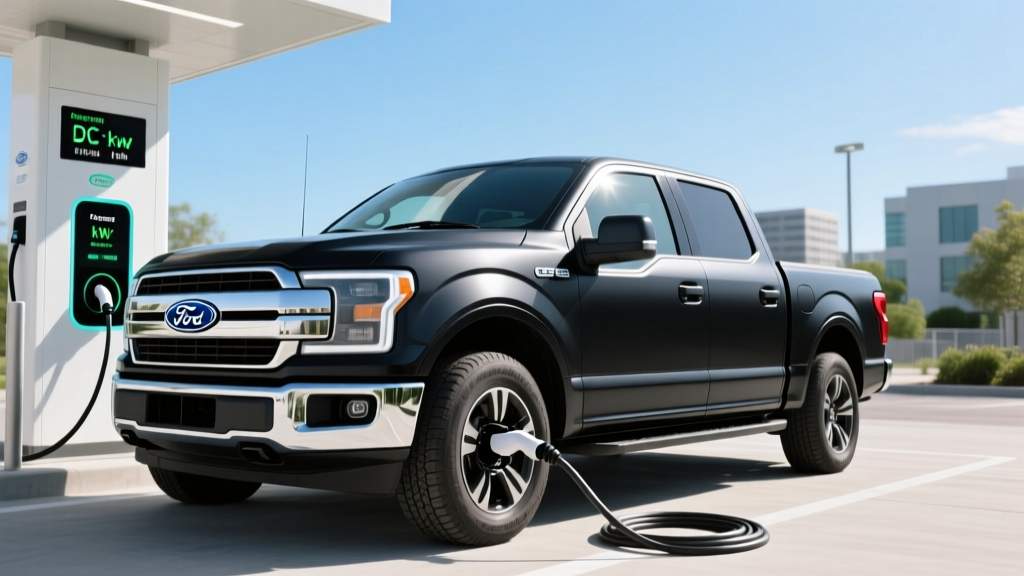
| DC Fast Charging | 400–800V DC | 50–350 kW | 150–1,000+ mi/hr (peak) | Road trips; 10–80% in 15–40 minutes |
Real-world DC fast-charging caveat: Peak kW rates apply only between roughly 10–50% State of Charge (SoC). Above 80%, the charge curve tapers significantly to protect battery health. A vehicle rated at 250 kW peak may average 120–140 kW across a full 10–80% session.
How Much Does It Cost to Install a Home EV Charger?
Installation costs vary enormously depending on your home's electrical panel capacity, the distance from panel to charger location, and local permit fees. Here's a realistic breakdown for a typical 240V/48A Level 2 installation in 2026:
| Component | Typical Range | Notes |
|---|---|---|
| Level 2 Charger (Equipment) | $350 – $750 | Smart Wi-Fi-enabled units, 32A–48A |
| Electrician Labor | $500 – $1,500 | Depends on run length, conduit type, wall material |
| Electrical Materials (conduit, wire, breaker) | $150 – $400 | 6 AWG copper for 48A; longer runs cost more |
| Permit & Inspection | $50 – $250 | Varies by municipality; some waive for EV installs |
| Panel Upgrade (if needed) | $1,500 – $3,500 | 100A → 200A service upgrade; older homes most likely |
| Total (no panel upgrade) | $1,050 – $2,900 | Most common scenario for homes built after 1990 |
| Total (with panel upgrade) | $2,550 – $6,400 | Common in homes with 100A service or heavy existing loads |
Electrical Requirements: What Your Panel Needs
A 48-amp Level 2 charger requires a 60-amp dedicated circuit (the NEC requires circuits to be rated 125% of the continuous load: 48A × 1.25 = 60A). This circuit draws from a double-pole breaker on a 240V line.
Panel capacity check: A licensed electrician will perform a load calculation (NEC Article 220) to determine if your panel can spare 60 amps. Homes with 200A service and gas appliances (range, water heater, furnace) typically have enough headroom. Homes with 100A service, electric heat, electric range, and electric water heater often do not — triggering a panel upgrade.
Alternative: 32A charger on a 40A circuit. If your panel is tight, a 32-amp charger (7.7 kW) still adds ~28 miles of range per hour and requires only a 40A breaker. For drivers covering under 60 miles daily, this is often sufficient and avoids a costly panel upgrade.
Connector Compatibility: NACS, CCS, and CHAdeMO in 2026
The connector landscape has consolidated dramatically. By 2026, the North American Charging Standard (NACS) — originally Tesla's proprietary connector — has been adopted by Ford, GM, Rivian, Volvo, Polestar, Mercedes-Benz, BMW, Hyundai, Kia, and most other major manufacturers. CCS1 remains on some legacy models and public infrastructure, while CHAdeMO is effectively discontinued on new vehicles (the Nissan Leaf ended production in 2025).
| Connector | Brands Using It (New Vehicles) | Notes |
|---|---|---|
| NACS (J3400) | Tesla, Ford, GM, Rivian, Volvo, Polestar, Hyundai, Kia, Mercedes, BMW, Lucid, Fisker | Native port on 2025+ models; adapter for some 2024 models |
| CCS1 | VW ID.4 (carryover), some Stellantis models, older 2020–2024 EVs | Still widely supported at public DCFC stations |
| CHAdeMO | None (discontinued) | Legacy only; Nissan Leaf, Mitsubishi Outlander PHEV |
For home Level 2 charging: All EVs use a J1772 connector for AC Level 2, or a NACS connector (which integrates AC Level 2 and DC fast charging in one port). If you own a CCS-equipped vehicle, most NACS wall chargers work with a J1772 adapter, and many charger manufacturers now ship with both connector options.
Cost to Charge: Home vs. Public vs. Gas per Mile
The economics of EV charging depend heavily on where and when you plug in. Here's a comparison using a mid-size EV averaging 3.0 miles per kWh (typical for vehicles like the Hyundai Ioniq 5 or Tesla Model Y) versus a 28 MPG gas sedan:
| Scenario | Rate | Cost per kWh | Cost per Mile |
|---|---|---|---|
| Home (off-peak utility rate) | $0.09–$0.14/kWh | $0.12 avg | $0.04 |
| Home (standard residential) | $0.14–$0.22/kWh | $0.18 avg | $0.06 |
| Public Level 2 (ChargePoint, etc.) | $0.25–$0.49/kWh | $0.35 avg | $0.12 |
| DC Fast Charging (Electrify America, Tesla Supercharger) | $0.32–$0.58/kWh | $0.44 avg | $0.15 |
| Gas vehicle (28 MPG, $3.40/gal) | — | — | $0.12 |
The takeaway: Home off-peak charging delivers fuel costs at roughly one-third the price of gasoline. Even standard residential rates undercut gas significantly. Public DC fast charging approaches or exceeds gas costs per mile — which is why home charging access is the primary economic argument for EV ownership.
Many utilities offer time-of-use (TOU) plans with overnight rates as low as $0.06–$0.09/kWh. Smart chargers with scheduled charging features automatically delay charging to off-peak windows, maximizing savings without any behavioral change.
Best Home EV Chargers for 2026: Equipment Recommendations
These recommendations prioritize reliability, power output, smart features, and value based on sustained market performance through 2026:
ChargePoint Home Flex
- Power: Up to 11.5 kW (48A) on 240V/60A circuit; configurable down to 16A
- Connector: J1772 (NACS version available)
- Cable length: 23 feet
- Smart features: Wi-Fi, app scheduling, Alexa integration, energy tracking
- Price: ~$549
- Best for: Flexibility across circuit sizes; strong app ecosystem
Wall Connector (Tesla, 3rd Gen)
- Power: Up to 11.5 kW (48A)
- Connector: Native NACS
- Cable length: 24 feet
- Smart features: Wi-Fi, OTA updates, Power Sharing (link multiple units), access control
- Price: ~$475
- Best for: NACS-equipped vehicles; cleanest design; multi-charger setups
Emporia Vue Level 2 Charger
- Power: Up to 11.5 kW (48A)
- Connector: J1772
- Cable length: 24 feet
- Smart features: Wi-Fi, solar integration, real-time energy monitoring, scheduled charging
- Price: ~$399
- Best for: Budget-conscious buyers; solar-home integration
Grizzl-E Smart
- Power: Up to 10 kW (40A)
- Connector: J1772 (NACS adapter available)
- Cable length: 24 feet
- Smart features: Wi-Fi, OCPP support, adjustable amperage, extreme-cold rated (-40°C)
- Price: ~$449
- Best for: Cold-climate durability; Canadian-made; outdoor installations
Key selection criteria: Match the charger's maximum amperage to your available circuit. A 48A charger requires a 60A circuit; a 40A charger needs a 50A circuit; a 32A charger needs a 40A circuit. Installing a charger rated higher than your circuit allows wastes money; installing one rated lower leaves charging speed on the table.
Charging Time Examples: 10–80% by Battery Size and Charger Power
Here's how long a 10–80% session takes for common battery sizes across different Level 2 power levels. These assume ~85% charging efficiency (energy lost to heat and onboard-converter overhead):
| Battery Size (usable kWh) | 7.7 kW (32A) | 9.6 kW (40A) | 11.5 kW (48A) |
|---|---|---|---|
| 58 kWh (e.g., VW ID.4 Standard) | 5.3 hrs | 4.2 hrs | 3.5 hrs |
| 75 kWh (e.g., Tesla Model Y LR) | 6.8 hrs | 5.5 hrs | 4.6 hrs |
| 84 kWh (e.g., Ford F-150 Lightning Ext.) | 7.6 hrs | 6.1 hrs | 5.1 hrs |
| 100 kWh (e.g., GMC Sierra EV) | 9.1 hrs | 7.3 hrs | 6.1 hrs |
For most drivers, overnight charging (8–10 hours available) on a 48A circuit fully replenishes even the largest consumer EV batteries. A 32A circuit is sufficient for daily commutes under 80 miles.
Safety, Code, and Installation Best Practices
EV charging is a continuous high-draw load — your charger will run at full power for hours at a time. This demands proper installation:
- Dedicated circuit: NEC requires the EV charger to have its own dedicated circuit — no sharing with other outlets or appliances
- GFCI protection: The 2023 NEC update requires GFCI protection for all EV receptacles (NEMA 14-50 outlets). Hardwired chargers are exempt from this requirement, which is one reason hardwired installations are increasingly preferred
- Outdoor rating: If your charger is mounted outside, ensure the unit carries a NEMA 4 (weatherproof) rating. Most quality chargers do, but verify before purchasing
- Wire gauge: 6 AWG copper for 48A circuits; 8 AWG for 40A; 10 AWG for 32A. Undersized wire is a fire hazard
- Permit and inspection: Nearly all jurisdictions require an electrical permit for EV charger installation. The inspection verifies wire gauge, breaker sizing, grounding, and GFCI compliance. Skipping the permit risks insurance claim denials and code violations
- NEMA 14-50 vs. hardwired: A 14-50 outlet gives you portability (take the charger when you move), but hardwired connections eliminate the GFCI breaker requirement and reduce failure points. Discuss trade-offs with your electrician
Frequently Asked Questions
How much does it cost to install a home EV charger?
Most installations without a panel upgrade run $1,050–$2,900 total (charger + electrician + materials + permit). If your home needs a 100A-to-200A panel upgrade, expect $2,550–$6,400. The §30C tax credit can return up to $1,000 (30% of costs) if your address is in an eligible census tract.
How fast will each charging level add range?
Level 1 (120V) adds 3–5 miles per hour. Level 2 (240V, 48A) adds 35–44 miles per hour depending on vehicle efficiency. DC fast charging adds 150–1,000+ miles per hour at peak, but sessions are typically measured in minutes (15–40 min for 10–80%) due to charge-curve tapering above 80% SoC.
Which connector/charger is compatible with my EV?
For 2026 models, most new EVs use NACS. Vehicles from 2020–2024 may use CCS1 or CHAdeMO. All EVs accept Level 2 AC charging via J1772 or NACS. Check your vehicle's charge port — if it's the smaller, rounder NACS port, buy a NACS charger. If it's the larger CCS port with two extra DC pins below, buy a J1772 charger or use a NACS-to-CCS adapter for DC fast charging on the road.
How much does charging cost per mile vs. gas?
Home charging at off-peak rates costs roughly $0.04/mile. Standard residential rates average $0.06/mile. A comparable 28 MPG gas vehicle at $3.40/gallon costs $0.12/mile. Home-charged EVs save $0.06–$0.08 per mile, translating to $720–$960 annually at 12,000 miles/year.
What electrical upgrades might I need?
The most common upgrade is a panel capacity increase from 100A to 200A service ($1,500–$3,500). You may also need a new double-pole breaker (40A or 60A), conduit run from panel to charger location, and a dedicated circuit. Homes with gas appliances and 200A service rarely need upgrades. Always have a licensed electrician perform a NEC Article 220 load calculation before committing to a charger amperage.