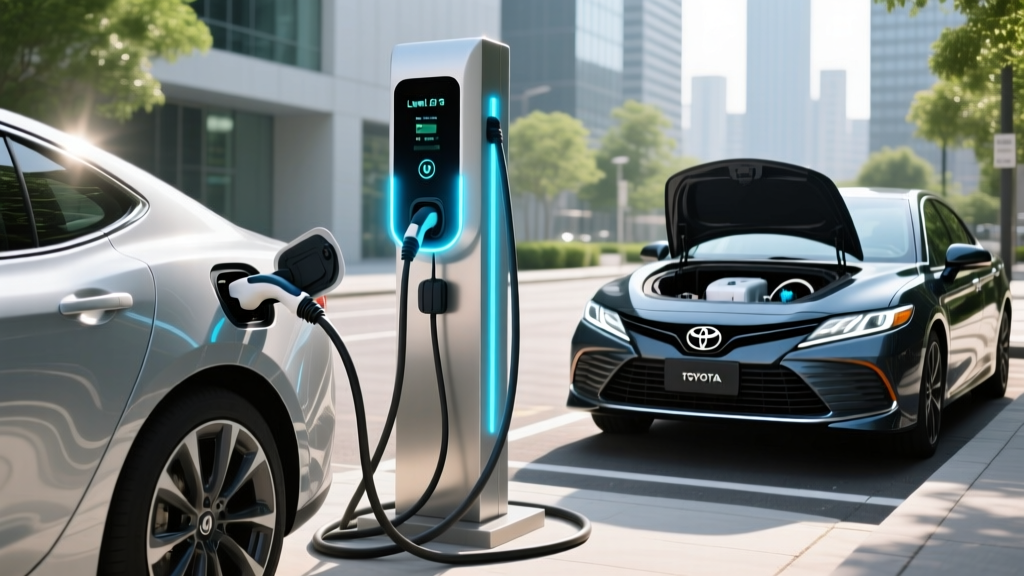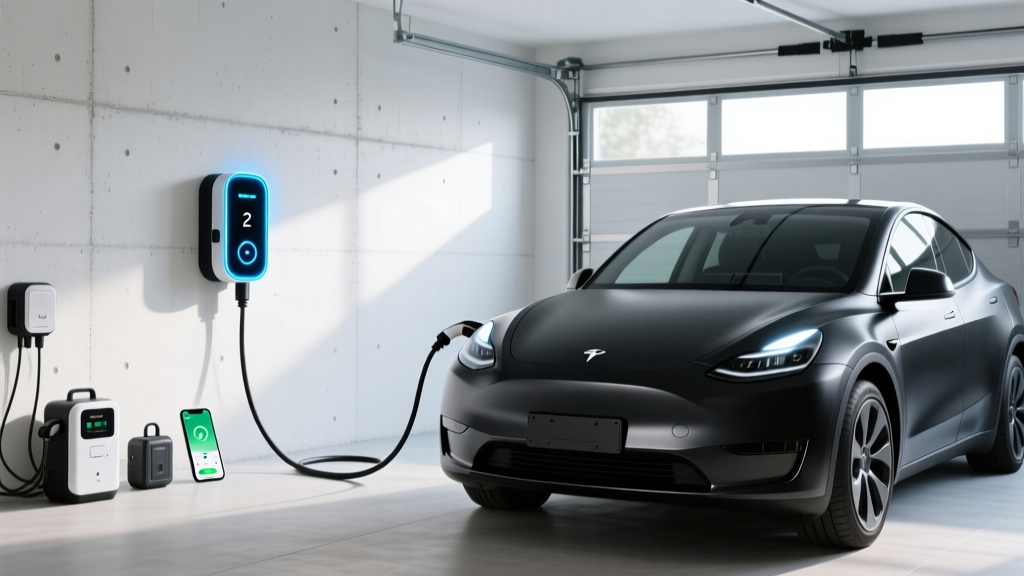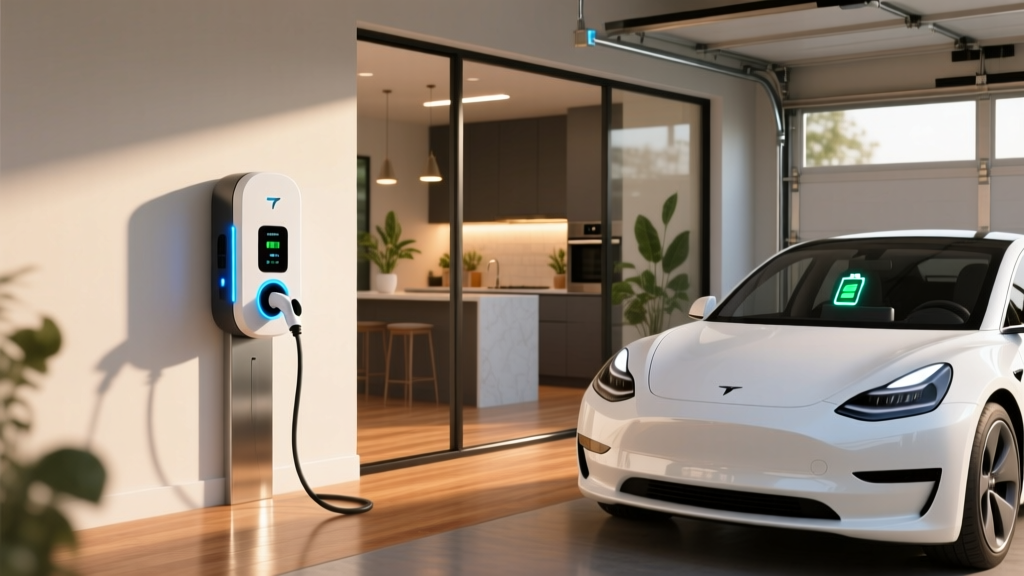
Buying an electric vehicle is only half the equation — you also need a reliable way to charge it at home. The good news for 2026: the federal government still offers a tax credit for electric car charger installation that can offset up to $1,000 of your home charging setup costs. But eligibility depends on where you live, what equipment you buy, and how your home's electrical panel is configured.
This guide breaks down exactly what the Alternative Fuel Vehicle Refueling Property Credit (IRS §30C) covers, how much a Level 2 home charger actually costs to install, which equipment to buy, and how to calculate your real-world charging savings versus gas.
The Federal Tax Credit for Electric Car Charger Installation
The IRS §30C credit, sometimes called the home charging tax credit, covers 30% of the cost of purchasing and installing qualified EV charging equipment at your primary residence, up to a maximum credit of $1,000 per year. This credit was extended and modified by the Inflation Reduction Act and remains available through December 31, 2032.
However, there are geographic restrictions that catch many buyers off guard. Under the updated rules, the charging equipment must be installed in a census tract that is classified as "non-urban" or meets specific low-income community criteria. This effectively means many suburban and urban homeowners may not qualify — a significant change from the pre-2023 rules.
§30C Eligibility Checklist (2026)
- Credit amount: 30% of equipment + installation costs, capped at $1,000
- Location requirement: Property must be in a qualifying census tract (non-urban or eligible low-income community) — check via the IRS §30C guidance page
- Equipment requirement: Must be new, UL-listed (or equivalent), and permanently installed at your primary residence
- Income limits: No income cap (unlike the §30D vehicle credit)
- Claim method: File IRS Form 8911 with your federal tax return for the year the charger was installed
- Nonrefundable: Credit can reduce your tax liability to zero but won't generate a refund beyond that
Key caveat: The census-tract requirement is the single biggest barrier. Before purchasing equipment, use the IRS interactive tool or consult a tax professional to confirm your address qualifies. State and utility rebates may also be available regardless of federal eligibility — check your local utility's EV programs.
Charging Levels Explained: Speeds in kW and Miles Per Hour
EV charging is measured in kW (kilowatts), which represents the rate of power delivery — think of it like water flowing through a pipe. The battery capacity is measured in kWh (kilowatt-hours), which is the total energy stored — the size of the tank. Never confuse the two: a 10 kW charger fills a 75 kWh battery in roughly 7.5 hours (minus taper losses).
| Level | Voltage | Power (kW) | Miles of Range Added Per Hour | Typical Use |
|---|---|---|---|---|
| Level 1 | 120V AC | 1.2–1.9 kW | 3–5 miles/hr | Overnight trickle; PHEVs; emergency backup |
| Level 2 | 240V AC | 3.3–19.2 kW | 12–75 miles/hr | Home daily charging; workplace; public destinations |
| DC Fast Charging | 400–900V DC | 50–400 kW | 150–1,200+ miles/hr | Road trips; highway corridors; rapid top-ups |
For most EV owners, Level 2 at home is the sweet spot. A 48-amp (11.5 kW) Level 2 charger can fully replenish a Tesla Model Y Long Range (75 kWh usable battery, ~310 miles EPA range) in about 7–8 hours — perfectly suited for overnight charging. A 75 kWh battery going from 10% to 80% (52.5 kWh needed) takes roughly 5 hours at 11.5 kW.
DC fast charging is for road trips. A modern EV on a 350 kW charger might go from 10% to 80% in 18–25 minutes, though charge curves taper significantly above 80% State of Charge (SoC). Peak kW is never sustained — a "250 kW capable" vehicle may only hold that rate for a few minutes before stepping down.
Home Charger Installation: Electrical Requirements and Costs
Installing a hardwired Level 2 charger typically requires a dedicated 240V circuit at 40–60 amps, depending on the charger's maximum output. The National Electrical Code (NEC) requires the circuit to be rated at 125% of the charger's continuous draw — so a 48-amp charger needs a 60-amp breaker.
Here's where costs vary dramatically: if your electrical panel has spare capacity and the charger is mounted close to the panel, installation is straightforward. But older homes with 100-amp service or panels already near capacity may need a panel upgrade to 200 amps, which adds $1,500–$3,500 to the project.
| Component | Low End | High End | Notes |
|---|---|---|---|
| Level 2 charger (hardware) | $350 | $750 | 32A–48A smart chargers; Wi-Fi enabled |
| Electrician labor (standard install) | $400 | $1,200 | Depends on run length, conduit, wall material |
| Electrical permit | $50 | $250 | Varies by municipality |
| Panel upgrade (if needed) | $1,500 | $3,500 | 100A → 200A service upgrade |
| Total (no panel upgrade) | $800 | $2,200 | Typical suburban home with adequate panel |
| Total (with panel upgrade) | $2,300 | $5,700 | Older homes with 100A service |
What electrical upgrades might you need? Beyond a panel upgrade, common additions include running new conduit (EMT or PVC) from the panel to the garage or exterior wall, installing a NEMA 14-50 outlet (for plug-in chargers) or a junction box (for hardwired units), and ensuring proper grounding. Some jurisdictions require GFCI protection on 240V EV circuits — your electrician will advise based on local code.
Which Connector and Charger Is Compatible with Your EV?
The EV charging connector landscape has shifted dramatically. Tesla's North American Charging Standard (NACS) has been adopted by Ford, GM, Rivian, Hyundai, Kia, and most other major automakers starting with 2025–2026 model-year vehicles. CCS1 (Combined Charging System) remains on many 2024 and earlier models, while CHAdeMO is largely limited to the Nissan Leaf.
| Connector | Brands Using It (2026) | Home Charger Options | Adapter Needed? |
|---|---|---|---|
| NACS (Tesla/J3400) | Tesla, Ford, GM, Rivian, Hyundai, Kia, Volvo, Polestar, BMW, Mercedes | Tesla Wall Connector, Autel MaxiCharger, ChargePoint Home Flex (NACS) | CCS→NACS adapters available (~$200–$300) |
| CCS1 | VW ID.4 (prior MY), some Stellantis, legacy models | ChargePoint Home Flex, Emporia Vue, Grizzl-E | NACS→CCS adapters available (~$200) |
| CHAdeMO | Nissan Leaf (discontinued after 2025) | Limited home options; mostly public DCFC | No widely available adapter |
For 2026 buyers: If you're purchasing a new EV from a brand that has switched to NACS, buy a NACS-equipped home charger. If you have an older CCS1 vehicle or plan to keep it for several more years, a CCS1 charger or a universal unit with a swappable connector cable is the pragmatic choice. The Tesla Wall Connector now ships with a NACS plug natively and works with all NACS-equipped vehicles.
Charging Cost Per Mile vs. Gasoline
One of the strongest financial arguments for EVs is the cost-per-mile advantage of electricity over gasoline. But the actual savings depend heavily on where and when you charge.
| Scenario | Rate ($/kWh) | EV Efficiency (kWh/100mi) | Cost Per Mile | vs. Gas at $3.40/gal, 28 MPG |
|---|---|---|---|---|
| Home off-peak (time-of-use) | $0.09–$0.13 | 28–32 | $0.027–$0.042 | Saves $0.08–$0.09/mile |
| Home standard rate | $0.14–$0.18 | 28–32 | $0.039–$0.058 | Saves $0.06–$0.08/mile |
| Public Level 2 (networked) | $0.25–$0.45 | 28–32 | $0.070–$0.144 | Saves $0.00–$0.05/mile |
| DC Fast Charging (public) | $0.35–$0.65 | 28–32 | $0.098–$0.208 | May cost MORE than gas |
| Gasoline (28 MPG avg) | — | — | $0.121 | Baseline |
The takeaway: home charging is where EVs deliver their maximum savings. At off-peak rates of $0.11/kWh, a Hyundai Ioniq 6 (27 kWh/100mi combined) costs about $0.03 per mile — roughly 75% less than a comparable gas car. But frequent reliance on DC fast charging at $0.50/kWh can erode or even eliminate that advantage.
This is why a home Level 2 charger isn't just a convenience — it's the economic foundation of EV ownership. The U.S. Department of Energy estimates the average EV driver saves $600–$1,200 annually on fuel when primarily charging at home.
Recommended Home EV Chargers for 2026
Tesla Wall Connector (Gen 4, NACS)
- Power output: Up to 11.5 kW (48 amps) on a 60A circuit
- Connector: NACS (native)
- Cable length: 24 feet
- Smart features: Wi-Fi, OTA updates, power sharing between multiple units, access control, energy tracking via Tesla app
- Price: ~$425
- Best for: Tesla owners and any 2025+ NACS-equipped EV (Ford F-150 Lightning, Hyundai Ioniq 5, GM Ultium vehicles)
ChargePoint Home Flex (NACS or CCS1)
- Power output: Up to 12 kW (50 amps) adjustable down to 16A for panel-constrained homes
- Connector: Available in NACS or CCS1 configurations
- Cable length: 23 feet
- Smart features: Wi-Fi, Alexa/Google Home integration, flexible amperage dial, scheduling, ChargePoint app with detailed energy reports
- Price: ~$550–$650
- Best for: Multi-EV households needing flexible amperage; older panels with limited capacity
Emporia Level 2 EV Charger
- Power output: Up to 11.5 kW (48 amps)
- Connector: CCS1 (NACS adapter available)
- Cable length: 24 feet
- Smart features: Wi-Fi, integrates with Emporia Vue whole-home energy monitor, solar-aware charging, TOU scheduling
- Price: ~$399
- Best for: Budget-conscious buyers; solar panel owners wanting to charge from excess generation
Grizzl-E Smart (United Chargers)
- Power output: Up to 10 kW (40 amps)
- Connector: CCS1 (J1772)
- Cable length: 24 feet
- Smart features: Wi-Fi, OCPP-compatible, extreme cold rating (-40°F), rugged aluminum enclosure
- Price: ~$499
- Best for: Cold-climate installations; outdoor mounting in harsh weather; commercial-grade durability
Installation tip: Hardwired chargers (no plug) are generally preferred for reliability and code compliance. NEMA 14-50 outlet installations require a higher-grade receptacle ($40–$80 extra for an EV-rated outlet like the Hubbell 9450A) and may trigger GFCI breaker requirements that add $60–$120 and can cause nuisance trips with some chargers.
Safety, Code, and Practical Considerations
EV chargers draw sustained high current for hours — far longer than a dryer or oven cycle. This makes proper installation non-negotiable. Key code and safety requirements include:
- Dedicated circuit: Your Level 2 charger must have its own dedicated breaker — never share a circuit with other appliances
- Wire gauge: 6 AWG copper for 48A chargers on a 60A breaker; 8 AWG for 32A chargers on a 40A breaker
- GFCI protection: Required in many jurisdictions for 240V receptacles in garages (NEC 2023, Article 511.9). Hardwired installations may be exempt — confirm with your local inspector
- Outdoor rating: If mounting outside, the charger must be rated NEMA 4 (weatherproof). All recommended chargers above carry this rating
- Permit and inspection: Most municipalities require an electrical permit ($50–$250) and a post-installation inspection. Do not skip this — it protects your home insurance coverage and is required to claim the §30C tax credit
Panel capacity check: Before buying a charger, have an electrician perform a load calculation on your panel. A 200-amp panel can typically handle a 60-amp EV circuit alongside normal household loads. A 100-amp panel likely cannot — you'll either need to choose a lower-amperage charger (16–24 amps, still adequate for overnight charging) or invest in a panel upgrade.
Frequently Asked Questions
How much does it cost to install a home EV charger?
A standard Level 2 home charger installation costs between $800 and $2,200 when your electrical panel has sufficient capacity. This includes the charger hardware ($350–$750), electrician labor ($400–$1,200), and a permit ($50–$250). If your home needs a 100A-to-200A panel upgrade, add $1,500–$3,500, bringing the total to $2,300–$5,700. The federal §30C tax credit can offset 30% of these costs (up to $1,000) if you're in a qualifying census tract.
How fast will each charging level add range?
Level 1 (120V) adds 3–5 miles of range per hour — adequate only for plug-in hybrids or very low daily mileage. Level 2 (240V) at 48 amps adds roughly 35–45 miles per hour for a typical EV, fully replenishing most batteries overnight. DC fast charging adds 150–1,200+ miles per hour at peak rates, though real-world sessions taper as the battery approaches 80% SoC — expect a 10–80% charge in 18–30 minutes on a 150–350 kW station.
Which connector/charger is compatible with my EV?
For 2026 model-year vehicles, most new EVs (Tesla, Ford, GM, Hyundai, Kia, Rivian, BMW, Mercedes) use the NACS connector. Older 2023–2024 models from VW, Stellantis, and others may still have CCS1. The Nissan Leaf uses CHAdeMO. Match your home charger's connector to your vehicle, or budget $200–$300 for a certified adapter.
How much does charging cost per mile vs. gas?
Home charging at off-peak rates ($0.09–$0.13/kWh) costs $0.03–$0.04 per mile for an efficient EV — roughly 70–75% less than gasoline at $3.40/gallon in a 28 MPG car ($0.12/mile). Public DC fast charging at $0.45–$0.65/kWh can cost $0.10–$0.21 per mile, which may exceed gas costs. Maximizing home charging is the key to EV fuel savings.
What electrical upgrades might I need for a home charger?
The most common upgrade is a panel increase from 100A to 200A service ($1,500–$3,500) if your current panel lacks spare capacity. Other potential needs include running new conduit from the panel to the garage, upgrading wire gauge for longer runs, installing an EV-rated NEMA 14-50 receptacle, or adding GFCI breakers required by local code. A licensed electrician's load calculation will identify exactly what's needed before you purchase equipment.