Why Supercharging Cost Matters More Than You Think
When Tesla popularized the term "Supercharging," it reshaped how every EV owner thinks about filling up. But the word has bled into everyday EV vocabulary to mean any DC fast charging session — and the supercharging cost of those sessions varies wildly depending on where, when, and how you plug in. A 10% to 80% session on a road trip might cost you $18 in rural Oklahoma and $38 in downtown San Francisco. Meanwhile, that same energy replenished overnight at home on a Level 2 charger might cost $7.
This guide breaks down the real economics of EV charging across all three levels, the hardware you need, what your electrical panel can handle, and how every dollar compares to gasoline. If you're shopping for an EV or optimizing your current ownership, the numbers below are the ones that actually move your monthly budget.
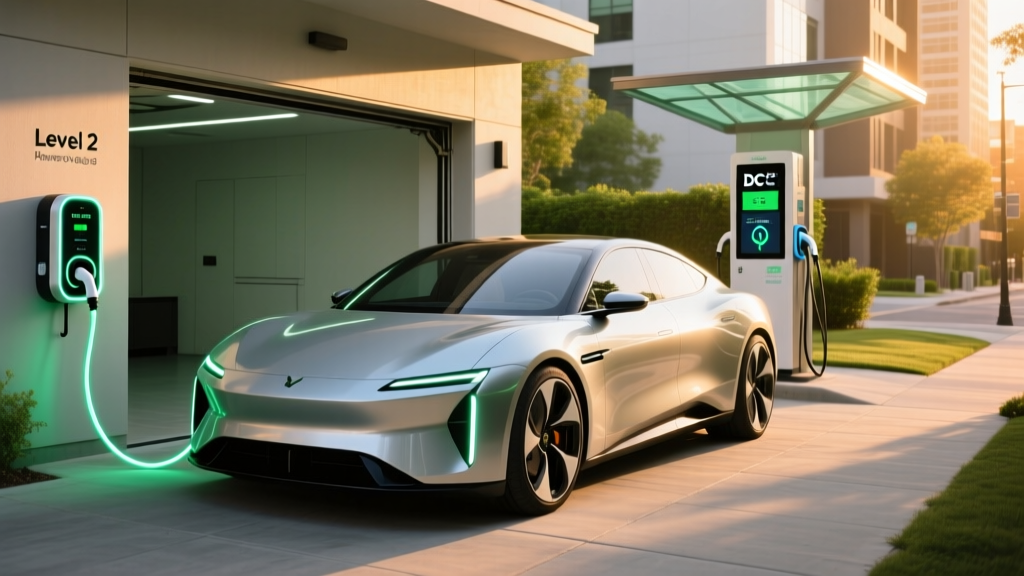
The Three Charging Levels: Speed, Power, and What They Cost
Before comparing prices, you need to understand the three charging tiers available to EV owners. The critical distinction: kW (kilowatts) measures the rate of power delivery — think of it as the width of the hose. kWh (kilowatt-hours) measures the total energy transferred — the volume of water in the bucket. You pay for kWh; your charger's kW rating determines how fast that bucket fills.
| Level | Voltage | Typical Power (kW) | Miles of Range Added per Hour | Where You Find It |
|---|---|---|---|---|
| Level 1 | 120V AC | 1.0 – 1.4 kW | 3 – 5 mi/hr | Any standard household outlet |
| Level 2 | 240V AC | 3.3 – 19.2 kW | 12 – 75 mi/hr | Home wallbox, workplace, public AC stations |
| DC Fast Charging (incl. Superchargers) | 400–800V DC | 50 – 350 kW | 150 – 1,200+ mi/hr (peak) | Tesla Supercharger, Electrify America, EVgo, Ionity |
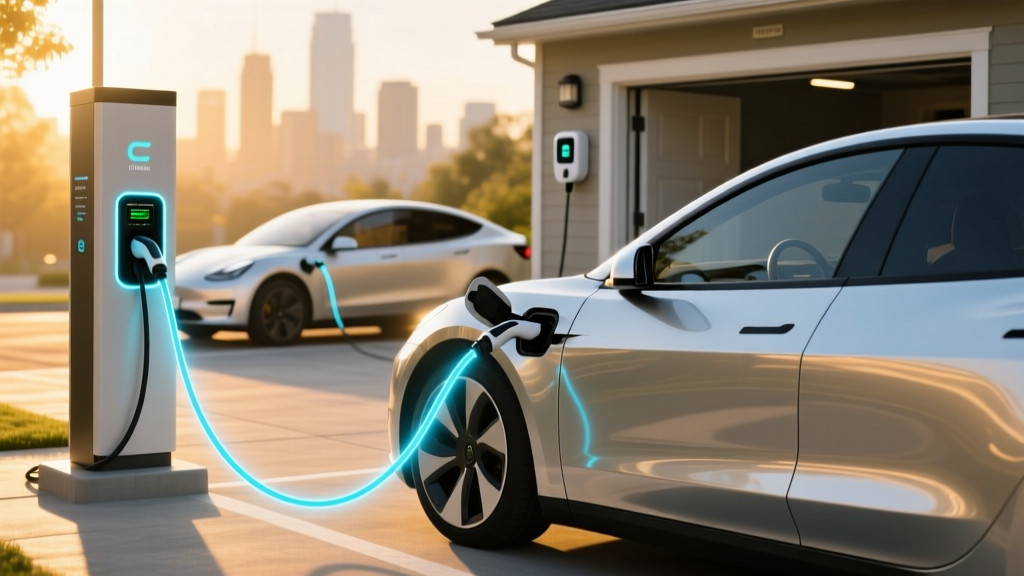
Level 1 is essentially a trickle — useful for plug-in hybrids with small batteries or as an emergency top-up, but impractical as a primary strategy for a 75+ kWh BEV. Level 2 is the backbone of daily EV ownership: plug in when you get home, wake up full. DC fast charging — the category that includes Tesla Superchargers and all CCS/CHAdeMO rapid chargers — is your road-trip lifeline and the most expensive option per kWh.
Supercharging Cost: What You Actually Pay per kWh
DC fast charging pricing is fragmented. Networks charge by the kWh where regulations allow, by the minute in some states, and occasionally with idle fees on top. Here's what the landscape looks like in early 2026:
| Scenario | $/kWh Range | Notes |
|---|---|---|
| Home Level 2 (national avg electricity) | $0.12 – $0.18 | Varies by state; off-peak plans can drop to $0.06 – $0.09 |
| Home Level 2 (time-of-use off-peak) | $0.06 – $0.10 | Requires utility TOU plan; overnight charging |
| Tesla Supercharger (V3/V4) | $0.25 – $0.48 | Urban and peak-hour locations trend higher; members-only pricing for Tesla owners |
| Electrify America / EVgo / ChargePoint DC | $0.32 – $0.58 | Subscription plans (EA Pass, EVgo+) reduce rates 15–30% |
| Free DC fast charging | $0.00 | Some dealers, hotels, and workplaces; increasingly rare and often time-limited |
For a concrete example: the 2025 Hyundai Ioniq 5 (84 kWh usable battery, NMC chemistry) charging from 10% to 80% needs roughly 59 kWh. At home on an off-peak rate of $0.08/kWh, that session costs $4.72. At a Tesla Supercharger averaging $0.35/kWh, it's $20.65. At a peak-hour Electrify America station at $0.52/kWh, you're paying $30.68. The same energy, a 6× price spread.
Cost per Mile: EV Charging vs. Gasoline in 2026
The ultimate comparison for budget-minded buyers is cost per mile. Let's put hard numbers on it using the EPA's efficiency ratings from fueleconomy.gov.
| Vehicle / Scenario | Energy Use | Fuel/Energy Cost | Cost per Mile |
|---|---|---|---|
| 2025 Tesla Model Y LR (home, $0.14/kWh) | 28 kWh/100mi | $0.14/kWh | $0.039 |
| 2025 Tesla Model Y LR (Supercharger, $0.35/kWh) | 28 kWh/100mi | $0.35/kWh | $0.098 |
| 2025 Hyundai Ioniq 5 (home, $0.08/kWh off-peak) | 30 kWh/100mi | $0.08/kWh | $0.024 |
| 2025 Hyundai Ioniq 5 (EA DC fast, $0.48/kWh) | 30 kWh/100mi | $0.48/kWh | $0.144 |
| 2025 Toyota RAV4 AWD (gas, $3.40/gal, 30 MPG combined) | 3.33 gal/100mi | $3.40/gal | $0.113 |
| 2025 Ford F-150 4WD (gas, $3.40/gal, 20 MPG combined) | 5.0 gal/100mi | $3.40/gal | $0.170 |
Home charging is decisively cheaper than gasoline in every scenario — often by a factor of three to five. Supercharging cost per mile, however, can approach or even exceed gasoline costs depending on the network and location. The takeaway: home Level 2 charging is where the EV savings story lives. DC fast charging is a convenience premium you pay for speed, not a long-term fuel-replacement strategy.
Home Charger Installation: What It Costs and What You Need
A Level 2 home charger is the single highest-impact accessory any EV owner can install. But the total cost extends well beyond the wallbox itself. Here's a realistic breakdown based on 2026 national averages:
| Component | Low End | High End | Notes |
|---|---|---|---|
| Level 2 charger (hardware) | $350 | $750 | 32A–48A smart chargers; Wi-Fi enabled |
| Electrician labor (standard install) | $400 | $1,200 | Assumes panel is nearby, short conduit run |
| Electrical permit | $50 | $250 | Required in most jurisdictions; varies by locality |
| Panel upgrade (if needed) | $1,500 | $4,500 | 100A → 200A service upgrade for older homes |
| Total (no panel upgrade) | $800 | $2,200 | Most homes with 200A service fall here |
| Total (with panel upgrade) | $2,300 | $6,700 | Common in pre-1990 homes with 100A panels |
The electrical requirements for a typical 48-amp Level 2 charger: a dedicated 240V/60A circuit (NEC requires circuits rated at 125% of continuous load, so 48A continuous needs a 60A breaker). The charger draws 11.5 kW at peak. If your home has a 200-amp panel with available capacity, the install is straightforward. If you're in an older home with a 100-amp panel already near capacity — running central AC, electric dryer, and an electric range — a panel upgrade is likely mandatory.
A qualified licensed electrician should perform a load calculation before any install. Never skip the permit: unpermitted work can void home insurance and create fire-safety risks. For outdoor installations, ensure your charger carries a NEMA 4 or NEMA 4X rating and that the circuit includes GFCI protection as required by NEC 2023 Article 625.
Connector Compatibility: NACS, CCS, and CHAdeMO in 2026
The connector landscape has consolidated dramatically since Ford, GM, Rivian, Volvo, and most major automakers adopted the North American Charging Standard (NACS) — originally Tesla's proprietary connector — starting in the 2025 model year. Here's where things stand:
| Connector | Native Vehicles | DC Fast Charge Availability |
|---|---|---|
| NACS (Tesla-style) | Tesla (all), Ford, GM, Rivian, Volvo, Polestar, Mercedes, Nissan (2026+), Honda (2026+), Fisker, Lucid | Tesla Supercharger network (20,000+ stalls), plus growing NACS-equipped EA and ChargePoint stations |
| CCS1 | Hyundai, Kia, BMW, VW, Audi, Porsche, Stellantis, Subaru, remaining legacy models | Electrify America, EVgo, ChargePoint, Ionity; adapters available for Tesla Supercharger access |
| CHAdeMO | Nissan Leaf (legacy, pre-2026), Mitsubishi Outlander PHEV (legacy) | Declining; most new stations omit CHAdeMO. Adapters are expensive (~$400+) and rare |
If you own a CCS1-equipped vehicle and want access to Tesla Superchargers, Tesla sells a CCS-to-NACS adapter (~$195) that enables Supercharging at V3 stalls (up to 250 kW). Ford and Rivian owners received complimentary adapters with their vehicles. For home Level 2 charging, all vehicles use the J1772 connector (or NACS for Teslas), and adapters are inexpensive (~$30–$50) if your charger cable doesn't match your car's inlet.
Equipment Recommendations: Best Home Level 2 Chargers for 2026
Below are three proven Level 2 chargers that balance power, reliability, smart features, and value. All support the J1772 connector natively; NACS-native versions or adapters are available for each.
ChargePoint Home Flex
- Power Output: Up to 11.5 kW (48A) on a 60A circuit; configurable down to 16A
- Connector: J1772 (NACS adapter available)
- Cable Length: 23 feet
- Smart Features: Wi-Fi, app scheduling, Alexa integration, energy tracking, utility demand-response compatible
- Price: ~$599 (hardware only)
- Best For: Most buyers; flexible amperage fits panels with limited headroom
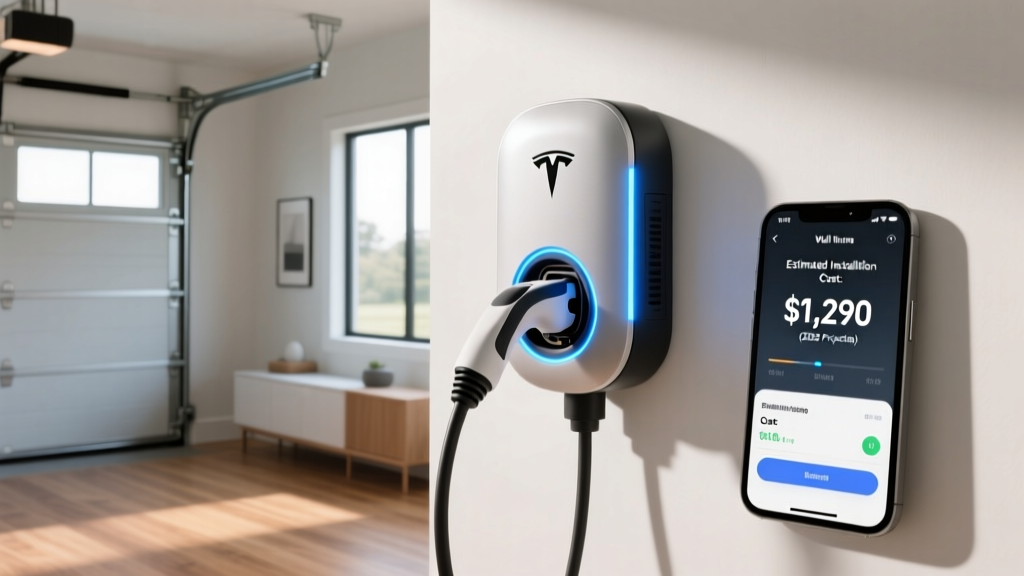
Tesla Wall Connector
- Power Output: Up to 11.5 kW (48A) on a 60A circuit
- Connector: NACS native; J1772 adapter included in box
- Cable Length: 24 feet
- Smart Features: Wi-Fi, OTA updates, power sharing (link multiple units on one circuit), Tesla app integration
- Price: ~$475
- Best For: Tesla owners and NACS-adopting households; best value at this power level
Grizzl-E Smart
- Power Output: Up to 10 kW (40A) on a 50A circuit
- Connector: J1772 (NACS version available)
- Cable Length: 24 feet
- Smart Features: Wi-Fi, OCPP-compatible, works with multiple energy-management platforms, built in Canada for extreme cold (-40°C rated)
- Price: ~$549
- Best For: Cold-climate owners; outdoor installs; buyers who want OCPP open-protocol flexibility
For homes with a NEMA 14-50 outlet already installed (common for electric ranges and RV hookups), plug-in versions of these chargers are available, avoiding hardwiring costs. However, hardwired installations support higher amperage and eliminate the receptacle as a potential failure point.
Charging Time Examples: 10% to 80% for Common Battery Sizes
Charge time depends on battery capacity (kWh), the charger's power output (kW), the vehicle's onboard charge acceptance rate, and the charging curve taper above 50% SoC. Below are representative 10–80% times for popular 2025–2026 EVs:
| Vehicle | Battery (usable kWh) | Level 2 (11.5 kW) | DC Fast (peak kW / avg) | 10–80% DC Time |
|---|---|---|---|---|
| 2025 Tesla Model Y Long Range | 75 kWh (NMC) | ~5.5 hours | 250 kW peak / ~145 avg | ~25 min (V3 Supercharger) |
| 2025 Hyundai Ioniq 5 | 84 kWh (NMC) | ~6.2 hours | 240 kW peak / ~150 avg | ~18 min (350 kW station) |
| 2025 Ford F-150 Lightning Ext. Range | 131 kWh (NMC) | ~9.8 hours | 150 kW peak / ~105 avg | ~41 min (150 kW station) |
| 2025 Chevrolet Equinox EV | 85 kWh (NMC) | ~6.3 hours | 150 kW peak / ~110 avg | ~30 min (150 kW station) |
| 2025 Tesla Model 3 Standard Range | 57.5 kWh (LFP) | ~4.2 hours | 170 kW peak / ~110 avg | ~22 min (V3 Supercharger) |
Note that LFP (lithium iron phosphate) batteries, like those in the standard-range Model 3, can tolerate regular 100% charging without the same degradation concerns as NMC chemistries — but DC fast charging still tapers sharply above 80%. Plan your road-trip stops around 10–80% for the fastest overall travel time.
Safety, Code, and the Fine Print
EV charging involves sustained high-current draw for hours at a time — more akin to running a welder than plugging in a lamp. Key safety and code considerations:
- Dedicated circuit: Your Level 2 charger must have its own dedicated breaker. Never share a circuit with other high-draw appliances.
- GFCI protection: NEC 2023 Article 625 requires ground-fault protection for EV supply equipment. Most modern hardwired chargers include internal GFCI; receptacle-based installs may need a GFCI breaker.
- Outdoor rating: If mounting outside, the charger must carry at minimum a NEMA 3R rating (rain protection). NEMA 4 is preferred for hose-down resistance and dust sealing.
- Cable management: Retractors or hooks prevent trip hazards and cable damage from being run over.
- Utility notification: Some utilities require notification before installing a Level 2 charger and offer rebates ($250–$1,000 in many areas) or time-of-use rate plans that dramatically reduce charging cost. Check with your local provider before purchasing equipment.
- Federal tax credit: The IRS §30C Alternative Fuel Vehicle Refueling Property Credit covers up to 30% of home charger hardware and installation costs (capped at $1,000), subject to census-tract eligibility requirements. Confirm your address qualifies before claiming.
Frequently Asked Questions
How much does it cost to install a home EV charger?
Expect $800–$2,200 for a standard installation in a home with a 200A panel and a short conduit run. If your home has a 100A panel that needs upgrading to 200A, total project cost rises to $2,300–$6,700. Equipment itself ranges from $350–$750 for a quality smart charger. Always get at least two quotes from licensed electricians and verify permit requirements in your municipality.
How fast will each charging level add range?
Level 1 (120V) adds 3–5 miles per hour — roughly 40 miles overnight. Level 2 (240V, 48A) adds 30–40 miles per hour for most EVs, fully replenishing a 75 kWh battery in 5–6 hours. DC fast charging adds 150–1,200+ miles per hour at peak rates, though the charge curve taper means real-world 10–80% sessions take 18–45 minutes depending on battery size and station power.
Which connector and charger is compatible with my EV?
For 2026 model-year vehicles: Tesla, Ford, GM, Rivian, Volvo, and most new models use NACS. Hyundai, Kia, BMW, VW, and Stellantis brands still primarily use CCS1. For home Level 2, all non-Tesla EVs use J1772, and Tesla includes a J1772 adapter with their Wall Connector. Adapters exist for nearly every combination, but native compatibility is always preferable for reliability and peak charge rates.
How much does charging cost per mile compared to gas?
Home-charged EVs cost $0.02–$0.05 per mile — roughly one-third to one-quarter the cost of a 30 MPG gas car at $3.40/gallon ($0.113/mi). Supercharging and DC fast charging cost $0.07–$0.15 per mile, which narrows the gap significantly and in some cases exceeds gasoline costs. The financial advantage of EV ownership depends heavily on consistent access to affordable home or workplace charging.
What electrical upgrades might I need?
The most common upgrade is a panel service increase from 100A to 200A ($1,500–$4,500), necessary in older homes with limited electrical capacity. Some installations require a new conduit run from the panel to the garage or carport, adding $200–$800. Homes with existing 240V/50A outlets (NEMA 14-50) near the parking spot may only need a plug-in charger and no electrical work at all. A licensed electrician's load calculation is the definitive answer for your specific home.