Superchargers vs Turbochargers: What Do These Terms Actually Mean?
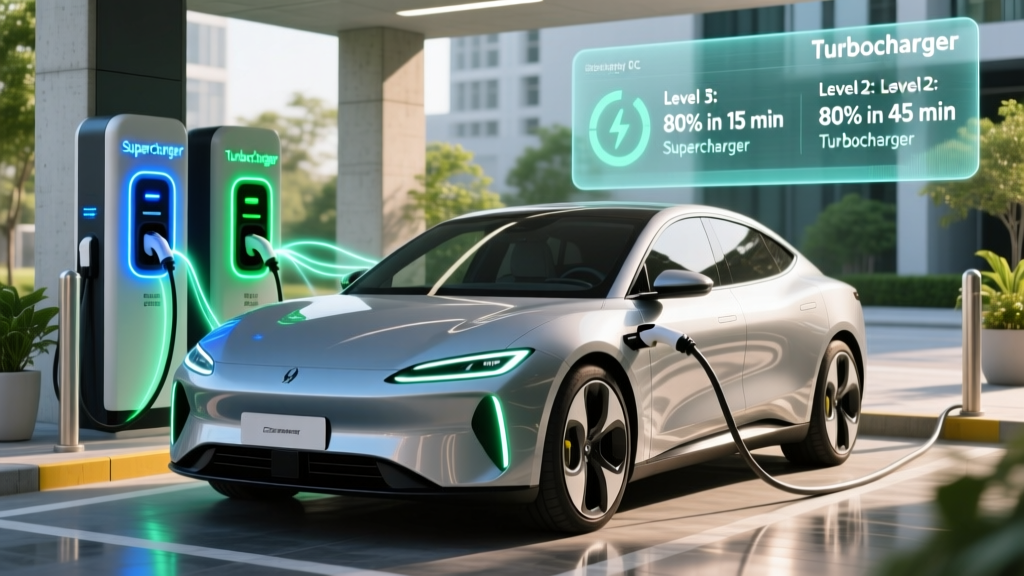
If you've searched for EV charging information, you've likely encountered a confusing collision of terms: superchargers vs turbochargers. Let's clear this up immediately, because these words come from entirely different automotive worlds and mixing them up can lead to expensive misunderstandings.
A turbocharger is a mechanical device bolted to an internal combustion engine. It forces more air into the cylinders to increase power output. It has nothing to do with electric vehicles or charging.
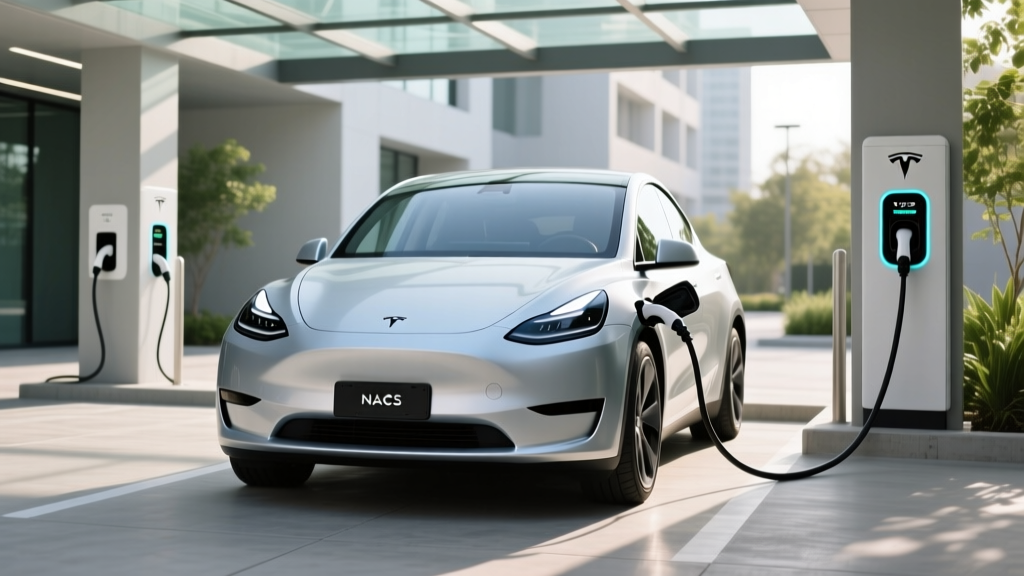
A Supercharger (capitalized) is Tesla's proprietary DC fast-charging network — now open to non-Tesla EVs via the North American Charging Standard (NACS) connector. More broadly, "supercharging" in EV parlance means using DC fast charging to rapidly replenish a battery.
This guide covers what actually matters for EV owners: the three charging levels, real-world speeds in kW, home installation costs, connector compatibility, and what you'll actually pay per mile in 2026.
The Three Charging Levels: Speeds, Power, and Range Added
Every EV sold in the US charges via one of three levels. Understanding the kW output and real-world range recovery of each is the foundation of practical EV ownership.
| Level | Voltage | Power (kW) | Miles of Range Per Hour | Typical Use Case |
|---|---|---|---|---|
| Level 1 | 120V AC | 1.0–1.4 kW | 3–5 mi/hr | Overnight top-up, PHEVs, emergencies |
| Level 2 | 240V AC | 3.3–19.2 kW | 12–75 mi/hr | Home daily charging, workplaces, hotels |
| DC Fast (Level 3) | 400–800V DC | 50–350 kW | 150–1,200+ mi/hr | Road trips, highway corridors, rapid top-ups |
A few critical nuances:
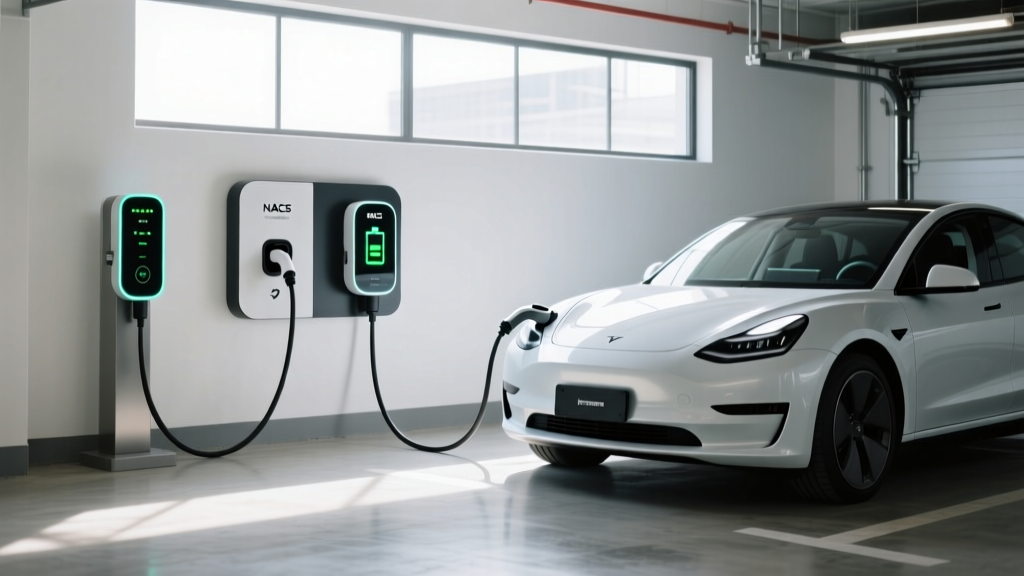
- Level 2 sweet spot: Most home chargers deliver 7.7–11.5 kW (32–48 amps on a 240V circuit). This fully replenishes a 75–100 kWh battery overnight in 7–10 hours.
- DC fast charging is not linear: A charger rated for 250 kW does not deliver 250 kW for the entire session. Charging follows a curve — power peaks between roughly 10–40% state of charge (SoC), then tapers significantly above 80% to protect battery chemistry. A "10–80% in 18 minutes" claim assumes ideal battery temperature and low starting SoC.
- 800V architecture advantage: Vehicles built on 800V platforms (Hyundai Ioniq 5, Kia EV6, Porsche Taycan, Genesis GV60) can sustain higher kW rates longer than 400V vehicles, translating to shorter real-world charging stops.
Home Charger Installation: Electrical Requirements and Real Costs
Installing a Level 2 home charger is the single highest-impact upgrade an EV owner can make. Here's what it actually involves — and what it costs.
Electrical Requirements
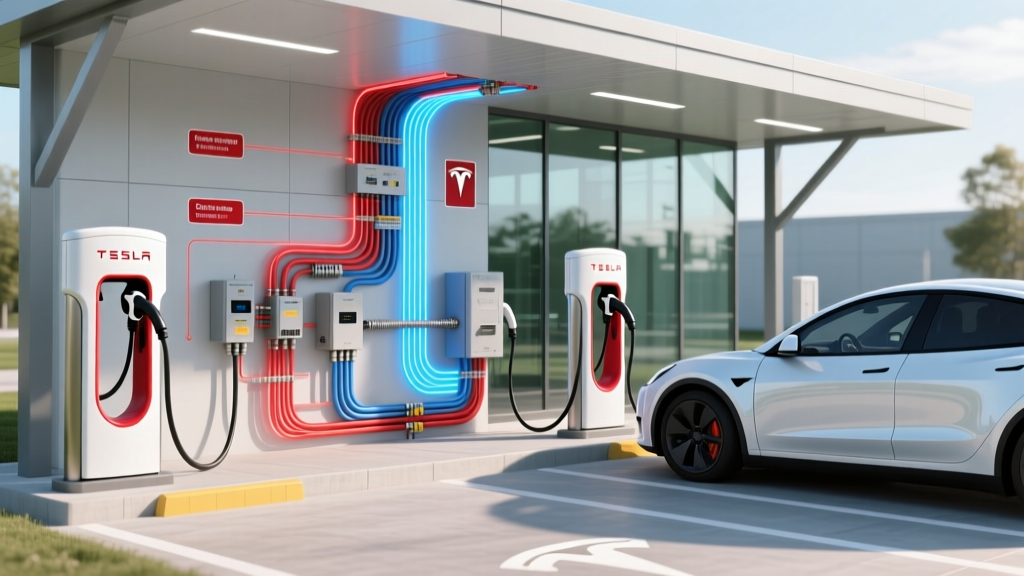
A typical Level 2 home charger requires a dedicated 240V circuit, similar to what powers an electric dryer or oven. Common configurations:
- 40-amp circuit → delivers 32A continuous (9.6 kW) — the most common residential setup
- 50-amp circuit → delivers 40A continuous (9.6–11.5 kW depending on charger)
- 60-amp circuit → delivers 48A continuous (11.5 kW) — requires heavier-gauge wire
The National Electrical Code (NEC) requires that continuous loads (like EV charging) use no more than 80% of a circuit's rated capacity. So a 40A breaker supports 32A continuous draw.
Panel Upgrade: The Cost Many Buyers Miss
Most modern homes have a 200-amp electrical panel, which usually supports a 40–60A EV circuit without upgrade. However, older homes (pre-2000 construction) may have 100A or 150A panels already near capacity. If your panel is maxed out, you'll need either:
- A panel upgrade to 200A: $1,500–$3,500
- A smart load management device (like the Emporia VUE or Span panel): $500–$2,000 installed, which dynamically throttles charger amperage when other appliances draw heavy current
Always have a licensed electrician perform a load calculation before committing to a charger amperage. Skipping this step risks tripped breakers or, worse, an electrical fire.
Installation Cost Breakdown
| Component | Low Estimate | High Estimate | Notes |
|---|---|---|---|
| Level 2 Charger Equipment | $300 | $750 | Smart WiFi-enabled units; basic units from $200 |
| Electrician Labor | $400 | $1,500 | Depends on run length from panel to garage/driveway |
| Electrical Permit | $50 | $250 | Required in most jurisdictions; varies by municipality |
| Panel Upgrade (if needed) | $1,500 | $3,500 | Only for older homes with insufficient capacity |
| Conduit/Wire (long runs) | $100 | $800 | If panel is far from charging location |
| Total (no panel upgrade) | $750 | $3,050 | Most homeowners pay $1,200–$1,800 |
| Total (with panel upgrade) | $2,250 | $6,550 | Older homes, long wire runs |
Connector Compatibility: NACS, CCS1, and CHAdeMO in 2026
The connector landscape has consolidated significantly since Tesla opened its Supercharger network. Here's where things stand for the 2026 model year:
| Connector | Standard | Brands Using It | DC Fast Charge Availability |
|---|---|---|---|
| NACS (J3400) | North American Charging Standard | Tesla, Ford, GM, Rivian, Volvo, Polestar, Hyundai, Kia (2025+), Mercedes-Benz, BMW (2025+), Nissan (2026+) | Tesla Supercharger network (20,000+ stalls), Electrify America, EVgo, ChargePoint |
| CCS1 | Combined Charging System | Legacy models pre-NACS transition: VW ID.4 (pre-2025), older BMW i4/iX, Stellantis EVs, Honda Prologue (2024–2025) | Electrify America, EVgo, ChargePoint — widespread but declining |
| CHAdeMO | Legacy Japanese standard | Nissan Leaf (discontinued), Mitsubishi Outlander PHEV (older) | Limited and shrinking network |
Do You Need an Adapter?
If you own a CCS-equipped EV but want access to Tesla Superchargers, you'll need a CCS-to-NACS adapter. Tesla sells an official adapter for approximately $195, and third-party options (Lectron, A2Z) are available for $130–$180. Adapters rated for DC fast charging must handle up to 500A and high voltage — never use an uncertified adapter for DC charging.
For Level 2 home charging, all connectors use the same J1772 standard for non-Tesla vehicles, or Tesla's proprietary connector. A simple $30–$50 J1772-to-Tesla adapter (included with most Teslas) handles home and destination charging.
Charging Cost Per Mile: Home vs. Public vs. Gas
The economic case for EV charging hinges on where you charge. Let's break down real cost-per-mile figures using a midsize EV consuming 3.0 miles per kWh (roughly 33 kWh/100mi — typical for a Tesla Model Y, Hyundai Ioniq 5, or Ford Mustang Mach-E) compared to a 30 MPG gas car at $3.40/gallon.
| Charging Scenario | Rate ($/kWh) | Cost Per Mile | Annual Cost (12,000 mi) |
|---|---|---|---|
| Home — Off-Peak Utility Rate | $0.08–$0.14 | $0.03–$0.05 | $360–$600 |
| Home — Standard Residential Rate | $0.14–$0.20 | $0.05–$0.07 | $600–$840 |
| Public Level 2 (ChargePoint, etc.) | $0.20–$0.40 | $0.07–$0.13 | $840–$1,560 |
| DC Fast Charging (Electrify America, EVgo) | $0.30–$0.55 | $0.10–$0.18 | $1,200–$2,160 |
| Tesla Supercharger (average) | $0.25–$0.40 | $0.08–$0.13 | $960–$1,560 |
| Gas Vehicle (30 MPG, $3.40/gal) | — | $0.11 | $1,360 |
The takeaway: home charging is the economic killer app of EV ownership. At off-peak utility rates, you'll pay roughly $0.04/mile — less than half the cost of gas. Even at standard residential rates, EVs win. But if you rely exclusively on DC fast charging at $0.45/kWh, your per-mile cost can exceed a fuel-efficient gas car. This is why home charger installation is not optional for cost-conscious EV ownership.
Many utilities offer time-of-use (TOU) plans with off-peak rates as low as $0.05–$0.08/kWh between 10 PM and 6 AM. Pair a TOU plan with scheduled charging on your Level 2 unit, and your fuel cost drops to roughly $400/year for 12,000 miles.
10–80% Charging Times for Common Battery Sizes
Real-world DC fast charging times depend on battery size (kWh), vehicle voltage architecture (400V vs. 800V), battery temperature, and the charger's peak output. Below are representative 10–80% times assuming a preconditioned battery at moderate temperature:
| Vehicle | Battery (kWh) | Architecture | Peak DC kW | 10–80% Time |
|---|---|---|---|---|
| Tesla Model Y Long Range | 78 kWh (usable) | 400V | 250 kW | ~25 min |
| Hyundai Ioniq 5 (Long Range) | 77.4 kWh | 800V | 240 kW | ~18 min |
| Ford F-150 Lightning (Extended) | 131 kWh | 400V | 150 kW | ~41 min |
| Chevrolet Equinox EV | 85 kWh | 400V | 150 kW | ~30 min |
| Kia EV9 (Long Range AWD) | 100 kWh | 800V | 236 kW | ~24 min |
| BMW iX xDrive50 | 105.2 kWh (usable) | 400V | 200 kW | ~34 min |
Recommended Home Level 2 Chargers for 2026
After testing dozens of units across multiple homes and electrical setups, these are the chargers we recommend based on power output, build quality, smart features, and value:
Emporia Vue EV Charger
Power: 11.5 kW (48A) max
Connector: J1772 (NACS adapter included)
Cable Length: 24 ft
Smart Features: WiFi scheduling, solar integration, energy monitoring via Emporia app, load management
Price: ~$399
Best For: Budget-conscious buyers who want full smart features and solar integration
ChargePoint Home Flex
Power: 12 kW (50A) max, configurable 16–50A
Connector: J1772 or NACS
Cable Length: 23 ft
Smart Features: WiFi, app scheduling, Alexa integration, flexible amperage to match your circuit
Price: ~$549–$649
Best For: Flexibility across different circuit sizes; strong app ecosystem
Tesla Wall Connector
Power: 11.5 kW (48A) max
Connector: NACS native (J1772 adapter available)
Cable Length: 24 ft
Smart Features: WiFi updates, power sharing (link multiple units on one circuit), Tesla app integration
Price: ~$420
Best For: Tesla owners or households with NACS-equipped vehicles seeking a clean, reliable unit
Grizzl-E Smart
Power: 10 kW (40A) max
Connector: J1772 or NACS
Cable Length: 24 ft
Smart Features: OCPP-compatible, works with multiple apps, adjustable amperage
Price: ~$449
Best For: Cold-climate durability (rated to -40°F) and open-protocol smart charging
All of these units are hardwired (preferred for 48A+ circuits) or available with a NEMA 14-50 plug for 40A setups. Hardwired installations eliminate the GFCI breaker requirement that the NEC mandates for plug-in receptacles in garages — saving $50–$100 on the breaker and reducing nuisance trips.
Safety, Code, and Installation Considerations
EV charging draws sustained high current for hours — this is fundamentally different from intermittent appliance use. Proper installation isn't optional.
- Dedicated circuit: Your EV charger must be on its own dedicated breaker. Never share a circuit with other heavy loads (dryer, HVAC).
- GFCI protection: NEC 2020+ requires GFCI protection for all receptacles in garages. If you hardwire your charger (recommended for 48A+), the GFCI requirement doesn't apply to the charger itself.
- Outdoor rating: If your charger is mounted outside, ensure it carries a NEMA 4 or IP65 rating. All four units recommended above are outdoor-rated.
- Wire gauge: A 60A circuit requires 4 AWG copper wire (or 3 AWG aluminum). A 40A circuit needs 8 AWG copper. Your electrician will size this correctly — but verify before work begins.
- Permitting and inspection: Most jurisdictions require a permit for new 240V circuits. The inspection ensures proper wire sizing, grounding, and breaker rating. Skipping this can void your homeowner's insurance in the event of an electrical fire.
Frequently Asked Questions
How much does it cost to install a home EV charger?
Most homeowners pay between $1,200 and $1,800 for a complete Level 2 installation (charger + electrician + permit) when no panel upgrade is needed. If your home requires a 200A panel upgrade, total costs range from $2,250 to $6,550. The IRS Residential Clean Energy Credit covers 30% of equipment and installation, up to $1,000.
How fast will each charging level add range?
Level 1 (120V) adds 3–5 miles per hour — adequate for PHEVs with small batteries but impractical for full EVs. Level 2 (240V) adds 12–75 miles per hour depending on amperage, and fully charges most EVs overnight. DC fast charging adds 150–1,200+ miles per hour at peak rates, with 10–80% sessions taking 18–41 minutes depending on the vehicle.
Which connector is compatible with my EV?
For 2026 model-year vehicles, NACS is the dominant standard — adopted by Tesla, Ford, GM, Rivian, Hyundai, Kia, Volvo, BMW, Mercedes-Benz, and Nissan. CCS1 remains on some carryover models from 2024–2025. CHAdeMO is effectively obsolete. Check your vehicle's charge port or the manufacturer's spec sheet. If you have CCS and need Supercharger access, a CCS-to-NACS adapter ($130–$195) solves it.
How much does charging cost per mile vs. gas?
At home off-peak rates ($0.08–$0.14/kWh), an average EV costs $0.03–$0.05 per mile — roughly one-third to one-half the cost of a 30 MPG gas car at $3.40/gallon ($0.11/mile). Public DC fast charging at $0.35–$0.55/kWh brings EV costs to $0.10–$0.18/mile, which can match or exceed gas. Home charging is the key to EV cost savings.
What electrical upgrades might I need?
If your home has a 200A panel with available capacity, you likely need nothing beyond a new dedicated 40–60A breaker and wire run. Homes with 100A or 150A panels may need a panel upgrade ($1,500–$3,500) or a smart load management device ($500–$2,000) that dynamically adjusts charger amperage. A licensed electrician should perform a load calculation per NEC Article 220 before installation.