If you've searched the difference in supercharger and turbo, you've likely stumbled across two completely different worlds: one belongs to electric vehicles, and the other to internal-combustion engines. The confusion is understandable — Tesla's marketing has made "Supercharger" synonymous with fast EV charging, while automotive enthusiasts have used "supercharger" and "turbocharger" (or "turbo") to describe gas-engine power adders for decades.
This guide clears up the terminology once and for all, then pivots to what actually matters if you're an EV owner or shopper: understanding EV charging levels, home installation costs, connector standards, and real-world charging economics in 2026.
Supercharger vs Turbo: Two Meanings, Two Worlds
Before we break down EV charging infrastructure, let's resolve the core question head-on.
In Gasoline Engines
A supercharger is a belt-driven air compressor bolted to an engine's intake. It forces more air into the combustion chamber, allowing more fuel to burn and producing more power. A turbocharger ("turbo") does the same job but uses exhaust gases to spin a turbine rather than a mechanical belt. Both are "forced induction" systems. The key engineering difference: superchargers deliver instant boost (no lag), while turbos are more efficient but can suffer from turbo lag as exhaust spools the turbine.
In Electric Vehicles
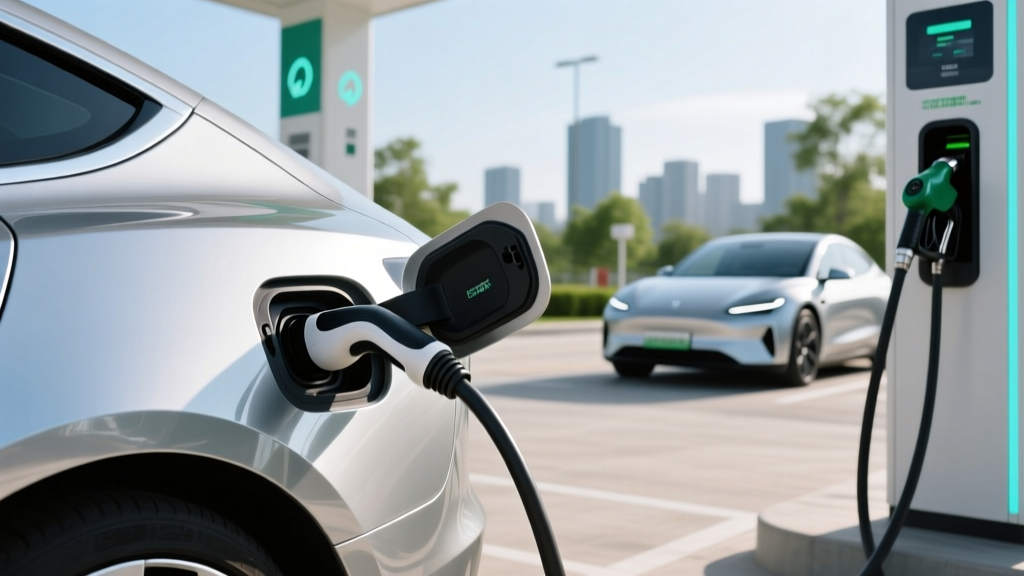
A Supercharger (capitalized) is Tesla's proprietary DC fast-charging network — currently the largest and most reliable public fast-charging ecosystem in North America. As of early 2026, Tesla operates over 6,500 Supercharger stations with roughly 60,000+ individual stalls in the U.S. and Canada. Superchargers deliver between 72 kW (urban Superchargers) and 250 kW (V3) up to 350 kW at newer V4 stalls.
There is no such thing as a "turbo" in EV terminology. If someone references a "turbo charger" for an EV, they're either conflating terms or referring to a non-EV product. The EV equivalent of a Tesla Supercharger is any DC fast-charging network — Electrify America, EVgo, ChargePoint, or Ionity (in Europe).
- Supercharger (EV): Tesla's DC fast-charging network, 72–350 kW
- Supercharger (gas engine): Belt-driven forced-induction air compressor
- Turbo/Turbocharger (gas engine): Exhaust-driven forced-induction air compressor
- DC Fast Charger (EV): The generic term for any high-power public EV charger (50–350 kW)
EV Charging Levels Explained: Level 1, Level 2, and DC Fast
Now that the terminology is settled, let's cover what matters for EV ownership. Every EV charges at one of three levels. The speed difference between them is massive — and understanding kW (power, or charge rate) versus kWh (energy, or battery capacity) is critical. Think of kW as the width of a pipe filling a tank (kWh). A wider pipe fills faster.
| Charging Level | Power (kW) | Voltage / Amperage | Miles of Range per Hour | Typical Use Case |
|---|---|---|---|---|
| Level 1 | 1.0–1.4 kW | 120V / 12A | 3–5 miles/hr | Overnight trickle; PHEVs; emergency backup |
| Level 2 | 3.3–19.2 kW | 240V / 16A–80A | 12–70 miles/hr | Home daily charging; workplace; public destinations |
| DC Fast Charge | 50–350 kW | 400V–900V DC | 150–1,000+ miles/hr (peak) | Road trips; quick top-ups on highways |
Real-world context: A Tesla Model Y Long Range (75 kWh usable battery, ~310 miles EPA) charging on Level 1 gains roughly 4 miles per hour — a full 10-hour overnight session adds only ~40 miles. That same vehicle on a 48A Level 2 home charger (11.5 kW) adds about 44 miles per hour, easily replenishing a day's driving in 1–2 hours. At a 250 kW V3 Supercharger, it peaks at roughly 250 kW and charges from 10% to 80% in approximately 22–25 minutes, though the charge curve tapers significantly above 80% State of Charge (SoC) to protect the battery.
This taper is why EV drivers rarely charge past 80% on road trips — the last 20% can take as long as the first 80%. Battery preconditioning (warming the pack before arrival at a charger) is essential for achieving peak charge rates, especially in cold weather.
How Much Does It Cost to Install a Home EV Charger?
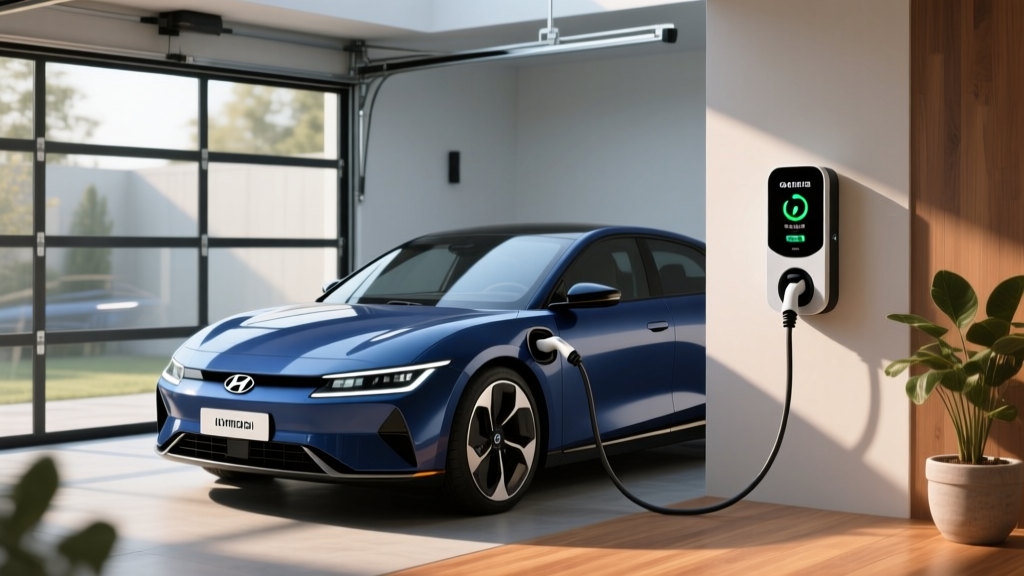
Home Level 2 charging is the backbone of practical EV ownership. But installation costs vary wildly based on your electrical panel's capacity, the distance from panel to charger location, and local permit requirements.
Electrical Requirements
A standard Level 2 home charger requires a 240-volt dedicated circuit. Most popular home chargers draw 40A or 48A, which requires a 50A or 60A circuit breaker respectively (the National Electrical Code requires circuits rated at 125% of continuous load). If you're installing a 48A charger, your electrician will install a 60A breaker with appropriately sized wire (typically 6 AWG copper for runs under ~50 feet).
Panel Upgrade Considerations
Many older homes have 100A electrical service panels. Adding a 50–60A EV circuit to a 100A panel that's already near capacity may require a panel upgrade to 200A — this is the single largest cost variable in home charger installation. Newer homes (built after ~2005) typically have 200A panels with enough headroom.
Your electrician will perform a load calculation per NEC Article 220 to determine if your panel can support the added circuit. Some utilities and municipalities now require this calculation before issuing a permit.
| Cost Component | Simple Install (Panel Nearby, No Upgrade) | Complex Install (Long Run or Panel Upgrade) |
|---|---|---|
| Level 2 Charger Equipment | $300–$700 | $400–$750 |
| Electrician Labor | $400–$900 | $1,200–$3,500 |
| Electrical Permit | $50–$200 | $50–$300 |
| Panel Upgrade (if needed) | $0 | $1,500–$4,000 |
| Conduit/Wire (long runs 50+ ft) | $0–$150 | $300–$1,000 |
| Total Estimated Cost | $750–$1,950 | $3,450–$9,550 |
The IRS §30D clean vehicle credit does not cover home charger equipment directly. However, the separate Residential Clean Energy Credit (IRC §25D) was historically available for alternative fuel vehicle refueling property through 2023 under §30C, though its availability for 2026 installations depends on current-year IRS guidance — consult a tax professional for eligibility.
Connector Compatibility: NACS, CCS1, and CHAdeMO in 2026
The connector landscape has shifted dramatically. As of 2026, the North American Charging Standard (NACS) — originally Tesla's proprietary connector, opened to the industry in late 2022 — has become the dominant standard. Nearly every major automaker has adopted NACS for new vehicles starting with 2025–2026 model years.
| Connector | Brands Using It (New Vehicles) | DC Fast Charge Access | Adapter Needed? |
|---|---|---|---|
| NACS (J3400) | Tesla (all), Ford, GM, Rivian, Hyundai/Kia (2026+), BMW, Mercedes, Volvo, Polestar, Nissan (2026+) | Tesla Supercharger network + growing third-party NACS stations | None for NACS-native vehicles |
| CCS1 | Remaining 2024–2025 models (legacy); Volkswagen ID.4 (through 2025), some Stellantis models | Electrify America, EVgo, ChargePoint DC stations | CCS-to-NACS adapter required for Tesla Supercharger access |
| CHAdeMO | Nissan Leaf (discontinued after 2025 MY), Mitsubishi Outlander PHEV (legacy) | Limited and declining network | No adapter widely available; network shrinking |
Adapter reality: If you own a CCS1-equipped EV (common for 2023–2025 model-year vehicles from Ford, GM, Hyundai, and others), you'll need a CCS-to-NACS adapter (roughly $200–$250) to access Tesla Superchargers. Tesla provides these adapters to eligible non-Tesla EV owners, and third-party options are available. Ford and GM have distributed adapters to existing owners. For new 2026 buyers, most vehicles ship with NACS natively — the adapter era is transitional.
For home Level 2 charging, all vehicles use a J1772 connector (or NACS, which handles AC Level 2 natively on Tesla and newer NACS vehicles). Most home chargers ship with a J1772 plug; NACS vehicles include a J1772-to-NACS adapter in the glovebox.
How Much Does Charging Cost Per Mile vs Gas?
This is the economics question that drives EV adoption. The answer depends heavily on where and when you charge.
| Scenario | Rate ($/kWh) | Cost per 100 Miles* | Cost per Mile |
|---|---|---|---|
| Home charging (off-peak utility rate) | $0.08–$0.14 | $2.40–$4.20 | $0.024–$0.042 |
| Home charging (standard residential rate) | $0.13–$0.18 | $3.90–$5.40 | $0.039–$0.054 |
| Public Level 2 (workplace/shopping) | $0.20–$0.35 | $6.00–$10.50 | $0.06–$0.105 |
| DC Fast Charging (Electrify America, EVgo) | $0.35–$0.55 | $10.50–$16.50 | $0.105–$0.165 |
| Tesla Supercharger (varies by location) | $0.25–$0.45 | $7.50–$13.50 | $0.075–$0.135 |
| Gasoline (25 MPG combined, $3.40/gal) | — | $13.60 | $0.136 |
*Based on a vehicle consuming 30 kWh/100 miles (typical for a midsize crossover like the Tesla Model Y, Hyundai Ioniq 5, or Ford Mustang Mach-E). Efficiency varies — see fueleconomy.gov for specific model data.
The takeaway: home charging is 60–75% cheaper per mile than gasoline. Even DC fast charging on road trips is generally cost-competitive with or slightly cheaper than gas. The savings compound over ownership — a driver covering 12,000 miles/year who charges primarily at home saves roughly $1,200–$1,600 annually compared to a 25 MPG gas vehicle.
Charging Time Examples: 10% to 80% for Common Battery Sizes
Charge time depends on battery capacity (kWh), the charger's peak power output (kW), and the vehicle's onboard charge acceptance rate. Here are real-world estimates for popular 2026 models, accounting for charge-curve taper:
| Vehicle | Usable Battery (kWh) | Peak Charge Rate (kW) | 10–80% Time (approx.) |
|---|---|---|---|
| Tesla Model Y Long Range | 75 kWh | 250 kW | ~22–25 minutes |
| Hyundai Ioniq 5 (Long Range) | 77.4 kWh | 240 kW (800V architecture) | ~18–20 minutes |
| Ford Mustang Mach-E Extended Range | 91 kWh | 150 kW | ~38–42 minutes |
| Chevrolet Equinox EV | 85 kWh | 150 kW | ~35–40 minutes |
| BMW i4 eDrive40 | 81.5 kWh | 200 kW | ~28–32 minutes |
| Nissan Leaf (final model year) | 60 kWh | 100 kW (CHAdeMO) | ~40–45 minutes |
Charge curve reality: No EV sustains its peak kW rate for the entire session. A vehicle rated at 250 kW might hold that rate from 10% to roughly 30% SoC, then taper to 150 kW, then drop further above 60%. The 800-volt architecture in vehicles like the Hyundai Ioniq 5 and Kia EV6 enables them to sustain higher charge rates longer — a meaningful advantage for road-trippers. Always look at 10–80% time rather than peak kW alone.
Recommended Home Level 2 Chargers (2026 Picks)
Not all Level 2 chargers are equal. Here are three proven options across different budgets, all UL-listed and compatible with the vast majority of EVs:
Tesla Wall Connector (Gen 4)
- Power Output: Up to 11.5 kW (48A on 60A circuit)
- Connector: NACS native (J1772 adapter included)
- Cable Length: 24 feet
- Smart Features: Wi-Fi, OTA updates, power-sharing between units, load management
- Price: ~$475
- Best For: Tesla owners and NACS-native EVs; excellent value
ChargePoint Home Flex
- Power Output: Up to 12 kW (50A, configurable 16A–50A)
- Connector: J1772 (NACS adapter available separately)
- Cable Length: 23 feet
- Smart Features: Wi-Fi, app scheduling, Alexa integration, energy tracking
- Price: ~$550–$650
- Best For: Non-Tesla EVs; flexible amperage for older panels
Emporia Vue Level 2 Charger
- Power Output: Up to 11.5 kW (48A on 60A circuit)
- Connector: J1772
- Cable Length: 24 feet
- Smart Features: Wi-Fi, app control, energy monitoring, solar integration
- Price: ~$350–$400
- Best For: Budget-conscious buyers; solar-panel households
Safety, Electrical Code, and Permit Requirements
EV charging equipment draws significant continuous current — this is not a DIY extension-cord situation. Here's what proper installation looks like:
- Dedicated circuit: Your Level 2 charger must have its own dedicated circuit breaker — it cannot share a circuit with other outlets or appliances.
- GFCI protection: The 2020 and 2023 National Electrical Code (NEC 625.54) requires GFCI (Ground Fault Circuit Interrupter) protection for all EV charging outlets rated 150V to ground or less. Many modern hardwired chargers have built-in ground-fault protection; receptacle-based installs require a GFCI breaker.
- Outdoor rating: If your charger is installed outdoors (garage exterior, driveway post), it must carry a NEMA 4 or NEMA 4X weather-resistance rating. All three chargers recommended above are outdoor-rated.
- Permit and inspection: Most jurisdictions require an electrical permit for EV charger installation. Your electrician pulls the permit, and a local inspector verifies the work meets code. Budget $50–$300 for the permit fee. Skipping the permit can void homeowner's insurance coverage for electrical fires.
- NEMA 14-50 receptacle vs hardwired: Some owners prefer a NEMA 14-50 outlet for portability (you can unplug and take the charger when you move). Hardwired installations allow higher amperage (up to 80A circuits) and avoid the GFCI breaker requirement in some jurisdictions. Your electrician will advise based on local code.
Frequently Asked Questions
How much does it cost to install a home EV charger?
A straightforward Level 2 installation (short wire run, adequate panel capacity) typically costs $750–$1,950 total including equipment, electrician labor, and permit. Complex installations requiring a panel upgrade, long conduit runs, or trenching can reach $3,500–$9,500. Always get 2–3 quotes from licensed electricians who have specific EV charger installation experience.
How fast will each charging level add range?
Level 1 (120V) adds 3–5 miles per hour — adequate only for plug-in hybrids or very low daily mileage. Level 2 (240V, 40–48A) adds 25–44 miles per hour, covering most daily driving needs overnight. DC fast charging adds 150–1,000+ miles per hour at peak rates, enabling 10–80% charges in 18–45 minutes depending on the vehicle and charger power.
Which connector/charger is compatible with my EV?
For 2026 model-year vehicles, most new EVs use the NACS connector (J3400). Vehicles from 2023–2025 may have CCS1. The Nissan Leaf uses CHAdeMO. For home Level 2 charging, all vehicles can use J1772 with the appropriate adapter (included with most EVs). Check your vehicle's charge port or owner's manual to confirm. For NHTSA-listed vehicles, the manufacturer's spec page will list the connector standard.
How much does charging cost per mile vs gas?
Home charging at typical residential rates ($0.13–$0.18/kWh) costs $0.039–$0.054 per mile in a midsize EV — roughly 60–75% less than a 25 MPG gas car at $3.40/gallon ($0.136/mile). DC fast charging on road trips costs $0.075–$0.165 per mile, still competitive with gasoline. The biggest savings come from consistent home charging, especially on time-of-use plans with off-peak rates.
What electrical upgrades might I need?
The most common upgrade is a panel service increase from 100A to 200A, required when your existing panel lacks headroom for a 50–60A EV circuit. Older homes may also need updated grounding, a new meter base, or conduit work between the utility connection and panel. A licensed electrician will perform a load calculation per NEC Article 220 to determine exactly what's needed. Never skip this step — an overloaded panel is a fire hazard.
Is Tesla's Supercharger network really better than other DC fast networks?
By most reliability metrics, yes. Tesla Superchargers consistently report 95%+ uptime, with stalls that are maintained proactively. Third-party networks like Electrify America and EVgo have improved significantly but still report higher rates of broken stalls, payment-system failures, and inconsistent charge speeds. The gap is narrowing as non-Tesla networks add NACS connectors and improve maintenance, but as of 2026, Superchargers remain the gold standard for road-trip charging reliability.