If you've searched "can you put a supercharger on a V6" and landed here, you're likely conflating two very different technologies—or you're a gas-car enthusiast starting to explore electric vehicles. Let's clear this up immediately, then get into what actually matters if you're transitioning to an EV: how charging works, what it costs, and how to set up your home for electric miles.
The Terminology Mix-Up: Supercharger vs. EV Charger
In the internal combustion world, a supercharger is a mechanical forced-induction device. Companies like Whipple, Roush, and Edelbrock sell supercharger kits for V6 engines (the 3.6L Pentastar V6 in older Jeep/Dodge models and the GM 3.6L V6 are popular candidates). These kits typically cost $4,000–$7,500 installed and can add 80–150 horsepower. They are engine modifications, not charging devices.
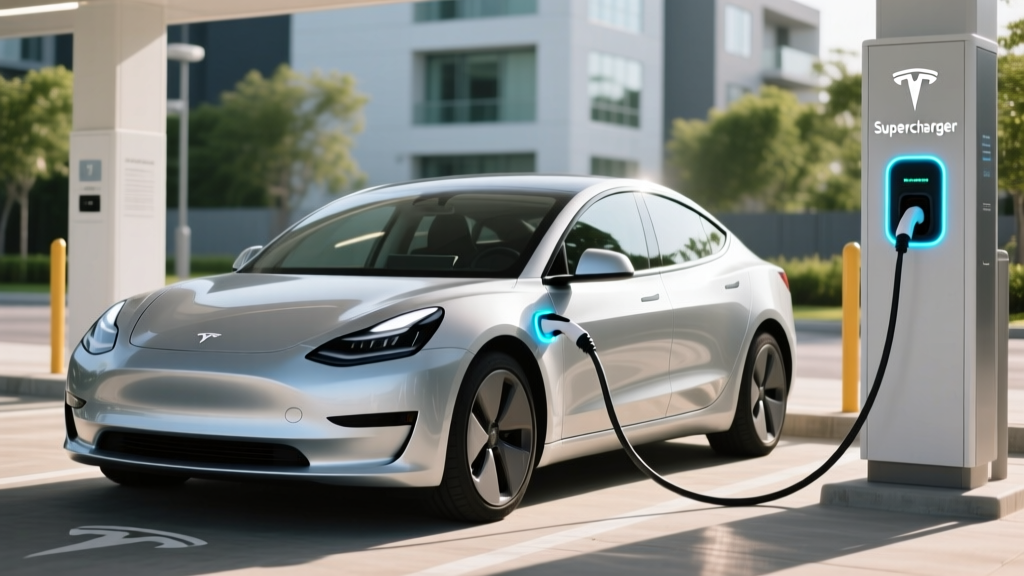
In the EV world, "Supercharger" (capitalized) is Tesla's proprietary DC fast-charging network—now officially called the Tesla Supercharger network. These stations deliver between 150 kW and 350 kW of DC power directly to an EV's battery, adding up to 200 miles of range in roughly 15 minutes on capable vehicles. With Tesla opening the network to non-Tesla EVs via the Non-Tesla Supercharger program, CCS1-equipped vehicles from Ford, Rivian, Hyundai, and others can now access these stations using a NACS adapter or built-in NACS port.
If your real question is about EV charging at home—how fast it is, what it costs, and whether your electrical panel can handle it—read on.
EV Charging Levels Explained: Speeds in kW and Miles Per Hour
EV charging is measured in kW (kilowatts), which is the rate of power delivery. The energy stored in your battery is measured in kWh (kilowatt-hours). Think of kW as how fast water flows from a hose, and kWh as the total gallons in the bucket. Confusing these two is the single most common EV literacy mistake—don't make it.
| Level | Voltage / Amps | Power (kW) | Miles of Range Added Per Hour | Best For |
|---|---|---|---|---|
| Level 1 | 120V / 12A | 1.4 kW | 3–5 miles/hr | Overnight top-offs, PHEVs, low-mileage drivers |
| Level 2 | 240V / 32–48A | 7.7–11.5 kW | 25–44 miles/hr | Daily home charging (the standard) |
| DC Fast (Level 3) | 400–800V DC | 50–350 kW | 150–1,000+ miles/hr (burst) | Road trips, commercial fleets |
A typical 75 kWh battery charged from 10% to 80% on a Level 2 home charger at 11.5 kW takes roughly 4.5 hours. That same charge on a 250 kW DC fast charger can take 18–25 minutes, depending on the vehicle's charge curve. Note that DC fast charging tapers significantly above 80% state of charge (SoC)—this is why manufacturers quote 10-80% times, not 0-100%.
Home Charger Installation: Electrical Requirements and Costs
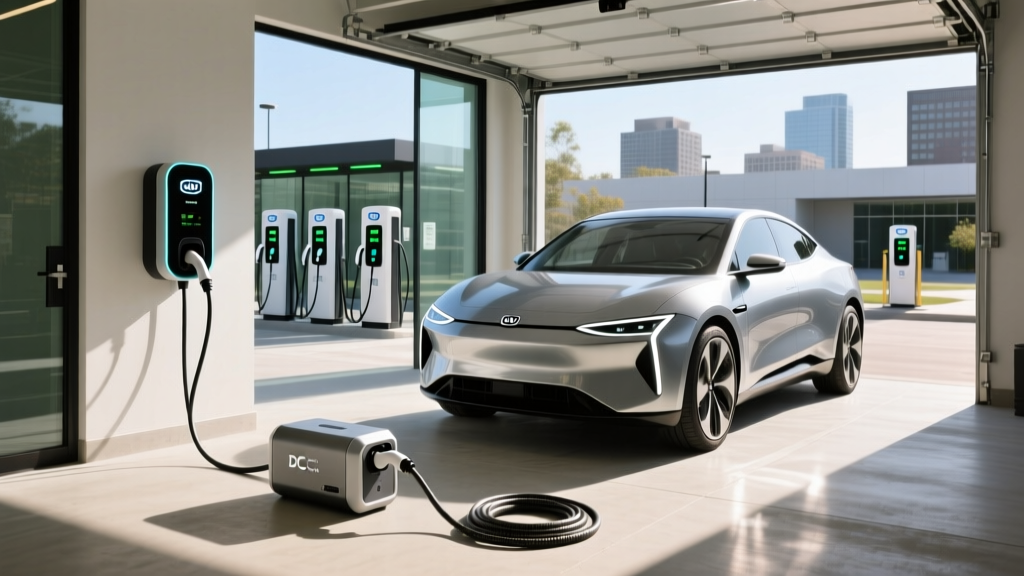
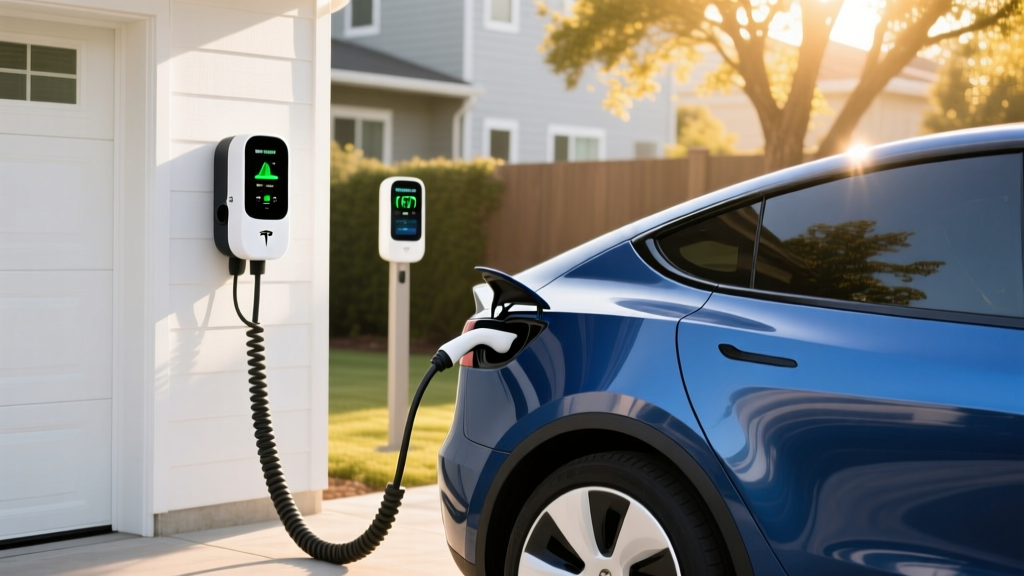
Installing a Level 2 home charger requires a dedicated 240V circuit, similar to what powers a clothes dryer or electric oven. Here's what that involves:
Electrical requirements: A 48-amp charger (delivering 11.5 kW) requires a 60-amp dedicated circuit per the National Electrical Code (NEC), which mandates that continuous loads not exceed 80% of the circuit breaker rating. A 32-amp charger (7.7 kW) requires a 40-amp circuit. Most modern homes with a 200-amp main panel can accommodate this without a panel upgrade, but older homes with 100-amp service may need an upgrade.
Panel upgrade reality: If your panel is at capacity or is an older 100-amp unit, upgrading to 200-amp service typically costs $1,500–$3,500 before the charger circuit is added. This is the hidden cost that catches many homeowners off guard.
| Component | Low-End Estimate | High-End Estimate | Notes |
|---|---|---|---|
| Level 2 Charger (hardware) | $300 | $700 | Varies by brand, amperage, smart features |
| Electrician labor | $400 | $1,500 | Depends on run length, conduit, wall type |
| Permit & inspection | $50 | $300 | Required by most jurisdictions |
| Panel upgrade (if needed) | $1,500 | $3,500 | Only for older or maxed-out panels |
| TOTAL (no panel upgrade) | $750 | $2,500 | Most common scenario |
| TOTAL (with panel upgrade) | $2,250 | $6,000 | Older homes, 100A service |
The IRS Residential Clean Energy Credit does not cover EV chargers as of 2026 (the previous Alternative Fuel Vehicle Refueling Property Credit, §30C, expired for residential use at the end of 2025 unless renewed by Congress). Some states and utilities still offer rebates—check your local utility and AFDC state incentive database for current programs.
Connector Compatibility: NACS, CCS1, and CHAdeMO in 2026
The connector landscape has consolidated dramatically. As of 2026, nearly every major automaker has adopted the North American Charging Standard (NACS), originally developed by Tesla. Here's where each brand stands:
| Connector | Vehicles Using It (2026 Models) | Adapter Needed? |
|---|---|---|
| NACS (native) | Tesla (all), Ford (F-150 Lightning, Mustang Mach-E 2025+), Hyundai/Kia/Genesis (2025+), Rivian, GM (Ultium platform), Volvo/Polestar, Mercedes-Benz | No—direct Tesla Supercharger and NACS public station access |
| CCS1 | Older Ford, VW ID.4 (pre-2025), BMW i4/iX (pre-2025), some Stellantis models | CCS-to-NACS adapter (~$200–$250) for Tesla Supercharger access |
| CHAdeMO | Nissan Leaf (legacy only, discontinued), Mitsubishi Outlander PHEV (older) | Limited adapter options; network shrinking |
For home Level 2 charging: All EVs sold in the US use the J1772 standard for Level 2 AC charging—or a NACS port that accepts J1772 via a simple adapter included with the vehicle. Any J1772 Level 2 home charger will work with any EV you can buy today. If you own a Tesla, you'll use the Tesla Mobile Connector or a Wall Connector. If you buy a NACS-equipped non-Tesla, most chargers now offer a NACS connector option or you'll use the included J1772-to-NACS adapter.
Cost to Charge: Per-Mile Cost vs. Gasoline
The economics of EV charging depend heavily on where and when you charge. Here are real 2026 scenarios for a mid-size EV averaging 3.5 miles per kWh (roughly 28.5 kWh/100mi, typical for a Tesla Model Y or Hyundai Ioniq 5):
| Charging Scenario | Price per kWh | Cost per Mile | Annual Cost (12,000 mi) |
|---|---|---|---|
| Home off-peak (utility time-of-use) | $0.09/kWh | $0.026/mi | $309 |
| Home standard rate | $0.16/kWh | $0.046/mi | $549 |
| Public Level 2 (ChargePoint, etc.) | $0.25/kWh | $0.071/mi | $857 |
| DC Fast (Electrify America, Tesla) | $0.40/kWh | $0.114/mi | $1,371 |
| Gas car (28 MPG, $3.40/gal) | — | $0.121/mi | $1,457 |
Even at DC fast-charging prices, a reasonably efficient EV is competitive with or cheaper than a 28 MPG gas car. At home off-peak rates, the EV costs roughly 80% less per mile to fuel. This is where the ownership economics shift dramatically—if you can charge at home, the savings are substantial. If you're entirely reliant on public DC fast charging, the gap narrows considerably.
Equipment Recommendations: 2026 Home Chargers Worth Buying
Here are three Level 2 chargers we recommend based on reliability, features, and value. All are hardwired or NEMA 14-50 plug compatible, UL-listed, and suitable for indoor or outdoor installation.
ChargePoint Home Flex
- Power: Up to 11.5 kW (48A) on a 60A circuit, configurable down to 16A
- Connector: J1772 (works with all EVs via adapter for NACS vehicles)
- Cable length: 23 feet
- Smart features: Wi-Fi, Alexa, scheduling, energy tracking, OTA updates
- Price: ~$550
- Best for: Flexibility across circuit sizes, strong app ecosystem
Tesla Wall Connector
- Power: Up to 11.5 kW (48A) on a 60A circuit
- Connector: NACS native (J1772 adapter available for non-Tesla EVs)
- Cable length: 24 feet
- Smart features: Wi-Fi, power-sharing (link multiple units on one circuit), OTA updates
- Price: ~$475
- Best for: Tesla owners or households with NACS-equipped vehicles
Emporia Vue Level 2 Charger
- Power: Up to 11.5 kW (48A) on a 60A circuit
- Connector: J1772 (NACS adapter included in box)
- Cable length: 24 feet
- Smart features: Wi-Fi, solar integration, real-time energy monitoring, load management
- Price: ~$400
- Best for: Budget-conscious buyers, solar-panel households, energy monitoring
Charging time examples with an 11.5 kW (48A) Level 2 charger:
- Tesla Model Y (75 kWh usable, NMC): 10–80% in approximately 4.5 hours
- Hyundai Ioniq 5 (77.4 kWh usable, NMC): 10–80% in approximately 4.7 hours
- Ford F-150 Lightning Extended Range (131 kWh usable, NMC): 10–80% in approximately 8 hours
- Toyota bZ4X (71.4 kWh usable, NMC): 10–80% in approximately 4.3 hours
These times assume the vehicle's onboard charger can accept the full 11.5 kW. Some vehicles (like older Nissan Leaf models or certain PHEVs) have smaller onboard chargers limited to 6.6 kW or even 3.3 kW, which will increase charge times proportionally.
Safety, Code, and Installation Best Practices
EV charging is a continuous electrical load, which means specific NEC requirements apply:
- Dedicated circuit: Your Level 2 charger must be on its own dedicated breaker—no sharing with other outlets or appliances.
- GFCI protection: NEC 2023 (and 2026 adoption by most jurisdictions) requires GFCI protection for all EV charging outlets. Hardwired installations typically satisfy this through the charger's internal protections, but plug-in installations on a NEMA 14-50 receptacle require a GFCI breaker (add $50–$100 to the electrical cost).
- Outdoor rating: If your charger is installed outside, ensure it carries a NEMA 4 or IP65 rating. All three chargers recommended above are rated for outdoor use.
- Wire gauge: A 60A circuit requires 6 AWG copper wire (or 4 AWG aluminum). Your electrician will determine the correct gauge based on run length and local code.
- Permit and inspection: Virtually all jurisdictions require a permit for a new 240V circuit. The inspection ensures proper wire sizing, breaker rating, grounding, and GFCI compliance. Do not skip this—it protects you and is required for homeowner's insurance validity.
Frequently Asked Questions
Can you put a Supercharger on a V6 engine?
A mechanical supercharger (like a Whipple or Roush kit) can be installed on certain V6 engines for $4,000–$7,500, adding 80–150 HP. This is a forced-induction engine modification, not an EV charging device. If you meant Tesla Supercharger, that's a DC fast-charging network for electric vehicles—you can't charge a gas car with it.
How much does it cost to install a home EV charger?
Expect $750–$2,500 for a standard Level 2 installation (charger + electrician + permit) if your electrical panel has capacity. If a panel upgrade from 100A to 200A is needed, add $1,500–$3,500, bringing the total to $2,250–$6,000. Always get a detailed quote from a licensed electrician before committing.
How fast will each charging level add range?
Level 1 (120V) adds 3–5 miles per hour. Level 2 (240V, 48A) adds 25–44 miles per hour depending on vehicle efficiency. DC fast charging at 150–350 kW can add 150–1,000+ miles per hour in short bursts, but tapers significantly above 80% SoC. For daily driving, Level 2 at home is the practical standard.
Which connector/charger is compatible with my EV?
For home Level 2 charging, any J1772 charger works with every EV sold in the US—NACS-equipped vehicles include a J1772 adapter. For DC fast charging, most 2025–2026 EVs use NACS natively. Older CCS1 vehicles need a CCS-to-NACS adapter (~$200–$250) for Tesla Supercharger access. CHAdeMO is effectively legacy and shrinking.
How much does charging cost per mile vs. gas?
At home off-peak rates (~$0.09/kWh), an average EV costs about $0.026/mile—roughly 80% less than a 28 MPG gas car at $3.40/gallon ($0.121/mile). Even at public DC fast-charging rates (~$0.40/kWh, or $0.114/mile), EVs remain competitive. The savings are greatest when you charge at home on a time-of-use plan.
What electrical upgrades might I need?
Most homes with a 200-amp panel and available breaker slots need only a new 60A circuit ($400–$1,500 in labor). Homes with 100-amp service, full panels, or long wire runs from the panel to the garage may need a panel upgrade ($1,500–$3,500), a sub-panel ($500–$1,200), or both. A licensed electrician can perform a load calculation to determine your exact needs.
Whether you came here looking to supercharge a V6 or charge an EV at home, the answer to the first is "yes, mechanically" and the second is "yes, electrically—with the right circuit, the right charger, and a licensed electrician." The home charging setup is the more practical investment for most drivers in 2026.