What Does "Supercharger Turbo" Actually Mean?
When EV owners search for "supercharger turbo," they're typically asking about Tesla's fastest DC fast-charging hardware — the V3 Supercharger (250 kW peak) and the newer V4 architecture (up to 350 kW peak for compatible vehicles). The word "turbo" isn't an official Tesla product name, but it captures what buyers want: the fastest possible charge at a public station, and how that compares to charging at home.
This guide breaks down exactly how fast Supercharger-class DC charging is versus Level 2 home charging, what each costs per mile, which connector your EV needs, and what a home installation really involves — including the electrical panel upgrades that catch many buyers off guard.
Charging Levels Explained: Speed in kW and Miles Per Hour
The single most important distinction in EV charging: kW (kilowatts) measures power — how fast energy flows into your battery. kWh (kilowatt-hours) measures energy — the total capacity of your battery. Think of kW as the flow rate of a hose and kWh as the size of the bucket.
| Level | Voltage | Power (kW) | Miles of Range Added Per Hour | Typical Use |
|---|---|---|---|---|
| Level 1 (120V) | 120V AC | 1.0–1.4 kW | 3–5 mi/hr | Overnight trickle; PHEV top-ups |
| Level 2 (240V) | 240V AC | 7.2–19.2 kW | 25–70 mi/hr | Home daily charging; workplace |
| DC Fast (CCS/NACS) | 400–800V DC | 50–350 kW | 150–1,000+ mi/hr (peak) | Road trips; rapid top-ups |
A Tesla V3 Supercharger delivers up to 250 kW peak. On a Model 3 Long Range (75 kWh usable battery), that translates to roughly 170 miles of range added in 15 minutes under ideal conditions. The V4 Supercharger cabinets, rolling out through 2025–2026, support up to 350 kW for vehicles with 800V architectures like the Hyundai Ioniq 5 and Kia EV6 (via NACS adapter) or future Tesla models.
At home, a 48-amp Level 2 charger on a 60-amp circuit delivers 11.5 kW. That same Model 3 gains about 44 miles of range per hour — or a full 10–80% charge in roughly 5 hours. Slower, but it happens while you sleep.
Real Charging Times: 10–80% for Common Battery Sizes
DC fast charging doesn't sustain peak kW for the entire session. The charge curve tapers significantly above 80% state of charge (SoC) to protect battery health. Here's what realistic 10–80% sessions look like:
| Vehicle (Battery kWh) | 250 kW DC Fast (V3 Supercharger) | 350 kW DC Fast (V4/Ionity) | 11.5 kW Level 2 (Home, 48A) |
|---|---|---|---|
| Tesla Model 3 LR (75 kWh) | ~25–28 min | N/A (400V arch) | ~5.0 hr |
| Hyundai Ioniq 5 (77.4 kWh) | ~30 min (w/ adapter) | ~18 min (800V) | ~5.5 hr |
| Ford F-150 Lightning Ext. (131 kWh) | ~42 min | ~35 min | ~9.0 hr |
| Chevrolet Equinox EV (85 kWh) | ~32 min | ~25 min | ~6.0 hr |
The Hyundai Ioniq 5's 800V architecture is the standout here: on a true 350 kW charger, it sustains over 230 kW through 55% SoC before tapering, achieving one of the fastest 10–80% times of any production EV. Tesla's 400V Model 3 peaks at 250 kW but tapers more aggressively after 50% SoC, which is why the real-world session time difference between 250 kW and 350 kW is smaller than the peak numbers suggest.
Home Charger Installation: Costs, Electrical Requirements, and Gotchas
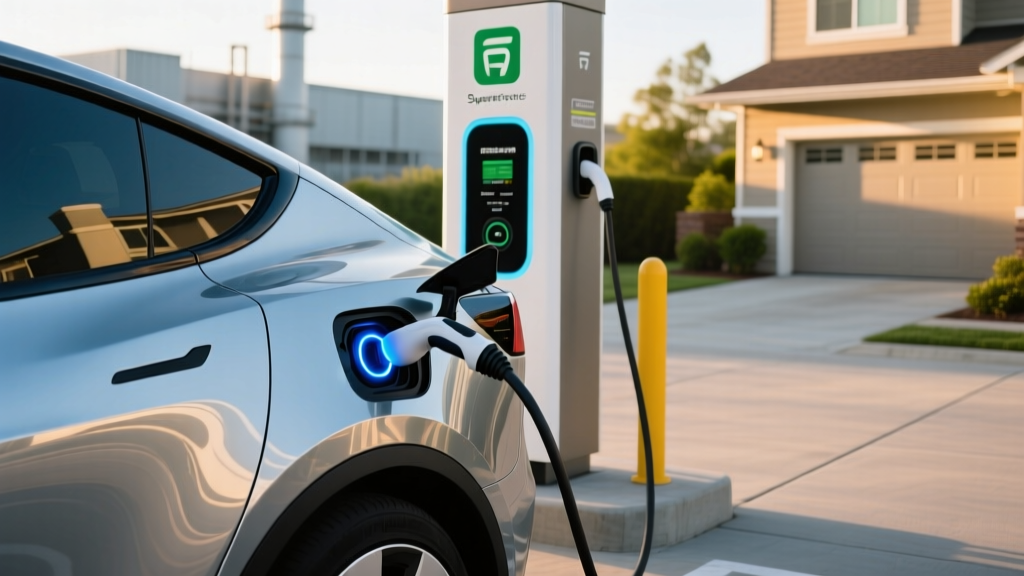
Installing a Level 2 home charger is the single biggest ownership advantage — but the cost varies wildly depending on your home's electrical panel.
Electrical Requirements
A typical 48-amp Level 2 charger requires a dedicated 60-amp, 240V circuit (the National Electrical Code requires circuits to be rated at 125% of continuous load, so 48A continuous = 60A breaker). Smaller 32-amp chargers need a 40-amp circuit.
Your home's electrical panel must have:
- Two adjacent breaker slots available
- Sufficient total panel capacity (most modern homes have 200A service; older homes may have 100A)
- A route from the panel to your garage or driveway for conduit and wiring
Installation Cost Breakdown
| Component | Simple Install (panel nearby, no upgrade) | Complex Install (long run or panel upgrade) |
|---|---|---|
| Level 2 Charger Equipment | $400–$700 | $400–$700 |
| Electrician Labor (2–8 hrs @ $85–$150/hr) | $170–$400 | $680–$1,200 |
| Materials (conduit, wire, breaker) | $50–$200 | $200–$600 |
| Permit & Inspection | $50–$150 | $50–$200 |
| Panel Upgrade (100A → 200A, if needed) | N/A | $1,500–$3,500 |
| Total | $670–$1,450 | $2,930–$6,200 |
The panel upgrade is the cost bomb that surprises homeowners. If your house was built before the 1990s with 100-amp service, adding a 60-amp EV circuit may push total load beyond capacity. A licensed electrician will perform a load calculation to determine if an upgrade is mandatory. Never skip the permit — unpermitted electrical work can void your homeowner's insurance and create fire risk.
Connector Compatibility: NACS, CCS, and CHAdeMO in 2026
The connector landscape has consolidated dramatically. As of 2025–2026, nearly every major automaker has adopted or committed to the North American Charging Standard (NACS) — Tesla's connector design — for new vehicles. But millions of CCS-equipped EVs remain on the road.
| Connector | Native Vehicles | Adapter Required For |
|---|---|---|
| NACS (Tesla) | Tesla (all), Ford (2025+), GM (2025+), Rivian (2025+), Volvo/Polestar (2025+), Hyundai/Kia (2026+) | CCS vehicles → Tesla Superchargers (Tesla CCS adapter, ~$250) |
| CCS1 | VW ID.4 (pre-2026), BMW iX, older Hyundai/Kia, Lucid, Mercedes EQS | NACS vehicles → CCS stations (various adapters, $200–$400) |
| CHAdeMO | Nissan Leaf (legacy only, no new models) | Essentially deprecated; no adapter to NACS |
If you own a CCS-equipped vehicle from 2022–2024 (like a VW ID.4 or Hyundai Ioniq 5 pre-2026), you can access Tesla's Supercharger network using an official adapter. Ford and GM provide these adapters to owners; aftermarket options from companies like Lectron and A2Z exist but verify they're UL-listed before purchasing.
Cost Per Mile: Home Charging vs. Supercharger vs. Gas
This is where home charging's economics dominate. Using the U.S. Energy Information Administration's average residential electricity rate of ~$0.17/kWh and typical public DC fast-charging rates:
| Scenario | Rate ($/kWh) | Cost to Add 200 Miles* | Cost Per Mile |
|---|---|---|---|
| Home (off-peak TOU rate) | $0.10–$0.13 | $6.00–$7.80 | $0.03–$0.04 |
| Home (standard rate) | $0.17 | $10.20 | $0.05 |
| Tesla Supercharger V3/V4 | $0.28–$0.36 | $16.80–$21.60 | $0.08–$0.11 |
| Electrify America / EVgo DC | $0.31–$0.48 | $18.60–$28.80 | $0.09–$0.14 |
| Gas car (28 MPG avg, $3.30/gal) | — | $23.57 | $0.12 |
*Based on 3.5 mi/kWh average efficiency (EPA combined). Actual varies by vehicle — a Model 3 achieves ~4.0 mi/kWh; an F-150 Lightning closer to 2.2 mi/kWh.
Home charging at off-peak rates costs roughly one-quarter what gasoline does per mile. Even at public DC fast-charging rates, most EVs still undercut gas — though exclusive Supercharger reliance narrows the gap significantly. For road trips, Tesla Supercharger pricing is typically $0.28–$0.36/kWh depending on location and demand-based pricing, according to Tesla's Supercharger page.
Recommended Home Level 2 Chargers (2026)
Tesla Wall Connector (Gen 4)
- Power: 11.5 kW (48A) max
- Connector: NACS native; J1772 adapter included
- Cable length: 24 ft
- Smart features: Wi-Fi, OTA updates, Power-Sharing (link two units on one circuit), Tesla app integration
- Price: ~$475
- Best for: Tesla owners or households with NACS-equipped vehicles
ChargePoint Home Flex (2nd Gen)
- Power: Up to 12 kW (50A) adjustable down to 16A
- Connector: J1772 (NACS adapter available separately)
- Cable length: 23 ft
- Smart features: Wi-Fi, ChargePoint app scheduling, Alexa integration, flexible amperage dial for panel-limited homes
- Price: ~$599
- Best for: CCS/J1772 vehicles; renters who may move (adjustable amperage adapts to different panels)
Emporia Vue Level 2 Charger
- Power: 11.5 kW (48A)
- Connector: J1772 (NACS version available)
- Cable length: 24 ft
- Smart features: Wi-Fi, energy monitoring via Emporia Vue panel integration, solar-aware scheduling, load management
- Price: ~$399
- Best for: Budget-conscious buyers; solar-panel households wanting integrated energy tracking
All three chargers are UL-listed, rated for indoor/outdoor use (NEMA 4 enclosure), and require hardwired installation on a dedicated circuit. Hardwired is preferred over plug-in (NEMA 14-50 outlet) for reliability and to avoid the GFCI nuisance-tripping issues that some outlets cause with continuous EV loads.
Safety and Electrical Code Requirements
EV charging is a continuous load (3+ hours), which triggers specific National Electrical Code (NEC) requirements:
- Dedicated circuit: Your EV charger must have its own breaker — no sharing with other appliances
- 125% rule: Circuit rating must be 125% of charger amperage (48A charger = 60A breaker minimum)
- GFCI protection: Required for outdoor outlets (NEC 2023+); hardwired installations typically exempt but check local amendments
- Wire gauge: 6 AWG copper for 60A circuits; 4 AWG aluminum acceptable in some jurisdictions for cost savings
- Outdoor rating: Any charger mounted outside must carry a NEMA 4 (weatherproof) rating — all three recommended models above qualify
- Permit required: Virtually all jurisdictions require an electrical permit and post-installation inspection
Never install a charger on an undersized circuit or use an extension cord. The sustained high current of EV charging generates heat that standard household wiring isn't designed to handle over hours-long sessions.
Frequently Asked Questions
How much does it cost to install a home EV charger?
A straightforward installation with adequate panel capacity typically runs $670–$1,450 total (equipment, labor, materials, permit). If your home needs a panel upgrade from 100A to 200A service, total costs can reach $2,900–$6,200. Always get a load calculation from a licensed electrician before committing.
How fast will each charging level add range?
Level 1 (120V) adds 3–5 miles per hour. Level 2 (240V, 48A) adds 35–44 miles per hour depending on vehicle efficiency. DC fast charging at 250 kW (V3 Supercharger class) adds roughly 170 miles in 15 minutes at peak, though real sessions average lower due to charge-curve taper above 50% SoC.
Which connector/charger is compatible with my EV?
Check your vehicle's charge port. 2025–2026 Tesla, Ford, GM, Rivian, and Volvo vehicles use NACS natively. Most 2022–2024 non-Tesla EVs use CCS1. The Nissan Leaf uses CHAdeMO. For home charging, a J1772 connector works with all non-Tesla EVs; Tesla owners use the NACS Wall Connector or a J1772-to-NACS adapter. Adapters exist to cross between networks.
How much does charging cost per mile vs gas?
Home charging at average rates ($0.17/kWh) costs about $0.05 per mile — roughly 58% less than a 28-MPG gas car at $3.30/gallon ($0.12/mi). Off-peak home rates drop to $0.03–$0.04/mi. Public DC fast charging at $0.30–$0.40/kWh costs $0.08–$0.14/mi, still competitive with gas for most vehicles.
What electrical upgrades might I need?
The most common upgrade is a panel replacement from 100A to 200A service ($1,500–$3,500). You may also need conduit runs if the panel is far from the garage, a sub-panel installation, or utility service-line upgrades for very old homes. A load calculation determines whether your existing panel has capacity for a 60-amp dedicated circuit without an upgrade.
Is a Supercharger always faster than home charging?
For a single session, yes — a V3 Supercharger at 250 kW adds range 10–15x faster than a home Level 2 charger. But for daily use, home charging is more practical: you start every morning with a full battery without detours. DC fast charging is best reserved for road trips and occasional rapid top-ups. Frequent DC fast charging also accelerates battery degradation slightly compared to Level 2 — fueleconomy.gov notes that sustained high-rate charging increases thermal stress on lithium-ion cells.