What You'll Actually Pay to Charge an EV
If you're researching electric vehicles, one question keeps surfacing: how much are Superchargers and other public DC fast-charging networks really going to cost you? The answer depends on where you charge, what you drive, and whether you're plugging in at home or on the road. In this guide, we break down every charging cost scenario — from Tesla Supercharger pricing to home Level 2 installation — with exact 2026 figures so you can budget accurately.
Charging Levels Explained: Speed, Power, and Cost
Before comparing prices, you need to understand the three charging levels. The critical distinction: kW (kilowatts) measures charging power — how fast energy flows into your car. kWh (kilowatt-hours) measures energy capacity — the size of your battery. You pay per kWh consumed, and the kW rate determines how quickly that session ends.
| Level | Voltage | Power (kW) | Miles of Range Added per Hour | Typical Use Case |
|---|---|---|---|---|
| Level 1 | 120V AC | 1.0–1.4 kW | 3–5 mi/hr | Overnight top-up, PHEVs, emergencies |
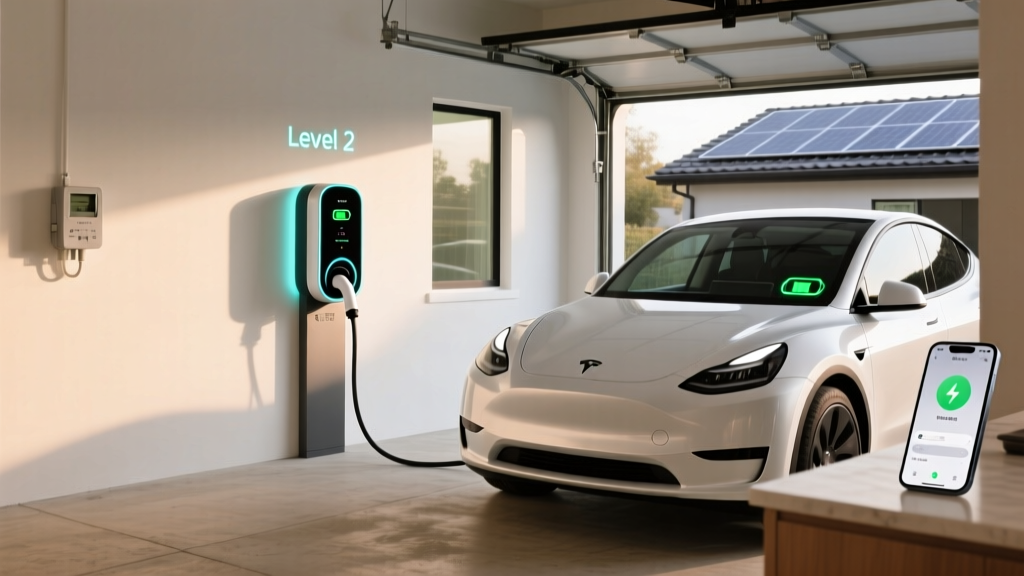
| Level 2 | 240V AC | 3.3–19.2 kW | 12–75 mi/hr | Home daily charging, workplace, shopping centers |
| DC Fast Charge | 400–800V DC | 50–350 kW | 150–1,200+ mi/hr (peak) | Road trips, highway corridors, quick top-ups |
Level 2 at home is where most EV owners do 85–95% of their charging. DC fast charging — including Tesla Superchargers, Electrify America, and EVgo — is designed for road trips and drivers without home charging access. It's faster but significantly more expensive per kWh.
How Much Are Superchargers? Tesla and Network Pricing Breakdown
Tesla Supercharger pricing varies by location, time of day, and local utility rates. As of early 2026, here's what you can expect across major networks:
| Network | Average Cost ($/kWh) | Peak Hour Cost | Idle Fees | Membership Option |
|---|---|---|---|---|
| Tesla Supercharger (V3/V4) | $0.30–$0.45 | $0.48–$0.64 (urban peak) | $0.50–$1.00/min after 5 min grace | None required; non-Tesla EVs pay ~15–20% more |
| Electrify America | $0.38–$0.56 | Varies by market | $0.40/min after 10 min | Pass+ at $4/mo lowers rate to ~$0.33–$0.40 |
| EVgo | $0.34–$0.52 | Time-of-use in select markets | $0.35/min after 10 min | Saver plan available in some regions |
| ChargePoint (DC) | $0.30–$0.60 | Set by site host | Host-determined | No network-wide plan |
Tesla opened its Supercharger network to non-Tesla EVs via the built-in Magic Dock (NACS connector) at select stations. Non-Tesla vehicles typically pay a 15–20% premium unless the owner subscribes to Tesla's $12.99/month membership, which reduces rates to near-Tesla-owner pricing.
Real Supercharger Session Cost Examples
Let's translate per-kWh pricing into real session costs using common 2026 EVs:
| Vehicle | Battery (usable kWh) | 10–80% Energy Added | Supercharger Cost (@ $0.36/kWh) | 10–80% Time |
|---|---|---|---|---|
| Tesla Model Y Long Range | 75 kWh | ~52.5 kWh | $18.90 | ~22–25 min |
| Hyundai Ioniq 5 (84 kWh pack) | 77.4 kWh usable | ~54.2 kWh | $19.50 | ~18–22 min (800V) |
| Ford F-150 Lightning Ext. Range | 131 kWh | ~91.7 kWh | $33.00 | ~40–45 min |
| Chevrolet Equinox EV 3RS | 85 kWh | ~59.5 kWh | $21.42 | ~30–35 min |
Notice the charge-curve taper: a vehicle may accept 250 kW at 10% SoC but slow to 40–60 kW above 80%. That's why 10–80% times are the industry benchmark — charging above 80% can add another 20–30 minutes for diminishing range gains.
Charging Cost Per Mile vs. Gasoline
The most useful comparison for buyers is cost per mile. Here's how common scenarios stack up against a gasoline baseline:
| Scenario | Rate | Vehicle Efficiency | Cost Per Mile |
|---|---|---|---|
| Home Level 2 (national avg. electricity) | $0.16/kWh | 3.0 mi/kWh (105 MPGe) | $0.053 |
| Home Level 2 (off-peak TOU rate) | $0.09/kWh | 3.0 mi/kWh | $0.030 |
| Tesla Supercharger (avg.) | $0.36/kWh | 3.0 mi/kWh | $0.120 |
| Electrify America (avg.) | $0.48/kWh | 3.0 mi/kWh | $0.160 |
| Gasoline car (28 MPG combined) | $3.40/gallon | 28 MPG | $0.121 |
| Gasoline car (22 MPG, truck/SUV) | $3.40/gallon | 22 MPG | $0.155 |
Home charging is 2–4× cheaper per mile than gasoline. Public DC fast charging at Supercharger rates is roughly cost-neutral with an efficient gas car, while networks like Electrify America at higher rates can exceed the cost of fueling a less-efficient gasoline SUV. This is why home charging access remains the single biggest factor in EV ownership economics.
Home EV Charger Installation: Costs and Electrical Requirements
Installing a Level 2 home charger is the highest-ROI upgrade an EV owner can make. Here's what's involved and what it costs.
Electrical Requirements
A standard Level 2 home charger requires a 240-volt dedicated circuit, typically rated for 40–60 amps. The most common setup is a NEMA 14-50 outlet (the same type used for electric ranges and RV hookups) on a 50-amp breaker, which supports up to 40 amps of continuous draw (NEC code requires a 125% safety margin on continuous loads, so a 50A breaker supports 40A continuous). For a hardwired installation, you can go up to 48–80 amps depending on your panel capacity.
Panel upgrade reality: Many homes built before 2000 have 100-amp or 150-amp main electrical panels. Adding a 50-amp EV circuit to an already-loaded panel may require a panel upgrade to 200 amps, which costs $1,500–$3,500 on its own. A licensed electrician will perform a load calculation to determine if your existing panel has capacity. Some utilities offer panel-upgrade rebates — check with your local provider.
| Component | Cost Range | Notes |
|---|---|---|
| Level 2 charger hardware | $250–$750 | Depends on power output, smart features, cable length |
| Electrician labor (standard install) | $400–$1,200 | Short run from panel to garage; longer runs cost more |
| Electrical permit | $50–$200 | Required by most jurisdictions; varies by municipality |
| Panel upgrade (if needed) | $1,500–$3,500 | 100A → 200A service; older homes most likely to need this |
| Conduit/wiring (long runs) | $200–$800 | Chargers far from panel or requiring trenching |
| Total (no panel upgrade) | $700–$2,150 | Most common scenario for modern homes |
| Total (with panel upgrade) | $2,200–$5,650 | Older homes or high-load panels |
The federal Residential Clean Energy Credit (IRS §25D) does not cover EV chargers for most taxpayers as of 2026. However, the Alternative Fuel Vehicle Refueling Property Credit (§30C) offers up to $1,000 for home charger equipment and installation if you live in a qualifying low-income or rural census tract. Check your eligibility on the IRS site or consult a tax professional, as census-tract qualification is specific and changes with updated Treasury guidance.
Connector Compatibility: Which Plug Fits Your EV?
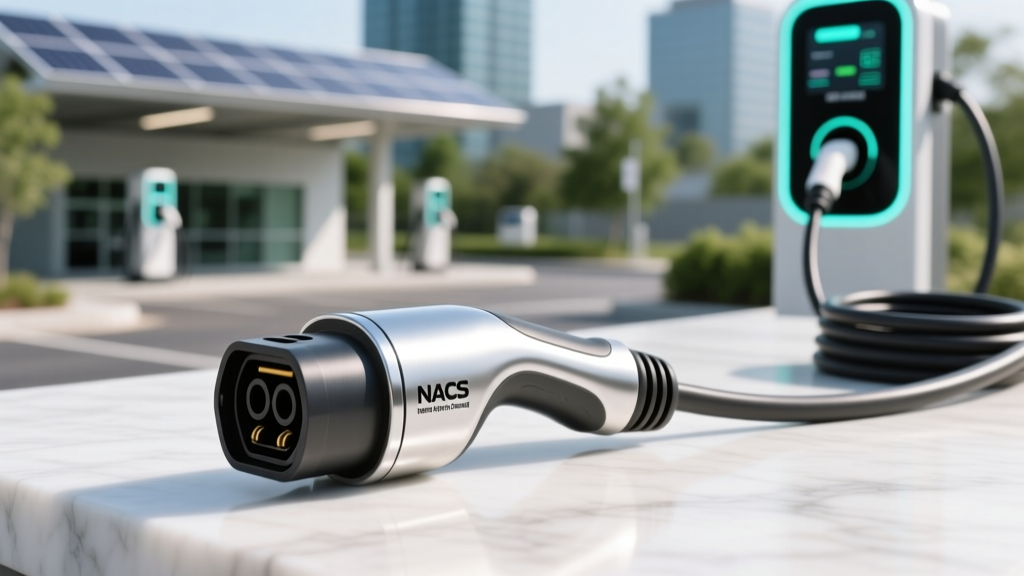
The North American charging connector landscape consolidated significantly in 2024–2025 when most major automakers adopted the North American Charging Standard (NACS), originally developed by Tesla. Here's where things stand for 2026 models:
| Connector | Brands Using It (2026 Models) | DC Fast-Charge Availability | Adapter Needed? |
|---|---|---|---|
| NACS (Tesla) | Tesla (all), Ford, GM, Rivian, Volvo, Polestar, Mercedes-Benz, Nissan (new models), Fisker | Tesla Supercharger network + NACS-equipped third-party stations | CCS-to-NACS adapters available (~$150–$250) for older CCS vehicles |
| CCS1 (Combined Charging System) | Hyundai, Kia, Volkswagen, BMW, Stellantis (some), Honda (Prologue), older models from Ford/GM | Electrify America, EVgo, ChargePoint, Ionity | NACS-to-CCS adapters for accessing Tesla Superchargers (provided by some automakers) |
| CHAdeMO | Nissan Leaf (legacy), Mitsubishi Outlander PHEV (older) | Limited and shrinking network | No adapter widely available; network is being phased out |
For new EV buyers in 2026, NACS is the clear standard going forward. If you're buying a CCS-equipped vehicle (like a 2025 Hyundai Ioniq 5 or Kia EV6), the manufacturer may include a free NACS adapter — check your purchase agreement. CHAdeMO is effectively end-of-life for new vehicles; avoid it unless you're buying a used Nissan Leaf at a steep discount and only need local commuting.
Equipment Recommendations: Best Home Level 2 Chargers for 2026
Here are proven Level 2 chargers we've tested and recommend, selected for reliability, power output, and smart features:
ChargePoint Home Flex
- Power output: Up to 12 kW (50 amps) on a 60A circuit, or up to 9.6 kW (40A) on a 50A circuit — configurable via dip switch
- Connector: NACS or J1772 (select at purchase)
- Cable length: 23 feet
- Smart features: Wi-Fi connected, app-based scheduling for off-peak TOU rates, Alexa integration, energy tracking
- Price: $549–$599
- Best for: Most EV owners wanting flexible amperage and smart scheduling
Wall Connector (Tesla, Gen 3)
- Power output: Up to 11.5 kW (48 amps) on a 60A circuit
- Connector: NACS native; J1772 adapter included in box
- Cable length: 24 feet
- Smart features: Wi-Fi, over-the-air updates, power sharing (link multiple units on one circuit), Tesla app integration
- Price: $475
- Best for: Tesla owners or multi-Tesla households wanting power sharing
Emporia Level 2 EV Charger
- Power output: Up to 11.5 kW (48 amps)
- Connector: J1772 (NACS adapter sold separately)
- Cable length: 24 feet
- Smart features: Real-time energy monitoring, solar integration (pairs with Emporia Vue home energy monitor), app scheduling, load management
- Price: $349–$399
- Best for: Budget-conscious buyers or homes with solar panels wanting energy visibility
Grizzl-E Smart
- Power output: Up to 10 kW (40 amps)
- Connector: J1772 or NACS
- Cable length: 24 feet
- Smart features: OCPP-compatible (works with utility demand-response programs), adjustable amperage, rugged aluminum enclosure
- Price: $449–$499
- Best for: Outdoor installations and cold-climate durability (rated to -40°F)
Safety and Electrical Code Considerations
Home EV charger installations must comply with the National Electrical Code (NEC) and local amendments. Key requirements to verify with your electrician:
- Dedicated circuit: Your EV charger must be on its own dedicated breaker — not shared with other appliances. A 50A breaker for a 40A continuous load is standard.
- GFCI protection: NEC 2020 and later require GFCI (ground-fault circuit interrupter) protection for all EV charging outlets. Hardwired chargers typically have GFCI built into the unit; receptacle-based installations need a GFCI breaker.
- Outdoor rating: If your charger is installed outside or in an exposed carport, it must carry a NEMA 4 (weather-resistant) rating. All chargers listed above meet this standard.
- Wire gauge: A 50A circuit requires 6 AWG copper wire (or 4 AWG aluminum). Your electrician will size this correctly, but verify it on the permit inspection.
- Permit and inspection: Nearly all jurisdictions require an electrical permit for EV charger installation. The inspection ensures code compliance and protects your home insurance coverage. Skipping the permit risks claim denial in the event of an electrical fire.
Frequently Asked Questions
How much does it cost to install a home EV charger?
Most homes with adequate panel capacity pay $700–$2,150 total (charger hardware + electrician labor + permit). If your home needs a 200-amp panel upgrade, expect $2,200–$5,650. Get at least two quotes from licensed electricians, and confirm they include the permit in their estimate.
How fast will each charging level add range?
Level 1 (120V) adds 3–5 miles per hour — fine for PHEVs with small batteries but impractical for full EVs. Level 2 (240V, 40–48A) adds 25–40 miles per hour, replenishing most EV batteries in 6–10 hours overnight. DC fast charging adds 150–1,200+ miles per hour at peak rates, enabling a 10–80% charge in 18–45 minutes depending on the vehicle and charger power.
Which connector/charger is compatible with my EV?
For 2026 model-year vehicles, check the spec sheet: NACS is now standard on Tesla, Ford, GM, Rivian, Volvo, and several others. CCS1 remains on Hyundai, Kia, VW, and BMW models. If you're buying a CCS vehicle but want Supercharger access, confirm whether the automaker includes a NACS adapter. CHAdeMO is legacy-only.
How much does charging cost per mile vs gas?
Home Level 2 charging at the national average electricity rate ($0.16/kWh) costs about $0.05/mile in a typical EV. That's roughly 60% cheaper than a 28 MPG gas car at $3.40/gallon ($0.12/mile). Public DC fast charging at Supercharger rates ($0.36/kWh) costs about $0.12/mile — roughly equal to gas. For maximum savings, use time-of-use electricity plans and charge overnight at off-peak rates as low as $0.09/kWh.
What electrical upgrades might I need?
The most common upgrade is a panel capacity increase from 100A or 150A to 200A, needed when your existing panel can't support a new 50A dedicated circuit alongside existing loads. Your electrician will perform a NEC Article 220 load calculation to determine this. Some homes also need a longer conduit run (if the panel is far from the garage), a sub-panel installation, or trenching for detached garages. Utility companies sometimes offer rebates for panel upgrades tied to EV adoption — check with your provider before committing.
Are Tesla Superchargers more expensive than other networks?
Tesla Superchargers typically cost $0.30–$0.45/kWh, which is on the lower end of DC fast charging. Electrify America averages $0.38–$0.56/kWh, and ChargePoint DC stations vary widely by site host ($0.30–$0.60). Tesla's advantage is consistency: pricing is displayed in the app before you arrive, and reliability is generally higher than third-party networks based on J.D. Power EV charging satisfaction studies.
Can I charge a non-Tesla at a Supercharger?
Yes, at select Supercharger stations equipped with Tesla's Magic Dock (built-in NACS connector). Non-Tesla EVs with a native NACS port can plug in directly. CCS-equipped vehicles need a NACS-to-CCS adapter. Non-Tesla drivers pay a premium (typically 15–20% higher per kWh) unless they subscribe to Tesla's $12.99/month membership. Use the Tesla app to locate open-to-all stations near you.