Supercharger How Much Does It Really Cost to Charge?
If you've searched "supercharger how much" expecting a single number, the honest answer is that it depends on whether you're asking about the price per kilowatt-hour (kWh) at a public DC fast-charging stall, the cost to install a home charger, or the per-mile cost compared to gasoline. This guide answers all three with exact 2026 figures, real-world charging curves, and the electrical work your home may actually need.
Before we get to the numbers, a quick but critical distinction: kW (kilowatts) measures power — how fast energy flows into your battery. kWh (kilowatt-hours) measures energy — the actual amount of electricity stored. You pay for kWh the same way you pay for gallons of gas. The kW rating of a charger determines how quickly those kWh arrive.
Charging Levels Explained: Speeds, Power, and Range Added
Every EV owner cycles through three charging tiers. Here's how they stack up in measurable terms.
| Level | Voltage | Power (kW) | Miles of Range Added per Hour | Typical Use Case |
|---|---|---|---|---|
| Level 1 | 120V AC | 1.0–1.4 kW | 3–5 mi/hr | Overnight top-ups, PHEVs, low-mileage drivers |
| Level 2 | 240V AC | 7.2–19.2 kW | 20–60 mi/hr | Daily home/work charging |
| DC Fast (incl. Supercharger) | 400–800V DC | 50–350 kW | 150–1,000+ mi/hr (peak) | Road trips, quick top-ups |
A Tesla Model Y Long Range (75 kWh usable battery, ~310 miles EPA) charging at a 250 kW V3 Supercharger will add roughly 200 miles in 15 minutes under ideal conditions. But "ideal" matters: battery temperature, state of charge (SoC), and ambient weather all shape the actual charge curve. Expect peak power only between roughly 10–40% SoC; above 80%, the rate tapers sharply to protect battery health.
How Much Does a Supercharger Cost Per kWh and Per Mile?
Tesla Supercharger pricing varies by location, time of day, and whether your vehicle is a Tesla or a non-Tesla EV using the newly opened network via the Magic Dock or NACS port. As of early 2026, typical U.S. Supercharger rates fall in these ranges:
- Off-peak (overnight/midday in some markets): $0.25–$0.35/kWh
- Peak (evening, urban corridors): $0.35–$0.55/kWh
- Non-Tesla vehicles at Superchargers: often $0.45–$0.65/kWh unless a membership discount applies
- Idle fees: $0.50–$1.00/minute once charging completes and the stall is full
Let's translate that into cost per mile. Using a 2026 Tesla Model 3 Long Range (EPA efficiency ~25 kWh/100 mi, or roughly 4 mi/kWh):
| Charging Scenario | $/kWh | Cost per Mile | Equivalent Gas Price (at 28 MPG) |
|---|---|---|---|
| Home Level 2 (national avg electricity) | $0.16 | $0.04 | $1.12/gal |
| Home Level 2 (off-peak TOU rate) | $0.09 | $0.023 | $0.64/gal |
| Supercharger (off-peak) | $0.30 | $0.075 | $2.10/gal |
| Supercharger (peak) | $0.48 | $0.12 | $3.36/gal |
| Non-Tesla DC fast (Electrify America, EVgo) | $0.48–$0.60 | $0.12–$0.15 | $3.36–$4.20/gal |
| Gasoline (U.S. avg $3.40/gal, 28 MPG sedan) | — | $0.121 | $3.40/gal |
Source: fueleconomy.gov efficiency data and EIA electricity pricing.
The takeaway: home charging on an off-peak rate is roughly 80% cheaper per mile than gasoline. Peak Supercharging is cost-competitive with a fuel-efficient gas car — the advantage is speed and convenience on road trips, not price.
How Much Does It Cost to Install a Home EV Charger?
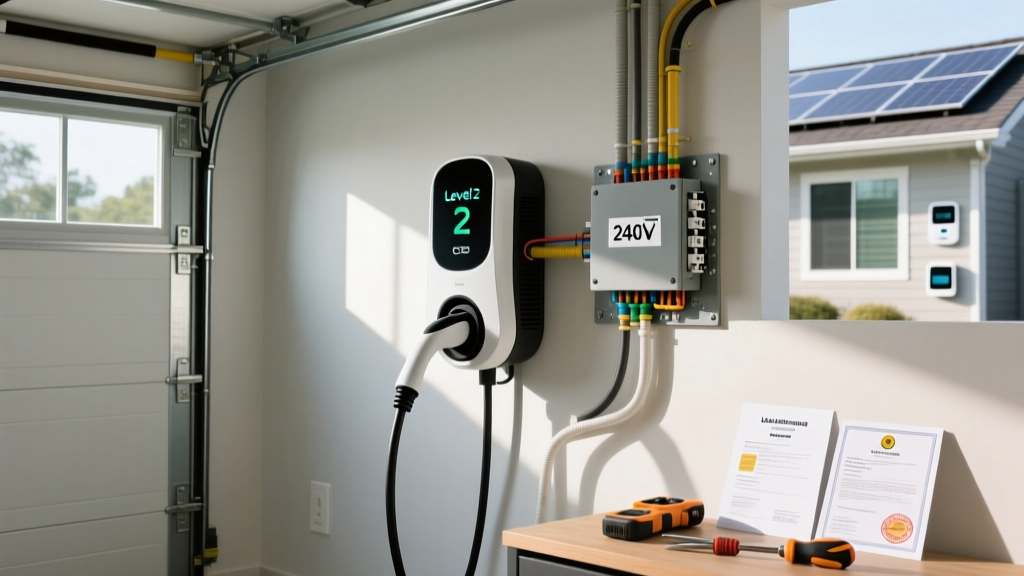
This is where "supercharger how much" becomes a home-infrastructure question. A Level 2 home charger (the practical daily solution) requires a 240V dedicated circuit, similar to a dryer or oven outlet. Total installed cost depends heavily on your electrical panel's capacity and the distance from panel to charger location.
| Component | Typical Cost Range | Notes |
|---|---|---|
| Level 2 EVSE equipment (smart charger) | $350–$750 | 40A–48A, Wi-Fi, NACS or J1772 |
| Electrician labor (standard install) | $500–$1,500 | Varies by run length, wall type |
| Permit & inspection | $50–$250 | Required by most jurisdictions |
| Electrical panel upgrade (if needed) | $1,500–$3,500 | 100A → 200A service for older homes |
| Total (no panel upgrade) | $900–$2,500 | Most newer homes with 200A service |
| Total (with panel upgrade) | $2,400–$6,000 | Homes built before ~1990 |
A few practical realities most guides gloss over:
- Panel headroom matters more than panel size. A 200A panel that's already loaded with electric heat, an EV, a dryer, and an oven may not have room for a 40A continuous EV load. Your electrician will perform a NEC Article 220 load calculation.
- 50A breaker = 40A continuous charge. NEC code requires circuits to be derated to 80% for continuous loads. A "40A charger" needs a 50A breaker and 6 AWG copper wire.
- The federal 30% tax credit (up to $1,000) for home charging equipment applies through 2032 if you live in an eligible census tract. Confirm eligibility with a tax professional.
- GFCI protection is required by NEC 2020+ for outdoor receptacles; hardwired installations may bypass this requirement depending on local code. Hardwired is generally preferred for reliability and weather resistance.
Which Connector Is Compatible With My EV?
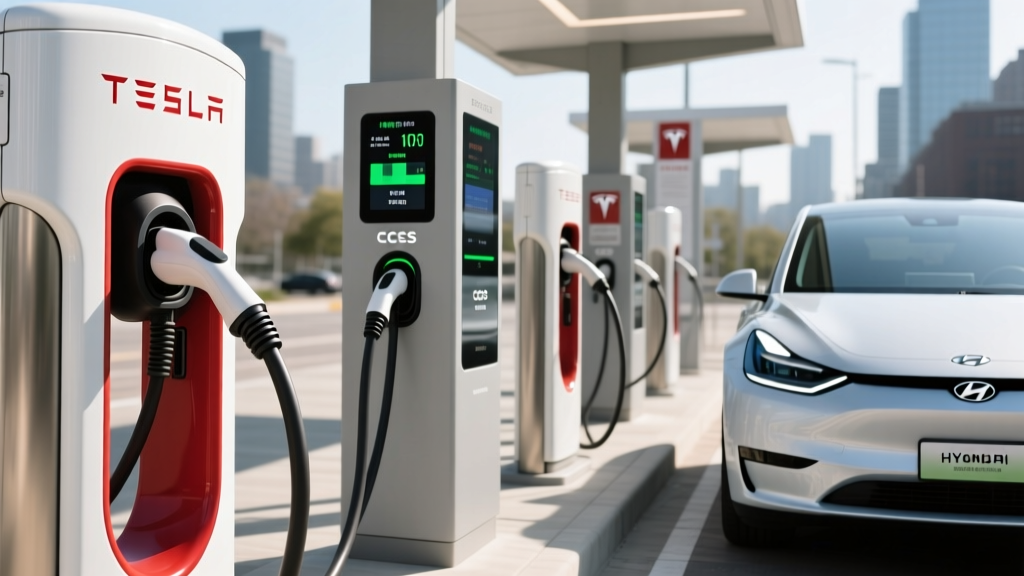
The connector landscape consolidated significantly in 2024–2025 when most major automakers adopted the North American Charging Standard (NACS), originally Tesla's proprietary design. Here's where each brand stands for 2026 models:
| Connector | Brands Using It (2026) | Supercharger Access | Adapter Needed? |
|---|---|---|---|
| NACS (native) | Tesla, Ford, GM, Rivian, Volvo, Polestar, Mercedes, Nissan (Ariya refresh) | Direct plug at all Superchargers | None |
| NACS (via adapter) | Hyundai/Kia (2024–2025 models), BMW, Stellantis | Yes, with OEM-provided or aftermarket NACS adapter | CCS1-to-NACS adapter ($150–$250) |
| CCS1 | Older Hyundai/Kia, VW ID.4 (pre-2025), some BMWs | Limited — requires adapter or non-Tesla networks | N/A for Electrify America, EVgo |
| CHAdeMO | Nissan Leaf (discontinued), Mitsubishi Outlander PHEV (legacy) | No Supercharger access | Limited adapter options |
If you drive a non-Tesla with a native NACS port (2025+ Ford, GM, Rivian), you can use any Supercharger stall directly. If your EV still has CCS1, Tesla sells an official adapter and many OEMs include one with purchase. Always verify your adapter is rated for the full amperage of the charger you're using — a 32A-rated adapter on a 250 kW stall will bottleneck your session.
Charging Time Examples: 10–80% for Common Battery Sizes
Battery size and charger power determine your session length. Below are realistic 10–80% times accounting for charge-curve taper (not just peak kW marketing claims):
- Tesla Model 3 Long Range (75 kWh, NMC): ~25 min at 250 kW V3 Supercharger; ~45 min at 150 kW V2
- Ford F-150 Lightning Extended Range (131 kWh, NMC): ~40 min at 250 kW; peak rate limited by battery acceptance
- Hyundai Ioniq 5 (77.4 kWh, NMC, 800V architecture): ~18 min at 350 kW Electrify America stall; ~30 min at 150 kW
- Chevrolet Equinox EV (85 kWh, NMC): ~30 min at 150 kW DC fast charger
- Level 2 home charging (48A / 11.5 kW) for a 75 kWh battery: ~6.5 hours for 10–80%, ideal for overnight
Remember: charging from 80–100% can take as long as 10–80% due to the taper. On road trips, plan stops around the 10–80% window and skip the final top-up unless you need it for your destination.
Recommended Home Level 2 Chargers for 2026
These units represent the best balance of power output, smart features, build quality, and connector flexibility for current EV owners:
Tesla Wall Connector (Gen 4)
- Power output: 48A (11.5 kW on 240V/60A circuit)
- Connector: NACS native; J1772 adapter included in box
- Cable length: 24 ft
- Smart features: Wi-Fi, OTA updates, load sharing with Powerwall, access control
- Price: ~$475
- Best for: Tesla owners and any NACS-equipped vehicle
ChargePoint Home Flex
- Power output: Up to 50A (12 kW) — adjustable via dip switches to match your circuit
- Connector: J1772 (NACS adapter available separately)
- Cable length: 23 ft
- Smart features: Wi-Fi, Alexa integration, scheduling, energy tracking
- Price: ~$550–$650
- Best for: CCS1/J1772 vehicles, flexible amperage for older panels
Emporia Vue Level 2 Charger
- Power output: 48A (11.5 kW)
- Connector: J1772 (NACS version available)
- Cable length: 24 ft
- Smart features: Wi-Fi, integration with Emporia energy monitor, solar-aware scheduling
- Price: ~$399
- Best for: Budget-conscious buyers who want energy monitoring
Safety, Code, and Electrical Requirements
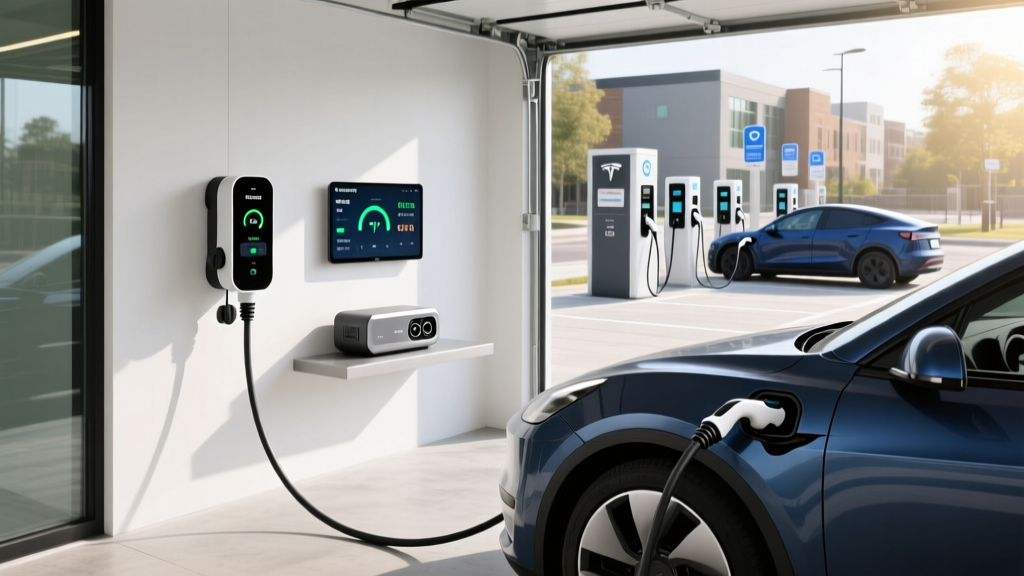
A Level 2 charger is a significant continuous electrical load. Here's what proper installation looks like:
- Dedicated circuit: Your EVSE must have its own breaker — never share a circuit with other appliances.
- Wire gauge: 6 AWG copper for 48A chargers (60A breaker); 8 AWG for 32A chargers (40A breaker). Aluminum wire requires upsizing.
- GFCI protection: Required for outdoor receptacles (NEMA 14-50); hardwired units may be exempt depending on jurisdiction. A hardwired install eliminates the GFCI nuisance-trip issues some owners report with receptacle-based setups.
- Outdoor rating: If mounting outside, the EVSE must carry a NEMA 4 or IP65 rating. All three units above are outdoor-rated.
- Permit and inspection: Most municipalities require an electrical permit for a new 240V circuit. Skipping this can void home insurance coverage in the event of an electrical fire.
- Load management: If your panel is near capacity, consider a smart load-management device (e.g., Emporia, Span) that dynamically reduces charger amperage when other loads spike, avoiding a costly panel upgrade.
Frequently Asked Questions
How much does it cost to charge at a Tesla Supercharger for a full battery?
For a Tesla Model Y Long Range (~75 kWh usable), a 10–90% session (about 60 kWh) at $0.35/kWh costs roughly $21. At $0.48/kWh peak pricing, that's about $29. Most road-trip stops involve adding 40–50 kWh, so expect $14–$24 per stop.
Is it cheaper to charge at home or at a Supercharger?
Home charging is dramatically cheaper. At the U.S. average residential rate of ~$0.16/kWh, the same 60 kWh session costs about $9.60 — less than half the Supercharger price. With off-peak time-of-use rates as low as $0.07–$0.09/kWh, home charging drops to $4–$5 per session.
Can non-Tesla EVs use Superchargers, and does it cost more?
Yes. As of 2026, Tesla has opened most U.S. Supercharger stalls to NACS-equipped non-Tesla vehicles. Non-Tesla drivers typically pay a 15–30% premium over Tesla owners unless they subscribe to a Tesla charging membership (~$13/month for discounted rates).
What electrical upgrades might I need for a home charger?
Homes with 100A electrical service (common in pre-1990 construction) almost always need a panel upgrade to 200A to support a 40A+ EV charger alongside existing loads. Homes with 200A service usually have sufficient headroom, but a load calculation by a licensed electrician is the only way to know for certain. Budget $1,500–$3,500 for a panel upgrade if needed.
How fast will a home Level 2 charger add range overnight?
A 48A Level 2 charger delivers about 11.5 kW, adding roughly 35–45 miles of range per hour depending on vehicle efficiency. Over an 8-hour overnight session, that's 280–360 miles — enough to fully replenish virtually any EV battery from 20% to 100%.
Does the federal tax credit cover home charger installation?
The residential clean energy credit covers 30% of home charging equipment and installation costs, up to $1,000. However, eligibility depends on your census tract meeting certain criteria. Always verify current-year rules on IRS.gov and consult a tax professional before claiming.