The Short Answer: Superchargers Don't Change Your EV's Efficiency
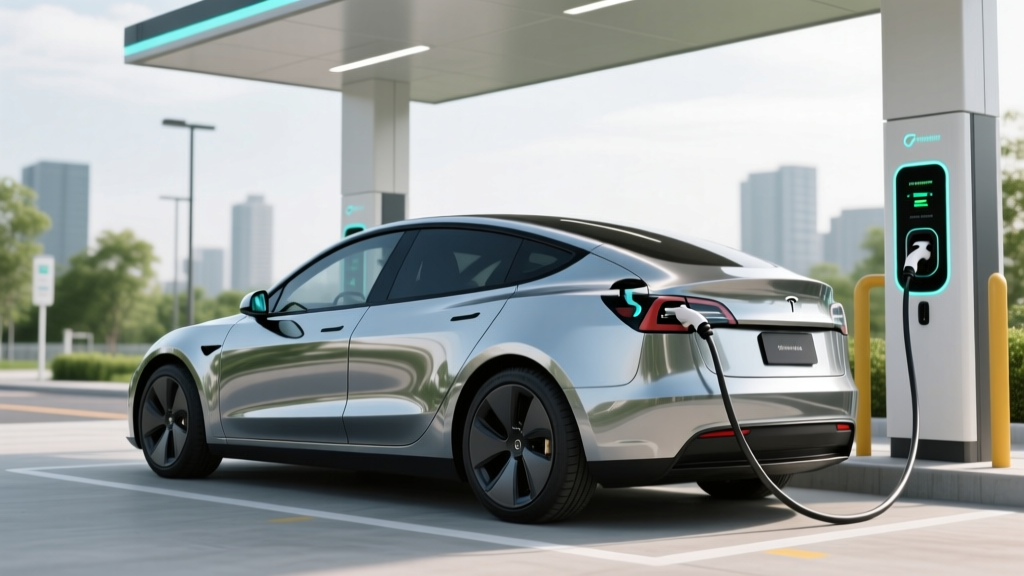
If you're asking whether plugging into a Tesla Supercharger (or any DC fast charger) gives your EV more miles per kWh than charging at home, the answer is no. A DC fast charger does not increase your vehicle's rated efficiency — measured in MPGe or kWh per 100 miles — because efficiency is determined by the car's drivetrain, weight, aerodynamics, and tires, not by the source of electrons.
What a Supercharger does change is how quickly energy enters your battery (measured in kilowatts, or kW) and, in some cases, how much energy is lost as heat during the charging process. Understanding the difference between kW (power — the rate of energy delivery) and kWh (energy — the total capacity stored) is the single most important concept in EV ownership. Think of kW as the speed of water flowing through a hose, and kWh as the total gallons in the bucket.
That said, there are real efficiency nuances between charging levels — including thermal losses, charging-curve taper, and battery preconditioning — that affect your wallet and your time. Let's break down every charging tier, the real costs, and what you need to know before installing a home charger in 2026.
Charging Levels Explained: Speed, Power, and Real-World Range Added
Every EV sold in the U.S. supports at least two charging levels, and most new models support three. Here's how they compare in terms of power delivery and practical range recovery:
| Level | Voltage | Typical Power (kW) | Miles of Range Added per Hour | Best Use Case |
|---|---|---|---|---|
| Level 1 (120V) | 120V AC | 1.0–1.4 kW | 3–5 miles/hr | Overnight trickle, PHEVs, emergency top-up |
| Level 2 (240V) | 240V AC | 3.3–19.2 kW | 12–75 miles/hr | Daily home charging, workplace, shopping centers |
| DC Fast Charging | 400–800V DC | 50–350 kW | 150–1,000+ miles/hr (peak) | Road trips, highway corridors, rapid top-up |
A few critical caveats behind these numbers:
- Level 2 variance is enormous. A 40-amp circuit delivering 9.6 kW adds roughly 30–35 miles per hour to a midsize SUV like the Hyundai Ioniq 5. A 48-amp circuit at 11.5 kW pushes that to ~40 miles/hr. But your EV's onboard charger caps intake — a Chevrolet Equinox EV with an 11.5 kW onboard charger won't benefit from a 19.2 kW wallbox.
- DC fast charging peak rates are not sustained. A Tesla Supercharger V4 rated at 250 kW might deliver that rate only between 10–30% State of Charge (SoC). Above 80%, the charge curve tapers sharply to protect battery health. A "10–80% in 18 minutes" claim assumes ideal battery temperature and low starting SoC.
- Miles per hour depends on vehicle efficiency. A highly efficient sedan like the Lucid Air (5.0 mi/kWh) gains more range per kWh than a heavy truck like the Ford F-150 Lightning (2.0 mi/kWh), even from the same charger.
Does Fast Charging Waste Energy? The Thermal Loss Reality
Here's where the "fuel economy" question gets interesting. While a Supercharger doesn't change your car's driving efficiency, the charging process itself has measurable energy losses that vary by level:
- Level 1 (120V): Highest relative losses — typically 10–15% of drawn power is lost as heat in the vehicle's onboard charger and cabling. For a 1.2 kW draw, you might pay for 1.4 kW from the grid.
- Level 2 (240V): Most efficient for daily use — losses drop to roughly 5–8% because the onboard charger operates closer to its optimal load range. A 9.6 kW session draws ~10.2 kW from the panel.
- DC Fast Charging: Losses range from 5–12% but spike during high-power delivery. At 250 kW, battery thermal management systems (cooling loops, pumps, fans) consume significant power. On a hot day, your car might draw 270 kW from the grid to put 240 kW into the cells. According to NREL research, DC fast charging energy losses average 8–10% in moderate temperatures but can exceed 15% in extreme heat or cold.
Bottom line: Level 2 home charging is the most energy-efficient way to fill your battery. DC fast charging trades a small efficiency penalty for massive time savings — a worthwhile trade on road trips, but not a reason to avoid home charging.
Home Charger Installation: Electrical Requirements and Real Costs
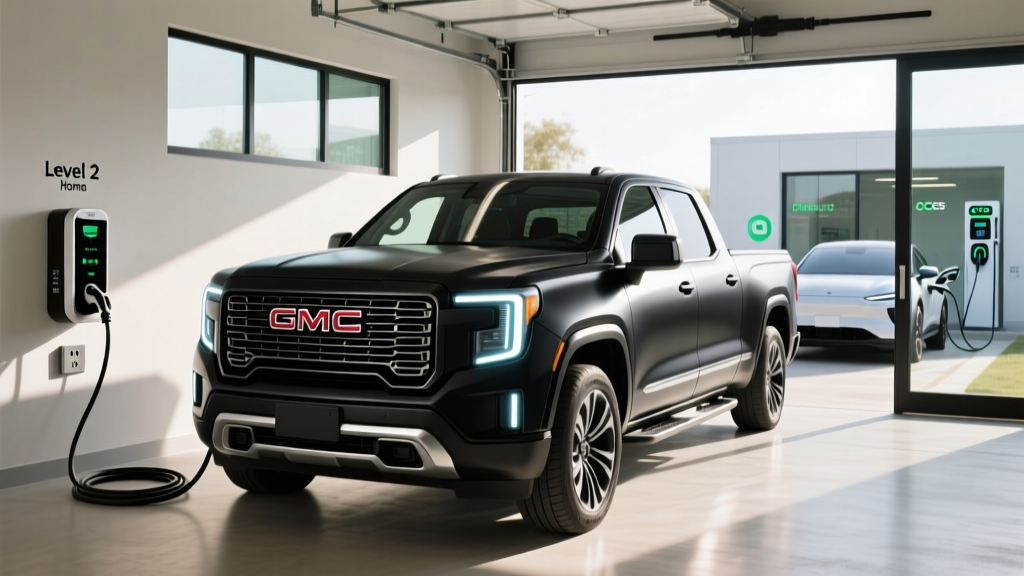
Installing a Level 2 home charger is the single highest-impact upgrade an EV owner can make. Here's what the electrical work actually involves and what you'll spend in 2026:
Electrical Requirements
A typical Level 2 home charger requires a dedicated 240V circuit — the same voltage as your electric dryer or oven. The most common configurations:
- 40-amp circuit: Supports up to 32 amps continuous (80% rule per NEC), delivering 7.7 kW. Adequate for most EVs with overnight charging.
- 50-amp circuit: Supports 40 amps continuous, delivering 9.6 kW. The sweet spot for modern EVs with larger batteries (75–100 kWh).
- 60-amp circuit: Supports 48 amps continuous, delivering 11.5 kW. Ideal for high-capacity vehicles like the Ford F-150 Lightning Extended Range (131 kWh usable) or if you want future-proofing.
Your electrician will verify whether your main electrical panel has sufficient spare capacity. A 200-amp panel in a modern home usually accommodates a 50-amp EV circuit without issue. Older homes with 100-amp or 150-amp service may need a panel upgrade — a significant added cost.
Installation Cost Breakdown
| Component | Low End | High End | Notes |
|---|---|---|---|
| Level 2 Charger (Equipment) | $350 | $800 | Smart Wi-Fi chargers cost more than basic units |
| Electrician Labor (standard install) | $400 | $1,200 | Depends on run length from panel to garage |
| Electrical Materials (wire, conduit, breaker) | $100 | $400 | Longer wire runs and buried conduit increase cost |
| Permit and Inspection | $50 | $250 | Required by most jurisdictions; varies by municipality |
| Panel Upgrade (if needed) | $1,500 | $4,000 | 100A to 200A upgrade; not needed in most modern homes |
| Total (no panel upgrade) | $900 | $2,650 | Most homeowners spend $1,200–$1,800 |
| Total (with panel upgrade) | $2,400 | $6,650 | Older homes with insufficient service |
The federal §30C Alternative Fuel Vehicle Refueling Property Credit covers up to 30% of home charger equipment and installation costs (capped at $1,000) if you live in an eligible census tract. Check irs.gov for current-year eligibility maps, as qualifying areas are subject to change.
Connector Compatibility: NACS, CCS1, and CHAdeMO in 2026
The connector landscape has consolidated significantly since Tesla opened its Supercharger network and the North American Charging Standard (NACS) was adopted by nearly every major automaker. Here's where things stand for 2026 model-year vehicles:
| Connector | Brands Using It (2026) | Adapter Needed? |
|---|---|---|
| NACS (Tesla standard) | Tesla, Ford, GM, Rivian, Volvo, Polestar, Mercedes-Benz, Nissan (new models), Hyundai/Kia (new models) | No — native on most 2025+ models |
| CCS1 | Legacy models (pre-2025 VW ID.4, BMW iX, Stellantis EVs); still present on some 2026 carryover trims | CCS-to-NACS adapter ($150–$250) for Supercharger access |
| CHAdeMO | Essentially discontinued — only older Nissan Leaf models still on the road | No adapter available; network shrinking |
For home Level 2 charging, the connector is less of a concern — all Level 2 wallboxes sold today come with either a NACS plug or a J1772 plug (the legacy Level 2 standard), and J1772-to-NACS adapters are widely available for under $100. Most 2026 EVs with native NACS ports accept J1772 via the adapter included with the vehicle.
Cost to Charge: Home vs. Public vs. DC Fast — and Per-Mile Comparison to Gas
One of the most persistent questions from prospective EV buyers is whether charging actually saves money compared to gasoline. The answer depends heavily on where and when you charge:
| Scenario | Cost per kWh | Cost per Mile (3.5 mi/kWh avg EV) | Equivalent Gas Price at 28 MPG |
|---|---|---|---|
| Home, off-peak utility rate | $0.08–$0.12 | $0.023–$0.034 | $0.64–$0.95/gallon |
| Home, standard residential rate | $0.14–$0.18 | $0.040–$0.051 | $1.12–$1.43/gallon |
| Public Level 2 (workplace, retail) | $0.20–$0.35 | $0.057–$0.100 | $1.60–$2.80/gallon |
| DC Fast Charging (Electrify America, EVgo) | $0.35–$0.55 | $0.100–$0.157 | $2.80–$4.40/gallon |
| Tesla Supercharger (member rates) | $0.25–$0.40 | $0.071–$0.114 | $1.99–$3.19/gallon |
| Gasoline (national avg, early 2026) | — | $0.11–$0.14 (at $3.10–$3.90/gal) | $3.10–$3.90/gallon |
Key takeaway: Home charging at off-peak rates delivers fuel cost savings of 70–85% compared to gasoline. Even DC fast charging on road trips generally costs less per mile than gas, though the gap narrows significantly. If you rely exclusively on public DC fast chargers, your "fuel" costs approach those of a very efficient hybrid — the savings advantage shrinks to 10–30%.
According to fueleconomy.gov, the average 2026 EV achieves 100–130 MPGe combined (roughly 3.0–4.0 miles per kWh), making home charging dramatically cheaper than gasoline on a per-mile basis.
Recommended Home Chargers for 2026
Based on power output, build quality, smart features, and connector compatibility, here are three Level 2 chargers that cover most EV owners' needs:
Emporia Level 2 Smart Charger
- Power Output: Up to 11.5 kW (48 amps on a 60A circuit)
- Connector: J1772 (NACS adapter available)
- Cable Length: 24 feet
- Smart Features: Wi-Fi, energy monitoring via Emporia Vue integration, scheduled charging, solar-aware charging
- Price: ~$399
- Best For: Budget-conscious owners who want energy tracking and solar integration
ChargePoint Home Flex
- Power Output: Configurable up to 12 kW (50 amps on a 60A circuit; adjustable down for smaller panels)
- Connector: J1772 or NACS (select at purchase)
- Cable Length: 23 feet
- Smart Features: Wi-Fi, app-based scheduling, Alexa/Google Home integration, flexible amperage settings
- Price: ~$649
- Best For: Owners who need configurable amperage for older electrical panels
Tesla Wall Connector (Gen 4)
- Power Output: Up to 11.5 kW (48 amps on a 60A circuit)
- Connector: Native NACS
- Cable Length: 24 feet
- Smart Features: Wi-Fi, over-the-air updates, power sharing between two units on one circuit, vehicle integration with Tesla app
- Price: ~$475
- Best For: Tesla owners and NACS-native EV drivers who want seamless ecosystem integration
Real-World Charging Times: 10–80% for Common Battery Sizes
Because charging speed is defined in kW (power) but battery capacity is measured in kWh (energy), calculating charge time requires dividing the energy needed by the power available — then adding a buffer for taper. Here's what to expect in practice:
- 60 kWh battery (e.g., Chevrolet Equinox EV): Needs ~42 kWh for a 10–80% fill. On a 150 kW DC fast charger with a typical charge curve, expect 22–28 minutes. On a 9.6 kW Level 2 home charger: ~4.5 hours.
- 82 kWh battery (e.g., Volkswagen ID.4 Pro S): Needs ~57 kWh for 10–80%. On a 170 kW DC fast charger: 25–32 minutes. On 9.6 kW Level 2: ~6 hours.
- 100 kWh battery (e.g., Ford F-150 Lightning Extended Range): Needs ~70 kWh for 10–80%. On a 250 kW DC fast charger: 35–42 minutes (sustained rates taper significantly above 60%). On 9.6 kW Level 2: ~7.5 hours.
- 131 kWh battery (Ford F-150 Lightning Extended Range, max pack): Needs ~92 kWh for 10–80%. On a 250 kW charger: 45–55 minutes. On 11.5 kW Level 2: ~8 hours.
The charge curve taper above 80% SoC is not a flaw — it's a deliberate battery-protection strategy. Charging at full power into a nearly-full battery generates excessive heat that accelerates lithium-ion degradation. This is why most EV route planners target 80% for road-trip stops and why daily home charging is typically set to 80% for NMC batteries (LFP batteries tolerate regular 100% charges better).
Safety, Electrical Code, and Installation Best Practices
Home EV charging is safe when installed to code, but cutting corners creates real fire and shock risk. Key requirements your electrician will address:
- Dedicated circuit: Your EV charger must have its own breaker — never shared with other appliances. A 50-amp charger requires a dedicated 50-amp double-pole breaker.
- GFCI protection: The 2020 NEC (National Electrical Code) requires GFCI (Ground Fault Circuit Interrupter) protection for all EV charging outlets. Hardwired chargers with built-in ground-fault detection may satisfy this requirement without an external GFCI breaker, depending on local code interpretation.
- Outdoor rating: If your charger is installed outside (carport, driveway), the unit must carry a NEMA 4 or IP65 weatherproof rating. All three chargers recommended above are outdoor-rated.
- Wire gauge: A 50-amp circuit requires minimum 6 AWG copper wire. A 60-amp circuit requires 4 AWG. Your electrician will size wire based on run length and local code — longer runs may need thicker wire to prevent voltage drop.
- Permit and inspection: Nearly all U.S. jurisdictions require an electrical permit for EV charger installation. The inspection ensures proper grounding, breaker sizing, and code compliance. Skipping this step can void your homeowner's insurance coverage for electrical fires.
Frequently Asked Questions
Does using a Supercharger or DC fast charger regularly degrade my battery faster?
Yes, but the effect is moderate. Studies tracking fleet data show that vehicles using DC fast charging more than 90% of the time experience roughly 2–4% additional capacity loss over 100,000 miles compared to vehicles charged primarily on Level 2. Modern thermal management systems (liquid cooling/heating) have narrowed this gap significantly. For daily use, Level 2 home charging is optimal; DC fast charging on road trips a few times per month has negligible long-term impact.
Can I charge my EV on a standard 120V household outlet?
Yes — every EV ships with a Level 1 cord that plugs into a standard 120V/15A outlet. However, at 1.0–1.4 kW, you'll add only 3–5 miles of range per hour. For a 300-mile-range EV, a full charge from empty would take 60–100 hours. Level 1 is practical only for PHEVs with small batteries (10–20 kWh) or as a backup for BEV owners who drive less than 30 miles daily.
Do I need a Tesla-specific charger if I own a Tesla?
No. The Tesla Wall Connector offers the best integration (native NACS plug, app connectivity), but any J1772 Level 2 charger works with a Tesla using the J1772-to-NACS adapter Tesla includes with every vehicle. At home, charging speed is identical regardless of charger brand — the car's onboard charger determines the intake rate.
What electrical upgrades might I need for a home charger?
The most common upgrade is a panel capacity increase. Homes built before 1990 often have 100-amp or 150-amp main panels that lack spare capacity for a 40–60 amp EV circuit. Upgrading to a 200-amp panel costs $1,500–$4,000 depending on your utility connection and local labor rates. Some utilities offer rebates for panel upgrades tied to EV adoption — check with your provider before proceeding.
Is it cheaper to charge at home or at a public Supercharger?
Home charging is almost always cheaper. At the U.S. average residential electricity rate of ~$0.16/kWh, a full 80 kWh charge costs roughly $12.80. The same energy at a Tesla Supercharger ($0.30/kWh average) costs $24.00 — nearly double. Over a year of driving 12,000 miles (consuming ~3,400 kWh at 3.5 mi/kWh), home charging saves $1,300–$1,800 compared to exclusive DC fast charging.