Why Commercial DC Fast Charging Is a Serious Business Decision
Installing a supercharger for business is not a weekend project or a simple equipment purchase — it's a commercial infrastructure investment that demands serious electrical engineering, utility coordination, and capital planning. Whether you operate a retail plaza, a fleet depot, a hotel, or a highway travel center, hosting DC fast chargers can drive foot traffic, generate direct revenue, and future-proof your property for the accelerating shift to battery-electric vehicles.
But the stakes are high. A single DC fast charging stall requires utility-grade power delivery (often 480V three-phase service), equipment costing $40,000 to $150,000+ per unit, and installation that can push total project costs well into six figures for multi-stall sites. This guide breaks down exactly what's involved — power levels, connectors, costs, equipment options, and the real-world economics of operating commercial fast chargers in 2026.
Understanding Charging Levels: What Businesses Actually Need
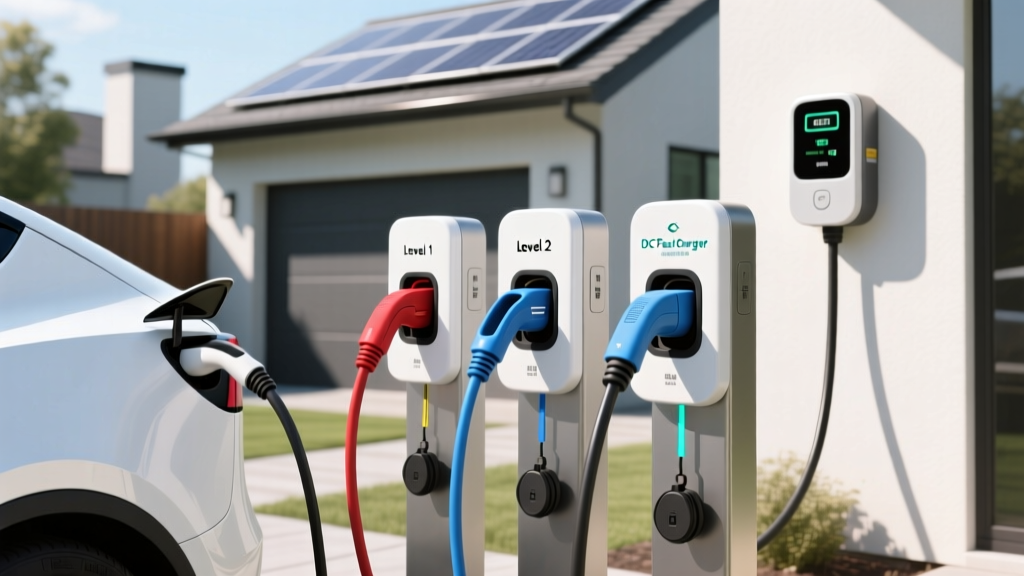
Before specifying equipment, you need to understand the three charging tiers and which ones make sense for a commercial deployment. The distinction between kW (power — the rate of energy delivery) and kWh (energy — the total capacity of a battery) is critical here and throughout this guide.
| Level | Voltage | Power (kW) | Miles Added/Hour | 10-80% Time (75 kWh battery) | Business Use Case |
|---|---|---|---|---|---|
| Level 1 | 120V AC | 1.2-1.9 kW | 3-5 mi/hr | ~31+ hours | Employee trickle charging only |
| Level 2 | 208/240V AC | 7.2-19.2 kW | 25-65 mi/hr | ~4-8 hours | Workplace, hotel, destination, fleet overnight |
| DC Fast (Level 3) | 400-800V DC | 50-400 kW | 150-1,200+ mi/hr | ~12-45 minutes | Highway, retail, fleet rapid-turnaround |
For a business marketing itself as a "supercharger" destination, DC fast charging is the only viable option. Level 2 chargers serve a complementary role — ideal for 4-8 hour dwell times at workplaces or hotels — but they cannot deliver the 15-30 minute charging sessions that drivers expect from a fast-charging stop.
Site Power Requirements: The Hidden Cost Driver
The single biggest variable in any commercial charging installation is available electrical capacity at the site. DC fast chargers draw enormous power:
- A single 150 kW charger draws roughly the same power as 50-75 homes simultaneously.
- A four-stall site with 350 kW chargers may require 1.5-2 megawatts of dedicated capacity.
- Most commercial sites need 480V three-phase service — standard in industrial areas but absent from many retail strips.
Electrical Requirements by Charger Class
| Charger Output | Input Voltage | Amperage (approx.) | Utility Service Needed |
|---|---|---|---|
| 50 kW DCFC | 480V 3-phase | ~70A | Existing 200-400A commercial panel may suffice |
| 150 kW DCFC | 480V 3-phase | ~200A | Dedicated transformer or utility upgrade likely |
| 350-400 kW DCFC | 480V 3-phase | ~450-550A | New utility transformer + switchgear almost certain |
Panel & Transformer Upgrades: The Budget Surprise
Many commercial sites discover during the feasibility study that their existing electrical infrastructure cannot support DC fast charging without a utility transformer upgrade. This can add $50,000 to $500,000+ to the project, depending on:
- Distance from the nearest utility feeder line
- Whether new trenching and conduit are required
- Local utility interconnection fees and demand charges
- Transformer lead times (12-52 weeks in many regions as of 2026)
Always engage a licensed electrical engineer and your utility's commercial EV program representative before committing to equipment purchases. According to the U.S. Department of Energy, utility coordination is the most common source of project delays in commercial charging deployments.
Connector Compatibility: NACS, CCS1 & CHAdeMO in 2026
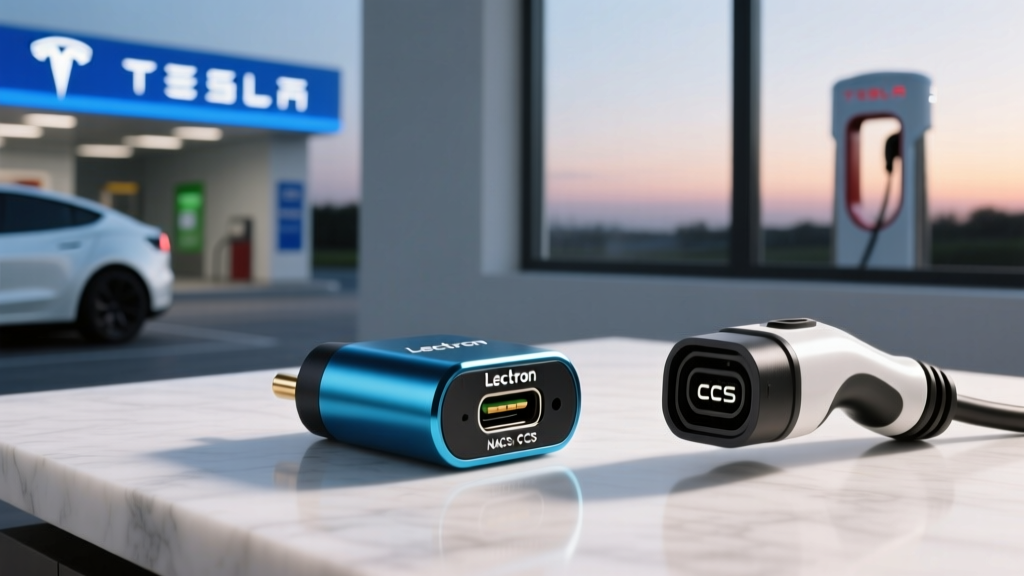
The connector landscape has consolidated dramatically since Tesla opened its North American Charging Standard (NACS) to the industry. By 2026, nearly every major automaker — Ford, GM, Rivian, Hyundai, Kia, BMW, Mercedes-Benz, and others — has adopted or committed to NACS for their North American EVs. CCS1 remains on legacy vehicles and some commercial fleets, while CHAdeMO (Nissan Leaf) is effectively discontinued on new vehicles.
| Connector | Vehicles Using It | Status in 2026 | Business Recommendation |
|---|---|---|---|
| NACS (Tesla standard) | Tesla, Ford, GM, Rivian, Hyundai, Kia, BMW, Mercedes, Volvo, Polestar, and growing | Dominant standard | Required on every new commercial install |
| CCS1 | Legacy VW ID.4, older BMW iX, some fleet vehicles | Declining but still in use | Include 1 CCS1 cable per 2-3 NACS stalls |
| CHAdeMO | Nissan Leaf (discontinued), Mitsubishi Outlander PHEV | Effectively phased out | Not recommended for new installs |
Dual-cable dispensers (one NACS + one CCS1 on the same unit) are the standard configuration for new commercial deployments. This maximizes vehicle compatibility while managing equipment costs. Most major charger manufacturers now ship NACS-native hardware with CCS1 as a secondary cable option.
Installation Cost Breakdown: What a Supercharger for Business Actually Costs
Total project costs vary enormously based on site conditions, number of stalls, charger power class, and utility proximity. Below is a realistic range for a typical 2-4 stall commercial deployment in 2026.
| Cost Category | Per-Stall Range | Notes |
|---|---|---|
| DC Fast Charger Unit (150-350 kW) | $40,000 - $150,000 | Higher kW = higher cost; dual-cable adds ~$5-10K |
| Electrical Infrastructure (conduit, wiring, switchgear) | $15,000 - $60,000 | Depends on distance from panel to charger pad |
| Utility Transformer Upgrade | $0 - $250,000 | $0 if existing capacity suffices; can exceed $250K |
| Concrete Pad & Site Work | $5,000 - $20,000 | Includes trenching, bollards, striping, ADA compliance |
| Permitting & Engineering | $3,000 - $15,000 | Electrical engineer, utility interconnection study, local permits |
| Network Software & Commissioning | $2,000 - $8,000 | Activation, network subscription setup, payment system |
| Total Per Stall | $65,000 - $503,000 | Median real-world project: ~$100K-$200K per stall |
Federal & State Incentives for Commercial Charging
The IRS §30C Alternative Fuel Vehicle Refueling Property Credit provides a tax credit of up to 30% of the cost of qualified charging equipment, capped at $100,000 per item of property. This credit applies to commercial installations (not the separate §30D consumer vehicle credit) and has specific requirements related to placement in eligible census tracts. Consult a tax professional for current-year eligibility, as rules and qualifying areas are updated periodically.
Many states and utilities also offer commercial EV charging incentives — rebates of $5,000-$50,000 per stall, make-ready infrastructure funding, or reduced demand charges. Check your local utility's commercial EV program and your state energy office for specifics.
Equipment Recommendations: Leading Commercial DC Fast Chargers
Below are widely deployed commercial DC fast charger platforms suitable for business installations in 2026. Each supports NACS and CCS1 connectivity.
Tritium RT175
- Power Output: 175 kW peak
- Connectors: Dual cable (NACS + CCS1)
- Form Factor: Compact, wall-mountable or pedestal
- Smart Features: OCPP 2.0.1, remote diagnostics, dynamic load management
- Approx. Unit Price: $55,000 - $70,000
ABB Terra 360
- Power Output: Up to 360 kW (single vehicle) or split across 2 vehicles
- Connectors: Up to 4 cables (NACS + CCS1 mix)
- Form Factor: Large pedestal unit
- Smart Features: ABB Ability cloud, integrated payment terminal, 15" display
- Approx. Unit Price: $100,000 - $140,000
ChargePoint Express 250
- Power Output: Up to 250 kW (power-sharing across 2 stalls)
- Connectors: NACS + CCS1 dual cable per pedestal
- Form Factor: Modular pedestal
- Smart Features: ChargePoint network, Express Connect monitoring, revenue-grade metering
- Approx. Unit Price: $70,000 - $95,000
BTC Power 4X
- Power Output: Up to 400 kW with power cabinet
- Connectors: NACS + CCS1, up to 4 dispensers per power cabinet
- Form Factor: Centralized power cabinet + slim dispensers
- Smart Features: OCPP, remote firmware updates, 24" touchscreen
- Approx. Unit Price: $85,000 - $130,000 (per dispenser pair + shared cabinet)
For businesses that want to participate in the Tesla Supercharger network as a host, Tesla's commercial partnership program provides Tesla-branded charging hardware and handles network operations, but requires the site to meet Tesla's specific site design, accessibility, and amenity standards. Revenue sharing and site terms are negotiated directly with Tesla's energy division.
Operating Economics: Revenue, Electricity Cost & ROI
Operating a commercial supercharger involves ongoing electricity costs, network subscription fees, maintenance, and demand charges from your utility. Here's how the economics typically break down:
| Scenario | Electricity Cost to Operator | Price Charged to Driver | Gross Margin |
|---|---|---|---|
| Commercial off-peak rate (utility) | $0.06 - $0.12/kWh | $0.35 - $0.48/kWh | $0.23 - $0.42/kWh |
| Commercial peak rate (utility) | $0.15 - $0.30/kWh | $0.35 - $0.48/kWh | $0.05 - $0.33/kWh |
| With utility demand charges | +$0.05 - $0.20/kWh effective | $0.35 - $0.48/kWh | Reduced significantly |
Cost Per Mile: EV Charging vs. Gasoline (2026 Baseline)
For context on why drivers seek out fast chargers — and why they'll pay premium rates at commercial stations — here's how EV charging compares to gasoline on a per-mile basis:
| Fuel Type | Cost Per Mile (avg.) | Assumptions |
|---|---|---|
| Home Level 2 charging (off-peak) | $0.03 - $0.05/mi | $0.12/kWh, 3.5 mi/kWh efficiency |
| Public DC fast charging | $0.10 - $0.14/mi | $0.40/kWh, 3.5 mi/kWh efficiency |
| Gasoline vehicle | $0.12 - $0.17/mi | $3.50/gal, 25 MPG combined |
Even at public DC fast charging rates, EVs typically cost less per mile than gasoline vehicles — which is why demand for commercial fast charging continues to grow. According to fueleconomy.gov, the average EV achieves 3-4 miles per kWh, making the per-mile math straightforward for operators setting prices.
Revenue Projections: A Simplified Model
For a 4-stall, 150 kW site charging at $0.40/kWh with an average utilization of 8% (a reasonable starting assumption for a new non-highway site):
- Energy dispensed per stall per day: ~175 kWh at 8% utilization
- Revenue per stall per day: ~$70
- Annual gross revenue (4 stalls): ~$102,000
- Minus electricity cost (~$0.12/kWh): ~$61,000 gross margin
- Minus network fees, maintenance, demand charges: ~$30,000-$45,000 net
Highway locations with 15-25% utilization can generate 2-3x these figures. ROI timelines of 4-8 years are typical for well-sited installations.
Safety, Code & Compliance Considerations
Commercial DC fast charger installations must comply with the National Electrical Code (NEC), local building codes, and ADA accessibility requirements. Key considerations include:
- Dedicated circuits: Each charger requires its own dedicated breaker and disconnect. NEC Article 625 governs EV charging system installations.
- GFCI protection: Required for all outdoor and accessible charging equipment per NEC 2023/2026 updates.
- Outdoor rating: All outdoor equipment must be NEMA 3R or 4 rated for weather resistance. Most commercial DCFC units ship NEMA 4 standard.
- Emergency shutoff: A clearly marked, accessible emergency power disconnect is required within sight of the charger.
- ADA compliance: At least one stall must meet ADA accessibility standards for reach range, clear floor space, and accessible route. The U.S. Access Board provides guidance on EV charger accessibility.
- Fire code setbacks: Many jurisdictions require minimum setbacks from building openings and property lines. Check local fire marshal requirements.
- Signage & striping: Clear "EV Charging Only" signage and dedicated striping reduce ICE-ing (gas vehicles blocking chargers) and improve utilization.
Frequently Asked Questions
How much does it cost to install a supercharger for business?
A single DC fast charging stall (150-350 kW) typically costs $65,000 to $200,000+ fully installed, including equipment, electrical work, permitting, and site preparation. Projects requiring utility transformer upgrades can exceed $300,000 per stall. A multi-stall site of 4 chargers commonly ranges from $300,000 to $1.2 million depending on site conditions.
How fast will each charging level add range?
Level 1 (120V) adds 3-5 miles per hour — suitable only for overnight employee charging. Level 2 (240V, 7.2-19.2 kW) adds 25-65 miles per hour — ideal for workplaces and hotels with 4-8 hour dwell times. DC fast charging (50-400 kW) adds the equivalent of 150-1,200+ miles per hour, delivering a 10-80% charge in 12-45 minutes depending on the vehicle and charger power.
Which connector should I install for maximum compatibility?
In 2026, NACS is the required primary connector for any new commercial charging installation in North America, as nearly all major automakers have adopted it. Include at least one CCS1 cable per 2-3 NACS stalls to serve legacy vehicles. CHAdeMO is no longer recommended for new installations.
What electrical upgrades might my site need?
DC fast chargers require 480V three-phase power. If your site has only 208V or single-phase service, you'll need a utility transformer upgrade — the single largest cost variable, ranging from $50,000 to $500,000+. Even sites with existing 480V service may need new switchgear, additional panel capacity, or upgraded service entrance conductors. Always commission a professional electrical feasibility study before purchasing equipment.
How long does a commercial charging project take from start to finish?
Typical timelines are 6-18 months, depending on utility interconnection requirements and transformer lead times. Sites with existing electrical capacity can sometimes complete in 3-6 months. Transformer procurement alone can take 12-52 weeks in some regions.
Can I participate in the Tesla Supercharger network as a host?
Yes — Tesla operates a commercial site host program where businesses provide the land and Tesla provides the hardware, installation, and network operations under a negotiated agreement. Revenue terms vary by site. Contact Tesla's energy/commercial team directly for qualification requirements. You can also install non-Tesla chargers and list them on networks like ChargePoint, EVgo, or Electrify America.