Why Supercharger Costs Matter More Than Ever in 2026
When Tesla opened its Supercharger network to non-Tesla EVs, the pricing landscape fractured into a patchwork of rates that vary by location, time of day, membership tier, and connector type. If you are budgeting for an electric vehicle — or optimizing your existing ownership costs — understanding exactly what you pay per kilowatt-hour (kWh) and per mile is the single most impactful financial decision you can make.
This guide breaks down Supercharger costs alongside home Level 2 charging, third-party DC fast networks like Electrify America and EVgo, and the real math behind cost-per-mile compared to a gasoline vehicle. We also cover what it takes to install a home charger, because for most owners, that is where 80% or more of charging actually happens.
Charging Levels Explained: Speeds, Power, and Miles Added Per Hour
Before comparing costs, you need to understand the three charging levels and how fast each one actually adds range. Power is measured in kilowatts (kW) — the rate at which energy flows — while battery capacity is measured in kilowatt-hours (kWh), the total energy stored. Do not confuse them.
| Level | Voltage | Power (kW) | Miles Added Per Hour | Typical Use |
|---|---|---|---|---|
| Level 1 | 120V AC | 1.0–1.4 kW | 3–5 mi/hr | Overnight trickle; PHEVs; emergency |
| Level 2 (Home/Public) | 240V AC | 3.3–19.2 kW | 12–75 mi/hr | Daily home charging; workplace; destinations |
| DC Fast Charging | 400–800V DC | 50–350 kW | 150–800+ mi/hr (peak) | Road trips; quick top-ups; Supercharger network |
A typical Level 2 home charger at 48 amps (11.5 kW) will add roughly 40–45 miles of range per hour of charging — enough to fully replenish a 75 kWh battery overnight. A 250 kW V3 Tesla Supercharger can add up to 200 miles in about 15 minutes on a compatible vehicle, though the charging curve tapers significantly above 80% state of charge (SoC).
Supercharger Costs: What You Actually Pay Per kWh in 2026
Tesla Supercharger pricing is not a single national rate. It varies by station, time of day, and whether you drive a Tesla or a non-Tesla EV using the Magic Dock NACS adapter or a built-in NACS port. As of early 2026, here is what the pricing landscape looks like:
- Tesla owners (standard rate): $0.28–$0.36/kWh at most urban and highway stations
- Tesla members ($12.99/month subscription): $0.22–$0.28/kWh — a roughly 20–25% discount
- Non-Tesla EVs (via Magic Dock or native NACS): $0.43–$0.56/kWh at standard rates; $0.33–$0.42/kWh with the monthly membership
- Off-peak hours (where available): 15–30% lower than peak rates, typically between 11 PM and 6 AM
Idle fees remain a factor: Tesla charges $1.00/minute if your vehicle remains plugged in after reaching its charge limit and the station is at least 50% occupied. That jumps to $2.00/minute at a fully occupied station.
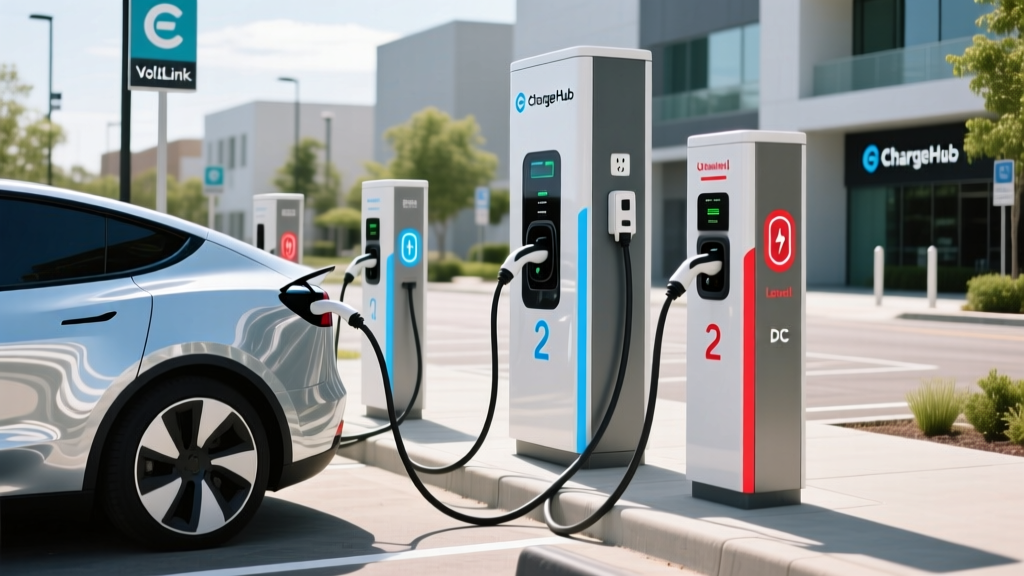
Public DC Fast Charging Beyond Tesla: Electrify America, EVgo, and ChargePoint
If you drive a non-Tesla EV with a CCS1 port, or if you are planning road trips through areas with limited Supercharger coverage, third-party DC fast networks are essential. Here is how their 2026 pricing compares:
- Electrify America: $0.48–$0.56/kWh standard; $0.36–$0.42/kWh with Pass+ subscription ($7/month). Peak rates at select California stations can reach $0.64/kWh.
- EVgo: $0.43–$0.52/kWh standard; $0.33–$0.40/kWh with EVgo Plus membership ($4.99–$7.99/month).
- ChargePoint (DC fast stations): Pricing set by site hosts, typically $0.39–$0.59/kWh, though some locations charge per-minute rates that are harder to predict.
For reference, the U.S. Department of Energy's fueleconomy.gov tracks national average electricity prices for EV charging, which hovered around $0.17/kWh for residential and $0.41/kWh for public DC fast charging as of late 2025.
Cost Per Mile: Supercharger vs. Home Charging vs. Gasoline
The headline number that matters most is cost per mile. To calculate this, divide the price per kWh by your vehicle's efficiency in miles per kWh. Here is a comparison using a mid-size electric SUV averaging 3.0 miles/kWh (roughly 112 MPGe) and a comparable gasoline SUV getting 26 MPG combined:
| Method | Rate ($/kWh or $/gal) | Cost Per Mile | Annual Cost (12,000 mi) |
|---|---|---|---|
| Home Level 2 (national avg. $0.17/kWh) | $0.17/kWh | $0.057 | $680 |
| Home Level 2 (off-peak TOU rate $0.09/kWh) | $0.09/kWh | $0.030 | $360 |
| Tesla Supercharger (owner rate $0.32/kWh) | $0.32/kWh | $0.107 | $1,280 |
| Tesla Supercharger (non-Tesla $0.48/kWh) | $0.48/kWh | $0.160 | $1,920 |
| Electrify America (standard $0.52/kWh) | $0.52/kWh | $0.173 | $2,080 |
| Gasoline SUV ($3.45/gal, 26 MPG) | $3.45/gal | $0.133 | $1,592 |
How Much Does It Cost to Install a Home EV Charger?
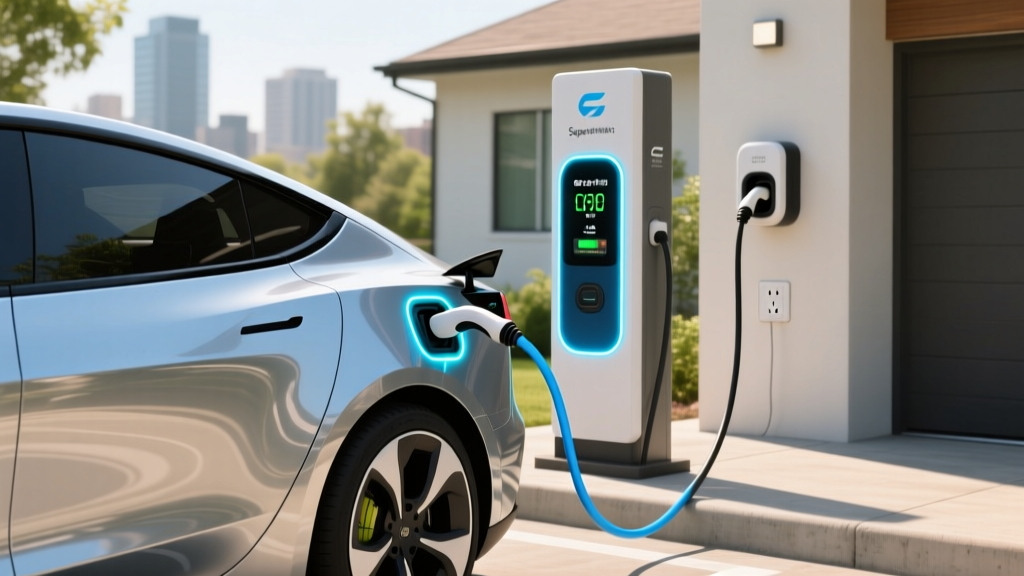
Installing a Level 2 home charger is the single best investment an EV owner can make for long-term cost savings. But the price varies enormously depending on your home's electrical infrastructure.
Electrical Requirements for a Standard Level 2 Installation
A typical Level 2 home charger requires a dedicated 240-volt circuit, most commonly rated at 40, 48, or 60 amps. The National Electrical Code (NEC) requires that continuous loads (like EV charging) not exceed 80% of the circuit's rated capacity. That means:
- A 40A circuit supports up to 32A (7.7 kW) continuous charging
- A 50A circuit supports up to 40A (9.6 kW) continuous charging
- A 60A circuit supports up to 48A (11.5 kW) continuous charging
Installation Cost Breakdown
| Component | Simple Install (panel nearby) | Complex Install (panel far / upgrade needed) |
|---|---|---|
| Level 2 charger (hardware) | $350–$700 | $350–$700 |
| Electrician labor (2–4 hrs simple / 6–12 hrs complex) | $400–$1,000 | $1,200–$3,500 |
| Electrical permit | $50–$200 | $50–$200 |
| Panel upgrade (100A → 200A) if needed | N/A | $1,500–$3,500 |
| Conduit, wiring, misc. materials | $100–$300 | $300–$800 |
| Total estimated cost | $900–$2,200 | $3,100–$8,700 |
Home Charger Equipment Recommendations
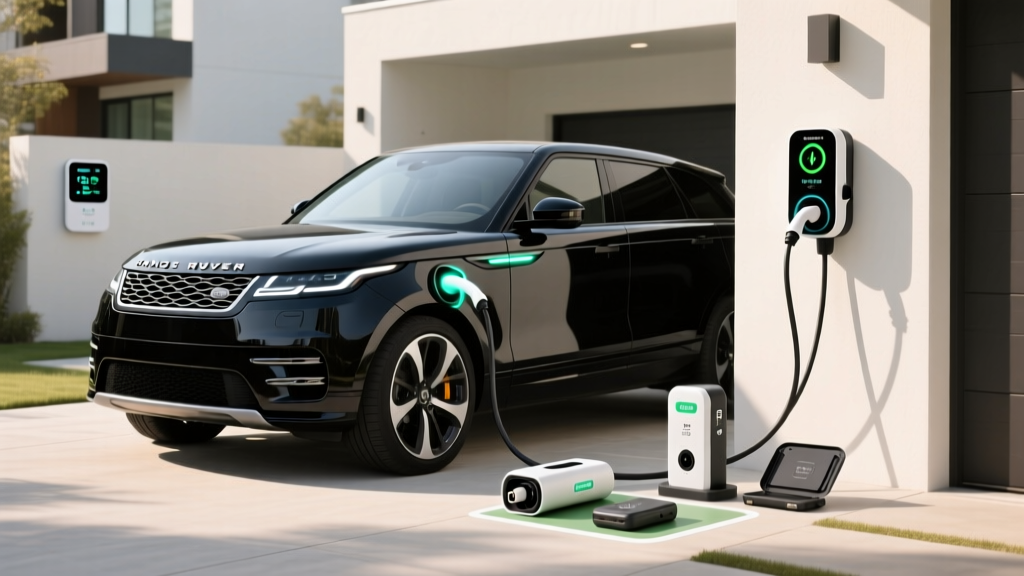
Not all Level 2 chargers are equal. Here are three well-regarded options for 2026, chosen for reliability, smart features, and value:
Grizzl-E Smart (48A)
- Power output: 11.5 kW (48A on 60A circuit)
- Connector: NACS or J1772 (select at purchase)
- Cable length: 24 ft
- Smart features: Wi-Fi, OCPP, energy tracking, scheduling
- Price: ~$449
- Best for: Cold-climate durability (rated to -40°F), simple operation
ChargePoint Home Flex (up to 50A)
- Power output: Up to 12 kW (50A on 60A circuit); adjustable down to 16A
- Connector: NACS or J1772 (NACS pigtail available)
- Cable length: 23 ft
- Smart features: Wi-Fi, ChargePoint app, Alexa, scheduled charging, utility integration
- Price: ~$599–$699
- Best for: Flexible amperage adjustment for older panels, robust app ecosystem
Tesla Wall Connector (48A)
- Power output: 11.5 kW (48A on 60A circuit)
- Connector: NACS (native Tesla); J1772 adapter included for non-Tesla EVs
- Cable length: 24 ft
- Smart features: Wi-Fi, OTA updates, load sharing (pair two units on one circuit), Powerwall integration
- Price: ~$475
- Best for: Tesla households, clean aesthetics, power-sharing between two EVs
Connector Compatibility: NACS, CCS1, and CHAdeMO Explained
The North American charging connector landscape has consolidated significantly since 2024, when Ford, GM, Rivian, Volvo, and others committed to adopting the Tesla-designed NACS (North American Charging Standard) connector. Here is where things stand for 2026 model-year vehicles:
| Connector | Brands Using It (2026 MY) | Supercharger Access | Adapter Needed? |
|---|---|---|---|
| NACS (native) | Tesla (all), Ford, GM, Rivian, Volvo, Polestar, Mercedes-Benz, BMW, Hyundai/Kia (select 2026+ models) | Direct access at Tesla Superchargers | None for Superchargers; CCS adapter needed for Electrify America/EVgo |
| CCS1 | Hyundai/Kia (2025 and earlier models still on road), VW ID.4 (pre-2026 refresh), BMW i4/iX (pre-2026), Stellantis brands | Via Tesla Magic Dock adapter at select Superchargers | Tesla CCS adapter or Magic Dock at Supercharger; no adapter for EA/EVgo |
| CHAdeMO | Nissan Leaf (legacy; production ended), Mitsubishi Outlander PHEV (legacy) | No Supercharger access | CHAdeMO-to-NACS adapters do not exist; limited to CHAdeMO stations |
If you are buying a 2026 model-year EV, check whether it ships with a native NACS port or still uses CCS1. The transition is mid-stream: some 2026 models (like the updated Hyundai Ioniq 5) now ship with NACS, while carryover models from 2025 production may still have CCS1. For CCS1 vehicles, Tesla sells a CCS adapter (~$250) that enables Supercharger access at stations equipped with the Magic Dock.
Charging Time Examples: 10–80% for Common Battery Sizes
Charging speed is not constant. DC fast chargers deliver peak power only at lower states of charge, then taper as the battery management system (BMS) protects cell health. Here are realistic 10–80% times for popular battery sizes on various charger types:
- 60 kWh battery (e.g., base Tesla Model 3 RWD, LFP chemistry):
- 250 kW V3 Supercharger: ~22 minutes (LFP charges more slowly above 50%)
- 150 kW Electrify America: ~28 minutes
- 11.5 kW Level 2 home: ~5.2 hours (full 0–100%)
- 82 kWh battery (e.g., Tesla Model Y Long Range, NMC chemistry):
- 250 kW V3 Supercharger: ~25 minutes (peak ~210 kW sustained, tapering after 55%)
- 350 kW Electrify America: ~22 minutes (if vehicle accepts peak rate)
- 11.5 kW Level 2 home: ~7.1 hours (full 0–100%)
- 100 kWh battery (e.g., GMC Sierra EV, Rivian R1T Max Pack):
- 350 kW DC fast charger: ~30 minutes (800V architecture helps sustain higher rates)
- 250 kW Supercharger: ~38 minutes
- 11.5 kW Level 2 home: ~8.7 hours (full 0–100%)
Safety and Code Considerations for Home Charging
EV charging is a high-draw, continuous electrical load — more like running an electric furnace than plugging in a television. Getting the installation right is critical for safety and insurance compliance:
- Dedicated circuit required: Your Level 2 charger must have its own dedicated circuit. Sharing a circuit with other appliances violates NEC requirements and creates a fire hazard.
- GFCI protection: The NEC (2020 and later editions) requires Ground Fault Circuit Interrupter protection for EV charging outlets. Most hardwired chargers have built-in GFCI; if you use a plug-in (NEMA 14-50 outlet) configuration, the breaker must be GFCI-rated. Note: some electricians report nuisance trips with certain GFCI breaker + charger combinations — hardwiring avoids this.
- Outdoor rating: If your charger is mounted outside, ensure it carries a NEMA 4 or IP65 rating for weather resistance. All three chargers recommended above are outdoor-rated.
- Permit and inspection: Most jurisdictions require an electrical permit and post-installation inspection for a new 240V circuit. Skipping this step can void your homeowner's insurance coverage for any related incident.
- Wire gauge: A 60A circuit requires 6 AWG copper wire (or 4 AWG aluminum). A 40A circuit requires 8 AWG copper. Your electrician will size this correctly, but verify it matches the breaker rating.
Frequently Asked Questions
How much does it cost to install a home EV charger?
A straightforward Level 2 installation with the electrical panel close to the garage typically costs $900–$2,200 including the charger, electrician labor, permit, and materials. If your home needs a panel upgrade (common in pre-1990 homes with 100A service), total costs can reach $3,100–$8,700. Always get a load calculation first.
How fast will each charging level add range?
Level 1 (120V) adds 3–5 miles per hour. Level 2 (240V, 48A) adds approximately 40–45 miles per hour for a typical EV. DC fast charging at 150–350 kW can add 150–800+ miles per hour at peak, but only for a portion of the session before the charging curve tapers.
Which connector is compatible with my EV?
For 2026 model-year vehicles, most new EVs from Tesla, Ford, GM, Rivian, Volvo, and select Hyundai/Kia models use the NACS connector natively and can access Tesla Superchargers directly. Older or carryover models may still have CCS1 ports and require an adapter for Supercharger access. CHAdeMO is essentially legacy and limited to older Nissan Leafs.
How much does charging cost per mile vs. gas?
Home charging on an average residential rate ($0.17/kWh) costs about $0.057/mile for a 3.0 mi/kWh EV — roughly 57% cheaper than a 26 MPG gas SUV at $3.45/gallon ($0.133/mile). However, exclusive Supercharger use at $0.32/kWh costs $0.107/mile, and non-Tesla DC fast charging at $0.48–$0.52/kWh can exceed gasoline costs per mile.
What electrical upgrades might I need?
The most common upgrade is a panel capacity increase from 100A to 200A, which costs $1,500–$3,500. You may also need a new conduit run if the panel is far from the garage (adding $300–$800 in materials and labor). Some utilities offer rebates for panel upgrades when paired with EV charger installation — check with your local provider.
Is it cheaper to charge at a Supercharger or at home?
Home charging is nearly always cheaper. At the national average residential rate of $0.17/kWh, you pay roughly $0.057/mile. At a Tesla Supercharger ($0.28–$0.36/kWh), you pay $0.093–$0.12/mile — roughly double. For non-Tesla EVs at standard Supercharger rates ($0.43–$0.56/kWh), the cost is $0.14–$0.19/mile, which can exceed gasoline.