The Real Supercharger Cost: What You Actually Pay Per kWh and Per Mile
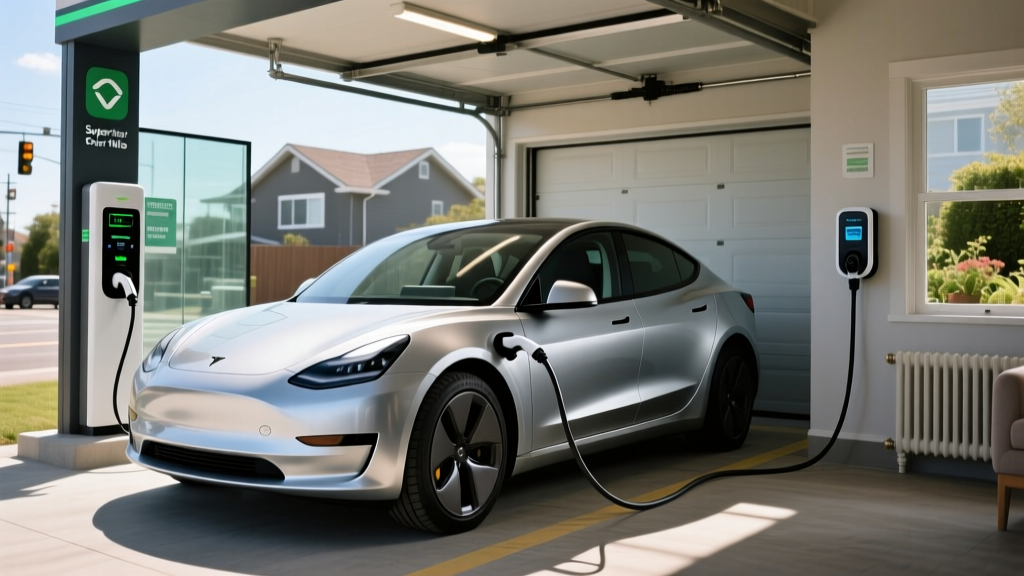
For EV owners and shoppers weighing their charging options, the question isn't just "where can I charge?" — it's "what does it actually cost?" Tesla's Supercharger network, now open to most non-Tesla EVs via the NACS standard, remains the gold standard for DC fast charging reliability. But the per-kWh pricing at Superchargers varies dramatically by location, time of day, and whether you're driving a Tesla or using an adapter.
As of early 2026, the average Supercharger cost in the U.S. ranges from $0.25 to $0.48 per kWh, with a national average hovering around $0.35/kWh. In high-demand urban areas like Los Angeles or San Francisco during peak hours, rates can spike to $0.55/kWh or more. Rural Superchargers in states like Montana or Oklahoma tend to sit at the lower end, around $0.25–$0.30/kWh.
Let's ground this in real numbers. If you drive a Tesla Model Y Long Range (75 kWh usable battery, EPA 310 miles) and charge from 10% to 80% at a Supercharger — adding roughly 52.5 kWh — you'll pay approximately $18.38 at the national average rate. That translates to about $0.07–$0.09 per mile depending on your real-world efficiency.
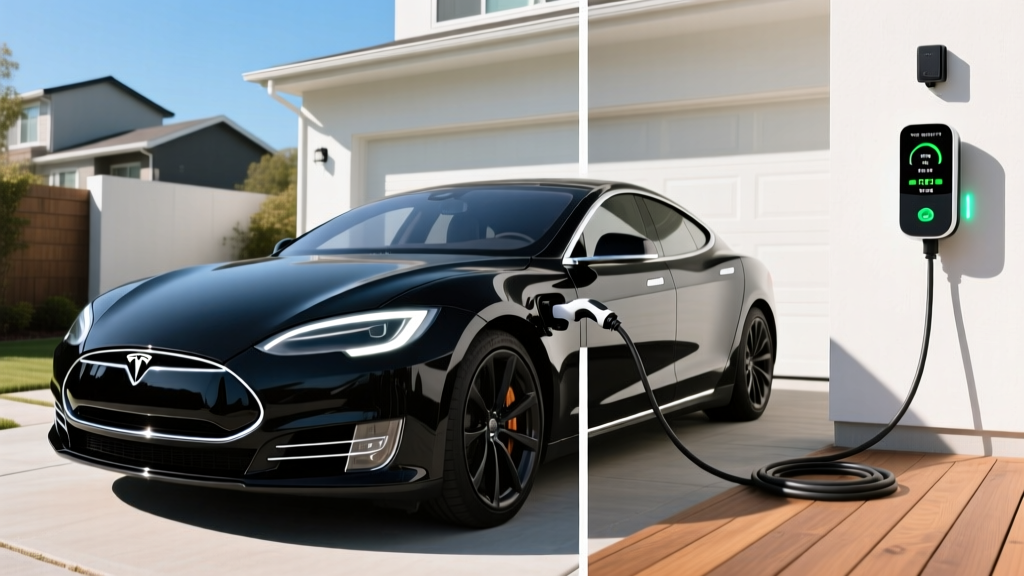
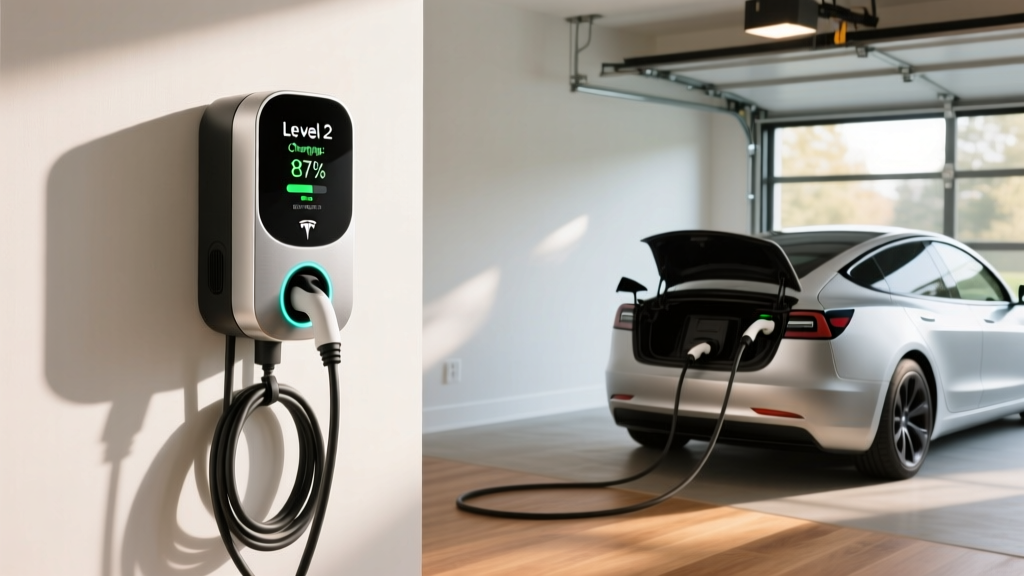
Compare that to home Level 2 charging at the U.S. average residential electricity rate of $0.17/kWh (per EIA data): that same 10–80% session costs roughly $8.93, or about $0.035 per mile. Home charging is roughly 50–65% cheaper than Supercharging, which is why maximizing home charging access is the single biggest cost lever for EV ownership.
Charging Levels Explained: Speeds, Costs, and Real-World Times
Understanding the three tiers of EV charging is essential for both cost planning and daily logistics. Here's how each level performs in practice:
| Level | Voltage / Amperage | Power (kW) | Miles Added Per Hour | 10–80% Time (75 kWh Battery) | Typical Cost/kWh |
|---|---|---|---|---|---|
| Level 1 (120V) | 120V / 12A | 1.4 kW | 3–5 mi/hr | 36–52 hours | $0.12–$0.20 (home) |
| Level 2 (240V) | 240V / 32–48A | 7.7–11.5 kW | 20–44 mi/hr | 5–7 hours | $0.12–$0.20 (home) |
| DC Fast (Supercharger / CCS) | 400–800V DC | 50–350 kW peak | 150–1,000+ mi/hr (peak) | 15–35 minutes | $0.25–$0.55 (public) |
A few real-world caveats on these numbers. The "miles added per hour" for DC fast charging reflects peak rate only — in reality, charging follows a taper curve. A Tesla Model 3 might pull 250 kW at 10% state of charge (SoC) but drop to 60 kW by 70% SoC and trickle at 15 kW above 90%. That's why we quote 10–80% times rather than 0–100%: the last 20% can take as long as the first 70%.
Level 1 charging is practical only for plug-in hybrids with small batteries (like the Toyota RAV4 Prime's 18.1 kWh pack, which adds roughly 42 miles of EV range in about 12 hours) or as an emergency trickle for BEVs. For any battery-electric vehicle with 60+ kWh of capacity, Level 2 is the minimum viable home solution.
How Much Does a Home Level 2 Charger Installation Actually Cost?
This is where many EV buyers get sticker shock — or pleasant surprises, depending on their electrical panel. A Level 2 home charger installation involves three cost components: the charger hardware, the electrical labor, and any panel or service upgrades needed.
| Component | Low-End | Typical | High-End |
|---|---|---|---|
| Level 2 charger hardware (32A–48A, Wi-Fi enabled) | $350 | $500–$700 | $800–$1,200 |
| Electrician labor (new 240V circuit, NEMA 14-50 or hardwired) | $400 | $800–$1,500 | $2,000–$3,000 |
| Electrical permit & inspection | $50 | $100–$250 | $300–$500 |
| Panel upgrade (100A → 200A service) | N/A (not needed) | $1,500–$2,500 | $3,000–$5,000 |
| TOTAL (no panel upgrade) | $800 | $1,400–$2,450 | $4,000–$4,700 |
| TOTAL (with panel upgrade) | $2,300 | $3,000–$5,000 | $7,000–$9,700 |
The panel upgrade is the wild card. Homes built before 1990 often have 100-amp service panels. Adding a 40-amp or 50-amp dedicated circuit for a Level 2 charger can push total load beyond the panel's capacity, requiring a service upgrade to 200 amps. This is a $1,500–$5,000 job depending on your utility's requirements, conduit runs, and local labor rates.
What electrical requirements should you expect? A typical Level 2 home charger needs:
- A dedicated 240V circuit — either a NEMA 14-50 outlet (50A circuit, 40A continuous draw) or a hardwired connection (which allows up to 48A continuous on a 60A circuit)
- A GFCI breaker is required by NEC 2020/2023 for outlets in garages in many jurisdictions — though hardwired chargers may bypass this requirement, which is worth discussing with your electrician
- Proper wire gauge: 6 AWG copper for 50A circuits, 4 AWG for 60A circuits
- An outdoor-rated enclosure (NEMA 3R or 4) if the charger is installed outside
Before hiring an electrician, check whether your utility offers rebates for EV charger installations — many investor-owned utilities provide $250–$1,000 rebates that can offset a significant portion of the cost. The federal §30C Alternative Fuel Vehicle Refueling Property Credit also covers up to 30% of home charging equipment and installation costs (capped at $1,000), though eligibility depends on census tract requirements.
Cost Per Mile: EV Charging vs. Gasoline — The Numbers
This is where the economics of EV ownership either shine or falter, depending entirely on where you charge. Let's compare real cost-per-mile figures across charging scenarios against a typical gasoline vehicle.
| Scenario | Rate / Price | Vehicle Efficiency | Cost Per Mile | Annual Cost (12,000 mi) |
|---|---|---|---|---|
| Home Level 2 (national avg) | $0.17/kWh | 3.5 mi/kWh (119 MPGe) | $0.049 | $588 |
| Home Level 2 (off-peak TOU) | $0.09/kWh | 3.5 mi/kWh | $0.026 | $312 |
| Tesla Supercharger (avg) | $0.35/kWh | 3.5 mi/kWh | $0.100 | $1,200 |
| Electrify America / EVgo DC Fast | $0.43/kWh | 3.5 mi/kWh | $0.123 | $1,476 |
| Gas car (28 MPG combined, $3.40/gal) | $3.40/gallon | 28 MPG | $0.121 | $1,457 |
The takeaway is stark: home-charged EVs cost 60–75% less per mile than gasoline. But if you rely exclusively on public DC fast charging — whether Superchargers or third-party networks — your per-mile cost can equal or even exceed a fuel-efficient gas car. This is why home charging access isn't just a convenience; it's the economic foundation of EV ownership.
For those with time-of-use (TOU) electricity plans, scheduling charges between midnight and 6 AM can push costs below $0.03/mile. Many Level 2 chargers (and the vehicles themselves) have built-in scheduling features to automate this.
Connector Compatibility: NACS, CCS, and CHAdeMO in 2026
The connector landscape has consolidated significantly since Ford, GM, Rivian, and most other major automakers adopted Tesla's North American Charging Standard (NACS) starting in 2025. Here's where things stand for the 2026 model year:
| Connector | Vehicles Using It (2026 MY) | Supercharger Access | Adapter Needed? |
|---|---|---|---|
| NACS (native) | Tesla (all), Ford (F-150 Lightning, Mustang Mach-E 2025+), GM (Cadillac Lyriq, Blazer EV 2025+), Rivian, Hyundai Ioniq 5/6 (2026+), Kia EV6/EV9 (2026+) | Direct — no adapter | None for Superchargers; CCS-to-NACS adapter (~$150–$200) for legacy CCS stations |
| CCS1 | VW ID.4, Hyundai Ioniq 5 (2022–2025), Kia EV6 (2022–2025), BMW iX, older Bolt EV/EUV | Via NACS-to-CCS adapter (provided by Tesla, ~$100 aftermarket) | Yes — CCS-to-NACS adapter for Superchargers |
| CHAdeMO | Nissan Leaf (legacy only — discontinued), Mitsubishi Outlander PHEV (legacy) | No — CHAdeMO not supported at Superchargers | No viable adapter; use Electrify America or EVgo CHAdeMO stations |
If you're buying a 2026 model-year EV, NACS is increasingly the default. For owners of 2022–2025 CCS-equipped vehicles, Tesla provides a NACS adapter (often included free with Supercharger access activation) that allows you to use Supercharger stalls. The adapter adds roughly one pound of weight and a 15-second connection step — minor trade-offs for access to 25,000+ Supercharger stalls nationwide.
Recommended Level 2 Home Chargers for 2026
After testing dozens of units across multiple garage setups, here are the Level 2 chargers that deliver the best combination of charging speed, reliability, smart features, and value:
Emporia Level 2 Smart Charger — Best Value
- Power Output: 48A / 11.5 kW (hardwired) or 40A / 9.6 kW (NEMA 14-50 plug)
- Connector: NACS native (2026 model); J1772 with NACS adapter also available
- Cable Length: 24 feet
- Smart Features: Wi-Fi, energy monitoring via Emporia Vue integration, scheduled charging, solar-aware charging
- Price: ~$399 (plug-in) / ~$449 (hardwired)
- Best For: Budget-conscious buyers who want full smart-home integration and energy tracking
ChargePoint Home Flex — Best All-Around
- Power Output: Up to 50A / 12 kW (hardwired, adjustable 16A–50A)
- Connector: NACS native (2025+ model); J1772 with included NACS adapter
- Cable Length: 23 feet
- Smart Features: Wi-Fi, Alexa/Google Home integration, ChargePoint app scheduling, flexible amperage settings to match your circuit
- Price: ~$699
- Best For: Owners who want a proven brand with flexible amperage tuning to match existing panel capacity
Tesla Wall Connector — Best for Tesla/NACS Owners
- Power Output: Up to 48A / 11.5 kW (hardwired on 60A circuit)
- Connector: NACS native
- Cable Length: 24 feet
- Smart Features: Wi-Fi, over-the-air updates, Power Sharing (link up to 6 units on one circuit), Tesla app integration
- Price: ~$450
- Best For: Tesla owners or those with NACS-native vehicles who want seamless ecosystem integration and a clean industrial design
Grizzl-E Smart — Most Rugged / Outdoor
- Power Output: 40A / 9.6 kW (NEMA 14-50) or 48A / 11.5 kW (hardwired)
- Connector: J1772 (with NACS adapter included) or NACS native (2025+ models)
- Cable Length: 24 feet
- Smart Features: Wi-Fi, OCPP compatibility, adjustable amperage, extreme temperature rating (-40°F to +122°F)
- Price: ~$549–$599
- Best For: Outdoor installations in harsh climates; Canadian-built with IP67 weatherproofing
Safety, Electrical Code, and Installation Best Practices
EV charging involves sustained high-current draw — often 8+ hours at 32–48 amps. This isn't like plugging in a dryer for 45 minutes. Proper installation isn't optional; it's a fire-safety necessity. Here's what you need to know:
- Dedicated circuit required: Your Level 2 charger must be on its own dedicated breaker — never shared with other appliances. A 40A continuous-load charger needs a 50A breaker; a 48A charger needs a 60A breaker.
- GFCI protection: NEC 2020 (Article 625.54) requires GFCI protection for all EV receptacles in garages and outdoor locations. Hardwired chargers may not require a GFCI breaker in all jurisdictions — confirm with your local AHJ (Authority Having Jurisdiction).
- Outdoor rating: If installing outside, the charger must carry a NEMA 3R (rain-resistant) or NEMA 4 (watertight) rating. All four chargers recommended above meet this standard.
- Conduit and wire: Your electrician should use THHN wire in conduit for any run longer than a few feet. Aluminum wire is acceptable for larger gauges but requires proper terminations rated for aluminum.
- Permit and inspection: Virtually all jurisdictions require an electrical permit for a new 240V circuit. The inspection ensures proper grounding, breaker sizing, and wire gauge — don't skip this step, as unpermitted work can void homeowner's insurance claims.
Frequently Asked Questions
How much does it cost to install a home EV charger?
For a straightforward Level 2 installation on an existing 200-amp panel with a short conduit run, expect $1,200–$2,500 total (charger + electrician + permit). If your home needs a panel upgrade from 100A to 200A service, add $1,500–$5,000, bringing the total to $3,000–$7,000. The federal §30C tax credit can offset up to $1,000 (30% of equipment and installation) if your home is in an eligible census tract.
How fast will each charging level add range?
Level 1 (120V) adds roughly 3–5 miles per hour — fine for PHEVs, impractical for full EVs. Level 2 (240V, 48A) adds 25–44 miles per hour depending on your vehicle's onboard charger capacity — sufficient to fully recharge overnight. DC fast charging at a Supercharger or Electrify America station adds 150–300+ miles in 15–25 minutes, though speeds taper significantly above 80% state of charge.
Which connector and charger is compatible with my EV?
For 2026 model-year vehicles, most new EVs ship with NACS connectors natively, granting direct Supercharger access. If you own a 2022–2025 EV with a CCS1 port, you'll need a CCS-to-NACS adapter (typically $100–$200, sometimes provided free by the automaker) to use Tesla Superchargers. CHAdeMO-equipped vehicles (legacy Nissan Leaf) cannot use Superchargers and must rely on Electrify America or EVgo stations that still maintain CHAdeMO connectors. For home Level 2 charging, all EVs use the J1772 standard or NACS — adapters are widely available.
How much does charging cost per mile compared to gas?
Home-charged EVs cost approximately $0.03–$0.05 per mile (depending on local electricity rates and vehicle efficiency), compared to $0.10–$0.15 per mile for a 25–30 MPG gasoline car at $3.40/gallon. Supercharger-exclusive charging at the national average of $0.35/kWh costs about $0.10/mile — comparable to a fuel-efficient gas car. The cost advantage of EV ownership is maximized when 80%+ of charging happens at home.
What electrical upgrades might I need for a home charger?
The most common upgrade is a panel service increase from 100A to 200A, needed in older homes where the existing panel lacks capacity for a new 50A or 60A circuit. Other potential upgrades include: adding a sub-panel in the garage (if your main panel is far away, adding $500–$1,500 in conduit runs), upgrading your utility meter socket if required by the utility for higher service, or installing a smart load-management device (like the Emporia Smart Load Center) that dynamically reduces charger amperage when other high-draw appliances are running — potentially avoiding a panel upgrade entirely for $300–$500.
Is the Supercharger cost the same for Tesla and non-Tesla vehicles?
No. Tesla owners typically pay 10–25% less per kWh at Superchargers than non-Tesla drivers using the Magic Dock or NACS connector. Tesla also offers subscription plans in some regions (like the $12.99/month membership for non-Tesla EV drivers) that reduce the per-kWh rate closer to Tesla-owner pricing. Idle fees ($0.50–$1.00/minute) apply to all vehicles if you remain plugged in after reaching your charge limit.
Sources: U.S. Energy Information Administration (EIA) residential electricity rates, fueleconomy.gov for MPGe and efficiency data, IRS §30C credit guidelines. Pricing and Supercharger rates reflect early 2026 averages and vary by location. Consult a licensed electrician for site-specific installation quotes and a tax professional for credit eligibility.