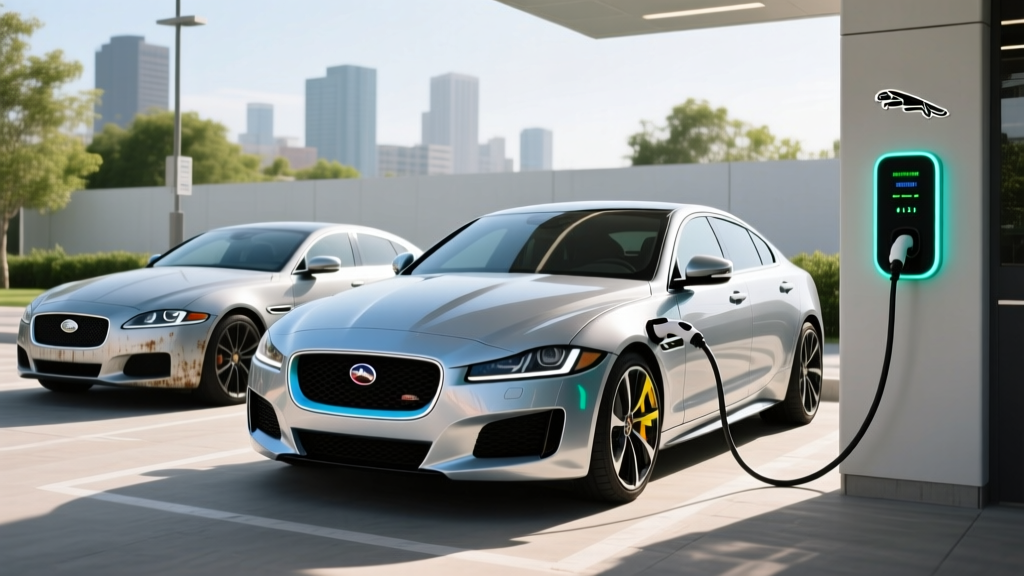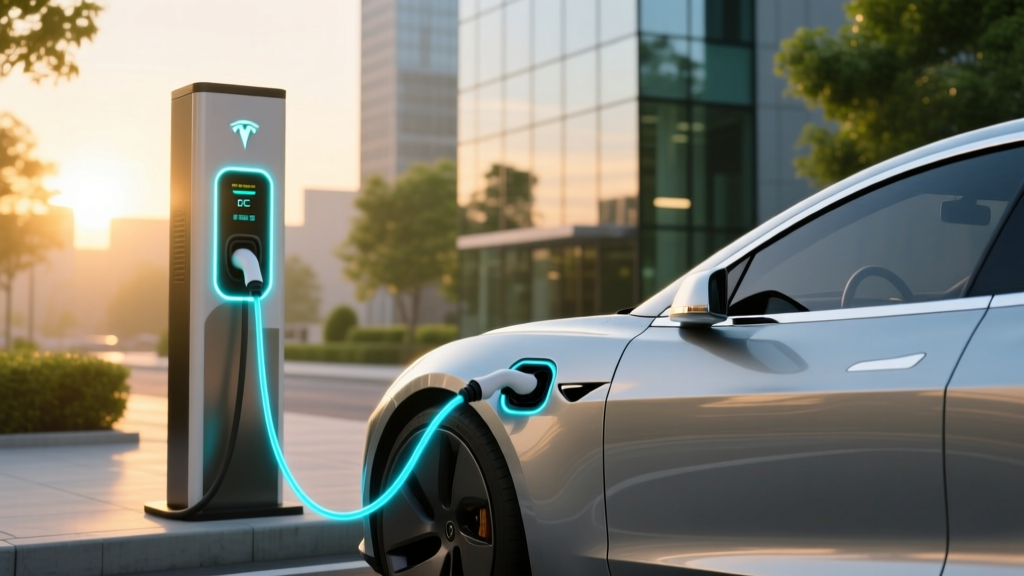
If you've pulled up to a Tesla Supercharger recently, you've probably noticed the price on the screen fluctuates by time of day, location, and even how fast you're charging. The Supercharger cost per kWh is no longer a flat national rate — it's a dynamic variable that can make or break your road-trip budget. In 2026, Tesla's pricing has become more granular than ever, and with the network now open to nearly every major EV brand via NACS adoption, understanding exactly what you'll pay is essential whether you drive a Model Y, a Ford F-150 Lightning, or a Hyundai Ioniq 5.
This guide breaks down real Supercharger pricing tiers, compares them against home Level 2 charging and other DC fast networks, and shows you the true cost-per-mile math versus a gas car. We'll also cover the home charging setup that lets most owners cut their fuel spend by 60–75%.
How Tesla Supercharger Pricing Actually Works
Tesla prices Supercharger sessions per kilowatt-hour (kWh) in most U.S. states, though a handful of regions still bill per minute. The critical concept: kWh is energy — the amount of electricity your battery receives. kW is power — the rate at which that energy flows. You pay for the kWh delivered, while the kW rate determines how quickly you accumulate them.
As of early 2026, the typical Supercharger cost per kWh in the United States ranges from $0.25 to $0.48, with a national average hovering around $0.35/kWh. But that average masks significant variation:
- Off-peak hours (typically 9 PM–6 AM): $0.25–$0.30/kWh at many urban and suburban stations
- Standard/peak hours: $0.32–$0.40/kWh
- High-demand corridor stations (I-5 California, Florida Turnpike, I-95 Northeast): $0.40–$0.48/kWh
- Idle fees: $0.50–$1.00/minute if you remain plugged in after reaching your charge limit at a full station
Tesla also introduced membership tiers in late 2024 that carry into 2026. Tesla owners pay the posted rate, while non-Tesla EVs using the Supercharger network (via the Tesla app or built-in NACS port) typically pay a 10–15% premium unless they subscribe to Tesla's charging membership at $12.99/month, which brings their per-kWh rate closer to the Tesla-owner price.
Supercharger Cost vs Home Charging vs Other DC Networks
To put the Supercharger cost per kWh in context, here's how it compares to other common charging scenarios:
| Charging Source | Typical $/kWh | Cost for 50 kWh Session | Best For |
|---|---|---|---|
| Home Level 2 (national avg electricity) | $0.16 | $8.00 | Daily charging |
| Home Level 2 (off-peak TOU rate) | $0.09–$0.12 | $4.50–$6.00 | Scheduled overnight charging |
| Tesla Supercharger (avg) | $0.35 | $17.50 | Road trips |
| Tesla Supercharger (peak corridor) | $0.44–$0.48 | $22.00–$24.00 | Highway travel (unavoidable) |
| Electrify America (guest rate) | $0.48–$0.56 | $24.00–$28.00 | Non-Tesla road trips |
| EVgo (Pay-As-You-Go) | $0.40–$0.52 | $20.00–$26.00 | Urban DC fast top-ups |
The takeaway is clear: home charging is 2–4× cheaper per kWh than Supercharging. An EV owner who charges 80% at home and 20% on the road will see dramatically lower fuel costs than someone who relies exclusively on public DC fast charging. According to fueleconomy.gov, the average EV travels 3–4 miles per kWh, making home electricity the equivalent of paying under $1.00 per gallon of gasoline.
Charging Levels Explained: Speed, Power, and Range Added
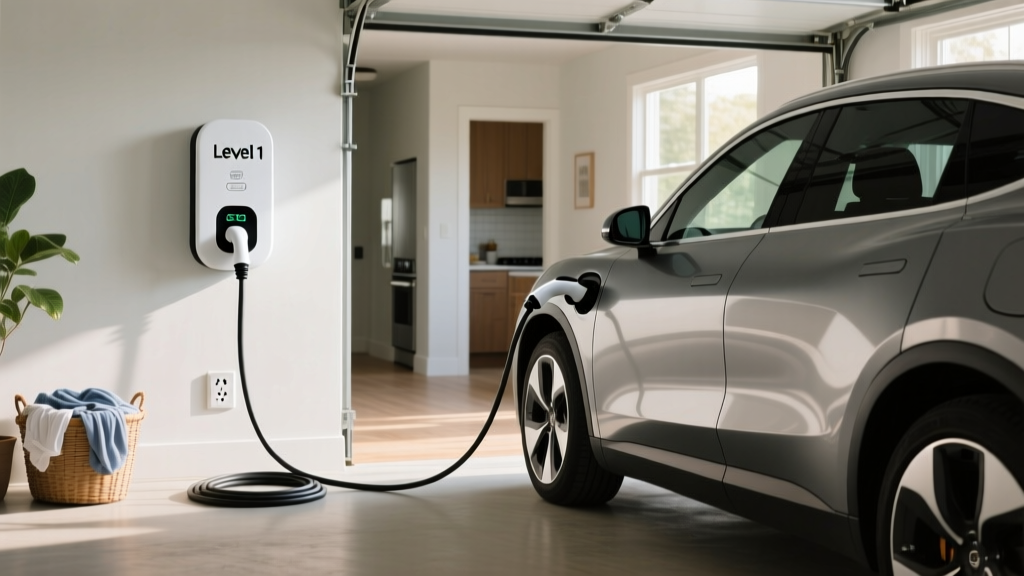
Understanding the three charging levels helps you plan where and when to charge — and what you'll actually pay for in time and money.
| Level | Voltage / Amperage | Max Power (kW) | Miles of Range Per Hour | 10–80% Time (75 kWh Battery) |
|---|---|---|---|---|
| Level 1 (120V household) | 120V / 12A | 1.4 kW | 3–5 mi/hr | ~38 hours |
| Level 2 (240V home/public) | 240V / 32–48A | 7.7–11.5 kW | 20–40 mi/hr | 5–7 hours |
| DC Fast Charging (public) | 400–800V DC | 50–350 kW | 150–1,000+ mi/hr | 15–45 minutes |
A few nuances that matter in practice:
- Charge-curve taper: DC fast chargers don't sustain peak power. A V4 Supercharger may deliver 250 kW to a Model 3 Long Range from 10–40% SoC, then taper to 150 kW by 60%, and drop below 50 kW past 80%. This is why manufacturers quote 10–80% times rather than 0–100%.
- Preconditioning: Tesla vehicles automatically warm the battery when navigating to a Supercharger, enabling faster charge acceptance. Non-Tesla EVs heading to Superchargers may not precondition as effectively unless they support the Tesla app's preconditioning command.
- Level 2 is the daily workhorse: Most EV owners do 85–95% of their charging at home on Level 2. Even a 40A (9.6 kW) charger replenishes 200+ miles overnight — more than most people drive in a day.
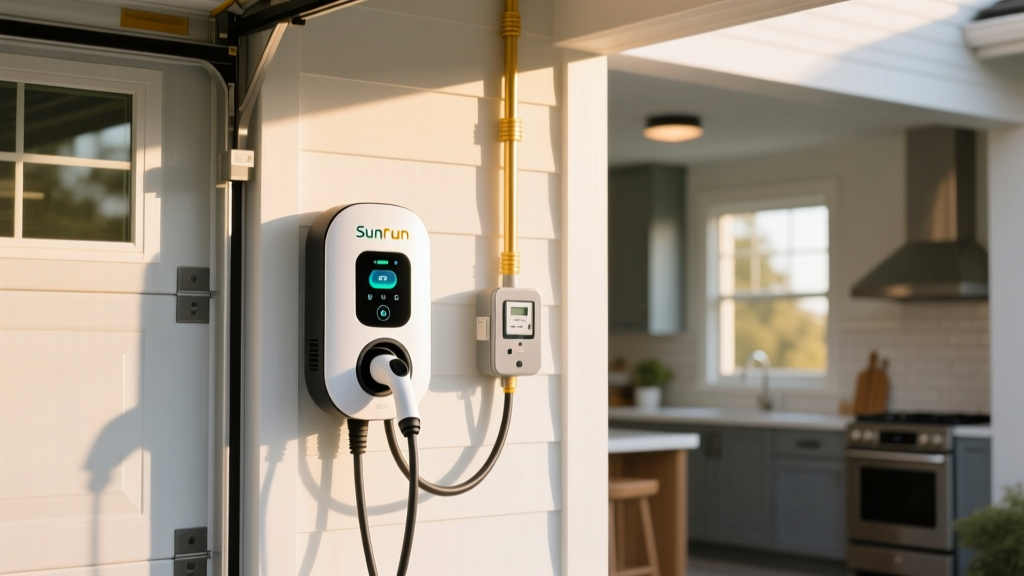
How Much Does It Cost to Install a Home EV Charger?
This is the question that stops many prospective EV buyers in their tracks. The answer varies enormously depending on your home's electrical panel, the distance from panel to garage or driveway, and local permitting requirements.
| Component | Simple Install (Panel Adjacent) | Moderate Install (50–80 ft Run) | Complex Install (Panel Upgrade) |
|---|---|---|---|
| Level 2 Charger (hardware) | $350–$650 | $350–$650 | $350–$650 |
| Electrician labor | $300–$600 | $600–$1,500 | $800–$2,000 |
| Electrical permit | $50–$150 | $50–$200 | $100–$300 |
| Panel upgrade (100A→200A) | N/A | N/A | $1,500–$3,500 |
| Total Estimated Cost | $700–$1,400 | $1,000–$2,350 | $2,750–$6,450 |
The panel upgrade gotcha: Homes built before 1990 often have 100-amp electrical panels that are already near capacity. Adding a 40A or 48A EV circuit may require upgrading to a 200-amp panel. This is the single largest cost variable in home charging installation. Always get a licensed electrician to perform a load calculation before committing to a charger purchase.
Electrical requirements for a typical Level 2 install:
- Circuit: Dedicated 240V circuit, typically 50A breaker (for a 40A continuous charger) or 60A breaker (for a 48A charger)
- Wire gauge: 6 AWG copper (50A) or 4 AWG copper (60A), run in conduit where exposed
- GFCI protection: Required by NEC 2020 and later for EV charging outlets (a GFCI breaker adds $50–$120)
- Hardwired vs plug: NEMA 14-50 outlet offers portability; hardwired installations eliminate the outlet as a failure point and are required for some chargers above 48A
- Outdoor rating: If your charger mounts outside, ensure NEMA 4 (weatherproof) enclosure rating
Connector Compatibility: NACS, CCS, and CHAdeMO in 2026
The connector landscape has shifted dramatically since Ford, GM, Rivian, and most other automakers committed to the North American Charging Standard (NACS) for their EVs. Here's where things stand for 2026 model-year vehicles:
| Connector | Native Vehicles | Adapter Needed? | Network Access |
|---|---|---|---|
| NACS (Tesla) | Tesla, Ford, GM, Rivian, Volvo, Polestar, Mercedes (2025+), Hyundai/Kia (2025+) | CCS→NACS adapter for legacy CCS vehicles | Tesla Superchargers + growing NACS third-party stations |
| CCS1 | Legacy VW ID.4, BMW i4/iX, pre-2025 Hyundai/Kia, Stellantis EVs | NACS→CCS adapter for Supercharger access | Electrify America, EVgo, ChargePoint DC stations |
| CHAdeMO | Nissan Leaf (legacy only — discontinued) | No adapter available to NACS/CCS | Shrinking; mostly Electrify America legacy stalls |
If you're buying a 2026 model-year EV, it almost certainly has a NACS port or will within the model year. The adapter question is mostly relevant for 2023–2024 CCS vehicles whose owners now want Supercharger access. Tesla sells an official CCS-to-NACS adapter for around $250, and Ford provides one to F-150 Lightning and Mustang Mach-E owners at no cost through a recall-style program.
Cost Per Mile: EV Charging vs Gasoline
The real measure that matters for your wallet isn't $/kWh — it's cost per mile driven. Here's how common EVs compare to equivalent gas vehicles using 2026 average fuel and electricity prices:
| Vehicle / Scenario | Efficiency | Energy Cost | Cost Per Mile |
|---|---|---|---|
| Tesla Model Y LR (home, $0.16/kWh) | 3.5 mi/kWh | $0.16/kWh | $0.046 |
| Tesla Model Y LR (home, TOU off-peak $0.10/kWh) | 3.5 mi/kWh | $0.10/kWh | $0.029 |
| Tesla Model Y LR (Supercharger $0.35/kWh) | 3.5 mi/kWh | $0.35/kWh | $0.100 |
| Hyundai Ioniq 5 (home, $0.16/kWh) | 3.3 mi/kWh | $0.16/kWh | $0.048 |
| Ford F-150 Lightning (home, $0.16/kWh) | 2.0 mi/kWh | $0.16/kWh | $0.080 |
| Toyota RAV4 Gas (28 MPG combined, $3.40/gal) | 28 MPG | $3.40/gal | $0.121 |
| Ford F-150 Gas (22 MPG combined, $3.40/gal) | 22 MPG | $3.40/gal | $0.155 |
Even at peak Supercharger rates, the Model Y costs less per mile than a comparable gas crossover. At home off-peak rates, the savings are dramatic: a Model Y owner charging on TOU rates pays roughly $0.03/mile vs $0.12/mile for a RAV4 — a 75% fuel cost reduction. Over 15,000 annual miles, that's a savings of approximately $1,350 per year, or $6,750 over five years.
Recommended Home Level 2 Chargers for 2026
Not all Level 2 chargers are equal. Here are three proven picks across different budgets, each with verified specs:
Tesla Wall Connector
- Power: 11.5 kW (48A) on 60A circuit
- Connector: NACS native
- Cable: 24 ft
- Smart features: Wi-Fi, OTA updates, load sharing (pair two units on one circuit), scheduled charging via Tesla app
- Price: ~$475
- Best for: Tesla owners and NACS-equipped Ford/GM/Rivian vehicles
ChargePoint Home Flex
- Power: Up to 12 kW (50A) on 60A circuit, configurable down to 16A
- Connector: NACS (2025+ models) or J1772 with adapter
- Cable: 23 ft
- Smart features: Wi-Fi, Alexa integration, detailed energy tracking, flexible amperage for older panels
- Price: ~$650–$700
- Best for: Homes with limited panel capacity (can set to 32A or 24A)
Emporia Level 2 EV Charger
- Power: 11.5 kW (48A) on 60A circuit
- Connector: NACS or J1772
- Cable: 24 ft
- Smart features: Wi-Fi, solar integration (pairs with Emporia Vue energy monitor), TOU scheduling, budget price
- Price: ~$350–$400
- Best for: Budget-conscious buyers, solar-panel owners
All three are NEMA 4 rated for outdoor installation. Hardwiring is recommended for any unit above 40A to avoid NEMA 14-50 outlet overheating concerns that have been documented in EV owner communities. A licensed electrician should verify wire gauge, torque specs, and GFCI breaker compatibility for your specific panel brand (Square D, Eaton, Siemens, etc.).
Smart Strategies to Lower Your Supercharger Costs
If you rely on Superchargers for road trips or apartment living, these tactics meaningfully reduce what you pay per kWh:
- Charge during off-peak windows. Many Supercharger stations now display time-of-use pricing in the Tesla app before you arrive. Stations in suburban areas often drop to $0.25–$0.28/kWh between 10 PM and 6 AM.
- Target 80% and go. Charging past 80% SoC at a DC fast charger wastes time and money — the charge curve tapers so severely that the last 20% can take as long as the first 60%. You're also paying peak kW pricing for trickle-speed delivery.
- Precondition before arriving. Navigate to the Supercharger in your Tesla's navigation at least 15–20 minutes before arrival. The car will warm the battery, enabling faster charge acceptance and a shorter (cheaper) session.
- Use membership plans. If you charge publicly more than twice a month, Tesla's $12.99/month membership or Electrify America's Pass+ ($4.99/month) can reduce per-kWh costs by 10–25%.
- Avoid idle fees. Set your charge limit correctly and move your car promptly. Idle fees at busy Superchargers can reach $1.00/minute — a 20-minute delay after reaching your limit could add $20 to your session.
Frequently Asked Questions
How much does a Supercharger session cost for a full road-trip charge?
For a typical 10–80% session on a 75 kWh battery (like the Model Y Long Range or Ioniq 5), expect to pay $17–$25 depending on the station's per-kWh rate. On a 500-mile road trip requiring two charges, budget roughly $35–$50 in Supercharger costs — still less than the $55–$70 you'd spend on gas in a 28 MPG crossover at $3.40/gallon.
Is it cheaper to Supercharge or charge at home?
Home charging is 2–4× cheaper. At the national average electricity rate of $0.16/kWh, home Level 2 charging costs about $0.046/mile in a Model Y. Supercharging the same vehicle at $0.35/kWh costs $0.10/mile. Over 12,000 miles per year, home charging saves approximately $648 compared to exclusive Supercharger use.
Do non-Tesla EVs pay more at Superchargers?
Yes, in most cases. Non-Tesla vehicles accessing Superchargers via the Tesla app or native NACS port typically pay a 10–15% premium over the posted Tesla-owner rate. Tesla's $12.99/month charging membership narrows this gap significantly. As of 2026, Ford, GM, Rivian, and Volvo NACS-equipped vehicles can use Superchargers, though some older CCS vehicles still require an adapter.
What electrical upgrades might I need for a home charger?
The most common and costly upgrade is a panel upgrade from 100A to 200A service, which runs $1,500–$3,500. Other potential needs include: a new dedicated 50A or 60A breaker ($20–$60), GFCI breaker upgrade ($50–$120), conduit runs for exposed wiring ($2–$8/foot), and in some jurisdictions, a smart panel or energy management system if your utility requires load management for EV circuits.
Can I install a Level 2 charger myself?
While physically possible for experienced DIYers, most jurisdictions require a licensed electrician to pull the permit and perform (or at least inspect) the work. The NEC requires GFCI protection on EV circuits, proper wire gauge, and correct breaker sizing. An unpermitted installation can void your homeowner's insurance coverage in the event of an electrical fire and will likely fail a home inspection when you sell.
How fast will each charging level add range?
Level 1 (120V) adds 3–5 miles per hour — adequate only for PHEVs with small batteries or as emergency backup. Level 2 (240V, 40–48A) adds 20–40 miles per hour, fully replenishing most EVs overnight. DC fast charging at 150–250 kW adds 150–500+ miles per hour in the initial charge phase, though the rate tapers significantly above 60–70% SoC. See the charging levels table above for exact figures.
Sources: U.S. Department of Energy / fueleconomy.gov, IRS.gov — Alternative Fuel Vehicle Refueling Property Credit, Tesla Home Charging Installation Guide. Pricing data reflects early 2026 averages; local rates may vary. Always verify current tax credit eligibility with a qualified tax professional.