What Is the Supercharger Congestion Fee?
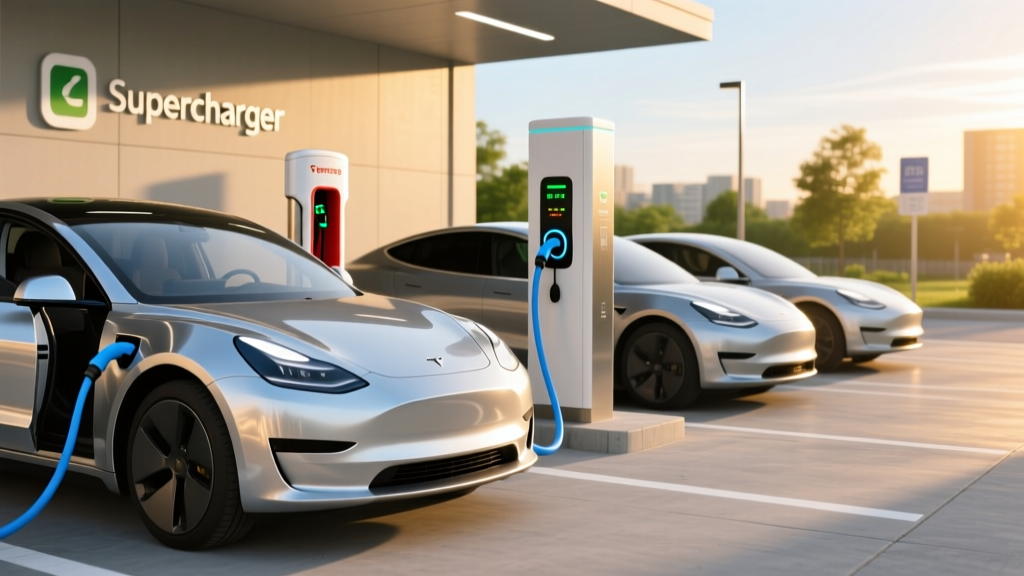
If you've pulled into a busy Tesla Supercharger station only to find every stall occupied, you've experienced the frustration that led Tesla to implement idle fees — often referred to by owners as the Supercharger congestion fee. This isn't a charge for using the charger itself; it's a per-minute penalty applied when your vehicle remains plugged in after reaching its charge limit at a station that is at or near full capacity.
Tesla introduced idle fees to keep stalls turning over at high-traffic stations. The logic is straightforward: a fully charged car occupying a stall blocks another driver who may be running low on battery and actively searching for a place to charge. The fee structure is designed to escalate the longer you linger.
• $0.50/minute — Station at ≥50% capacity when your charge completes
• $1.00/minute — Station at 100% capacity when your charge completes
• Grace period: 5 minutes to unplug and move before fees begin accruing
• Fee waiver: Tesla has historically waived idle fees if you move the vehicle within 5 minutes of the charge completing, even at 100% capacity stations.
The key distinction many owners miss: idle fees only apply when the station is busy. If you're charging at a half-empty Supercharger plaza at 2 a.m., you won't be penalized for leaving your car plugged in. But during holiday travel weekends or peak commuting hours at urban stations, those $1/minute charges can add up to $20–$30 in minutes.
How DC Fast Charging Works (and Why Turnover Matters)
To understand why congestion fees exist, it helps to understand how Tesla Supercharger stations and DC fast charging operate. Unlike home charging, which delivers alternating current (AC) that your car's onboard charger converts to direct current (DC), a DC fast charger bypasses the onboard charger and feeds DC power directly to the battery at much higher rates.
Here's how the three charging levels compare in real-world terms:
| Level | Power (kW) | Miles of Range/Hour | Best For |
|---|---|---|---|
| Level 1 (120V) | 1.0–1.4 kW | 3–5 mi/hr | Overnight top-off, PHEVs |
| Level 2 (240V) | 7.2–19.2 kW | 25–60 mi/hr | Daily home charging |
| DC Fast (Supercharger/CCS) | 50–350 kW | 150–1,000+ mi/hr (peak) | Road trips, rapid top-up |
kW vs. kWh — the critical distinction: kW (kilowatts) measures the rate of energy delivery — like the flow rate of a garden hose. kWh (kilowatt-hours) measures the total energy capacity of your battery — like the size of the bucket. A 250 kW Supercharger can theoretically deliver 250 kWh of energy in one hour, but real-world charging never sustains peak rates due to the charge curve.
The Charge Curve: Why Your Last 20% Takes So Long
DC fast charging follows a tapering curve. When your battery is at a low state of charge (SoC), say 10–20%, it can accept energy at near-peak rates. A Tesla Model Y with a ~75 kWh (usable) NMC battery on a V3 Supercharger (250 kW peak) might charge from 10% to 50% in roughly 15 minutes. But as the battery fills, the charge rate drops to protect cell health and manage heat. That same session from 80% to 90% might take another 15 minutes at a fraction of the peak power.
• Tesla Model Y (75 kWh, NMC): ~25 min at V3 Supercharger (250 kW peak)
• Hyundai Ioniq 5 (77.4 kWh, NMC): ~18 min at 350 kW charger (peaks ~240 kW)
• Ford F-150 Lightning (131 kWh ext., NMC): ~41 min at 150+ kW charger
• Chevrolet Equinox EV (85 kWh, NMC): ~30 min at 150+ kW charger
Note: Cold batteries, high ambient temps, and consecutive charges without preconditioning can add 20–50% to these times.
This tapering is exactly why idle fees exist. Once you've hit 80% or your set charge limit, the car is essentially done receiving meaningful power — but if you stay plugged in at a busy station, you're blocking someone who could be charging at peak rates.
Strategies to Avoid Supercharger Idle Fees
Avoiding the congestion fee is mostly about awareness and preparation. Here's what works in practice:
1. Set a Charge Limit Below 100%
Unless you genuinely need a full battery for the next leg of a trip, set your charge limit to 80% in the Tesla app or in-car settings. Not only does this reduce idle-fee risk (the car finishes faster), but it also aligns with battery longevity best practices for NMC chemistry. Tesla's daily recommended limit is 80% for NMC packs.
2. Use the Tesla App for Real-Time Alerts
The Tesla app sends a push notification when charging is nearly complete and a second alert when charging finishes. If you're within earshot of your phone — say, at a restaurant near the Supercharger — this 5-minute grace period is usually enough to walk back and unplug.
3. Check Station Occupancy Before You Arrive
The Tesla navigation system and app show real-time stall availability. If a station shows 8 of 8 stalls in use, consider:
- Driving to a nearby station with more availability
- Waiting 10–15 minutes for turnover (cheaper than a $1/min idle fee)
- Using a non-Tesla DC fast charger if your vehicle has NACS-to-CCS adapter access
4. Charge During Off-Peak Hours
Urban Supercharger stations in metro areas tend to be busiest between 5–8 p.m. on weekdays and midday on weekends. Early-morning or late-night sessions rarely trigger idle fees because station occupancy stays below 50%.
5. Precondition Your Battery
Navigate to the Supercharger using the car's built-in navigation, even if you know the route. This triggers battery preconditioning — warming the pack to optimal temperature for fast charging. A preconditioned battery charges faster, meaning you finish sooner and free up the stall (and yourself) before idle fees kick in.
Public DC Fast Charging Costs: Supercharger vs. Competitors
Idle fees are just one component of your total public charging cost. Here's how DC fast charging costs break down across networks in 2026:
| Network | Typical $/kWh | Idle Fee | Connector |
|---|---|---|---|
| Tesla Supercharger (V3/V4) | $0.28–$0.48 | $0.50–$1.00/min | NACS |
| Electrify America | $0.35–$0.55 | $0.40/min (after 10 min grace) | CCS1 / NACS (select) |
| EVgo | $0.34–$0.50 | Varies by location | CCS1 / CHAdeMO / NACS |
| ChargePoint (DC) | $0.30–$0.52 | Site-dependent | CCS1 / CHAdeMO |
Cost Per Mile: DC Fast Charging vs. Gasoline
Even at the higher end of public DC fast charging pricing, EVs typically cost less per mile than gasoline vehicles. Here's a realistic comparison using 2026 averages:
| Scenario | Cost/Mile | Assumptions |
|---|---|---|
| Home Level 2 (off-peak) | $0.03–$0.05 | $0.12/kWh, 3.5 mi/kWh efficiency |
| Home Level 2 (peak rate) | $0.06–$0.08 | $0.22/kWh, 3.5 mi/kWh |
| Supercharger (avg. $0.38/kWh) | $0.11–$0.13 | 3.0–3.5 mi/kWh highway |
| Electrify America ($0.48/kWh) | $0.14–$0.16 | 3.0–3.5 mi/kWh highway |
| Gas car (28 MPG combined) | $0.12–$0.14 | $3.40/gal national avg (2026) |
| Gas truck (19 MPG combined) | $0.18–$0.20 | $3.40/gal national avg (2026) |
The takeaway: home charging is dramatically cheaper than gasoline. Public DC fast charging is roughly cost-competitive with an efficient gas car — but if you add idle fees, a 20-minute overstay at $1/min tacks on $15–$20, which can blow past the cost of filling a gas tank for the same distance.
Connector Compatibility: NACS, CCS1, and CHAdeMO in 2026
As of 2025–2026, the North American charging landscape has consolidated heavily around NACS (North American Charging Standard), the connector Tesla developed and opened to other manufacturers. Here's where each standard stands:
| Connector | Native Vehicles (2026) | Supercharger Access | Adapter Needed? |
|---|---|---|---|
| NACS (Tesla) | Tesla, Ford, GM, Rivian, Volvo, Polestar, Mercedes, Hyundai/Kia (select 2026 models) | Direct — no adapter | No |
| CCS1 | VW ID.4, BMW iX, older Hyundai/Kia, Chevrolet (pre-2025) | Yes — via NACS-to-CCS adapter | Yes (~$200–$250) |
| CHAdeMO | Nissan Leaf (legacy), Mitsubishi Outlander PHEV | Limited — no direct access | Rare/expensive adapters |
For Tesla owners accessing non-Tesla DC fast chargers (Electrify America, EVgo), you'll need a Tesla-to-CCS adapter (commonly called a "Magic Dock" adapter or a third-party NACS-to-CCS1 adapter). Tesla sells a CCS Combo 2 adapter in some markets; in the US, third-party options from brands like Lectron and A2Z are widely used. Expect to pay $150–$250 for a quality adapter rated for up to 250 kW.
For non-Tesla EV owners now accessing Superchargers: Ford, GM, and Rivian owners with NACS-equipped 2025+ models can plug directly into V3 and V4 Superchargers. Older CCS1 vehicles need a CCS-to-NACS adapter, which Tesla offers to approved manufacturers. Check your automaker's official guidance before purchasing an adapter — not all are certified for Supercharger use.
Home Charging Setup: Avoiding Public Congestion Entirely
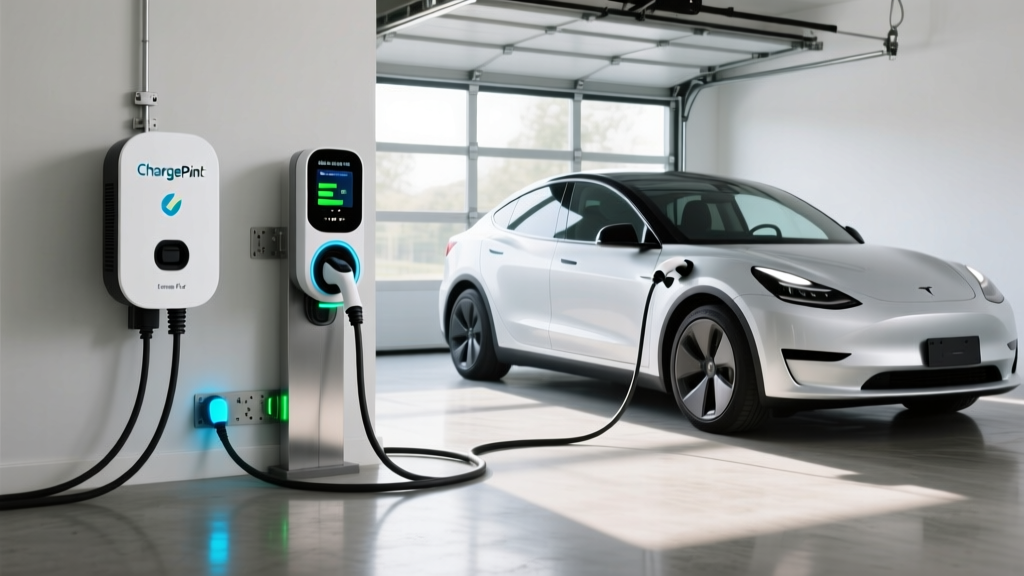
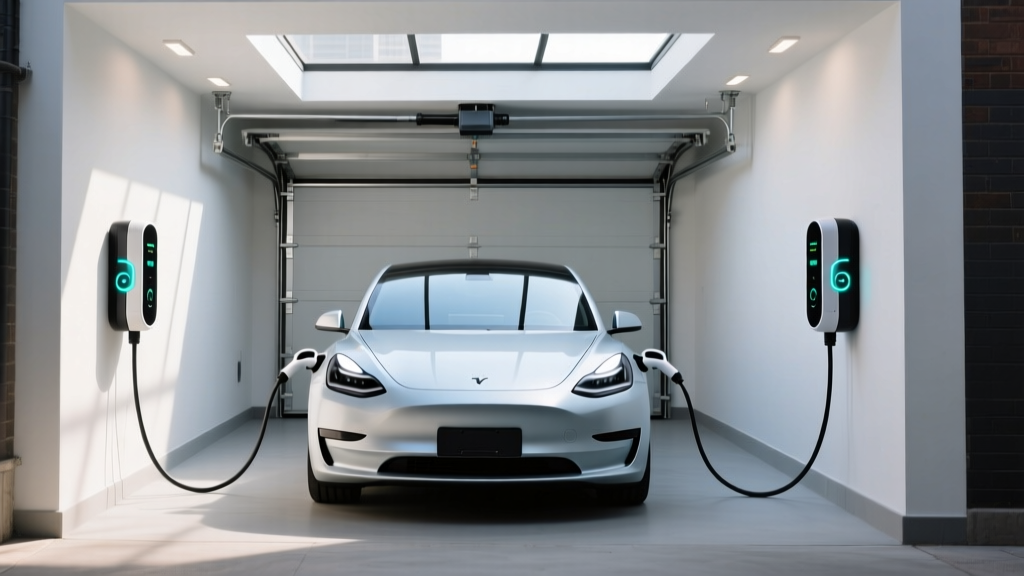
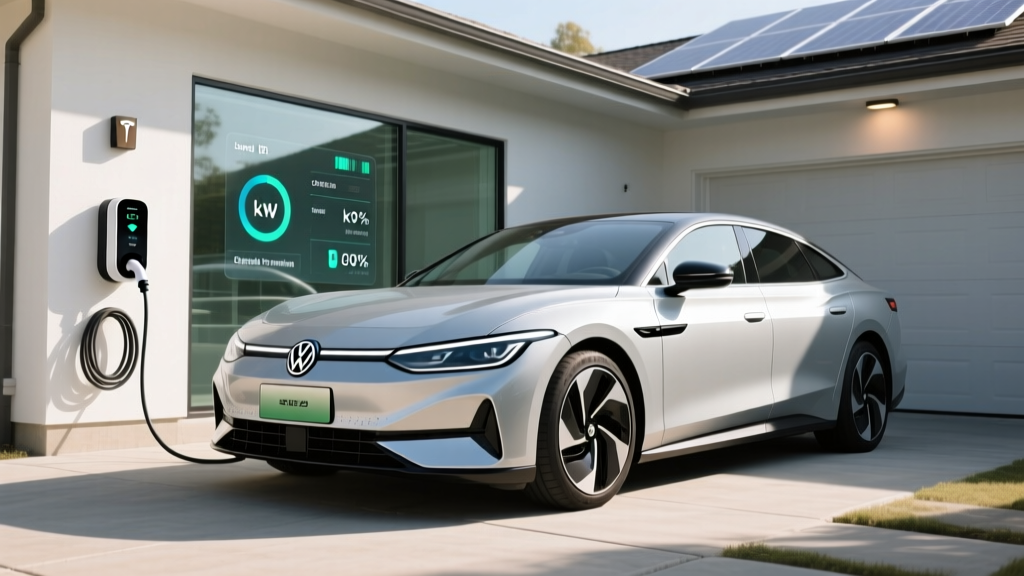
The most reliable way to avoid Supercharger congestion fees is to do the bulk of your charging at home. A properly installed Level 2 home charger means you wake up every morning with a full (or 80%-limited) battery, reserving DC fast charging strictly for road trips.
Electrical Requirements for Level 2 Home Charging
A Level 2 charger requires a 240-volt dedicated circuit, similar to what an electric dryer or oven uses. The most common residential setup:
- Circuit: 50-amp breaker (delivers 40 amps continuous to the charger, per NEC 80% rule)
- Wire: 6 AWG copper (THHN in conduit or NM-B/Romex depending on local code)
- Outlet: NEMA 14-50 (if using a plug-in charger) or hardwired connection (preferred for 48A+ chargers)
- Panel capacity: Your electrical panel must have room for a 50A double-pole breaker and enough total capacity. A typical 200A panel can usually accommodate this; a 100A panel may require an upgrade.
Home Charger Installation Cost Breakdown
| Component | Simple Install | Complex Install |
|---|---|---|
| Level 2 Charger (hardware) | $350–$700 | $500–$750 |
| Electrician labor (2–4 hrs) | $300–$600 | $800–$1,500 |
| Permit & inspection | $50–$150 | $100–$300 |
| Electrical panel upgrade (if needed) | $0 | $1,500–$3,500 |
| Total | $700–$1,450 | $2,900–$6,050 |
A "simple" install means your panel is near the garage, has spare capacity, and the run is short (under 30 feet). A "complex" install involves long wire runs through walls or conduit, a panel upgrade from 100A to 200A, or trenching for a detached garage. Always get a licensed electrician's assessment before budgeting — the National Electrical Contractors Association can help you find qualified professionals.
Recommended Level 2 Home Chargers (2026)
• Power: Up to 12 kW (50A) / adjustable down to 16A
• Connector: NACS or J1772 (configurable)
• Cable: 23 ft
• Smart features: Wi-Fi, app scheduling, energy tracking, Alexa
• Price: ~$550–$650
• Best for: Most EVs, flexible amperage for older panels
• Power: Up to 11.5 kW (48A hardwired)
• Connector: NACS native
• Cable: 24 ft
• Smart features: Wi-Fi, OTA updates, Power-Sharing with 2nd unit
• Price: ~$425–$475
• Best for: Tesla owners, cleanest NACS integration
• Power: Up to 11.5 kW (48A)
• Connector: J1772 (NACS adapter available)
• Cable: 24 ft
• Smart features: Energy monitoring, solar integration, load management
• Price: ~$350–$400
• Best for: Budget-conscious, solar homes
Safety and Code Requirements
Per the National Electrical Code (NEC), your Level 2 installation must include:
- Dedicated circuit: The charger must be on its own breaker — no sharing with other appliances
- GFCI protection: Required for all outlets in garages and outdoor locations (NEC 2023+). Hardwired chargers may be exempt depending on local interpretation
- Outdoor rating: If your charger is installed outside, both the unit and the receptacle must have a weatherproof (in-use) cover rated NEMA 3R or 4
- Permit and inspection: Virtually all jurisdictions require a permit for a new 240V circuit. Skipping this can void home insurance coverage and create a fire risk
Non-Tesla Networks and Their Idle Fees
Tesla isn't the only network that penalizes overstays. As DC fast charging has become mainstream, most major networks have adopted some form of idle or overstay fee:
- Electrify America: $0.40/minute after a 10-minute grace period post-charge
- EVgo: Fees vary by station; typically $0.30–$0.50/minute after a grace period
- ChargePoint: Set by individual site hosts — some locations charge, others don't
The pattern is industry-wide: if you're plugged into a DC fast charger after your session ends, you risk fees. The strategies that work at Superchargers — set a charge limit, monitor via app, move promptly — apply everywhere.
Frequently Asked Questions
Does the Supercharger congestion fee apply if I'm still actively charging?
No. Tesla's idle fee only applies after your vehicle has completed charging (reached its set charge limit or 100%). As long as the car is still drawing power, no idle fee accrues — even at a 100% occupied station.
How do I know if a Supercharger station is busy enough to trigger idle fees?
The Tesla app and in-car navigation display real-time stall occupancy. If the station shows more than 50% of stalls occupied when your charge completes, the $0.50/min tier applies. At 100% occupancy, the $1.00/min tier kicks in. The Tesla app also sends a notification warning you when idle fees are about to begin.
Can I dispute a Supercharger idle fee?
Tesla allows you to dispute idle fees through the app or by contacting support. Common successful dispute reasons include: station exits being blocked by other vehicles, charger malfunction preventing session completion, or a medical emergency. However, simply "not noticing" the notification is rarely accepted. Tesla has historically auto-waived idle fees during the early rollout period and during widespread station outages.
Do Supercharger idle fees apply to non-Tesla vehicles using the network?
Yes. As of 2025–2026, Ford, GM, Rivian, and other NACS-equipped vehicles accessing Superchargers through the Magic Dock or native NACS port are subject to the same idle fee structure. The fee is charged to the payment method on file in your Tesla or partner-automaker charging account.
What's the best way to charge at home to avoid relying on public chargers?
Install a Level 2 home charger on a dedicated 240V/50A circuit. For a typical EV with a 75–85 kWh battery, a 40A Level 2 charger (9.6 kW) adds roughly 30–35 miles of range per hour, meaning a full overnight charge (8–10 hours) easily replenishes 250+ miles of range. This eliminates daily dependence on public DC fast chargers and their associated idle fees entirely.
How much does public DC fast charging really cost per road trip?
For a 300-mile highway trip in a Tesla Model Y (averaging ~3.2 mi/kWh at highway speeds), you'll consume roughly 94 kWh. At an average Supercharger rate of $0.38/kWh, that's about $35–$40 in charging. Add a potential idle fee of $10–$15 if you overstay at a busy station, and the cost rises to $45–$55. The same trip in a 28 MPG gas car at $3.40/gal costs about $36. The economics are close — but home charging for daily driving keeps your overall fuel costs far below gasoline.