The Horsepower Misconception: Why kW Is What Actually Matters
If you've searched "how much HP do superchargers add" to your electric vehicle, you're not alone—but the question itself reveals a common confusion between internal-combustion and electric powertrains. In a gas engine, a supercharger or turbocharger forces more air into the cylinders, literally adding horsepower to the engine's output. An EV "Supercharger" (Tesla's trademarked name for its DC fast-charging network, now broadly used as shorthand for any fast charger) does something entirely different: it delivers electrical power to replenish the battery. That power is measured in kilowatts (kW), not horsepower.
To translate: 1 horsepower ≈ 0.746 kW. So a Tesla V4 Supercharger delivering a peak 250 kW is pumping energy at the equivalent of roughly 335 horsepower into your battery pack. But that number doesn't add to your car's motor output—it simply determines how fast your battery refills. The motor's horsepower (say, 346 hp in a Model Y Long Range) is fixed by the drivetrain, not the charger.
What you actually need to know is: how many miles of range does each charger type add per hour, and how long does a typical charging session take? That's what determines your real-world ownership experience.
Charging Levels Explained: Speeds, Miles Per Hour, and Real-World Times
Every EV owner deals with three charging tiers. Here's what each delivers in concrete terms, using a mid-size crossover with roughly 3.5–4.0 miles per kWh efficiency (typical of a Tesla Model Y, Hyundai IONIQ 5, or Ford Mustang Mach-E).
| Level | Voltage | Power (kW) | Miles of Range Added Per Hour | Typical Use Case | 10–80% Time (75 kWh battery) |
|---|---|---|---|---|---|
| Level 1 | 120V AC | 1.0–1.4 kW | 3–5 mi/hr | Overnight top-up, PHEVs, emergencies | ~40+ hours (impractical) |
| Level 2 | 240V AC | 3.3–19.2 kW | 12–75 mi/hr | Home daily charging, workplace, hotels | ~4–5 hours (at 11.5 kW) |
| DC Fast Charge | 400–800V DC | 50–350 kW | 150–1,000+ mi/hr (peak) | Road trips, quick top-ups | ~18–45 minutes |
Why DC Fast Charging Isn't a Flat Rate
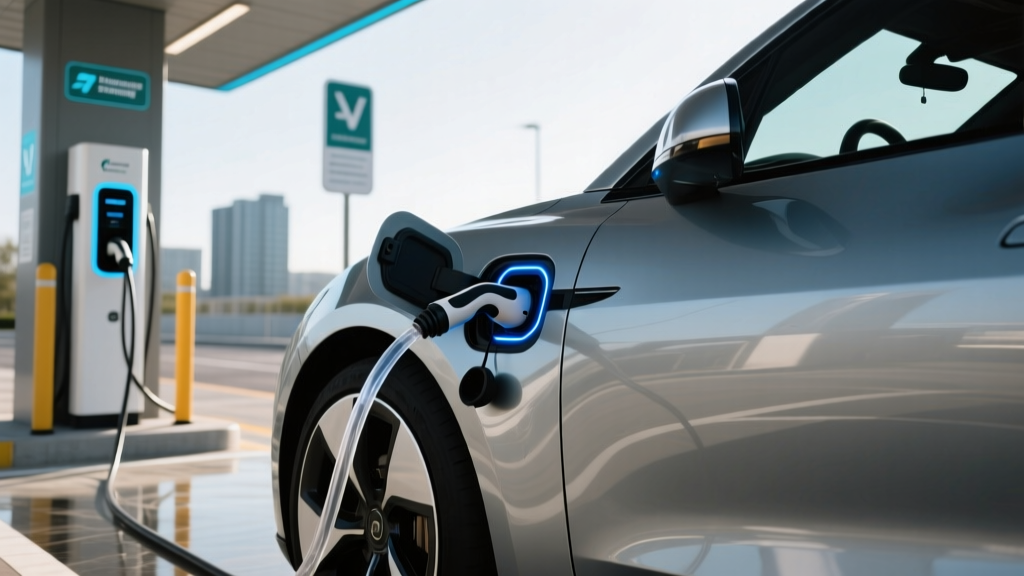
A 250 kW Supercharger doesn't deliver 250 kW for the entire session. EV batteries follow a charging curve: power ramps up quickly from low state-of-charge (SoC), peaks near 10–30% SoC, then progressively tapers as the battery management system (BMS) protects cell health. Above 80% SoC, speeds drop dramatically—often below 50 kW. This is why manufacturers quote "10–80%" times rather than 0–100%.
Real-world examples from 2025–2026 models:
- Tesla Model Y Long Range (75 kWh usable, NMC): Peaks at ~250 kW on V3/V4 Superchargers, 10–80% in approximately 22–25 minutes under ideal thermal conditions.
- Hyundai IONIQ 5 (77.4 kWh usable, NMC, 800V architecture): Peaks at ~240 kW on 350 kW chargers, 10–80% in approximately 18 minutes.
- Ford F-150 Lightning Extended Range (131 kWh usable, NMC): Peaks at ~150 kW, 10–80% in approximately 41 minutes.
- Chevrolet Equinox EV (85 kWh usable, NMC): Peaks at ~150 kW, 10–80% in approximately 30 minutes.
Home Charging Installation: Electrical Requirements and Real Costs
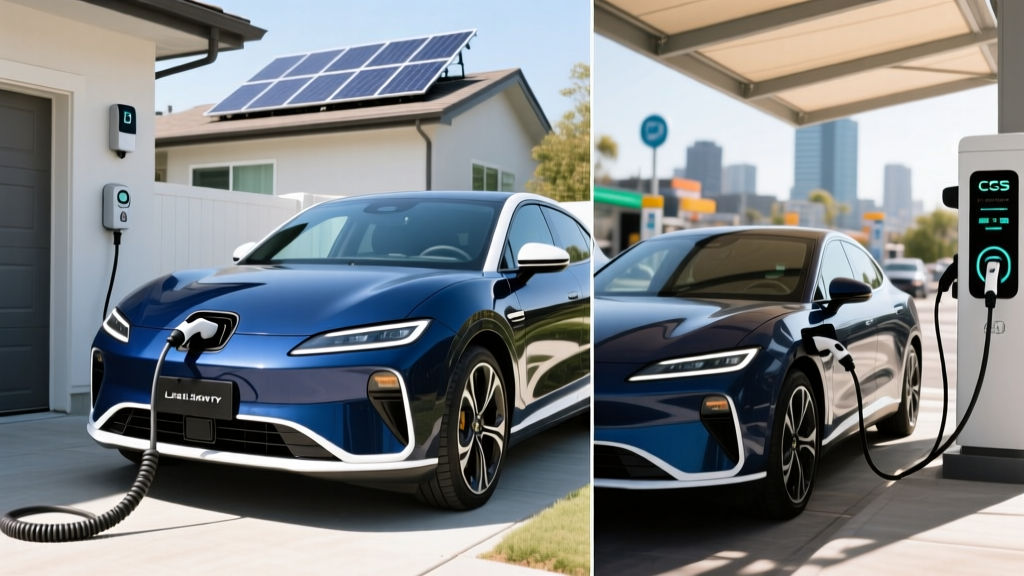
Installing a Level 2 home charger is the single highest-impact upgrade for EV ownership. You'll start every morning with a full battery, eliminating routine visits to public chargers. But costs vary enormously depending on your home's electrical panel, wiring distance, and local code.
What Your Electrician Needs to Know
A typical Level 2 home charger requires a 240-volt dedicated circuit, similar to an electric dryer or oven. The most common configurations:
- 40-amp circuit / 32-amp continuous output (7.7 kW): Minimum recommended for most EVs. Adds ~28–30 miles per hour of charging.
- 50-amp circuit / 40-amp continuous output (9.6 kW): Ideal for larger batteries (80+ kWh). Adds ~35–38 miles per hour.
- 60-amp circuit / 48-amp continuous output (11.5 kW): Maximum for most residential chargers. Adds ~42–44 miles per hour. Requires a 200-amp service panel in most homes.
The National Electrical Code (NEC) requires that continuous loads (anything running 3+ hours, which includes EV charging) use only 80% of a circuit's rated capacity. So a 50-amp breaker delivers 40 amps continuously.
Panel Upgrade: The Hidden Cost
Many older homes have 100-amp electrical service. Adding a 50- or 60-amp EV circuit may exceed available capacity, requiring a panel upgrade to 200 amps. This is the single biggest variable in installation cost. Newer homes (post-2000) typically already have 200-amp service, but even those can be near capacity with electric HVAC, water heaters, and dryers running simultaneously. A licensed electrician will perform a load calculation to determine available headroom.
| Component | Simple Install (panel nearby, no upgrade) | Complex Install (long wire run, panel upgrade) |
|---|---|---|
| Level 2 Charger Equipment | $350–$700 | $350–$700 |
| Electrical Permit | $50–$200 | $50–$200 |
| Electrician Labor (2–4 hrs simple) | $300–$800 | — |
| Electrician Labor (6–12 hrs complex) | — | $1,000–$3,000 |
| Wiring & Conduit Materials | $100–$300 | $300–$800 |
| Panel Upgrade (100A → 200A, if needed) | — | $1,500–$4,000 |
| Total Estimated Cost | $800–$2,000 | $3,200–$8,700 |
Always get at least three quotes from licensed electricians. Some utilities offer rebates of $250–$1,000 for home charger installation—check with your local provider before scheduling work.
Connector Compatibility: NACS, CCS, and CHAdeMO in 2026
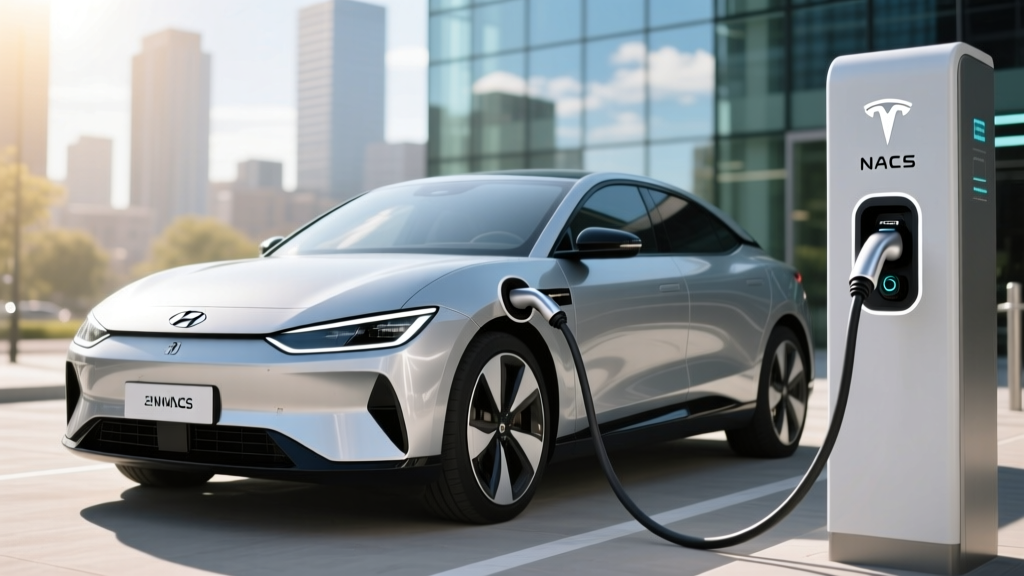
The North American charging connector landscape has consolidated dramatically since Tesla opened its Supercharger network and the North American Charging Standard (NACS) was adopted by nearly every major automaker. Here's where things stand for 2025–2026 model-year vehicles:
| Connector | Brands Using Natively | DC Fast-Charge Networks | Adapter Needed? |
|---|---|---|---|
| NACS (Tesla) | Tesla, Ford, GM, Rivian, Volvo, Polestar, Mercedes-Benz, BMW, Hyundai/Kia (2025+), Subaru, Lucid, Fisker | Tesla Supercharger, Electrify America (partial), EVgo, ChargePoint (partial) | CCS→NACS adapter for legacy CCS vehicles accessing Superchargers |
| CCS1 | Legacy models: pre-2025 VW ID.4, BMW i4 (pre-2025), some Stellantis EVs | Electrify America, EVgo, ChargePoint | NACS→CCS adapter needed for Supercharger access |
| CHAdeMO | Nissan Leaf (discontinued 2025), Mitsubishi Outlander PHEV (legacy) | Limited; mostly legacy stations | No adapter available for DCFC; network shrinking |
If you're buying a new EV in 2026, it almost certainly has a NACS port. For home Level 2 charging, NACS and J1772 (the legacy AC standard) are interchangeable via inexpensive adapters, and most new home chargers now ship with NACS connectors or include adapters in the box.
Cost to Charge: Home vs. Public vs. Gas Per Mile
One of the strongest economic arguments for EV ownership is lower per-mile energy cost—but the savings depend heavily on where and when you charge.
| Charging Scenario | Avg. Cost per kWh | Cost per Mile (3.5 mi/kWh EV) | Equivalent Gas MPG at $3.50/gal |
|---|---|---|---|
| Home, Off-Peak (utility time-of-use rate) | $0.08–$0.12 | $0.023–$0.034 | 103–152 MPG |
| Home, Standard Residential Rate | $0.14–$0.18 | $0.040–$0.051 | 69–88 MPG |
| Public Level 2 (ChargePoint, workplace) | $0.20–$0.35 | $0.057–$0.100 | 35–61 MPG |
| DC Fast Charge (Electrify America, EVgo) | $0.35–$0.55 | $0.100–$0.157 | 22–35 MPG |
| Tesla Supercharger (avg. 2026) | $0.28–$0.40 | $0.080–$0.114 | 31–44 MPG |
| Gasoline Vehicle (28 MPG combined avg.) | $3.50/gallon | $0.125 | 28 MPG (baseline) |
The takeaway: home charging on off-peak rates delivers the best economics by far—often one-quarter to one-third the per-mile cost of gasoline. Exclusive reliance on DC fast charging, however, can approach or even exceed gas costs in high-price markets like California. Most EV owners charge at home 85–95% of the time, using public DC fast charging only for road trips.
According to fueleconomy.gov, the average EV achieves 3–4 miles per kWh, making home charging extraordinarily cost-effective compared to internal combustion.
Recommended Home Level 2 Chargers (2025–2026)
After testing and tracking reliability data across major brands, these are the chargers we recommend for different needs. All are hardwired or NEMA 14-50 plug-compatible and carry UL or ETL certification.
Emporia Vue EV Charger
Power: 48A / 11.5 kW (60A circuit)
Connector: NACS (J1772 adapter included)
Cable: 24 ft
Smart Features: Wi-Fi, scheduling, energy monitoring, solar integration
Price: ~$399
Best For: Budget-conscious buyers who want full smart features and maximum residential power output.
ChargePoint Home Flex
Power: Up to 50A / 12 kW (configurable 16–50A)
Connector: NACS or J1772 (select at purchase)
Cable: 23 ft
Smart Features: Wi-Fi, Alexa/Google, amperage adjustment, detailed app
Price: ~$549
Best For: Homes with varying circuit capacities; the adjustable amperage means you can match it to your panel without replacing the unit.
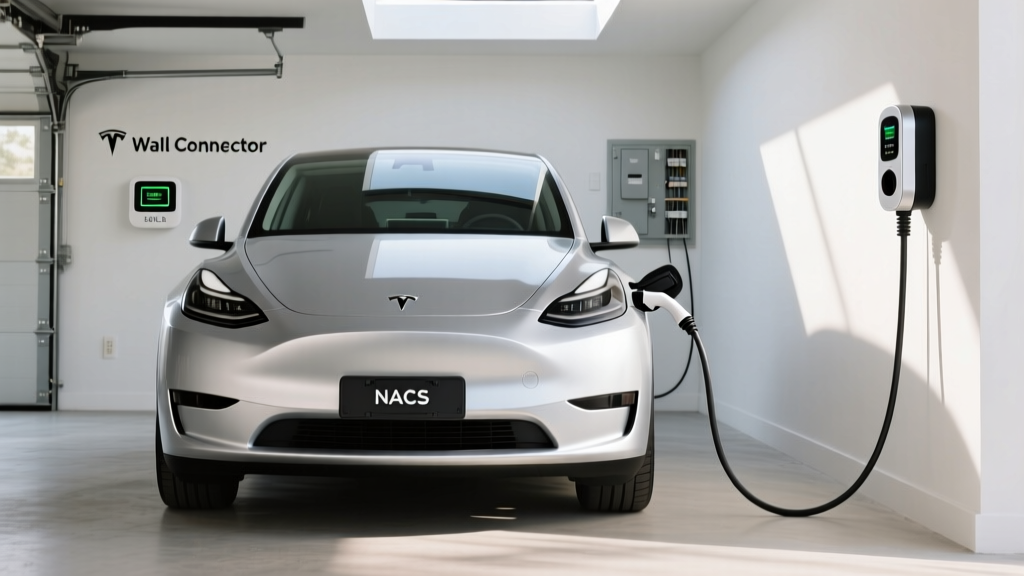
Tesla Wall Connector
Power: 48A / 11.5 kW (60A circuit)
Connector: NACS native
Cable: 24 ft
Smart Features: Wi-Fi, OTA updates, Power Sharing (multiple units on one circuit), load management
Price: ~$420
Best For: Tesla owners or households with multiple NACS vehicles. Power Sharing lets you install two connectors on a single 60A circuit.
Grizzl-E Smart
Power: 40A / 9.6 kW (50A circuit)
Connector: NACS or J1772
Cable: 24 ft
Smart Features: Wi-Fi, OCPP compatibility, ruggedized aluminum case
Price: ~$449
Best For: Outdoor installations in harsh climates. Rated to -40°F and built in Canada with a 3-year warranty.
Safety, Code, and Installation Best Practices
EV charging draws sustained high current for hours—this is fundamentally different from short-burst appliances. Cutting corners on installation creates fire risk. Here's what proper installation requires:
- Dedicated circuit: Your EV charger must have its own breaker—not shared with other outlets or appliances. This prevents overloading and tripping.
- GFCI protection: The 2023 NEC (and 2026 adopted versions in most jurisdictions) requires ground-fault circuit interrupter protection for outdoor EV charging outlets. Hardwired chargers with built-in GFCI satisfy this requirement; for NEMA 14-50 receptacles, a GFCI breaker is typically required.
- Outdoor rating: If your charger is mounted outside or in an unconditioned garage, it must carry a NEMA 4 (weatherproof) rating. All chargers listed above meet this standard.
- Wire gauge: For a 60A circuit, 4 AWG copper wire is standard. For long runs (100+ feet from panel), your electrician may upsize to 3 AWG to reduce voltage drop. Never undersize wire.
- Permit and inspection: Every jurisdiction requires a permit for new 240V circuits. The inspection ensures proper wire sizing, grounding, torque specs, and GFCI compliance. Skipping the permit can void your homeowner's insurance in the event of an electrical fire.
- NEMA 14-50 vs. hardwired: A NEMA 14-50 outlet gives you portability (take the charger when you move), but hardwired installations are generally safer for continuous high-current use because they eliminate the plug connection as a failure point. Many electricians now recommend hardwiring for 48A+ chargers.
For detailed electrical code requirements, the National Fire Protection Association's NEC page is the authoritative source.
Frequently Asked Questions
How much does it cost to install a home EV charger?
A straightforward Level 2 installation with an existing 200-amp panel and short wire run typically costs $800–$2,000 total (charger, permit, labor, materials). If your home needs a panel upgrade from 100A to 200A, expect $3,200–$8,700 all-in. Get three quotes from licensed electricians and check for utility rebates before committing.
How fast will each charging level add range?
Level 1 (120V) adds 3–5 miles per hour—suitable only for plug-in hybrids or emergency trickle charging. Level 2 (240V) at 48 amps adds roughly 40–44 miles per hour, easily replenishing a full battery overnight. DC fast charging at 150–250 kW adds the equivalent of 150–1,000+ miles per hour at peak, but sustained sessions average much less due to the charging curve taper above 80% SoC.
Which connector or charger is compatible with my EV?
For 2025–2026 model-year vehicles, NACS is the dominant standard. Tesla, Ford, GM, Rivian, Hyundai/Kia, BMW, Mercedes, and Volvo all use NACS natively. Older CCS-equipped vehicles can access Tesla Superchargers using a manufacturer-approved CCS-to-NACS adapter (typically $150–$250). CHAdeMO is effectively discontinued for new vehicles. For home Level 2 charging, any NACS or J1772 charger works with any EV using inexpensive adapters.
How much does charging cost per mile vs. gas?
Home charging on off-peak rates costs roughly $0.02–$0.03 per mile, compared to $0.12–$0.13 per mile for a 28 MPG gas car at $3.50/gallon. That's a 75–85% per-mile savings. Exclusive DC fast charging at $0.40–$0.55/kWh narrows the gap to $0.10–$0.16 per mile—comparable to or slightly above gas. Most owners charge at home the vast majority of the time.
What electrical upgrades might I need?
The most common upgrade is a panel upgrade from 100A to 200A service, needed when your existing panel lacks capacity for a dedicated 50–60A EV circuit. Some homes may also need a new meter base or utility service drop. If your panel already has 200A service with available capacity, you'll only need the new circuit breaker, wire run, and outlet or hardwired connection. An electrician's load calculation (typically $100–$200 as part of a quote) will tell you definitively.
Does a Supercharger add horsepower to my EV?
No. A Supercharger (or any DC fast charger) delivers electrical power to your battery—it does not increase your motor's horsepower. The "horsepower equivalent" of the charging rate (e.g., 250 kW ≈ 335 hp) describes the rate of energy transfer, not added performance. Your EV's motor output is determined by the drivetrain and battery discharge capability, not the charger.