If you're cross-shopping a supercharged and turbocharged car against a modern electric vehicle, the powertrain comparison goes far beyond horsepower figures. Forced-induction gas engines compress intake air to produce more power from smaller displacements—superchargers use a belt-driven compressor, while turbochargers harness exhaust gases. EVs, by contrast, deliver instant torque from stationary and require an entirely different infrastructure: electrical charging rather than fuel pumps. This guide breaks down exactly what EV charging involves at home and in public, how the costs compare to fueling a forced-induction gas car, and what equipment you need.
Why Forced-Induction Gas Cars and EVs Demand Different Fueling Thinking
A supercharged and turbocharged car typically burns premium fuel (91-93 octane) to prevent knock under boost, which means higher per-gallon costs than a naturally aspirated engine. A 2025 Chevrolet Camaro ZL1 with its 650-hp supercharged 6.2L V8, for example, averages around 13 MPG combined and requires premium fuel—costing roughly $0.28-$0.35 per mile depending on regional gas prices.
An EV like the 2025 Tesla Model 3 Long Range (363 miles EPA range, 82 kWh usable battery) achieves 132 MPGe combined and costs roughly $0.04-$0.06 per mile on home electricity. The fueling math is dramatically different, but EV ownership requires understanding kW (kilowatts, the rate of power flow—like water pressure) versus kWh (kilowatt-hours, the total energy stored—like gallons in a tank). Confusing these two is the single most common mistake new EV buyers make.
Charging Levels Explained: Speed, Power, and Range Added Per Hour
EV charging happens at three distinct levels, each with different electrical requirements and practical use cases. Here's the breakdown by the numbers:
| Level | Voltage | Max Power (kW) | Miles of Range Added Per Hour | Best Use Case |
|---|---|---|---|---|
| Level 1 | 120V AC | 1.4–1.9 kW | 3–5 miles | Overnight top-up, PHEVs, low-mileage drivers |
| Level 2 | 240V AC | 7.2–19.2 kW | 20–60 miles | Daily home charging, workplace, shopping centers |
| DC Fast Charge | 400–900V DC | 50–350 kW | 150–1,200+ miles (theoretical per hour) | Road trips, highway corridors, quick stops |
Critical nuance: DC fast charging speeds peak only between roughly 10-40% State of Charge (SoC), then taper significantly. A vehicle advertising "250 kW peak" may only sustain that rate for a few minutes before dropping to 100-150 kW, then further tapering above 80%. This is the charge curve—and it's why 10-80% charge times are a more honest metric than peak kW alone.
Charging Time Examples: What to Expect With Real Battery Sizes
Charge times depend on battery capacity (kWh), the vehicle's onboard charger acceptance rate, and the charger's output. Here are realistic 10-80% estimates for common battery sizes:
- 60 kWh battery (e.g., base Tesla Model 3, Hyundai Kona Electric): ~22 minutes at a 150 kW DC fast charger; ~6.5 hours on a 7.2 kW Level 2 home charger.
- 82 kWh battery (e.g., Tesla Model 3 Long Range, Ford Mustang Mach-E Extended Range): ~25 minutes at 250 kW; ~9 hours at 7.2 kW Level 2.
- 100 kWh battery (e.g., Rivian R1T Large Pack, Lucid Air): ~28-35 minutes at 200-350 kW; ~11-13 hours at 7.2 kW Level 2.
On Level 1 (a standard 120V outlet), expect 30-50+ hours for a full charge on any of these batteries—adequate only for plug-in hybrids with small 10-20 kWh packs or EVs driven fewer than 30 miles daily.
Home Charger Installation: Electrical Requirements and Costs
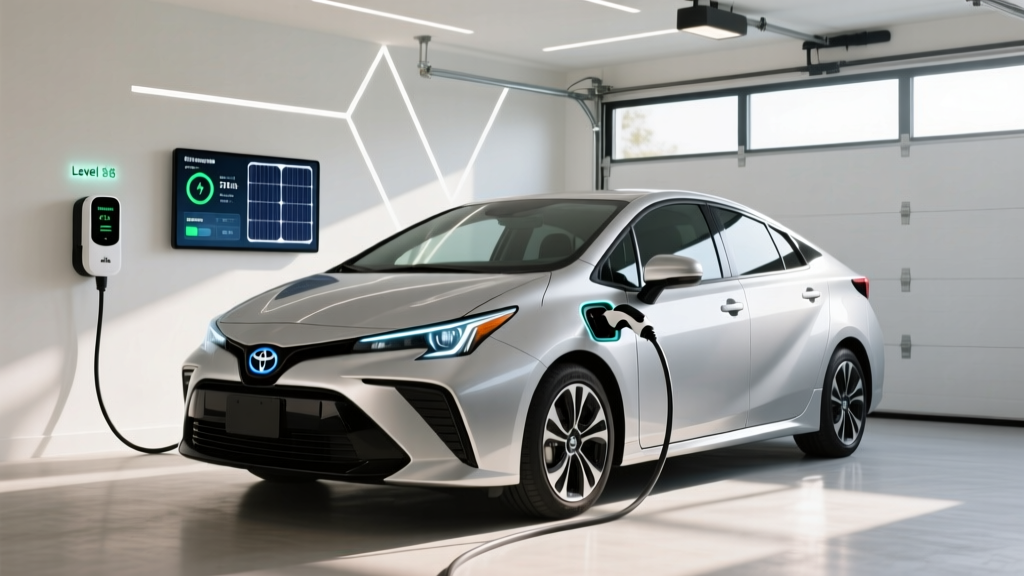
Installing a Level 2 home charger is the single biggest infrastructure decision for EV ownership. Here's what's involved electrically:
Voltage and Amperage Requirements
Most Level 2 home chargers require a 240V dedicated circuit—the same voltage as your electric dryer or oven. Common configurations:
- 32A circuit → 7.7 kW output (requires 40A breaker)
- 40A circuit → 9.6 kW output (requires 50A breaker)
- 48A circuit → 11.5 kW output (requires 60A breaker)
The National Electrical Code (NEC) requires circuits to be rated at 125% of continuous load, meaning a 40A charger needs a 50A breaker. A licensed electrician will verify this.
Panel Upgrade Considerations
Homes built before the 1990s often have 100A electrical panels that may lack capacity for a 40-50A EV circuit alongside existing loads (HVAC, electric range, dryer). A panel upgrade to 200A typically costs $1,500-$3,000 before any charger work begins. Some utilities offer load-management devices that throttle the charger when other high-draw appliances run, avoiding a panel upgrade entirely.
Installation Cost Breakdown
| Component | Low End | High End | Notes |
|---|---|---|---|
| Level 2 Charger (Equipment) | $350 | $700 | Hardwired or NEMA 14-50 plug; 32-48A |
| Electrician Labor | $300 | $1,200 | Depends on run length from panel to garage |
| Permit & Inspection | $50 | $250 | Required by most jurisdictions |
| Electrical Panel Upgrade | $0 | $3,000 | Only if existing panel lacks capacity |
| Conduit, Wiring, Misc. | $100 | $500 | Longer runs and outdoor installations cost more |
| Total (no panel upgrade) | $800 | $2,650 | Most homes with 200A panels fall in $1,000-$1,500 |
| Total (with panel upgrade) | $2,300 | $5,650 | Older homes with 100A service |
Federal incentive note: The Residential Clean Energy Credit (IRS §25D) previously covered 30% of home charging equipment and installation costs up to $1,000, but eligibility and extension status for 2026 should be confirmed with a tax professional, as provisions have been subject to legislative changes. Some states and utilities also offer separate rebates—check your local provider.
Connector Compatibility: NACS, CCS1, and CHAdeMO
The physical plug connecting your EV to a charger has undergone a major consolidation. As of 2025-2026, the North American Charging Standard (NACS), developed by Tesla, has become the dominant connector for new vehicles in North America. Here's where each brand stands:
| Connector | Brands Using It | Adapter Needed? |
|---|---|---|
| NACS (native) | Tesla (all), Ford (2025+), GM (2025+), Rivian (2025+), Hyundai/Kia (2025+), Volvo, Polestar | None for Superchargers and NACS stations |
| CCS1 | Older Ford/GM/Hyundai/Kia models (pre-transition), VW ID.4 (some trims), BMW iX/i4 | CCS1-to-NACS adapter (~$150-$250) for Tesla Superchargers |
| CHAdeMO | Nissan Leaf (legacy), Mitsubishi Outlander PHEV | Limited future support; CHAdeMO stations declining |
Practical advice: If you're buying a new EV in 2025-2026, prioritize one with a native NACS port. This gives you direct access to Tesla's Supercharger network—over 25,000 stalls in North America—without carrying an adapter. CCS1 vehicles can still access Electrify America, EVgo, and ChargePoint DC fast stations, but a NACS adapter unlocks the largest and most reliable network.
Cost to Charge: Home, Public, and Gas Comparison
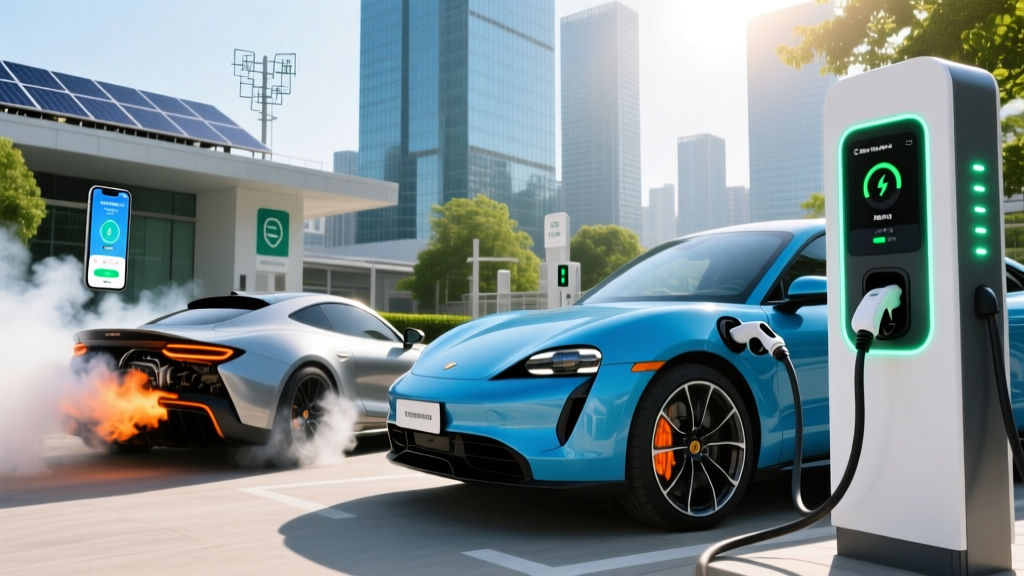
The per-mile fueling cost is where EVs decisively beat even efficient gas cars—and crush thirsty forced-induction vehicles. Here's the math:
| Scenario | Rate | Cost Per Mile (3-4 mi/kWh EV) | Cost Per Mile (Gas, 13-25 MPG) |
|---|---|---|---|
| Home charging (off-peak/utility rate) | $0.10-$0.15/kWh | $0.03-$0.05 | — |
| Home charging (avg US rate) | $0.16/kWh | $0.04-$0.05 | — |
| Public Level 2 (workplace/mall) | $0.20-$0.35/kWh | $0.06-$0.10 | — |
| DC Fast Charge (public) | $0.30-$0.55/kWh | $0.09-$0.16 | — |
| Gas (premium, supercharged V8, 13 MPG) | $4.20/gal | — | $0.32 |
| Gas (premium, turbo I4, 25 MPG) | $4.20/gal | — | $0.17 |
The takeaway: Home-charging an EV at average utility rates costs roughly $0.04-$0.05 per mile—about one-sixth the cost of fueling a supercharged V8 and one-third the cost of a turbocharged four-cylinder on premium. Even DC fast charging on road trips typically undercuts premium gas on a per-mile basis, though the gap narrows.
For a driver covering 12,000 miles annually, the difference between a supercharged car at $0.32/mile and an EV at $0.05/mile (home charging) equals roughly $3,240 per year in fuel savings alone.
Equipment Recommendations: Level 2 Chargers for Home
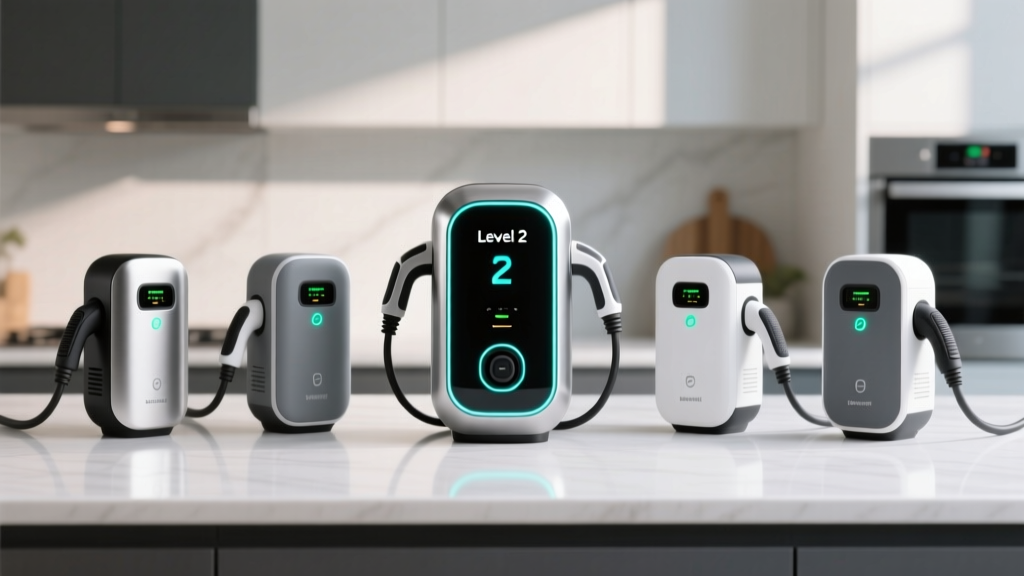
Not all Level 2 chargers are equal. Here are proven picks across budgets, all compatible with NACS-port vehicles (or CCS1 with appropriate cable):
Emporia Vue Level 2 Charger
- Power: 48A / 11.5 kW (hardwired) or 40A / 9.6 kW (NEMA 14-50 plug)
- Connector: NACS native (2025+ models) or J1772 with adapter
- Cable length: 24 feet
- Smart features: Wi-Fi scheduling, energy monitoring, solar integration, utility demand-response compatible
- Price: ~$400-$450
- Best for: Budget-conscious buyers who want smart scheduling and energy tracking
ChargePoint Home Flex
- Power: Up to 50A / 12 kW (configurable 16-50A to match circuit)
- Connector: NACS or J1772 (configurable)
- Cable length: 23 feet
- Smart features: App scheduling, Alexa/Google integration, flexible amperage settings
- Price: ~$550-$650
- Best for: Flexibility—adjustable amperage fits almost any electrical panel
Tesla Wall Connector
- Power: 48A / 11.5 kW (hardwired, 60A breaker required)
- Connector: NACS native; J1772 adapter included for non-Tesla EVs
- Cable length: 24 feet
- Smart features: Wi-Fi updates, power-sharing between two units, Tesla app integration
- Price: ~$475
- Best for: Tesla owners or multi-EV households wanting NACS-native simplicity
Safety, Code, and Installation Best Practices
EV charging draws sustained high current for hours—unlike most household appliances that cycle on and off. This makes proper installation critical:
- Dedicated circuit: Your EV charger must have its own dedicated breaker—never shared with other outlets or appliances.
- GFCI protection: The 2020 NEC requires GFCI (Ground Fault Circuit Interrupter) protection for outdoor EV outlets. Hardwired chargers may be exempt in some jurisdictions, but many electricians include GFCI regardless for safety.
- Outdoor rating: If your charger is mounted outside (driveway, exterior wall), it must carry a NEMA 4 or IP55+ weather resistance rating. All recommended units above meet this standard.
- Wire gauge: A 50A circuit requires 6 AWG copper wire; a 60A circuit requires 4 AWG. Undersized wiring is a fire hazard—never cut corners here.
- Permit and inspection: Most municipalities require an electrical permit and post-installation inspection for EV charger circuits. Skipping this can void home insurance coverage in the event of an electrical fire.
Always hire a licensed electrician familiar with EV charging installations. Ask whether they've installed EVSE (Electric Vehicle Supply Equipment) before—experience matters for correct conduit sizing, load calculations, and code compliance.
Frequently Asked Questions
How much does it cost to install a home EV charger?
Most homes with an existing 200A electrical panel spend between $1,000 and $1,500 total (equipment, labor, permit). Older homes with 100A panels may need a $1,500-$3,000 panel upgrade, pushing the total to $2,500-$5,500. Get 2-3 quotes from licensed electricians and verify whether the quote includes permit fees.
How fast will each charging level add range?
Level 1 (120V) adds roughly 3-5 miles per hour—barely enough for daily driving. Level 2 (240V) adds 20-60 miles per hour depending on amperage, fully recharging most EVs overnight. DC fast charging can add 100-250+ miles in 15-30 minutes, but speed tapers significantly above 80% SoC due to battery protection protocols.
Which connector/charger is compatible with my EV?
Check your vehicle's charge port. New 2025-2026 EVs from Ford, GM, Rivian, Hyundai, Kia, and Tesla use NACS. Older models may have CCS1. The Nissan Leaf uses CHAdeMO, which is being phased out. For home Level 2 charging, a NACS-native charger or a J1772 charger with a NACS adapter will cover virtually all current EVs.
How much does charging cost per mile vs gas?
Home charging at average US electricity rates ($0.16/kWh) costs about $0.04-$0.05 per mile. A supercharged or turbocharged car requiring premium fuel (at ~$4.20/gallon) costs $0.17-$0.32 per mile depending on MPG. That's 3-8x more expensive per mile for the gas vehicle. See the cost comparison table above for detailed scenarios.
What electrical upgrades might I need?
If your home has a 200A panel with spare capacity, you likely need only a new dedicated 50-60A breaker and wiring run to the garage. If you have a 100A panel (common in pre-1990 homes), a panel upgrade to 200A is usually required—adding $1,500-$3,000. An electrician can perform a load calculation to determine your panel's spare capacity. Some utilities offer managed-charging programs that let you avoid an upgrade by limiting charger draw during peak household usage.
Can I just use a regular 120V outlet instead of installing a Level 2 charger?
You can, but Level 1 charging (1.4-1.9 kW) adds only 3-5 miles of range per hour—a full charge on a 80 kWh battery takes 40+ hours. This works for plug-in hybrids with 20-40 miles of electric range, or EV drivers who travel under 30 miles daily and can charge for 10-12 hours overnight. For most BEV owners, Level 2 is practically essential.
Whether you're stepping away from a supercharged and turbocharged car or simply adding an EV to a multi-vehicle household, understanding charging infrastructure—from circuit requirements to connector types to real-world cost per mile—ensures you make an informed investment. The fuel savings are substantial, but the installation details and equipment choices determine whether your daily charging experience is seamless or frustrating.